2027 Best Accredited Online Health Systems Management Degree Programs: Compare Tuition, Admissions, and Career Outcomes

Co-Founder and Chief Data Scientist
Choosing an online health systems management degree is a cost, time, and career decision. The field matters because healthcare organizations need managers who can improve operations, budgets, quality, compliance, and patient access. According to the U. S. Bureau of Labor Statistics, the median annual wage for medical and health services managers was $117,960 in May 2024, making program quality and return on investment important. This guide is for working adults, transfer students, and first-time students comparing accredited online options, tuition, admissions, learning formats, and career outcomes before applying.
Key Things You Should Know
- For most students, the best overall value comes from an institutionally accredited online bachelor's program with transparent per-credit tuition, strong transfer-credit acceptance, career advising, and healthcare-focused coursework in finance, quality improvement, compliance, and operations.
- Cost should be compared by total degree price, not tuition alone; the College Board's 2024 pricing data shows average published tuition and fees of $11,610 at public four-year in-state institutions and $43,350 at private nonprofit four-year institutions, before aid.
- Career outcomes depend on experience as much as the degree; BLS projects much faster-than-average growth for medical and health services managers from 2023 to 2033, but entry-level graduates may start in coordinator, analyst, revenue cycle, or practice management roles before moving into management.
Which Accredited Online Health Systems Management Degree Programs Offer the Best Overall Value?
The best accredited online health systems management degree program is usually the one that balances institutional accreditation, affordable net cost, transfer-credit efficiency, flexible scheduling, and career-relevant coursework. Health systems management overlaps with healthcare administration, health services administration, and healthcare management, so students should compare closely related program titles rather than searching for only one exact name.
Students comparing an online health systems management degree may also want to review a closely related health administration degree online, especially if their goal is healthcare operations, practice management, policy implementation, or administrative leadership.
The table below summarizes common value categories among accredited online programs. It is designed to help students identify which type of program may fit their background, budget, and career target before reviewing individual schools.
| Program value category | Best fit | Why it can be a strong value | Trade-off to check |
| Public university online bachelor's program | In-state students, transfer students, cost-sensitive learners | Often combines institutional reputation, lower public tuition, and access to university career services | Out-of-state online tuition and fees may reduce the savings |
| Adult-completion bachelor's program | Students with prior college credits or an associate degree | Can shorten time to graduation by accepting transfer credits and focusing upper-division coursework on healthcare management | Students with few credits may need extra general education courses |
| Competency-based online program | Self-directed working adults with healthcare or business experience | May lower cost if students can complete courses quickly within subscription terms | Requires strong time management and may not suit students who need frequent live instruction |
| Private nonprofit online program | Students seeking structured advising, frequent start dates, or national online infrastructure | May offer strong student support and flexible course scheduling | Sticker tuition may be higher, so net price after scholarships matters |
| Healthcare-focused university program | Students targeting hospitals, clinics, public health organizations, insurers, or long-term care administration | Coursework may align more closely with healthcare finance, law, quality, ethics, and systems improvement | Students aiming for broader business roles may prefer a business administration major with healthcare concentration |
A strong-value program does not have to be the cheapest. A lower-cost school may be the right choice if it accepts many transfer credits and has clear career support, while a higher-cost option may make sense if it offers a respected healthcare network, internship access, military benefits, employer partnerships, or faster completion.
The common mistake is ranking programs by tuition alone without calculating time to completion, fees, lost transfer credits, and likely career fit.
For most students, the strongest overall value is an accredited public or nonprofit online bachelor's program that allows generous transfer credit, publishes total cost clearly, includes healthcare management coursework, and provides documented online student support.
Students already working in healthcare should give extra weight to programs that let them use workplace projects for capstones or applied assignments.
What Accreditation Should Students Look for in an Online Health Systems Management Degree Program?
Accreditation is the first quality filter. For an online health systems management degree, students should confirm that the college or university holds institutional accreditation from an accreditor recognized by the U.S. Department of Education or the Council for Higher Education Accreditation. Institutional accreditation affects federal financial aid eligibility, transfer credit, graduate school admission, and employer recognition.
Programmatic accreditation is different. Some graduate healthcare management programs pursue accreditation from the Commission on Accreditation of Healthcare Management Education, commonly known as CAHME.
At the bachelor's level, specialized accreditation is less universally required, so students should not automatically reject a bachelor's program because it lacks programmatic healthcare management accreditation. Instead, they should verify that the institution is accredited and that the curriculum matches their career goals.
Use the following checklist before applying. These steps help prevent one of the most expensive mistakes in online education: enrolling in a program whose credits, aid eligibility, or credential recognition do not match the student's plans.
- Search the school in the U.S. Department of Education's accreditation database and confirm the institutional accreditor is currently recognized.
- Ask whether the online program is covered under the institution's accreditation and whether any state authorization limits apply to your location.
- Review whether the curriculum includes healthcare law, finance, quality improvement, data analysis, ethics, human resources, and organizational leadership.
- If you plan to pursue a master's degree later, ask graduate programs whether they commonly accept graduates from the school you are considering.
- If you are considering long-term care, nursing home administration, or another regulated role, check your state board requirements before enrolling.
Accreditation is not the same as quality, affordability, or career placement, but it is the foundation for all three. A properly accredited program still needs to be evaluated for graduation rates, faculty experience, student support, and total cost.
How Do Tuition Costs Compare Across Accredited Online Health Systems Management Degree Programs?
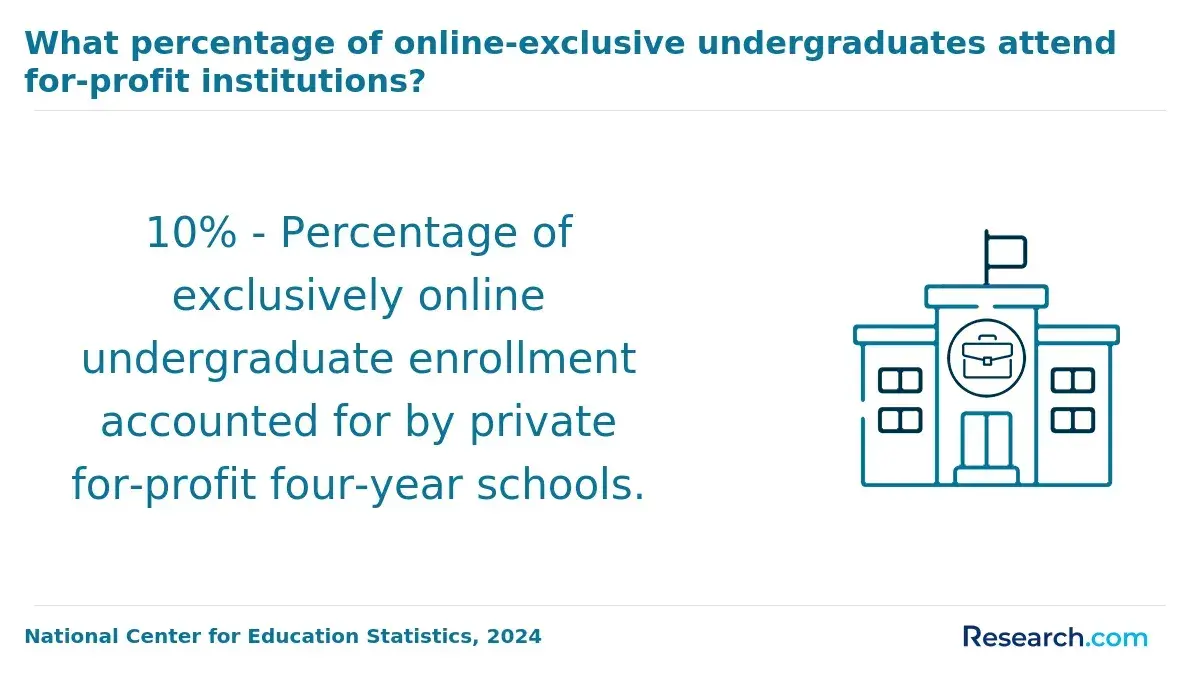
Tuition varies widely because online health systems management programs may be offered by public universities, private nonprofit institutions, private for-profit institutions, and competency-based colleges. The most useful comparison is total program cost after transfer credits and aid, not the advertised per-credit price.
National tuition benchmarks provide a helpful reality check. The College Board's 2024 Trends in College Pricing data reports average published tuition and fees of $11,610 for in-state students at public four-year institutions and $43,350 at private nonprofit four-year institutions for the 2024-25 academic year.
These figures are not specific to health systems management, but they show why students should compare net price, transfer policy, and time to graduation across school types.
The table below explains the major cost variables students should request from each school. This is more useful than comparing tuition alone because two programs with similar per-credit rates can have very different final costs.
| Cost factor | Why it matters | What to ask the school |
| Per-credit tuition | Forms the base cost of the degree | Is online tuition the same for in-state and out-of-state students? |
| Required credits remaining | Determines the real cost for transfer students | How many of my prior credits will apply to the major, general education, and electives? |
| Online program fees | Can raise the total price beyond tuition | Are there technology, distance learning, assessment, graduation, or course material fees? |
| Books and digital materials | Healthcare management courses may use software, case studies, or publisher platforms | Are materials included in tuition or billed separately? |
| Residency or practicum expenses | Some programs require local projects, internships, or optional campus experiences | Can all requirements be completed remotely in my state? |
| Completion speed | Longer enrollment can increase fees and opportunity cost | What is the typical completion time for students entering with my number of credits? |
A practical way to compare costs is to request a degree audit before enrolling. If one program accepts 75 transfer credits and another accepts 45, the first option may be less expensive even if its per-credit tuition is higher. For working adults, a program that reduces time to completion can also reduce the risk of stopping out because of schedule pressure.
Red flags include schools that will not provide a written cost estimate, programs that advertise low tuition without disclosing fees, and admissions processes that push enrollment before a transfer-credit evaluation. Students should also compare financial aid offers carefully because scholarships can change the net cost substantially.
How Competitive Is Admission to Accredited Online Health Systems Management Degree Programs?
Admission competitiveness depends on the degree level and institution. Many online bachelor's programs in health systems management are designed for adult learners and transfer students, so they may be less selective than traditional campus programs. However, less selective admission does not automatically mean weaker academic quality; it often means the program is built for access, completion, and workforce advancement.
Typical bachelor's-level requirements may include a high school diploma or equivalent, official transcripts, a minimum GPA, transfer-credit documentation, and sometimes a personal statement. Degree-completion programs may require prior college credits or an associate degree before students can enter upper-division healthcare management coursework.
The table below compares common admissions profiles. Students should use it to determine whether they are ready to apply now or should first complete prerequisites, improve their GPA, or gather transfer documents.
| Program type | Common admissions approach | Who it fits best | Possible barrier |
| First-year online bachelor's program | High school transcript or equivalent; standardized tests often optional | Students starting college for the first time | May require more total credits and longer completion time |
| Transfer-friendly bachelor's program | College transcripts reviewed for general education and elective credit | Students with prior college coursework | Some healthcare or business major credits may not transfer directly |
| Associate-to-bachelor completion program | Associate degree or substantial prior credits expected | Working adults and community college graduates | Students without enough credits may need preparatory coursework |
| Competency-based program | May assess readiness, work history, and prior learning | Independent learners with professional experience | Self-paced formats can be difficult without strong study habits |
Students who need faster entry into healthcare employment may want a shorter credential first and return for a bachelor's degree later. For example, a shortest medical assistant program may fit someone seeking quick patient-facing or clinic support experience before pursuing management education.
The smartest admissions strategy is to apply only after confirming transfer credit, cost, and schedule fit. Applicants should ask whether the school offers provisional admission, prior learning assessment, employer tuition partnerships, or academic support for returning adults. Avoid assuming that an easy application means the program will be easy to complete.
Which Learning Formats Offer the Greatest Flexibility in Online Health Systems Management Degree Programs?
Online health systems management programs can be asynchronous, synchronous, hybrid, accelerated, part-time, full-time, or competency-based. The most flexible format depends on the student's work schedule, learning style, family responsibilities, and need for structure.
Asynchronous courses usually offer the greatest schedule flexibility because students can complete weekly readings, discussions, and assignments without attending live class at a fixed time. Synchronous programs provide more real-time interaction but may be harder for shift workers. Hybrid programs can be valuable when they include local internships or networking, but they may not be ideal for students who live far from campus.
The table below compares common online learning formats. It helps students match format to lifestyle instead of choosing a program only because it is labeled "online."
| Learning format | Flexibility level | Best fit | What to verify |
| Asynchronous online | High | Working adults, parents, military learners, students in different time zones | Weekly deadlines, exam proctoring rules, and group project expectations |
| Synchronous online | Moderate | Students who want live discussion and direct faculty interaction | Class meeting times and attendance policies |
| Hybrid online | Moderate to low | Students near campus or those who value in-person networking | Campus visit frequency, travel costs, and residency requirements |
| Accelerated terms | High but intensive | Motivated students who can handle compressed coursework | Weekly workload and whether courses overlap |
| Competency-based | Very high for self-directed learners | Students with prior knowledge and strong independent study habits | Subscription terms, assessment format, faculty access, and graduate school acceptance |
Flexibility should not be confused with low workload. A three-credit online course commonly requires regular reading, writing, discussion, exams, and applied projects. Health systems management courses often include case analyses, data interpretation, policy reviews, budgeting assignments, and team-based problem solving.
Before enrolling, students should ask for a sample syllabus and learning management system demo. The best format is the one a student can sustain for several terms, not the one that sounds easiest during recruitment.
What Student Support Services Improve Success in Online Health Systems Management Degree Programs?
Student support can make the difference between enrolling and graduating. Online students often manage work, caregiving, and financial pressure, so they should evaluate advising and academic support as carefully as tuition.
Strong support services are especially important in health systems management because students must connect classroom topics to complex healthcare workplaces. Useful services may include academic advising, career coaching, writing support, tutoring, library access, technical support, internship coordination, and help with graduate school planning.
When speaking with admissions or advising staff, students should look for services that are available to online learners, not just campus students. The following support features are worth confirming before accepting an offer.
- Dedicated online academic advisor who helps plan courses, monitor degree progress, and prevent unnecessary credits.
- Career services with healthcare resume reviews, mock interviews, job boards, employer events, and internship or project guidance.
- Writing, statistics, accounting, and data analysis support for students returning after time away from school.
- Accessible faculty office hours through video, phone, email, or learning platform messaging.
- Technical support during evenings or weekends, especially for students completing work outside regular business hours.
- Transfer-credit and prior-learning advising before enrollment, not after the student has already committed.
A common red flag is a school that offers general online enrollment help but limited academic advising after classes begin. Students should ask who their advisor will be, how often they can meet, how course sequencing works, and what happens if they fail or withdraw from a course.
Good support also improves return on investment. If advising prevents one unnecessary course or helps a student graduate one term earlier, it can reduce both direct cost and time away from career advancement.
Which Financial Aid Options Are Available for Accredited Online Health Systems Management Degree Students?
Students in accredited online health systems management degree programs may qualify for many of the same financial aid options as campus students, provided the institution and program meet federal eligibility rules. Aid availability depends on enrollment status, citizenship or eligible noncitizen status, satisfactory academic progress, dependency status, and school participation in aid programs.
The most important first step is completing the Free Application for Federal Student Aid. Federal Student Aid loan limits for undergraduate students remain capped by year in school and dependency status, so students should not assume loans will cover any price at any institution. This makes net-price comparison essential before enrollment.
The table below summarizes common aid sources. Students should compare aid offers after grants and scholarships, not just the amount they are allowed to borrow.
| Aid option | Who may qualify | Why it matters | Question to ask |
| Federal Pell Grant | Undergraduate students with financial need | Does not need to be repaid if eligibility rules are met | How will my enrollment intensity affect Pell eligibility? |
| Federal Direct Loans | Eligible undergraduate students enrolled at least half time | Can help cover tuition and required costs but must be repaid | What is my total borrowing after four years or after transfer? |
| State grants | Residents who meet state-specific rules | Can reduce net cost at public or approved institutions | Does online enrollment affect eligibility? |
| Institutional scholarships | Students meeting school-specific academic, need-based, transfer, military, or adult learner criteria | Can significantly lower private or out-of-state costs | Is the award renewable, and what GPA is required? |
| Employer tuition assistance | Employees of hospitals, clinics, insurers, public agencies, and healthcare vendors | Can make a degree more affordable for working adults | Does the employer require a specific grade, repayment period, or approved school list? |
| Military and veteran benefits | Eligible service members, veterans, and dependents | May cover a substantial share of tuition and fees | Does the school have military advising and Yellow Ribbon participation if applicable? |
To compare aid offers, students should follow a consistent process. This prevents the common mistake of choosing the largest aid package when it includes more loans rather than more grant or scholarship support.
- Calculate tuition, required fees, books, technology costs, and any practicum or residency expenses for the credits you still need.
- Subtract grants and scholarships first because these usually reduce cost without repayment.
- Separate subsidized loans, unsubsidized loans, private loans, and payment plans so you can see repayment risk clearly.
- Ask whether scholarships renew automatically or require a specific GPA, credit load, or application each year.
- Compare total estimated borrowing at graduation, not just the first-term bill.
Students should be cautious with private loans and high-cost programs if their career goal is an entry-level administrative role. Borrowing can be reasonable when it supports a clear path to advancement, but the safest approach is to minimize debt while preserving accreditation, completion support, and career relevance.
Which Career Outcomes Are Associated With Accredited Online Health Systems Management Degree Programs?
An online health systems management degree prepares students for administrative, operational, and analytical roles in healthcare organizations. It is not usually a clinical licensure degree. Graduates may work in hospitals, physician practices, community health organizations, long-term care settings, insurance companies, healthcare technology firms, public health agencies, or nonprofit organizations.
The salary upside is strongest for students who combine the degree with healthcare experience, leadership ability, data skills, and knowledge of reimbursement and regulation. The U.S. Bureau of Labor Statistics reported a May 2024 median annual wage of $117,960 for medical and health services managers.
That figure reflects an occupational category that often includes experienced managers, so bachelor's graduates should view it as a labor-market benchmark rather than an entry-level promise.
The table below connects common roles to typical responsibilities and preparation. Use it to decide whether a health systems management curriculum aligns with the work you actually want to do.
| Career path | Typical responsibilities | Helpful preparation | Experience often valued |
| Healthcare operations coordinator | Support scheduling, workflows, reporting, and process improvement | Operations management, quality improvement, data literacy | Clinic, hospital, administrative, or customer service experience |
| Practice manager | Oversee staffing, budgets, patient flow, compliance, and vendor coordination | Healthcare finance, human resources, law and ethics | Medical office, billing, supervisory, or ambulatory care experience |
| Revenue cycle analyst | Analyze billing, reimbursement, denials, coding trends, and payment processes | Healthcare reimbursement, data analysis, finance | Billing, coding, insurance, or analytics experience |
| Quality improvement specialist | Track performance measures, support audits, and improve patient safety processes | Quality management, statistics, healthcare policy | Clinical support, compliance, project coordination, or data reporting experience |
| Health services manager | Lead departments, programs, service lines, or administrative teams | Leadership, finance, strategic planning, compliance | Several years of healthcare and supervisory experience |
Current trends are changing what employers value. Healthcare organizations increasingly use data dashboards, telehealth workflows, automation tools, electronic health record analytics, and AI-supported administrative systems. Students should look for programs that teach ethical data use, privacy, change management, and process improvement rather than only general management theory.
Students interested in advanced clinical leadership should compare this route with graduate nursing or clinical pathways. For example, information on PhD in nursing salary may be more relevant for nurses pursuing research, faculty, or advanced leadership roles than for students focused on nonclinical health systems administration.
This degree is worth considering for students who want to manage healthcare operations without becoming licensed clinicians. It may be less appropriate for students who want direct patient diagnosis or treatment, because those careers usually require clinical degrees, supervised practice, licensure, and sometimes certification.
How Do Online and Campus-Based Health Systems Management Degree Programs Compare?
Online and campus-based health systems management programs can lead to similar academic credentials when they are offered by accredited institutions. The bigger differences are schedule, networking style, student support, cost structure, and access to local experiential learning.
Online programs often fit working adults because they reduce commuting and allow students to study around shifts. Campus programs may be better for students who want in-person faculty contact, campus clubs, local internships, or a traditional college experience. Neither format is automatically better; the right choice depends on how the student learns and what support they need.
The table below compares major decision factors. Students should use it to identify which format fits their constraints rather than assuming online is always easier or campus is always more respected.
| Factor | Online program | Campus-based program | Best choice when |
| Schedule | Often asynchronous or evening-friendly | Usually fixed class meeting times | Online fits students balancing work or caregiving |
| Networking | Virtual events, discussion boards, online career services | In-person events, student groups, local employer visits | Campus fits students who want face-to-face networking |
| Cost | May reduce commuting and relocation expenses | May include campus fees, housing, or transportation costs | Online can lower indirect costs, but tuition still needs comparison |
| Learning style | Requires self-direction and written communication | Provides more real-time structure | Campus may fit students who need frequent live accountability |
| Experiential learning | May use local projects, virtual simulations, or workplace-based assignments | May offer local internships through campus employer networks | Either can work if experiential requirements are clear |
Students comparing healthcare fields should also recognize that some programs are much harder to deliver fully online because they require labs or clinical practice. For example, becoming an ultrasound tech usually involves hands-on clinical training, while health systems management is more naturally suited to online delivery because it focuses on administration, finance, operations, and policy.
Employers generally care more about accreditation, school reputation, skills, experience, and interview performance than whether every course was taken online. Students should still make sure the diploma and transcript do not create confusion and that the program's online format is clearly supported by the institution.
How Should Students Choose the Best Accredited Online Health Systems Management Degree Program?
Students should choose an accredited online health systems management degree by starting with career goals and working backward. A program that is excellent for a hospital operations coordinator may not be ideal for someone pursuing public health policy, healthcare analytics, long-term care administration, or graduate study.
The best decision process combines accreditation, cost, admissions fit, transfer credit, flexibility, support, and career relevance. Students should avoid relying only on rankings, advertisements, or the fastest completion promise.
Use the following steps to compare programs in a practical order. This sequence helps eliminate poor-fit options before application fees, transcript requests, and enrollment pressure begin.
- Define your target role, such as practice manager, healthcare operations coordinator, revenue cycle analyst, quality improvement specialist, or future graduate student.
- Verify institutional accreditation and confirm whether the online program is approved for students in your state.
- Request a written transfer-credit evaluation and ask how many credits remain for graduation.
- Calculate total cost after tuition, fees, books, scholarships, grants, employer aid, and expected borrowing.
- Compare curriculum depth in healthcare finance, law, compliance, quality improvement, data analysis, leadership, and ethics.
- Ask about online advising, faculty access, career services, internship options, and alumni outcomes.
- Review course format, term length, weekly workload, live meeting requirements, and exam proctoring rules.
- Speak with an admissions counselor and ask what successful online students in the program have in common.
- Compare at least three schools using the same criteria before making a deposit or enrolling.
Students should also consider whether they want a nonclinical management path or a clinical credential. Someone who wants to become a registered nurse should compare health systems management with online ABSN programs, because nursing licensure and healthcare administration lead to different types of work.
A good final test is simple: would you still choose the program if it were not ranked, advertised as fast, or discounted for the first term? If the answer is yes because it is accredited, affordable after aid, realistic for your schedule, and aligned with your target role, it is likely a stronger fit.
Other Things You Should Know About Health Systems Management
No. Health systems management focuses on healthcare operations, leadership, finance, policy, staffing, and organizational performance. Health informatics focuses more heavily on health data systems, electronic health records, analytics, information governance, and technology-supported care delivery.
Clinical experience is not always required for admission, especially at the bachelor's level. However, healthcare work experience can help students understand real operational problems and may strengthen applications for management, quality, revenue cycle, or department leadership roles.
Yes, many online programs are designed for working adults. The key is choosing a format with realistic weekly deadlines, strong advising, and part-time options if needed. Students working full time should be cautious with accelerated course loads.
Yes, graduates may pursue an MHA, MBA with a healthcare concentration, MPH, health informatics master's degree, or related graduate program. Students planning graduate study should choose an institutionally accredited bachelor's program and keep strong grades in writing, statistics, finance, and leadership courses.
References
- Online Health Information Management Degrees: Top Schools https://www.edumed.org/online-schools/health-information-management-degrees/
- 2025 Most Affordable Online Master's in Healthcare Administration https://www.onlineu.com/most-affordable-colleges/healthcare-administration-masters-degrees
- New Data on Completion Rates | HESA https://higheredstrategy.com/new-data-on-completion-rates/
- Top 35 Online Healthcare MBA Programs - Healthcare Management Degree Guide https://www.healthcare-management-degree.net/best/best-online-healthcare-mba-programs/
- Master of Science (MS) in Health Systems Management Admissions https://www.rushu.rush.edu/college-health-sciences/academic-programs/master-science-health-systems-management/master-science-health-systems-management-admissions-deadlines
- Who Accredits MHA Programs? https://www.mhaonline.com/faq/who-accredits-online-mha-programs
- What Are the Job Prospects for an HIM Graduate? - Healthcare Administration Degree Programs https://www.healthcare-administration-degree.net/faq/what-are-the-job-prospects-for-an-him-graduate/
- Career Options and Salaries https://www.stonehill.edu/programs/healthcare-management/career-options-and-salaries-vont/
- Health Systems Management https://www.fanshawec.ca/programs/hsy2-health-systems-management/next