2027 Best Accredited Online Social Psychology Degree Programs: Compare Tuition, Admissions, and Career Outcomes

Co-Founder and Chief Data Scientist
Choosing an online social psychology degree means balancing cost, credibility, flexibility, and career payoff. The stakes are real: the U. S. Bureau of Labor Statistics reports a May 2024 median annual wage of $94,310 for psychologists, but many social psychology-adjacent roles also depend on research, analytics, communication, and human behavior skills. This guide is for working adults, transfer students, and first-time applicants comparing accredited online options. You will learn how to evaluate tuition, admissions, accreditation, online formats, support services, and career outcomes before committing to a program.
Key Things You Should Know
- The best overall value usually comes from a regionally accredited public or nonprofit online psychology program that includes social psychology coursework, accepts transfer credits, and publishes clear tuition and outcome data.
- College Board data for 2024-25 shows average published tuition and fees of $11,610 for in-state public four-year students versus $43,350 at private nonprofit four-year institutions, so total cost can vary sharply by school type and residency policy.
- Social psychology is not usually a standalone online undergraduate major; most students pursue an online psychology degree, behavioral science degree, or graduate psychology program with social psychology, research methods, statistics, group behavior, or applied social science coursework.
Which Accredited Online Social Psychology Degree Programs Offer the Best Overall Value?
The strongest accredited online social psychology degree program is rarely the one with the lowest sticker price alone. For most students, the best value is the program that combines institutional accreditation, relevant social psychology coursework, reasonable total cost, transfer-credit flexibility, strong academic support, and outcomes that match the student's goal.
Because social psychology is commonly offered as a concentration, elective cluster, research area, or graduate specialization rather than a standalone online major, compare programs by fit rather than by label. A bachelor's program may prepare students for entry-level roles or graduate school, while a master's program may better support research, user experience, organizational, nonprofit, or doctoral-preparation goals.
The table below summarizes the types of accredited online programs that most often serve students interested in social psychology. Use it to identify which option best matches your academic level, schedule, and career plan.
| Program type | Best fit | Typical social psychology relevance | Value signal to prioritize |
| Online BA or BS in Psychology | First-time college students, transfer students, and career changers | Courses in social psychology, personality, research methods, statistics, cognition, and abnormal psychology | Low net price, strong transfer policy, and graduate-school preparation |
| Online BA or BS in Behavioral Science | Students interested in applied human behavior across workplaces, communities, and organizations | Interdisciplinary coursework in psychology, sociology, communication, and social systems | Career-focused electives and internship or project options |
| Online MS or MA in Psychology | Students seeking advanced research, consulting, analytics, or doctoral preparation | Advanced theory, quantitative methods, social cognition, group behavior, and applied research | Faculty expertise, research alignment, and transparent completion requirements |
| Online I/O psychology or applied psychology master's | Students targeting workplace behavior, employee research, leadership, or people analytics roles | Applies social psychology concepts to teams, motivation, persuasion, decision-making, and organizations | Employer relevance, applied projects, and career services for working professionals |
A low-cost public online bachelor's degree is often the best starting point for students who need an affordable path to graduate school. A higher-cost master's degree can make sense when it gives access to advanced research methods, faculty mentorship, applied projects, or a recognized pathway into doctoral study or specialized employment.
Common mistakes include choosing a program just because it uses the phrase "social psychology," assuming all online psychology degrees cover the same research skills, or ignoring whether the curriculum includes statistics and methodology. If two programs look similar, compare the required research sequence, capstone expectations, transfer-credit rules, and graduate placement information before deciding.
What Accreditation Should Students Look for in an Online Social Psychology Degree Program?
Accreditation is the first quality filter for any online social psychology degree. In the U.S., students should start by verifying institutional accreditation from an agency recognized by the U.S. Department of Education or the Council for Higher Education Accreditation. This matters because federal financial aid, transfer credits, employer recognition, and graduate admissions often depend on institutional accreditation.
For social psychology specifically, programmatic accreditation is less common than in clinical, counseling, or school psychology. The American Psychological Association accredits doctoral programs in clinical psychology, counseling psychology, school psychology, and related professional psychology areas, but it does not generally accredit standalone bachelor's or master's programs in social psychology. That means students should not reject an online social psychology-focused program simply because it lacks APA accreditation; instead, they should understand whether APA accreditation is relevant to their intended pathway.
Before applying, take these steps to verify accreditation and avoid red flags:
- Confirm the institution's accreditation status in the U.S. Department of Education or CHEA-recognized database, not only on the school's marketing page.
- Check whether the degree title, delivery format, and campus location are covered under the institution's accreditation status.
- Ask whether online students receive the same transcript notation and degree credential as campus students.
- If you plan to pursue licensure later, confirm doctoral and state licensing requirements before enrolling in a bachelor's or master's program.
- Avoid schools that are vague about accreditation, pressure you to enroll immediately, or promise licensure or employment outcomes that depend on additional education and state approval.
Accreditation should be treated as a minimum requirement, not a full quality guarantee. A program can be accredited and still be a poor fit if it lacks research training, advising, transfer support, or career alignment for your goals.
How Do Tuition Costs Compare Across Accredited Online Social Psychology Degree Programs?
Tuition for accredited online social psychology degree pathways varies widely because students may enroll in public, private nonprofit, or private for-profit institutions; pay in-state or out-of-state rates; and bring in different amounts of transfer credit. College Board's 2024-25 pricing report shows average published tuition and fees of $11,610 for in-state public four-year students, compared with $43,350 at private nonprofit four-year institutions. For online students, that gap makes net price and credit transfer especially important.
The table below shows how cost categories typically compare. It is not a ranking of individual schools; it is a practical framework for estimating what you may actually pay.
| Cost factor | Lower-cost scenario | Higher-cost scenario | How to evaluate it |
| Tuition model | In-state public rate or flat online rate | Private tuition with limited institutional aid | Compare cost per credit and total credits still needed |
| Transfer credits | Generous credit acceptance from accredited colleges | Strict limits on transfer, old credits, or major requirements | Request a degree audit before committing |
| Fees | Few technology, distance learning, or course fees | Multiple per-term or per-course fees | Ask for a full cost-of-attendance estimate |
| Books and materials | Open educational resources or digital materials included | Separate textbook, testing, software, or lab expenses | Review sample course syllabi when available |
| Time to completion | Accelerated terms or transfer-friendly completion plan | Sequential courses that delay graduation | Map required courses by term, not just by credit total |
Students comparing accelerated completion options should be careful not to confuse speed with value. A fast track bachelor degree can reduce opportunity cost if credits transfer smoothly, but it may be a poor fit if compressed courses limit time for statistics, research design, or graduate-school preparation.
When comparing prices, focus on total program cost after transfer credits and aid rather than tuition alone. A school with a higher per-credit price may cost less overall if it accepts more prior credits, while a cheaper program may become expensive if it requires many repeated courses.
How Competitive Is Admission to Accredited Online Social Psychology Degree Programs?
Admissions competitiveness depends heavily on degree level. Online bachelor's programs in psychology are often designed for broad access, especially for transfer and adult students. Online master's programs are usually more selective because they may require a minimum GPA, statistics coursework, writing samples, recommendation letters, or alignment with faculty and research interests.
Admissions flexibility does not automatically mean weak academic quality. Some reputable online programs use inclusive admissions policies but maintain rigor through statistics, writing-intensive courses, research projects, and capstone requirements. The better question is whether the program can support students once they enroll.
The table below compares typical admissions expectations by program level so you can estimate your readiness before applying.
| Degree level | Common admissions requirements | Competitiveness signal | Best applicant strategy |
| Online bachelor's in psychology | High school diploma or GED, transcripts, transfer-credit review, and sometimes minimum GPA | Often moderately accessible | Maximize transfer credits and confirm major prerequisites |
| Online bachelor's completion program | Prior college credits, minimum transferable GPA, and general education completion | Depends on credit fit more than selectivity | Request a pre-enrollment transfer evaluation |
| Online master's in psychology | Bachelor's degree, GPA threshold, statement of purpose, references, and research or statistics background | More selective when research alignment matters | Show clear goals and preparation in methods and writing |
| Online applied or I/O psychology master's | Bachelor's degree, professional resume, statement, recommendations, and sometimes quantitative coursework | Often career-focused rather than purely research-selective | Connect work experience to applied social behavior questions |
Applicants should avoid applying only to programs with the easiest admissions process. If your goal is graduate school or research-oriented employment, a more demanding program with stronger methods training may be a better long-term choice than an easier program with limited academic depth.
Which Learning Formats Offer the Greatest Flexibility in Online Social Psychology Degree Programs?
The most flexible online social psychology degree programs are usually asynchronous, transfer-friendly, and offered in multiple start dates. However, maximum flexibility is not always the best academic fit. Students who need structure, live discussion, research supervision, or faculty feedback may benefit from synchronous or hybrid components.
Online learning in psychology often includes readings, discussion boards, exams, recorded lectures, research papers, group projects, and statistics assignments. Social psychology courses may also require analysis of experiments, survey design, literature reviews, or applied projects on group dynamics, persuasion, prejudice, identity, or decision-making.
The table below compares common online formats and the type of student each one tends to serve best.
| Online format | Flexibility level | Best for | Potential drawback |
| Asynchronous online | Highest | Working adults, caregivers, military students, and students in different time zones | Requires strong self-management and comfort learning independently |
| Synchronous online | Moderate | Students who want live discussion, accountability, and real-time faculty interaction | Scheduled class times may conflict with work or family duties |
| Hybrid or low-residency | Moderate to low | Students who value occasional in-person networking, labs, or intensive seminars | Travel and scheduling costs can reduce convenience |
| Accelerated online terms | High but intensive | Students with transfer credits and strong time-management skills | Compressed timelines may be difficult for statistics or research-heavy courses |
| Part-time online | High over time | Students balancing full-time work or caregiving | Longer completion time can increase opportunity cost |
Students comparing social psychology with adjacent health or behavioral science routes may also look at flexible professional programs, such as online nurse practitioner programs, but those programs follow different licensure, clinical-hour, and admissions rules. That comparison is useful mainly if you are deciding between behavioral research and direct patient-care pathways.
A common mistake is selecting the most flexible format without checking whether the program offers enough interaction. If you plan to pursue graduate school, prioritize faculty access, feedback on writing, and opportunities to complete research or applied projects.
What Student Support Services Improve Success in Online Social Psychology Degree Programs?
Student support services can determine whether an online program is merely convenient or genuinely effective. This is especially important in psychology because students often need help with statistics, research writing, graduate-school planning, and career translation.
Look for services that directly support the hardest parts of an online social psychology degree. These supports are worth asking about before you enroll because they affect persistence, confidence, and academic performance.
- Academic advising that maps every required course from enrollment through graduation, including prerequisites and transfer credits.
- Online tutoring for statistics, research methods, writing, and psychology-specific assignments.
- Library access with psychology databases, journal articles, citation tools, and remote research support.
- Faculty office hours and clear response-time policies for online students.
- Career coaching that helps translate social psychology skills into roles in research, human resources, user experience, marketing, public service, or nonprofit work.
- Graduate-school advising for students considering master's, doctoral, counseling, or clinical pathways.
- Technology support available outside traditional business hours.
- Disability services and mental health resources accessible to remote learners.
Do not assume that online students receive the same support as campus students. Ask admissions counselors whether tutoring, career services, research opportunities, and advising are available fully online, and request examples of how online psychology students use them.
Which Financial Aid Options Are Available for Accredited Online Social Psychology Degree Students?
Accredited online social psychology degree students may qualify for many of the same financial aid options as campus students, provided the institution and program meet federal aid requirements. The maximum Federal Pell Grant for the 2024-25 award year is $7,395, which can significantly reduce cost for eligible undergraduate students but may not cover the full expense of tuition, fees, and materials.
Financial aid should be compared by net cost, not by award size alone. A school with a large scholarship may still be more expensive than a public online program with lower tuition.
Students should review the following funding sources before choosing a program:
- Federal Pell Grants for eligible undergraduate students who demonstrate financial need.
- Federal Direct Subsidized and Unsubsidized Loans, with borrowing limits that vary by dependency status and academic level.
- State grants or tuition programs, especially for residents attending public institutions.
- Institutional scholarships for transfer students, adult learners, first-generation students, military-affiliated students, or high-achieving applicants.
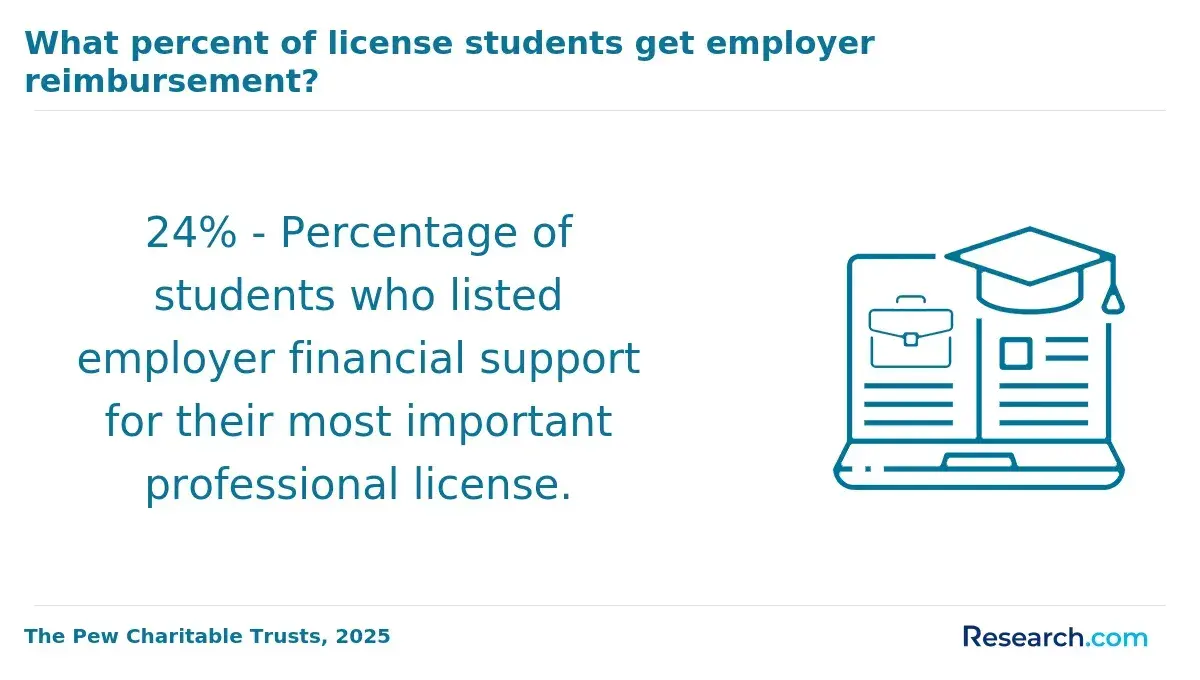
- Employer tuition assistance or reimbursement for students applying psychology skills in human resources, management, training, marketing, public service, or healthcare settings.
- Military and veteran education benefits, including GI Bill benefits when applicable.
- Psychology department awards, research assistantships, or graduate assistantships, which are more common at the graduate level and may be limited for fully online students.
Students considering clinical mental health pathways should understand that financial aid planning may extend beyond a social psychology degree. For example, online Psych NP programs prepare nurses for a regulated advanced practice route, while social psychology programs usually focus on research, behavior, organizations, and social processes rather than nursing licensure.
Before accepting an offer, compare the full aid package across schools. Pay attention to renewable scholarship rules, minimum GPA requirements, loan amounts, fees, and whether aid applies to summer or accelerated terms.
Which Career Outcomes Are Associated With Accredited Online Social Psychology Degree Programs?
Career outcomes for social psychology degree students depend on degree level, work experience, research skills, internships, and whether the student continues to graduate study. A bachelor's degree can support entry-level roles that use behavioral insight, writing, data interpretation, and communication. A master's degree may improve access to applied research, organizational, analytics, or program evaluation roles. Licensure as a psychologist generally requires doctoral education and state-specific requirements.
BLS data shows that psychologists had a May 2024 median annual wage of $94,310, with employment projected to grow 6% from 2024 to 2034. That figure should be used carefully: it reflects the broader psychologist occupation, not every graduate of an online psychology or social psychology program, and many psychologist roles require doctoral training.
The table below connects common education levels to realistic career directions. Use it to distinguish between roles available after an undergraduate degree and those requiring graduate or professional education.
| Education level | Possible career directions | How social psychology applies | Important limitation |
| Bachelor's degree | Research assistant, human resources assistant, case management support, community program coordinator, marketing assistant, training coordinator | Understanding attitudes, group behavior, communication, bias, motivation, and decision-making | Many psychology-specific roles require graduate study |
| Master's degree | Applied researcher, user experience researcher, people analytics associate, organizational development specialist, program evaluator, survey researcher | Designing studies, interpreting behavior data, evaluating interventions, and improving group or organizational outcomes | Job titles vary widely by employer and may require technical analytics skills |
| Doctoral degree | Social psychology researcher, professor, behavioral scientist, advanced research director | Original research, theory development, advanced statistics, experimental design, and publication | Doctoral admission is competitive and often requires strong research experience |
| Licensure-focused doctoral pathway | Licensed psychologist roles in clinical, counseling, or school settings | Social behavior knowledge may support assessment, intervention, and consultation | Social psychology alone is not a direct licensure pathway |
If your goal is a regulated healthcare career, compare the education pathway carefully. Programs such as online pharmacy school lead toward profession-specific licensure requirements, while social psychology degrees are usually broader and more research- or behavior-focused.
To improve career value, choose a program that builds practical evidence of skill: statistics projects, survey design, research papers, internships, capstones, portfolio samples, and experience with tools used in analytics or evaluation. Employers often care less about the phrase "social psychology" and more about whether you can analyze behavior, communicate findings, and solve people-centered problems.
How Do Online and Campus-Based Social Psychology Degree Programs Compare?
Online and campus-based social psychology degree programs can lead to similar academic credentials when they are offered by accredited institutions, but the experience is not identical. The best format depends on how you learn, whether you need research access, and how much schedule flexibility you require.
Online programs are often better for working adults and transfer students who need to keep employment while studying. Campus programs may offer easier access to labs, faculty research teams, peer networks, and in-person seminars. For students aiming for competitive doctoral programs, research experience may be more important than delivery format.
The table below highlights the trade-offs that matter most when comparing online and campus-based options.
| Comparison factor | Online program | Campus-based program | Decision guidance |
| Schedule | Often more flexible, especially asynchronous formats | Fixed class times and campus attendance | Choose online if work or caregiving obligations are central |
| Research access | May include remote projects, capstones, or faculty-supervised work | Often easier access to labs and in-person research teams | Choose based on research availability, not format alone |
| Networking | Built through discussion boards, virtual events, and online career services | More informal peer and faculty interaction | Ask how online students connect with faculty and alumni |
| Cost | May reduce relocation, commuting, and housing expenses | May include campus fees, housing, and transportation | Compare total cost of attendance, not just tuition |
| Learning style | Requires self-direction and written communication | Provides more immediate in-person structure | Choose the environment that supports your consistency |
Students comparing online psychology with other online health and wellness degrees may also evaluate programs such as an online masters nutrition degree. That can be a better fit for students more interested in food systems, wellness, and nutrition science than social behavior, group processes, and psychological research.
The main red flag is assuming online means easier. A strong online social psychology program should still require research writing, statistical reasoning, ethical analysis, and sustained engagement with complex theories of human behavior.
How Should Students Choose the Best Accredited Online Social Psychology Degree Program?
To choose the best accredited online social psychology degree program, start with your end goal and work backward. A student seeking an affordable bachelor's degree for broad career mobility should evaluate different factors than a student preparing for doctoral research or an applied organizational psychology career.
Use the following process to compare programs in a way that balances cost, quality, flexibility, and long-term return on investment:
- Define your target outcome, such as graduate school, research work, human resources, UX research, nonprofit programs, public service, or doctoral study.
- Verify institutional accreditation and confirm whether any specialized accreditation is relevant to your intended pathway.
- Compare the curriculum for social psychology, research methods, statistics, experimental design, ethics, and applied projects.
- Request a transfer-credit evaluation before enrolling if you have prior college credit.
- Calculate total program cost after grants, scholarships, employer aid, loans, fees, and transfer credits.
- Review student support services, including advising, tutoring, library access, career coaching, and graduate-school guidance.
- Ask how online students build research experience, complete capstones, work with faculty, or develop portfolio samples.
- Compare completion timelines realistically based on your work schedule and course load.
- Check career outcome information, but avoid treating salary data as a guarantee of individual results.
- Speak with admissions, financial aid, and academic advising before committing, and compare answers across schools.
Ask each school direct questions before you apply. Strong questions include: "How many credits will transfer into my major?" "Can online students work with faculty on research?" "What statistics support is available?" "Do graduates enter master's or doctoral programs?" and "Will my diploma or transcript identify the program as online?"
Students who want direct patient-care authority, prescribing responsibilities, or regulated healthcare practice should compare social psychology against professional clinical routes before enrolling. For example, online nurse practitioner programs are built around advanced nursing practice and licensure, while social psychology programs are better suited to understanding social behavior, research, organizational dynamics, and human decision-making.
The best choice is the program that you can afford, complete, and use. Prioritize accreditation first, then curriculum fit, total net cost, support services, and evidence that the program can help you build the skills required for your next step.
Other Things You Should Know About Social Psychology
No. Social psychology studies how individuals think, feel, and behave in social contexts, while sociology focuses more on groups, institutions, cultures, and social systems. The fields overlap, but social psychology is usually housed within psychology programs.
A social psychology degree by itself is usually not enough to become a licensed therapist. Therapy licensure typically requires a qualifying graduate degree in counseling, clinical psychology, social work, marriage and family therapy, or a related state-approved field.
Most quality psychology programs include statistics and research methods because social psychology relies heavily on evidence, experiments, surveys, and data interpretation. Students who dislike quantitative work should review syllabi before enrolling.
Yes. Social psychology can be useful in human resources, marketing research, user experience, public health communication, nonprofit programming, policy research, organizational development, and community work. Its value is strongest when paired with writing, data analysis, and applied project experience.
References
- Best Online Bachelor's Degrees In Psychology Of 2025 https://www.psychology.org/rankings/best-online-bachelor-degree-programs/
- Top 10 Best Online School Psychology Programs https://www.bestpsychologydegrees.com/top/online-school-psychology/
- Top 5 Highest-Paying Psychology Careers - Rivier Academics https://www.rivier.edu/academics/online/resources/program-resources/top-5-highest-paying-psychology-careers-rivier-university/
- Compare Online Social Psychology Degree Programs https://www.counselingpsychology.org/psychology/degrees/social-psychology/
- New Data on Completion Rates | HESA https://higheredstrategy.com/new-data-on-completion-rates/
- 2025 Most Affordable Online Colleges for Psychology Degrees https://www.onlineu.com/most-affordable-colleges/psychology-degrees
- Social Psychology Degree and Career Guide https://www.psychologydegree411.com/degrees/social-psychology/
- Application and tuition fees - SWPS University https://english.swps.pl/programs/apply/application-and-tuition-fees
- Social Psychology Network https://www.socialpsychology.org/gsocial.htm
- Is a Psychology Degree Worth It in 2024? https://www.nottingham.edu.my/NewsEvents/News/2024/is-a-psychology-degree-worth-it.aspx