2027 Cheapest Accredited Online Social Psychology Degree Programs: Tuition, Fees, and Financial Aid

Co-Founder and Chief Data Scientist
Choosing the cheapest accredited online social psychology degree is not as simple as picking the lowest per-credit tuition. College Board reported average published tuition and fees of $11,610 for in-state public four-year students and $43,350 for private nonprofit students in 2024-25, so small pricing differences can become major budget issues.
This guide is for students comparing online psychology programs with social psychology coursework, concentrations, or research pathways. You will learn how to compare accreditation, tuition, mandatory fees, total program cost, FAFSA aid, scholarships, transfer credit, and net price before enrolling.
Key Things You Should Know
- UF Online and UCF Online can be among the cheapest choices for Florida residents, while Fort Hays State University, Southern New Hampshire University, and Oregon State Ecampus are often stronger low-cost comparisons for out-of-state online students because they publish broadly available online rates.
- A $257.33-per-credit program over 120 credits starts near $30,880 before books, repeated courses, technology fees, and graduation costs, while a $330-per-credit program starts near $39,600 before non-tuition expenses.
- FAFSA-based aid, including Pell Grants up to $7,395 for eligible students in recent federal aid years, institutional scholarships, employer tuition benefits, and transfer credits can make a higher-tuition accredited program cheaper for an individual student.
What Are the Cheapest Accredited Online Social Psychology Degree Programs?
Standalone online degrees titled "social psychology" are uncommon in the United States. Most affordable options are accredited online psychology bachelor's programs that include social psychology courses, behavioral science electives, research methods, statistics, and sometimes a social psychology concentration.
Students interested in social psychology usually use these programs as preparation for roles in research support, human services, marketing research, user experience, human resources, community programs, or graduate study.
The table below compares affordable accredited online options using published online undergraduate tuition or tuition-and-fee rates available from institutional pricing pages. Estimated tuition is calculated for 120 credits, the common bachelor's-degree requirement, but it should not be treated as a final bill because transfer credits, residency rules, mandatory fees, and course materials vary.
| Program | Accreditation | Social psychology fit | Published online tuition basis | Estimated 120-credit tuition before aid | Best value profile |
| University of Florida Online BA in Psychology | Institutionally accredited by SACSCOC | Psychology major with social, developmental, cognitive, and research coursework | Low in-state UF Online rate; higher out-of-state rate | Lowest for eligible Florida residents; substantially higher for nonresidents | Florida residents who qualify for in-state pricing and federal or state aid |
| University of Central Florida Online BA or BS in Psychology | Institutionally accredited by SACSCOC | Online psychology pathway with social psychology and research-focused coursework | Low in-state online rate; higher out-of-state rate | Low for Florida residents; higher for nonresidents | Florida residents comparing public university options |
| Fort Hays State University Online BA or BS in Psychology | Institutionally accredited by the Higher Learning Commission | Psychology degree with social psychology and behavioral science coursework | $257.33 per credit for online undergraduate tuition in 2024-25 | About $30,880 before aid and non-tuition costs | Nonresident students who want a low published online rate without relying on in-state residency |
| Southern New Hampshire University Online BA in Psychology with social psychology-related options | Institutionally accredited by NECHE | Psychology curriculum with applied social behavior, research, and concentration options depending on catalog availability | $330 per credit for online undergraduate tuition | About $39,600 before aid and non-tuition costs | Working adults who need frequent start dates, broad transfer acceptance, and predictable pricing |
| Oregon State University Ecampus BA or BS in Psychology | Institutionally accredited by NWCCU | Psychology degree with social processes, research methods, and behavioral science electives | Published Ecampus undergraduate per-credit tuition, commonly above the lowest flat-rate providers but below many private options | Varies by current credit rate and transfer credits | Students who want a public research university online option with a strong psychology curriculum |
| Arizona State University Online BS in Psychology | Institutionally accredited by the Higher Learning Commission | Psychology degree with research, statistics, social behavior, and applied psychology coursework | Program-based online tuition with additional fees | Often higher than low-cost flat-rate programs before aid | Students prioritizing brand recognition, support services, and large online-course infrastructure |
| Penn State World Campus BA or BS in Psychology | Institutionally accredited by Middle States Commission on Higher Education | Psychology degree with social psychology, research methods, and upper-division electives | Published lower-division and upper-division World Campus rates | Usually higher than the cheapest options before aid | Students who want a nationally recognized public university and can access employer benefits or scholarships |
The lowest-cost choice depends heavily on where you live. A Florida resident may find UF Online or UCF Online cheaper than any national flat-rate option, while a nonresident may pay less at Fort Hays State University or another school with one online rate for all students. The practical takeaway is to compare each school's full cost worksheet, not just the tuition headline.
When narrowing the list, ask each school for a written cost estimate showing tuition, mandatory online fees, books, required software, exam proctoring charges, transfer-credit evaluation fees, and graduation fees. A program that looks more expensive per credit may be cheaper if it accepts more transfer credits, offers renewable grants, or has fewer non-tuition charges.
How Were the Cheapest Online Social Psychology Degree Programs Ranked?
The cheapest online social psychology degree programs should be ranked by the price a student is most likely to pay for an accredited, aid-eligible degree. That means the ranking should begin with accreditation and federal aid eligibility, then compare published tuition, mandatory fees, transfer-credit policies, and net price.
A reliable affordability ranking uses a cost-first method but does not ignore quality. The following criteria help prevent the common mistake of treating a low tuition quote as the final cost of attendance:
- Accreditation status: Only institutionally accredited U.S. colleges and universities should be considered because accreditation affects credit transfer, graduate school recognition, and federal financial aid eligibility.
- Social psychology relevance: Programs should offer a psychology major, social psychology course, applied social behavior content, research methods, statistics, or a related concentration rather than a generic unrelated social science degree.
- Published online tuition: Per-credit or term-based tuition should be clearly available from the institution, with separate attention to in-state, out-of-state, and online-only rates.
- Mandatory fees and non-tuition costs: Rankings should account for technology fees, distance-learning charges, course materials, proctoring, graduation fees, and required software when disclosed.
- Financial aid availability: Programs should participate in Title IV federal aid if students need Pell Grants, federal loans, or federal work-study eligibility.
- Transfer and completion policies: Schools that accept substantial transfer credit, CLEP, AP, military learning, or prior learning assessment may produce a lower total cost even when their per-credit tuition is not the absolute lowest.
- Student outcomes and fit: Retention, completion support, career services, graduate-school preparation, and curriculum quality should be reviewed before choosing the cheapest program.
This approach also recognizes that "cheapest" changes by student profile. A first-time freshman, a community college transfer student, a military-affiliated learner, and a working adult with employer tuition assistance may each land on a different best-value program.
How Can You Verify the Accreditation of an Online Social Psychology Degree Program?
Accreditation is the first filter for any online social psychology degree because it affects federal financial aid, credit transfer, employer recognition, and graduate-school admission. For most psychology bachelor's programs, the key credential is institutional accreditation from a recognized accreditor, not programmatic accreditation.
Students sometimes confuse institutional accreditation with psychology-specific approval. At the bachelor's level, APA accreditation generally does not apply to standard undergraduate psychology degrees; APA accreditation is mainly relevant to doctoral programs in clinical, counseling, and school psychology, plus certain internships and residencies. A social psychology-focused bachelor's program can still be legitimate and aid-eligible if the institution is properly accredited.
Use this verification sequence before applying or paying a deposit. It gives you a defensible way to confirm that the online program is recognized and that the school's aid claims are credible.
- Search the school in the U.S. Department of Education's Database of Accredited Postsecondary Institutions and Programs and confirm the institution's name, campus, and accreditor.
- Check the Council for Higher Education Accreditation directory as a second source, especially if the school has recently changed ownership, name, or accreditor.
- Confirm that the online psychology degree appears in the official academic catalog, not only on a marketing landing page.
- Ask whether the exact online program is Title IV eligible if you plan to file the FAFSA or use federal student loans.
- Verify whether credits from the program are commonly accepted by graduate psychology, counseling, social work, or human services programs you may pursue later.
- Look for state authorization information if you live outside the school's home state, especially if field experiences, internships, or licensure-related pathways are involved.
Red flags include vague claims such as "internationally accredited," pressure to enroll immediately, tuition discounts that expire the same day, missing catalog pages, or a school name that does not match the accreditation database. If a school cannot clearly explain its accreditor, program approval, and federal aid status in writing, choose another option.
How Much Does an Accredited Online Social Psychology Degree Really Cost?
An accredited online social psychology degree usually costs more than the tuition line shown on a website. Tuition is the instructional charge per credit or term. Mandatory fees are required charges such as technology, distance learning, student services, or graduation fees.
Total program cost adds tuition, fees, books, software, and other required expenses. Net price is what remains after grants, scholarships, and tuition discounts are applied, not including loans that must be repaid.
The table below shows how the same 120-credit bachelor's degree can produce very different tuition-only estimates. Use it as a comparison framework, then request a school-specific cost-of-attendance worksheet before deciding.
| Pricing scenario | Example tuition rate | Tuition-only estimate for 120 credits | What can change the final cost |
| Low in-state public online rate | About $130 to $180 per credit in some state online programs | About $15,600 to $21,600 before fees | Residency eligibility, state grants, course fees, and limited out-of-state pricing |
| Low national online flat rate | $257.33 per credit at Fort Hays State University in 2024-25 | About $30,880 before fees and books | Transfer credits, repeated courses, books, and online student fees |
| Moderate private nonprofit online rate | $330 per credit at Southern New Hampshire University | About $39,600 before fees and books | Institutional grants, employer benefits, military discounts, and transfer acceptance |
| Higher public research university online rate | Program-based rates often above low-cost flat-rate providers | Can exceed low-cost options before aid | Scholarships, brand value, student support, research opportunities, and graduate-school goals |
College Board's 2024-25 tuition data shows why online students should not assume private colleges are always unaffordable or public colleges are always cheapest. In-state public pricing can be very low, but nonresident public pricing can exceed some private online rates. The right comparison is the net cost for your residency, credits, aid package, and schedule.
If you are comparing psychology with other online health or science pathways, cost structures can look very different. For example, clinical or science-heavy degrees may include placement, lab, or equipment costs that are not typical in a social psychology-focused bachelor's program, which is why comparisons with fields such as an online masters nutrition program should focus on total cost rather than tuition alone.
Which Tuition Models Make Online Social Psychology Degree Programs More Affordable?
Tuition model matters because two schools with similar per-credit prices can produce different bills. Online psychology students should pay special attention to whether the school charges by credit, by term, by residency status, or by subscription-like competency period.
The table below summarizes common tuition models and how they affect affordability for students pursuing online psychology or social psychology coursework.
| Tuition model | How it works | When it can be cheaper | Main risk |
| Per-credit tuition | You pay for each credit attempted | Best for part-time students and transfer students who need fewer credits | Repeated or withdrawn courses add cost quickly |
| Flat-rate full-time tuition | You pay the same tuition within a credit range | Best for students who can take a heavier course load successfully | Not cheaper if work or family demands force dropped courses |
| In-state online tuition | Residents pay a lower state-subsidized rate | Best for students who meet residency rules and qualify for state grants | Out-of-state students may pay much more |
| One-rate online tuition | Online students pay the same rate regardless of state | Best for nonresidents comparing public universities | May still include separate mandatory fees |
| Competency-based tuition | You pay by term and complete as many competencies as allowed | Best for highly self-directed students with prior knowledge | Slow progress can erase savings |
Students trying to finish quickly should compare accelerated formats carefully. A fast track bachelor degree can reduce living expenses and time away from the workforce, but only if the schedule is realistic and credits apply directly to the psychology major.
Before choosing a tuition model, calculate cost under at least two pacing plans. A full-time plan may look cheapest, but a part-time plan may be safer if it prevents course withdrawals, repeated classes, or loss of scholarship eligibility.
What Fees and Hidden Costs Should Online Social Psychology Degree Students Expect?
Fees and hidden costs can change the affordability ranking of online social psychology programs. Psychology degrees usually have fewer lab and clinical costs than nursing or pharmacy programs, but online learners still face required expenses that may not appear in the tuition headline.
Ask each school to identify which of the following costs are mandatory and which are optional. This list is especially important when comparing a low-tuition school with a higher-tuition school that bundles more services into the advertised rate.
- Technology or distance-learning fees: required charges for online platforms, student systems, or digital course delivery.
- Course materials: textbooks, access codes, digital homework platforms, statistics software, or research tools.
- Proctoring fees: charges for identity verification or supervised online exams.
- Transfer-credit evaluation fees: costs for reviewing prior college, military, international, or experiential learning.
- Residency or capstone costs: travel, lodging, or time away from work if the program requires an in-person intensive, research presentation, or internship meeting.
- Graduation and transcript fees: final administrative charges that may be small individually but should still be included in the total budget.
- Repeated-course costs: additional tuition if a student withdraws, fails, or retakes a required statistics, research methods, or capstone course.
One common mistake is assuming that all online psychology programs are completely asynchronous and cost-free beyond tuition. Some courses may require scheduled exams, group research projects, specialized software, or instructor-approved field observations. These are not necessarily red flags, but they should be visible in the budget before enrollment.
Students comparing social psychology with clinical mental health pathways should also note that clinical programs can carry additional placement and compliance expenses. For example, learners researching online Psych NP programs will see cost categories such as clinical hour requirements and healthcare compliance that generally do not apply to a non-licensure social psychology bachelor's pathway.
How Does FAFSA and Federal Financial Aid Work for Online Social Psychology Degree Programs?
FAFSA is the main gateway to federal financial aid for eligible students in accredited online degree programs. Online students generally follow the same federal aid process as campus students, but the school and program must participate in Title IV aid, and the student must meet enrollment, citizenship or eligible noncitizen, academic progress, and other federal requirements.
The current Pell Grant maximum has remained $7,395 in recent federal aid years, according to Federal Student Aid. That amount can materially reduce the net price of a low-cost online psychology program, but eligibility depends on the Student Aid Index, enrollment intensity, lifetime limits, and the school's cost of attendance.
Use this FAFSA checklist before comparing award letters. It helps you separate grants and scholarships from loans, which is essential when calculating the true net price.
- Confirm that the institution and the exact online psychology program are eligible for federal student aid.
- Submit the FAFSA as early as possible for the aid year in which you plan to enroll.
- List every school you are seriously considering so each can prepare an aid offer.
- Review grants, scholarships, federal work-study, subsidized loans, unsubsidized loans, and parent loans separately.
- Ask whether aid changes if you enroll part time, accelerate, stop out, or transfer additional credits.
- Compare remaining out-of-pocket cost after gift aid, not after loans.
- Check satisfactory academic progress rules so you do not lose aid because of withdrawals or repeated courses.
Federal aid rules apply across many online fields, not only psychology. If you are comparing social psychology with healthcare pathways such as online nurse practitioner programs, remember that graduate-level borrowing limits, clinical costs, and professional licensure requirements can make the aid strategy very different.
Which Scholarships, Grants, and Tuition Benefits Can Help Pay for an Online Social Psychology Degree?
Scholarships and grants lower net price because they generally do not have to be repaid, while loans postpone payment and add repayment obligations. For an affordable online social psychology degree, the strongest funding strategy usually combines federal aid, state aid, institutional scholarships, employer benefits, and transfer credit.
The table below explains common funding sources and what to verify before counting them in your budget.
| Funding source | How it helps | What to verify |
| Federal Pell Grant | Reduces out-of-pocket cost for eligible undergraduates | Annual eligibility, enrollment intensity, lifetime limit, and whether the online program is Title IV eligible |
| State grants | May support residents attending in-state public or approved private schools | Residency rules, online-program eligibility, deadlines, and minimum credit load |
| Institutional scholarships | Can reduce tuition at public or private online programs | Renewal GPA, credit requirements, transfer-student rules, and whether awards stack with discounts |
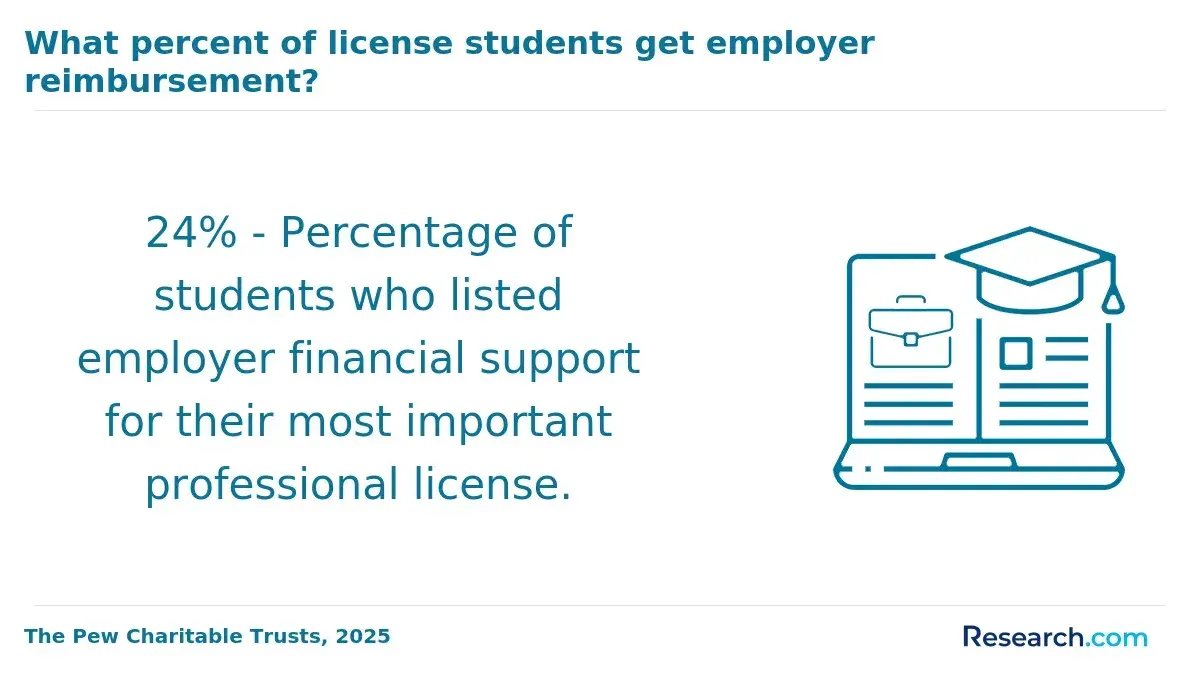
| Employer tuition assistance | Can cover part of tuition or reimburse completed courses | Annual cap, grade requirement, approved-school list, and whether repayment is required if you leave the employer |
| Military and veteran benefits | Can reduce tuition, fees, or housing-related costs depending on benefit type | School participation, benefit remaining, online housing rules, and military tuition rate policies |
| Psychology or behavioral science scholarships | May support students pursuing research, community service, human services, or graduate study | Major requirements, essay topics, recommendation letters, and whether awards are renewable |
Do not assume a scholarship is renewable unless the school says so in writing. A first-year award that disappears in the second year can make a program look cheaper than it really is.
Employer tuition benefits are becoming more important as adult learners compare online programs while working. The best programs for working students make billing, reimbursement documentation, and part-time enrollment clear before classes begin.
Can Transfer Credits, Prior Learning, and Competency-Based Study Lower the Cost of an Online Social Psychology Degree?
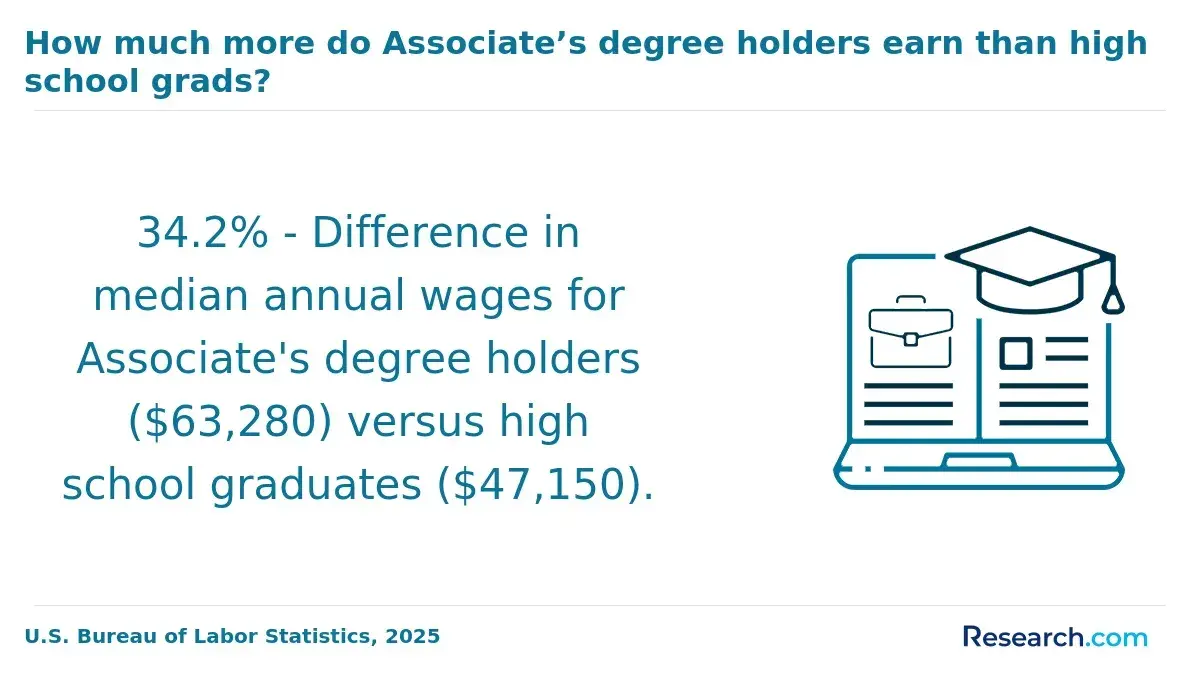
Transfer credits can be the largest cost-saving tool for an online social psychology degree. Because bachelor's programs commonly require about 120 credits, a student who transfers an associate degree or prior college coursework may avoid paying for dozens of credits at the four-year tuition rate.
However, transfer savings depend on how credits apply. General elective credit may help graduation totals, but it may not replace psychology statistics, research methods, laboratory, writing-intensive, or upper-division major requirements. The most useful transfer evaluation shows exactly which requirements are satisfied.
Before enrolling, ask these questions in writing so you can estimate real savings rather than theoretical transfer credit:
- How many total transfer credits can be accepted toward the degree?
- How many upper-division credits must be completed at the university?
- Is there a residency requirement requiring a minimum number of credits at the school?
- Will community college psychology, statistics, sociology, anthropology, or research courses count toward the major?
- Does the school accept CLEP, AP, IB, military training, workplace learning, or portfolio-based prior learning?
- Are prior learning assessment credits billed at a lower rate than regular tuition?
- Will transfer credits affect scholarship eligibility, Latin honors, financial aid pacing, or graduation timeline?
Competency-based study can also reduce costs for students who already know the material and can move quickly. It is less helpful for students who need more instructor support, struggle with statistics, or cannot dedicate consistent time each week.
If you are weighing several accelerated or credit-heavy online options, compare how each school treats prior learning. The same principle matters in other professional online pathways, including an online pharmacy school, where accepted prerequisites and transfer policies can strongly affect the final bill.
How Should Students Compare the Net Price, Quality, and Return on Investment of Online Social Psychology Degree Programs?
The best-value accredited online social psychology degree is the one with the strongest combination of low net price, recognized accreditation, realistic completion path, useful curriculum, and credible outcomes for your goal. For most students, that means building a short list rather than choosing the single lowest tuition rate.
Use the table below to compare affordability and value side by side. It highlights common decision points that can change which program is actually the best choice.
| Comparison factor | Why it matters | Better-value sign | Red flag |
| Net price after gift aid | Shows what you may actually pay before loans | Clear award letter separating grants, scholarships, loans, and out-of-pocket cost | School promotes monthly payments without showing total degree cost |
| Accreditation and aid eligibility | Affects transfer, graduate school, and federal aid | Institution appears in federal accreditation records and program is in the official catalog | Accreditation claims are vague or unverifiable |
| Transfer-credit fit | Can reduce tuition more than a small per-credit discount | Degree audit shows exactly which credits apply to major and graduation requirements | School gives only a verbal transfer estimate |
| Curriculum relevance | Social psychology careers and graduate study require research, statistics, and behavioral science skills | Program includes social psychology, research methods, statistics, writing, and applied electives | Program has few upper-division psychology options |
| Completion support | Stopping out can increase debt without producing a credential | Accessible advising, tutoring, online library support, and career services | Limited advisor access or unclear online student support |
| Career and graduate-school alignment | Many psychologist roles require graduate study | Program prepares students for research, human services, HR, market research, UX, or graduate admissions | Marketing implies a bachelor's degree alone leads to licensed psychologist roles |
Salary expectations should be realistic. The U.S. Bureau of Labor Statistics reported a median annual wage of $94,310 for psychologists in May 2024, but many psychologist titles require a doctoral degree and state licensure. A bachelor's degree in psychology or social psychology more commonly supports entry-level roles or serves as preparation for graduate study.
Before committing, calculate three numbers: tuition-only cost, total cost of attendance, and net price after gift aid. Then compare those figures with completion time, support services, and your next-step goal. If the cheapest program slows your progress, transfers fewer credits, or does not support your graduate-school plan, a slightly higher-priced accredited program may be the better value.
Other Things You Should Know About Social Psychology Degrees
No. A bachelor's degree can be a useful foundation, but licensed psychologist roles typically require graduate education, supervised experience, and state licensure. Requirements vary by state and specialty.
For most undergraduates, a general psychology degree with strong social psychology electives, research methods, and statistics is more flexible. A concentration can be helpful if it does not reduce options for graduate school or related careers.
Employers are more likely to respect an online degree from an institutionally accredited college or university. The transcript usually names the degree and school, not always the delivery format, but employer expectations vary by role.
Do not enroll until you receive written pricing. Ask for tuition, mandatory fees, estimated books, transfer-credit results, financial aid details, and refund policies. If the school remains unclear, compare other accredited options.
References
- Average Private vs Public College Tuition [2025]: Data Analysis https://educationdata.org/private-vs-public-college-tuition
- Top Accrediting Bodies For Counseling Degrees https://www.psychology.org/resources/accreditation-for-counseling-degrees/
- Psychology Accreditation: What you need to know https://www.onlinepsychologydegrees.com/articles/accreditation/
- Cost of Psychology Degree: Tuition, Fees & Is it Worth it? | SoFi https://www.sofi.com/cost-of-psychology-degree/
- Compare Counseling And Psychology Accreditation https://www.accreditedschoolsonline.org/psychology/resources/accreditation/
- 2025 Most Affordable Online Colleges for Psychology Degrees https://www.onlineu.com/most-affordable-colleges/psychology-degrees
- 2025's Most Affordable Online Master’s Degrees in Psychology https://www.onlinemastersdegrees.org/most-affordable/psychology-programs/
- What Are the Best Accrediting Bodies for Psychology Degrees? https://www.bestpsychologydegrees.com/faq/what-are-the-best-accrediting-bodies-for-psychology-degrees/