2027 Best Online Social Psychology Degree Programs at Nonprofit Universities

Co-Founder and Chief Data Scientist
Choosing an online social psychology degree means weighing more than convenience: the program must support your career target, budget, and possible graduate-school plans. The U.S. Bureau of Labor Statistics projects employment for market research analysts to grow 8% from 2024 to 2034, faster than the average for all occupations, making research, behavior, and data-analysis skills especially relevant.
This guide explains how to compare nonprofit online programs, verify quality, estimate costs, and select an option that fits your goals.
Key Things You Should Know
- Online social psychology study is usually offered as a psychology bachelor's degree, psychology master's degree, or concentration rather than as a stand-alone undergraduate major; verify that the curriculum includes social influence, group behavior, research methods, and statistics.
- Institutional accreditation matters most for federal aid, credit transfer, and graduate-school eligibility; nonprofit status alone does not establish academic quality, affordability, or licensure preparation.
- A bachelor's degree can support entry-level research, human resources, marketing, and community roles, while independent psychologist practice generally requires a doctoral degree and state licensure; the BLS lists a $76,950 median annual wage for market research analysts in May 2024.
What Makes an Online Social Psychology Degree Program at a Nonprofit University Different?
An online social psychology degree at a nonprofit university is a psychology program delivered partly or fully online by a public university or private nonprofit institution. Social psychology examines how people's thoughts, emotions, and behavior are shaped by groups, relationships, culture, social norms, persuasion, prejudice, leadership, and social environments.
Many nonprofit universities do not label a degree "social psychology." Instead, students commonly find a Bachelor of Arts or Bachelor of Science in Psychology with social psychology coursework, a social or organizational concentration, or an online master's in psychology with research-oriented electives. This distinction matters because a broad psychology degree can be useful, but it may not provide the depth needed for a specialized graduate program.
Nonprofit universities may be public or private. Public institutions can offer lower tuition to in-state students, while private nonprofit universities may use more standardized online tuition, multiple start dates, and adult-oriented transfer policies. Neither structure is automatically better. Compare the actual curriculum, net cost, student outcomes, and scheduling rules.
Students seeking the fastest route to a general bachelor's credential should compare whether a psychology program accepts prior coursework and offers accelerated terms; a fast track bachelor degree can be useful when speed matters, but accelerated pacing leaves less time for research-intensive psychology courses.
This comparison shows how common program paths serve different goals.
| Program path | Typical fit | What to look for | Important limitation |
| Associate degree in psychology | Students testing the field or planning transfer | Transfer agreements, general education alignment, introductory statistics | Usually insufficient for most psychology-related professional roles |
| Online bachelor's in psychology | Career starters, career changers, and graduate-school applicants | Social psychology, research methods, statistics, writing, faculty mentoring | Does not qualify graduates to practice as licensed psychologists |
| Online master's in psychology | Professionals seeking advanced behavioral-science knowledge | Applied research, capstone, specialization, graduate admissions prerequisites | May not meet clinical licensure requirements |
| Doctoral psychology program | Students pursuing psychologist licensure, research, or university teaching | Accreditation, supervised training, residency, state licensure alignment | Rarely fully online because of intensive clinical and research requirements |
Programs are strongest for students who want evidence-based insight into people and groups, can manage substantial reading and writing, and are comfortable learning quantitative research skills. Students seeking direct clinical counseling preparation should instead examine programs specifically designed for the license they intend to pursue.
How Can Students Verify Accreditation for an Online Social Psychology Degree at a Nonprofit University?
Students should verify accreditation before applying, paying attention to the institution rather than assuming that an online program has separate approval. In the United States, institutional accreditation is reviewed by an accreditor recognized by the U.S. Department of Education or the Council for Higher Education Accreditation. It supports federal aid eligibility and can affect transfer and graduate admissions decisions.
Psychology bachelor's and many nonclinical master's programs generally do not require specialized programmatic accreditation. By contrast, doctoral clinical, counseling, and school psychology programs may seek accreditation from the American Psychological Association Commission on Accreditation. Specialized accreditation is particularly important when a program is intended to lead toward a regulated professional path.
Use this verification sequence before paying an application fee.
- Find the university in the U.S. Department of Education's Database of Accredited Postsecondary Institutions and Programs and confirm its current institutional accreditor.
- Read the online program's official catalog page to confirm the exact degree title, delivery format, required courses, and any in-person components.
- For a clinical or licensure-oriented pathway, check whether the program holds relevant specialized accreditation and compare it with the licensing board requirements in the state where you expect to practice.
- Ask admissions whether online students receive the same degree, transcript designation, faculty access, and academic standards as campus students.
Red flags include vague accreditation language, an accreditor that is not recognized by the federal government or CHEA, pressure to enroll immediately, and claims that a general psychology degree leads directly to psychologist licensure. Also confirm that transfer credits will be reviewed individually; accreditation does not guarantee transfer acceptance.
How Rigorous Are Online Social Psychology Degree Programs at Nonprofit Universities?
A well-designed online social psychology program can be academically demanding. Students should expect peer-reviewed reading, discussion-based analysis, research papers, statistics assignments, examinations, and projects that apply psychological theory to real social problems. The most rigorous programs teach students to evaluate evidence rather than simply memorize famous studies.
Look closely at whether the curriculum develops both content knowledge and transferable research skills. Social psychology is especially valuable when students learn how to frame a research question, recognize bias, interpret data, write clearly, and apply ethical standards to studies involving people.
The following course areas indicate whether a program provides a solid social psychology foundation.
| Curriculum area | Why it matters | Evidence to seek |
| Social psychology | Introduces attitudes, conformity, identity, prejudice, relationships, and group processes | A dedicated upper-level course rather than a brief unit in introductory psychology |
| Research methods | Builds the ability to design, assess, and communicate behavioral research | Research proposal, literature review, or project-based assignment |
| Statistics | Supports data interpretation for graduate study and research-oriented work | Required statistics course with applied data analysis |
| Ethics and diversity | Helps students interpret behavior within cultural, social, and professional contexts | Ethics instruction integrated into research or applied courses |
| Capstone or internship | Connects theory to a supervised project or workplace setting | Clear expectations, faculty oversight, and accessible placement support |
Online rigor is not determined by live video meetings alone. Asynchronous courses can be demanding when they have weekly deadlines, substantive instructor feedback, group projects, and authentic assessments. Conversely, a program with many synchronous sessions may be less workable for a full-time employee. Ask for a sample syllabus and grading rubric before enrolling.
A common mistake is selecting a program solely because it has a social psychology course in its catalog. Review how many advanced courses are available, whether research methods and statistics are required, and whether students can complete independent research or a capstone.
How Much Does an Online Social Psychology Degree Cost at a Nonprofit University?
Total cost is more useful than advertised tuition. It includes tuition, mandatory fees, technology charges, books, course materials, proctoring, travel for any residency, and the opportunity cost of reducing work hours. A lower per-credit rate can become less economical if few transfer credits apply or if required courses are offered infrequently.
For context, College Board reported average published tuition and fees for 2024-25 of $11,610 for in-state students at public four-year institutions and $43,350 at private nonprofit four-year institutions. These national averages are not online psychology program prices, and they do not show grant aid or state residency differences. Use them only as a broad reminder to request each school's written estimate.
This cost framework helps students compare unlike programs on the same basis.
| Cost factor | Questions to ask | Why it changes value |
| Tuition model | Is tuition charged per credit, per term, or at a flat online rate? | Determines whether taking more courses changes the bill |
| Transfer credit | How many credits are accepted, and which psychology courses count toward the major? | Can substantially change completion time and total tuition |
| Fees and materials | Are technology, proctoring, lab, graduation, or digital textbook fees separate? | Prevents underestimating the amount owed |
| Residency and travel | Is any in-person orientation, practicum, or capstone presentation required? | Adds transportation, lodging, and time costs |
| Course availability | Can required courses be taken in the needed sequence? | Delays can increase both tuition and living expenses |
Public nonprofit universities may be especially cost-effective for residents, while private nonprofit universities can be competitive after institutional scholarships or transfer awards. Ask each school for a net-price estimate based on your residency, transfer record, enrollment intensity, and expected completion date. Do not compare schools using tuition alone.
What Financial Aid Is Available for an Online Social Psychology Degree at a Nonprofit University?
Students enrolled in an eligible, accredited nonprofit university may qualify for federal, state, institutional, employer, and private funding. Complete the Free Application for Federal Student Aid each year as early as possible, because some state and institutional aid is limited or has priority deadlines.
Federal aid can include grants for eligible undergraduate students, Direct Loans, and work-study opportunities. Graduate students may have access to federal Direct Unsubsidized Loans and, when eligible, Graduate PLUS Loans. Loan availability does not mean borrowing is the best choice; compare projected borrowing with the degree's role in your intended career path.
Students exploring adjacent health professions should keep program-specific aid rules separate. For example, funding and clinical requirements for online masters nutrition programs can differ from those for a nonclinical psychology degree.
Before accepting an aid package, compare these funding sources and conditions.
- Federal grants and loans: Review eligibility, annual limits, interest, repayment obligations, and whether enrollment intensity affects the award.
- State grants: Check residency rules, eligible institutions, deadlines, and whether online enrollment qualifies.
- Institutional scholarships: Ask whether awards are renewable and whether they apply to online students, transfer students, or part-time enrollment.
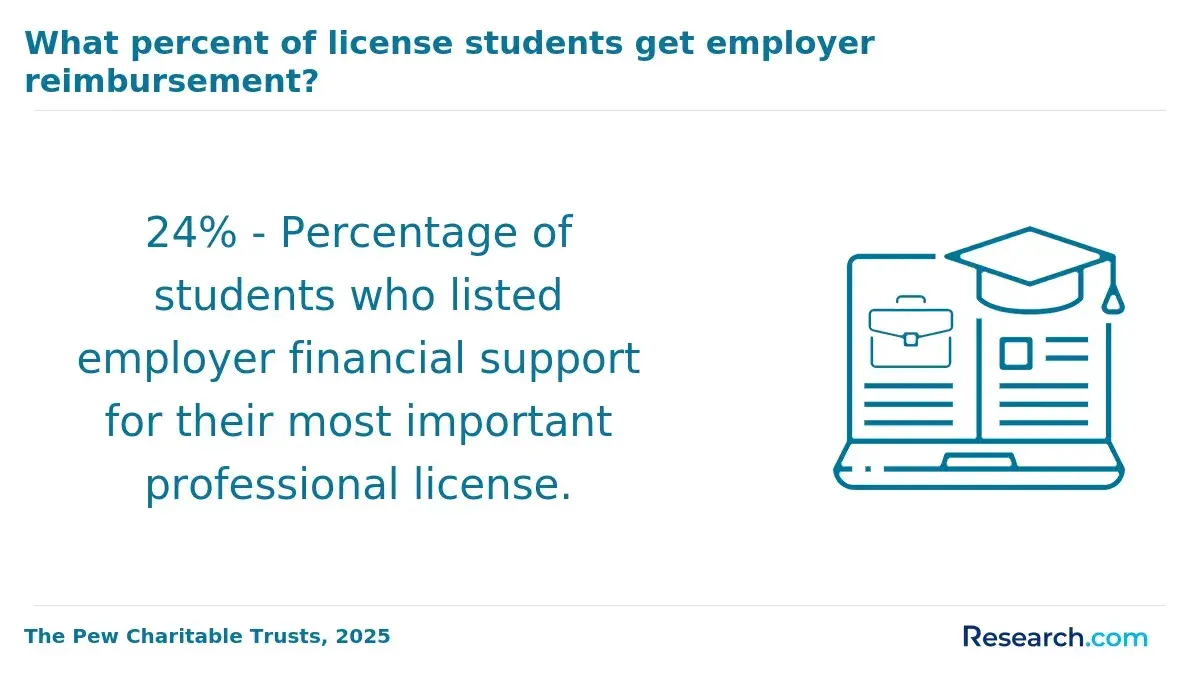
- Employer tuition assistance: Confirm annual caps, grade requirements, eligible course rules, and any employment commitment.
- Veterans education benefits: Speak with the school's certifying official about program approval, enrollment reporting, and required course loads.
A practical financial-aid comparison uses the same assumptions for every school: identical transfer credits, the same number of courses per term, expected fees, and only grants or scholarships that are confirmed in writing. Be cautious about using private loans before you understand federal options and repayment terms.
How Flexible Are Online Social Psychology Degree Programs at Nonprofit Universities?
Flexibility varies widely among online social psychology programs. "Online" can mean fully asynchronous coursework, scheduled evening video sessions, hybrid classes, or primarily online study with an occasional residency, internship, or proctored assessment. Working adults should evaluate the weekly schedule, not just the program's marketing label.
Asynchronous study usually provides the most control over when students view lectures and complete readings, but it still includes deadlines and group-work obligations. Synchronous courses provide real-time interaction and structure, yet may create time-zone and work-schedule conflicts. Traditional 15-week terms can support deeper pacing; accelerated 5- to 8-week terms can shorten the calendar but require more weekly study time.
For students comparing psychology with clinical career paths, remember that programs such as online nurse practitioner programs typically have clinical placement and licensure requirements that make their scheduling constraints very different from those of a social psychology degree.
Ask these questions to determine whether an online format fits your life.
- Are any class meetings mandatory, and what time zone do they use?
- How many hours per week does the school recommend for each course?
- Are exams remotely proctored, and what technology or quiet testing space is required?
- Are internships, field experiences, research projects, or residencies required?
- Can students attend part time, pause enrollment, or change course loads without losing aid or scholarships?
- How often are required psychology courses offered, especially statistics, research methods, and capstone courses?
Students who need maximum scheduling control should prioritize asynchronous delivery, predictable assignment windows, strong online advising, and a documented course rotation. Students who learn best through discussion may prefer scheduled sessions, but should confirm attendance requirements before committing.
What Student Support Services Do Nonprofit Universities Provide for Online Social Psychology Degree Students?
Online students need more than a learning platform. Strong nonprofit universities provide support that helps distance learners navigate registration, develop academic skills, connect with faculty, and plan next steps after graduation. Support quality can affect persistence just as much as course format.
Start by checking whether services are available during evenings or weekends and whether online learners can use them without traveling to campus. A named advisor, accessible tutoring, library support, disability services, technical help, and career coaching are meaningful signals that a school has designed its online experience intentionally.
This table identifies support services that are particularly valuable in a research-oriented psychology program.
| Service | What effective support looks like | Why social psychology students benefit |
| Academic advising | Degree map, transfer evaluation, and course-sequencing guidance | Helps students complete research and statistics prerequisites in order |
| Online library and writing center | Research database access, citation help, and remote writing feedback | Supports literature reviews and evidence-based papers |
| Statistics or quantitative tutoring | Individual or group help with data concepts and software | Can strengthen performance in research methods courses |
| Career services | Resume review, interview preparation, job-search tools, and employer events | Helps translate psychology skills into nonclinical job language |
| Faculty access and research opportunities | Office hours, mentoring, virtual research teams, or capstone supervision | Is especially helpful for graduate-school applicants |
Do not rely on a general statement that "support is available." Ask how quickly technical support responds, whether tutoring covers statistics, how often advisors contact online students, and whether career services provide help to alumni as well as current students.
Do Online Social Psychology Degree Programs at Nonprofit Universities Prepare Graduates for In-Demand Careers?
An online social psychology degree can prepare graduates for in-demand work when students pair psychological knowledge with research, communication, data, and applied problem-solving skills. It is not a direct license for clinical practice. Instead, it can support entry-level or early-career roles in market research, human resources, employee development, customer insights, community programs, sales analysis, and behavioral research support.
The BLS projects market research analyst employment to grow 8% from 2024 to 2034. That projection applies to the occupation, not to every psychology graduate, and employers may prefer applicants with experience in analytics, business, research software, or a related internship. Students should treat it as a labor-market signal to build complementary skills rather than as a guaranteed outcome.
Career preparation is strongest when a program connects coursework to the tasks employers actually value.
| Career direction | Typical responsibilities | Helpful degree experiences | Additional preparation often valued |
| Market research or consumer insights | Collecting survey data, analyzing behavior, presenting findings | Statistics, research methods, survey design, capstone | Spreadsheet, visualization, or analytics tools |
| Human resources | Supporting recruitment, training, employee engagement, and policy communication | Organizational behavior, social psychology, communication | Internship and knowledge of HR practices |
| Community and nonprofit programs | Coordinating outreach, assessing needs, and supporting program delivery | Social behavior, diversity, ethics, research literacy | Volunteer or field experience |
| Research assistant roles | Managing study materials, recruiting participants, organizing data | Methods, statistics, academic writing | Faculty research experience and careful documentation |
Students interested in direct psychiatric diagnosis, medication management, or advanced mental-health practice should not assume a social psychology degree is interchangeable with nursing preparation. Those goals follow separate clinical education and licensure pathways, including online Psych NP programs.
To improve employability, build a portfolio with a research poster, anonymized data-analysis project, survey-design sample, presentation, or supervised internship reflection. Career outcomes depend on location, experience, degree level, job market conditions, and the skills students can demonstrate.
Can an Online Social Psychology Degree From a Nonprofit University Prepare Students for Graduate School?
Yes, an online social psychology degree from an accredited nonprofit university can prepare students for graduate school, provided the coursework and academic record match the receiving program's admissions standards. Graduate admissions committees generally focus on institutional accreditation, prerequisite courses, grades, research exposure, recommendations, writing quality, and fit with the program's mission - not whether the bachelor's degree was completed online.
A bachelor's degree is commonly the starting point for master's and doctoral psychology study. A master's can deepen research or applied expertise, but it does not automatically lead to psychologist licensure. Students aiming for clinical, counseling, school, or research psychologist roles should map prerequisites early because doctoral programs may require particular statistics, methods, laboratory, or thesis experiences.
Health-profession doctorates operate under separate admissions and prerequisite systems. Students considering a major career pivot should compare psychology preparation with the science prerequisites, experiential requirements, and professional expectations associated with an online pharmacy school pathway.
Graduate-school-focused students should take the following steps during their undergraduate program.
- Review admission requirements for several target master's or doctoral programs before choosing electives.
- Complete statistics and research methods with strong grades, then pursue advanced quantitative or research coursework when available.
- Develop relationships with faculty who can later write detailed recommendations based on your work.
- Seek a research assistantship, capstone, independent project, or supervised community experience that produces evidence of academic readiness.
- Save major papers, project summaries, and feedback so you can build a focused personal statement and portfolio.
One common mistake is assuming any psychology master's qualifies a graduate for therapy licensure. Licensure rules vary by state and profession, and many social or general psychology programs are not designed to meet clinical practicum or supervised-experience requirements.
How Should Students Compare the Best Online Social Psychology Degree Programs at Nonprofit Universities?
The best online social psychology degree is the one that meets your specific academic and career requirements at a manageable total cost. Start with a shortlist of accredited nonprofit universities, then compare each program using the same criteria. Avoid relying on nonprofit status, rankings, a low tuition headline, or broad employment promises.
Use this comparison scorecard to organize school research before applying.
| Comparison category | What to verify | Best fit indicator |
| Degree alignment | Exact degree title, social psychology courses, concentration options, and capstone | Required coursework directly supports your intended job or graduate program |
| Accreditation | Current institutional accreditation and any relevant specialized accreditation | Credentials are acceptable for aid, transfer, employer, and graduate-school purposes |
| Net cost | Tuition, fees, aid, transfer credits, course materials, and travel | Written estimate fits your borrowing and completion plan |
| Format | Term length, live sessions, deadlines, proctoring, and residency requirements | Schedule is realistic alongside work and family obligations |
| Transfer policy | Maximum transfer credits, major-course equivalencies, and evaluation timing | Prior credits apply without delaying required psychology courses |
| Support and outcomes | Advising, tutoring, faculty access, career services, retention, and graduation information | Online students can access help and build career-relevant experience |
After comparing the basics, contact admissions and ask for the current catalog, a transfer-credit evaluation, a sample course sequence, estimated total charges, and a clear explanation of required synchronous or in-person activities. If graduate school is your goal, also ask whether students can complete research, receive faculty mentoring, and obtain recommendations.
Choose a public nonprofit university when in-state tuition, established transfer pathways, or a traditional academic calendar best fit your needs. Choose a private nonprofit university when its online course rotation, transfer model, support availability, or scholarship offer provides stronger value. The right choice is based on the complete package, not the institution's tax status.
Other Things You Should Know About Social Psychology
No. Social psychology studies how people influence and relate to one another, while clinical psychology focuses on assessing and treating mental-health conditions. A social psychology degree does not by itself qualify someone to provide psychotherapy or become a licensed psychologist.
Yes. The degree can support entry-level HR, recruiting, employee-engagement, training, or people-analytics work. Internships, business coursework, communication skills, and familiarity with HR practices can make candidates more competitive.
Many universities issue the same diploma for online and campus programs, but policies vary. Ask the registrar or admissions office whether the diploma or transcript identifies the delivery format.
Prioritize research literacy, statistics, survey design, ethical reasoning, academic writing, presentation skills, spreadsheet competence, and collaborative communication. These skills help students apply psychological knowledge in workplaces and graduate programs.
References
- Best Online Master's & Doctoral Programs In Psychology 2025 https://www.psychology.org/rankings/best-online-graduate-degree-programs/
- Social Psychology Network https://www.socialpsychology.org/gsocial.htm
- Online Psychology Program https://stmary.edu/online-programs/psychology.html
- 2025 Most Affordable Online Colleges for Psychology Degrees https://www.onlineu.com/most-affordable-colleges/psychology-degrees
- Online Master's in Social Psychology: Compare Top Schools https://www.onlinemastersdegrees.org/best-programs/psychology/social-psychology/
- Online Psychology Degrees | University of Phoenix https://www.phoenix.edu/online-psychology-degrees.html
- Financial Aid for Psychology Students https://www.onlinepsychologydegrees.com/financial-aid/
- 8 Best Non Profit Online Psychology Masters Programs https://mastersinpsychologyguide.com/articles/8-best-online-psychology-masters-from-non-profits/
- 2025 Social Psychology Programs https://psychologyonlinedegrees.org/programs/social-psychology/
- Psychology (Online) https://www.claflin.edu/DivisionofAcademicAffairs/the-center-for-professional-and-continuing-studies/degrees/psychology-(online)