2027 Audio & Music Degree Jobs That Do Not Require Licensure

Co-Founder and Chief Data Scientist
What career options exist for those with an audio & music degree who want to avoid licensure? Many graduates seek roles that capitalize on creative and technical skills without the delays or costs of licensing exams. The audio & music industry offers diverse non-licensed careers such as sound engineering, music production, and audio editing across media, entertainment, and marketing sectors.
According to the U.S. Bureau of Labor Statistics, employment in arts and entertainment occupations is projected to grow 12% through 2030, highlighting expanding opportunities. This article explores audio & music degree jobs that do not require licensure and outlines potential career paths for graduates.
Key Benefits of Audio & Music Degree Jobs That Do Not Require Licensure
- The absence of licensure allows audio & music graduates to enter the workforce more quickly, reducing delays and easing access to entry-level positions.
- Diverse industries such as entertainment, marketing, and education offer roles without licensing barriers, expanding career flexibility across multiple sectors.
- Non-licensed positions enable graduates to develop transferable skills and gain early professional experience, supporting sustained career growth and advancement.
What Jobs Can You Get With a Audio & Music Degree Without Licensure?
Graduates with an audio & music degree can enter a variety of career paths that do not require professional licensure, giving them flexibility and faster entry into the workforce. According to the U.S. Bureau of Labor Statistics, roles in creative and technical fields often prioritize skills and experience over formal credentials. This allows for diverse employment options in industries that value practical knowledge and hands-on expertise.
Below are some common jobs that audio & music graduates can pursue without needing licensure.
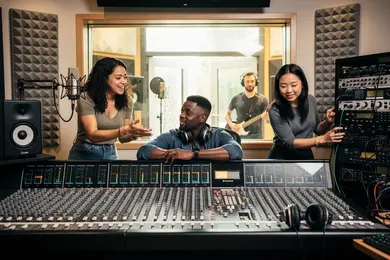
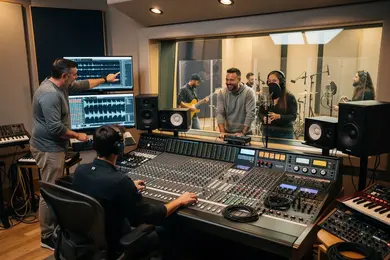
- Audio Engineer: Professionals in this role manage the recording, mixing, and mastering of sound for studios or live events. An audio & music degree equips graduates with technical skills in acoustics, sound equipment, and software, enabling them to produce high-quality audio without a licensing requirement.
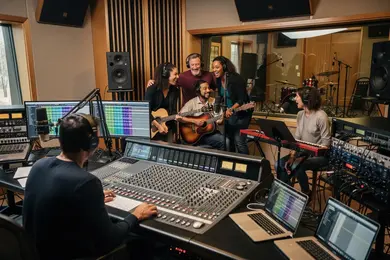
- Music Producer: Music producers direct the creative process of making music tracks, collaborating with artists and overseeing recording sessions. This role benefits from a strong foundation in music theory, arrangement, and digital production tools that an audio & music degree provides, all without needing formal licensure.
- Sound Designer: Sound designers create audio effects for media such as film, television, and video games. The degree offers expertise in digital audio workstations and sound synthesis, preparing graduates to innovate in sound production without any licensing hurdles.
- Music Teacher (Private or Informal): Offering instruction outside public school systems, these teachers use their degree knowledge to coach students in singing or instruments. Since public school licensure is not required, private teaching roles are accessible alternatives for audio & music graduates.
- Broadcast Technician: These technicians operate and maintain audio equipment for radio, television, or streaming platforms, ensuring sound quality in broadcasts. The technical training from an audio & music degree supports their work, which typically does not require professional licensure.
For those exploring affordable educational options to launch these careers, resources listing the cheapest online colleges that accept FAFSA near me can be valuable. Pursuing these career paths allows graduates to build professional experience in audio & music graduate jobs without licensure, leveraging their academic background for success.
Which Industries Hire Audio & Music Graduates Without Licensure?
Many industries value the transferable skills and creative knowledge that Audio & Music graduates offer, emphasizing practical expertise and academic preparation over formal licensure. The U.S. Bureau of Labor Statistics projects a 13% growth in multimedia arts and animation employment from 2022 to 2032, a field closely related to audio production and reflective of expanding opportunities for degree holders without licensure.
Below are several key industries that commonly hire Audio & Music graduates without requiring professional licensing.
- Entertainment Sector: This industry includes film, television, and video game production, where Audio & Music graduates contribute to sound design, mixing, and post-production. Their technical and creative skills enhance media experiences without the need for regulated credentials.
- Live Events and Performance: Graduates support concerts, theater, and festivals by managing sound systems, mixing audio live, and optimizing acoustics. Their knowledge ensures high-quality sound delivery in dynamic, fast-paced environments.
- Advertising and Marketing: Agencies hire Audio & Music graduates to create jingles, soundtracks, and audio branding. Understanding of composition and audio editing helps develop memorable sounds that reinforce brand identity.
- Education: Private music schools and community programs employ graduates as instructors or curriculum developers. While public school teaching may require licensure, many private settings prioritize musical and audio expertise.
What Entry-Level Jobs Are Available Without Audio & Music Licensure?
Many industries provide entry-level roles that prioritize practical skills and academic knowledge rather than professional licensure. In audio & music fields, about 60% of new graduates find work within six months, often in positions that build on technical expertise gained during their studies.
Below are several common jobs available without requiring official licensing.
- Audio Technician: This role involves setting up and managing audio equipment for live shows, studio sessions, or broadcasts. Graduates use their understanding of acoustics and gear operation to ensure clear, balanced sound throughout events.
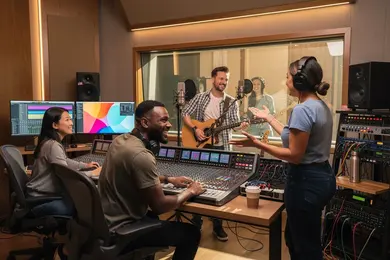
- Recording Assistant: Supporting producers and engineers, recording assistants handle equipment setup, prepare studios, and organize audio files. Familiarity with digital audio workstations and signal flow, typically developed in degree programs, is crucial here.
- Sound Editor: Sound editors enhance audio tracks by removing unwanted noise, syncing sound with visuals, and enriching audio quality. Educational training in relevant software and sound design techniques equips graduates for this position.
- Music Production Assistant: These assistants aid composers and producers through administrative tasks and production support. Their communication skills and understanding of project workflows, sharpened during their studies, help them thrive in this role.
- Live Sound Assistant: Working under experienced engineers, live sound assistants manage audio elements during concerts or performances. Knowledge of live sound systems and quick problem-solving learned in school is key in this job.
A graduate with an audio & music degree once shared that entering the industry without licensure felt daunting at first, especially navigating job applications and demonstrating hands-on skills. "I focused on internships and small gigs to build my experience and confidence," he recalled.
He emphasized the importance of adaptability and networking, explaining that while no license was required, proving practical competence opened doors early on. "It was a step-by-step process, but every project helped me gain trust in the field."
Salary levels for non-licensed audio and music careers often reflect industry demand, specialized technical skills, leadership roles, and business influence. For bachelor's-level professionals without licensure, median salaries hover around $65,000, showcasing the financial viability of these paths.
Below are several high-paying jobs for graduates with an audio and music degree that do not require licensure.
- Sound Engineer: Responsible for capturing and refining audio through mixing and acoustics, sound engineers ensure high-quality recordings for studios and media producers. This role typically pays between $50,000 and $90,000, benefiting from technical expertise gained in an audio and music degree program.
- Music Producer: Overseeing the creative and production process, music producers coordinate artists and select sound elements to achieve desired commercial or artistic results. Their comprehensive knowledge of music theory and production drives salaries from $60,000 to $120,000.
- Audio Post-Production Specialist: Specializing in sound editing and synchronization for film, television, and games, these professionals enhance final products without the need for licensure. Their compensation often ranges between $55,000 and $100,000, supported by skills in digital audio workstations.
- Broadcast Engineer: Maintaining transmission equipment for radio and television, broadcast engineers apply technical audio system knowledge to guarantee reliable signal delivery. Salaries in this field generally fall between $45,000 and $85,000.
For students exploring cost-effective educational options in this field, institutions offering the cheapest engineering degree can provide solid technical foundations relevant to audio and music degree highest paying jobs.
Employers hiring audio & music graduates without licensure emphasize practical skills and flexibility, as these qualities often determine a candidate's ability to succeed in diverse roles. A 2023 industry report found that 78% of hiring managers in creative sectors prioritize technical competence over formal certifications for such positions.
Below are key skills that enhance employability in this competitive field.
- Technical Proficiency: Mastery of digital audio workstations, recording equipment, and sound editing tools is crucial. This expertise enables graduates to deliver high-quality results efficiently, making them valuable assets in studios, live events, and production companies.
- Creative Innovation: The ability to generate original ideas and adapt sound design techniques boosts appeal across music production and marketing roles. Creativity helps graduates contribute uniquely to projects, increasing their versatility beyond typical technical functions.
- Effective Communication: Strong interpersonal skills facilitate clear idea exchange and collaboration with clients, artists, and team members. This competency supports leadership and teamwork alike, proving vital in dynamic, project-based environments.
- Adaptability: Navigating changing technologies and diverse client needs requires flexibility. Graduates who can quickly learn new tools and adjust workflows remain relevant and productive despite evolving industry trends.
- Team Collaboration: Success in most audio & music jobs relies on cooperative work among producers, engineers, and creatives. Demonstrating the ability to work well with others fosters positive outcomes and is highly valued by employers seeking reliable contributors.
Certifications can sometimes serve as alternatives to professional licensure in certain audio & music careers, particularly those that are non-regulated or industry-based. Unlike licensure, which is a legally mandated permission to practice regulated professions, certifications are voluntary credentials issued by educational institutions or professional organizations to demonstrate skills and knowledge.
Research shows that about 72% of employers in the audio & music industry value relevant certifications as indicators of proficiency and commitment, even when no formal license is required. This highlights the growing importance of professional audio and music certifications benefits for individuals seeking to showcase expertise without undergoing licensure processes.
Certifications are especially relevant in technical and creative roles such as sound design, mixing, and live event production, where demonstrated skill often outweighs regulatory credentials. For freelance professionals and independent contractors, certifications can effectively substitute for licensure by verifying competence in lieu of legally required permissions.
However, certifications do not carry legal authority, cannot grant exclusive rights to practice, and do not ensure public safety the way licensure does. Those exploring alternatives to licensure may also consider options like the cheapest CSWE-accredited online MSW programs for complementary credentials in related fields, but it remains essential to recognize that certifications supplement rather than replace licensure where it is mandatory.
Remote work has grown significantly, with recent studies showing a 44% increase in companies offering flexible remote options since 2020. This shift is fueled by advances in digital technology and collaboration tools, enabling audio and music professionals to work effectively from anywhere.
Below are some common remote roles accessible to graduates without the need for licensure.
- Audio Editor: These professionals enhance and fine-tune audio recordings using digital audio workstations. Remote audio editors focus on cleaning up sound quality, balancing levels, and creating seamless mixes, applying technical skills learned during their studies without any licensing requirements.
- Podcast Producer: Podcast producers manage the end-to-end process of episode creation, including recording, editing, and coordinating content. Their expertise in storytelling and audio production, gained through an audio and music degree, prepares them to handle these tasks independently from a remote setting.
- Music Transcriber: Transcribers convert audio performances into written music notation, supporting composers, publishers, and media projects. This job demands a strong grasp of music theory and notation software but doesn't require formal certification, making it well suited for remote execution.
- Licensing Coordinator: Working behind the scenes, licensing coordinators handle rights clearance and catalog management for various media projects. While the legal negotiations require specialists, coordinating the administrative aspects remotely relies on organizational skills and music industry knowledge rather than licensure.
- Audio Content Marketer: This role involves creating and distributing audio-related promotional content across digital platforms. Graduates use their understanding of music trends and marketing strategies to engage audiences, all achievable without professional licenses in a remote environment.
A professional with an Audio & Music degree shared her perspective on finding remote work without licensure. She recalled the initial uncertainty she faced, wondering if lack of formal certification would limit her opportunities. Over time, she discovered that building a strong portfolio and networking online were far more valuable.
"I had to learn how to market my skills digitally and adapt to new software constantly," she explained. The flexibility of remote jobs allowed her to explore different roles, from editing podcasts to coordinating licensing details, which gave her both confidence and variety in her career path. She emphasized that persistence and practical experience outweighed traditional credentials in many remote audio roles.
Job competitiveness in certain audio & music sectors often favors licensed candidates, affecting those without professional credentials. A recent survey found that 43% of employers show a preference for licensed applicants when hiring for technical audio roles. This preference creates notable hurdles for graduates lacking official licensure.
The following outlines key challenges they face.
- Employer Preference: Many hiring managers, especially in regulated or institutional environments, prioritize candidates with licensure as proof of verified expertise and adherence to industry standards. Non-licensed applicants often struggle to compete against those who provide this clear credential.
- Credential Barriers: Some positions legally require professional licenses, barring non-licensed candidates from applying. Even where licensure is not mandatory, employers frequently use credentials as a screening tool, disadvantaging those without formal recognition.
- Experience Requirements: Roles in audio & music commonly demand practical experience alongside credentials. Without a license, applicants may find fewer chances to gain relevant experience, as employers tend to prefer licensed candidates, making it hard to build a strong resume.
- Regulatory Limitations: Certain sectors like broadcast engineering enforce regulations restricting work to licensed professionals for safety and quality reasons. This reduces opportunities for non-licensed graduates in specific technical fields.
Non-licensed professionals in audio & music face some career limitations, though these vary widely depending on the role and sector. Generally, many audio & music degree career limitations in the United States do not stem from licensure requirements, as most jobs do not mandate formal licenses.
However, research shows that about 15% of technical audio roles, especially those within institutional or government settings, may require specific licensure or accreditation. This reflects a general pattern where licensing acts as a regulatory safeguard rather than a universal entry barrier in the field.
These limitations primarily consist of restricted access to regulated roles that legally require licensure, such as positions tied to safety compliance or broadcasting standards in large venues. Non-licensed professionals may also experience slower advancement in some career paths since licensed colleagues are often preferred for supervisory or specialized technical roles.
Consequently, many rely on alternative credentials like portfolio experience, which, while valuable, might not carry the same authoritative weight. For those exploring accelerated options, pursuing the shortest MBA can provide additional career flexibility and credentials beyond technical expertise.
Deciding whether to pursue licensure is a critical step that shapes long-term career planning for audio & music graduates. Nearly 40% of hiring managers in education and therapy sectors prefer candidates with formal credentials, which highlights the role of certification in certain career paths.
Below are key factors to weigh before deciding to skip licensure.
- Career Goals: Clarifying your professional ambitions is essential. Some specialized roles in audio & music require licensure, so if your target positions demand formal credentials, skipping licensure could hinder your ability to qualify for those opportunities.
- Industry Requirements: Different sectors have varying standards; some explicitly prefer or mandate licensed professionals to meet regulatory or client expectations. Awareness of these industry demands helps avoid unexpected barriers and aligns your credentials with employer needs.
- Long-Term Growth: Licensure often functions as a milestone signifying expertise and dedication, unlocking advanced roles and leadership opportunities. Forgoing licensure may limit career progression, even if initial job accessibility is unaffected.
- Job Accessibility: While entry-level audio & music jobs may not require licensure, considering how industry trends evolve is important. Licensure can provide networking advantages and access to professional communities that support ongoing career development.
Careful evaluation of these considerations empowers audio & music students to make informed decisions based on their individual ambitions and the realities of their chosen fields. For those looking to explore related education options, see the best online electrical engineering programs USA as an example of how specialized credentials impact career pathways.
What Graduates Say About Audio & Music Degree Jobs That Do Not Require Licensure
- Valentino: "Choosing not to pursue licensure allowed me to dive straight into the music production world without unnecessary delays. Starting my career early gave me invaluable hands-on experience, helping me build a unique portfolio that truly represents my style. Having a career in audio & music that doesn't require licensure has opened doors to freelance opportunities I'd never imagined."
- Zev: "Reflecting on my journey, I realized that not needing a license gave me the freedom to experiment creatively and find my niche. The flexibility to work on diverse projects without regulatory hurdles allowed me to develop skills rapidly. This path confirmed for me that passion and talent can thrive even without formal licensure in audio & music careers."
- Grayson: "With a professional approach, I found that many audio & music roles focus more on skills and experience than official credentials. Forgoing licensure enabled me to enter the industry without extra costs or bureaucracy, which was a practical choice. It's rewarding to have a career where what truly matters is your craft and connection to the audience."
Other Things You Should Know About Audio & Music Degrees
Critical skills for unlicensed audio and music jobs in 2027 include strong proficiency in sound engineering software, understanding of digital music formats, creativity, and collaboration. Employers often value experience with specific tools such as Pro Tools or Ableton Live, along with excellent communication and teamwork abilities.
Industry certifications can strengthen applications for unlicensed audio and music jobs. Common examples include Avid Pro Tools User or Operator, Apple Logic Pro, and Dante Certification. These credentials are not licenses, but employers often value them for studio work, live sound, broadcast, and post-production roles.
Industries like film, television, radio, and gaming offer opportunities for audio and music degree holders without licensure in 2027. Positions such as sound designer, music producer, or audio technician are common in these sectors where practical skills and creativity are paramount.
- Teach Music https://www.teachmusic.org/alternative-licensure/
- How to find an entry-level audio job (paid)? - Gearspace https://gearspace.com/board/career-work/1224674-how-find-entry-level-audio-job-paid.html
- Alternative Certification – NAfME https://nafme.org/resource/alternative-certification/
- Audio Production Experts https://euremotejobs.com/job/audio-production-experts/
- Freelance Audio Jobs | Audio Transcription & Editing Jobs | useme.com https://useme.com/en/jobs/category/multimedia,36/music-and-audio,108/
- Helping Students Prepare for Music School - The Instrumentalist https://theinstrumentalist.com/november-2013/helping-students-prepare-for-music-school/
- Building a Career in Audio without a Degree - Produce Like A Pro https://producelikeapro.com/blog/building-a-career-in-audio-without-a-degree/
- Remote audio jobs - Skrivanek - agencja tłumaczeń https://skrivanek.pl/en/remote-audio-jobs/
- Remote Entry Level Music Jobs | Working Nomads https://www.workingnomads.com/remote-entry-level-music-jobs
- Sound Engineer Assistant – Entry Level (No Experience Needed) https://aliyucares.org/jobs/sound-engineer-assistant-entry-level-no-experience-needed/