2027 Online BA in Psychology - Addictions After an AAS in Social Work Assistance: Compare Transfer Credit and Remaining Coursework

Co-Founder and Chief Data Scientist
An AAS in social work assistance gives you relevant human-services experience, but it does not necessarily put you halfway through an online psychology BA. Applied associate degrees often contain courses a university will accept without counting toward psychology-major requirements.
If you are considering an addictions concentration, the useful comparison is not just how many credits transfer: it is which requirements they satisfy and what remains. This guide shows you how to compare degree audits, course sequences, costs, and career implications before committing to a program.
Key Things You Should Know
- Accepted credits are not completed requirements. Ask each university for an individualized audit showing where your AAS courses apply to general education, the psychology major, addictions coursework, and electives.
- Use a credit gap, not your associate degree's title, to estimate time. In an illustrative 120-credit BA, 60 accepted credits would leave 60 credits - but unmet prerequisites and residency rules can still affect the schedule.
- An addictions concentration is academic preparation, not a counseling license. Check your state's credential rules before choosing courses or paying for a degree intended to support addiction counseling work.
What Is an Online BA in Psychology With an Addictions Concentration?
It is a bachelor of arts degree in psychology with a defined group of courses focused on substance use, prevention, and recovery. The BA typically retains a broad psychology foundation, including research methods and statistics. The addictions component may be an officially designated concentration, a track, or simply related electives; only the university's catalog can establish which designation appears on your academic record.
For an AAS graduate, the distinction matters because prior human-services courses may align well with applied electives while leaving psychology's research sequence untouched. Compare the actual degree checklist, not just the concentration name. Also confirm whether "online" includes live meetings, campus visits, or a locally arranged placement.
If your goal is to provide therapy rather than work in support or coordination roles, compare the BA with a qualifying graduate route before enrolling. A guide to shorter routes through mental health counseling graduate study can help frame that later decision, but a faster program is useful only if it meets the requirements of the state where you intend to practice.
How Many Transfer Credits Apply From an AAS in Social Work Assistance?
There is no reliable universal number. The receiving university decides which AAS courses it accepts and, separately, which accepted courses fulfill BA requirements. An applied degree may include substantial fieldwork and occupational courses that enter as free electives rather than replacing psychology-major courses. A school may also limit total transfer credits, upper-division substitutions, or credits awarded for prior learning.
The following comparison shows why two offers displaying the same accepted-credit total can lead to different graduation plans. These are possible outcomes, not predictions for any particular AAS.
| AAS coursework | Possible use in the BA | Question for the evaluator |
| English composition or mathematics | General education, if equivalent | Does it satisfy the specific writing or quantitative requirement? |
| Introduction to psychology | Major prerequisite, general education, or elective | Is it equivalent to the required psychology course? |
| Social work assistance and casework courses | Related electives or, less commonly, approved substitutions | Will any replace a named addictions or major requirement? |
| AAS field placement | Elective credit or no direct placement substitution | Does the BA require a separately approved experience? |
Send official transcripts and, for ambiguous courses, catalog descriptions or syllabi to the transfer-credit office. Ask the psychology department to review potential major substitutions and request a written degree audit from an academic advisor. Compare remaining coursework after transferring into psychology using requirements satisfied, not merely the accepted-credit total. If a course receives only elective credit, ask about the school's documented appeal or reevaluation process before enrolling.
How Much Coursework Remains After Transferring an AAS Degree?
Your remaining coursework is the set of unsatisfied graduation requirements on the receiving school's audit. As an illustration only, a 120-credit BA with 60 accepted AAS credits would have a 60-credit arithmetic gap. That calculation does not prove that the remaining work fits into any particular number of terms: a required course may have prerequisites, be offered infrequently, or need to be taken at the degree-granting university.
Compare audits by separating the remaining work into general education, psychology core, addictions concentration, free electives, and university residency requirements. Pay particular attention to whether an AAS statistics class substitutes for the psychology program's required statistics course and whether research methods must be completed before an advanced seminar or capstone. These decisions can change the schedule more than an extra elective credit does.
Accelerated calendars do not remove course dependencies. Even when comparing an unrelated intensive online forensic psychology bachelor's study option, use its term structure as a scheduling comparison - not as evidence that your addictions BA will offer the same courses at the same pace.
Start by confirming that the university holds recognized institutional accreditation and that the accreditation applies to the institution awarding the online BA. The U.S. Department of Education and the Council for Higher Education Accreditation maintain directories that can be used to check an accreditor's recognition and a school's status. Accreditation supports baseline institutional oversight, but it does not establish how your AAS credits will apply or whether the degree meets a state addiction-counselor requirement.
Do not reject a psychology BA because it lacks American Psychological Association accreditation: APA accreditation is not the standard accreditation for general undergraduate psychology majors. Likewise, social work and counseling program accreditors cover particular professional programs, not every psychology degree. If a school advertises accreditation or credential alignment, ask which specific program and credential the claim covers.
This distinction matters even when reviewing a different specialization. A forensic psychology program review before enrollment should apply the same institution-versus-professional-credential test; a specialization's name is not proof of authority to perform regulated work.
Universities commonly request an application and official college transcripts from transfer applicants. Additional rules may govern minimum grades, good academic standing, English or mathematics preparation, and admission to the psychology major. Admission to the university does not itself approve a concentration, transfer equivalencies, or a graduation plan.
Ask admissions whether your AAS qualifies you for any associate-degree transfer policy, then ask the registrar or transfer office how the policy treats applied degrees specifically. Confirm whether the psychology department has a separate major application or prerequisite threshold. If you have credits from multiple schools, submit every required transcript; a course omitted from review cannot reliably be included in your plan.
Keep later graduate-school admissions separate from this BA decision. For example, forensic psychology master's accelerated curriculum planning concerns a different academic level. A bachelor's admission offer neither confirms eligibility for that program nor tells you which BA courses a future graduate program will require.
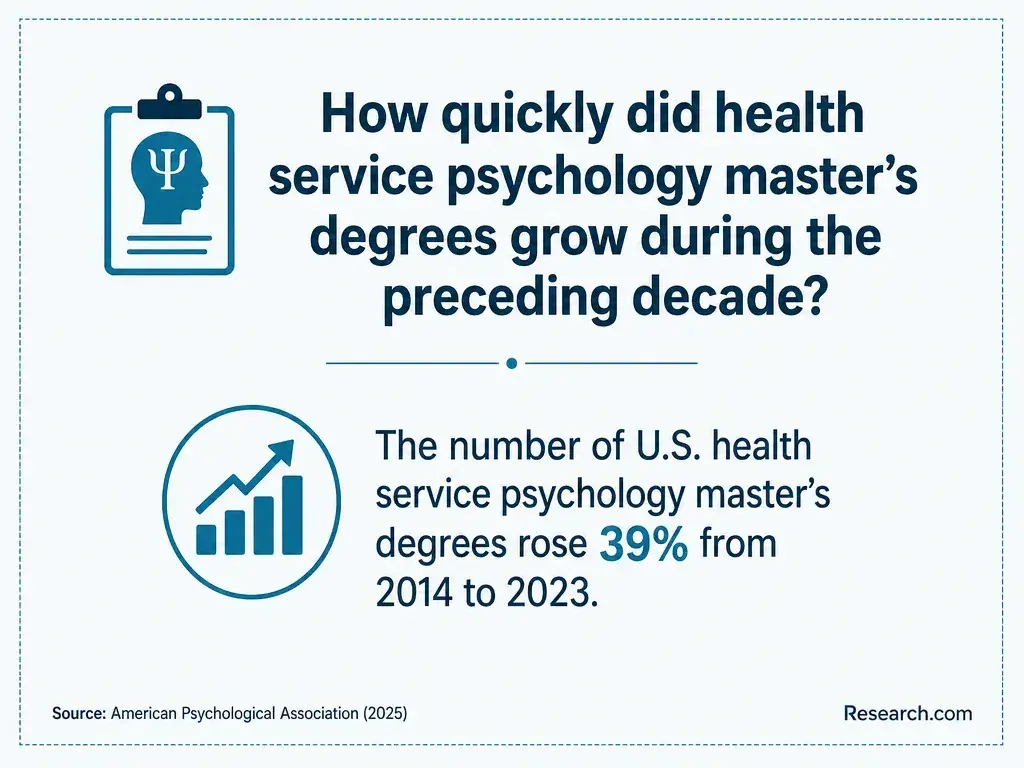
Expect the degree audit to distinguish psychology foundations from concentration coursework. Psychology requirements may include introductory psychology, statistics, research methods, developmental or social psychology, and advanced writing or a capstone. Addictions offerings may address substance-use science, prevention, recovery systems, co-occurring concerns, and ethical or cultural issues. Course names, required sequences, and availability vary by university.
Your AAS may have prepared you well for client communication, referrals, and service systems. The likely academic gap is often psychological research preparation: evaluating studies, interpreting statistics, and distinguishing evidence about addiction from claims of treatment effectiveness. If graduate study is a possibility, compare course descriptions rather than assuming that an applied AAS methods course meets a psychology research prerequisite.
Read any placement description closely. An undergraduate agency experience may involve outreach, observation, documentation, or referrals under supervision; it is not automatically clinical training or a substitute for license-supervised practice. This distinction also applies to shorter master's study plans in forensic psychology: a compressed academic curriculum does not, by itself, confer a regulated professional scope.
Completion time depends on the approved audit, how many credits you can take each term, and when required courses run. An illustrative 60-credit gap could take about two years at a full-time pace across conventional academic years, but that is not a program promise. Part-time enrollment, prerequisite chains, or an unavailable capstone can extend it; year-round offerings may change the calendar without changing the required work.
Request a term-by-term course map for each school you are seriously considering. Check whether statistics precedes research methods, whether concentration courses rotate, and whether a placement requires daytime hours at an approved site. If you work in human services, ask whether your current workplace could be considered for a placement, but do not assume existing employment will satisfy supervision and learning requirements.
Compare any advertised fast track with its actual workload and graduation rules. A school may offer short terms while still requiring courses in a fixed sequence; the relevant measure is your projected graduation term after your AAS has been evaluated. If you anticipate graduate study, keep its budget separate. Psychology master's fees and total study costs may affect your long-term choice, but they should not be folded into a comparison of what it costs to finish this BA.
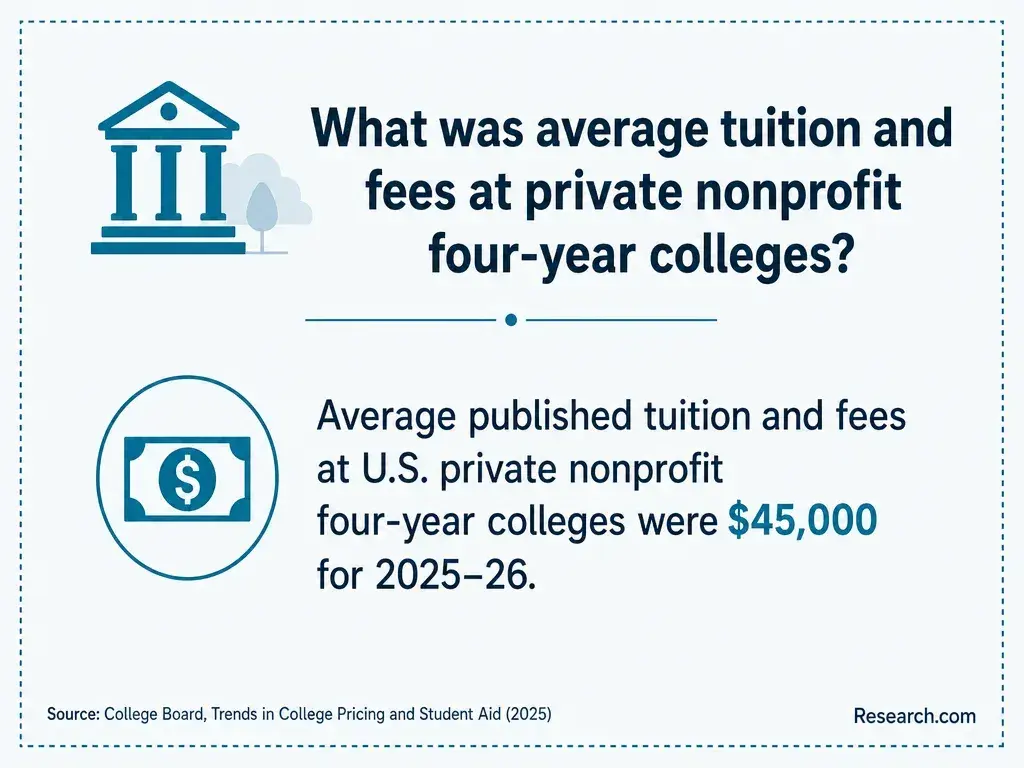
The meaningful comparison is the cost to finish your audited degree, not the advertised annual tuition. Ask each university to price your remaining required credits at the rate you would pay, then identify mandatory online, technology, course, and graduation fees. Include possible books, placement travel, and the cost of retaking a course that transfers only as an elective. Do not assume two schools with identical tuition rates will require the same number of credits from you.
Request a written estimate tied to your degree audit, enrollment pace, and residency requirements. Compare grants and scholarships separately from loans, which must generally be repaid; the discussion of grants versus loans for substance abuse counseling bachelor's students can help you ask the financial-aid office the right questions. Confirm aid eligibility and satisfactory academic progress rules with that office rather than assuming all accepted credits will be treated identically for aid purposes.
Your AAS experience plus a completed BA may support applications for nonclinical roles such as recovery-program support worker, intake or referral coordinator, prevention-program assistant, case coordinator, or community outreach worker. Duties and degree requirements differ by employer. The BA can add research literacy and broader psychology coursework; it does not replace experience, employer training, or a required state credential.
Compare roles by their actual tasks. A support position might involve explaining services, documenting contacts, coordinating referrals, or helping a program track participation. Independently diagnosing substance-use disorders or providing psychotherapy is a different responsibility with different qualification rules. An addiction recovery employment guide can help you identify job titles, but verify each posting's duties and credential requirements in your state.
Before enrolling, collect several local postings for the work you want. If they primarily require supervised experience or a specific addiction credential, ask whether the BA's courses count toward that credential. If they require only the experience you already have, targeted training or an employer-supported credential may be a more direct next step than another degree.
What Licenses and Certifications Are Needed for Addiction Counseling Careers?
Requirements depend on the state, the credential level, the job title, and whether the work involves supervised or independent counseling. A state may specify approved education, addiction-focused coursework, documented supervised hours, an examination, and an application process. Peer-support certification and addiction-counselor credentials are distinct; neither should be inferred from a psychology concentration or an AAS field placement.
Identify the exact credential named in local job postings, then check the responsible state board or certification authority. Ask the BA program to document whether its courses meet that authority's education rules and whether any placement meets its supervision rules. Obtain confirmation before relying on a concentration description: academic credit and qualifying credential hours are separate determinations.
If your intended role is licensed mental health counseling rather than an addiction-support or state-specific addiction-counselor position, research the applicable qualifying graduate degree and supervised-practice pathway. Compare mental health counseling tuition and funding options only after confirming that a program meets the educational requirements of the jurisdiction where you plan to seek licensure.
Other Things You Should Know About Psychology
Often, transferred courses receive credit without their grades being included in the new institution's GPA, but policies differ. Ask how transfer grades affect admission, major eligibility, and graduation honors.
Possibly, if the program permits employed placements and approves the site, supervisor, duties, and learning objectives in advance. Your regular job duties alone may not qualify.
Do not assume so. Advanced-standing MSW admission is generally designed for graduates of qualifying accredited BSW programs; check each MSW program's eligibility policy.
Ask for a revised audit before switching. Some concentration courses may still count as major electives, while others may become free electives and change your remaining requirements.
- Substance Use Disorder Professional (SUDP) | Washington State Department of Health https://doh.wa.gov/licenses-permits-and-certificates/professions-new-renew-or-update/substance-use-disorder-professional/certification-requirements
- Transfer Credit Policy | SUNY Niagara https://sunyniagara.edu/registration-records/transfer-credit-policy/
- Transfer and Credit | Henderson State University https://www.hsu.edu/academics/registrar/transfer-and-credit/
- SUNY Orange: Registrar - Transfer Credit Evaluation https://sunyorange.edu/registrar/transfer_credit.html
- Online Psychology B.A. or B.S. Degree Completion Program | gsu.edu https://online.gsu.edu/program/psychology-ba-or-bs-completion-program/
- Psychology (B.S.) - Addictions & Recovery - Online | Liberty University Course Catalog https://catalog.liberty.edu/undergraduate/colleges-schools/behavioral-sciences/psychology-major-bs/addictions-recovery-online/
- How to Finish Your Degree Online | University of North Carolina Wilmington https://flex-online.uncw.edu/blog/online-degree-completion/
- Credit Counting for Degree Requirements - CourseLeaf CIM https://cim.psu.edu/user-guides/program-management/credit-counting/
- How Many Credits Do You Need to Graduate College? | snhu.edu https://www.snhu.edu/about-us/newsroom/education/how-many-credits-to-graduate-college
- Licensure & Certification | ECU https://dars.ecu.edu/programs/clinicalcounseling/licensure-certification/