2027 Choosing an Online BA in Psychology - Addictions for a Future Prevention Science Graduate Application: Prerequisites to Compare

Co-Founder and Chief Data Scientist
An addictions-focused psychology BA can introduce you to substance use and recovery, but a future prevention science application may depend more on statistics, research methods, and evidence of scholarly work. If you are choosing an online bachelor's program with graduate study in mind, the concentration name is only a starting point.
This guide shows you how to compare prerequisite coverage, research access, online obligations, and cost so you can select a degree - or a more targeted set of courses - that supports the graduate programs you actually want to enter.
Key Things You Should Know
- Compare the published prerequisites of your target prevention science programs before choosing an addictions concentration; statistics and research preparation may matter more than the concentration label.
- Confirm that required courses are offered online and that you can obtain supervised research experience, a substantive writing sample, and faculty recommendations.
- A psychology-addictions BA is academic preparation, not authorization to diagnose, provide therapy, or practice independently as an addiction counselor.
What Is an Online BA in Psychology-Addictions?
It is a psychology bachelor's degree with coursework focused on substance use, addiction, recovery, or related behavioral health topics. Schools may call that focus a concentration, track, minor, or set of electives; those designations are not interchangeable. An online BA generally combines psychology foundations and general education with the school's available addiction-related courses.
Prevention science studies how to reduce risks and strengthen protective factors before problems develop or worsen. Graduate work may examine families, schools, communities, policy, or health systems - not only substance use treatment. For this goal, compare addiction psychology BA and BS degree options by their methods curriculum and research opportunities, not just their specialized course titles. A strong general psychology degree with relevant electives can be a better fit than a narrowly focused concentration that leaves quantitative gaps.
What Prerequisites Do Prevention Science Graduate Programs Require?
There is no universal prerequisite list. Prevention science programs may sit in psychology, public health, human development, education, or another department, and each program sets its own admission rules. Some accept applicants from many majors; others specify prior coursework. Separate required prerequisites from recommended preparation and from evidence that makes an eligible applicant more competitive.
The following comparison helps you read admissions pages without mistaking a useful skill for a formal requirement.
| Preparation to check | Why it matters for prevention science | What to verify with the graduate program |
| Statistics | Supports interpretation of intervention and population-level evidence. | Required course level, acceptable departments, grades, and recency. |
| Research methods | Builds skills in study design, ethics, sampling, and evidence appraisal. | Whether a general methods course meets any specified prerequisite. |
| Developmental or social psychology | Helps explain behavior across life stages and social settings. | Whether either course is required or merely recommended. |
| Public health or program evaluation | Connects behavioral theory to implementation and assessment. | Whether undergraduate exposure is expected or taught after admission. |
| Research experience | Demonstrates how you formulate questions and work with evidence. | Whether experience is expected and what forms count. |
An admissions requirement establishes eligibility; a supervised project, clear statement of interests, or recommendation may demonstrate readiness without replacing a required course. Ask each target program whether an outstanding prerequisite can be completed before enrollment and obtain its answer in writing. If your actual goal is providing therapy, prevention science is not a substitute for a qualifying clinical degree; compare that separate route, including the time and cost considerations in shorter online counseling master's financial comparisons.
How Do You Choose an Accredited Online Psychology-Addictions Program?
Start by verifying the institution's accreditation through the accreditor and the institution itself. Then confirm the exact degree title, whether "addictions" is an official concentration, and which requirements apply to your entry term. Institutional accreditation does not establish that a particular course meets a graduate prerequisite, and APA accreditation is not a general accreditation category for psychology bachelor's degrees.
Request a degree plan showing when statistics, research methods, and advanced electives are offered. Ask who supervises online research students, how they join projects, and whether a capstone can produce an appropriate academic writing sample. Published graduation or employment claims are less useful unless the school explains which students were counted and over what period.
Be careful when comparing similarly marketed specialties. A page covering online forensic psychology tuition, admissions, and outcomes can illustrate what to examine in another concentration, but forensic coursework should not displace prevention-relevant methods or developmental preparation simply because both are psychology subjects.
Prioritize a sequence rather than the largest collection of addiction electives: introductory psychology, statistics, research methods, then courses that let you apply those tools to development, social context, health behavior, and substance use. If available, epidemiology, program evaluation, or an advanced statistics course can strengthen preparation for population-focused graduate work. Check prerequisites and course rotation before assuming you can fit every elective into your degree.
An addiction course is most useful for this pathway when it examines prevention as well as disorder and treatment - for example, how risk and protective factors are measured, why an intervention may work differently across communities, and what a study can or cannot claim. A capstone could critique existing prevention research or develop an evaluation proposal without accessing confidential client records. Any project involving participants or agency data needs the appropriate permissions and oversight; a student's access to a workplace does not itself authorize research use.
If your undergraduate choice is between research-oriented psychology and counseling-oriented substance use study, compare curricular gaps separately from price. Substance use counseling bachelor's financial aid options may help with the funding side of that choice, but aid availability cannot establish that a program covers prevention science prerequisites.
Online study can remove routine commuting, but it does not guarantee flexible research access. An asynchronous lecture may coexist with scheduled group work, live lab meetings, or a placement that must occur during an agency's operating hours. Campus programs may offer more informal contact with faculty and research teams, while well-designed online programs can offer remote projects and purposeful mentoring. Neither format guarantees a recommendation letter or research position.
For an online program, ask how students meet faculty, whether remote research tasks are available, and what happens if a proposed placement falls through. Also check examination arrangements, residencies, and course scheduling. If you are returning with credits, online psychology completion programs and pacing can help frame the timing comparison; only a school-issued degree audit can show whether your credits satisfy its major and graduation requirements.
Undergraduate admission and entry to a psychology major can be separate decisions. First-time applicants should check the institution's academic-record requirements; transfer applicants should request both an admission decision and a course-by-course evaluation. A school can accept a statistics course for elective credit without applying it to the psychology major's statistics requirement.
Ask the undergraduate admissions and psychology advising offices to identify any major-entry GPA, prerequisite, residency, or course-sequencing rules. Submit transcripts and relevant syllabi when seeking equivalency review, and retain the approved degree audit. A shorter advertised path in another specialty - for example, shorter forensic psychology BA and BS timelines - does not show how quickly you can finish an addictions-focused degree or whether its courses fit your graduate goals.
Completion time depends on accepted credits that actually satisfy requirements, enrollment pace, prerequisite order, and when courses run. Your remaining-credit audit - not an advertised program length - is the useful starting point. Include time for research involvement if graduate preparation is the goal; finishing faster may leave fewer opportunities to develop a project or faculty relationship.
Compare a written estimate of remaining tuition and required fees with likely books, technology, travel, and any unpaid experiential work. Check financial-aid eligibility against your planned enrollment pace rather than assuming a lower per-credit price means a lower total cost. Affordable bachelor's study in psychology online is a useful comparison point, but a less expensive general degree is the better value only if it preserves the courses and experiences you need. If you already hold a bachelor's degree, ask target graduate programs whether a few prerequisite courses would suffice before paying for another full BA.
Possible nonclinical paths include prevention-program assistance, community outreach, recovery-service coordination, research support, and program-data or evaluation support. Duties and entry requirements differ by employer: one role may emphasize referrals and documentation, while another requires data cleaning, recruitment support, or grant reporting. Coursework helps, but supervised experience and evidence of reliable work often determine whether you are ready for a particular opening.
If you want direct recovery-support work while preparing for graduate study, compare the duties described in working in substance use recovery support with the positions available locally. Look for roles that provide appropriate supervision and respect client confidentiality. Intake or referral work is not psychotherapy, and an addictions-focused BA alone does not authorize diagnosis or independent treatment.
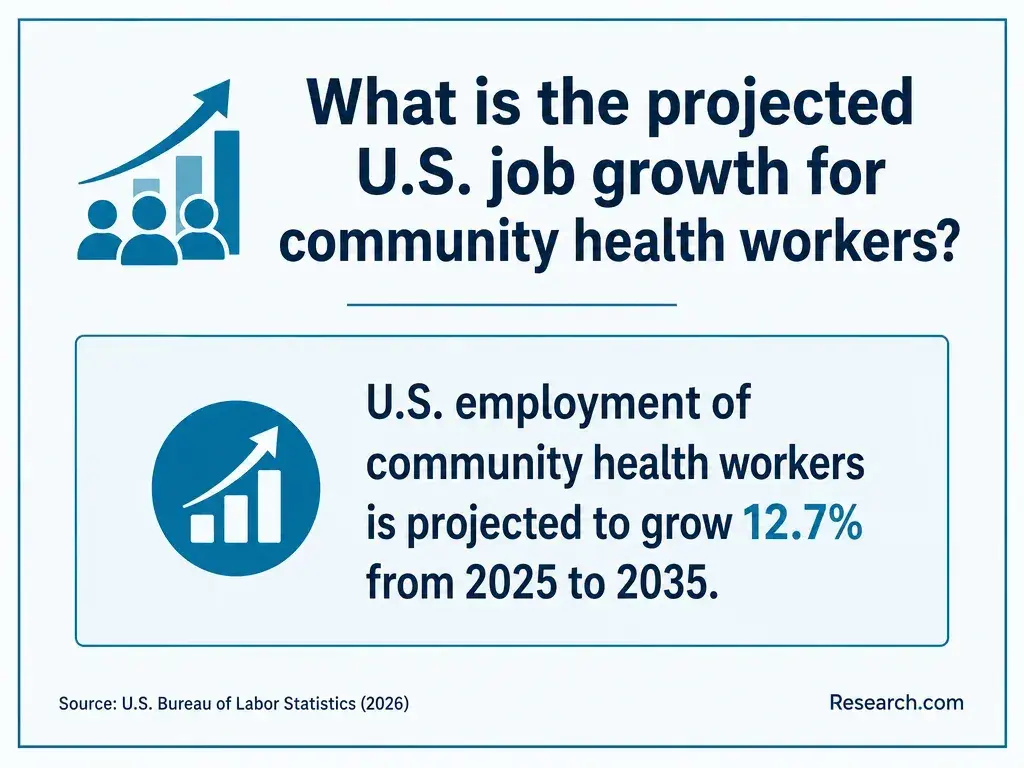
There is no single reliable salary or growth figure for "psychology-addictions graduates." Labor-market data describe occupations, not everyone who completed a concentration. A prevention-program assistant, research assistant, and credentialed substance use counselor may have different duties, qualifications, employers, and pay. Use the latest U.S. Bureau of Labor Statistics Occupational Outlook Handbook entry for the specific occupation you are considering, checking its wage reference year and projection period before comparing offers.
Do not use a licensed counselor's occupational median as a forecast for a new BA graduate. Likewise, a forensic psychology master's employment and pay guide describes a different educational and career comparison, not the expected return on a prevention-focused bachelor's. For this decision, weigh likely entry-level opportunities and required further study against your full education cost.
Which Certifications or Licenses Might Addiction Professionals Need?
Requirements depend on the job and state. Recovery-support positions may call for a state-recognized peer credential or employer training. Substance use counseling roles may require a particular degree, approved coursework, supervised experience, an examination, or a state credential; the permitted duties can differ by credential level. A prevention science graduate degree is not automatically a counseling license, just as an addictions concentration is not one.
Before enrolling for a regulated role, take the intended job title to the relevant state licensing or certification authority and compare its rules with the school's curriculum and placement arrangements. If your goal is clinical counseling rather than research or prevention-program work, include the qualifying graduate degree and supervision in your financial plan. Affordability checks for online counseling study address that separate pathway; a low price cannot substitute for meeting applicable credential requirements.
Other Things You Should Know About Psychology
Often, yes, if you will complete the degree before the graduate program begins. Check each program's application and final-transcript deadlines, and disclose any unfinished prerequisites.
Keep an approved writing sample, your description of the work you personally performed, and nonconfidential materials you are permitted to retain. Do not include identifiable participant or client information.
No. A focused interest - such as school-based prevention or substance use among young adults - can help you choose courses and projects, but you can refine it as you encounter research methods and faculty work.
Ask your advisor whether a remote faculty project, public-data assignment, or approved work in a broader prevention setting can meet your academic objective. Obtain approval before counting an experience toward any degree requirement.
- Bachelor of Arts in Psychology - Online Program | CSULB CPaCE https://www.cpace.csulb.edu/courses/bachelor-of-arts-in-psychology
- Graduate Certificate in Prevention Science | The Graduate School https://gradschool.wsu.edu/degrees/graduate-certificate-in-prevention-science/
- MS in Prevention Science and Community Health | miami.edu https://graduatestudies.publichealth.med.miami.edu/academic-programs/masters-degrees/ms-prevention-science-and-community-health/index.html
- Undergraduate Independent Studies | University of Arizona College of Information Science https://infosci.arizona.edu/undergraduate-programs/independent-studies
- Transfer credit policies - Office of Admissions https://admit.washington.edu/apply/transfer/policies/
- Transfer Credit FAQ - KU Registrar's Office https://registrar.ku.edu/transfer-credit-faq
- Independent Study and Internships | College of Staten Island Catalog https://csi-undergraduate.catalog.cuny.edu/policies/independent-studies-and-internships
- Accelerated Health Sciences B.A. to Prevention Science M.S. https://healthsciences.camden.rutgers.edu/prevention-science-ms/
- Cost of Attendance (COA) | fitnyc.edu https://www.fitnyc.edu/admissions/costs/cost-of-attendance.php
- Student Opportunities - Violence Prevention Institute https://violenceprevention.tulane.edu/training-outreach/student-opportunities/