2027 Online BA in Psychology - Addictions After an AAS in Criminal Justice: Compare Transfer Credit and Remaining Coursework
Audited and Verified:
Our Editorial and Data Verification Process
Research.com uses government datasets, official education statistics and primary institutional information to support its career and degree guides. Our review process checks factual accuracy, occupational definitions, source dates and the requirements associated with the credentials discussed.
How This Article Was Fact-Checked
Our editorial team verifies salary estimates, employment projections, education requirements and program information against original data providers and official organizations. Salary figures are checked against the relevant occupational definitions and reporting periods. Information about licensure, accreditation and required in-person training is reviewed separately.
Fact-checked and verified on:

Co-Founder and Chief Data Scientist
An AAS in criminal justice can provide a useful starting point for an online psychology bachelor's degree, but a school may accept a course without applying it to the requirements you still need. That distinction can change your graduation date and total cost. This guide is for AAS graduates considering an addictions focus. It shows how to compare transfer evaluations, identify remaining psychology and general education courses, and judge whether the degree fits your intended work in justice or recovery services.
Key Things You Should Know
- Count requirements satisfied, not just credits accepted. In an illustrative 120-credit BA, 60 applicable transfer credits leave 60 credits; 45 applicable credits leave 75, even if the AAS contains more coursework.
- Criminal justice courses may fill electives or related requirements, but statistics, research methods, upper-division psychology, and an addictions sequence may still need to be completed.
- Request a course-by-course degree audit before enrolling. An addictions focus is academic preparation, not authorization to provide substance-use-disorder counseling.
What Is an Online BA in Psychology With an Addictions Focus After an AAS?
An Associate of Applied Science (AAS) in criminal justice usually emphasizes occupational preparation. An online Bachelor of Arts (BA) in psychology adds a broader study of behavior, psychological research, and degree-level general education. An addictions focus might be a formally named concentration, a certificate, or simply a group of electives; check what will actually appear on the transcript.
Prior work in corrections, courts, victim services, or community supervision can make topics such as substance use, referral systems, and reentry especially relevant. It does not replace psychology prerequisites unless the receiving department approves an equivalency. When comparing online bachelor's program choices in psychology, start with the degree audit rather than the concentration's name.
How Many AAS Criminal Justice Credits Transfer to an Online Psychology Bachelor's Degree?
There is no dependable AAS-to-BA credit total across schools. A registrar may accept a course for credit while the psychology department decides that it does not satisfy a major requirement. Catalog rules, grades, course content, transfer limits, and the student's entry term all matter.
The table shows where common AAS coursework might land. These are possibilities, not promises of equivalency.
| AAS coursework | Possible application | Key question for the receiving school |
| Composition or mathematics | General education | Does the course meet the specific BA requirement? |
| Criminal justice or corrections | Free elective or approved related elective | Does it count toward the major, or only toward total credits? |
| Introductory psychology | Psychology prerequisite | Is the course equivalent to the required introduction? |
| Applied statistics | General education, elective, or methods prerequisite | Does its syllabus meet the psychology department's statistics standard? |
| Internship or occupational training | Possible elective credit | Are these credits transferable, and can they satisfy any degree requirement? |
Send official transcripts and, for uncertain courses, syllabi to the transfer-credit office; ask psychology advising to confirm major equivalencies in writing. Finding psychology colleges that consider prior credits can help build a shortlist, but each college has final authority over its own evaluation.
How Much Coursework Remains After Transferring an AAS in Criminal Justice?
Start with the BA's total-credit requirement, subtract credits that apply to the degree, and then check the requirements that subtraction cannot reveal. A student can have enough total credits on paper yet still lack required upper-division courses, a capstone, or credits earned at the graduating institution.
These hypothetical examples use a 120-credit BA solely to illustrate the arithmetic; they are not estimates for a particular school.
| Illustrative evaluation | Credits applied to the BA | Minimum credits still needed by subtraction | What could add coursework or time? |
| AAS coursework fills general education and electives | 60 | 60 | Unmet major, upper-division, or residency rules |
| Some AAS courses do not fit degree requirements | 45 | 75 | General education gaps and psychology prerequisites |
Ask for an audit that labels every course as general education, major, prerequisite, elective, or unused. Then request a term-by-term schedule showing when statistics, research methods, addictions electives, and the capstone are offered. Shorter undergraduate psychology study pathways help only if their course sequence and transfer rules actually shorten your remaining work.
A psychology BA commonly builds from introductory psychology into statistics, research methods, and subjects such as development, social behavior, biological psychology, and psychopathology. An addictions focus may add substance-use research, prevention, recovery systems, or co-occurring conditions. Course names and required depth vary by institution.
For an AAS graduate, the pivotal question is whether the focus fits after required psychology prerequisites and leaves room for any desired justice-related electives. If the goal is a specific addiction-counselor credential rather than broad psychology study, compare the BA against an addiction counseling degree comparison resource and the target state's educational rules. Coursework about treatment does not itself qualify a student to deliver it.
Admission to a university, entry into its psychology major, and approval of transfer equivalencies are separate decisions. Schools may review college transcripts, academic standing, and completion of specified introductory or general education courses; some permit admission before every major prerequisite is finished.
Before paying an enrollment deposit, ask admissions which catalog applies, the registrar for a written transfer evaluation, and psychology advising for a major-specific degree audit. Provide syllabi when a criminal justice, statistics, or behavioral-science course might warrant review. If you are also considering a justice-centered major, forensic psychology admissions and education planning offers a separate comparison; do not assume its admission or transfer rules match those of an addictions-focused BA.
Time depends on the approved audit, course availability, prerequisites, and how many credits you can take each term. An asynchronous course can still have weekly deadlines; an internship or capstone may run only in certain terms. Work and caregiving schedules should shape a realistic completion plan, not just the advertised fastest pace.
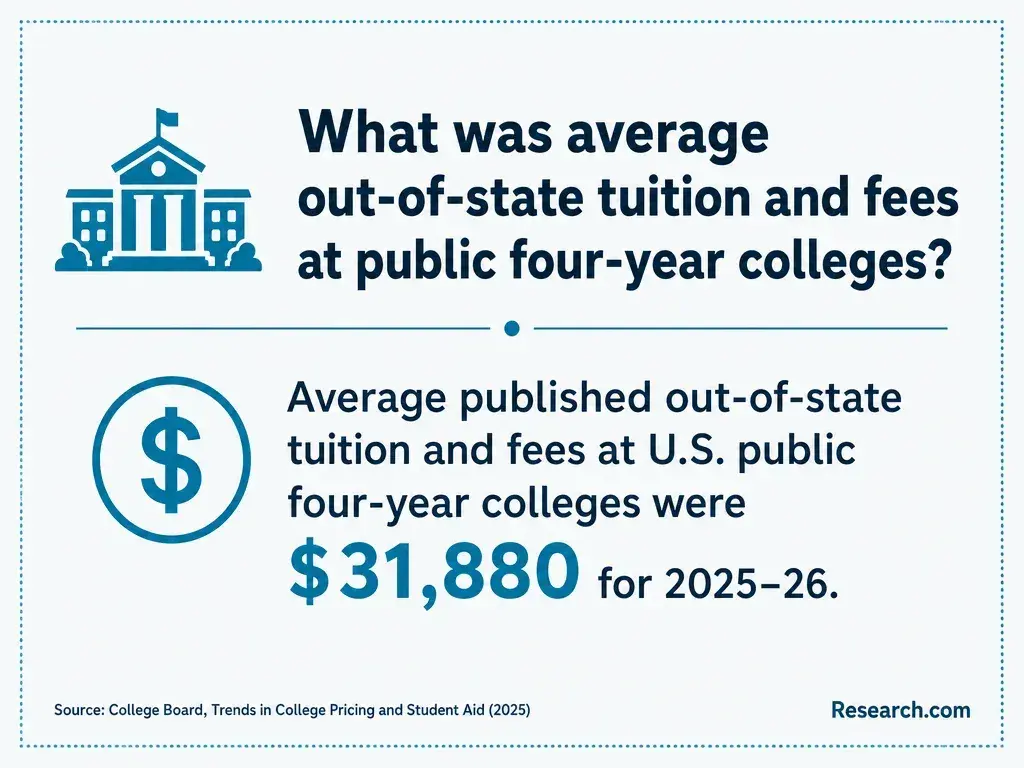
Compare written estimates for tuition on remaining required credits, mandatory online and course fees, books, and any travel or unpaid placement. A cheaper per-credit price may cost more overall if fewer AAS courses apply. Review affordable online psychology degree programs alongside each school's individualized audit, and confirm financial-aid eligibility with its aid office before committing.
Both formats can teach the same academic subject matter, but access to courses and applied experiences may differ. Online students should verify live-session requirements, exam arrangements, faculty contact, local internship approval, and whether required courses are offered in the terms they need. Campus students may find it easier to attend on-site research or agency activities, though commuting can restrict their schedules.
If a faster justice-focused option appeals to you, compare forensic psychology bachelor's study with accelerated pacing against the addictions BA using the same transfer audit and course calendar. A shorter advertised program is not necessarily shorter for an AAS holder whose credits apply differently.
Check that the institution holds recognized institutional accreditation and that the credential awarded is the BA described in its catalog. Institutional accreditation matters for issues including federal aid eligibility and future transfer consideration, but it does not guarantee that another school will accept a course or that a licensing board will recognize the degree for a regulated role.
Do not look for APA accreditation as a test of an ordinary psychology BA; APA accreditation covers specified professional psychology training programs, not general undergraduate majors. If graduate study is a possibility, check the next program's prerequisites separately. Even forensic psychology master's pathways under two years must be evaluated for their actual curriculum and intended credential outcome, rather than assumed to confer clinical authority.
The AAS may already support applications for some justice or community-service positions. A psychology BA could strengthen preparation for nonclinical roles involving recovery-service coordination, prevention outreach, victim advocacy, reentry support, or program administration, particularly when paired with relevant work experience. Employers may also require a specific credential, background screening, or demonstrated documentation and referral skills.
Ask whether the BA changes eligibility for the job you want or mainly adds knowledge you could gain through employer training or a narrower credential. For a move toward forensic work, higher-paying career paths after forensic psychology graduate study describe a different educational decision; neither a forensic label nor an addictions focus grants authority to investigate, diagnose, or treat.
What Salary and Licensing Requirements Apply to Addiction-Related Careers?
Separate nonclinical support jobs from substance-use-disorder counseling. Pay depends on the actual occupation, employer, location, and qualifications - not the BA concentration. The U.S. Bureau of Labor Statistics reports occupation-wide pay for substance abuse, behavioral disorder, and mental health counselors, but that figure should not be treated as an expected salary for an AAS holder or psychology BA graduate.
Before choosing coursework for a counseling goal, consult the state licensing board for its degree, course, supervised-experience, and examination rules. Some routes require qualifying graduate education; the requirements cannot be inferred from a BA's addictions electives. Planning the time and cost of a counseling master's is therefore a distinct step if licensed practice - not support or coordination - is the goal.
Other Things You Should Know About Psychology
Possibly. Request the school's policy for military learning and submit the documentation it requires, such as a Joint Services Transcript. Credit awarded still has to fit the BA's requirements.
It depends on the receiving school's grade and transfer policies. Ask whether the course can satisfy a specific requirement, particularly if it is a psychology prerequisite.
Many schools have a review or appeal process. Ask the registrar or department for the procedure and provide the original syllabus and learning outcomes; approval is not automatic.
Only if the program permits it and approves the duties, site, and supervision in advance. Existing employment alone does not establish academic internship credit.
- WAC 250-61-100 | wa.gov https://app.leg.wa.gov/wac/default.aspx
- Psychology courses and pre-requisites guide | brooklyn.edu https://students.brooklyn.edu/knowledge-base/psychology-courses-and-pre-requisites/
- Requirements | Department of Psychology https://psychology.uchicago.edu/undergraduate-major/requirements
- How to Become an Addiction Counselor: 5 Key Steps (2026) | Touro University Worldwide https://www.tuw.edu/health/how-to-become-an-addiction-counselor/
- Senior Residence Requirement (30-Credit Rule) | L&S Undergraduate Academic Deans' Services https://deans.ls.wisc.edu/policies-forms/residence-requirement-30-credit-rule/
- Welcome Transfer Students - Program in Criminal Justice | Rutgers, The State University of New Jersey https://crimjust.rutgers.edu/academics/program-info/transfer-courses/transfer-student-info
- AAS Pathways - Transfer Admissions & Engagement https://transfer.appstate.edu/future-students/transferring-credits/aas-pathways
- Transfer of Credit Policy | South University https://catalog.southuniversity.edu/transfer-of-credit-policy
- How Many Credits Do You Need to Graduate College? | snhu.edu https://www.snhu.edu/about-us/newsroom/education/how-many-credits-to-graduate-college
- Psychology Major Requirements | upenn.edu https://psychology.sas.upenn.edu/node/199