2027 Online BA in Psychology - Addictions After an AAS in Addiction Studies: Compare Transfer Credit and Remaining Coursework
Audited and Verified:
Our Editorial and Data Verification Process
Research.com uses government datasets, official education statistics and primary institutional information to support its career and degree guides. Our review process checks factual accuracy, occupational definitions, source dates and the requirements associated with the credentials discussed.
How This Article Was Fact-Checked
Our editorial team verifies salary estimates, employment projections, education requirements and program information against original data providers and official organizations. Salary figures are checked against the relevant occupational definitions and reporting periods. Information about licensure, accreditation and required in-person training is reviewed separately.
Fact-checked and verified on:

Co-Founder and Chief Data Scientist
An AAS in Addiction Studies can give you a head start on an online psychology bachelor's degree - but accepted credits do not always shorten the degree as much as expected. Applied courses may transfer as electives while psychology methods, general education, and upper-division requirements remain. This guide is for AAS graduates comparing online BA programs with an addictions focus. It shows how to read a transfer evaluation, estimate the coursework still required, and weigh cost and career goals before committing to a school.
Key Things You Should Know
- An AAS may transfer substantial credit, but only an approved degree audit shows which credits satisfy general education, psychology, addictions, and graduation requirements.
- In an illustrative 120-credit BA, 60 accepted AAS credits leave 60 credits only if every accepted credit applies to the degree; unmet requirements or residency rules can change the plan.
- Prioritize written course equivalencies, remaining-course schedules, and total cost over the school's advertised transfer-credit maximum. A psychology addictions BA does not itself confer counseling licensure.
How Does an Online BA in Psychology Addictions Build on an AAS in Addiction Studies?
An Associate of Applied Science, or AAS, typically emphasizes occupational preparation. Addiction Studies coursework may cover substance use, recovery services, interviewing, ethics, and supervised support work. A psychology BA adds broader study of behavior and psychological science, usually including research methods, statistics, development, and social or biological psychology. An "addictions" focus might be a formally named concentration or simply a set of electives; confirm which appears on the degree record.
The strongest academic progression is not repeating introductory addiction content. It is using prior service knowledge to ask better questions about evidence: how outcomes are measured, why people differ in treatment access, and what research can and cannot establish about an intervention. When comparing addiction-focused undergraduate psychology degrees, check whether addiction courses deepen that preparation or merely duplicate AAS courses for which the school awards elective credit.
If your goal is advancement in a role governed mainly by a state addiction-counselor credential, first check that credential's education and supervised-experience rules. A BA may be useful or required for some pathways, but the psychology major is not automatically the shortest route.
How Many Credits Transfer From an AAS in Addiction Studies to a Psychology BA?
There is no reliable universal number. The receiving university decides whether each AAS course is acceptable for transfer and, separately, where it fits in the BA. An accepted course might satisfy a named requirement, count toward the total as an elective, or exceed the elective space available. A published transfer maximum is a ceiling, not a promise that your AAS will meet that many degree requirements.
The distinction is easier to see in a hypothetical audit. These figures illustrate the calculation, not a particular university's policy.
| Illustrative audit item | What it means for a 120-credit BA |
| 60 AAS credits reviewed | Credits available for the university to evaluate; not necessarily 60 applicable BA credits |
| 60 credits accepted and applied | 60 credits remain, provided all other degree requirements can be met within them |
| 60 accepted, but 12 do not fit degree requirements | Only 48 reduce the requirements in this example; the student must clarify how the school calculates remaining credits |
A course-by-course evaluation matters particularly for an AAS because applied practica and technical courses may have no direct BA equivalent. Ask the transfer office for written decisions on acceptance, then ask a psychology advisor or degree-audit office to identify each course's placement. Bring official transcripts and, for disputed courses, syllabi describing learning outcomes, assignments, and contact hours. Check statistics and research-methods equivalencies individually rather than assuming a similarly titled course substitutes.
Compare psychology program transfer policies only after you have program-specific evaluations. Ask whether an articulation agreement covers your exact AAS, catalog year, and receiving major, and whether a substitution or appeal is possible before enrolling.
What Coursework Remains After Transferring an Addiction Studies Associate Degree?
The remaining curriculum is usually a mix of unmet general education, psychology foundations, upper-division major courses, addictions electives, and university residency requirements. An AAS practicum may provide useful experience without replacing a psychology research course or a separately approved BA internship.
The table shows where AAS graduates commonly encounter gaps. Your official degree audit, not this pattern, determines your actual requirements.
| Requirement area | Likely transfer question | Possible remaining work |
| General education | Does the AAS satisfy the BA's writing, mathematics, laboratory science, and breadth rules? | Courses absent from a career-focused associate curriculum |
| Psychology core | Do introductory and applied courses have approved psychology-major equivalencies? | Developmental, social, biological, or other required psychology courses |
| Methods and statistics | Does prior quantitative or evaluation coursework meet the major's specific standards? | Statistics followed by research methods, sometimes in sequence |
| Addictions focus | Are previous addiction courses substitutes, major electives, or unrestricted electives? | Required upper-division addiction courses or additional electives |
| Graduation rules | How many advanced credits and credits taken at the university are required? | Upper-division coursework, capstone, or residency credits |
Review the sequence as well as the credit count: a required statistics course offered before research methods may affect your finish date. When comparing online bachelor's program choices in psychology, request a term-by-term plan showing when each remaining course is offered and whether any internship, capstone, exam, or campus visit is required.
Accreditation belongs to the institution or to a program within its accreditor's stated scope; "online" does not create a separate psychology accreditation category. Verify the university's current institutional accreditation through the institution and its recognized accreditor, and confirm that it covers the university awarding the BA. Also verify the exact degree name and whether addictions is an official concentration.
Do not expect APA accreditation of a general psychology BA: APA's relevant professional accreditation is not a blanket approval of undergraduate psychology majors. Likewise, institutional accreditation does not prove that a BA meets a state's addiction-counselor requirements. If credential eligibility drives your choice, compare the BA against the educational rules for your intended state and role; substance use counseling program pathways may align differently with those rules.
Requirements vary by university and entry route. A transfer applicant commonly needs an application and official transcripts from every college attended; a school may also set minimum academic-standing or transferable-credit rules. Admission to the university does not necessarily mean admission to a particular psychology major or automatic approval of AAS course substitutions.
Ask admissions which catalog and transfer agreement will apply to your entry term. Submit transcripts early enough to obtain a completed evaluation before a deposit or enrollment deadline, and ask the major advisor whether statistics or introductory psychology must be completed before advanced courses. If a condensed schedule appeals to you, review planning an intensive online psychology degree alongside its admissions rules: shorter terms cannot remove course prerequisites or guarantee a place in every required class.
Time depends on applicable transfer credit, remaining course order, course availability, and how many credits you can complete each term. In the illustrative 120-credit BA with 60 credits applied, 60 credits remain; that is a workload calculation, not a completion-time promise. Needing more general education or waiting for a prerequisite can extend the calendar even if the credit total looks manageable.
For a realistic estimate, ask the advisor for a term-by-term plan at your intended enrollment pace. Confirm whether classes are asynchronous, whether live meetings or group work occur at fixed times, and whether a placement or capstone has scheduled obligations. Comparisons with fast-paced BA and BS forensic psychology pathways can illustrate how accelerated formats work, but another specialization's advertised finish time does not predict yours.
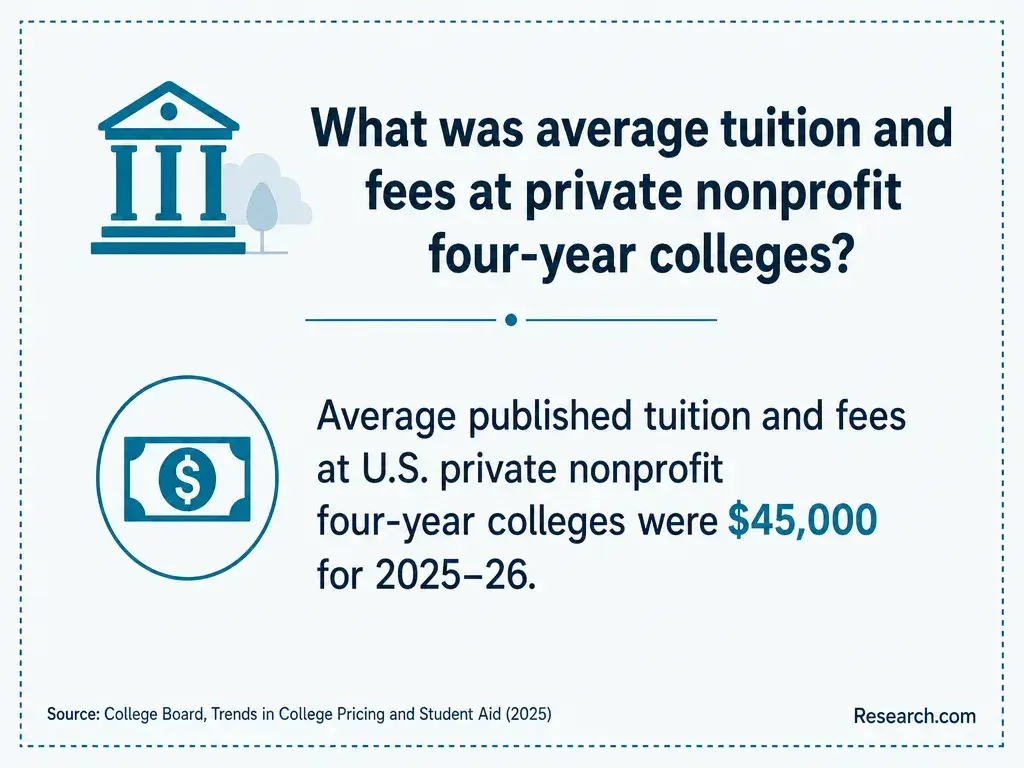
Without a named school and an approved audit, a trustworthy total cannot be calculated. Start with the tuition charged for your remaining billable credits, then add mandatory online or course fees, materials, and any placement-related expenses. Check whether tuition differs by residency, enrollment pace, or term and whether courses that transfer only as excess electives actually reduce what you must pay to finish.
Compare written estimates at the same intended pace and ask the financial-aid office how enrollment intensity, satisfactory academic progress, prior borrowing, and remaining eligibility affect your aid. An extra required term can matter more than a small per-credit tuition difference. If a licensure-track counseling master's is your eventual goal, include that separate degree in your long-range budget; mental health counseling degree fees and aid planning addresses costs the BA estimate will not capture.
An AAS graduate may already have relevant service experience. A BA can strengthen applications for nonclinical work in recovery-service coordination, outreach, intake support, prevention programs, case coordination, and program support, depending on the employer. These jobs may involve documentation, referrals, client communication, and collaboration with licensed staff - not independent diagnosis or therapy.
Compare postings by duties rather than by title. One "recovery specialist" position may require a state-recognized peer credential; another may prioritize experience with referrals and records. Use career choices across recovery service settings to identify roles of interest, then check local job advertisements for the degree, certification, background-check, and experience requirements that actually apply. If you already qualify for your target support role, supervised experience or a targeted credential may offer a more direct next step than a BA.
There is no single salary or growth rate for "psychology addictions BA graduates." The US Bureau of Labor Statistics reports occupational wages and projections, not outcomes for a particular major. Its substance abuse, behavioral disorder, and mental health counselors category may be relevant to a future counseling role, but it includes jobs with differing education and credential requirements; its occupation-wide median should not be treated as an entry-level BA salary.
For a useful comparison, identify the exact local job title you could hold now, check its posted pay range and requirements, and compare that with positions for which additional credentials would make you eligible. If your projected return depends on a later graduate degree, account for that separate time and expense. Online psychology master's completion planning may help with a nonclinical graduate-study comparison, but a general psychology master's is not interchangeable with a licensure-qualifying counseling degree.
Does a Psychology Addictions BA Qualify You for Counseling Licensure?
No. Studying addiction and psychology does not, by itself, authorize psychotherapy, independent diagnosis, or use of a protected counseling title. Requirements differ by state and by credential: a substance-use-disorder counselor pathway may have different education, supervised-experience, examination, and scope rules from a licensed professional counselor pathway.
Before choosing the BA for a regulated career goal, identify the exact credential and state, then compare the regulator's current requirements with the school's written curriculum and any supervised hours you have already completed. Ask which hours, if any, count toward that credential; an AAS field placement or BA internship is not automatically license-supervised experience. If your goal is professional mental health counseling, evaluating shorter mental health counseling graduate pathways is a separate decision from whether this BA accepts your AAS credits.
Other Things You Should Know About Psychology
Possibly. Ask your employer about scheduling and education assistance, then check required live classes, group projects, and placement hours. Online coursework is not necessarily self-paced.
Only if the program approves the site, supervisor, duties, and learning objectives. Existing employment or an earlier AAS practicum does not automatically satisfy a new internship requirement.
Request a written equivalency review first. A detailed syllabus may support a substitution or appeal; retaking the course before that decision could create avoidable expense.
It depends on your target role. Compare postings and credential rules with the BA's remaining cost and coursework. For a role you can already pursue, experience or focused training may be the better investment.
- Semester Course Load and Student Performance - PMC - NIH https://pmc.ncbi.nlm.nih.gov/articles/PMC7568764/
- Cost of Attendance (Budget) | 2025-2026 Federal Student Aid Handbook https://fsapartners.ed.gov/knowledge-center/fsa-handbook/2025-2026/vol3/ch2-cost-attendance-budget
- Credit Requirements for the College of Arts & Sciences | UVA College of Arts & Sciences https://college.as.virginia.edu/credits
- How Many Credits Do You Need for a Bachelor's Degree? | Notre Dame de Namur University https://www.ndnu.edu/articles/guides-tips/how-many-credits-for-a-bachelors-degree.html
- Articulation Agreements | Southeastern Technical College https://www.southeasterntech.edu/about/articulation-agreements/
- Transfer Agreements and Guarantees - The Hub https://thehub.colostate.edu/registration-records/transfer-agreements-and-guarantees/
- DRAFT: Transfer Toolkit - The Transfer Student Journey | NCCCS https://www.nccommunitycolleges.edu/transfer-advising-toolkit/transfer-toolkit-the-transfer-student-journey/
- Degree & Certificate: Psychology, AA-T | elcamino.edu http://catalog.elcamino.edu/preview_program.php
- How Many Credits Do You Need to Graduate from College? | Digital Crafts https://www.trident.edu/how-many-credits-to-graduate-college
- Tuition & cost of attendance | UC Admissions https://admission.universityofcalifornia.edu/tuition-financial-aid/tuition-cost-of-attendance/