2027 Online BA in Psychology - General Psychology After Military Human Resources Training: Compare Transfer Credit and Remaining Coursework
Audited and Verified:
Our Editorial and Data Verification Process
Research.com uses government datasets, official education statistics and primary institutional information to support its career and degree guides. Our review process checks factual accuracy, occupational definitions, source dates and the requirements associated with the credentials discussed.
How This Article Was Fact-Checked
Our editorial team verifies salary estimates, employment projections, education requirements and program information against original data providers and official organizations. Salary figures are checked against the relevant occupational definitions and reporting periods. Information about licensure, accreditation and required in-person training is reviewed separately.
Fact-checked and verified on:

Co-Founder and Chief Data Scientist
Military human resources training may earn college credit without replacing the psychology courses required for a bachelor's degree. For service members and veterans considering an online BA in general psychology, that distinction can change the price and graduation date.
This guide shows where personnel training is most likely to fit, how to obtain an official degree audit, and which research and statistics courses may remain. It also helps you compare programs based on credits that apply to graduation, not just credits a school agrees to accept.
Key Things You Should Know
- Military HR training may satisfy electives or some general education requirements, but psychology-major credit requires a school-approved equivalency.
- Compare each school's official audit: accepted credits, requirements satisfied, remaining psychology courses, and credits that must be completed there.
- Remaining tuition depends on credits still required, course sequencing, fees, and your verified education benefits, not the advertised transfer-credit maximum.
What Is an Online BA in General Psychology After Military HR Training?
An online BA in general psychology is a bachelor's degree covering psychological science broadly rather than training for a particular clinical license. Your military HR background may provide experience in personnel administration, training, workplace communication, and organizational procedures. The degree adds study of behavior, research evidence, statistics, and psychological theory.
"Online" describes course delivery, not a promise that every class is asynchronous or that every requirement can be completed remotely. When comparing psychology degrees available through online study, check live-session schedules, exam arrangements, and any internship or campus obligations against your duty or work schedule.
How Much Military Human Resources Training Can Transfer Toward a Psychology Degree?
There is no reliable credit total based on an HR military occupational specialty alone. The receiving college decides whether documented training or experience earns credit, how much it awards, and where that credit fits its BA. A school's transfer ceiling is a limit, not an award or a promise of faster graduation.
The comparison below separates credit acceptance from degree progress. It shows why two colleges can award similar amounts of credit yet leave different amounts of coursework.
| Prior learning | Possible application | What the school must confirm |
| Military personnel administration or leadership training | Open electives or an applicable general education area | Whether the recommendation matches a requirement rather than adding unused elective credit |
| Documented college coursework | General education, electives, or a psychology prerequisite | Course equivalency, grade rules, and any recency policy |
| Training involving workplace behavior or data | Potential elective credit | Whether its assessed learning actually meets a psychology, statistics, or methods requirement |
HR experience can inform class projects, but similar subject matter does not establish course equivalency. Use an official evaluation, not an unofficial estimate, when evaluating transfer options before psychology enrollment.
How Many Psychology Credits and Courses Will You Still Need?
The answer is the gap between your chosen program's requirements and the credits it applies to those specific requirements. Ask for an audit that separately identifies unfinished general education, psychology prerequisites, major courses, free electives, and institutional residency requirements. Credits accepted beyond an elective limit may appear on a transcript without shortening the degree.
Military HR training should not be presumed to replace introductory psychology, statistics, research methods, or advanced psychology courses. Those courses may have prerequisites and limited term availability, so a small remaining credit total can still take several terms.
If you are also planning a shorter undergraduate forensic psychology degree, request a separate audit: a different major can change which courses count and how they are sequenced.
For a useful comparison, have each school identify the courses you would actually register for in your first terms and when the last required course is next offered. An advisor's estimated finish date should reflect that sequence, not just a credit subtraction.
Submit records early enough to receive a formal evaluation before committing to a program. The school's registrar or transfer-credit office determines credit awards; the psychology department or designated academic authority may need to approve major equivalencies.
This sequence helps you preserve evidence and identify decisions worth appealing:
- Request your official Joint Services Transcript or Community College of the Air Force transcript, as applicable, along with transcripts from every college attended.
- Send records through the receiving school's required channels and ask whether it evaluates military training at admission or only after enrollment.
- Request a written degree audit showing each accepted credit, the requirement it fulfills, and all remaining courses.
- For a disputed equivalency, ask about the appeal process and provide available course descriptions, training outcomes, and assessments.
Do not enroll in a course you expect to replace until the substitution is approved in writing. If you later consider graduate study, keep the completed undergraduate syllabi as well. An affordable online psychology master's program may evaluate prerequisites independently of how your BA counted military credit.
Expect a foundation in introductory psychology followed by courses such as developmental, social, biological, cognitive, or abnormal psychology. Statistics and research methods teach you to evaluate evidence and design studies; an advanced seminar or capstone may bring those skills together. Exact requirements and elective availability vary by institution.
For someone with military HR training, industrial-organizational psychology, learning, and social psychology can connect prior experience with new academic concepts. That does not mean workplace training substitutes for research methods or that an elective creates a formal specialization.
If your intended work is specifically in substance-use services, compare the general major with a bachelor's-level addiction psychology program guide and verify each program's actual curriculum and credential implications.
Admission to the college and acceptance into the psychology major may be separate decisions. Schools commonly request prior academic transcripts and an application; their GPA, prerequisite, and major-declaration policies differ. Military training documentation supports a credit evaluation but does not automatically satisfy academic admission requirements.
If you lack prior college coursework, ask how the school admits first-year applicants with military experience. If you have attended college, ask whether you apply as a transfer student and whether a completed associate degree changes general education requirements.
Applicants comparing a general BA with online addiction counseling programs should check both programs' admission rules separately; similar entry requirements do not mean the degrees prepare students for the same credentials.
Neither time nor total cost can be determined from your military job title. Compare schools using the remaining credits that satisfy degree requirements, their tuition and mandatory fees, the pace you can sustain, and the availability of required courses. Include books, technology charges, and any travel or unpaid experiential requirement the program actually imposes.
Ask the school for a term-by-term plan and a cost estimate based on your evaluated credits, not its published price for an entering student. Confirm eligibility and remaining entitlement with your benefits administrator before assuming GI Bill coverage.
Yellow Ribbon participation and coverage, where relevant, also require program-specific verification. Scholarships aimed at another major, including undergraduate addiction counseling grants and scholarships, should not be included in a general psychology BA budget unless you confirm that you qualify.
First verify the institution's recognized accreditation and that the BA is an actual degree offered in the advertised online format. APA accreditation is not the standard to seek for a general psychology bachelor's program. Then compare official degree audits: a generous transfer award is less useful if it leaves more required courses than a smaller, better-applied award.
Review course rotation, live attendance, transfer appeals, military and veteran advising, career services, and policies for interruptions to study. Ask whether statistics and research methods can be taken online when you need them. If graduate study is a future possibility, investigate it separately; time-to-degree planning for forensic psychology graduate students concerns a different curriculum and should not drive your BA transfer decision.
Military HR training plus a psychology BA may be relevant to civilian recruiting, employee training, personnel support, program coordination, or organizational research support. Employers will assess your actual duties, civilian-equivalent experience, software and data skills, and degree requirements, not simply the combination of credentials.
Translate military responsibilities into evidence of work such as coordinating training, maintaining records, or communicating personnel policies, without disclosing protected information.
For community-service roles, compare job descriptions carefully: intake, referrals, advocacy, and recovery support can have different supervision and certification rules. A comparison of recovery support occupations can help you identify which roles merit closer investigation.
If your goal is advancement within HR rather than a new psychology-related role, an HR credential or targeted analytics training may be more direct than another degree.
What Salary and Licensing Requirements Apply to Psychology Graduates?
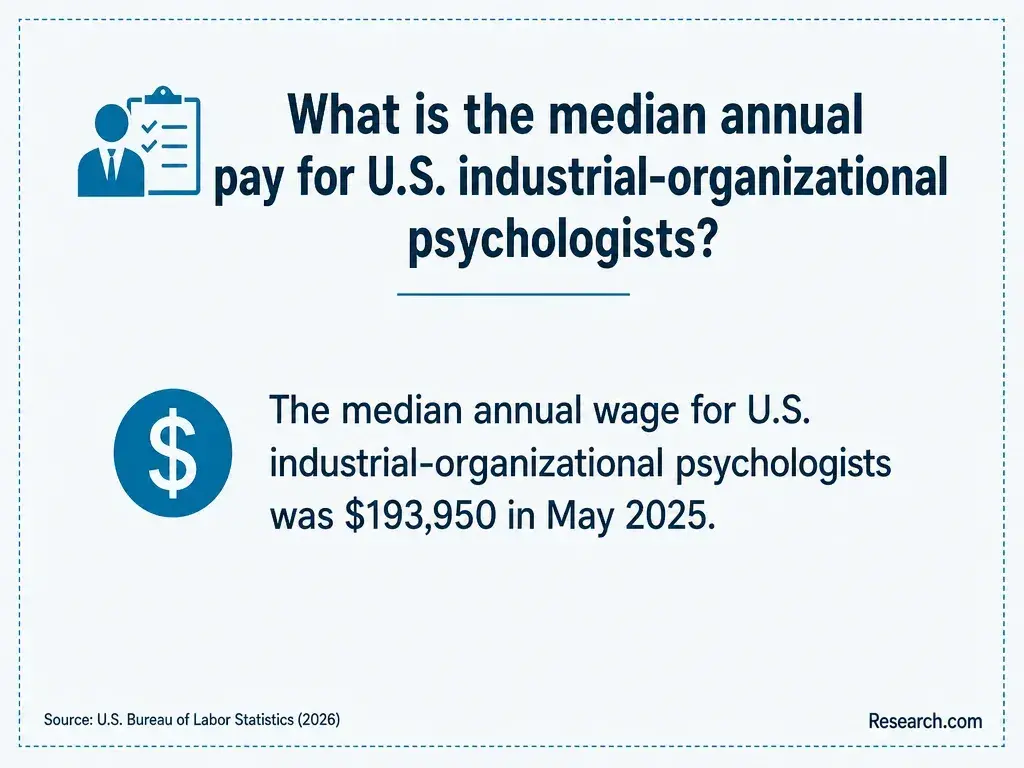
There is no single salary for a psychology BA graduate with military HR training. Compare pay for the specific occupation and location you intend to enter, using current US Bureau of Labor Statistics occupation data and actual job postings.
An occupation-wide median includes workers with different credentials and experience; it is not a starting-salary estimate or a return-on-investment promise for this degree.
A general psychology BA does not authorize diagnosis, psychotherapy, independent psychological assessment, or use of a protected psychologist title. Licensed roles require the education, supervised experience, examinations, and other conditions set by the relevant state and profession.
Likewise, forensic psychology graduate occupations and salary considerations should not be treated as BA outcomes or proof that a nonclinical master's degree confers a license.
Other Things You Should Know About Psychology Programs
Possibly. Ask the instructor about the assignment and obtain any required employer permission. Do not use identifiable personnel records or assume workplace access authorizes research.
No. Submit separate official transcripts from colleges you attended, including institutions that awarded credit for military learning.
Ask each school about leave, withdrawal, reentry, and course-access policies before enrolling. Also check how a break could affect your aid or education benefits.
Compare the actual requirements rather than the degree letters. The better fit is the program that applies your credits effectively and provides the psychology and quantitative preparation your next goal requires.
- Post-9/11 GI Bill (Chapter 33) | Veterans Affairs https://www.va.gov/education/about-gi-bill-benefits/post-9-11/
- Military Training Evaluation Program (MTEP) | dantes.mil https://www.dantes.mil/credit4training/
- Psychology Degree Requirements | University of Bridgeport https://www.bridgeport.edu/news/psychology-education-requirements/
- Psychology (BS) Military Pathway - ODUGlobal https://online.odu.edu/military/pathways/psychology-bachelors
- Prior Learning Assessment Policy | farmingdale.edu https://www.farmingdale.edu/policies/
- Psychology Program FAQs | University of La Verne https://health.laverne.edu/psychology/faq/
- Online Bachelor's in Psychology | University of Kansas https://online.ku.edu/undergraduate-programs/online-bachelors-psychology
- College of Liberal Arts and Sciences - Academic Catalog https://catalog.uic.edu/ucat/colleges-depts/liberal-arts-sciences/
- Credit for Prior Learning - The City University of New York https://www.cuny.edu/academics/academic-policy/credit-prior-learning/