2027 Online BA in Psychology - Mental Health: Choosing Between an Immediate Start and a Better Aid Offer
Audited and Verified:
Our Editorial and Data Verification Process
Research.com uses government datasets, official education statistics and primary institutional information to support its career and degree guides. Our review process checks factual accuracy, occupational definitions, source dates and the requirements associated with the credentials discussed.
How This Article Was Fact-Checked
Our editorial team verifies salary estimates, employment projections, education requirements and program information against original data providers and official organizations. Salary figures are checked against the relevant occupational definitions and reporting periods. Information about licensure, accreditation and required in-person training is reviewed separately.
Fact-checked and verified on:

Co-Founder and Chief Data Scientist
An online psychology program may let you start soon, while another school - or a later term - may leave you with less to pay. The earlier date is valuable only if it advances graduation and fits your finances. This guide is for prospective and returning undergraduates weighing an online BA with a mental health focus. It explains how to compare written aid offers, remaining degree requirements, scheduling, and career goals so you can choose a start date without mistaking a faster enrollment decision for a faster or more affordable degree.
Key Things You Should Know
- Compare the cost of finishing, not the first term: subtract grants and scholarships from tuition and required fees, then account for remaining credits, aid-renewal rules, and borrowing.
- Start now when the program fits your goal, the degree audit supports timely completion, and the extra net cost is manageable; wait when a documented, usable aid improvement outweighs the delay.
- An online psychology BA can prepare you for some nonclinical support roles, but its mental health focus does not qualify you to diagnose conditions or provide psychotherapy.
What Is an Online BA in Psychology With a Mental Health Focus?
It is a bachelor of arts in psychology delivered partly or wholly online, with coursework emphasizing topics such as mental health, psychopathology, prevention, or service systems. Schools may call that emphasis a formal concentration, a track, or simply a set of electives. Ask which designation will appear on your academic record; similar names do not establish identical requirements or qualifications.
The degree remains an undergraduate psychology degree, not clinical training. If your interests may later shift toward legal settings, compare the academic focus and next-degree requirements rather than assuming one concentration covers both. Resources on choosing forensic psychology study by cost and entry criteria address a different specialization and should not be treated as a substitute for evaluating this BA's mental health curriculum.
Can a Bachelor's Degree in Psychology Lead to Mental Health Careers?
Yes, but generally through nonclinical work, subject to the employer's requirements. Possibilities include service coordination, intake support, community outreach, research assistance, and some recovery-support positions. The work may involve documentation, referrals, education, or helping people navigate services - not independently diagnosing or treating them. Certain roles require additional training, certification, or supervised experience under state or employer rules.
Before paying extra to start immediately, compare the degree with the qualifications in local job postings. An approved internship or relevant job experience may be more useful than a concentration label alone. If substance-use services are your target, explore addiction recovery career paths and check the credential rules for the specific role and state.
How Do You Choose Between Starting Now and Waiting for Better Financial Aid?
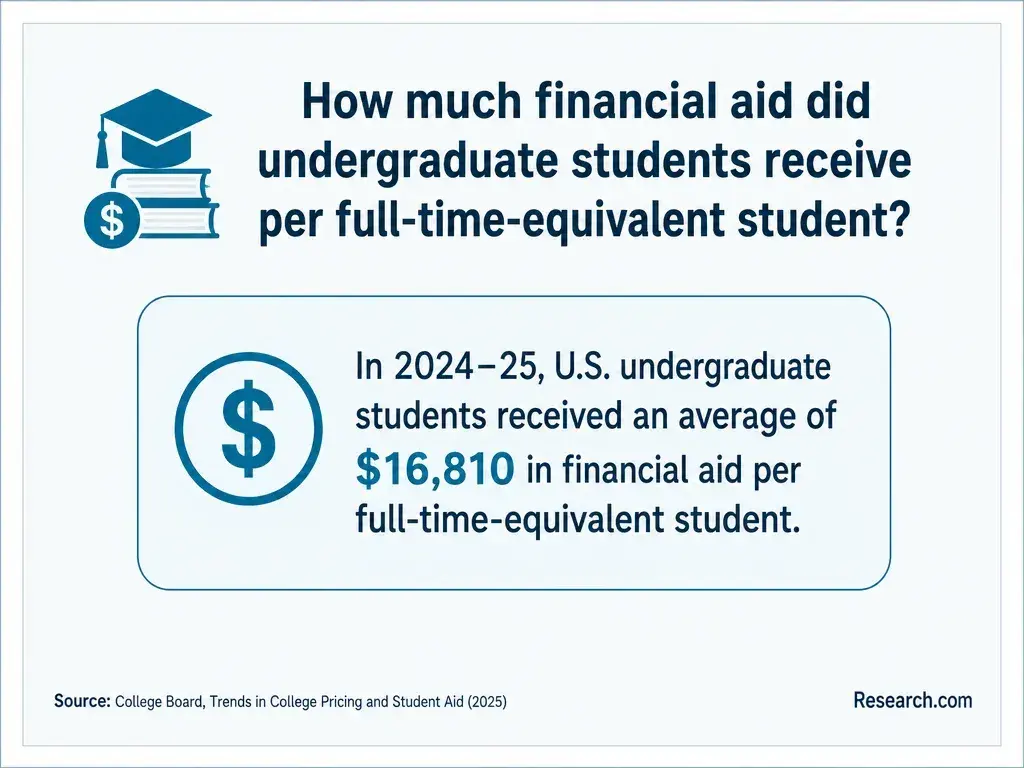
Compare two complete, written scenarios: the earliest start available and the later start with the better offer. A larger award is not necessarily a better deal if it is mostly loans, expires after one term, requires a course load you cannot sustain, or comes from a program that applies fewer of your existing credits.
The following comparison separates the parts of an aid offer that can change the decision. "Later offer" should mean an award the school has confirmed, not an estimate of what you hope to receive.
| Decision factor | Start now | Wait for the later offer |
| Net education cost | Tuition and required fees minus grants and scholarships available now | Projected charges minus confirmed later grants and scholarships |
| Borrowing | Loans needed now and in subsequent terms | Loans needed after the wait, including any changed aid eligibility |
| Time | Remaining courses and their actual scheduling | Courses available after the delay and any resulting graduation shift |
| Offer conditions | Enrollment level, renewal, and satisfactory academic progress rules | The same rules, plus deferral or award-expiration conditions |
Request a term-by-term estimate from each financial aid office and a degree audit from each academic advisor. Then total your expected out-of-pocket payments and borrowing through graduation, using the same assumptions about course load and living expenses. Treat a loan as financing, not a discount. If income has changed, ask whether a documented special-circumstances review is available; submitting a new FAFSA or waiting for another term does not, by itself, promise more aid.
Starting now makes sense when the additional cost is acceptable, required courses are available, and delaying would meaningfully postpone a job or next-degree application. Waiting makes sense when the improved grant offer is confirmed, you can retain eligibility, and the savings exceed the financial and professional cost of the delay. If neither offer is workable, compare a lower-cost accredited option before committing. Guidance on financial aid planning for a substance use counseling bachelor's can also help readers considering that distinct educational route; its aid and credential details must be checked against their chosen program.
Online delivery can reduce commuting and make an earlier start feasible, but it does not guarantee self-paced study. Check whether classes require live meetings, group work, scheduled exams, campus visits, or locally arranged internships. Campus-based study may make in-person faculty contact and research opportunities easier to access; an online student should ask how the program provides those opportunities before assuming they are equivalent.
Format also matters if you expect to continue into graduate study: compare the eventual program's attendance and experience requirements separately from the BA's. For example, comparing forensic psychology master's programs by study length is relevant only if that distinct graduate pathway fits your goal. A short advertised timeline should not determine which undergraduate aid offer you accept.
Expect to examine general psychology, statistics, research methods, development, and social or biological aspects of behavior, alongside any available mental health electives. Depending on the school, those electives might address abnormal psychology, addiction, health psychology, or community services. Studying symptoms, screening, or treatment research teaches you to evaluate evidence; it does not authorize clinical assessment or treatment.
Course order affects the start-now decision. A statistics prerequisite, a research-methods sequence, or an elective offered infrequently can delay completion even when many transfer credits are accepted. Request a term-by-term course plan for each start date. Accelerated psychology curriculum planning offers a comparison point, but a faster schedule is useful only if you can meet its workload and course sequence.
Requirements vary by school and by whether you enter as a first-year or transfer student. A school may request prior transcripts, proof of secondary-school completion, or additional materials. Admission to the university is distinct from admission to a particular major, if the school has separate major-entry rules.
For a returning student, the decisive document is a written degree audit: accepted credits may count as electives without satisfying psychology, general education, or residency requirements. Ask admissions what is needed to apply, the registrar how prior courses were evaluated, and an academic advisor what remains for graduation. If a later graduate degree is part of your plan, its admission standards are a separate check; condensed online psychology master's study does not remove the need to meet that program's prerequisites.
There is no reliable completion date or total price without your remaining-credit audit, course schedule, tuition rate, and aid terms. Full-time enrollment may finish sooner on a calendar, while part-time enrollment may be necessary to keep working. A later start can still lead to an earlier graduation if that school accepts more applicable credits or offers required courses more often.
Calculate tuition for the credits you must actually take, then add mandatory fees, books, technology, any travel or placement expenses, and borrowing costs. Subtract only grants and scholarships you can reasonably expect to retain under their stated conditions. Preserve room in your budget for later education if your goal requires it; affordable distance learning in graduate psychology concerns a separate degree and expense, not a guaranteed next step after this BA.
Check that the institution holds recognized institutional accreditation covering the school awarding the degree. Confirm its status with the accreditor or the U.S. Department of Education's accreditation records, and ask the institution whether any pending change could affect your entry term. Institutional accreditation matters for federal aid eligibility and can affect credit transfer, although another school retains authority over whether to accept particular credits.
Do not reject a general psychology BA because it lacks APA accreditation: APA accreditation is not a general undergraduate psychology program credential. If your eventual goal is licensed counseling, evaluate the later professional program and your state's rules separately, including its cost after aid. Resources on mental health counseling education costs after aid address that separate decision, not accreditation or licensure conferred by this BA.
A psychology graduate may seek nonclinical positions in human services, behavioral-health administration, outreach, or research support. Eligibility depends on the posting, relevant experience, and any state-specific requirements. A degree can strengthen an application without replacing demonstrated skills in documentation, data handling, respectful communication, and appropriate referrals.
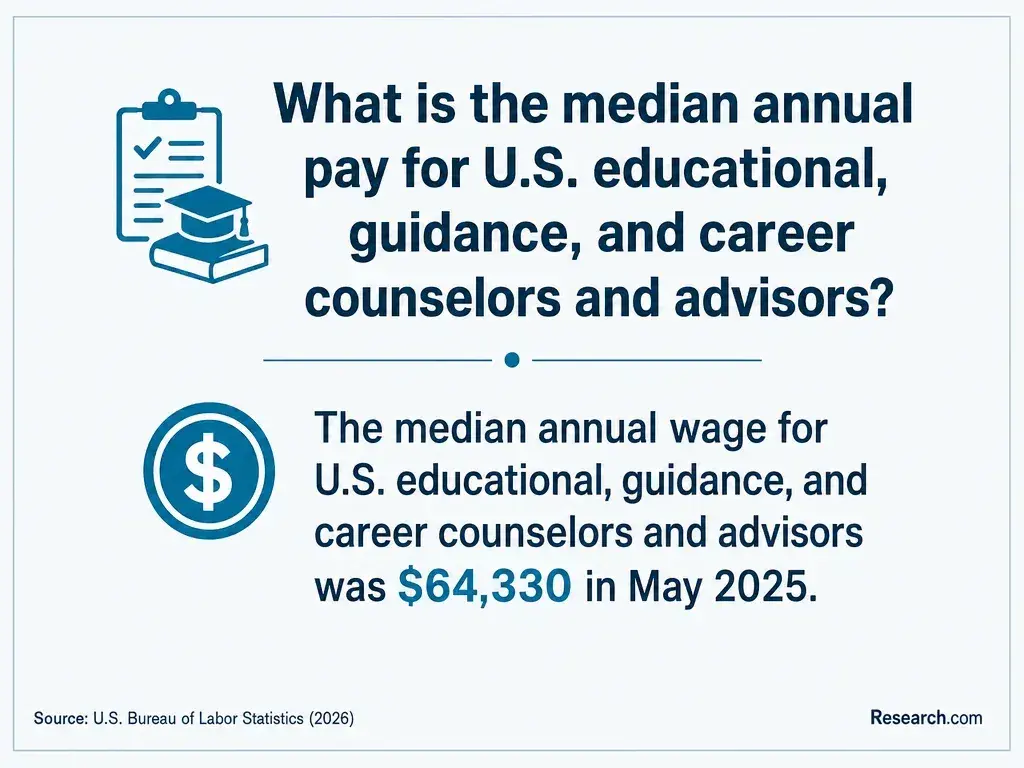
Use the U.S. Bureau of Labor Statistics' occupation-specific wage information and local job postings to investigate pay for a defined job, not for "psychology graduates" as a group. Published occupational medians include workers with different qualifications and experience, so they are not a starting-salary promise or a dependable offset for extra tuition. Likewise, forensic psychology master's education and job earning prospects describe a different credential and must not be used to justify the cost of an undergraduate mental health focus.
What Licenses or Graduate Degrees Are Needed for Mental Health Practice?
Independent psychotherapy, diagnosis, and use of protected clinical titles require qualifications beyond this BA. Depending on the profession and state, the route may involve a qualifying graduate degree, required supervised experience, examinations, and a license. Counseling, clinical social work, marriage and family therapy, and psychology are distinct pathways; neither a mental health concentration nor a general psychology master's automatically satisfies their rules.
Before choosing an undergraduate start date around a clinical career goal, identify the intended license and check the state board's educational requirements. Then compare whether either BA supplies useful prerequisites and whether you can finance the subsequent training. Accelerated clinical counseling degrees and study length may inform a later comparison, but a shorter degree timeline does not replace required supervised training or state approval.
Other Things You Should Know About Psychology
Ask admissions about its deferral policy, deposit deadline, and whether the scholarship would carry forward. Get the answers in writing before declining another offer.
It may. Ask the financial aid office to recalculate each offer at the course load you can actually manage, including any enrollment minimums for scholarships and loans.
Review each school's award terms first. Accepting an offered loan is not the same as receiving a grant, and you can ask the aid office how to reduce or decline borrowing.
Contact that program promptly to ask whether an extension or aid review is possible. Do not assume it will match the offer; compare the options you can still accept under their actual deadlines.
- Initial Calculations, Recalculations, and Overawards | ed.gov https://fsapartners.ed.gov/knowledge-center/fsa-handbook/2026-2027/vol7/ch7-initial-calculations-recalculations-and-overawards
- Delayed Time-to-Degree and Post-college Earnings - PMC - NIH https://pmc.ncbi.nlm.nih.gov/articles/PMC7875953/
- Types of Financial Aid: Grants, Work-Study, and Loans | studentaid.gov https://studentaid.gov/understand-aid/types
- Enrollment Intensity Definition & Requirements for the Federal Pell Grant | American Military University (AMU) https://www.amu.apus.edu/student-handbook/financing-education/how-to-pay-for-courses/enrollment-intensity-definition-requirements-federal-pell-grant/
- Financial Aid Procedures | Lansing Community College https://www.lcc.edu/financial-aid/procedures.html
- Online Bachelor's in Psychology | University of Kansas https://online.ku.edu/undergraduate-programs/online-bachelors-psychology
- Online Mental Health Concentration | SNHU https://www.snhu.edu/online-degrees/bachelors/ba-in-psychology/mental-health
- How Enrollment Affects Your Federal Student Loans | The University of Iowa https://financialaid.uiowa.edu/types-aid/loans/how-enrollment-affects-your-federal-student-loans
- Academic Advising & Transfer Credits | nyu.edu https://cas.nyu.edu/newstudents/transfer-transition-students/external-transfers/academic-advising.html
- Transfer Credit Policy - Medgar Evers College - CUNY https://www.mec.cuny.edu/admissions/transfer-applicant/transfer-policy/