2027 Online BA in Psychology - Mental Health Admissions with a Request to Start with One Course: What to Ask Before Applying
Audited and Verified:
Our Editorial and Data Verification Process
Research.com uses government datasets, official education statistics and primary institutional information to support its career and degree guides. Our review process checks factual accuracy, occupational definitions, source dates and the requirements associated with the credentials discussed.
How This Article Was Fact-Checked
Our editorial team verifies salary estimates, employment projections, education requirements and program information against original data providers and official organizations. Salary figures are checked against the relevant occupational definitions and reporting periods. Information about licensure, accreditation and required in-person training is reviewed separately.
Fact-checked and verified on:

Co-Founder and Chief Data Scientist
Starting an online psychology BA with one course can make college manageable, but "one course at a time" may mean different things to admissions, financial aid, and the degree planner. If you are returning to school, transferring credits, or testing whether a mental health focus fits your goals, those differences matter before you apply. This guide explains which questions to put in writing, how to check your remaining requirements and costs, and when a psychology BA supports your career plans - or when another route is more direct.
Key Things You Should Know
- Ask whether one-course enrollment is available in your first term, whether that course applies to the BA, and whether the pace remains available in later terms.
- A bachelor's degree commonly requires about 120 semester credits; taking one course at a time changes the timeline, not the number of requirements you must satisfy.
- Get a written degree audit and a one-course cost and aid estimate before committing. A mental health focus does not make a psychology BA a counseling license.
What Is an Online Bachelor's Degree in Psychology for Mental Health Careers?
An online BA in psychology is an undergraduate degree in psychological science, typically combining general education, psychology courses, electives, and a culminating requirement if the school has one. "Mental health" may describe a formal concentration, a suggested group of electives, or simply a program's marketing emphasis. Ask which designation, if any, will appear on your transcript.
The degree can prepare you to understand research, development, behavior, and mental health service systems. It does not train you to independently diagnose or treat clients. If you already work in community services, compare the coursework with skills you need for your next role: documentation, research literacy, referrals, or program support may matter more than the concentration label.
Do not confuse this undergraduate starting point with a graduate credential. Shorter completion routes for psychology master's students address a later level of study; they do not replace BA admission or establish eligibility for clinical practice.
Is an Online Psychology Bachelor's Degree Accredited and Recognized?
Check the institution's accreditation and confirm that it covers the university awarding the online BA. Then verify the exact degree name and any concentration in the current catalog. The American Psychological Association does not accredit general psychology bachelor's programs, so an "APA-accredited BA" claim is a warning to investigate, not a feature to seek.
Recognition for a particular next step is a separate question. A graduate admissions office decides whether your courses meet its prerequisites; an employer decides whether the degree and your experience meet a job's requirements. For a broader comparison of online undergraduate options, use psychology degree planning for prospective online students as a starting point, then confirm accreditation and catalog details directly with each school.
Can You Start an Online Psychology Degree With Just One Course?
Often you can enroll part time, but schools may distinguish admission to the degree from taking a course as a nondegree student. A nondegree course might later count toward the BA - or it might not. A school may also permit one course in the first term but require a different pace for certain sequences, financial aid arrangements, or graduation timelines.
Ask admissions and the psychology adviser the following questions together, so you can compare their answers against the same proposed first course:
- Can I enter the BA as a degree-seeking student while taking only one course in my first term?
- Which available course fulfills a specific requirement in my preliminary degree audit, and what prerequisite comes next?
- Can I continue at one course per term, including during terms when required courses or a capstone are offered?
- What would change for tuition, aid eligibility, registration priority, and maximum time to completion?
Request the answers for your intended entry term in writing. Accelerated BA and BS psychology pathways may offer a different schedule, but "accelerated" is not automatically compatible with a deliberately light course load.
Requirements depend on whether you are a first-year applicant, a transfer applicant, or a returning student. Schools commonly request prior transcripts and proof that you meet their undergraduate admission standards; a psychology major may also have separate entry or progression rules. Ask whether any college-level coursework makes you a transfer applicant and whether a previous academic record affects admission or aid.
For transfer students, accepted credits are not the same as completed requirements. An elective credit may transfer without satisfying statistics, research methods, or the psychology major. Submit official transcripts, course descriptions or syllabi for disputed equivalents, and any relevant prior-learning documentation. Ask the registrar or transfer-credit office for the evaluation and the psychology department for major equivalencies; request a degree audit showing what remains. Guidance on moving existing credits into psychology study can help you frame those questions, but the admitting institution makes the final determination.
Look for a foundation in introductory psychology, statistics, research methods, development, and social or biological aspects of behavior. Mental health-oriented options may include psychopathology, health psychology, substance use, or community mental health. Catalogs differ: an appealing elective may not be offered every term, and a course about counseling is not supervised counseling training.
Ask for a course sequence that starts with your proposed single class and identifies prerequisites and term availability. If addiction services are your goal, compare the mental health BA with addiction psychology bachelor's degree planning, then check the credential rules for the state and job you actually want. Course subject matter alone does not establish eligibility for an addiction counseling credential.
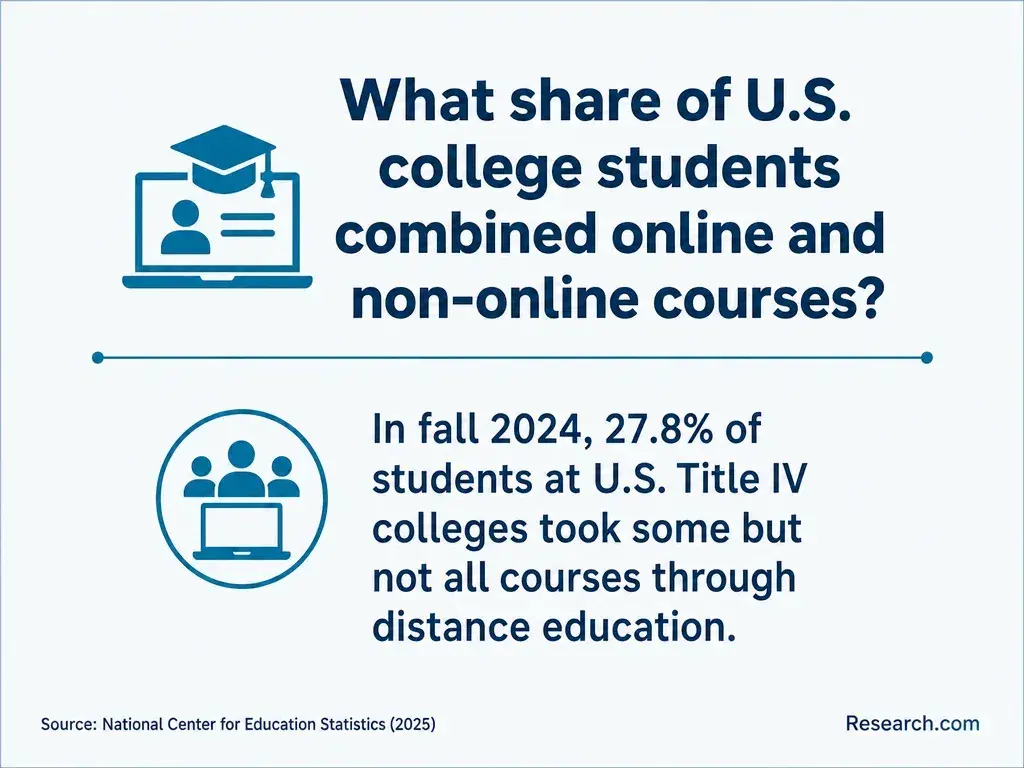
Many bachelor's degrees are built around roughly 120 semester credits, but your remaining credits, required course sequence, transfer evaluation, and enrollment pace determine your actual timeline. One course per term may be sustainable alongside work or caregiving yet extend the period over which you pay fees and wait for required classes. Ask for a term-by-term plan, not only an advertised completion estimate.
A useful quote separates the charges below; it lets you see whether a low per-course price remains affordable at your intended pace.
The table identifies cost items to request from each school before comparing offers. It is not a price list, because charges and aid eligibility depend on the institution and your enrollment.
| Cost item | What to confirm |
| Tuition | Rate per credit or course and any residency-based difference |
| Required fees | Technology, course, and term charges that apply at one-course enrollment |
| Materials and experiences | Books, software, travel, and any required placement costs |
| Financial aid | Eligibility at your actual credit load and its effect on aid duration |
Ask the financial aid office to calculate an estimate for your proposed term rather than assuming a full-time award applies. Funding an online bachelor's in substance abuse counseling covers related aid questions, but its program costs should not be treated as the price of a psychology BA.
Online study may reduce commuting and make a one-course start easier, but delivery mode does not tell you whether classes are asynchronous. Ask about scheduled meetings, exam windows, group work, campus visits, and any placement that requires local attendance. An on-campus option may be more useful if it gives you accessible faculty research, nearby service organizations, or advising you would otherwise struggle to arrange.
Compare the format against the opportunity you need, not the word "online." This matters beyond the BA as well: forensic psychology master's study with faster pacing illustrates a different graduate-level scheduling decision, not evidence that an undergraduate mental health program offers the same flexibility.
A psychology BA can support applications for nonclinical roles such as human services assistant, intake or program coordinator, research assistant, and some behavioral-health support positions. Duties may include helping people navigate services, maintaining records, arranging referrals, collecting research data, or supporting program operations. Employers may require additional experience, a background check, or a role-specific credential.
Choose the first course and later experiences with a target job in mind. For example, a current nonprofit employee might pair research methods with an approved program-evaluation project; a career changer seeking intake work might need supervised service experience and training in documentation. Neither path authorizes therapy. If legal-system settings interest you, comparing jobs associated with forensic psychology graduate education can clarify why victim-support work and licensed forensic assessment are different paths.
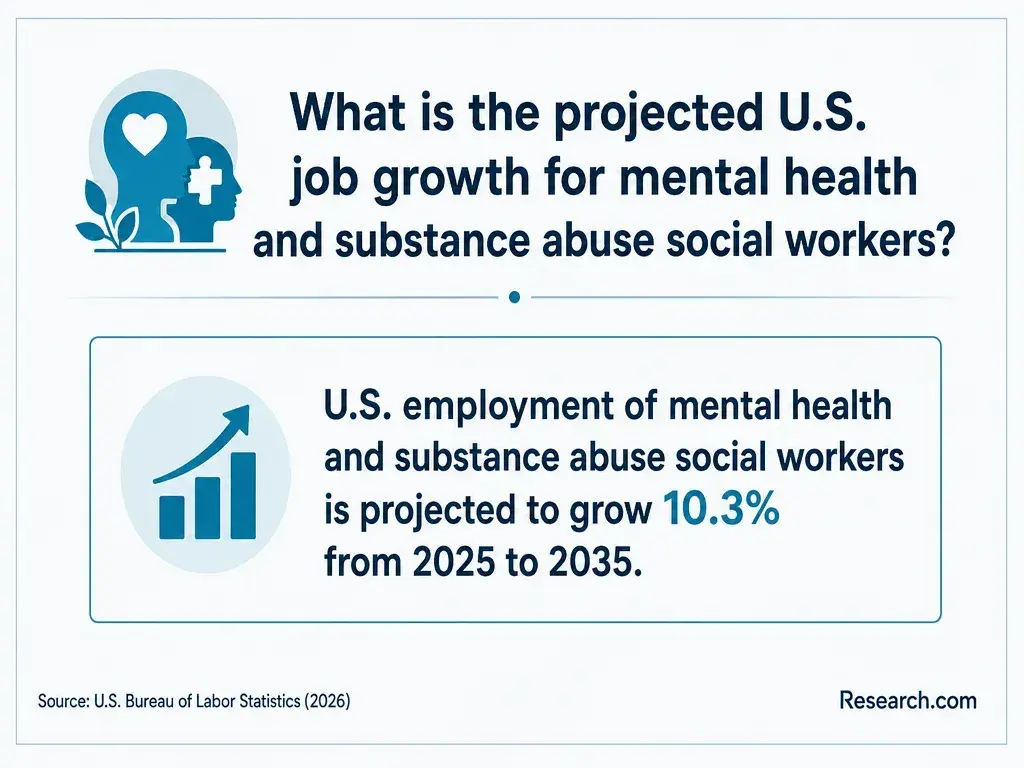
There is no single "psychology BA salary": pay follows the occupation, location, employer, and experience. For a relevant point of reference, the U.S. Bureau of Labor Statistics reports $45,120 as the 2024 median annual pay for social and human service assistants. That is an occupation-wide median, not the starting wage or expected outcome of an online psychology graduate. The occupation's projected growth also cannot tell you whether a particular local employer will hire you.
Compare actual job postings for the role and region you want, including required credentials and schedules. If your intended occupation is licensed counseling, account for the cost and time of qualifying graduate education rather than comparing its pay with BA-only costs. Affordable accredited mental health counseling study options address that separate investment decision; verify any option against your state's licensing rules.
Does a Psychology Bachelor's Degree Lead to Counseling Licensure?
No. A psychology BA, including one with a mental health concentration, does not by itself qualify you for independent counseling licensure. Licensed professional counseling generally requires an appropriate graduate program plus jurisdiction-specific supervised experience and other conditions. The state licensing board - not the BA's concentration name - determines educational eligibility.
If counseling is the goal, ask prospective graduate programs which undergraduate courses they require or recommend. Starting the BA with one course can still be sensible if you need the bachelor's credential, but it is only an early step. Compare the subsequent training commitment, including any live or in-person obligations, using clinical counseling degree formats and completion estimates and the applicable licensing board's requirements before deciding that the BA is your best starting route.
Other Things You Should Know About Psychology
Some schools allow nondegree enrollment. Before registering, ask whether admission is required, whether the class would later apply to the BA, and whether taking it changes your application status.
Possibly. Ask your benefits administrator about approved schools, minimum grades, reimbursement timing, and whether you must be degree-seeking. Confirm the school's payment deadline separately.
Ask about leave-of-absence and reentry rules before enrolling. A pause can affect catalog requirements, aid, and access to courses offered infrequently.
Not necessarily. Start with a course that fits your approved degree audit and prepares you for later requirements. Introductory psychology or statistics may be more useful if it is a prerequisite for the courses you want.
- Chapter 3 - Courses and Enrollment, Full Course of Study, and Reduced Course Load | USCIS https://www.uscis.gov/policy-manual/volume-2-part-f-chapter-3
- Cost of Attendance (Budget) | 2025-2026 Federal Student Aid Handbook https://fsapartners.ed.gov/knowledge-center/fsa-handbook/2025-2026/vol3/ch2-cost-attendance-budget
- Types of Financial Aid: Grants, Work-Study, and Loans | studentaid.gov https://studentaid.gov/understand-aid/types
- Frequently Asked Questions (FAQs) - Transfer Credit Ohio https://transfercredit.ohio.gov/help-center/faqs/faqs
- Transfer Students | New York State Education Department https://www.nysed.gov/standards-instruction/transfer-students
- Non-Degree Student Admission Information | Undergraduate Admissions https://admissions.oregonstate.edu/non-degree-student-admission-information
- Non-degree Seeking Graduate Student | Alabama A&M University https://www.aamu.edu/admissions-aid/graduate-admissions/non-degree-seeking-graduate-students.html
- Section 2, Students - District | Maricopa https://district.maricopa.edu/book/export/html/9831
- 3-801 Credit Requirements for Degrees - Student Code | Illinois https://studentcode.illinois.edu/article3/part8/3-801
- Non-Degree Seeking Students | Office of Admissions https://admissions.fsu.edu/nondegreeapp