2027 Online BA in Psychology - General Psychology for Faith-Based Outreach Staff: What to Check Before Changing Careers
Audited and Verified:
Our Editorial and Data Verification Process
Research.com uses government datasets, official education statistics and primary institutional information to support its career and degree guides. Our review process checks factual accuracy, occupational definitions, source dates and the requirements associated with the credentials discussed.
How This Article Was Fact-Checked
Our editorial team verifies salary estimates, employment projections, education requirements and program information against original data providers and official organizations. Salary figures are checked against the relevant occupational definitions and reporting periods. Information about licensure, accreditation and required in-person training is reviewed separately.
Fact-checked and verified on:

Co-Founder and Chief Data Scientist
Faith-based outreach work may already have given you experience building trust, coordinating services, and responding to people in difficult circumstances. An online BA in general psychology could strengthen that work or support a move into a paid community-service role, but it may not be the most direct route to your goal.
This guide helps outreach staff compare the degree with targeted training and other qualifications, check whether online study fits their schedule and budget, and distinguish nonclinical opportunities from careers that require professional licensure.
Key Things You Should Know
- A general psychology BA can strengthen outreach, referral, and program-evaluation skills, but it does not qualify you to diagnose conditions or provide psychotherapy.
- A bachelor's degree commonly requires about 120 semester credits; ask for a degree audit before assuming prior college work will shorten the path.
- For a pay comparison, the U.S. Bureau of Labor Statistics reports a May 2024 median wage of $45,120 for social and human service assistants, not a salary promised to psychology graduates.
What is an online BA in general psychology for faith-based outreach staff?
It is a broad undergraduate degree in psychological science delivered primarily online, not a pastoral-care credential or a clinical qualification. General psychology typically combines coursework on behavior and development with research methods and statistics. A BA may also leave room for electives or a minor, but its requirements depend on the institution.
For an outreach worker, the value lies in applying evidence carefully. Understanding barriers to service use, communicating across communities, evaluating a referral process, and recognizing when someone needs a qualified professional. Experience in a congregation or faith-based nonprofit can provide useful context, but a degree will not convert existing support duties into clinical practice.
If your intended job specifically involves substance-use counseling, compare the broad BA with online addiction counseling coursework and admissions. Check the credential rules in your state before choosing either route; a program's name alone does not establish eligibility.
Is an online psychology bachelor's degree accredited and reputable?
Start with institutional accreditation: confirm the school and its current status in the U.S. Department of Education's accreditation database, then check that the degree itself is offered by that institution.
The American Psychological Association does not accredit general psychology bachelor's programs. Institutional accreditation matters for academic recognition and federal-aid eligibility, but it does not prove that a particular curriculum fits your career goal.
Reputation is more useful when translated into evidence. Ask for the published course sequence, faculty access, online tutoring, methods-course support, career services, and information about graduates' outcomes.
If an internship is advertised, determine whether it is required, whether employed students can use an existing workplace, and who must approve the site. Do not assume an outreach position will automatically count.
If counseling is your longer-term goal, assess a prospective counseling graduate program under the recognition and state rules relevant to that credential; those are separate from BA accreditation. An accredited mental health counseling program cost guide can help frame that later comparison, but confirm each program's current status and requirements directly.
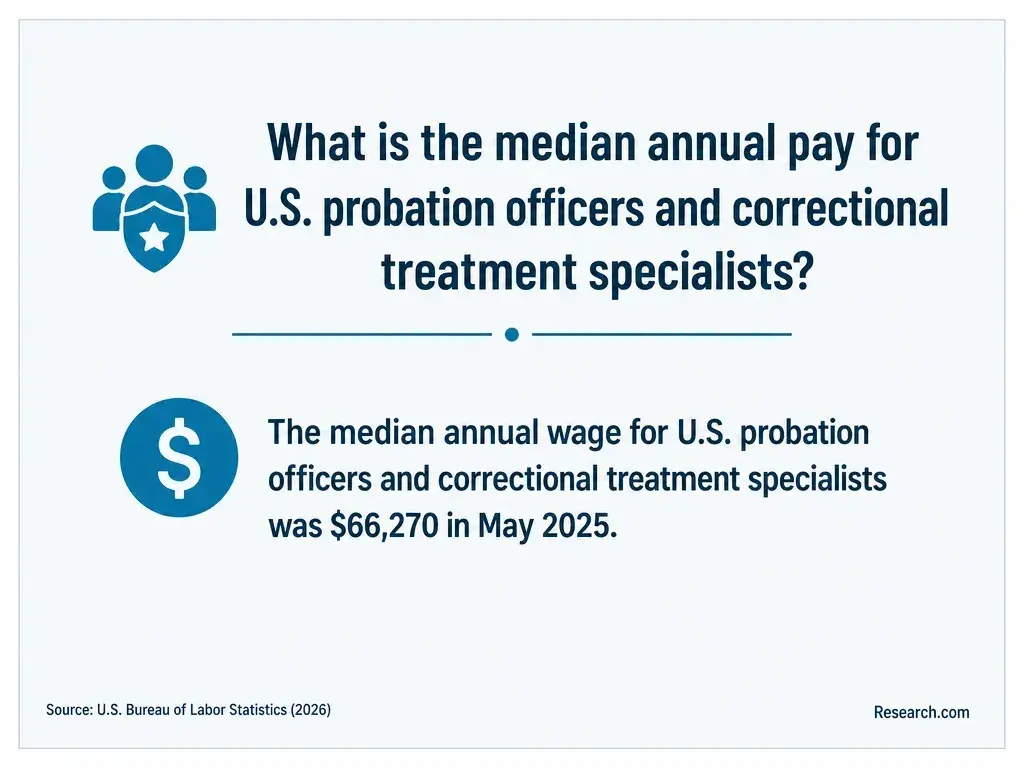
What careers can a psychology degree support in faith-based outreach?
Your existing experience may already be relevant to outreach coordinator, referral specialist, volunteer coordinator, or community-program roles.
A BA can add evidence of research literacy and a completed undergraduate education where an employer requires one. It is less likely to replace required case-management experience, a language skill, a professional credential, or knowledge of local service systems.
The distinctions below can help you identify the actual duties to prepare for, rather than choosing a degree by job title alone.
| Target work | What the BA may add | What to verify |
| Outreach or referral coordination | Knowledge of behavior, development, and evidence-based communication | Employer requirements for documentation, safeguarding, language skills, and community partnerships |
| Program support or evaluation | Research methods, statistics, and clear reporting | Required spreadsheet, data, grant-reporting, and evaluation experience |
| Recovery or behavioral-health support | Relevant academic background and referral literacy | State or employer rules for peer-support and addiction-service positions |
| Therapy or psychological assessment | Possible preparation for further study | The qualifying graduate degree, supervised training, and licensure rules |
If you work with survivors or people involved in the justice system, victim advocacy may be a more direct target than a forensic title. Likewise, online forensic psychology master's graduation planning concerns a later academic option, not a shortcut to licensed evaluation or legal authority. Compare actual job postings before committing to another degree.
Expect foundational psychology, lifespan development, social or cultural psychology, research methods, and statistics alongside general education requirements. Offerings vary. A program may include electives in health, addiction, trauma, or community psychology without awarding a formal concentration. Academic study of mental health does not train a student to diagnose or treat it.
For outreach work, methods courses can be especially practical. They can help you judge whether a survey represents the people your organization serves, distinguish an observed change from proof that a program caused it, and present findings without exposing client information.
If you hope to evaluate a program at work, ask both the school and your organization about supervision, data permission, confidentiality, and any required review before collecting information.
Choose electives against a specific job description. For recovery-service work, review recovery-focused roles and qualifications before assuming an addictions elective satisfies a credential requirement. For general outreach leadership, evaluation, communication, or nonprofit administration coursework may serve you better.
Schools commonly request evidence of secondary-school completion or prior college study, transcripts, and an application; policies on GPA, prior coursework, and admission to the major vary.
You do not necessarily need a previous psychology course to start an undergraduate major. A returning student should distinguish being admitted from having prior credits applied to specific degree requirements.
Before you enroll, request a written degree audit showing general education, psychology-major, prerequisite, elective, and institution-residency requirements. Ask whether prior statistics or research-methods courses meet major requirements and when any remaining courses are offered. Planning a psychology degree with previous college study can help you prepare that conversation; only the receiving institution can decide how your credits apply.
A conventional bachelor's degree is commonly structured around 120 semester credits and roughly four years of full-time study.
Your remaining time depends on accepted credits, how those credits satisfy requirements, course sequencing, and the number of courses you can realistically take while working. Online delivery does not eliminate a required capstone, placement, or final courses offered on a limited schedule.
Request a personalized cost estimate, not just a tuition rate. Include remaining credits, mandatory fees, books or software, travel for any site requirement, and earnings you might lose by reducing work hours.
Compare that total with the likely benefit of the specific role you want. Lower-tuition undergraduate psychology options are worth comparing, but a lower per-credit price may not mean a lower total if fewer of your credits apply.
Ask your employer whether education assistance is available and check federal-aid eligibility with each school's financial-aid office. Neither reimbursement nor aid should be treated as certain until its conditions are confirmed.
Online study can reduce commuting and make it easier to remain employed in outreach. It may also require scheduled live sessions, group projects, proctored exams, or an approved local experience.
Campus study can make informal faculty contact and local networking easier, but its class times and travel may conflict with service schedules. Neither format is inherently more rigorous or more flexible.
Ask for a sample term schedule and identify every fixed obligation, including evening meetings and placement hours. Check how online students obtain research mentorship and whether faculty can supervise a nonclinical project connected to your organization.
If speed matters, comparing accelerated psychology degree options is useful only after checking workload, transfer-credit treatment, and course availability; shorter terms can mean more intense weeks, not less work.
A general psychology BA alone does not authorize independent psychotherapy, diagnosis, psychological testing, or use of a protected psychologist title. Those activities require the qualifications and permissions applicable to the profession and jurisdiction.
An outreach worker can offer support, explain available services, and make appropriate referrals within their role; studying psychology does not expand that role's legal scope.
If you want to become a licensed mental health counselor, identify your intended state's licensing board and examine qualifying graduate education, supervised experience, and examination requirements before selecting undergraduate electives.
Planning an accelerated clinical counseling master's may help you compare later programs, but speed is secondary to whether a particular program meets the requirements that apply to you.
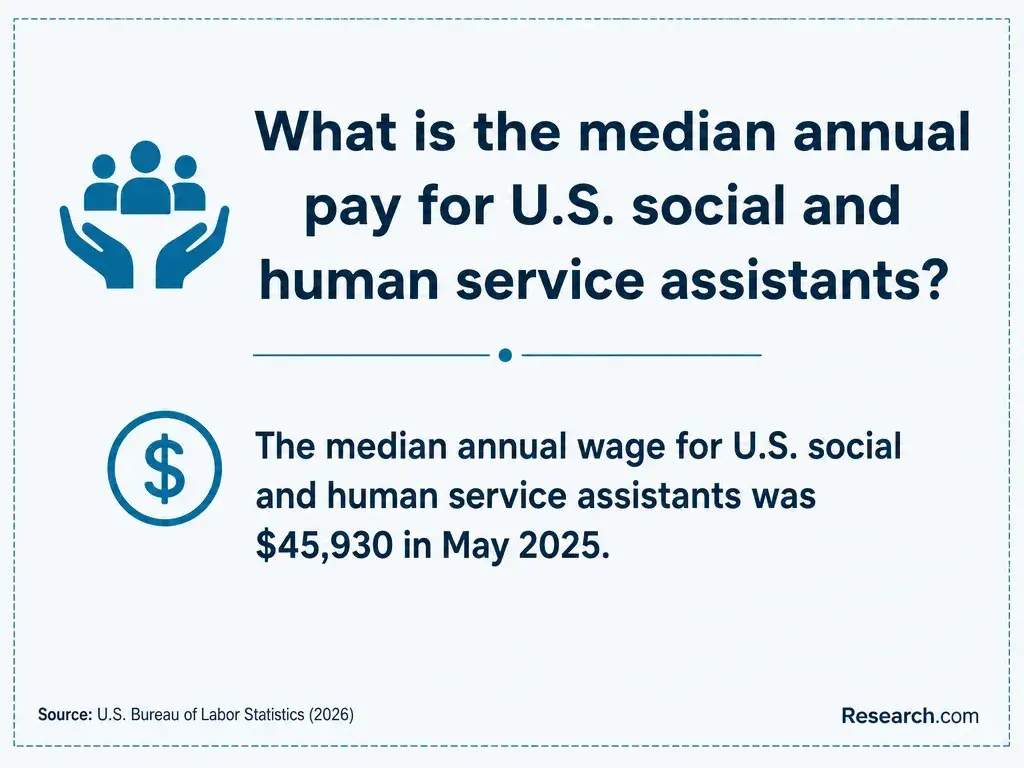
There is no single salary or employment outlook for an online psychology BA. Pay follows the occupation, location, employer, experience, and required credentials. As one relevant benchmark, the U.S. Bureau of Labor Statistics reports a May 2024 median annual wage of $45,120 for social and human service assistants.
This occupation includes varied settings and education backgrounds; the figure is not an entry-level offer or an outcome for graduates of a particular program.
BLS projects employment growth for social and human service assistants over its 2024-2034 projection period, but a national outlook cannot tell you whether your local faith-based organization has a funded opening. Compare local postings for duties, degree requirements, pay, and advancement.
If a more specialized substance-use pathway is under consideration, compare its likely costs as well as job requirements; financial support for substance abuse counseling majors may affect that calculation, subject to actual eligibility and award terms.
How can faith-based outreach staff choose the right psychology program?
Begin with a target job and two or three real postings, including one outside faith-based organizations. Mark the qualifications you already meet through outreach work and those you lack.
Then compare a general psychology BA with a targeted course, employer-supported training, an appropriate credential, or another degree. A full BA makes more sense when the target employer requires a bachelor's degree or when you also want broad preparation for later study.
Use the following checks to turn program claims into a decision you can document:
- Ask the employer or hiring manager which degree, experience, and credentials the target role actually requires.
- Obtain a degree audit, full remaining-cost estimate, and realistic term-by-term schedule from each school.
- Confirm institutional accreditation and ask how online students access advising, faculty, and approved applied work.
- Check any future licensed-career plan with the relevant state board before treating the BA as a step toward that credential.
- Compare the degree's total commitment with a smaller training option and the responsibilities or opportunities each would realistically add.
If counseling is the eventual goal, account for graduate study rather than budgeting only for the BA. Information on accelerated clinical counseling degrees and study length can help frame that longer timeline.
Verify recognition, placement obligations, and state eligibility for any program you consider. If your goal is simply to improve referrals or volunteer training in your current position, a focused course and supervised workplace project may be the better first move.
Other Things You Should Know About Psychology Programs
Yes, it can demonstrate communication, service, and leadership experience. Describe your responsibilities accurately, and do not present pastoral or volunteer support as clinical training.
Possibly. Ask the instructor and organization for approval before using internal information or contacting participants. A literature review may be feasible without accessing confidential client records.
Requirements depend on the institution. Review its mission, curriculum, and conduct policies, and ask how it teaches psychological evidence and respectful service to people with different beliefs.
It may be a useful trial if it teaches a skill your target role needs. Check its cost, employer value, and whether its credits would apply to a later degree before enrolling.
- Cost of Attendance (Budget) | 2026-2027 Federal Student Aid Handbook https://fsapartners.ed.gov/knowledge-center/fsa-handbook/2026-2027/vol3/ch2-cost-attendance-budget
- Undergraduate Retention and Graduation Rates - COE https://nces.ed.gov/programs/coe/indicator/ctr/undergrad-retention-graduation
- DAPIP | Homepage - Office of Postsecondary Education (OPE) https://ope.ed.gov/dapip/
- Types of Financial Aid: Grants, Work-Study, and Loans | studentaid.gov https://studentaid.gov/understand-aid/types
- College Accreditation | U.S. Department of Education http://www.ed.gov/laws-and-policy/higher-education-laws-and-policy/college-accreditation
- Psychology Department Courses | Lehman College Catalog https://lehman-undergraduate.catalog.cuny.edu/departments/PSYCH-LEH/courses
- What Jobs Can You Get With a Ministry Degree? 10 to Consider - Lancaster Bible College https://www.lbc.edu/blog/what-job-can-you-get-with-a-ministry-degree/
- Credit for Prior Learning | Office of the University Registrar | West Virginia University https://registrar.wvu.edu/transfer/credit-for-prior-learning
- FAQs | umaryland.edu https://www.ssw.umaryland.edu/practicum/faqs/
- Pursuing a Career in Clinical or Counseling Psychology | apa.org https://www.apa.org/education-career/guide/subfields/clinical/education-training