2027 Online BA in Psychology - Addictions Admissions with Part-Time Study Across Several Institutions: What to Ask Before Applying
Audited and Verified:
Our Editorial and Data Verification Process
Research.com uses government datasets, official education statistics and primary institutional information to support its career and degree guides. Our review process checks factual accuracy, occupational definitions, source dates and the requirements associated with the credentials discussed.
How This Article Was Fact-Checked
Our editorial team verifies salary estimates, employment projections, education requirements and program information against original data providers and official organizations. Salary figures are checked against the relevant occupational definitions and reporting periods. Information about licensure, accreditation and required in-person training is reviewed separately.
Fact-checked and verified on:

Co-Founder and Chief Data Scientist
An online BA in psychology with an addictions focus may let you study around work or caregiving, but "part-time" means different things at different institutions. One school may offer flexible courses yet require a daytime placement; another may accept transfer credits that do not satisfy the major. This guide is for applicants comparing several programs, especially returning students who need a reliable completion plan.
It explains what to ask admissions, advising, financial aid, and - if counseling is the goal - the relevant credentialing authority before committing.
Key Things You Should Know
- Ask each institution for a program-specific degree audit: accepted transfer credit, credit applied to requirements, and admission to the major are separate decisions.
- A conventional BA often requires about 120 semester credits, but your remaining credits, course sequence, and placement obligations - not the advertised part-time label - determine your timeline.
- An addictions concentration is academic preparation, not a counseling license; check your state's credential rules before choosing courses or a placement.
What is an online bachelor's degree in psychology with an addictions concentration?
It is a psychology bachelor's degree that combines a broad major with focused study of substance use, prevention, recovery, and related services. The focus might be an officially recorded concentration, a minor, or simply a set of electives. Those distinctions matter: ask what appears on the transcript and whether the focused courses are guaranteed to be available online at your intended pace.
Compare the degree's purpose with your target job. A psychology BA can build research literacy and knowledge of behavior while leaving room for other career directions. A program designed specifically around addiction counseling may offer a different mix of coursework and supervised experience; online addiction counseling degree programs are worth comparing if that is your intended occupation. Neither program title establishes eligibility for a state credential.
Is an online addictions psychology degree accredited and professionally recognized?
Check the institution's accreditation status with its accreditor and confirm that it covers the institution offering the online degree. Then ask whether any separate program recognition applies to the exact BA and whether your target state credential accepts its coursework. Institutional accreditation does not certify an addictions concentration as counselor training, and APA accreditation should not be assumed for a psychology BA.
Apply the same scrutiny to any appealing specialization label. For example, forensic psychology degree program quality checks also require separating institutional standing from claims about a particular professional pathway. For addictions, send the state credentialing authority the proposed course list and placement description rather than relying on a school's general career statement.
What careers can you pursue with a bachelor's degree in addictions psychology?
Depending on the employer, experience, and local rules, graduates may seek nonclinical work in recovery outreach, program support, intake, referrals, case coordination, or community education. These jobs can involve documenting services and helping people navigate resources; they do not automatically permit diagnosis or psychotherapy. Experience in a nonprofit or human-services setting may strengthen an application, but it does not replace a required credential.
Before enrolling, collect several local job postings and separate duties from titles. If the work you want is recovery support rather than counseling, compare the BA with employer training, a state-recognized peer-support route where applicable, and supervised experience. Explore professional pathways in recovery organizations to identify roles, then confirm each employer's actual hiring requirements.
Requirements differ for first-year, transfer, and returning applicants. Ask whether admission to the university also admits you to the psychology major; whether a minimum GPA or prerequisite applies; and which transcripts, prior-school records, or other documents are required. A student with an associate degree should not assume that all accepted credits fulfill psychology, general education, or residency requirements.
Request a written, program-specific degree audit before paying an enrollment deposit. Ask the registrar or transfer-credit office to evaluate prior courses, then have psychology advising confirm how statistics, research methods, and addictions courses apply.
Ask who approves substitutions or appeals and when that decision becomes final. If speed matters, start by comparing accelerated psychology degree options, but check whether their admission and course schedules actually accommodate part-time study.
Expect to compare psychology foundations, statistics, research methods, and courses addressing substance use and recovery. Programs may differ substantially in their treatment of developmental psychology, social context, prevention, ethics, and community services. Ask for the current catalog and a term-by-term course rotation: an elective listed in the catalog may not be offered when a part-time student needs it.
If graduate study is possible, protect your methods preparation. Ask whether statistics and research methods satisfy likely prerequisites at programs you may later consider; the undergraduate advisor cannot promise another institution's admission decision.
Shorter completion routes for psychology master's students may be attractive later, but an accelerated calendar does not remove prerequisite gaps. Coursework about addiction or counseling remains academic study, not authorization to treat clients.
There is no dependable timeline without your approved audit and the school's course schedule. A conventional BA often totals about 120 semester credits, but accepted credits can still leave unmet major requirements. Prerequisite chains, courses offered only in certain terms, and institutional residency rules can extend completion even when the remaining credit count looks manageable.
Ask each school to map your remaining courses across actual upcoming terms, including any internship or capstone. Confirm whether courses have fixed weekly meetings, whether placements require daytime hours, and what happens if you pause enrollment.
If your ultimate goal is licensed counseling, budget for subsequent qualifying education and supervised experience rather than treating BA graduation as the endpoint; a clinical mental health counseling master's pacing guide can help frame that separate time commitment.
Compare estimated cost to completion, not advertised tuition alone. Ask each school for its tuition basis, required fees, remaining credits after evaluation, expected terms, and charges tied to placements or technology. Add books, travel, and potential unpaid placement time where relevant. Without a final audit and current price schedule, a total-cost estimate is provisional.
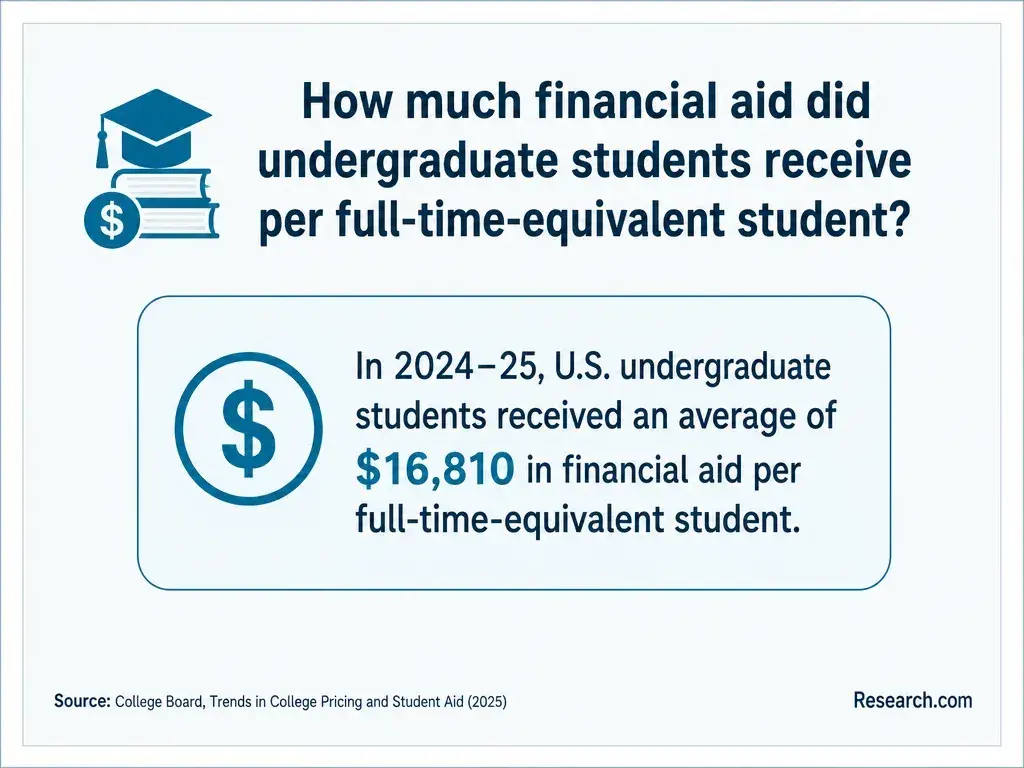
Part-time enrollment can also change aid eligibility and spread fees across more terms. Ask financial aid which enrollment thresholds apply to your aid, whether your prior borrowing or attempted credits affect eligibility, and how satisfactory academic progress is measured. The guide to reducing undergraduate substance abuse counseling tuition through aid is a starting point, not a substitute for an individualized aid offer.
Online delivery can reduce commuting, but it does not guarantee self-paced work. Compare required live sessions, exam arrangements, group projects, faculty access, and placement-site approval with the campus option. A campus program may offer easier access to a local research team or agency network; an online program may better fit a working student if those opportunities are accessible remotely or near home.
Ask both programs how they support part-time students finding supervised, appropriate experience and whether an existing job can be proposed as a site. Approval, supervision, duties, and confidentiality rules still apply. If you expect to continue to graduate study, assess that later expense separately with an online psychology master's affordability guide; savings on BA commuting do not establish the cost of the full pathway.
Requirements depend on the state and the specific job title. A state may distinguish supervised substance-use counseling, independent clinical practice, and peer recovery support, with different education, examination, experience, and supervision rules. An online psychology BA - or an addictions concentration within it - does not independently grant any of those credentials.
Start with the state board or credentialing body for the job and location you want. Ask whether the exact degree and courses meet its educational criteria, which supervised hours count, who may supervise, and whether an out-of-state placement qualifies.
If the target role instead requires a qualifying counseling master's, compare that route before paying for a BA concentration on the assumption it will satisfy licensing coursework. Lower-cost accredited counseling degree pathways may be relevant, but their suitability still depends on the applicable state rules.
What salary and job outlook can addictions psychology graduates expect?
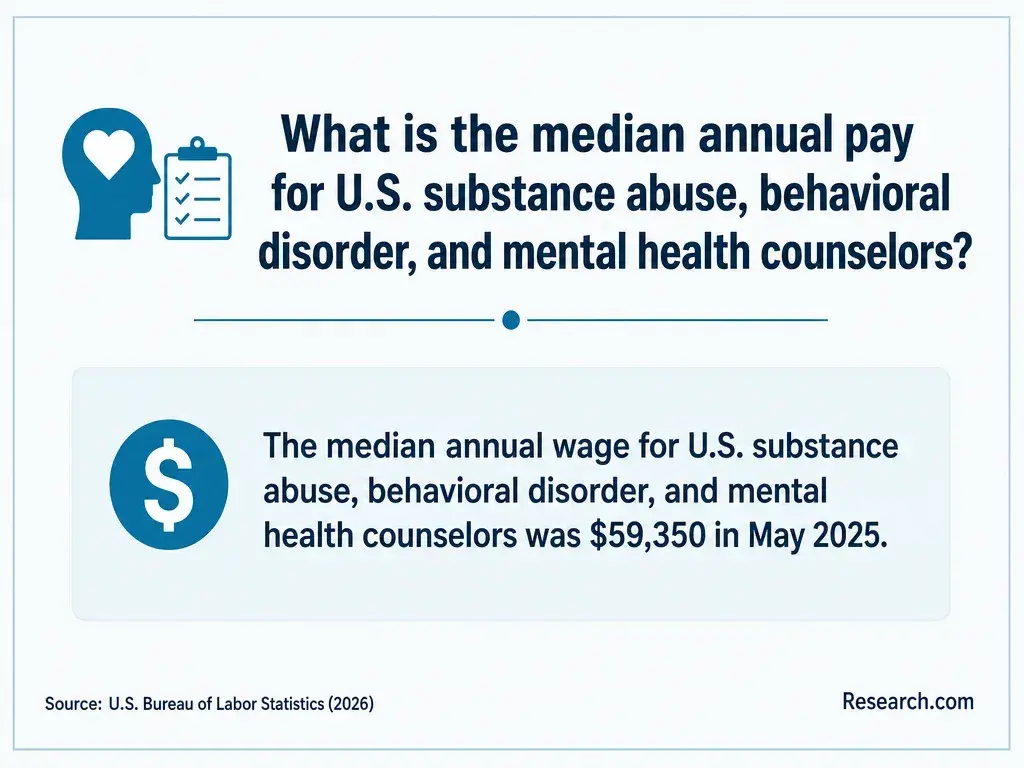
There is no single salary or job-growth figure for graduates of this concentration. The US Bureau of Labor Statistics reports by occupation, not undergraduate major. Its substance abuse, behavioral disorder, and mental health counselor category is useful for examining a counseling career, but it combines roles with different qualification requirements; its occupation-wide median is not a BA graduate's expected starting pay.
For a decision grounded in your circumstances, compare current local postings for jobs you could qualify for upon graduation with postings for your longer-term target role. Note required credentials, experience, hours, and pay, then weigh those opportunities against your verified remaining degree cost. A guide to planning a budget for an online psychology degree can help organize costs; it cannot predict an individual employment outcome.
Other Things You Should Know About Psychology
Often, yes, but ask when final transcripts are due and whether admission or your proposed degree audit is conditional until those courses are completed.
Ask advising about course availability and financial aid about enrollment thresholds before changing pace. A lighter term can affect both your sequence and aid.
Not necessarily. Ask whether the focus is recorded on the diploma, transcript, both, or neither, and confirm that it is an official program option.
Ask the office with authority over each decision - admissions, transfer evaluation, major advising, or financial aid - for its answer in writing. For professional credentials, consult the relevant state authority.
- Semester Course Load and Student Performance - PMC - NIH https://pmc.ncbi.nlm.nih.gov/articles/PMC7568764/
- Certified Addiction Counselor (CAC) clinical training program | colorado.gov https://bha.colorado.gov/for-service-providers/learning-and-development/certified-addiction-counselor-cac-clinical-training
- School-Determined Requirements | 2024-2025 Federal Student Aid Handbook https://fsapartners.ed.gov/knowledge-center/fsa-handbook/2024-2025/vol1/ch1-school-determined-requirements
- Drug Misuse and Addiction | National Institute on Drug Abuse https://nida.nih.gov/publications/drugs-brains-behavior-science-addiction/drug-misuse-addiction
- Guidance on Clinical Practice and Supervision | ca.gov https://docs.ctc.ca.gov/Document/Download/30526
- Substance Abuse Counselor (CASAC) | Monroe University https://www.monroeu.edu/academics/undergraduate-programs/school-criminal-justice/certified-alcohol-and-substance-abuse
- Understanding the Schedule of Classes: Register for Classes | Student Engagement https://southbend.iu.edu/students/registrar/register-for-classes/understanding-the-schedule-of-classes.html
- Applied Psychology: Addictions Studies, B.S. - CPS, CPSO | University of New Hampshire https://www.unh.edu/program/bachelor-science/applied-psychology-addictions-studies
- Common Course Scheduling - Policy Library https://www.umkc.edu/provost/policies-and-resources/policies/common-course-scheduling.php
- Best Practices | Field Study - UC Irvine https://fieldstudy.soceco.uci.edu/pages/best-practices