2027 Online Finance Bachelor's Degree Programs With No Application Fee

Co-Founder and Chief Data Scientist
Choosing an online finance bachelor’s degree is not only a tuition decision. Before you compare courses, transfer credits, and career outcomes, you may run into a smaller but frustrating barrier: the application fee. For career changers, working adults, first-generation students, and applicants comparing several schools, those fees can make it harder to explore legitimate options.
No-application-fee online finance programs can reduce that early cost, but “free to apply” does not automatically mean “affordable,” “easy to enter,” or “high quality.” The real question is whether the program is accredited, financially realistic, transfer-friendly, and respected enough to support your goals in banking, corporate finance, financial analysis, insurance, fintech, or related business roles.
Recent data shows that 42% of online Finance bachelor's degree applicants prioritize programs with no application fees when considering enrollment. This guide explains what no application fee actually means, how to evaluate accredited programs, what students may save, how tuition and financial aid compare, and what to check before applying.
Key Benefits of Online Finance Bachelor's Degree Programs With No Application Fee
- Compare programs based on accreditation, tuition costs, and financial aid options to ensure a no-fee online finance degree meets both academic standards and budget constraints.
- Evaluate transfer credit policies and curriculum alignment with your career goals; programs offering flexible credit transfers and specialized finance coursework support smoother degree completion and job readiness.
- Assess career outcomes data such as job placement rates and industry demand for finance graduates, which are crucial for adult learners and career changers investing time and resources into a new field.
What Does 'No Application Fee' Really Mean for an Online Finance Bachelor's Program?
A no-application-fee online finance bachelor’s program lets you submit an admissions application without paying the standard upfront fee. That can make it easier to compare several schools before committing. However, applicants should confirm whether the fee is permanently waived or only removed through a temporary promotion, deadline-based offer, or admissions code.
According to data from the National Center for Education Statistics (NCES), approximately 65% of accredited schools offering online finance bachelor's degrees still charge an application fee, while about 35% either permanently waive the fee or regularly provide fee waivers.
The distinction matters because a temporary waiver may expire before you finish gathering transcripts, recommendations, or financial aid documents. A permanent no-fee policy is usually simpler: the school does not charge applicants at all during the standard admissions process.
- Permanent waivers: Some schools never require an application fee, which lets students apply without an upfront admissions cost.
- Temporary promotions: Some institutions waive fees during limited admissions windows or require a special code. Always confirm the deadline and conditions.
- Cost transparency: A waived application fee removes one early expense, but it does not tell you whether the program has low tuition, strong aid, or generous transfer policies.
- Budget impact: Applying to several no-fee programs can help students compare acceptance decisions and aid offers without spending money before enrollment.
Examples of accredited institutions with permanent no-application-fee policies include Southern New Hampshire University, Western Governors University, and Fort Hays State University, all of which highlight this option on their admissions pages for online finance bachelor's programs.
Use the no-fee policy as a starting point, not the final reason to enroll. Review tuition, required fees, textbook or software costs, financial aid, transfer credit limits, course format, and graduation requirements. If your priority is entering the workforce quickly, it can also help to compare finance pathways with short careers that pay well so you understand the time and cost trade-offs before choosing a degree.
Which Nationally and Regionally Accredited Schools Offer Online Finance Bachelor's Degrees With No Application Fee?
Several nationally and regionally accredited schools offer online Finance bachelor’s degrees with no application fee. Because admissions policies can change, students should verify the current fee policy directly on the school’s admissions page or with an enrollment counselor before applying.
Accreditation should be the first filter. Regional accreditation usually has broader acceptance among employers, graduate schools, and transfer institutions. National accreditation is often associated with career-focused or private institutions and may be recognized differently depending on the employer, licensing body, graduate school, or transfer destination.
For a finance bachelor’s degree, regional accreditation generally provides more flexibility if you later want to transfer credits, pursue a master’s degree, or apply for roles where employers screen for institutional credibility.
| School | Online finance-related program | Accreditation type stated | Tuition information stated |
| Arizona State University | Online Bachelor of Science in Finance | Higher Learning Commission (regional) | Total tuition is approximately $60,000 |
| Bellevue University | Fully online Bachelor of Science in Finance | Higher Learning Commission (regional) | Estimated tuition of $38,000 |
| Fort Hays State University | Online Bachelor of Science in Finance | Higher Learning Commission (regional) | Approximately $22,000 for in-state and $35,000 for out-of-state students |
| Herzing University | Bachelor of Business Administration with a Finance concentration | Nationally accredited by ACICS | Total tuition around $50,000 |
| Southern New Hampshire University | Online Bachelor of Science in Finance | New England Commission of Higher Education (regional) | Estimated at $38,000 |
When comparing these options, do not stop at “no application fee.” Ask each school for a full cost estimate that includes tuition, technology fees, required course materials, transfer credit evaluation, and projected financial aid. Also ask whether the finance program is a standalone finance major, a business degree with a finance concentration, or another business pathway with finance coursework.
Students comparing accreditation standards may also find it useful to review how specialized accreditation is discussed in other fields. For example, CACREP-accredited program listings show how affordability and recognized quality standards can be evaluated together.
How Much Money Can Students Save by Choosing an Online Finance Bachelor's Program With No Application Fee?
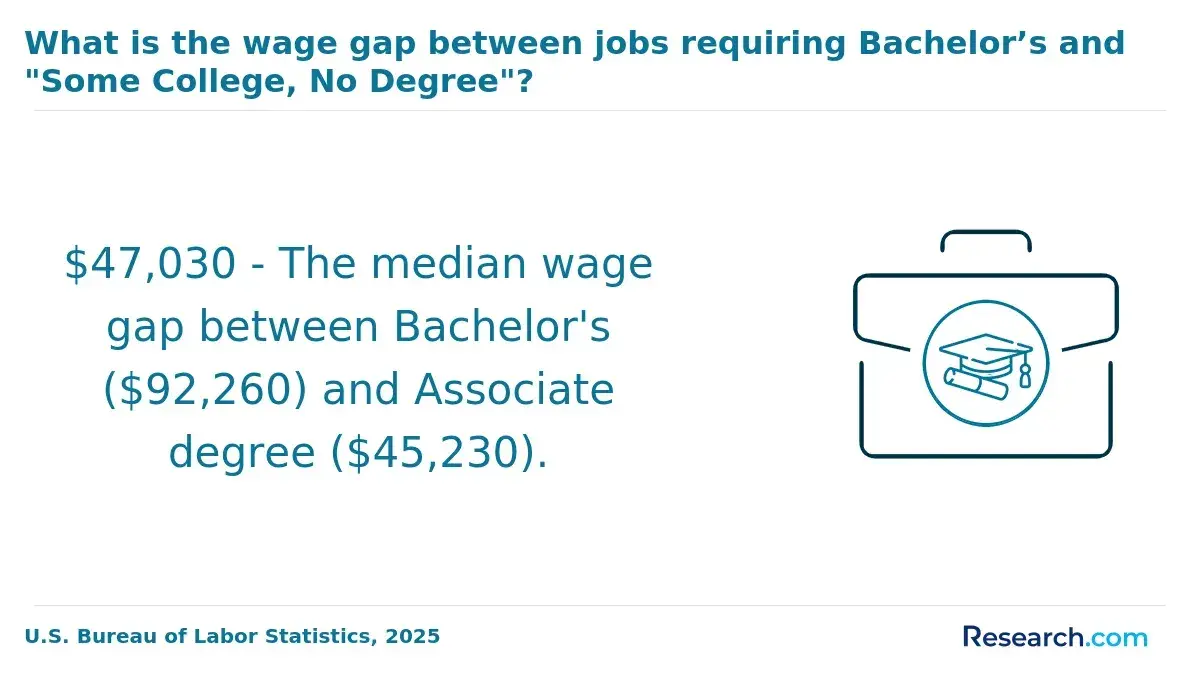
Students can save the full cost of each waived application fee. Data from the College Board shows that application fees usually range from $25 to $75 each. If you apply to eight to ten schools, those fees can total between $200 and $750. Choosing only no-fee programs, or using legitimate fee waivers, can eliminate that upfront application cost.
The savings are most meaningful for students who need to compare several programs before choosing one. Adult learners, transfer students, first-generation applicants, and career changers may need multiple offers to evaluate admissions fit, transfer credit, scholarships, and total cost.
The Georgetown Center on Education and the Workforce emphasizes that application fees represent a major obstacle for many low-income and first-generation college applicants. Removing those fees can make it easier to apply broadly and compare real options instead of guessing which single program is most affordable.
- Direct savings: Avoiding $25 to $75 per application can save $200 to $750 when applying to eight to ten programs.
- Better comparison shopping: No-fee applications allow students to request admissions decisions and financial aid information from more than one school.
- Lower risk for career changers: Applicants coming from unrelated fields can explore finance programs without paying before knowing whether their academic background fits.
- More access for first-generation students: Removing early costs can reduce hesitation among students unfamiliar with the college admissions process.
Still, application-fee savings are small compared with total degree cost. A program with no application fee but high tuition may cost more overall than a program with a modest application fee and much lower tuition. Compare the total price after transfer credits and aid, not only the cost to apply.
Are Online Finance Bachelor's Programs That Charge No Application Fee Accredited and Legitimate?
Yes, many legitimate accredited online finance bachelor’s programs charge no application fee. A waived fee is usually a recruitment or access policy, not a sign that academic standards are lower. The important question is whether the institution is properly accredited and whether the program’s curriculum aligns with your career goals.
Regional accreditation confirms that an institution meets broad academic and administrative standards. Programmatic accreditation from organizations such as the Accreditation Council for Business Schools and Programs (ACBSP) or the Association to Advance Collegiate Schools of Business (AACSB) can provide additional evidence of business-school quality. Although ABET mainly accredits engineering and technology, the broader lesson is the same: applicants should understand which accreditor applies to the field they are studying.
- Verify institutional accreditation: Use the CHEA database (www.chea.org) to confirm whether the school holds recognized accreditation.
- Check the U.S. Department of Education listing: The U.S. Department of Education's tool (https://ope.ed.gov/dapip/#/home) allows students to look up schools and accreditation status.
- Do not treat “free to apply” as a red flag by itself: Many legitimate schools waive application fees to reduce barriers or attract qualified students.
- Be cautious with unaccredited schools: A free application does not protect you from diploma mills, weak transferability, or degrees that employers may not respect.
- Review the curriculum: A strong finance program should include coursework in financial management, investments, accounting, economics, analytics, risk, and business decision-making.
Students should also ask whether credits will transfer, whether graduates qualify for graduate study, and whether the degree supports professional goals connected to financial analysis, banking, corporate finance, or related business roles. For a broader view of affordability in adjacent fields, see this guide to accounting degree online cost.
What Are the Admission Requirements for Online Finance Bachelor's Programs That Waive the Application Fee?
No-application-fee finance programs usually require the same core admissions materials as programs that charge a fee. A free application removes an upfront cost; it does not necessarily mean open admission or automatic acceptance. Many programs maintain moderate selectivity with acceptance rates generally between 40% and 70%.
- High school diploma or GED equivalent: First-year applicants typically need proof of secondary school completion.
- Official transcripts: Schools usually require high school transcripts and, for transfer students, transcripts from every college previously attended.
- GPA expectations: Competitive programs may look for a GPA around 2.5 to 3.0, though requirements vary by institution.
- SAT/ACT policies: Many programs have adopted test-optional admissions, but some selective institutions still encourage applicants to submit SAT or ACT scores.
- Math and English preparation: Applicants are often expected to have completed foundational coursework in math and English because finance programs involve quantitative analysis, writing, and business communication.
- Transfer documentation: Transfer applicants may need course descriptions or syllabi if they want prior credits evaluated for specific finance, accounting, economics, or business requirements.
Rolling admissions and multiple start dates are common in online programs. That flexibility can help working adults and career changers begin sooner, but it can also create pressure to enroll quickly. Before accepting admission, confirm the program length, tuition, transfer credit award, financial aid package, and withdrawal policies.
How Does Per-Credit-Hour Tuition at Online Finance Bachelor's Programs Compare When the Application Fee Is Already Waived?
Once the application fee is waived, tuition becomes the main cost driver. Online finance bachelor’s programs vary widely by per-credit rate, total credits, transfer credit acceptance, and fee structure. Using IPEDS and College Scorecard data, some no-fee programs are priced below the national online bachelor’s average of approximately $350 per credit hour, while others are near or above that benchmark.
| School | Per-credit-hour tuition stated | Total credits stated | Approximate total tuition stated | Application fee |
| Western Governors University | $370 per credit hour | 120 total credits | Approximately $44,400 total tuition | No application fee |
| Fort Hays State University | $218 per credit hour | 120 total credits | About $26,160 total tuition | No application fee |
| University of the People | $100 per credit hour | 120 credits | Roughly $12,000 total tuition | No application fee |
| American Public University System | $285 per credit hour | 120 credits | Approximately $34,200 total tuition | No application fee |
| Colorado State University Global | $350 per credit hour flat rate | 120 credits | Estimated $42,000 total tuition | No application fee |
Several schools offer flat-rate tuition, meaning students pay the same per-credit price regardless of residency. Western Governors University and Colorado State University Global use this model, which can make costs more predictable and may benefit out-of-state students.
In 2023, over 40% of online bachelor's degree programs eliminated application fees to enhance access for diverse and nontraditional students. That trend improves access, but it does not eliminate the need to compare total cost.
- Application fee impact: Waiving the fee lowers the cost of applying but does not reduce tuition after enrollment.
- Tuition variability: Listed no-fee programs range from as low as $100 to above $350 per credit hour.
- Total credits matter: A 120-credit degree can become substantially cheaper if the school accepts prior college credit.
- Flat-rate pricing can help: A consistent per-credit rate can make planning easier, especially for non-resident students.
- Ask about extra costs: Technology fees, textbooks, software, exam proctoring, and graduation fees can affect the final price.
The best value is not automatically the lowest sticker tuition. A slightly higher-cost program may be worthwhile if it accepts more transfer credits, offers stronger student support, provides better employer recognition, or fits your schedule well enough to help you finish.
What Financial Aid and Scholarships Are Available for Online Finance Bachelor's Students at No-Fee Programs?
Students at accredited no-application-fee finance programs may still qualify for the same major forms of financial aid available at other accredited colleges. The application fee policy does not determine FAFSA eligibility. Accreditation, enrollment status, program eligibility, and student financial circumstances are the key factors.
According to Federal Student Aid, completing the FAFSA unlocks access to funds such as the Pell Grant and subsidized or unsubsidized federal loans. Nearly 60% of undergraduate students use some form of federal financial aid, making early aid planning an important part of choosing an online Finance bachelor’s degree.
- Federal grants and loans: Eligible students can use FAFSA-based aid at accredited institutions that participate in federal student aid programs.
- Pell Grant: Qualified undergraduate students may receive grant aid that does not have to be repaid if program and eligibility requirements are met.
- Subsidized and unsubsidized federal loans: These can help cover remaining costs, but students should borrow carefully and understand repayment obligations.
- Finance-specific scholarships: Some professional associations, universities, and scholarship databases offer awards for Finance students.
- Institutional grants: No-fee online Finance programs may still provide merit-based or need-based awards through the school.
- Employer tuition assistance: Working adults should ask employers about tuition reimbursement or education benefits that can be combined with other aid when allowed.
- Transfer-based savings: Although not a scholarship, accepted transfer credit can reduce the number of courses you must pay for.
Submit the FAFSA as early as possible and contact each school’s financial aid office before enrolling. Ask for a net price estimate, not just a tuition quote. A useful comparison includes tuition, fees, books, software, transfer credits accepted, grants, scholarships, loans, and employer benefits.
How Long Does It Take to Complete an Online Finance Bachelor's Degree at a No-Application-Fee School?
An online finance bachelor’s degree typically requires around 120 credit hours. Most full-time students finish in about four years, but the actual timeline depends on transfer credits, course load, term length, work schedule, and whether the program offers accelerated or competency-based options.
- Standard full-time pace: A four-year timeline usually assumes about 15 credits per semester in a traditional academic calendar.
- Accelerated formats: Some no-application-fee programs use eight-week terms or year-round enrollment, allowing motivated students to finish in as little as two to three years.
- Part-time study: Students balancing full-time work, caregiving, or military service may take five years or more, especially if they enroll in one or two courses at a time.
- Asynchronous courses: Many online finance programs let students access lectures and assignments on their own schedule, which can help adults manage coursework around work hours.
- Competency-based models: Some programs allow students to progress by demonstrating mastery rather than spending a fixed amount of time in each course.
- Transfer credits and exams: Prior college coursework, military training, prior learning assessment, or exams like CLEP may reduce remaining credit requirements.
- Course sequencing: Finance majors may require prerequisites in accounting, economics, statistics, or business math. Missing prerequisites can slow progress if key courses are offered only in certain terms.
Before enrolling, ask an advisor for a written degree plan showing how many credits you need, which courses are required, how often they are offered, and the expected graduation date at your planned pace. Adult learners comparing flexible formats may also find relevant planning guidance in resources on online degrees for moms.
Can Transfer Students Apply for Online Finance Bachelor's Degrees With No Application Fee?
Yes. Most online finance bachelor’s programs that waive the application fee also accept transfer students. This can be especially valuable for students who started at a community college, changed majors, left school before finishing, or completed credits at another four-year institution.
Transfer credit policies usually depend on accreditation, course content, grades earned, credit age, and how well prior coursework matches the finance degree requirements. Credits from regionally accredited institutions and relevant coursework are more likely to be accepted, while vocational, remedial, highly specialized, or non-accredited credits may face limits.
According to data from the National Center for Education Statistics (NCES) and the National Council for State Authorization Reciprocity Agreements (NC-SARA), over 80% of online finance programs accept transfer credits. Articulation agreements between community colleges and four-year universities offering online finance degrees can also make transfer planning easier by identifying which courses are guaranteed to count.
- Request an early transfer evaluation: Do this before enrolling so you know how many credits remain and what the degree will actually cost.
- Send every transcript: Schools typically require official transcripts from all colleges attended, even if you do not expect all credits to transfer.
- Check business core requirements: Accounting, economics, statistics, management, and business law courses may transfer differently than general education credits.
- Ask about maximum transfer limits: Some schools cap the number of credits that can be applied toward the bachelor’s degree.
- Review articulation agreements: These agreements can reduce uncertainty for community college students planning to complete a finance bachelor’s online.
Transfer students should compare no-fee programs by remaining cost, not advertised tuition alone. A school with higher tuition may be cheaper if it accepts more of your prior credits. Students researching cost-effective online pathways in other fields can also examine how transfer planning appears in guides such as cheapest online master's mechanical engineering.
Are Online Finance Bachelor's Degrees With No Application Fee Recognized by Employers?
Employers are generally more concerned with accreditation, institutional reputation, skills, and work experience than with whether a school charged an application fee. A no-fee admissions policy does not appear on the diploma and usually has no bearing on employer recognition.
According to Georgetown University's Center on Education and the Workforce, accreditation signals academic quality and plays a pivotal role in employer acceptance, while degrees from unaccredited schools often trigger skepticism no matter the cost or convenience.
Survey data from the Society for Human Resource Management indicates that hiring managers increasingly treat online and traditional degrees equally when the institution is properly accredited. In Finance, that matters because many roles focus on applied skills: financial analysis, spreadsheet modeling, budgeting, forecasting, investment research, risk assessment, and business communication.
Programmatic accreditation, such as from the Association to Advance Collegiate Schools of Business (AACSB), can carry additional weight in some business settings. Employers and credentialing agencies like the CFA Institute and Financial Industry Regulatory Authority (FINRA) often prefer candidates whose degrees meet recognized academic standards.
- Accreditation matters most: Regionally accredited institutions are typically better understood by employers and graduate schools.
- Online format is increasingly accepted: Properly accredited online degrees are often evaluated similarly to campus-based degrees.
- Program quality still counts: Look for rigorous coursework in finance, accounting, economics, analytics, and business strategy.
- Experience strengthens the degree: Internships, capstone projects, case competitions, work experience, or portfolio projects can help online graduates stand out.
- Resume presentation matters: List the institution, degree title, major, graduation date, relevant coursework, and technical skills clearly. There is usually no need to emphasize that the program was online unless asked.
For job seekers, the strongest approach is to combine an accredited finance degree with demonstrable skills. Build evidence through projects, Excel-based analysis, budgeting assignments, investment research, or internships whenever possible.
What Technology Requirements and Online Learning Tools Are Used in No-Fee Online Finance Bachelor's Programs?
No-application-fee online finance programs usually require the same technology as other online bachelor’s programs. Students need reliable broadband internet, a modern laptop or desktop computer, a webcam, and a microphone for virtual meetings, presentations, and remotely proctored exams.
- Learning management systems: Platforms such as Canvas, Blackboard, and D2L are commonly used for lectures, assignments, quizzes, grades, discussion boards, and instructor communication.
- Spreadsheet tools: Excel is often essential in finance courses because students may build budgets, forecasts, valuation models, amortization schedules, and data analyses.
- Accounting and business software: Some programs may use tools such as QuickBooks for accounting-related coursework.
- Market data tools: Some programs may provide access to Bloomberg terminals or other market data resources, while others use browser-based alternatives or simulations.
- Remote proctoring: Exams may require identity verification, webcam monitoring, a quiet testing space, and a stable internet connection.
- Virtual collaboration tools: Group projects may use video meetings, shared documents, presentation tools, and discussion platforms.
- Technical support: Schools typically provide help with platform access, software setup, password issues, and troubleshooting.
Before enrolling, ask whether software is included in tuition or billed separately. Also check minimum device specifications, operating system requirements, browser requirements, mobile access limitations, and proctoring rules. A no-fee application can reduce upfront admissions cost, but required hardware and software can still affect affordability.
What Graduates Say About Their Online Finance Bachelor's Degree Programs With No Application Fee
-
: "I decided to pursue an online finance bachelor's degree mainly because there was no application fee, which made it less daunting to explore a new career path. The affordability of the program allowed me to focus on learning without the typical financial pressure. Completing the degree opened doors for me to transition smoothly into a finance analyst role, proving it was a valuable investment in my future.
— Callahan"
-
: "The no-application-fee option was a deciding factor for me as I was cautious about upfront costs when changing careers. I appreciated how the program balanced cost-effectiveness with quality education, making it accessible for working professionals like me. Since graduating, I've noticed a significant boost in my confidence and skills, which has helped me secure roles that align better with my passion for finance.
— Saul"
-
: "As someone shifting careers, eliminating the application fee was an important consideration to reduce initial barriers. The overall cost of the online finance bachelor's degree was reasonable, especially given the flexibility it provided around my existing job. Earning this degree has not only enhanced my resume but also empowered me to negotiate higher positions and responsibilities within the finance sector.
— Adam"
Other Things You Should Know About Finance Degrees
Students enrolling in 2027 online finance bachelor's degree programs need a reliable computer with updated software and internet access. Most programs require familiarity with online learning platforms like Blackboard or Canvas and may recommend using browsers like Chrome or Firefox for optimal performance.
After admission, most students must complete the FAFSA to be considered for federal grants, loans, or work-study. Many schools also require a separate institutional aid form by a published priority deadline, often in spring, to qualify for need-based scholarships.
References
- How long does it typically take to complete finance MBA online programs? https://www.lsib.co.uk/2022/answers.aspx
- Online Finance Degree https://www.snhu.edu/online-degrees/bachelors/bs-in-finance
- The top 7 Master's in Finance benefits and why you should pursue one https://www.eaemadrid.com/en/blog/masters-in-finance-benefits
- Online Bachelor of Business Administration and Digital Innovation with Finance & FinTech https://www.global-business-school.org/programs/bachelor-europe-bachelor-of-business-administration-online/online-bachelor-of-business-administration-and-digital-innovation-with-finance-fintech/
- Stevenson University https://www.stevenson.edu/online/about-us/news/how-long-does-it-take-to-get-a-business-degree-online/
- Online Bachelor's Degree in Finance | CSU Global | Accredited https://csuglobal.edu/academic-programs/undergraduate-degrees/bachelors-degree-finance
- Department of Education offers an institutional lookup tool (<em> https://ope.ed.gov/dapip/
- Online Bachelor's Degree Completion Financial Aid https://www.hamline.edu/admission-aid/financial-aid/online-bachelors
- We're Here for You https://www.setonhill.edu/apply-afford/financial-aid-affordability/online-bachelors-degree-certificate-program-aid/index.html
- 5 Benefits of Completing a Master's in Finance Online https://www.master-of-finance.org/lists/5-benefits-of-completing-a-masters-in-finance-online/