2027 Return on Investment of an Online Finance Bachelor's Degree: Salary vs Cost

Co-Founder and Chief Data Scientist
Choosing to pursue an online finance bachelor's degree raises a critical question: does the salary boost after graduation justify the tuition and time investment? Many working professionals hesitate as they weigh the growing costs of education against uncertain financial returns. Studies show graduates with a finance degree earn approximately 20% more than those with unrelated bachelor's degrees within five years-a significant factor in evaluating return on investment.
This article examines salary trends, program costs, and employment outcomes to help prospective students determine if an online finance bachelor's degree offers a worthwhile financial pivot in their careers.
Key Things to Know About the Return on Investment of an Online Finance Bachelor's Degree
- Average tuition for online finance bachelor's degrees ranges from $15,000 to $40,000-significantly lower than traditional programs-boosting affordability for first-generation students and working professionals.
- Graduates report median salaries near $70,000 annually, reflecting a 20% premium over peers without degrees and stronger earning potential in key financial sectors.
- Non-financial returns include enhanced job security, access to leadership roles, and opportunities for continuous professional development in a rapidly evolving financial industry.
What is the true cost of earning an online finance bachelor's degree from enrollment to graduation?
Direct and indirect expenses shape the total cost of earning an online finance bachelor's degree. Tuition, the most substantial expense, can vary widely-public in-state tuition ranges from $15,000 to $30,000, while private institutions often exceed $40,000 for the full program.
It's important to factor in that many students pay far less than these sticker prices after financial aid, scholarships, and grants are applied. Using data from IPEDS, individual university net price calculators, and the National Center for Education Statistics helps establish realistic tuition and fees for online finance bachelor's programs.
Additional fees contribute to the overall investment. Technology fees, which cover access to digital platforms and support, often total between $500 and $1,500. Textbooks and required course materials add another $1,000 to $2,000, and some programs charge proctoring fees ranging from $20 to $50 per exam. These smaller costs accumulate and can add $2,000 to $3,500 over the degree's duration.
Indirect costs such as time invested in studying and the opportunity cost of foregone wages also affect the financial impact. Working professionals balancing jobs or family obligations must consider these factors carefully. Reliable sources ensure students can realistically assess their total investment.
- Tuition Variability: Tuition differs widely between public and private institutions, with many students paying less than the published sticker price after financial aid and scholarships.
- Additional Fees: Technology charges, textbooks, and exam proctoring fees add approximately $2,000 to $3,500 throughout the degree duration.
- Indirect Costs: Time management and potential lost wages during study play a crucial role in the overall financial impact.
- Total Estimated Cost: Considering all direct and indirect costs, most students can expect to spend between $20,000 and $50,000 from enrollment to graduation.
Prospective students comparing different pathways may also want to explore shorter alternatives, such as associates degrees online, which require lower upfront investment but come with different career outcomes.
How does the starting salary for finance bachelor's degree graduates compare to the total cost of the degree?
The median annual starting salary for graduates holding a finance bachelor's degree typically ranges between $55,000 and $65,000, according to the Bureau of Labor Statistics (BLS) Occupational Outlook Handbook. Entry-level roles, such as financial analysts or junior accountants, commonly fall within this salary spectrum.
When considering the total cost of an online finance bachelor's degree-which varies widely from $20,000 to $50,000 depending on the institution and availability of financial aid-it is helpful to frame return on investment by comparing these numbers directly. This assessment can guide first-generation college students, working professionals seeking advancement, or career changers to choose an online Finance program aligned with their financial goals.
In the best-case scenario, with tuition at the lower end and substantial financial aid, the total cost might be about $20,000. At a starting salary of $65,000, it would take roughly four months of gross income to cover these educational expenses.
Conversely, in a worst-case scenario-where tuition approaches $50,000 and financial assistance is minimal-the same salary range means approximately nine to 11 months of gross income are needed to recoup degree costs. These calculations offer practical insight into how long it may take to offset the investment in an online Finance degree.
Starting salary is only the beginning. Careers in finance generally show steady wage growth over five to 10 years, greatly enhancing long-term ROI. This salary progression helps graduates repay educational loans faster while building financial stability. Beyond financial returns, this degree also opens doors to career advancement, increased job security, and expanded professional networks-benefits essential for sustained success. Those interested should also consider other affordable options and related fields such as the LMFT degree when planning their educational investments.
- Starting Salary Range: Entry-level salaries for finance bachelor's degree graduates typically fall between $55,000 and $65,000 annually, according to BLS data for roles like financial analyst and accountant.
- Degree Cost Variation: Total cost of an online finance bachelor's degree varies-from $20,000 at lower-cost programs with financial aid to about $50,000 without significant assistance.
- Payback Period: Depending on tuition and salary, it takes between four and 11 months of starting salary to recover degree expenses in gross earnings.
- Salary Growth Potential: Finance careers generally experience steady salary increases over time, improving long-term ROI beyond starting pay.
- Non-Financial Benefits: A finance degree enhances job security, career advancement, and professional development opportunities critical to long-term success.
What is the average return on investment (ROI) for an online finance bachelor's degree over a 10-year career?
Return on investment (ROI) in higher education is calculated by subtracting the total cost of completing a degree from the additional earnings generated by the graduate compared to someone with only a high school diploma or an associate degree in the same field.
According to research from the Georgetown University Center on Education and the Workforce and PayScale's College ROI Report, finance bachelor's degree holders typically see substantial financial benefits over a 10-year career.
Using median wage data from the U.S. Bureau of Labor Statistics, a finance professional starts with an annual salary of about $72,000 and receives yearly raises averaging 3%. When compounded over a decade, this results in cumulative earnings exceeding $770,000. Comparatively, a high school graduate in a similar role might begin at $42,000 per year with smaller raises, totaling roughly $470,000 over the same period.
Considering an average tuition and fees total near $40,000 for an online finance degree, the net career earnings gain is approximately $260,000 over 10 years. This figure demonstrates how education investment pays off in long-term income. Finance degree ROI generally surpasses the national average for all bachelor's degrees, reflecting strong demand and consistent wage growth in the finance sector.
- Definition Of ROI: ROI measures the net financial benefit by subtracting education costs from increased earnings over 10 years, comparing degree holders to those without.
- 10-Year Earnings: Starting at $72,000 with a 3% annual raise, finance graduates accumulate around $770,000 in earnings over a decade.
- Degree Cost Impact: The $40,000 average expenditure on tuition and fees reduces gross gains to a net ROI, emphasizing cost considerations.
- Comparison To National Average: Finance graduates typically experience a higher ROI than the average bachelor's degree recipient due to strong industry salary trends.
- Additional Benefits: Graduates also gain access to career advancement, job stability, and professional networking opportunities beyond financial returns.
A professional who enrolled in an online finance bachelor's program after a careful analysis of its cost versus expected ROI shared that the decision was driven by a clear understanding of long-term benefits amid upfront financial concerns. "It wasn't easy juggling work, classes, and expenses," he recalled.
"I frequently questioned if the investment would truly be worth it." However, he emphasized that precise budgeting and realistic salary projections helped him stay focused. "Knowing the numbers gave me confidence, even when the workload felt overwhelming." This experience highlights the importance of evaluating both financial and personal factors when pursuing an online finance degree.
Tuition rates for online finance programs remain highly diverse.
- Public Institutions: In-state public universities generally offer the most economical tuition for online finance bachelor's degrees, with costs typically between $7,000 and $12,000 annually, based on flat-rate pricing models reported by IPEDS for the latest academic year. These schools often combine affordable tuition with recognized accreditation and established alumni networks, supporting both academic quality and career advancement.
- Private Nonprofit Colleges: These institutions have tuition rates usually ranging from $20,000 to $40,000 per year. Although pricier, they frequently provide enhanced financial aid options and comprehensive career services that may improve job placement and long-term salary potential for graduates.
- For-Profit Institutions: Often marketed with lower sticker prices-commonly below $15,000 annually-these colleges might appear budget-friendly at first glance. However, their lower graduation rates and employer skepticism can negatively impact long-term returns on investment and salary outcomes.
When weighing average tuition costs for online finance bachelor's degrees by institution type, prospective students should balance upfront expenses against verified career results. Lower tuition at for-profit schools may not translate to better financial returns if career outcomes suffer.
Public and private nonprofit options, despite higher costs, often yield superior job security and professional growth. Those exploring education pathways can also consider pursuing an online degree for construction management or related fields to align their goals with market demand and ROI.
Here is the projected long-term salary trajectory over a 20- to 30-year career:
Early Career: Finance graduates typically start in roles like financial analyst or junior accountant, where salary growth is steady but moderate. Annual raises often range between 3% and 5% as they build essential skills and credentials.
Mid Career: Around five to ten years into their profession, many advance to senior analyst or team lead positions. This stage often sees a noticeable salary increase, partly driven by added responsibilities and professional certifications such as the CFA or CPA.
Established Career: At ten to fifteen years of experience, the salary trajectory accelerates sharply. Professionals frequently move into leadership roles like finance manager or director, benefiting from specialized expertise and earning above national averages.
Late Career: Beyond fifteen years, earnings continue to grow, though at a steadier pace, as individuals take on executive roles including CFO or senior finance consultant. Industry experience and reputation play a crucial role in maximizing compensation during this period.
Cumulative Earnings Premium: Over a 20- to 30-year career, finance degree holders earn substantially more than their non-degree peers. Studies estimate lifetime earnings premiums exceeding $1 million, reflecting advantages in job stability, advancement, and benefits tied to long-term professional growth.
When asked about her journey, a professional who built her career after completing an online finance bachelor's degree shared how balancing coursework with a full-time job was challenging yet rewarding.
She noted, "The flexibility allowed me to gain practical experience simultaneously, which really made a difference." Her proactive approach to earning certifications alongside the degree helped her accelerate into leadership roles more quickly than expected, underscoring the program's value for those aiming for sustained salary growth over decades.
Comparing the investment in an online Finance bachelor's degree with that of a two-year associate degree or a professional certificate reveals significant variations in cost, earning potential, and career trajectory.
- Cost: Tuition for a Finance bachelor's degree typically falls between $20,000 and $40,000 total, whereas associate degrees generally range from $6,000 to $15,000. Industry certificates usually cost less than $5,000, making them the most affordable option for individuals with limited budgets.
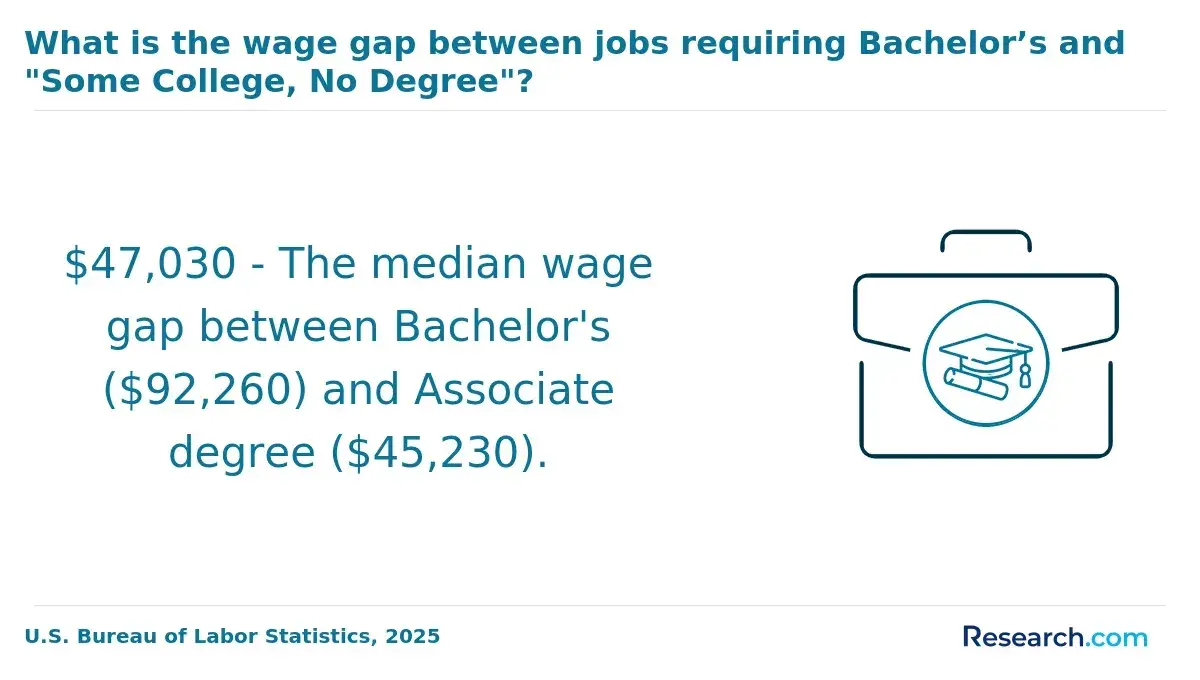
- Median Salary: Data from the U.S. Bureau of Labor Statistics indicates that professionals holding bachelor's degrees in Finance earn median salaries near $72,000 per year. Those with associate degrees earn closer to $45,000, while certificate holders often start in entry-level roles with wages around $35,000, though this varies with specialization.
- Short-Term Versus Long-Term Earnings:
- Certificates and associate degrees enable quicker workforce entry, allowing individuals to start earning sooner without the expenses of extended education.
- A bachelor's degree requires more time and upfront investment but typically leads to higher lifetime earnings and access to specialized and supervisory roles.
- Career Advancement: Earning a bachelor's degree broadens progression opportunities, including leadership roles and eligibility for professional certifications that often mandate four-year credentials. Certificates and associate degrees may restrict long-term mobility within Finance careers.
- Job Security and Demand: Finance degree holders usually experience lower unemployment rates due to broader qualifications that enhance job stability and marketability.
- Decision Framework: For students needing rapid workforce entry or facing financial constraints, pursuing a certificate or associate degree can be an effective, low-risk strategy. Conversely, working professionals aiming for upward mobility and increased earnings may benefit more from investing time and resources into a bachelor's degree.
Assessing tuition costs, median incomes, and career goals alongside personal circumstances can guide prospective students toward the credential that best aligns with their individual financial and professional aspirations.
Choosing a specialization within online finance bachelor's programs can significantly influence your earning potential and career path. According to Bureau of Labor Statistics (BLS) data, graduates who concentrate in certain finance areas tend to earn notably higher median salaries than those with general finance degrees entering similar fields.
- Financial Analysis: Roles such as financial analyst or investment analyst offer median salaries around $83,660. This specialization often commands a premium due to the technical skills and market knowledge required.
- Financial Planning and Wealth Management: Graduates typically become personal financial advisors, earning a median salary near $95,570. Additional certifications like the Certified Financial Planner (CFP) credential can enhance earnings but require further investment in time and fees.
- Risk Management: Jobs related to insurance underwriting and risk assessment report median pay close to $72,600. Certifications such as Financial Risk Manager (FRM) increase salary prospects but add cost and training beyond the bachelor's degree.
- Corporate Finance: Specializing in budgeting, financial reporting, or treasury positions often yields median salaries near $85,000. Having an MBA or CPA license may boost compensation depending on the employer.
Specialized finance graduates typically earn 10 to 30 percent more initially than generalists. However, some concentrations require extra credentials, increasing total expenses. When selecting a specialization, consider your existing experience, financial constraints, and how quickly you want to see a return on investment. Weighing both salary premiums and certification costs can help you choose the track that balances earning potential with your career goals and timeline.
Employer tuition reimbursement programs are a powerful tool to lower the out-of-pocket cost of an online finance bachelor's degree. Under IRS Section 127, employers can provide up to $5,250 per year in tax-free tuition assistance to employees. These programs typically reimburse tuition fees after course completion or at the end of a semester, making higher education more financially accessible for working professionals.
Data from the Society for Human Resource Management (SHRM) reveals that about 60% of U.S. employers offer some form of tuition assistance, underscoring its role as a widely available benefit in many industries.
These employer tuition reimbursement benefits for online finance degrees often work alongside federal and institutional financial aid. Federal aid, such as Pell Grants and subsidized loans, reduce costs significantly because grants do not require repayment and subsidized loans carry lower interest rates. Institutional scholarships based on merit or financial need further shrink net tuition expenses. Combining these resources can dramatically lower the total amount students must finance personally.
For working students or career changers, leveraging employer tuition reimbursement with federal financial aid options to reduce cost of online finance bachelor's programs can make completing the degree realistic. For example, a $20,000 annual tuition can drop to roughly $5,255 when applying $5,250 employer reimbursement, a $6,495 Pell Grant, and a $3,000 university scholarship. This layered approach showcases how tuition assistance and federal aid form a vital financial support system.
Students exploring options for advanced credentials might also consider an online master's in organizational leadership, which can complement their finance skills and enhance career prospects.
- Employer Tuition Reimbursement: Many employers provide up to $5,250 per year in tax-free tuition assistance under IRS Section 127, which helps reduce direct education expenses for employees pursuing an online finance degree.
- Prevalence of Benefits: Approximately 60% of U.S. employers offer tuition assistance, demonstrating its common availability and value for working students in finance and related fields.
- Federal and Institutional Aid: Pell Grants, scholarships, and subsidized loans lower upfront tuition costs substantially without requiring repayment, easing financial burdens.
- Cost Reduction Synergy: Using employer reimbursement alongside federal and institutional aid can reduce the net cost of a finance degree to less than half the listed tuition, improving affordability dramatically.
- Worked Example: An annual tuition of $20,000 can be lowered to roughly $5,255 through a combination of employer reimbursement, federal Pell Grants, and university scholarships, illustrating the impact of layered financial support.
Regional accreditation reviews entire institutions for overall academic quality, while programmatic accreditation targets specific fields such as finance or business. Employers place higher value on degrees from regionally or programmatically accredited programs because these signify rigorous, industry-aligned curricula. This accreditation status directly enhances graduates' employability and strengthens their ability to negotiate higher salaries.
Surveys conducted by the National Association of Colleges and Employers (NACE) reveal that hiring managers consistently favor candidates holding degrees from accredited institutions. Degrees from schools lacking accreditation or with only national accreditation often carry less credibility, affecting graduates' job prospects and salary offers. Additionally, many licensure exams, graduate programs, and government or healthcare finance roles mandate degrees from properly accredited programs, which can exclude those from unaccredited schools.
Before enrolling, students should verify accreditation through the U.S. Department of Education's accreditation database and the Council for Higher Education Accreditation (CHEA). This step safeguards their investment and preserves future career mobility.
- Regional vs Programmatic Accreditation: Regional accreditation evaluates the institution's overall quality, while programmatic accreditation focuses on finance-related programs, impacting employer confidence and compensation potential.
- Employer Preferences and Salary Outcomes: Hiring managers prioritize accredited degrees, enabling better salary negotiations and more competitive job opportunities.
- Licensure and Career Barriers: Accreditation is often necessary for professional licenses, graduate admission, and employment in government or healthcare finance sectors.
- Verification Tools: The U.S. Department of Education and CHEA databases provide reliable sources to confirm valid accreditation before committing to a program.
- Risks of Non-Accredited Schools: Graduates may face limited employment options, lower earnings, and restricted access to specialized roles without recognized accreditation.
Graduates of online finance bachelor's programs have access to a wide array of entry-level roles, as modern employers increasingly value the degree's content over the delivery format.
Financial Analyst: Commonly the primary career entry for graduates, with starting median salaries from $55,000 to $70,000. Highest pay is generally in finance and technology sectors. Completing internships and earning certifications like CFA Level 1 can enhance starting wages.
- Budget Analyst: Entry salaries range between $50,000 and $65,000, often higher in government and healthcare organizations. Graduates concentrating on public finance or healthcare management may receive more competitive offers.
- Accountant: Typical starting pay lies between $50,000 and $60,000, particularly at accounting firms and corporations. A CPA credential can significantly increase initial compensation.
- Credit Analyst: Median entry pay ranges from $50,000 to $62,000, mainly in banking and finance industries where quantitative skills and internships boost hireability.
- Financial Advisor: Salaries vary widely-usually $45,000 to $60,000 plus commissions-with premium incentives for certified professionals, such as those holding CFP designations.
- Risk Analyst: Entry compensation typically falls between $55,000 and $68,000, especially in insurance and financial institutions valuing risk management expertise.
- Investment Banking Analyst: Salaries often exceed $70,000 initially, augmented by bonuses in key financial hubs. Intense internships and focused finance tracks improve salary prospects.
- Operations Analyst: Starting pay ranges from $50,000 to $60,000, with best offers found within tech and finance sectors. Skills in data analytics tools can lead to immediate higher salary brackets.
Internships, specialized certifications, and targeted concentrations accelerate salary growth for new graduates. Industry choices also produce varying compensation patterns, helping graduates maximize their return on investment and career advancement potential early on.
What Graduates Say About the Return on Investment of Their Online Finance Bachelor's Degree
- Callahan: "Choosing the online finance bachelor's degree was a strategic decision rooted in carefully weighing its ROI versus the cost. Beyond just the financial benefits, the program offered tremendous flexibility which allowed me to continue working full-time while advancing my education. The degree ultimately opened doors to leadership roles that wouldn't have been accessible otherwise, proving the non-financial returns to be just as valuable."
- Saul: "Reflecting on my journey, the online finance bachelor's degree provided not only a solid foundation in key concepts but also enhanced my job security in an uncertain market. The career advancement opportunities became clear within the first year of graduation as I took on more complex projects with confidence. Financially, the program's ROI was evident through a noticeable salary increase combined with professional recognition."
- Adam: "Pursuing an online finance bachelor's degree was a professional game-changer for me. It allowed me to acquire a specialized skill set that directly impacted my promotion timeline and expanded my professional network. The investment not only paid off in monetary terms but also empowered me with the credibility and knowledge required to excel in a competitive industry."
Other Things You Should Know About Finance Degrees
The typical timeframe to recover the tuition and related expenses of an online finance bachelor's degree ranges from four to seven years, depending largely on the program cost and the graduate's post-degree salary increase. Graduates who enter high-demand sectors or geographic areas with elevated wage levels tend to recoup costs more quickly. Additionally, students who balance study with full-time employment may take longer to recoup costs but benefit from continued income during their studies.
Geographic location significantly influences salary outcomes for finance graduates, with urban and financial hub regions typically offering higher wages than rural areas. Industry sectors such as investment banking, corporate finance, and financial consulting tend to pay more than entry-level roles in government or nonprofit finance. Graduates should consider cost-of-living differences alongside salaries to assess realistic earnings potential.
Employer surveys consistently rate finance bachelor's degrees as valuable credentials that demonstrate analytical skills and financial literacy necessary for many mid- to high-level finance roles. Labor market data shows steady demand for finance graduates, with projected job growth in financial analysis and management positions outpacing overall employment rates. This sustained demand bolsters the degree's potential ROI.
Yes, if the program meets state CPA board education rules. Most states require 150 semester hours, a bachelor’s degree, and specific accounting and business courses. The degree alone is not enough; candidates must also pass the Uniform CPA Examination and meet any supervised experience requirements.
- Median Starting Salaries (by Institution): Finance https://www.collegetransitions.com/dataverse/median-starting-salaries-finance/
- Does College Pay Off? A Comprehensive Return On Investment Analysis - FREOPP https://freopp.org/whitepapers/does-college-pay-off-a-comprehensive-return-on-investment-analysis/
- Is an Online Associate in Finance Worth It? | SNHU https://www.snhu.edu/about-us/newsroom/business/is-an-online-associate-in-finance-worth-it
- Employability of University Graduates as a Measure of Quality https://www.e-mentor.edu.pl/eng/article/index/number/110/id/1714
- Mastering College Finances: Uncovering Hidden Costs Beyond Tuition https://www.edvisors.com/blog/uncovering-hidden-costs-beyond-tuition/
- Best Entry-Level Finance Jobs https://www.investopedia.com/personal-finance/best-entry-level-finance-jobs/
- Is College Worth it? | Return on Investment Analysis of College Degree https://educationdata.org/college-degree-roi
- ROI on degrees, certificates https://www.ccdaily.com/2024/10/roi-on-degrees-certificates/
- Certificate vs. Degree: Pros, Cons, and Career Outcomes | National University https://www.nu.edu/blog/certificate-vs-degree/
- The Hidden Costs of Paying for Higher Education https://www.futurityinvest.com.au/insights/futurity-blog/2025/02/11/the-hidden-costs-of-paying-for-higher-education