2027 Online BA in Psychology - Mental Health for Culturally Responsive Helping Skills: Which Courses Should You Look For?
Audited and Verified:
Our Editorial and Data Verification Process
Research.com uses government datasets, official education statistics and primary institutional information to support its career and degree guides. Our review process checks factual accuracy, occupational definitions, source dates and the requirements associated with the credentials discussed.
How This Article Was Fact-Checked
Our editorial team verifies salary estimates, employment projections, education requirements and program information against original data providers and official organizations. Salary figures are checked against the relevant occupational definitions and reporting periods. Information about licensure, accreditation and required in-person training is reviewed separately.
Fact-checked and verified on:

Co-Founder and Chief Data Scientist
An online psychology BA may offer courses on mental health and culture, but course titles alone cannot show whether students learn to work respectfully with people whose experiences differ from their own. If you hope to enter community services, prepare for graduate study, or strengthen an existing helping role, the curriculum matters more than the concentration label.
This guide identifies the courses and supervised learning worth looking for, explains how to judge online skills practice, and separates useful bachelor's-level preparation from qualifications required for clinical work.
Key Things You Should Know
- Prioritize developmental and abnormal psychology, social and cultural psychology, research methods, and ethics; then look for supervised practice in communication, referral, and community support.
- A typical bachelor's degree requires about 120 semester credits, but transferred credits, course sequencing, and placement availability determine the actual time and cost.
- A mental-health focus can prepare you for nonclinical helping work or further study; it does not authorize diagnosis, psychotherapy, or independent psychological assessment.
What Is an Online BA in Psychology Focused on Mental Health and Cultural Responsiveness?
It is an undergraduate psychology degree that combines the study of behavior with coursework relevant to mental-health needs, social context, and respectful support. Cultural responsiveness means examining how language, identity, disability, family circumstances, community history, and access to services can shape an interaction - without assuming that any one characteristic explains a person's needs.
"Mental health" may describe an official concentration, a group of electives, or simply an advertised theme. Ask for the catalog requirements and a sample degree plan. A named focus is valuable only if the courses and experiences develop the skills you need. If finishing quickly is the competing priority, compare shorter routes to an online psychology major against the availability of the relevant electives and supervised opportunities; speed alone does not establish fit.
Which Accreditation Should You Look For in an Online Psychology Bachelor's Degree?
Check that the institution holds accreditation from an accreditor recognized by the U.S. Department of Education or the Council for Higher Education Accreditation, and confirm that the degree is offered by that institution. This is an essential quality and eligibility check, not proof that a particular mental-health course, placement, or career outcome is strong.
The American Psychological Association does not accredit general psychology bachelor's degrees. Nor does institutional accreditation turn a BA concentration into a counseling credential. The same distinction matters when examining accredited college pathways in addiction psychology: verify both the college's accreditation and the actual curriculum, then check state credential rules separately if addiction counseling is your goal.
What Courses Should an Online Psychology BA Include for Mental Health Careers?
Look for a sequence that builds scientific understanding before asking students to apply it. Course names vary, so inspect descriptions, prerequisites, assignments, and how often electives run. The comparison below shows what each area contributes to culturally responsive nonclinical helping.
| Course area | Useful learning outcome | What to check |
| Developmental psychology | Recognize how needs and communication change across the lifespan. | Coverage beyond a single age group. |
| Abnormal psychology or psychopathology | Understand disorders and the limits of diagnostic labels. | Attention to context and help-seeking, not just symptom lists. |
| Social and cultural psychology | Examine bias, identity, relationships, and structural barriers. | Applied analysis rather than a brief diversity unit. |
| Research methods and statistics | Evaluate evidence and avoid overgeneralizing from limited studies. | Practice interpreting findings and measurement limitations. |
| Ethics and community mental health | Understand confidentiality, boundaries, accessibility, and referrals. | Case-based work tied to realistic support roles. |
Choose electives for the population and setting you hope to serve. Addiction or trauma coursework may be pertinent to community outreach; language study or disability studies may address a more immediate skill gap. A specialized subject is not automatically a better match: comparing forensic psychology curricula and career fit, for example, serves a different decision than preparing for general mental-health support.
Reading about cultural humility is a starting point, not a demonstration of it. Stronger courses ask students to examine assumptions, listen without stereotyping, communicate across differences, recognize when an interpreter or accessible format is needed, and respond to feedback. Simulated conversations, case analyses, peer discussion, and instructor-reviewed reflection can make those skills visible without presenting students as therapists.
Ask how instructors assess an interaction: Is there a rubric for listening, respectful questions, boundaries, and appropriate referral? Can students revise after feedback? For applied courses or community placements, find out who approves the site, supervises the student, and handles confidentiality or safeguarding concerns. Online coursework may still require scheduled meetings or in-person hours.
If your goal is to provide therapy, these undergraduate exercises are preparation for - not replacements for - qualifying graduate training. A clinical mental health counseling master's pacing guide can help you examine the later time commitment, including supervised practice that cannot be reduced to online discussion.
Requirements depend on whether you are entering as a first-year student, transferring, or returning with an earlier degree. Schools generally ask for prior academic records and may set separate requirements for admission to the psychology major. An unrelated previous major does not necessarily prevent entry; introductory psychology, statistics, or other preparatory courses may instead become part of your plan.
Transfer students should request a written degree audit, not just a count of accepted credits. A course can transfer as elective credit without satisfying psychology statistics, research methods, or a major requirement. Compare the audit with a term-by-term schedule of required courses; guidance on remaining coursework after transferring into psychology can help you frame questions for the registrar and academic adviser before enrolling.
A bachelor's degree commonly totals about 120 semester credits and takes roughly four years of full-time study from the beginning. Your timeline depends on accepted credits that fulfill requirements, prerequisite order, elective availability, and whether you can complete any approved applied experience locally. An asynchronous course can still have weekly deadlines, group meetings, or fixed placement hours.
There is no reliable single price for this type of BA. Compare the institution's current tuition and mandatory fees against the credits in your approved degree plan, then account for books, technology, travel, and any unpaid experience. Published lists of low-cost online psychology degrees are a starting point; your remaining-credit total and aid eligibility determine the more useful personal estimate.
Delivery mode by itself does not establish learning quality. An online program can teach psychological science and provide meaningful instructor feedback, but culturally responsive helping skills need opportunities to practice communication and receive correction. Compare actual course activities, faculty access, research opportunities, and approved local placements - not just whether lectures are recorded.
Ask for sample syllabi and a schedule showing live sessions, group work, and any campus visits. Find out how online students obtain references and supervised experience if graduate study is possible. The same scrutiny applies later to psychology graduate programs with compressed schedules: a shorter calendar is useful only if it leaves adequate time for feedback and the work your goal requires.
A BA can support applications for nonclinical roles such as intake assistant, community outreach worker, human-services assistant, or research support staff. Actual duties may include explaining services, documenting contacts, coordinating referrals, helping with program activities, or collecting approved research data. Employers may also require experience, language skills, a driver's license, background checks, or a role-specific credential.
Match your electives and experience to the work: a community-services placement can demonstrate respectful communication and referral judgment, while a research assistantship can demonstrate careful data handling. If substance-use services interest you, review roles in community recovery organizations and check the duties and state requirements of each job. Studying addiction or mental health does not itself qualify you to deliver treatment.
Not by itself. A psychology BA can help you prepare for applications to qualifying graduate programs, but independent counseling or psychologist practice generally requires a different level and type of education, supervised experience, and satisfaction of state licensing rules. Requirements differ by profession and jurisdiction; a mental-health concentration does not change the BA's professional scope.
If counseling is the goal, start with your intended state board's educational requirements and then check whether each graduate program is designed to meet them. Program recognition, required field experience, and state eligibility deserve more weight than speed. Resources on faster completion planning for accredited clinical counseling study can inform scheduling, but you must verify the particular program and jurisdiction before relying on any pathway.
What Salaries and Job Outlook Can Psychology Bachelor's Graduates Expect?
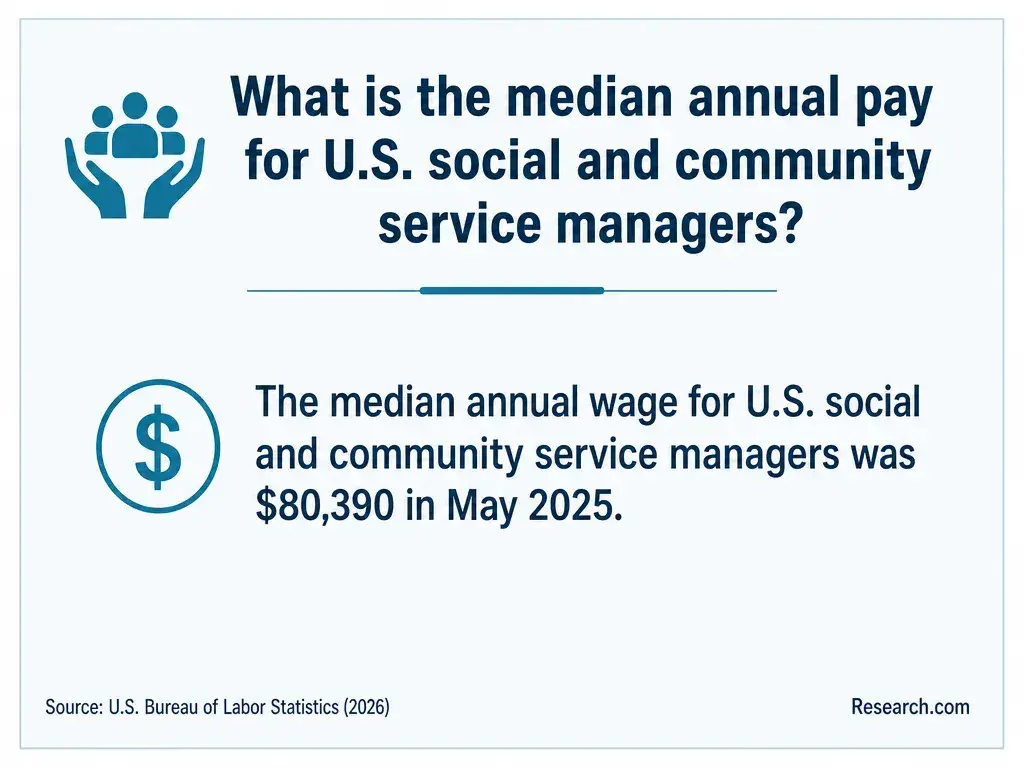
There is no single salary or job-growth figure for psychology BA graduates: labor statistics track occupations, not everyone holding a particular major. For a realistic comparison, identify a target job's duties and usual entry requirements, then consult the latest U.S. Bureau of Labor Statistics Occupational Outlook Handbook entry for that occupation. Its median wage covers workers across experience levels and, sometimes, education levels; it is not an entry-level offer.
Do not use licensed counselor or psychologist wages to estimate returns from a BA. Likewise, graduate-level forensic psychology career research addresses a different credential and job market. Compare local postings for your target support role with the full cost of your remaining degree requirements. If a short, employer-recognized training course would qualify you for the work you want, a full BA may not be the most direct investment.
Other Things You Should Know About Psychology
Language ability can improve access, but it does not replace attentive listening, knowledge of one's limits, or appropriate interpreting arrangements. Ask whether the program teaches these distinctions.
Only when the organization and instructor permit the use and required privacy protections are met. Removing a name may not prevent identification; use approved fictional or appropriately authorized material instead.
Yes, when it fills a relevant gap. Public health, disability studies, sociology, language, and community-focused courses can complement psychology, subject to your degree requirements.
Ask the adviser for its next scheduled term and an approved substitute. If the skill matters for your goal, compare a relevant placement or separate training option rather than assuming the catalog listing guarantees availability.
- Social Determinants of Health | NCHHSTP Health Equity https://www.cdc.gov/health-disparities-hiv-std-tb-hepatitis/about/social-determinants-of-health.html
- Trauma-Informed Care: A Sociocultural Perspective - NCBI https://www.ncbi.nlm.nih.gov/books/NBK207195/
- Frameworks for cultural adaptation of psychosocial interventions | nih.gov https://pmc.ncbi.nlm.nih.gov/articles/PMC10644683/
- Behavioral Health - Think Cultural Health - HHS.gov https://thinkculturalhealth.hhs.gov/education/behavioral-health
- ER&M methods courses | Ethnicity, Race, and Migration https://erm.yale.edu/erm-methods-courses
- Experiential Learning Tools - Risk Management | Western Washington University https://risk.wwu.edu/experiential-learning-tools
- Field Education With External Supervision: Supporting Student Learning: Applied Learning in Social Work Education https://alswe.simmons.edu/article/field-education-with-external-supervisions-support-student-learning/
- Multicultural Psychology - Pre-College Course Catalog" https://catalog.precollege.brown.edu/detail/CEPY0992
- Full article: The Relative Effectiveness of Active Listening in Initial Interactions | tandfonline.com https://www.tandfonline.com/doi/full/10.1080/10904018.2013.813234
- Culturally Responsive Teaching: 5 Strategies for Educators | Northeastern University Graduate Programs https://graduate.northeastern.edu/knowledge-hub/culturally-responsive-teaching-strategies/