2027 Online BA in Psychology - Mental Health: Program Options for Behavioral Health Quality Improvement Work
Audited and Verified:
Our Editorial and Data Verification Process
Research.com uses government datasets, official education statistics and primary institutional information to support its career and degree guides. Our review process checks factual accuracy, occupational definitions, source dates and the requirements associated with the credentials discussed.
How This Article Was Fact-Checked
Our editorial team verifies salary estimates, employment projections, education requirements and program information against original data providers and official organizations. Salary figures are checked against the relevant occupational definitions and reporting periods. Information about licensure, accreditation and required in-person training is reviewed separately.
Fact-checked and verified on:

Co-Founder and Chief Data Scientist
Behavioral health organizations need people who can spot gaps in access, follow-up, and service coordination - and help test practical improvements. An online BA in psychology with mental health coursework can build relevant knowledge, but its value depends on the methods training and applied experience you can actually obtain.
This guide is for prospective students and service professionals considering nonclinical quality improvement work. It explains which program features matter, what jobs may be realistic, and when a different credential or targeted training is the better investment.
Key Things You Should Know
- For quality improvement work, prioritize statistics, research methods, service-system knowledge, and a supervised project over a program's mental health label.
- A psychology BA can support nonclinical coordination and evaluation roles; it does not authorize diagnosis, psychotherapy, or independent psychological assessment.
- Compare remaining credits, total charges, scheduling, and access to usable project data before enrolling. A targeted course or workplace project may be enough if you already have a degree.
What is an online BA in psychology and mental health?
It is a bachelor of arts in psychology delivered wholly or partly online, with coursework related to mental health. The mental health component might be a formally named concentration, a set of electives, or simply part of the psychology curriculum. Check the catalog: these are not interchangeable credentials.
For behavioral health quality improvement, the goal is to examine how a service operates, identify a measurable problem, make a permitted change, and assess whether processes improve. Examples include tracking referral completion or reviewing whether follow-up procedures are applied consistently. This is service improvement, not diagnosing clients or deciding their treatment.
A BA can provide the psychological and research foundation for that work, but program options differ substantially. Use a guide to online psychology programs and academic pathways to build a shortlist, then inspect each school's current curriculum for methods courses, applied learning, and the exact degree designation.
What careers can an online psychology degree support in behavioral health?
Graduates may compete for nonclinical roles such as behavioral health program assistant, referral or intake coordinator, research assistant, or quality improvement assistant. Duties might include documenting service workflows, checking records for missing process steps under an employer's rules, preparing aggregate reports, and coordinating with licensed staff. Employers may also require relevant work experience, data skills, or training in their systems; a BA alone is not a job qualification for every opening.
For someone already working in a nonprofit or clinic, an internal move from service coordination into reporting or improvement support may be more feasible than applying directly for an analyst position. Compare job descriptions by tasks, not titles: "quality improvement specialist" can mean anything from entry-level data support to independent responsibility for complex reporting.
Substance-use services offer related support roles, but counseling credentials and permitted duties vary by state. If that is your target setting, compare psychology with bachelor's-level substance use counseling tuition and career value before choosing a major.
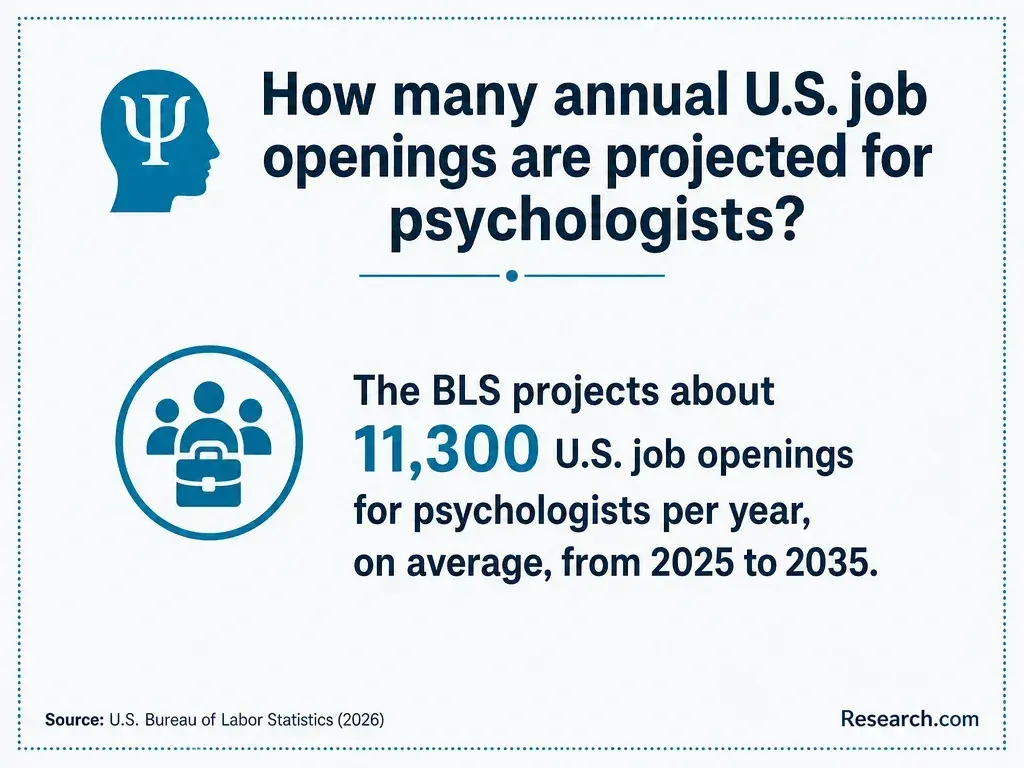
Can a bachelor's degree in psychology lead to mental health licensure?
Not by itself. Studying psychopathology or counseling theories does not qualify a graduate to diagnose conditions, provide psychotherapy, or practice as a licensed psychologist. Clinical licenses generally require a qualifying graduate or doctoral program and additional jurisdiction-specific steps, such as supervised experience and examinations. The requirements depend on the profession and state.
This distinction matters when comparing a nonclinical improvement career with a treatment career. If you want to improve referral processes or evaluate service delivery, a psychology BA plus relevant experience may fit. If you want to provide counseling, investigate a qualifying professional degree and your state board's rules before enrolling; clinical mental health master's programs by study pace are a separate program category, not a continuation that automatically follows from any psychology BA.
The strongest preparation connects psychological knowledge to evidence and service operations. Statistics and research methods help students interpret changes without mistaking correlation for causation. Measurement coursework helps them ask whether an indicator - such as time to first appointment - actually represents the issue they want to improve. Abnormal psychology and health or community psychology provide context, while ethics and cultural psychology sharpen attention to privacy, accessibility, and unequal service experiences.
Look for a capstone, internship, or research course that permits an approved nonclinical project. A manageable project might map a referral workflow and propose measures for monitoring delays. Access to agency records requires authorization; a student should not assume that removing names makes client data available for coursework or a portfolio. Faculty and site staff must also determine whether research review, consent, or other safeguards apply.
If you already hold a bachelor's degree and need deeper methods training, compare individual courses with accelerated MA psychology study pathways. An additional degree is worthwhile only if its research opportunities and cost match the responsibility you want.
Online delivery can remove commuting, but it does not guarantee control over your schedule. Live classes, group analyses, faculty meetings, exams, and agency projects may have fixed times. Campus programs may make it easier to meet research teams or local partners, while a well-supported online program may let a student develop an approved project with an employer or nearby organization.
Ask both types of program who finds project sites, whether a current workplace can be considered, how supervision works, and whether any campus visits are required. For a student balancing employment or caregiving, these answers matter more than an advertised "flexible" format. Compressed terms can add pressure rather than reduce it; consider the weekly workload before planning an intensive online psychology degree.
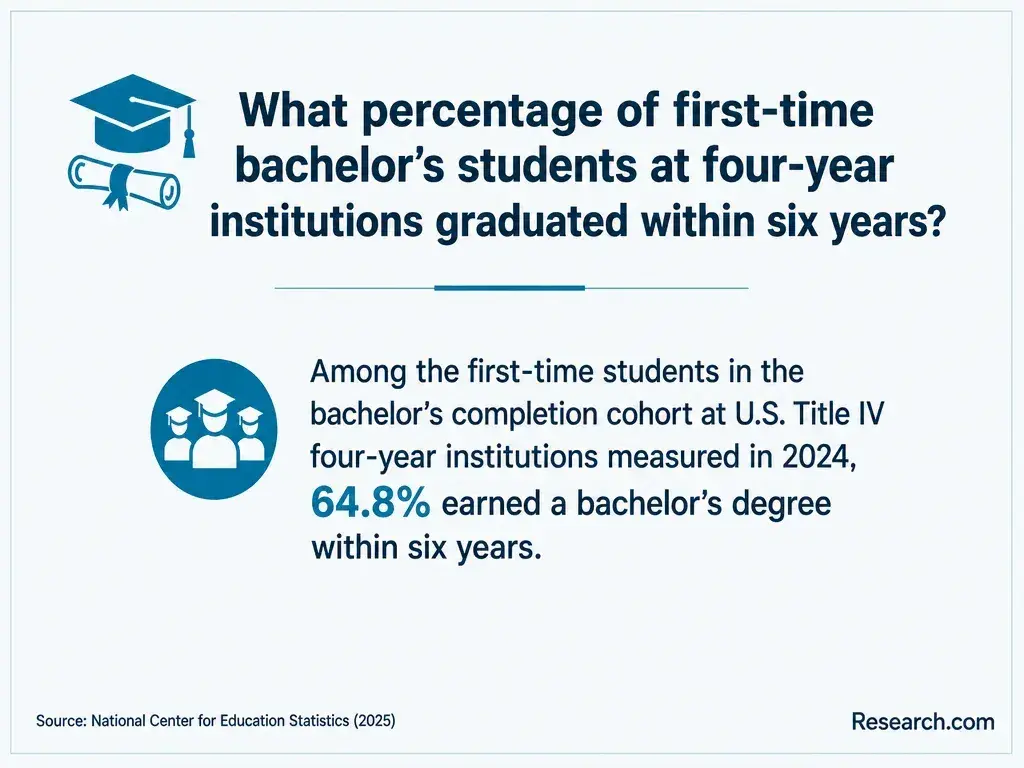
Verify that the institution has recognized institutional accreditation and that it applies to the school awarding the degree. This matters for the degree's standing and may affect transfer or further-study decisions, though another institution retains authority over its own admissions and credit policies.
Do not look for APA accreditation of a general online psychology BA: APA's professional accreditation does not cover general bachelor's programs. If your eventual goal is counseling rather than quality improvement, investigate the applicable professional-program recognition and state licensing criteria for that later degree. Compare those requirements separately when reviewing tuition-conscious mental health counseling degree choices.
Schools commonly distinguish first-year from transfer applicants and specify their own transcript, prior-study, and application requirements. Admission to the university does not necessarily settle admission to a major or determine how prior courses meet degree requirements.
Returning students should request a written degree audit showing which accepted credits satisfy general education, psychology, statistics, research methods, and remaining residency requirements. A course can transfer as credit without replacing a required methods course. Ask who approves substitutions and when the courses needed for graduation will be offered.
If you are comparing a psychology BA with a substance-use counseling major, investigate aid separately from admission. This guide to financial support for substance abuse counseling majors can help frame questions, but eligibility and awards require confirmation with each school.
Completion time depends on approved transfer credits, course sequencing, enrollment pace, and whether an applied project requires a separate term. A faster calendar is not necessarily cheaper if it creates fees, reduces work hours, or leaves little time for a useful placement.
Request an individualized estimate that separates tuition from mandatory fees, books or software, potential travel, and any placement expenses. Ask whether online and campus students pay different rates, whether charges change with enrollment intensity, and which remaining courses are available each term. Compare that estimate with an online psychology tuition comparison guide, using your own degree audit rather than a school's advertised starting price.
For professionals who already meet job-posting degree requirements, the relevant cost comparison may be a statistics course and an approved workplace project versus an entire second bachelor's degree.
There is no single reliable salary for "online psychology BA graduates in quality improvement." Pay depends on the actual occupation, employer, location, experience, and level of data or program responsibility. Entry-level referral and program-support work should not be priced against senior analyst positions or licensed clinician jobs.
For a realistic estimate, collect local postings with duties you could perform, note their stated pay ranges and minimum qualifications, and compare them with the matching occupation in the U.S. Bureau of Labor Statistics Occupational Outlook Handbook. An occupation-wide median is not a graduate earnings forecast. If higher pay depends on becoming a counselor, account for the qualifying education and licensure steps; a mental health counseling master's investment and pay outlook addresses a different career decision.
How should students choose an online psychology program for quality improvement careers?
Choose for the work you intend to demonstrate, not the appeal of "mental health" in a program name. A useful comparison starts with your existing education and target job postings, then tests whether each program closes a real skill gap.
Use these questions when speaking with a program advisor and, if applicable, your employer:
- Which required courses teach statistics, research design, measurement, and ethical data handling, and when are they offered?
- Can a student complete an approved nonclinical service-improvement project, and who arranges the site and supervision?
- What written degree audit, full cost estimate, scheduling information, and evidence of relevant graduate outcomes can the school provide?
For a first bachelor's degree, a sound psychology curriculum with feasible applied experience may be a good fit. For an experienced service worker, targeted methods training may be more direct. If a later nonclinical graduate degree is under consideration, compare its actual research depth and expense with low-cost master's degrees in psychology - without assuming that a master's is necessary for an entry-level improvement role.
Other Things You Should Know About Psychology
No. A sound student project can document a process, define a useful measure, and explain what future data would be needed. Do not claim effectiveness from a proposal or incomplete observations.
Only with the employer's permission and appropriate academic approval. Share a process description or template if authorized; do not publish identifiable client information or restricted internal reports.
For reporting-focused roles, practical spreadsheet and data-interpretation skills may address a clearer gap. Check target postings and choose training that also teaches you to question data quality and explain limitations.
Yes. Depending on organizational permission, you may be able to map workflows, review public information, or design an aggregate reporting plan. Any use of restricted records requires the relevant approvals.
- Cost of Attendance (Budget) | 2026-2027 Federal Student Aid Handbook https://fsapartners.ed.gov/knowledge-center/fsa-handbook/2026-2027/vol3/ch2-cost-attendance-budget
- CDC Approach to Program Evaluation https://www.cdc.gov/evaluation/php/about/index.html
- Behavioral Health Career Descriptions | samhsa.gov https://www.samhsa.gov/about/careers/behavioral-health-workforce/careers-by-state/descriptions
- Implementing Measurement-Based Care in Behavioral Health | nih.gov https://pmc.ncbi.nlm.nih.gov/articles/PMC6584602/
- | Agency for Healthcare Research and Quality https://www.ahrq.gov/
- Requirements Related to the Practice of Counseling - NCBI https://www.ncbi.nlm.nih.gov/books/NBK259170/
- Tuition & Expenses | Student Financial Services https://financialaid.wsu.edu/tuition-and-expenses/
- What Degree Do I Need to Become a Counselor or Therapist? | Palo Alto University https://paloaltou.edu/resources/blog/what-degree-do-i-need-become-counselor-or-therapist
- Online Certificate in Implementation Science | ucsf.edu https://epibiostat.ucsf.edu/online-certificate-implementation-science
- Tuition in Detail - One Stop Student Services https://onestop.utk.edu/billing-payments/tuition-detail/