2027 Choosing an Online BA in Psychology - General Psychology for a Future MS in User Experience Research: Prerequisites to Compare
Audited and Verified:
Our Editorial and Data Verification Process
Research.com uses government datasets, official education statistics and primary institutional information to support its career and degree guides. Our review process checks factual accuracy, occupational definitions, source dates and the requirements associated with the credentials discussed.
How This Article Was Fact-Checked
Our editorial team verifies salary estimates, employment projections, education requirements and program information against original data providers and official organizations. Salary figures are checked against the relevant occupational definitions and reporting periods. Information about licensure, accreditation and required in-person training is reviewed separately.
Fact-checked and verified on:

Co-Founder and Chief Data Scientist
An online BA in general psychology can prepare you for a user experience (UX) research master's program, but the degree title alone will not. Graduate programs differ in the statistics, research methods, design experience, and portfolio evidence they expect.
If you are choosing a bachelor's program with UX research in mind, this guide shows how to compare those requirements before enrolling. You will learn which courses and research opportunities carry the most weight, where an online format can create practical obstacles, and when a more direct educational route may be better.
Key Things You Should Know
- Compare your target master's programs first: psychology may be an accepted major, but statistics, research methods, and evidence of applied research can matter more than the BA label.
- A bachelor's degree commonly requires about 120 semester credits; transferred credits reduce the remaining workload only when the receiving institution applies them to graduation requirements.
- Choose an online program that lets you complete supervised research and an ethical, shareable project, not just courses that mention UX, cognition, or design.
What Is an Online BA in General Psychology for UX Research?
A general psychology BA studies behavior and mental processes across areas such as cognition, development, social behavior, and research methods. It is not usually a dedicated UX research credential. Its value for this goal comes from learning to formulate questions about people, collect appropriate evidence, analyze it, and explain findings without overstating them.
UX researchers study how people understand and use products or services. Their methods may include interviews, usability studies, surveys, and analysis of behavioral data. Psychology provides a strong foundation for studying people, while design or human-computer interaction study helps connect findings to product decisions.
A student seeking clinical work instead needs a different educational pathway; intensive graduate study in clinical mental health counseling addresses a distinct, regulated profession.
A BA is a sensible choice if it offers substantial methods training and room for relevant electives or projects. A human-computer interaction, design, information science, or data-oriented bachelor's degree may be more direct if its curriculum provides comparable research rigor and better access to product teams.
What Prerequisites Do UX Research Master's Programs Require?
There is no universal prerequisite list for an "MS in UX research." Relevant programs may be called human-computer interaction, human factors, information science, or UX research, and their admissions standards differ. Some welcome applicants from many majors; others specify quantitative coursework, programming, design preparation, or prior research experience.
Separate formal requirements from evidence that makes an application competitive. A published statistics prerequisite is different from a program's preference for applicants who can explain a research project. The comparison below shows what to check on each target program's admissions page.
| Preparation area | Possible admissions status | Evidence to look for in a BA |
| Statistics and quantitative reasoning | May be required, recommended, or taught after admission | Inferential statistics, interpretation, and opportunities to analyze data |
| Research methods | May be a formal course prerequisite or competitive preparation | Study design, sampling, measurement, ethics, and a completed project |
| Design or computing | Varies substantially by degree | Accessible electives, collaborations, or approved outside coursework |
| Research evidence | Often evaluated through application materials rather than a fixed course | A documented project, faculty reference, or appropriately shared portfolio sample |
Before committing to a BA, shortlist several actual master's programs and record their accepted majors, required courses, portfolio rules, application materials, and policies for unfinished prerequisites. If speed matters, compare the curriculum and admissions rules of accelerated MA psychology study pathways separately: an accelerated psychology master's is not necessarily a UX research master's.
How Can You Compare Accredited Online Psychology Bachelor's Programs?
Start by verifying the institution's accreditation through the accreditor or U.S. Department of Education recognition information, then inspect the actual online BA curriculum. Institutional accreditation supports a basic quality and aid-eligibility check.
It does not establish that a program offers UX research, guarantees graduate admission, or holds American Psychological Association accreditation. APA accreditation does not generally apply to undergraduate general psychology majors.
Ask each program for a degree plan showing when statistics, research methods, and advanced electives run; whether online students can join faculty research; and whether a capstone permits an approved UX-related question. Find out who supervises projects, whether meetings are live, and what happens if a desired elective is unavailable.
Program labels are not interchangeable. Guidance on accredited forensic psychology study and career preparation addresses a different specialization and should not substitute for checking UX-relevant coursework.
Give particular weight to written answers about course availability and research access. A broad elective catalog is less useful than a feasible sequence you can actually complete online.
Prioritize statistics followed by research methods, then seek cognitive psychology and coursework in perception, learning, social behavior, or psychological measurement. Statistics helps you judge uncertainty; methods teaches you to match a question to a design. Cognitive and social psychology help explain why an interface may be confusing without treating a participant's behavior as proof of an unobserved motive.
Useful complements include qualitative methods, survey design, human factors, accessibility, information architecture, data analysis, and introductory programming when available. Choose depth over a long list of loosely related electives: a well-supervised project that includes a research question, recruitment limits, method choice, analysis, and a decision-oriented report is stronger evidence of readiness than an isolated UX-themed course.
Match specialized electives to your intended work. For example, evaluating online addiction counseling programs is relevant to a service-career goal, but addiction counseling coursework is not a substitute for experimental design or usability research preparation.
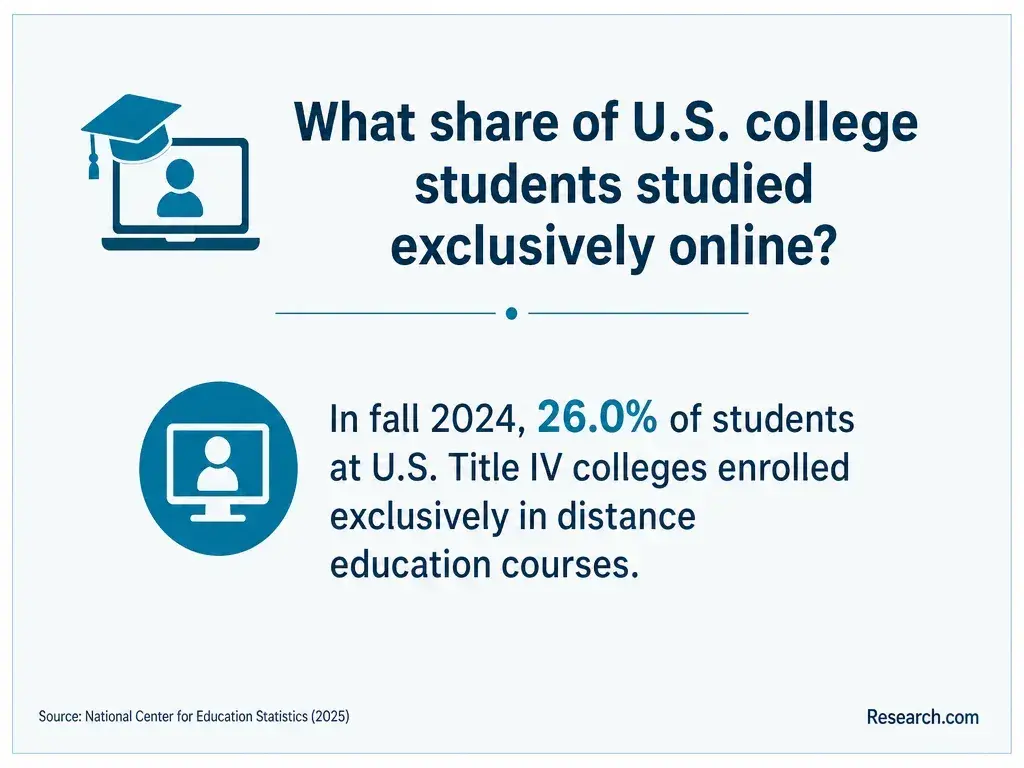
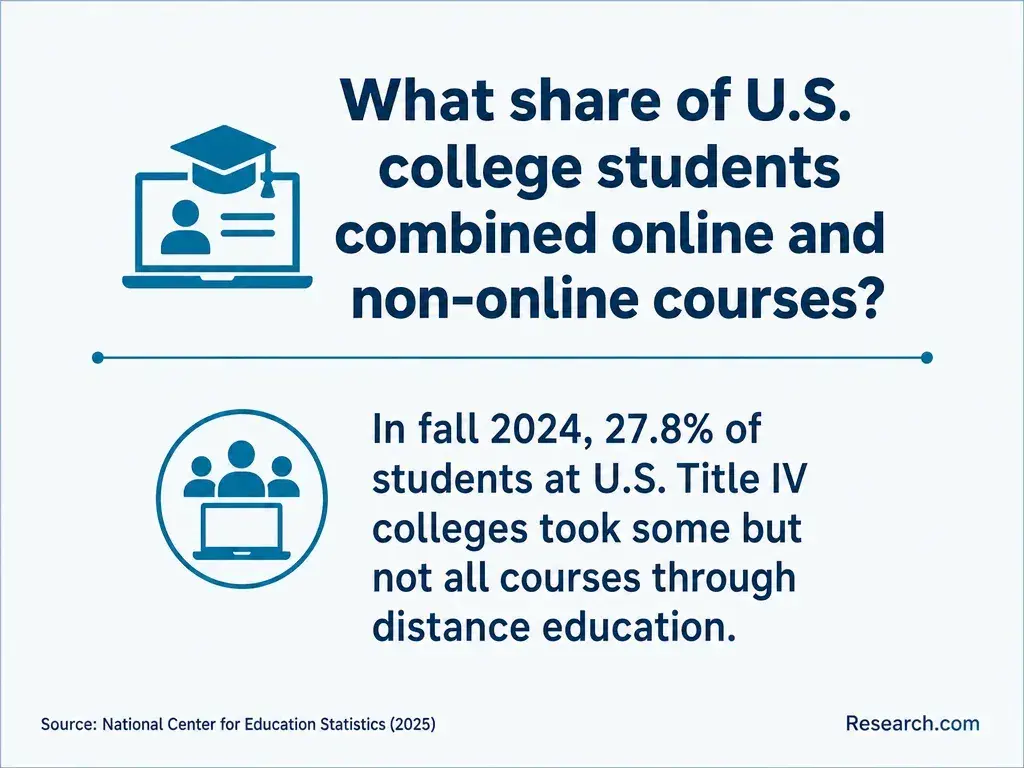
The important distinction is access to people, projects, and supervision, not the location printed on a transcript. Online coursework may fit employment or caregiving, while campus study may make research-team meetings and cross-disciplinary design collaboration easier to arrange. Either format can work if students can produce credible research under appropriate oversight.
Before choosing online delivery, check whether advanced classes have scheduled sessions, whether group work crosses time zones, whether research participation requires campus visits, and whether a capstone can use an approved remote project.
Compare these obligations alongside faster psychology degree timelines online. A shorter advertised timeline is not useful if required methods courses are offered too infrequently to fit it.
Requirements depend on whether you are applying as a first-year or transfer student. Schools commonly request prior academic records and may have separate institutional and major-entry rules. A previous major outside psychology does not automatically block entry, although you may need introductory coursework before taking advanced methods classes.
Transfer applicants should distinguish credits accepted by the university from credits that satisfy psychology, statistics, general education, or residency requirements. Request a written degree audit and ask specifically whether a prior statistics course meets the major requirement. The receiving school makes that determination; a general guide to college credit evaluation for psychology majors cannot replace its decision.
A conventional bachelor's pathway is often planned around about 120 semester credits and four years of full-time study. Your remaining time depends on accepted credits, course sequencing, enrollment pace, and any residency requirement. Working students should also account for the hours needed to recruit participants, meet a supervisor, and revise a research project.
Compare total expected cost rather than advertised tuition alone: include mandatory fees, books or software, travel for any required visit, and the credits still needed after an official audit. When comparing affordable psychology colleges online, ask each school for an estimate based on your own remaining requirements. A lower per-credit charge may not be the cheaper path if fewer prior courses apply.
For return on investment, include the prospective master's cost and the possibility that project experience, not another credential, is your most immediate gap. Do not assume undergraduate borrowing will be offset by a particular UX salary.
Relevant roles include UX researcher, user researcher, usability researcher, research operations specialist, and product research analyst. Responsibilities vary: one employer may expect interview planning and synthesis, while another emphasizes experiments, surveys, analytics, or coordinating participant recruitment.
Graduate study can deepen methods and provide portfolio opportunities, but it does not guarantee a research title; employers also assess project evidence, communication, and product-context experience.
Look for internships, supervised research, or adjacent analyst and research-coordinator work if direct UX roles require experience you do not yet have. If your intended work is instead supporting people with substance-use concerns, that is a separate career decision with different training and funding considerations. Financial aid planning for a substance use counseling bachelor's belongs to that pathway, not to UX research preparation.
The U.S. Bureau of Labor Statistics does not publish a single occupation and median wage specifically for "UX researcher." Depending on duties, a position might resemble market research analysis, survey research, or another research occupation.
Their published wages and employment projections describe those broader occupations, not expected earnings or hiring prospects for graduates of a psychology BA or UX master's.
Use job postings in your target location to compare pay ranges alongside required methods, experience, and industry knowledge. Treat occupational comparisons cautiously, especially across unrelated fields. Comparing the financial value of addiction counseling bachelor's study addresses a different labor market and cannot predict UX research compensation.
Do UX Researchers Need Psychology Licensure or Certification?
UX research is generally a nonclinical occupation and does not require a psychology license simply because it studies human behavior. An employer may value a methods certificate or tool-specific training, but those are not substitutes for sound research judgment or universally required credentials. A psychology BA or nonclinical MS does not authorize psychotherapy, diagnosis, restricted psychological assessment, or use of a protected clinical title.
If your goal changes to counseling, verify the applicable state licensing rules and qualifying degree requirements rather than assuming UX coursework will count. Resources on accelerated counseling study and accreditation requirements concern that separate professional route.
For UX projects involving people, the immediate obligations are appropriate consent, privacy safeguards, organizational permission, accessibility, and any review required by the institution or research setting.
Other Things You Should Know About Psychology Programs
Not inherently. Compare the actual statistics, methods, computing, and project options. A BA with strong research training can be a better fit than a BS whose additional science courses leave little room for UX-relevant work.
Not universally. Some employers hire applicants with a bachelor's degree and convincing research experience. Check postings for your target roles before paying for graduate study.
It can help you collaborate with designers, but it usually matters less than being able to design a study, interpret evidence, and communicate findings. Check each program's stated expectations.
Possibly, if your instructor and any partner permit it. Remove identifying information, respect consent and data-use limits, and describe the study's limitations rather than presenting a class exercise as commissioned product research.
- Master's in Psychology Requirements: What You Need to Apply | CalSouthern https://www.calsouthern.edu/articles/requirements-for-a-masters-in-psychology/
- Transfer Students - College Catalog - The University of Chicago http://collegecatalog.uchicago.edu/thecollege/transfercredit/transferstudents/
- Online Bachelor's in Psychology | University of Kansas https://online.ku.edu/undergraduate-programs/online-bachelors-psychology
- Master's in Psychology Requirements | louisiana.edu https://psychology.louisiana.edu/programs/masters/requirements
- 4 Types of Psychology Degrees: Picking the Right Program | Bouvé College of Health Sciences https://bouve.northeastern.edu/news/4-types-of-psychology-degrees-picking-the-right-program/
- Can You Get a Master's in Psychology With a Bachelor's in a Different Field? - Psych Degree Starter https://psychdegreestarter.com/resources/can-you-get-psychology-masters-with-different-bachelors/
- How to Become a UX Researcher in 2026 (No Degree) | CleverX https://cleverx.com/blog/how-to-become-a-ux-researcher-in-2026-skills-portfolio-and-first-job/