2027 Online BA in Psychology - Mental Health for Work in Supported Employment Providers: Compare Degree Fit and Hiring Requirements
Audited and Verified:
Our Editorial and Data Verification Process
Research.com uses government datasets, official education statistics and primary institutional information to support its career and degree guides. Our review process checks factual accuracy, occupational definitions, source dates and the requirements associated with the credentials discussed.
How This Article Was Fact-Checked
Our editorial team verifies salary estimates, employment projections, education requirements and program information against original data providers and official organizations. Salary figures are checked against the relevant occupational definitions and reporting periods. Information about licensure, accreditation and required in-person training is reviewed separately.
Fact-checked and verified on:

Co-Founder and Chief Data Scientist
If you want to help people with mental health conditions find and keep work, an online psychology BA may be useful - but it may not be the qualification a supported employment provider values most. These employers also look for practical skills: building relationships, coordinating with treatment teams, engaging employers, and documenting services.
This guide compares degree preparation with hiring requirements so you can decide whether to enroll, seek field experience, or pursue a more direct route into the work.
Key Things You Should Know
- A psychology BA can support entry into nonclinical employment-specialist roles, but a provider may accept other degrees or relevant experience; it does not qualify you to provide therapy.
- Compare programs by access to supervised community experience and courses in research, mental health, disability, and work - not by an advertised mental-health label alone.
- For a broad wage benchmark, the U.S. Bureau of Labor Statistics reported a May 2024 median annual wage of $45,120 for social and human service assistants. That occupation includes many jobs outside supported employment, so it is not a graduate salary estimate.
What is an online bachelor's degree in psychology for supported employment work?
An online psychology BA is an undergraduate degree in the scientific study of behavior and mental processes. It can provide useful preparation for supported employment, a service that helps people obtain and sustain jobs aligned with their preferences and goals. In mental health settings, providers may use the Individual Placement and Support (IPS) model, which emphasizes competitive employment, client choice, and coordination with mental health services.
The degree is usually broad rather than a professional qualification in supported employment. A program may offer mental-health, disability, or community-service electives, but course titles do not establish training in IPS or eligibility for a particular job. An online BA makes the most sense if you need a bachelor's credential and can pair it with relevant experience. If you already have a bachelor's degree, compare job postings before assuming another undergraduate degree - or online psychology master's completion planning - is necessary.
What jobs can a psychology bachelor's degree qualify you for in supported employment?
Depending on the employer, a psychology graduate may be considered for employment specialist, job developer, vocational support specialist, or employment-focused case coordination roles. Typical work includes learning a participant's job preferences, developing employer relationships, helping with applications and interviews, coordinating workplace supports, and recording progress. Some roles involve travel to workplaces and meetings with a mental health treatment team.
A BA does not, by itself, qualify someone to diagnose a condition, provide psychotherapy, or independently conduct restricted psychological assessments. It also does not guarantee an employment-specialist job: employers may prioritize direct service experience, local employer connections, or training in a specific service model. If your interest is broader than employment services, working in substance use recovery support involves related but distinct responsibilities and, in some positions, different credential rules.
What hiring requirements do supported employment providers typically have?
Requirements vary by provider, funding contract, state, and job duties. Some postings prefer a bachelor's degree in psychology, rehabilitation, social work, human services, or a related field; others allow substantial relevant experience. A driver's license or ability to travel may matter where staff meet participants and employers in the community. Background checks, documentation standards, confidentiality training, and employer-provided IPS training may also apply.
Read the duties more closely than the job title. A strong applicant can show evidence of respectful client engagement, employer outreach, reliable recordkeeping, accessible communication, and coordination without overstepping clinical boundaries.
For career changers, customer service, recruiting, workforce development, and community outreach experience can be relevant - but confirm how a particular provider evaluates it. Justice-system support is a different target; forensic psychology program review before enrollment should not be mistaken for preparation required by a supported employment provider.
For this career goal, the decisive difference is often access to people and placements, not where lectures occur. The comparison below identifies what to verify before choosing a format.
| Decision factor | Online BA | Campus-based BA |
| Course scheduling | May reduce travel, but live sessions and fixed deadlines can still apply | Usually requires scheduled travel and class attendance |
| Community experience | May require the student to locate an approved local site | May offer nearby agency connections; placement is not guaranteed |
| Employer networking | Often depends on deliberate local outreach | May be supported by local events and faculty contacts |
Ask each program who approves placements, whether an employment-services agency can serve as a site, and whether supervision is available near you. An online student already working at a provider may have an advantage if the school approves that setting; existing employment does not automatically count as academic fieldwork. Compare the full price and support offered, not format alone, when reviewing economical online psychology program choices.
Look first for research methods and statistics, which help you interpret claims about employment programs, and for abnormal psychology or psychopathology, which introduces mental health concepts without granting clinical competence. Developmental and social psychology can inform communication across life stages and settings. Disability studies, rehabilitation, community psychology, and industrial-organizational psychology may add more direct context where offered.
Courses are most valuable when you can apply them appropriately: an evidence review of employment supports, a supervised community placement, or a project using authorized, non-identifiable program information. Ask whether the school teaches service coordination, accessibility, confidentiality, and the limits of screening tools. A specialized label is less useful than these competencies. Likewise, forensic psychology one-year program value considerations address a different specialization, not a substitute for supported employment practice.
Confirm that the institution holds accreditation from an agency recognized by the U.S. Department of Education or the Council for Higher Education Accreditation, and confirm that the online BA is offered by that institution. Institutional accreditation matters for degree recognition and can affect credit transfer and federal aid eligibility; it does not prove that a particular course, placement, or job outcome will meet your needs.
Do not reject a general psychology BA because it lacks American Psychological Association program accreditation: APA accreditation does not cover general undergraduate psychology degrees. If your eventual goal is licensed counseling instead of employment support, investigate the applicable graduate training and state rules separately. Even funding options for accredited mental health counseling programs concern a different educational and professional decision.
First-year applicants generally submit evidence of secondary education; transfer applicants also submit college transcripts. Admission to a university is not necessarily admission to every major requirement. Schools set their own policies for GPA, accepted credits, statistics equivalencies, residency credits, and course availability, so request a written degree audit before relying on a completion estimate.
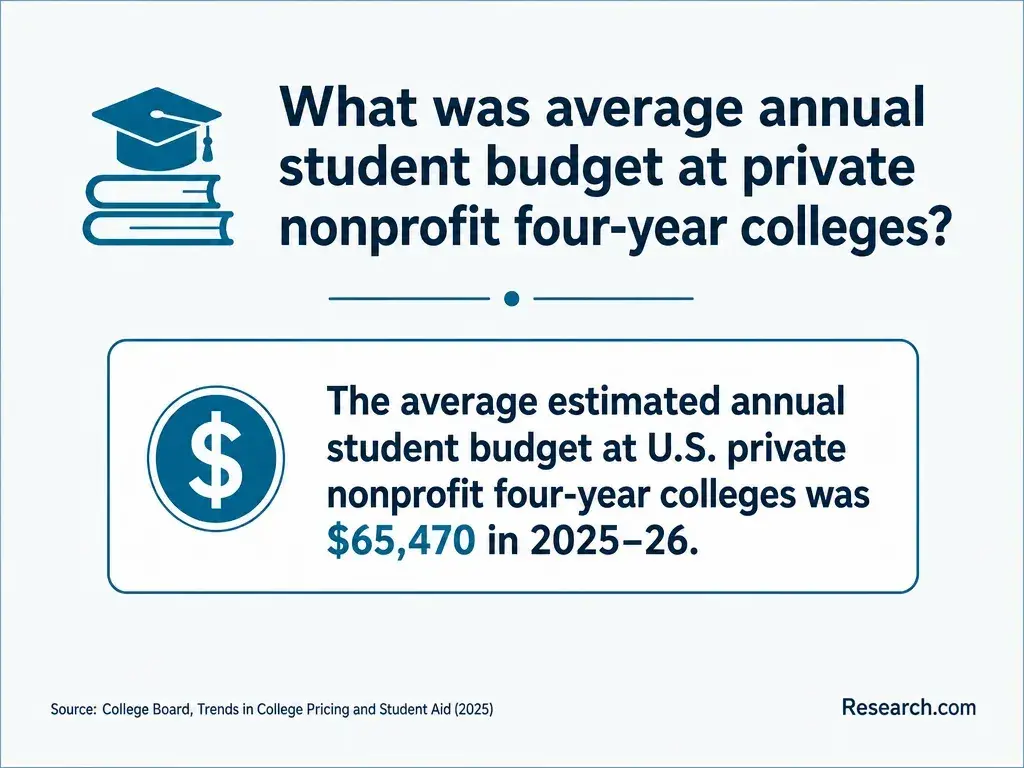
A bachelor's degree commonly requires about 120 semester credits, but the credits you still need - and the time to finish them - depend on the school's requirements and your approved transfer work. Compare per-credit tuition, mandatory online fees, books, any placement-related travel, and the cost of courses that cannot be transferred.
Federal aid eligibility and employer assistance depend on individual circumstances. If you are comparing an adjacent counseling-focused bachelor's route, bachelor's-level substance use counseling scholarship planning addresses funding questions specific to that choice.
A psychology license is not ordinarily the entry credential for a nonclinical supported employment specialist. Employers may instead require or provide training in IPS, confidentiality, safety, documentation, and their service procedures. A particular contract or state may impose additional qualifications, so check the actual posting and ask who supervises the work.
Be careful with positions combining employment support and clinical duties. A BA does not authorize therapy, diagnosis, or use of a protected clinical title. If you want to become a licensed mental health counselor, that is a separate graduate and supervised-practice pathway; faster completion planning for accredited clinical counseling study should be evaluated against the requirements of the state where you intend to practice.
There is no single national wage series for "psychology graduates in supported employment." As a broad reference, the U.S. Bureau of Labor Statistics reported a May 2024 median annual wage of $45,120 for social and human service assistants. That category spans multiple service settings and education levels; it is neither a supported-employment-only figure nor a prediction of your starting pay.
Compare local postings by duties, location, required experience, travel reimbursement, benefits, and whether the job is full-time. Before paying for further study to pursue higher pay, check whether target employers actually reward that credential. Tuition-focused psychology master's program choices can help frame the cost side of that decision, but a general psychology master's degree does not automatically confer clinical eligibility or a salary increase.
What is the job outlook for psychology graduates in mental health services?
The Bureau of Labor Statistics projects employment of social and human service assistants to grow 6% from 2024 to 2034. This indicates demand across a broad occupation, not a forecast specifically for IPS positions or psychology BA holders. Local hiring can still depend on provider funding, contracts, and the availability of community-based services.
For a realistic outlook, review current employment-specialist postings in your intended area and separate their requirements from those for clinicians or rehabilitation professionals. If the work you want is psychotherapy rather than helping participants pursue employment, the outlook for support roles should not drive your degree choice; clinical counseling master's course sequencing belongs to that distinct pathway. For supported employment, the strongest next step is to match local postings to your existing skills, then choose only the education and supervised experience that close the gaps.
Other Things You Should Know About Psychology
Yes. Ask about a typical workweek, travel, employer outreach, documentation, training, and the preparation their organization values. Do not request confidential participant information.
It can help you assess whether you enjoy community-facing support work. Seek clearly supervised duties and ask employers whether that experience would count toward their hiring requirements.
No. IPS is a defined supported employment approach for people receiving mental health services. A provider may offer employment assistance without using the IPS model, so check how it describes and delivers its services.
Ask which tasks students may perform, who provides supervision, what training is required, and whether the site can meet your school's approval and scheduling requirements.
- Direct Support Professionals (DSPs) | dol.gov https://www.dol.gov/agencies/odep/program-areas/individuals/DSP
- Vocational rehabilitation for people with severe mental illness | nih.gov https://pmc.ncbi.nlm.nih.gov/articles/PMC4170889/
- Part 14 - Supported Employment https://content.dcf.ks.gov/rehab/policy%20manual/webhelp/section_3/part-14_supported_employment.htm
- Depression, PTSD, & Other Mental Health Conditions in the Workplace: Your Legal Rights https://www.eeoc.gov/laws/guidance/depression-ptsd-other-mental-health-conditions-workplace-your-legal-rights
- How Do Social Work Field Placements Work? | Virginia Commonwealth University https://onlinesocialwork.vcu.edu/blog/social-work-field-placement/
- Psychology careers guide | apa.org https://www.apa.org/education-career/guide/careers
- Careers to Pursue With a Bachelor's Degree in Psychology | NMSU Global Campus https://global.nmsu.edu/blog/arts-and-humanities/jobs-for-psychology-majors/
- Why APA Accreditation Matters https://accreditation.apa.org/why-accreditation-matters
- Why Psychology Accreditation Matters For Your Future https://www.psychology.org/resources/accreditation/
- Online Psychology Degrees: Programs, Costs & Career Paths | CareersInPsychology.org https://careersinpsychology.org/online-psychology-degrees/