2026 Competency-Based Online Social Work Master's Degrees

Imed Bouchrika, PhD

by Imed Bouchrika, PhD

Co-Founder and Chief Data Scientist

A master's degree in social work can open doors to clinical, community, school, nonprofit, healthcare, and leadership roles, but many prospective students cannot pause work or family responsibilities for a traditional semester-based program. Competency-based education offers a different path: instead of advancing by spending a set number of weeks in a course, students move forward when they prove they have mastered defined skills and knowledge.

This model can be especially appealing to career changers, working social service professionals, and students who already bring relevant experience to graduate study. Recent data show that 42% of students in online social work master's programs cite flexibility as their primary enrollment factor. This guide explains how competency-based online social work master's programs work, what admissions teams look for, how accreditation affects licensure and financial aid, how costs are structured, and what career outcomes graduates may pursue.

Key Benefits of Competency-Based Online Social Work Master's Degree

  • Competency-based online social work master's degrees offer flexible pacing, allowing working professionals to balance studies with careers and personal commitments effectively.
  • Accelerated skill acquisition through mastery-based assessments enables students to progress upon demonstrating expertise, often reducing time to degree completion.
  • These programs provide access to a diverse, global network of peers and instructors, fostering collaboration and cross-cultural professional connections valuable in social work practice.

What Is a Competency-Based Social Work Master's Degree, and How Does It Work?

A competency-based social work master's degree is a graduate program built around demonstrated mastery rather than fixed classroom time. Students still complete rigorous graduate-level work, but progress is measured by whether they can apply social work knowledge, ethics, assessment skills, policy analysis, and practice methods to defined outcomes.

In a traditional credit-hour program, students usually move through courses according to a semester or quarter calendar. In a competency-based education (CBE) program, the structure is more flexible: students may move quickly through material they already understand and spend more time on unfamiliar or challenging competencies.

  • Mastery replaces seat time: Students advance by showing they can meet specific learning outcomes, not simply by attending class for a set number of weeks.
  • Modules are often self-paced: Coursework is commonly organized into learning units, assessments, projects, and faculty feedback cycles that allow students to control their pace within program rules.
  • Assessments are practice-focused: Students may complete case analyses, simulated client scenarios, written policy work, ethical decision-making exercises, research projects, and other applied assignments.
  • Faculty support still matters: CBE is not independent study without oversight. Students typically work with instructors, mentors, evaluators, or advisors who guide progress and assess mastery.
  • The format favors prepared adult learners: Students with strong time-management skills, prior human services experience, or clear career goals often benefit most from the model.

The key trade-off is autonomy. A CBE program can reduce wasted time for students who already know parts of the material, but it also requires discipline. Students who need weekly class meetings, frequent live discussion, or highly structured deadlines may prefer a more traditional online MSW format.

For students comparing long-term academic value and workforce relevance, resources on the best degrees for the future can provide useful context. According to a 2022 National Center for Education Statistics study, nearly 40% of graduate students prioritize flexible program pacing when selecting an online degree, which helps explain growing interest in competency-based social work master's degree online options.

What Are the Admission Requirements for a Competency-Based Online Social Work Master's Program?

Admission requirements for competency-based online social work master's programs are similar to traditional MSW admissions in several ways, but CBE programs may place extra weight on professional readiness, writing ability, self-direction, and evidence that applicants can handle an independent learning format.

  • Bachelor's degree from an accredited institution: Applicants generally need a completed undergraduate degree. A bachelor's in social work or a related human services field may strengthen an application, but requirements vary by school.
  • Official transcripts: Programs review transcripts to confirm degree completion, prerequisite coursework, academic performance, and minimum GPA and prerequisites for online social work master's programs.
  • Relevant professional or volunteer experience: Experience in social services, behavioral health, case management, advocacy, education, healthcare, or nonprofit work can help applicants show readiness for applied graduate study.
  • Letters of recommendation: Strong recommendations should speak to the applicant's judgment, communication skills, reliability, ethical awareness, and ability to work with diverse communities.
  • Personal statement or statement of purpose: This is often one of the most important application materials. Applicants should explain why social work, why this program format, and how their background connects to their professional goals.
  • Standardized tests: Many competency-based social work master's degrees waive the GRE or GMAT and instead use a holistic review that may include portfolios, interviews, writing samples, or competency-based screening.

Applicants should avoid treating flexibility as the only reason to apply. Admissions committees want to see mission fit, professional maturity, and an understanding of social work ethics and responsibilities. If a program requires field education or supervised practice, students should also confirm whether they can complete those requirements in their state or local area.

Students comparing graduate pathways may also find it helpful to review broader online options, including masters of social work online, before choosing a competency-based structure. For those considering future advancement beyond the master's level, the cheapest online doctorate in educational leadership resource can offer additional perspective on accelerated graduate degree formats.
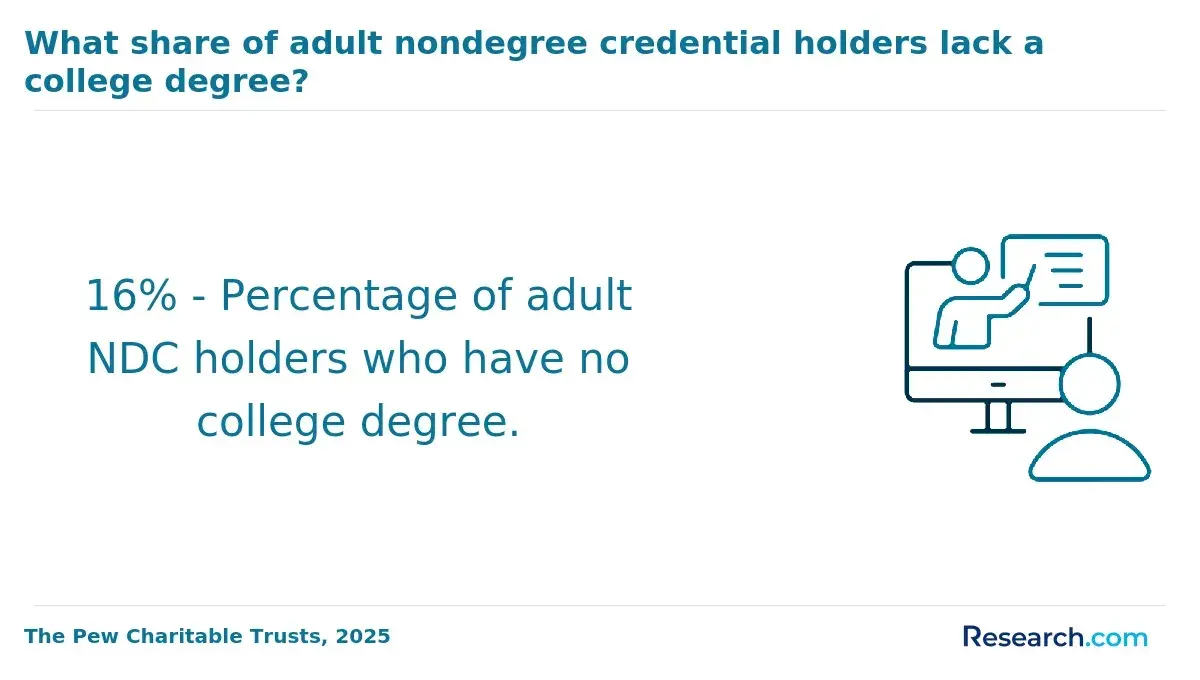
The share of nondegree credential holders who have no college degree.

What Is the Minimum GPA Requirement for a Social Work Competency-Based Master's Program?

Many competency-based online social work master's programs use GPA as one measure of graduate readiness, but it is rarely the only factor. A common expectation is a minimum undergraduate GPA near 3.0 on a 4.0 scale, though each institution sets its own policy.

  • Typical GPA benchmark: Accredited social work CBE master's programs usually expect a minimum undergraduate GPA near 3.0 on a 4.0 scale to indicate preparation for graduate-level reading, writing, research, and applied analysis.
  • Conditional admission may be possible: Some schools may admit applicants below the preferred GPA if they provide strong evidence of readiness through work experience, references, a portfolio, or an interview.
  • Professional experience can strengthen the file: Substantial social work background, leadership in human services, relevant certifications, or documented community work may help offset weaker undergraduate grades.
  • Alternative assessments may be used: Programs may review writing samples, competency exams, portfolios, or interviews to evaluate whether the applicant can succeed in a mastery-based format.
  • School policies vary: Applicants should review each program's stated GPA policy, probationary admission rules, and requirements for remaining in good academic standing after enrollment.

Students with a lower GPA should not rely on vague explanations. A stronger approach is to show evidence of growth: improved later coursework, professional achievements, supervisor recommendations, graduate certificates, or recent academic work that demonstrates current readiness.

A professional who switched careers by enrolling in a competency-based online social work master's program described initial concern about having an undergraduate GPA below the typical threshold: "I wasn't sure if my experience would be enough, but presenting my portfolio and discussing my work during the interview helped." He noted that contacting admissions early helped him understand how to present strengths beyond grades and identify whether the program was realistic for his background.

How Long Does It Take to Complete a Competency-Based Social Work Master's Degree Online?

The time to complete a competency-based online social work master's degree depends on the student's pace, transfer credits, prior learning, field requirements, work schedule, and the program's maximum completion rules. Some learners may finish in as little as 12 months, while others may take up to three years.

  • Self-paced progression can shorten the timeline: Students who already understand certain topics may move through those competencies faster than they could in a semester-based class.
  • Work and family responsibilities affect pace: Flexibility does not eliminate workload. Students should estimate how many hours per week they can consistently dedicate to reading, writing, assessments, and any required fieldwork.
  • Subscription tuition can reward speed: Many programs charge tuition per term. Students who complete more competencies during each term may reduce their overall cost.
  • Prior learning may reduce duplication: Prior learning assessment (PLA), transfer credit, or advanced standing options may allow eligible students to skip competencies they have already mastered.
  • Field education may set practical limits: If the program includes supervised field placement or clinical preparation, those requirements may not be fully self-paced and can affect graduation timing.

Before enrolling, students should ask the program for sample completion plans. A realistic plan should include weekly study time, assessment deadlines, field placement expectations, technology requirements, and any limits on how quickly competencies can be completed.

Students preparing for graduate social work study may also compare earlier educational pathways, including affordable online bachelor degree programs, as a foundation for future master's-level admission.

How Much Does a Competency-Based Online Social Work Master's Degree Cost?

The cost of a competency-based online social work master's degree depends on the tuition model, program length, transfer credit, fees, books, technology costs, field placement expenses, and the student's pace. The pricing structure matters because CBE programs may not bill the same way traditional credit-hour programs do.

  • Subscription-based tuition: Many programs charge a flat rate for each term. Students can often complete as many competencies as allowed during that period, which may lower the total price for fast learners.
  • Per-competency or per-credit pricing: Some institutions charge by the competency, course, or credit. This model may be easier to budget incrementally but may not offer the same savings for students who can move quickly.
  • Program speed affects total cost: A student who finishes sooner may pay for fewer terms. A student who needs more time may pay more, especially under a subscription model.
  • Financial aid may be available: Students should ask whether the program is eligible for federal loans, scholarships, employer tuition reimbursement, military benefits, or graduate social work funding.
  • Non-tuition costs still matter: Budget for technology fees, textbooks, software, background checks, travel to field sites if required, and possible lost work hours.
Cost factorWhy it mattersQuestion to ask before enrolling
Tuition modelDetermines whether speed lowers your total costIs tuition charged by term, competency, course, or credit?
Program paceLonger enrollment can increase total expenseHow many competencies can students realistically complete per term?
Transfer or PLA policyMay reduce the number of competencies requiredWhat documentation is required for prior learning review?
Field placement expensesCan add travel, scheduling, and background-check costsAre field placements required, and who helps arrange them?
Financial aid eligibilityAffects affordability and borrowing optionsIs the program eligible for federal financial aid?

A professional who transitioned careers through a competency-based online social work master's program shared, "I was initially worried about budgeting since the payment was per term, not per course. But as I finished faster than expected, the flat fee worked in my favor." She also noted that software subscriptions and study materials required planning: "It wasn't just the tuition, but the whole experience that shaped how I viewed the value of the degree."
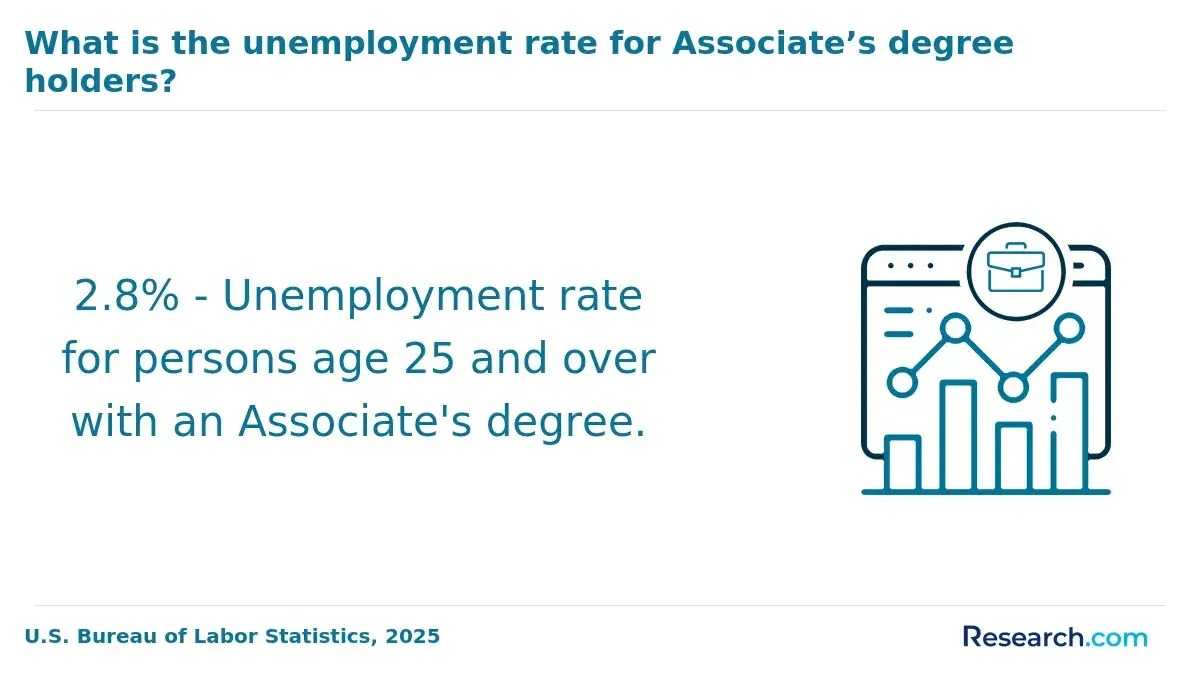
The unemployment rate for associate's degree holders.

Which Accrediting Bodies Recognize Competency-Based Social Work Master's Programs?

Accreditation is one of the most important checks when evaluating a competency-based online social work master's program. It affects academic credibility, federal financial aid eligibility, transferability, employer recognition, and, in many cases, whether the degree supports future licensure pathways.

  • Regional accreditation: Institutional accreditors such as the Higher Learning Commission (HLC), Southern Association of Colleges and Schools Commission on Colleges (SACSCOC), and WASC Senior College and University Commission (WSCUC) review colleges and universities for overall academic quality and institutional integrity.
  • Programmatic accreditation: The Council on Social Work Education (CSWE) is the specialized accreditor for social work programs, including programs using competency-based formats. CSWE accreditation helps show that the curriculum aligns with professional social work education standards.
  • Learning outcomes review: Accreditors examine whether the program can reliably assess student mastery. This is especially important in CBE because the model depends on clear competencies, valid assessments, and consistent faculty evaluation.
  • Federal aid implications: Students seeking federal financial aid should confirm that the institution and program structure meet applicable eligibility requirements.
  • Licensure relevance: Students pursuing clinical or licensed social work roles should check their state licensing board's education requirements before enrolling.

Applicants should verify accreditation directly rather than relying only on marketing language. The U.S. Department of Education's Database of Accredited Postsecondary Institutions and Programs (DAPIP) is a useful source for checking recognized accreditors and accredited institutions. Be cautious with schools that cite unfamiliar or unrecognized accrediting bodies, especially if they promise unusually fast completion, guaranteed licensure, or limited academic oversight.

What Core Competencies and Curriculum Areas Are Covered in a Social Work CBE Master's Program?

A social work CBE master's program is organized around measurable professional competencies. The exact curriculum varies by institution, but strong programs should connect each competency to real social work responsibilities, ethical standards, evidence-informed practice, and service to individuals, families, groups, organizations, and communities.

  • Ethical and professional practice: Students learn to apply social work values, professional boundaries, confidentiality principles, mandated reporting expectations, and ethical decision-making frameworks.
  • Human behavior and the social environment: Coursework often examines development, trauma, family systems, culture, social determinants, and the ways environment shapes client needs.
  • Assessment and intervention: Students practice gathering information, identifying client strengths and needs, developing service plans, and selecting appropriate interventions.
  • Policy and advocacy: Programs typically address social welfare policy, systems-level inequities, resource access, and advocacy strategies.
  • Research and evidence-informed practice: Students learn to evaluate research, use data, assess program outcomes, and apply evidence to practice decisions.
  • Diversity, equity, and culturally responsive practice: Competencies should prepare students to work respectfully and effectively with diverse populations and communities.
  • Leadership and interprofessional collaboration: Graduate-level social work often requires coordination with healthcare providers, educators, courts, nonprofits, public agencies, and community organizations.

Because competency frameworks vary, students should request a curriculum map before applying. A strong map should show how each competency is taught, how mastery is assessed, and how the program prepares students for the type of social work they want to practice. Students interested in clinical roles should pay especially close attention to whether the curriculum aligns with their state's education expectations for future licensure.

What Delivery Formats and Technology Platforms Are Used in Online Social Work CBE Programs?

Online social work CBE programs rely on technology to deliver coursework, track competency progress, submit assessments, and connect students with faculty. The platform should make learning more manageable, not create barriers. Before enrolling, students should understand how the program is delivered and what technical support is available.

  • Learning management systems: Programs may use Canvas, Blackboard, or specialized proprietary systems. The LMS typically houses readings, videos, assignment instructions, rubrics, discussion tools, progress dashboards, and messages from instructors.
  • Asynchronous coursework: Many CBE programs rely heavily on asynchronous learning, allowing students to study, write, and submit work outside scheduled class times.
  • Synchronous components: Some programs include live virtual sessions, faculty meetings, skills labs, group discussions, or field seminar meetings. These can improve interaction but may reduce scheduling flexibility.
  • Progress tracking: A well-designed CBE platform should clearly show which competencies are completed, which are in progress, and what evidence is still required.
  • Accessibility and mobile compatibility: High-quality platforms should follow accessibility expectations such as WCAG guidelines and work across common devices, though major assignments may still require a reliable computer.
  • Technical support: Students should confirm help desk hours, response times, software requirements, and whether support is available during evenings or weekends.

Prospective students should ask for a platform demo or orientation preview before committing. During the demo, look for clear navigation, transparent rubrics, easy file submission, accessible course materials, and a visible path for contacting faculty or technical support. Students comparing similar online graduate formats may also review an online masters in marriage and family therapy, which can involve comparable virtual learning tools and applied assessment models.

How Are Students Assessed, and How Is Mastery Demonstrated in Social Work CBE Programs?

Assessment is the core of a competency-based social work master's program. Instead of relying mainly on timed exams or course completion, students must produce evidence that they can apply graduate-level social work knowledge and skills in realistic situations.

  • Performance tasks: Students may complete case studies, intervention plans, policy briefs, research critiques, client assessment exercises, or documentation assignments modeled on professional practice.
  • Simulations: Some programs use role-play, recorded demonstrations, virtual client scenarios, or structured practice exercises to evaluate communication, assessment, and ethical reasoning.
  • Rubric-based evaluation: Faculty evaluators or competency assessors use standardized rubrics tied to program outcomes and social work standards. This helps make expectations clearer and grading more consistent.
  • Portfolios: Students may compile major projects, reflections, practice artifacts, and evidence of competency across the program. A strong portfolio can also support job interviews.
  • Capstone projects: A capstone may require students to integrate research, ethics, policy, practice, and leadership into one substantial final project.
  • Revision and resubmission: Many CBE models allow students to revise work after feedback. This reinforces mastery, but it also requires persistence and the ability to respond constructively to critique.

The best assessment systems are transparent. Students should know the required standard for mastery before submitting work, understand how feedback is delivered, and have a clear process for revision. If a program's assessments are vague, disconnected from social work practice, or too easy to pass, that may signal weak academic quality.

Students interested in how competency-based structures appear in other fields may compare applied programs such as game design schools online, where portfolio-based evidence and project mastery are also common features.

What Transfer Credit and Prior Learning Assessment Options Exist for Social Work CBE Programs?

Transfer credit and prior learning assessment can make a competency-based social work master's program faster and more affordable, but policies vary widely. Students should confirm what the school accepts before assuming previous coursework or experience will reduce degree requirements.

  • Graduate transfer credit: Some programs accept prior graduate coursework from accredited institutions if the content, grade, and recency meet program standards.
  • Portfolio evaluation: Applicants or enrolled students may document professional training, certifications, work projects, supervision experience, and other evidence that aligns with specific competencies.
  • Standardized exams: Programs often accept exam results from nationally recognized tests such as the College-Level Examination Program (CLEP) and DANTES Subject Standardized Tests (DSST), although applicability to graduate social work requirements depends on institutional policy.
  • Challenge exams: Some institutions create internal exams that allow students to prove mastery of a specific course or competency area.
  • Credit limits: Most programs cap the amount of transfer or PLA credit allowed to ensure students complete a meaningful portion of the degree through the institution.
  • Field education limits: Prior professional experience may not automatically replace required field education, especially when accreditation or licensure-related expectations apply.

Students should prepare documentation early. Useful materials may include syllabi, transcripts, training certificates, job descriptions, supervisor letters, work samples, continuing education records, and reflective statements connecting experience to program competencies. Before applying, ask the admissions office or registrar which materials are reviewed, who evaluates them, what deadlines apply, and whether denied PLA requests can be appealed.

What Career Outcomes and Professional Opportunities Does a Social Work CBE Master's Degree Unlock?

A competency-based online social work master's degree can support advancement into professional social work roles, but outcomes depend on accreditation, field preparation, state licensure rules, prior experience, and the graduate's chosen specialization. The degree may be especially useful for students who want to show employers concrete evidence of applied skills through portfolios, projects, and competency documentation.

  • Clinical and direct-practice pathways: Graduates may pursue roles such as clinical social workers, behavioral health specialists, case managers, or community-based practitioners, depending on licensure requirements and supervised experience.
  • School and youth services: Some graduates work in school social work, child welfare, youth programs, family services, or community agencies.
  • Healthcare and behavioral health settings: Hospitals, mental health organizations, substance use treatment programs, and integrated care teams often employ master's-level social workers.
  • Nonprofit and public-sector roles: Graduates may work in advocacy organizations, government agencies, housing programs, veteran services, aging services, or policy-focused roles.
  • Leadership opportunities: With experience, graduates may move into supervision, program management, grant-funded initiatives, training, or organizational leadership.

Data from labor sources indicate that social workers holding master's degrees earn roughly $50,000 to $75,000 annually. Actual earnings vary by location, setting, specialization, licensure status, experience, and employer type. Students should be cautious about any program that implies a degree alone guarantees a specific salary or licensed title.

For career planning, students should confirm three items before enrolling: whether the program is appropriately accredited, whether it meets education requirements in the state where they plan to practice, and whether the curriculum and field experiences align with their intended role. A CBE portfolio can strengthen a job search, but licensure-related careers still require meeting state-specific rules.

What Graduates Say About Their Competency-Based Online Social Work Master's Degrees

  • : "Choosing a competency-based online social work master's degree was a game-changer for me because it allowed me to balance my full-time job with advancing my education at my own pace. The cost was surprisingly affordable compared to traditional programs, which helped ease my financial stress. Now, I feel more confident in my professional skills and can apply real-world knowledge daily.
    Fredric"
  • : "Reflecting on my journey, the flexibility of the competency-based program was essential as it matched my learning style and schedule perfectly. The program's affordability made it accessible without accumulating excessive debt, which was a major relief. Earning this degree online empowered me to take on more challenging roles in the social work field and make a tangible difference in my community.
    Stanley"
  • : "As a practicing social worker, I valued the competency-based online master's program for its focus on practical skills over seat time, which suited my professional goals. The reasonable tuition fees made it possible to pursue my degree without putting my finances on hold. This advancement not only boosted my career but also deepened my commitment to effective and ethical social work practice.
    Harold"

Other Things You Should Know About Social Work Degrees

How does a competency-based Social Work master's program compare to a traditional online master's in Social Work?

A competency-based Social Work master's program in 2026 offers flexibility, allowing students to progress as they master skills, whereas traditional programs follow a set schedule. While both lead to the same degree, competency-based programs often appeal to self-directed learners with varying paces.

What student support services are available in online Social Work cbe programs?

Online social work competency-based programs typically offer student support services similar to traditional online degrees. These include academic advising, career counseling, technical support, and access to virtual libraries and writing centers. Many programs also provide forums or mentorship options to connect students with faculty and peers for additional guidance throughout the program.

What are the pros and cons of pursuing a competency-based Social Work master's degree online?

The primary advantage of competency-based online social work master's degrees is flexibility, allowing students to move at their own speed and balance other responsibilities. They often reduce time to completion and can credit prior learning experiences. On the downside, these programs require strong self-motivation and may lack some traditional cohort cohesion due to asynchronous pacing. Prospective students should consider their learning style and support needs before enrolling.

Related Articles
2026 Online Social Work Degree Master's Programs That Accept FAFSA thumbnail
Advice JUN 11, 2026

2026 Online Social Work Degree Master's Programs That Accept FAFSA

by Imed Bouchrika, PhD
2026 Easiest Online Social Work Master's Degree Programs That Pay Well: High-Salary Degrees with Simple Admissions thumbnail
2026 Last-Minute Admissions: Online Social Work Degree Master's Programs Still Accepting Students thumbnail
2026 Fully Online vs Hybrid Social Work Degree Master's Programs: Which Is Better? thumbnail
2026 Accredited Online Social Work Degree Master's Programs: How to Verify & Avoid Scams thumbnail
2026 Online Social Work Degree Master's Programs That Accept Transfer Credits thumbnail

Recently Published Articles