2027 Most Affordable Online HVAC Trade Schools & Certifications

Co-Founder and Chief Data Scientist
Online HVAC trade schools appeal to students who want a faster, more affordable path into skilled trades without committing to a traditional 4-year degree. That matters because many workers are weighing the cost of college against direct-to-career training. In 2023, 54% of workers ages 25 to 34 did not have a 4-year college credential (Fry, Braga, & Parker, 2024), and many entered occupations where practical training, certifications, and work experience can matter more than a bachelor’s degree.
HVAC training prepares students to work with heating, ventilation, air conditioning, and refrigeration systems used in homes, schools, hospitals, commercial buildings, and industrial facilities. This guide explains what online HVAC programs include, how long they take, what they cost, which certifications to look for, how online training compares with campus-based programs, and what career outcomes may be available after graduation.
Quick Answer: Are Online HVAC Trade Schools Worth Considering?
Online HVAC trade schools can be worth considering if you need flexible training, want to enter the workforce quickly, and can complete any required hands-on practice through labs, externships, apprenticeships, or employer-based training. They are especially useful for career changers, working adults, and students who want certification preparation without relocating or attending full-time campus classes.
However, HVAC is a hands-on trade. A strong online program should not rely only on videos and readings. Before enrolling, verify accreditation, certification preparation, practical training options, state or local licensing requirements, total cost, refund policies, and whether employers in your area recognize the credential.
What are the benefits of getting an online HVAC education and training?
- Online HVAC training can prepare students for several technical career paths, including heating, air conditioning, and refrigeration mechanic and installer; electrician; stationary engineer; and boiler operator.
- In May 2024, heating, air conditioning, and refrigeration mechanics and installers in the US earned a median annual wage of $59,810, compared with the $49,500 median annual wage for all US occupations during the same period [US Bureau of Labor Statistics (BLS), 2025].
- Online programs allow students to study around work, caregiving, or other responsibilities while still building toward practical skills through simulations, labs, externships, or certification preparation.
What can I expect from online HVAC trade schools?
Online HVAC trade schools usually combine digital coursework with practical skill development. Students learn the theory behind heating, cooling, ventilation, refrigeration, electrical controls, safety procedures, troubleshooting, and system maintenance. Many programs use video demonstrations, interactive lessons, virtual simulations, digital textbooks, assignments, and instructor support.
The strongest programs also explain how students will gain hands-on experience. Some include required in-person labs, local externships, tool-based assignments, or preparation for apprenticeships. Others focus mainly on theory and certification preparation, which may be useful but may not be enough by itself for students who have never worked with mechanical or electrical systems.
| Program feature | What it means for students | Why it matters |
| Online coursework | Lessons may include videos, readings, quizzes, simulations, and digital assignments. | Students can study at home and often move through material at a flexible pace. |
| Hands-on training | Programs may require labs, externships, apprenticeships, or practice with tools and equipment. | HVAC employers typically value demonstrated troubleshooting and installation skills. |
| Certification preparation | Some programs prepare students for EPA 608, HVAC Excellence, or NATE-related credentials. | Certifications can support entry-level hiring and may be required for certain work. |
| Student support | Support may include instructor email access, discussion boards, tutoring, and career services. | Online students need responsive help when studying technical topics remotely. |
Where can I work with an online HVAC education and training?
HVAC training can lead to work in residential service, commercial contracting, facilities maintenance, refrigeration, building operations, wholesale trade, education, retail, and self-employment. In 2023, about 441,200 heating, air conditioning, and refrigeration mechanics and installers were employed in the US. The largest employers were as follows (US BLS, 2025):
- Plumbing, Heating, and Air-conditioning Contractors: 67%
- Self-employed Workers: 8%
- Wholesale Trade: 3%
- Educational Services (State, Local, and Private): 3%
- Retail Trade: 3%
HVAC training also overlaps with electrical work because technicians regularly deal with motors, controls, wiring, circuits, and diagnostics. In 2023, about 779,800 electricians were employed in the US. Their largest employers were as follows (US BLS, 2025):
- Electrical Contractors and Other Wiring Installation Contractors: 67%
- Self-employed Workers: 7%
- Manufacturing: 6%
- Government: 3%
- Employment Services: 3%
How much can I make with an online HVAC education and training?
In May 2024, heating, air conditioning, and refrigeration mechanics and installers in the US earned a median annual wage of $59,810. That was more than $10,000 above the $49,500 median annual wage for all US occupations in the same period (US BLS, 2024).
Related trade and facilities roles may pay differently. Electricians earned a May 2024 median annual wage of $62,350, while stationary engineers and boiler operators earned a median annual wage of $75,190 (US BLS, 2025). Actual earnings can vary by location, employer, union status, overtime, licensing, experience, specialization, and whether a worker is employed or self-employed.
| Career path | May 2024 median annual wage | How HVAC training may help |
| Heating, air conditioning, and refrigeration mechanic and installer | $59,810 | Direct preparation for installation, maintenance, troubleshooting, and repair roles. |
| Electrician | $62,350 | HVAC coursework in motors, controls, and electrical systems can support further electrical training. |
| Stationary engineer and boiler operator | $75,190 | Mechanical systems knowledge can support work with boilers, chillers, and building systems. |
- List of Online HVAC Programs for 2027
- How long does it take to complete an online HVAC program?
- How does an online HVAC program compare to an on-campus program?
- What is the average cost of an online HVAC program?
- What are the financial aid options for students enrolling in an online HVAC program?
- What are the prerequisites for enrolling in an online HVAC program?
- What courses are typically in an online HVAC program?
- What types of specializations are available in online HVAC programs?
- How do you choose the best online HVAC program?
- What accreditation and certification factors should I consider for online HVAC programs?
- What further education opportunities can advance an HVAC career?
- How can advanced online degrees boost HVAC career prospects?
- Are advanced online degree options beneficial for HVAC professionals?
- What career paths are available to graduates of online HVAC programs?
- What is the job market like for graduates of online HVAC programs?
List of Online HVAC Programs for 2027
The following online HVAC programs were selected using the Research.com research methodology. The analysis drew from recent data available through the IPEDS database, Peterson's database, the College Scorecard database, and the National Center for Education Statistics. Students should still verify current tuition, start dates, certification preparation, hands-on requirements, and state-specific licensing rules before enrolling.
| School | Program | Length | Cost | Accreditation |
| Texas State University | Online HVAC/R Certified Technician course | 12 months or less | Contact the university for information on tuition rates. | Southern Association of Colleges and Schools Commission on Colleges (SACSCOC) |
| University of Texas at San Antonio (UTSA) | Online HVAC/R Technician Training Course | 12 months | $2,895 | SACSCOC |
| Arkansas State University | HVAC/R Technician course | 12 months | $2,995 | Higher Learning Commission (HLC) |
| Ashworth College | Online self-paced HVAC training program | 4 to 12 months | $1,049 | Distance Education Accrediting Commission (DEAC) |
| Penn Foster Career School | Online HVAC/R Technician Career Diploma Program | 5 months | $939 | DEAC |
1. Texas State University
Texas State University offers an online HVAC/R Certified Technician course designed to prepare students for certification exams, including the HVAC Excellence Core and Professional Technician certification exams. The curriculum includes domestic appliances, commercial refrigeration, safety, tools and equipment, and shop practices.
- Program Length: 12 months or less
- Cost: Contact the university for information on tuition rates.
- Accreditation: Southern Association of Colleges and Schools Commission on Colleges (SACSCOC)
2. University of Texas at San Antonio (UTSA)
The University of Texas at San Antonio (UTSA) provides an online HVAC/R Technician Training Course for students preparing for entry-level HVAC work. Topics include safety, tools and equipment, shop practices, electric motors, commercial refrigeration, air-conditioning, cooling, and all-weather systems. The course is designed to prepare students for the certification examination they choose.
- Program Length: 12 months
- Cost: $2,895
- Accreditation: SACSCOC
3. Arkansas State University
Arkansas State University offers an HVAC/R Technician course that covers HVAC/R service and repair, environmental issues and solutions, service calls through simulations, and other trade-focused topics. The course prepares students for certification examinations such as HVAC Excellence Employment Ready Certificates, EPA 608, and the NATE Ready to Work Certificate.
- Program Length: 12 months
- Cost: $2,995
- Accreditation: Higher Learning Commission (HLC)
4. Ashworth College
Ashworth College offers a self-paced online HVAC training program with lessons in fundamentals, systems, and commercial applications. The program is intended to help students build the foundational knowledge needed for Environmental Protection Agency (EPA) certification.
- Program Length: 4 to 12 months
- Cost: $1,049
- Accreditation: Distance Education Accrediting Commission (DEAC)
5. Penn Foster Career School
Penn Foster Career School offers an online HVAC/R Technician Career Diploma Program. The curriculum includes eight courses, including fundamentals of HVAC/R, residential and light commercial HVAC/R systems, and refrigeration systems.
- Program Length: 5 months
- Cost: $939
- Accreditation: DEAC
How long does it take to complete an online HVAC program?
Most online HVAC certificate or diploma programs can be completed in 6 to 12 months, although self-paced programs may be shorter or longer depending on how much time a student can study each week. These programs typically focus on job-ready fundamentals such as safety, electrical systems, refrigeration, heating, cooling, tools, and basic diagnostics.
Associate degree options, such as an Associate of Applied Science (AAS) in HVAC, generally take about 2 years and usually include general education, math, science, and broader technical coursework. This longer route may be useful for students who want a more complete academic credential, plan to move into supervision, or want credits that may transfer into additional education.
| Credential type | Typical timeline | Best for |
| Certificate or diploma | 6 to 12 months | Students who want focused HVAC training and a faster route into entry-level work. |
| Self-paced career program | Varies by student schedule | Working adults who need flexibility and can stay disciplined without fixed class meetings. |
| Associate degree | About 2 years | Students who want broader technical education and potential long-term advancement options. |
Students interested in customer-facing or business-development roles may also ask, “What should I major in to get into sales?” HVAC can connect with sales careers when technical knowledge is paired with communication, estimating, and client service skills.
How does an online HVAC program compare to an on-campus program?
The main difference between online and campus-based HVAC training is how students receive instruction and complete hands-on practice. Online programs are more flexible, while campus programs usually provide easier access to labs, tools, and supervised demonstrations.
| Factor | Online HVAC program | On-campus HVAC program |
| Schedule | Often self-paced or asynchronous, making it easier to study around work or family responsibilities. | Usually follows scheduled class times and lab sessions. |
| Learning format | Uses videos, online modules, digital readings, virtual simulations, and remote instructor support. | Uses face-to-face instruction, live demonstrations, and direct lab supervision. |
| Hands-on access | May require local labs, externships, apprenticeships, or separate practice opportunities. | Typically includes direct access to equipment, lab stations, and instructors on site. |
| Best fit | Students who need flexibility and are comfortable learning technical material online. | Students who prefer structured schedules and immediate hands-on guidance. |
Many of the best online HVAC trade schools try to close the gap by offering simulations, instructor support, certification preparation, and practical training options. Even so, students should ask exactly how hands-on skills will be developed and assessed before enrolling.
What is the average cost of an online HVAC program?
Online HVAC program costs vary by school, credential type, included materials, certification preparation, and whether the course is offered through a college, university, or career school. Based on the programs listed above, published costs range from $939 to $2,995, excluding the Texas State University program, which requires students to contact the university for current tuition rates.
| School | Listed program cost | Cost note |
| University of Texas at San Antonio (UTSA) | $2,895 | Confirm whether books, exam fees, or materials are included. |
| Arkansas State University | $2,995 | Ask whether certification exam preparation and support services are included. |
| Ashworth College | $1,049 | Review payment plans, materials, and EPA certification preparation details. |
| Penn Foster Career School | $939 | Verify current tuition, payment options, and what is included in the diploma program. |
Students should look beyond tuition alone. The real cost of an HVAC program may include textbooks, online platform fees, tools, lab fees, exam fees, background checks, transportation to hands-on training, and state or local licensing expenses. Certificate and diploma programs are often less expensive than associate degree programs because they are shorter and more focused.
Students comparing trade-school options may also want to review affordable online home remodeling and repair trade school programs, especially if they want broader maintenance or construction-related skills alongside HVAC training.
The chart below visualizes online HVAC program costs using the current tuition data listed by the featured academic institutions.
What are the financial aid options for students enrolling in an online HVAC program?
Financial aid for online HVAC students depends on the school, program type, accreditation, enrollment status, and whether the program qualifies for federal, institutional, private, or industry-based aid. Students should ask each school which aid options apply before assuming that an online trade program is eligible.
- American Society of Heating, Refrigerating, and Air-conditioning Engineers (ASHRAE) Scholarship Program: The ASHRAE Foundation offers scholarships of up to $10,000 for qualified students. For the academic year 2025–2026, 46 society scholarships are available. The foundation supports students pursuing engineering and technology careers connected to HVAC.
- The Refrigeration School, Inc. (RSI) Scholarships: Founded in 1965 and based in Arizona, RSI trains students in HVAC/R, electrical, and welding foundations. It also offers several scholarships, including HVAC/R, general trade school, and military scholarships. Its HVAC/R scholarship options include the Rees Scholarship Foundation, which awards eligible students up to $2,000 annually.
- $2,000 No Essay Scholarship by Sallie: Students can apply for scholarships through Sallie, including the $2,000 No Essay Scholarship. This monthly contest is open to students at accredited academic institutions who are legal residents of the US or any US Territory. Applicants may enter multiple times, and winners are selected randomly.
Financial aid opportunities are not limited to HVAC. Students comparing technical fields, including those exploring the fastest online architecture degree programs, should compare scholarships, grants, employer tuition assistance, and payment plans across eligible programs.
What are the prerequisites for enrolling in an online HVAC program?
Most online HVAC trade schools have basic entry requirements rather than highly selective admissions. Requirements vary by institution, but students should expect to verify academic readiness, technology access, and eligibility for any hands-on components.
- High School Diploma or GED: Many programs require applicants to have completed high school or earned a GED so they have the reading, math, and science foundation needed for technical training.
- Basic Computer Skills: Online students need to use email, learning platforms, video lessons, digital assignments, and online testing tools.
- Minimum Age Requirement: Some programs require students to be at least 18 years old, especially when externships, hands-on work, or licensing preparation are involved.
Applicants may also need to pay application, registration, or testing fees. Students trying to reduce upfront costs can compare online colleges with free applications as part of a broader affordability strategy.
What courses are typically in an online HVAC program?
Online HVAC programs usually begin with safety and system fundamentals before moving into electrical components, refrigeration, heating, cooling, diagnostics, and repair procedures. The goal is to help students understand how systems work, how to service them safely, and how to prepare for entry-level work or certification exams.
Students who want to add complementary job-site skills may also compare affordable welding certification schools, since welding and metal fabrication knowledge can be useful in some installation, repair, and industrial maintenance settings.
- Safety, Tools and Equipment, and Shop Practices: Students learn safe work habits, proper tool use, equipment handling, and professional practices for technical environments.
- Commercial Refrigeration: This course covers refrigeration systems used in places such as restaurants, supermarkets, and other commercial facilities, including system components, operating cycles, maintenance, and troubleshooting.
- Air-conditioning: Students study installation, servicing, diagnostics, refrigerant handling, and system performance for central air systems and ductless mini-split units.
- Domestic Appliances: This topic introduces students to HVAC-related household appliances, such as refrigerators, freezers, and dehumidifiers, with an emphasis on maintenance and repair.
- Electric Motors: Students examine motors used in compressors, fans, and other HVAC components, including operation, testing, and troubleshooting.
Students who want broader property maintenance skills can also look at affordable online home remodeling and repair trade school programs, particularly if they are considering facilities maintenance, rental property repair, or general building services.
What types of specializations are available in online HVAC programs?
Some online HVAC programs allow students to focus on a specific part of the field. Specializations can help students align training with local employer demand, long-term income goals, or the type of equipment they want to service.
- Commercial HVAC Systems: This focus covers larger systems used in offices, schools, hospitals, and other commercial properties. Students may study rooftop units, zoning, ductwork, controls, and system complexity.
- Refrigeration and Cooling Technologies: This track emphasizes walk-in coolers, ice machines, supermarket freezers, and other refrigeration systems used in food storage and commercial operations.
- Green and Energy-efficient Technologies: Students learn about energy-conscious HVAC practices, efficiency-focused system design, energy audits, and technologies such as geothermal heating and cooling.
Students who want a broader building-systems foundation can also compare affordable maintenance technician programs online, which may include plumbing, electrical systems, general repair, and facility upkeep.
How do you choose the best online HVAC program?
The best online HVAC program is the one that fits your schedule, budget, career goal, local licensing environment, and need for hands-on training. A low-cost program can be a good value, but only if it prepares you for the work you actually want to do.
| What to check | Questions to ask before enrolling | Why it matters |
| Accreditation | Is the school accredited by a recognized accreditor such as the Distance Education Accrediting Commission (DEAC), SACSCOC, or HLC? | Accreditation can affect quality assurance, financial aid eligibility, and credit recognition. |
| Certification preparation | Does the program prepare students for EPA 608, HVAC Excellence, NATE, or other relevant credentials? | Certification preparation may improve readiness for entry-level work and certain regulated tasks. |
| Hands-on training | Are labs, externships, simulations, apprenticeships, or tool-based assignments included? | HVAC is practical work, so theory alone may not be enough for beginners. |
| Total cost | Are books, tools, exam fees, platform fees, and lab costs included? | Sticker tuition may not show the full amount you will pay. |
| Schedule | Is the program self-paced, instructor-led, full-time, or part-time? | The right format depends on your work schedule, discipline, and learning preferences. |
| Career support | Does the school help with resumes, apprenticeships, employer connections, or interview preparation? | Career services can be especially valuable for students changing fields. |
Students interested in self-employment may also explore what to study to become an entrepreneur, since HVAC training can support future service-business ownership when combined with estimating, bookkeeping, marketing, and customer management skills.
What accreditation and certification factors should I consider for online HVAC programs?
Accreditation and certification preparation are two of the most important quality checks for online HVAC programs. Accreditation indicates that a school or program has been reviewed against recognized educational standards. Certification preparation shows whether the curriculum is aligned with common industry credentials.
Students should distinguish between institutional accreditation and professional certification. Institutional accreditation applies to the school. Certifications, such as HVAC Excellence, EPA 608, and NATE-related credentials, apply to the student or worker after meeting exam or eligibility requirements. A program can be accredited but still vary in how well it prepares students for specific HVAC certifications.
| Credential factor | What to verify | Student action |
| School accreditation | Confirm the accreditor and whether the school is currently accredited. | Check the school website and the accreditor’s public database. |
| EPA 608 preparation | Ask whether the program prepares students for refrigerant-handling certification. | Request exam details, study materials, and pass-support resources. |
| HVAC Excellence preparation | Ask which HVAC Excellence exams the course is designed to support. | Compare the course outline with certification exam topics. |
| NATE-related preparation | Ask whether the program supports NATE Ready to Work or other NATE-aligned pathways. | Confirm which credential level is included or recommended. |
| Licensing alignment | Ask whether the program satisfies requirements in your state or locality. | Contact your state licensing board or local authority before enrolling. |
Students seeking faster academic credentials should be cautious with accelerated claims. Options such as an associate degree in 6 months online may be useful in some fields, but HVAC students should make sure speed does not come at the expense of lab practice, certification readiness, and local employer recognition.
What further education opportunities can advance an HVAC career?
After initial HVAC training, workers can continue advancing through certifications, apprenticeships, associate degrees, business courses, engineering technology programs, or management-focused education. The right next step depends on whether the worker wants to stay in field service, specialize in refrigeration or controls, move into facilities management, supervise technicians, estimate projects, or start a business.
| Goal | Useful next step | Why it may help |
| Become more employable in entry-level HVAC | Certification preparation and supervised hands-on practice | Employers often want workers who can show both technical knowledge and practical readiness. |
| Move into facilities or building maintenance | Maintenance technician or building systems training | Broader skills can help with plumbing, electrical, mechanical, and repair duties. |
| Advance into supervision | Associate degree, leadership training, or business coursework | Supervisors need scheduling, safety, communication, and team-management skills. |
| Start an HVAC business | Business, accounting, entrepreneurship, and customer-service training | Technical ability alone is not enough to manage pricing, marketing, compliance, and operations. |
| Transition into technical sales | Sales, estimating, and product training | HVAC sales roles require both system knowledge and client-facing communication. |
Some students compare additional academic pathways, including the easiest bachelor degrees, when they want a broader credential that may support management, business ownership, or career mobility beyond field technician roles.
How can advanced online degrees boost HVAC career prospects?
Advanced online degrees may help HVAC professionals who want to move away from daily field service and toward leadership, operations, business management, technical training, consulting, or specialized building-systems roles. These programs can add skills in budgeting, project management, communication, analytics, technology adoption, and strategic decision-making.
They are not necessary for every HVAC career. A technician focused on residential service may gain more immediate value from certifications, apprenticeships, manufacturer training, or licensing preparation. However, professionals aiming for management or business leadership may benefit from online education that lets them continue working while studying. Those comparing accelerated graduate options may review the fastest online master's degree pathways, while still evaluating cost, accreditation, workload, and relevance to HVAC career goals.
Are advanced online degree options beneficial for HVAC professionals?
Advanced online degree options can be beneficial for HVAC professionals when the degree matches a clear career objective. They are most relevant for workers pursuing leadership, teaching, consulting, facilities management, entrepreneurship, engineering-adjacent roles, or organizational advancement. They are less useful if the student has no defined reason for needing the credential.
Before enrolling in any advanced program, HVAC professionals should compare expected benefits against tuition, time commitment, lost work hours, and alternative credentials. For some, targeted certifications will be more practical. For others, a degree may support long-term advancement. Students considering high-level academic credentials can review the shortest doctoral programs online, but they should be realistic about whether doctoral study aligns with HVAC career outcomes.
What career paths are available to graduates of online HVAC programs?
Graduates of online HVAC trade schools can pursue roles involving installation, inspection, repair, preventive maintenance, refrigeration, building operations, and system troubleshooting. Some graduates start in helper, apprentice, or entry-level technician roles, then gain experience, certifications, and licensing over time.
Heating, Air Conditioning, and Refrigeration Mechanic and Installer
Heating, air conditioning, and refrigeration mechanics and installers work on HVAC/R systems in homes, businesses, industrial facilities, and institutional buildings. Their duties may include installing equipment, diagnosing malfunctions, replacing components, performing preventive maintenance, testing system performance, and helping customers understand repairs.
Students who want to strengthen repair and facilities skills may consider the cheapest maintenance technician classes online as a related training option.
In May 2024, heating, air conditioning, and refrigeration mechanics and installers earned a median annual wage of $59,810 (US BLS, 2025).
Electrician
Some HVAC students become interested in electrical work because HVAC systems rely heavily on wiring, motors, circuits, relays, controls, and diagnostics. Electricians install, maintain, and repair electrical systems in residential, commercial, and industrial environments. HVAC training alone may not satisfy electrician licensing requirements, so students should check state and local rules.
In May 2024, electricians in the US earned a median annual wage of $62,350 (US BLS, 2025).
Stationary Engineer and Boiler Operator
Stationary engineers and boiler operators manage and maintain large mechanical systems such as boilers, chillers, turbines, and building heating and cooling systems. HVAC training can provide a useful foundation in mechanical systems, safety, controls, and troubleshooting.
In May 2024, stationary engineers and boiler operators earned a median annual wage of $75,190 (US BLS, 2025).
Career changers and future business owners may also want to understand the benefits of MBA programs, particularly if they plan to manage employees, price contracts, handle finances, or grow an HVAC company.
Students who want to become more versatile in industrial or construction-related environments may compare the cheapest welding programs online, since welding can complement HVAC work in some installation and maintenance settings.
The chart below shows the May 2024 median annual wages of selected HVAC-related professionals in the US, based on 2025 data from the US BLS.
What is the job market like for graduates of online HVAC programs?
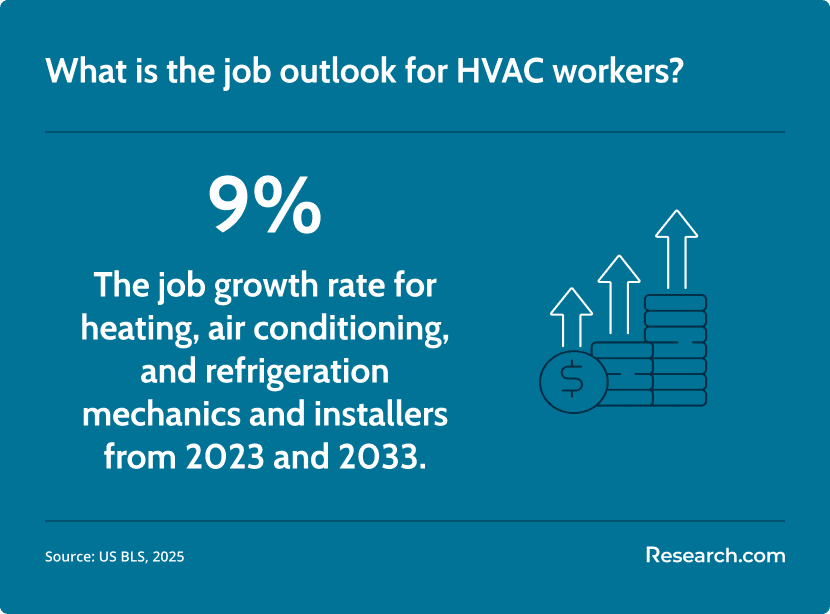
The job outlook for HVAC-trained workers is strong compared with many occupations. Between 2023 and 2033, employment for heating, air conditioning, and refrigeration mechanics and installers in the US is projected to grow by 9%, with an average of about 42,500 job openings each year over the decade. This growth rate is much faster than the average for all occupations in the country (US BLS, 2025).
Related occupations also show continued demand. From 2023 to 2033, electricians are projected to see 11% job growth, equal to an average of about 80,200 openings per year. Stationary engineers and boiler operators are projected to grow by 4%, about as fast as the average for all US occupations, with an average of about 3,800 openings each year over the decade (US BLS, 2025).
| Occupation | Projected employment growth, 2023 to 2033 | Average annual openings |
| Heating, air conditioning, and refrigeration mechanics and installers | 9% | About 42,500 |
| Electricians | 11% | About 80,200 |
| Stationary engineers and boiler operators | 4% | About 3,800 |
Like programs at accredited medical billing and coding schools online, HVAC training is often chosen by students who want career-focused education tied to consistent labor-market demand.
And just as cheap post master's certificate pediatric NP online programs help healthcare professionals specialize, HVAC certifications and focused trade training can help technicians build targeted expertise in areas such as refrigeration, controls, or energy-efficient systems.
Common Mistakes to Avoid When Choosing an Online HVAC Trade School
- Choosing only by lowest tuition: A cheap program may cost more in the long run if it does not include certification preparation, support, materials, or practical training.
- Ignoring hands-on requirements: HVAC is a physical trade. Make sure you know where and how you will practice installation, diagnostics, tools, and safety procedures.
- Assuming online training automatically meets licensing rules: HVAC licensing and contractor requirements can vary by state or locality. Contact the appropriate authority before enrolling.
- Not checking accreditation: Accreditation affects school credibility and may affect financial aid, credit transfer, and employer perception.
- Overlooking certification exam costs: Ask whether EPA 608, HVAC Excellence, NATE-related preparation, or exam fees are included in tuition.
- Skipping employer research: Search local HVAC job postings and ask employers which credentials, certifications, and experience they prefer.
- Assuming salary outcomes are guaranteed: Median wage data describes broad occupational earnings, not what every graduate will earn after finishing a program.
Here’s What Graduates Have to Say about Their Online HVAC Programs
- “My online HVAC program gave me enough flexibility to keep my job while training for a new field. After earning certification, I was able to launch a small business, and instructor support helped me stay on track.” —Anthony
- “I changed careers in my 40s, and the organized online lessons made the transition feel manageable. I now work with complex systems every day and enjoy the practical problem-solving side of the trade.” —Shane
- “The simulations and video demonstrations made the technical concepts easier to understand. After completing the program, I entered an apprenticeship and felt prepared to start learning on real job sites.” —Bryan
Key Insights
- Online HVAC trade schools are best for students who need flexible, career-focused training, but they should still include a clear path to hands-on practice.
- Certificate and diploma programs usually take 6 to 12 months and are designed for students who want a faster route into entry-level HVAC work.
- Program costs among the listed schools range from $939 to $2,995, while Texas State University requires students to contact the university for tuition details.
- Accreditation and certification preparation matter. Look for recognized accreditation and ask whether the program prepares students for EPA 608, HVAC Excellence, NATE-related credentials, or other relevant exams.
- The ASHRAE Foundation offers qualified students scholarships of up to $10,000, with 46 society scholarships available for the academic year 2025–2026.
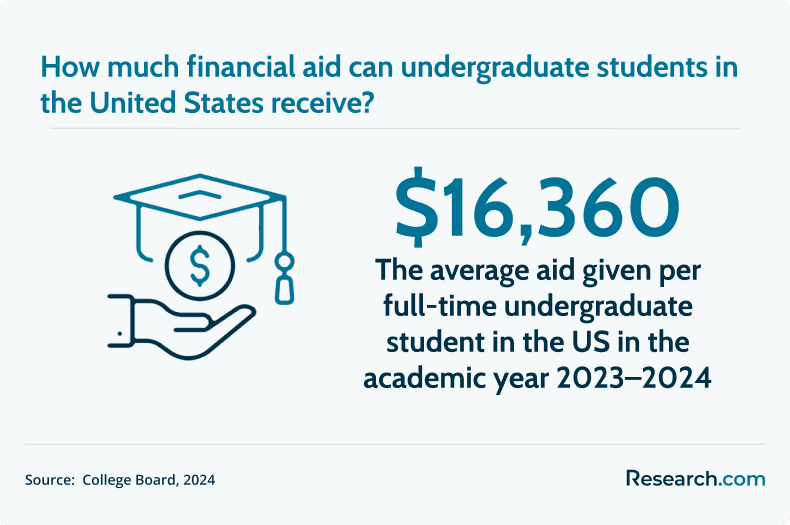
- The average amount of financial aid awarded per full-time equivalent undergraduate student in the US was $16,360 in the academic year 2023–2024 (Ma, Pender, & Oster, 2024).
- In May 2024, heating, air conditioning, and refrigeration mechanics and installers earned a median annual wage of $59,810, and the highest 10% earned $91,020 (US BLS, 2025).
- From 2023 to 2033, employment for heating, air conditioning, and refrigeration mechanics and installers is projected to grow by 9%, with about 42,500 openings per year on average (US BLS, 2025).
- The best program choice depends on your local licensing rules, budget, schedule, certification goals, hands-on training access, and long-term career plan.
References:
- Fry, R., Braga, D., & Parker, K. (2024, May 23). Is College Worth It? Pew Research Center. https://www.pewresearch.org/social-trends/2024/05/23/is-college-worth-it-2
- Ma, J., Pender, M., & Oster, M. (2024). Trends in College Pricing and Student Aid 2024. College Board. https://research.collegeboard.org/media/pdf/Trends-in-College-Pricing-and-Student-Aid-2024-ADA.pdf
- US Bureau of Labor Statistics. (2025, April 18). Electricians. Occupational Outlook Handbook. https://www.bls.gov/ooh/construction-and-extraction/electricians.htm
- US Bureau of Labor Statistics. (2025, April 18). Heating, Air Conditioning, and Refrigeration Mechanics and Installers. Occupational Outlook Handbook. https://www.bls.gov/ooh/installation-maintenance-and-repair/heating-air-conditioning-and-refrigeration-mechanics-and-installers.htm
- US Bureau of Labor Statistics. (2025). Occupational Employment and Wage Statistics, Industry: Cross-industry, Private, Federal, State, Local Government, Period: May 2024. Occupation Employment and Wage Statistics Query System. https://data.bls.gov/oes/#/industry/000000
- US Bureau of Labor Statistics. (2025, April 18). Stationary Engineers and Boiler Operators. Occupational Outlook Handbook. https://www.bls.gov/ooh/production/stationary-engineers-and-boiler-operators.htm
Other Things You Should Know About Online HVAC Programs
Yes. Many affordable online HVAC programs include EPA Section 608 prep because technicians must pass that exam to handle refrigerants under the U.S. Environmental Protection Agency rules. The exam has four types: I, II, III, and Universal. Fees are set by the approved testing provider.
Prospective students must have a high school diploma or GED to enroll in online HVAC certification programs in 2027. Some schools may require basic math skills or introductory courses in electricity, and specific requirements can vary by institution.