2027 Most Affordable Online Locksmith and Home Security Technician Trade School Programs

Co-Founder and Chief Data Scientist
Choosing an online locksmith and home security technician program is usually a cost decision first: you want job-ready training, but you do not want to spend college-level tuition on a short trade credential. The locksmith industry remains large enough to support steady demand, with the Locksmiths Market Size & Growth Report citing global revenue of $9.1 billion. At the same time, modern locksmith work now includes more than keys and deadbolts; many roles involve smart locks, access control, alarms, safes, and customer-facing field service.
This guide is for students, career changers, working adults, and hands-on learners comparing affordable online locksmith and home security technician trade school programs. It explains what these programs teach, how long they take, what they cost, how online training compares with campus labs, which schools are affordable options, and how to judge whether a program is credible enough for your career goals.
Quick answer: Are online locksmith and home security technician programs worth considering?
Yes, an online locksmith or home security technician program can be worth considering if you need flexible, lower-cost training for entry-level work in residential locksmithing, commercial lock service, safe repair, or security system installation. The best programs combine online theory with hands-on practice through tool kits, simulations, labs, or local experience. However, students should verify licensing rules in their state, check accreditation or school approval, and avoid assuming that a low-cost certificate automatically guarantees employment.
Key benefits of choosing an online locksmith and home security technician program
- Graduates may pursue entry-level roles such as residential locksmith, commercial locksmith, safe technician, automotive locksmith, or home security system installer.
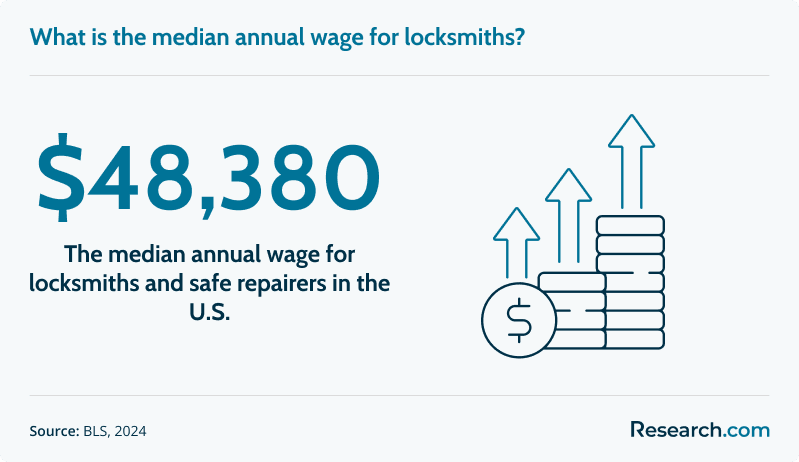
- Locksmiths and safe repairers earned a median annual wage of $48,380 as of May 2023, according to the U.S. Bureau of Labor Statistics.
- Online programs are often self-paced and less expensive than many in-person trade programs, which can help working adults, parents, and budget-conscious learners train without relocating.
- Short programs can help students build practical skills faster than a traditional degree route, though hands-on practice remains essential.
What can you expect from an online locksmith and home security technician program?
Online locksmith and home security technician programs usually teach the theory behind locks, keys, entry systems, safe mechanisms, and basic electronic security. Students learn how common lock designs work, how keys are duplicated or cut by code, how locks are installed and repaired, and how security devices are used in homes and businesses. Stronger programs also introduce professional ethics, customer service, basic business operations, safety practices, and licensing preparation.
The biggest limitation of online training is that locksmithing is a physical trade. Reading about a pin tumbler lock is not the same as manipulating one. For that reason, better online programs may ship tool kits, provide video demonstrations, require practical assignments, or recommend in-person labs. Some hybrid programs pair online lessons with scheduled campus or workshop training.
| Program feature | What it means for students | Why it matters |
| Self-paced online lessons | You can study around work, family, or another job. | Useful for adult learners who cannot attend fixed weekday classes. |
| Tool kits or practice materials | You can practice basic procedures at home. | Hands-on repetition is critical for building confidence with locks and keys. |
| Electronic security content | You may learn about alarms, access control, smart locks, and home automation. | Employers increasingly expect technicians to understand both mechanical and digital security devices. |
| Licensing or certification preparation | The course may explain professional standards, exams, or state requirements. | Locksmith licensing rules vary, and some jobs require background checks or credentials. |
| Business and customer service training | You learn pricing, service calls, ethics, scheduling, and client communication. | Many locksmiths work in mobile service roles or eventually operate independently. |
Where can you work after completing a locksmith and home security technician program?
Graduates can look for work in locksmith shops, mobile locksmith companies, alarm and security installation firms, property maintenance departments, schools, hospitals, apartment management companies, retail chains, banks, and government facilities. The right work setting depends on whether your training focuses on mechanical locks, safes, automotive systems, electronic access control, or broader security technology.
Some graduates pursue self-employment by operating a mobile locksmith service. That path can offer schedule flexibility and income upside, but it also requires more than technical skill. You may need business registration, insurance, licensing, local permits, tools, a service vehicle, marketing, and a clear process for verifying customer authorization before opening or rekeying property.
How much can you make after completing a locksmith and home security technician program?
According to the U.S. Bureau of Labor Statistics, locksmiths and safe repairers earned a median annual wage of $48,380 in May 2023. New technicians may earn between $30,000 to $40,000 per year, depending on employer, region, schedule, and the type of work performed. Technicians who develop specialized skills in electronic security, safes, automotive systems, or emergency service may have access to higher-paying opportunities.
Self-employed locksmiths who handle urgent calls or serve high-demand urban markets may earn upwards of $60,000 to $70,000 annually, but that figure is not guaranteed. Independent work also brings expenses such as tools, transportation, insurance, advertising, licensing, and unpaid administrative time. Some technicians also receive overtime pay, bonuses, or travel stipends, especially in field-service roles.
- Most affordable online locksmith and home security technician trade school programs for 2027
- Program length: How quickly can you finish?
- Online vs. campus locksmith training
- Typical cost of online locksmith training
- Financial aid and payment options
- Admission requirements and background considerations
- Common courses in locksmith and home security technician programs
- Specializations to consider
- Employer recognition and accreditation
- How to choose the best affordable program
- Career paths after training
- Common challenges in online locksmith training
- Job market outlook and hiring industries
- Industry trends affecting locksmith and security careers
- Using trade training as a step toward further education
List of the Most Affordable Online Locksmith and Home Security Technician Trade School Programs for 2027
How do we rank schools?
Affordability matters, but a low price is not enough. A locksmith or home security technician program should also provide practical training, credible recognition, transparent costs, and enough flexibility for students who are working while they study. Research.com’s ranking is designed to help future locksmiths compare options using a clear mix of cost and academic-quality factors.
For more detail on how Research.com evaluates schools and programs, review our methodology section. Data sources used in the ranking process include the IPEDS database, Peterson’s database, including the Distance Learning Licensed Data Set, the College Scorecard database, and the National Center for Education Statistics (NCES).
| Rank | School or provider | Program focus | Length | Cost information | Accreditation or recognition |
| 1 | Ashworth College | General Locksmithing through a fully online Locksmithing Career Diploma Program | Four to 12 months | Approx. $79 per credit; 22 required credits | Distance Education Accrediting Commission (DEAC) |
| 2 | Penn Foster | Locksmithing and Security Systems through an online Locksmith and Home Security Technician Program | Average completion time is five to seven months | Approx. $64 per credit; 20 required credits | DEAC |
| 3 | Stratford Career Institute | General Locksmithing for residential, commercial, and automotive lock basics | Six to 12 months | Not credit-based; full program cost approx. $750 | Not formally accredited; considered a vocational correspondence school |
| 4 | California Institute of Locksmithing | General Locksmithing and Safe Technician training through online theory and hands-on components | Three to six months for the online portion | N/A; course-based pricing | Bureau for Private Postsecondary Education – California (BPPE) |
| 5 | International Locksmith and Security Training Program (ILSTP) | Residential, Commercial, and Automotive Locksmithing | Self-paced, typically three to six months | N/A | Independent; not regionally or nationally accredited |
| 6 | Fox Valley Technical College | Locksmithing Basics through hybrid instruction | One semester, approx. four months | $136 in-state per credit; $204 out-of-state per credit; 12 required credits | Higher Learning Commission (HLC) |
| 7 | North Bennet Street School | Locksmithing and Security Technology with online prep modules | Online prep: one month; Full program: nine months | Not applicable | Accrediting Commission of Career Schools and Colleges (ACCSC) |
| 8 | Hocking College | AAS in Security Technology with locksmithing electives | Two years | $188 in-state per credit; $376 out-of-state per credit; 65 required credits | HLC |
| 9 | Sullivan and Cogliano Training Center | General Locksmithing through vocational online and hybrid training | Six to nine months | Flat rate per course; approx. $900 total | Council on Occupational Education (COE) |
| 10 | Locksmith Trade Academy | Lockpicking, Safe Opening, and Rekeying through modular online lessons | One to three months | Not applicable; flat fee of approx. $500 | Not accredited; industry-recognized certificate |
How to read this ranking
A shorter program is not always better. A one- to three-month course may be useful if you want basic exposure or a low-cost entry point, while a longer certificate or associate-level pathway may provide broader preparation in security technology. Students who need recognized accreditation should pay close attention to whether a provider is accredited by DEAC, HLC, ACCSC, COE, BPPE, or another relevant body. Students who mainly want practical skill-building should ask what tools, demonstrations, assignments, and feedback are included.
How long does it take to complete an online locksmith and home security technician program?
Most online locksmith and home security technician programs can be completed in three to 12 months. The actual timeline depends on whether the program is self-paced, how many hours you study each week, whether hands-on labs are required, and whether the curriculum includes only core locksmithing or also covers electronic security, safe service, and business operations.
Some fast-track options may be completed in as little as two months, while broader programs can take longer. By comparison, students researching adjacent fields often ask how long does it take to get a degree in criminal justice; degree pathways generally require a much larger time commitment than short trade certificates.
| Training path | Typical timeline | Best for | Trade-off |
| Short online course | One to three months | Learners who want a low-cost introduction or targeted skills such as rekeying or lockpicking | May not provide enough hands-on depth for all employers or licensing needs |
| Career certificate or diploma | Three to 12 months | Students preparing for entry-level locksmith or home security technician roles | Quality varies, so curriculum and accreditation should be checked carefully |
| Hybrid technical program | One semester to nine months | Students who want online theory plus supervised practical work | May require travel to a campus or training site |
| Associate-level security technology program | Two years | Learners seeking broader security technology training and a college credential | Costs more and takes longer than a trade certificate |
How does an online locksmith and home security technician trade school compare to an on-campus program?
Online and campus programs can cover similar topics, but they are not identical learning experiences. Online training is usually more flexible and often less expensive, while campus programs typically offer stronger supervised practice with professional tools and instructors present.
| Factor | Online program | On-campus or hybrid program | Who should choose it? |
| Schedule | Often self-paced, with lessons available anytime | Usually follows a set class or lab schedule | Online works well for students with jobs or family obligations; campus fits students who need structure. |
| Hands-on practice | May rely on shipped tool kits, video demos, simulations, or independent practice | Often includes supervised labs and access to more equipment | Campus or hybrid training is better if you learn best by doing with instructor feedback. |
| Cost | Often lower because students avoid commuting, housing, and some facility costs | May include lab fees, travel, housing, or campus-based expenses | Online may be the better choice for students focused on affordability. |
| Networking | Depends on online forums, instructor access, and career services | May offer direct peer and instructor relationships | Campus can help students who want local employer connections. |
| Licensure preparation | May explain requirements, but students must verify rules independently | May be more connected to local licensing expectations | Students in regulated states should ask both online and campus programs about licensing alignment. |
If your interests extend beyond trade-level security work into emergency planning or public safety, an affordable master’s in homeland security online may be relevant later. For entry-level locksmith work, however, a short trade program is usually the more direct path.
What is the average cost of an online locksmith and home security technician program?
Many online locksmith programs cost between $400 and $2,000, with a common full-program range of $500 to $2,000 depending on provider, length, tools, support, and credential type. Course-only options may be cheaper, while accredited or hybrid programs may cost more because they include broader instruction, college credit, or hands-on components.
By comparison, NCES data shows that average annual expenses for two-year institutions in the U.S. range from $10,000 to $36,000, depending on institution type and a student’s living situation. That difference is why many students consider short locksmith training as a lower-cost route into hands-on technical work.
Cost should still be evaluated carefully. A low advertised price may not include tools, exam fees, background checks, business registration, licensing fees, travel for labs, or additional practice materials. Students comparing other practical career paths may also review the most affordable online real estate degree programs if they are interested in property-related careers outside locksmithing.
What are the financial aid options for students enrolling in an online locksmith and home security technician program?
Financial aid options depend heavily on the type of school. Some short, non-degree, or non-accredited locksmith programs may not qualify for federal student aid. Accredited colleges and approved career schools may have more options, but students should confirm eligibility before enrolling.
- School payment plans: Many providers allow monthly payments, which can make a short program easier to budget for.
- Employer reimbursement: Maintenance companies, property managers, security firms, or related employers may help pay for training that improves job performance.
- Private scholarships and local grants: Community foundations and workforce organizations sometimes support vocational training, though locksmith-specific awards may be limited.
- Workforce development funding: Local or state workforce agencies may offer training vouchers for eligible students entering in-demand trades.
- Military and veteran education benefits: Eligible students may be able to use GI Bill benefits if the school and program are approved.
Students exploring security-related career training at the bachelor’s level may also compare the cheapest online bachelor’s in emergency management, especially if their long-term goal is public safety, emergency operations, or security management rather than field locksmithing.
What are the prerequisites for enrolling in an online locksmith and home security technician program?
Most online locksmith programs are designed for beginners and have limited academic requirements. Students should still expect professional screening to matter because locksmiths may work with homes, vehicles, safes, businesses, and secure facilities.
- Minimum age, usually 18 years old
- High school diploma or GED, though some programs may allow enrollment without one
- Basic computer skills for online lessons, assignments, and exams
- Clean criminal background check, especially for licensing, bonding, or secure work environments
- Reliable access to tools or a willingness to buy required practice materials if they are not included
Zippia reports that about 39% of locksmiths hold a high school diploma, while 20% have an associate degree and another 20% have a bachelor’s degree. For security technicians, 36% have a bachelor’s, 30% have an associate degree, and 21% have a high school diploma. These figures show that the field includes workers with different education levels, but advancement may depend on technical skill, trustworthiness, specialization, and experience.
If you are comparing other entry-level technical credentials, the cheapest online AutoCAD certificate programs may be useful for students interested in technical drawing, layouts, and security system planning.
What courses are typically in an online locksmith and home security technician program?
Curricula vary, but most programs combine mechanical locksmithing with introductory electronic security. Students should look for a curriculum that moves from fundamentals to practice, rather than one that only provides reading material.
| Course area | What you learn | Career relevance |
| Lock mechanisms and key systems | Pin tumbler locks, wafer locks, lock functions, and master keying concepts | Core knowledge for residential and commercial locksmith work |
| Lock installation and repair | Fitting, replacing, servicing, and troubleshooting common lock hardware | Useful for field service, property maintenance, and commercial accounts |
| Key duplication and code cutting | Duplicating keys, reading codes, and understanding key blanks | Essential for locksmith shops and mobile service calls |
| Safe and vault servicing | Safe manipulation, drilling basics, and re-locker bypassing concepts | Helpful for students interested in higher-skill safe technician work |
| Electronic security systems | Alarm systems, access control, smart locks, and connected home security devices | Important as locksmithing overlaps with security technology |
| Business, ethics, and customer service | Pricing, documentation, client verification, licensing ethics, and service communication | Critical for mobile locksmiths and independent operators |
Mobile technicians also benefit from scheduling, routing, inventory, and workflow skills. Students curious about broader operations careers can read what is a logistics manager to see how organization and resource coordination apply across industries.
What types of specializations are available in online locksmith and home security technician programs?
General locksmithing is a practical starting point, but specialization can make your training more marketable. The best choice depends on the type of customers you want to serve and whether you prefer mechanical work, electronics, vehicles, safes, or smart home systems.
Locksmithing specializations
- Automotive Locksmithing: Focuses on vehicle lockouts, ignition work, and transponder key programming.
- Safe and Vault Technician: Covers safe servicing, opening methods, and repair for residential or commercial clients.
- Forensic Locksmithing: Involves examining lock evidence for legal, investigative, or insurance-related purposes.
Security technician specializations
- Electronic Access Control Systems: Covers keypads, card readers, biometric devices, and remote access systems.
- Surveillance and Alarm Systems: Focuses on cameras, sensors, alarms, monitoring, and system integration.
- Smart Home Integration: Teaches connected locks, entry devices, automation, and app-based security features.
Zippia reports that 21% of locksmiths and 14% of security technicians majored in business, while other common majors include criminal justice and electrical engineering. That mix makes sense: locksmithing requires technical skill, customer trust, and sometimes business ownership. Students who already have hands-on trade experience, such as those comparing affordable online flooring installer certification programs or the cheapest carpentry certification courses online, may find crossover opportunities in property access, building hardware, and smart home installation.
Are online programs accredited and recognized by employers?
Employer recognition depends on the provider, credential, curriculum, and local labor market. Accreditation is one way to evaluate quality because it signals that a school has gone through external review. For distance education, students may see organizations such as the DEAC; for colleges, regional or institutional accreditors may apply. State approval can also matter, especially for career schools and programs tied to licensing.
Not every useful locksmith course is accredited, and not every accredited program is the best fit for every student. The key is matching the credential to your goal. If you need a recognized college credential, choose an accredited school. If you need targeted practice for a specific skill, an industry course may be enough, but you should ask employers whether they value that certificate.
Short technical credentials are different from academic shortcuts such as 6 months degree courses. Before enrolling, ask whether the program awards college credit, a certificate, a diploma, or only a certificate of completion.
How do you choose the best among the most affordable online locksmith and home security technician programs?
The best affordable program is not automatically the cheapest. It is the program that gives you enough usable skill, recognition, support, and flexibility for the lowest reasonable total cost.
| Question to ask | Why it matters | Red flag |
| Is the school accredited, state-approved, or industry-recognized? | Recognition may affect employer trust, financial aid, transfer options, and licensing preparation. | The provider makes vague claims but does not identify any accreditor or approval agency. |
| Does the price include tools, exams, books, and materials? | Low tuition can become expensive if required supplies are excluded. | The school advertises a low price but does not provide a full cost breakdown. |
| How much hands-on practice is required? | Locksmithing requires physical skill, not only theory. | The course is mostly reading with little demonstration or practical feedback. |
| Does the curriculum include modern electronic security? | Smart locks, alarms, and access control are increasingly common in the field. | The course only covers older lock types and ignores current security technology. |
| Does the program explain licensing rules? | Requirements vary by location, and students may need background checks or state approval. | The school suggests licensing is automatic after completion. |
| What career support is available? | Resume help, employer contacts, and apprenticeship guidance can be valuable for beginners. | No instructor access, no career guidance, and no clear student support process. |
Common mistakes to avoid when choosing a program
- Choosing only by tuition: The cheapest course may not include tools, support, or enough practice.
- Ignoring licensing requirements: A certificate may not satisfy your state or local rules.
- Assuming online training is fully hands-on: You may need to buy tools or find local practice opportunities.
- Overvaluing rankings: Rankings help narrow options, but your location, goals, and budget matter more.
- Skipping employer research: Ask local locksmith shops and security companies what training or credentials they respect.
- Assuming salary outcomes are guaranteed: Pay depends on location, employer, specialization, schedule, and experience.
What career paths are available for graduates of online locksmith and home security technician programs?
Graduates can pursue several entry-level and specialized roles. The right path depends on your comfort with field service, electronics, customer interaction, emergency calls, and business ownership.
| Career path | Typical work | Good fit for |
| Residential locksmith | Rekeying, lock installation, home lockouts, deadbolts, and smart lock setup | Students who want direct customer service and home service work |
| Commercial locksmith | Door hardware, master key systems, office access, and facility lock maintenance | Learners interested in businesses, institutions, and recurring accounts |
| Automotive locksmith | Vehicle lockouts, key programming, ignition work, and car key replacement | Technicians who enjoy mobile work and vehicle systems |
| Safe technician | Safe opening, repair, combination changes, and vault-related service | Students willing to build specialized mechanical expertise |
| Security system installer | Alarms, sensors, cameras, access control, and smart home devices | Learners who prefer electronics and integrated security systems |
| Electronic access control specialist | Keycards, biometric entry, keypad systems, remote access, and troubleshooting | Students aiming for commercial security technology roles |
The BLS reports a median wage of around $48,380 for locksmiths. Some of the top-paying industries for locksmiths and safe repairers include:
- Local Government (excluding schools and hospitals): $74,550
- Junior Colleges: $68,050
- Psychiatric and Substance Abuse Hospitals: $67,960
- State Government (excluding schools and hospitals): $66,450
- General Medical and Surgical Hospitals: $66,380
Career changers from property-related trades may find this field especially practical. For example, someone who completed an affordable landscaping technology career diploma online may already understand site access, client service, tools, and property maintenance workflows.
What challenges might you face in an online locksmith and home security technician program?
Online training can be convenient, but it requires discipline and planning. The most common challenge is limited live hands-on instruction. Even with videos and tool kits, students may need extra practice before they feel ready for real service calls. Another challenge is technology: online platforms, simulations, exams, and digital lessons require reliable internet access and basic troubleshooting skills.
Students should also watch for outdated curriculum. A program that ignores smart locks, electronic access control, or customer verification practices may not reflect current employer expectations. Finally, career growth may require continued education. Advanced academic programs such as the shortest doctoral program online are not direct locksmith training routes, but they show how different online formats serve very different career goals. Locksmith students should focus first on practical skills, licensing readiness, and employer-recognized credentials.
What is the job market like for graduates who completed an online locksmith and home security technician program?
The job market for locksmiths and home security technicians is supported by ongoing demand for physical access, lock repair, safe service, institutional security, and smart security installation. Technology has changed the field, but it has not eliminated the need for trained people who can diagnose problems, work on-site, verify authorization, and handle customers professionally.
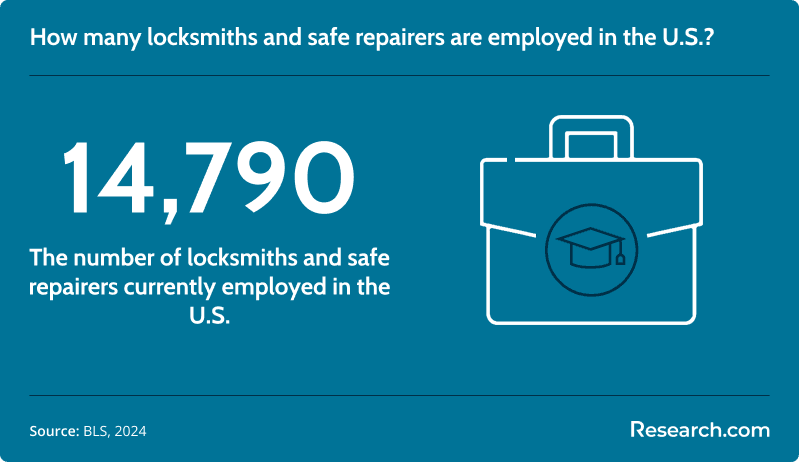
In 2024, there were 14,790 locksmiths and safe repairers working in the U.S. BLS data identifies the industries with the highest employment levels for locksmiths and safe repairers as:
- Investigation and Security Services: 10,200
- Colleges, Universities, and Professional Schools: 1,090
- Elementary and Secondary Schools: 620
- Local Government (excluding schools and hospitals): 390
- Federal, State, and Local Government (excluding education and USPS): 310
These figures show that employment is not limited to small locksmith shops. Schools, government agencies, hospitals, and security firms also use trained locksmiths and safe repairers. Students who want a fast route into construction or design-adjacent work may compare this path with an accelerated online architecture degree, but locksmith training is usually more direct for hands-on security service work.
What emerging industry trends can impact your training and career growth?
Locksmithing is becoming more connected to electronic and digital security. Mechanical locks still matter, but many homes and businesses now use smart locks, keypads, cameras, biometric access, and cloud-connected devices. Online programs that include IoT-enabled smart locks, biometric access control, cybersecurity awareness, digital diagnostics, and remote troubleshooting may better prepare students for modern service calls.
Employer expectations are also shifting. Technicians are often expected to communicate clearly with customers, document work, protect sensitive access information, and understand ethical boundaries. Students who eventually want broader management or technology roles may consider additional academic pathways, but trade training should come first if the goal is immediate field work. For context, Research.com also covers broader degree options such as the easiest bachelor degree to get, though those programs serve different goals than locksmith certification.
Can online locksmith training open doors to advanced academic opportunities?
Online locksmith training is primarily a workforce credential, not an academic degree. Still, it can help students build confidence in technical learning, customer service, field operations, and security concepts. Those skills may later support further study in security management, criminal justice, cybersecurity, emergency management, business, or facilities operations.
If you plan to move from trade work into leadership or advanced study, ask whether your program awards transferable credit or only a noncredit certificate. Students who already hold a bachelor’s degree and want graduate-level options can compare broader online pathways such as the fastest masters degree online. For most beginners, though, the immediate priority should be affordable training, hands-on practice, licensure readiness, and entry-level work experience.
Questions to ask before enrolling
- Is the program accredited, state-approved, or clearly recognized by employers in my area?
- Does the total price include tools, textbooks, software, exams, shipping, and support?
- How many practical assignments will I complete, and who reviews my work?
- Does the course cover both traditional locks and modern electronic security systems?
- Will the program help me understand licensing, background checks, bonding, and business requirements?
- Can I speak with an advisor about career outcomes without being pressured to enroll immediately?
- What refund policy applies if the course is not a good fit?
- Will I receive a certificate, diploma, college credit, or only proof of completion?
Key Insights
- Online locksmith and home security technician programs are best for students who want flexible, lower-cost training for entry-level security work without committing to a long degree program.
- Most programs take three to 12 months, while some fast-track options may be completed in as little as two months.
- Many online locksmith programs cost between $400 and $2,000, with many full certificate programs falling between $500 to $2,000.
- Hands-on practice is the deciding factor. A strong online program should include tool kits, demonstrations, assignments, labs, or clear guidance for practical skill-building.
- Accreditation and recognition matter, especially if you need financial aid, employer credibility, licensing preparation, or a pathway to further education.
- Locksmiths and safe repairers earned a median annual wage of $48,380 in May 2023, but earnings vary by location, specialization, employer, and whether you are self-employed.
- The highest-paying listed industries include Local Government (excluding schools and hospitals) at $74,550 and Junior Colleges at $68,050, based on BLS data.
- Modern locksmith careers increasingly overlap with smart locks, access control, alarms, surveillance, and connected home security systems.
- Before enrolling, verify your state’s licensing expectations, ask employers what credentials they value, and compare total program cost instead of advertised tuition alone.
References:
- BLS. (2023, April 25). Locksmiths and safe repairers. bls.gov.
- Data USA. (n.d.). Locksmiths & safe repairers. datausa.io.
- Kentley Insights. (2024, May 7). Locksmiths Market Size & Growth. kentleyinsights.com.
- NCES. (2024). COE - Price of attending an undergraduate institution. nces.ed.gov.
- Zippia. (2025, January 8). Locksmith education requirements and Courses. zippia.com.
- Zippia. (2025, January 8). Security Technician Education Requirements and Courses. zippia.com.
Other Things You Should Know About the Most Affordable Online Locksmith and Home Security Technician Trade School Programs
In 2027, many online trade schools offer affordable programs for aspiring locksmiths and home security technicians. Top options include Penn Foster Career School, Stratford Career Institute, and Ashworth College. These programs provide comprehensive training at a lower cost compared to traditional schools, making them accessible for budget-conscious students.
Formal training ensures a well-rounded foundation before hands-on work begins. Accredited programs cover both mechanical and electronic security systems and prepare students for certification exams. Online schools offer practical tools and structured curriculum, accelerating confidence and competence. Apprenticeships often follow, deepening skills in real-world settings. Ultimately, combining online education with mentorship provides a faster, more rounded entry into the trade.
Yes, after finishing a general locksmith and home security technician program, you can pursue advanced certifications in areas like automotive locksmithing, electronic access control, safes and vaults, or forensic locksmithing. Some associations offer tiered paths, such as Certified Registered Locksmith, Certified Professional Locksmith, or Certified Master Locksmith, which build upon foundational credentials and target specific specializations.