2027 Most Affordable Online CDL Training for Truck Drivers: Top Trade School Programs

Co-Founder and Chief Data Scientist
Choosing online CDL training raises two practical questions: will it satisfy federal Entry-Level Driver Training requirements, and will it actually help you move from studying regulations to passing the skills test and getting hired? The short answer is that FMCSA-listed online providers can meet the theory portion of ELDT, but they do not replace the required behind-the-wheel training and state testing process.
This guide is for new commercial drivers, career changers, military veterans, unemployed workers, and students comparing low-cost CDL training options. It explains what online CDL programs can and cannot do, how much training may cost, which providers offer affordable options, what credentials and endorsements matter, and how to avoid spending money on a program that does not fit your state, schedule, or job goals.
The need for qualified commercial drivers remains significant. Heavy and tractor-trailer truck drivers had a median annual salary of $57,440 in May 2024, and about 240,300 openings are projected each year through 2033. Those numbers do not guarantee a job or a specific paycheck, but they show why many students see CDL training as a faster route into a trade career than a traditional degree.
Quick answer: Is online CDL training worth it?
Online CDL training is worth considering if you need to complete the ELDT theory requirement affordably and on a flexible schedule. It is not enough by itself to earn a CDL because you still need a Commercial Learner’s Permit, behind-the-wheel instruction, and a state skills test. The best option is usually a low-cost online theory course from an FMCSA Training Provider Registry-listed provider combined with local hands-on driving practice.
| Question | Direct answer |
| Can CDL theory training be completed online? | Yes, if the provider is listed on the FMCSA Training Provider Registry and reports completion properly. |
| Does online CDL training replace road training? | No. Online programs generally cover theory; behind-the-wheel training must still be completed in person. |
| How much do many online CDL theory courses cost? | Many listed options fall between $100 and $500, though full CDL schools can cost much more. |
| How long does online CDL theory take? | Some self-paced courses can be completed in 3-4 hours, while broader programs may take longer. |
| Who benefits most from online CDL training? | Working adults, rural students, career changers, and anyone who wants to complete theory before arranging local driving practice. |
What are the main benefits of earning a CDL?
- Access to regulated commercial driving jobs: A CDL allows you to qualify for roles operating commercial vehicles in trucking, delivery, transit, construction, waste management, and public services.
- A wage path that does not require a bachelor’s degree: Heavy and tractor-trailer truck drivers earned a median annual salary of $57,440 in May 2024.
- Multiple work styles: CDL holders can pursue local routes, regional routes, long-haul work, specialized hauling, public transportation, or owner-operator paths.
- Stackable credentials: Endorsements such as Hazmat, Passenger, Tank Vehicle, and air brake-related qualifications can expand the kinds of vehicles and cargo you may handle.
- Flexible training options: Online theory courses let you study from a phone, laptop, or desktop before moving into required in-person driving practice.
What should you expect from online CDL training?
Online CDL training usually covers the classroom or theory portion of Entry-Level Driver Training. That means you study the rules, safety principles, inspection procedures, vehicle systems, and operating concepts required before you move deeper into licensing and testing. It is best understood as one part of the CDL process, not the entire process.
Typical online modules cover safe operating procedures, vehicle inspection, basic control, hours-of-service rules, cargo handling, hazardous materials awareness, and preparation for certain endorsements. Many courses are self-paced and work on mobile devices, laptops, or desktops. Some programs cost between $100 and $500 and may take 3-4 hours to complete, depending on the course and student pace.
After you finish an eligible course, the provider should issue proof of completion and submit your record to the FMCSA Training Provider Registry. Before enrolling, verify that the provider is listed, ask how quickly records are reported, and confirm that the course matches your intended CDL class or endorsement.
Where can you work with a CDL?
A CDL can lead to jobs in freight transportation, logistics, construction, wholesale trade, manufacturing, public transit, school transportation, waste services, emergency services, and government transportation. Some drivers work for carriers or local employers, while others eventually move toward owner-operator work.
The day-to-day lifestyle varies widely. Local delivery jobs may offer more predictable home time, while long-haul routes can involve extended time away. Construction and waste management driving may involve physical work in addition to vehicle operation. Passenger transportation requires strong safety habits and customer-facing communication.
According to the U.S. Bureau of Labor Statistics, about 240,300 openings for heavy and tractor-trailer truck drivers are projected each year through 2033. Many openings are expected to come from replacement needs as workers retire or leave the occupation.
How much can you make with a CDL?
The median annual salary for heavy and tractor-trailer truck drivers was $57,440 in May 2024. Pay varies by employer, region, route type, experience, endorsements, safety record, schedule, and compensation model.
Drivers in truck transportation earn around $59,570, while drivers in manufacturing or construction earn between $54,000–$57,000. New drivers often start below experienced drivers, and compensation can increase with route complexity, mileage, seniority, or specialized credentials.
Owner-operators and experienced drivers can make upwards of $78,800 per year, especially when compensation includes mileage-based pay, bonuses, specialized freight, or demanding routes. Treat high earnings claims carefully: fuel, maintenance, insurance, downtime, and business costs can affect take-home income for owner-operators.
- Best Online CDL Training for Truck Drivers for 2027
- How long does it take to complete a CDL program?
- Online vs. on-campus CDL training: which format should you choose?
- How much does CDL training cost?
- How can students pay for CDL training?
- What are the prerequisites for enrolling in a CDL program?
- Should you pursue additional education with a CDL?
- What courses are usually included in CDL training?
- Which certifications and endorsements can strengthen a CDL career?
- Can CDL training lead to leadership roles in transportation?
- What CDL specializations are available?
- How to choose the best CDL program
- What career paths are available after CDL training?
- What trends are shaping CDL training?
- What is the job market like for CDL graduates?
Best Online CDL Training for Truck Drivers for 2027
How we evaluated these CDL training options
CDL training is not a traditional academic degree, so the most important selection factors are different from a college major. Students should look for FMCSA Training Provider Registry status, ELDT alignment, transparent pricing, clear reporting procedures, endorsement coverage, usability, and access to behind-the-wheel training or local testing support.
For broader education and provider context, our review process considers trusted sources such as the IPEDS database, Peterson's database, the College Scorecard database, and the National Center for Education Statistics. To learn more about our general ranking standards, see Research.com's methodology page.
| Provider | Best fit | Cost stated | Credential or approval stated |
| Midwest Truck Driving School | Low-cost Class A ELDT theory | $109 | FMCSA Training Provider Registry approved |
| CDL Online | Multiple CDL classes and endorsements | $60–$225 depending on course | FMCSA Training Provider Registry approved |
| ProDriverU | Interactive Class A and B ELDT modules | $199–$299 | FMCSA Training Provider Registry approved |
| Roadmaster Drivers School | Students who want full CDL school with driving practice | Varies by location; typically $6,000–$8,000 | FMCSA Training Provider Registry approved |
| 360 OSHA Campus | Short online safety-oriented course | $110 | FMCSA Training Provider Registry (TPR) listed |
| Global CDL Driver Training School | Class A or Hazmat online theory | $100 per course (Class A or Hazmat) | FMCSA TPR-listed; licensed by the Pennsylvania Department of Education |
| OnlineCDLCourse.com | Simple ELDT theory access across devices | Varies by course; typically $75–$100 | FMCSA Training Provider Registry (TPR) listed |
| Cape Fear Community College | Students seeking a community college truck driver program | Contact school for up-to-date pricing | Southern Association of Colleges and Schools Commission on Colleges (SACSCOC) |
| Lenoir Community College | Longer hybrid Class A preparation with Hazmat preparation | $750 plus CDL license fees | Southern Association of Colleges and Schools Commission on Colleges (SACSCOC) |
| Fox Valley Technical College | Students seeking ELDT theory through a technical college | Approximately $1,914.85 based on current tuition and fees | Higher Learning Commission (HLC); FMCSA TPR-listed |
1. Midwest Truck Driving School
Midwest Truck Driving School offers an online Class A CDL ELDT theory course for first-time CDL applicants. The course is self-paced, designed to meet FMCSA requirements in all 50 states, and can be completed in as little as three to four hours. After completion, students receive a certificate and their information is reported to the FMCSA’s Training Provider Registry.
- Required Credits to Graduate: Not credit-based; completion of theory course
- Cost: $109
- Accreditation: FMCSA Training Provider Registry approved
2. CDL Online
CDL Online provides FMCSA-compliant ELDT courses for Class A, Class B, Hazmat, school bus, and passenger training. The platform is self-paced, available for 180 days, and designed for students who want to finish theory preparation before taking the next licensing step.
- Required Credits to Graduate: Not credit-based; course completion required
- Cost: $60–$225 depending on course
- Accreditation: FMCSA Training Provider Registry approved
3. ProDriverU
ProDriverU offers online Entry Level Driver Training courses that align with federal CDL training standards. Its courses include more than 30 interactive modules, progress tracking, and automatic reporting to the FMCSA’s Training Provider Registry. Class A and B options are available nationwide, with hazmat training excluded in Washington state.
- Required Credits to Graduate: Not credit-based; course completion required
- Cost: $199–$299
- Accreditation: FMCSA Training Provider Registry approved
4. Roadmaster Drivers School
Roadmaster Drivers School is a stronger fit for students who want full Class A CDL preparation that includes classroom learning and real driving practice. Training covers inspections, DOT regulations, trip planning, and supervised driving. The school also offers job placement support and may help students connect with employers before graduation.
- Required Credits to Graduate: Not credit-based; completion of CDL training program
- Cost: Varies by location; typically $6,000–$8,000
- Accreditation: FMCSA Training Provider Registry approved
5. 360 OSHA Campus
360 OSHA Campus offers an online CDL Behind-the-Wheel course through a partnership with IMPROV Learning. The course uses scenarios, animations, and safety-focused instruction to reinforce commercial driving concepts for students preparing for on-road performance.
- Required Credits to Graduate: Not credit-based; 3-hour course
- Cost: $110
- Accreditation: FMCSA Training Provider Registry (TPR) listed
6. Global CDL Driver Training School
Global CDL Driver Training School provides fully online ELDT theory training for Class A licenses and Hazmat endorsements. Students can complete the coursework at their own pace, and completion results are uploaded to the FMCSA database.
- Required Credits to Graduate: Not credit-based; self-paced courses
- Cost: $100 per course (Class A or Hazmat)
- Accreditation: FMCSA TPR-listed; licensed by the Pennsylvania Department of Education
7. OnlineCDLCourse.com
OnlineCDLCourse.com delivers ELDT-compliant online theory training for Class A and B CDL applicants. The platform serves individual drivers, schools, and trucking companies and emphasizes device-friendly access in all 50 states.
- Required Credits to Graduate: Not credit-based; ELDT theory modules
- Cost: Varies by course; typically $75–$100
- Accreditation: FMCSA Training Provider Registry (TPR) listed
8. Cape Fear Community College
Cape Fear Community College offers a Truck Driver Training program that includes safety, compliance, logbook procedures, defensive driving, and equipment operation. The program is intended to prepare students for the CDL exam and entry into licensed truck driving roles.
- Required Credits to Graduate: Not credit-based; completion of program curriculum
- Cost: Contact school for up-to-date pricing
- Accreditation: Southern Association of Colleges and Schools Commission on Colleges (SACSCOC)
9. Lenoir Community College
Lenoir Community College offers a 352-hour CDL program that combines FMCSA theory training, classroom learning, and hands-on driving instruction. The program prepares students for the CDL Class A exam and Hazmat endorsement, with hybrid learning options available.
- Required Credits to Graduate: 352 hours of instruction
- Cost: $750 plus CDL license fees
- Accreditation: Southern Association of Colleges and Schools Commission on Colleges (SACSCOC)
10. Fox Valley Technical College
Fox Valley Technical College offers an online Entry-Level Driver Training theory program for students pursuing Class A CDL certification. Learners can complete the modules on a flexible schedule, and records are reported to the FMCSA registry after completion.
- Required Credits to Graduate: Not credit-based; ELDT modules
- Cost: Approximately $1,914.85 based on current tuition and fees
- Accreditation: Higher Learning Commission (HLC); FMCSA TPR-listed
How long does it take to complete a CDL program?
Most CDL programs take 3 to 7 weeks, although the timeline depends on whether you train full time, part time, online, through a community college, or through an employer-sponsored school. Online theory can be much shorter, but the complete licensing path includes permit testing, theory training, behind-the-wheel practice, and a state skills test.
| Timeline factor | How it affects completion |
| Full-time vs. part-time schedule | Full-time training may finish in a few weeks; evening, weekend, or part-time programs may extend over several months. |
| Program hours and format | Traditional CDL programs generally require around 160 hours of instruction, while online theory may take a few days to several weeks depending on the student. |
| License class | Class A, B, and C training requirements differ because they prepare students for different vehicles and operating responsibilities. |
| Endorsements | Hazmat, Passenger, Tanker, and other endorsements may require additional study, background checks, or testing. |
| Testing availability | DMV or third-party skills test scheduling can delay completion even after training is finished. |
If your goal is simply to finish ELDT theory quickly, an online course may be efficient. If your goal is to become road-ready, make sure you also have a plan for supervised driving practice, vehicle access, and test scheduling.
If you are comparing CDL work with training-related careers, you may also want to explore affordable online alteRNative teacher certification programs, especially if you are interested in teaching or workforce instruction later in your career.
Online vs. on-campus CDL training: which format should you choose?
Online CDL programs are strongest for theory, flexibility, and lower upfront cost. On-campus and full CDL schools are stronger for structure, supervised driving time, equipment access, and direct instructor feedback. Many students need both: online or classroom theory plus in-person behind-the-wheel instruction.
| Factor | Online CDL theory | On-campus or full CDL school |
| Best for | Students who need flexible ELDT theory completion | Students who need road practice, equipment, and a structured schedule |
| Hands-on training | Usually not included or must be arranged separately | Often built into the program |
| Cost profile | Often lower for theory-only courses | Often higher because it includes instructors, trucks, facilities, and road time |
| Schedule | Self-paced or asynchronous in many cases | Fixed class times, driving blocks, or cohort schedules |
| Employer connections | Varies by provider | Often stronger at schools with carrier relationships |
| Main risk | Completing theory without a plan for behind-the-wheel training | Paying more than necessary or choosing a school with weak job support |
Choose online CDL theory if:
- You already have access to local behind-the-wheel training.
- You need to study around work, caregiving, or military transition obligations.
- You want to reduce the classroom portion of your training cost.
- You are pursuing an endorsement and only need the theory component.
Choose an on-campus or full CDL program if:
- You need a truck, instructor, and practice range.
- You learn better with real-time feedback.
- You want job placement help or carrier introductions.
- You prefer a set timeline that keeps you accountable.
Both formats can support CDL preparation when used correctly. If you prefer a structured career pathway outside transportation, Research.com also explains how to become a human resources assistant, which may appeal to students comparing office-based roles with trade careers.
How much does CDL training cost?
CDL training costs vary because theory-only online courses, community college programs, private driving schools, and employer-sponsored programs include different services. The range can run from free company-sponsored training to private schools charging up to $7,000.
| Training option | Typical cost stated | What to watch for |
| Online CDL theory | Many courses cost between $100 and $500 | May not include behind-the-wheel training, permit fees, or skills testing. |
| Private CDL schools | $3,000–$7,000 | Ask whether tuition includes road time, vehicle use for testing, materials, and job placement. |
| Community colleges | $1,000–$5,000 | Often more affordable, but schedules may be longer or cohort-based. |
| Company-sponsored programs | Low or no upfront cost | Usually require a work commitment after graduation. |
| Written exam fees | Usually $5–$20 per attempt | Retakes can add cost if you are not prepared. |
| Skills test fees | Can range from $30 to $100 | Confirm whether the school includes test vehicle access. |
Additional fees may apply for endorsements such as Hazmat or Tanker. Students should also budget for transportation, medical exam requirements, background checks where applicable, permit fees, license fees, supplies, and lost wages if training requires time away from work.
Because CDL rules and fees are state-specific, use the FMCSA’s CDL State and Local Government Resources to check your state’s licensing process before choosing a provider.
If you are comparing CDL training with ministry or nonprofit leadership preparation, you can also review affordable Christian leadership degree programs online as a separate education path.
How can students pay for CDL training?
CDL training may be paid for through employer sponsorship, workforce funding, state programs, grants, scholarships, payment plans, or loans. The right option depends on the school, your income, employment status, location, and willingness to commit to an employer after training.
1. Employer-sponsored CDL training
Some trucking companies cover training costs in exchange for a work commitment. This can reduce or eliminate upfront tuition, but it may require staying with the employer for 6–24 months. Read the agreement carefully so you understand repayment obligations if you leave early.
2. State workforce and unemployment funding
Students who are unemployed, underemployed, or changing careers may qualify for training support through workforce programs. Possible sources include:
- Workforce Innovation and Opportunity Act (WIOA)
- State labor departments
- American Job Centers
3. Grants and scholarships
Some eligible schools may qualify students for public or institutional aid. If your program is eligible for Title IV aid, possible options may include:
- Federal Pell Grants (up to $7,395 in 2025)
- State-based career training grants
- School-specific or nonprofit scholarships
4. School payment plans and financing
Many CDL schools offer payment plans, installment billing, or school-arranged financing. Before agreeing, compare the total repayment amount, fees, interest, refund policy, and whether financing is tied to program completion or job placement.
5. Federal and private student loans
Some eligible CDL programs may accept FAFSA-based loans, including:
- Direct Subsidized/Unsubsidized Loans
- PLUS Loans for parents or grad students
- Private loans through lenders like SoFi or Upstart
If you are deciding between CDL training and a public safety career, compare funding availability as well as licensing requirements. For example, Research.com’s guide to the best degrees for law enforcement can help you compare education routes with different financial aid structures.
What are the prerequisites for enrolling in a CDL program?
CDL prerequisites depend on your state, license class, and endorsement goals. In general, students must first earn a Commercial Learner’s Permit by passing the knowledge exam through their local Department of Motor Vehicles or equivalent licensing agency.
Typical enrollment and licensing steps
- Confirm your state’s CDL rules: Review age, residency, medical, documentation, and testing requirements before paying a school.
- Study for and pass the CDL knowledge exam: Passing the knowledge exam allows you to obtain a Commercial Learner’s Permit.
- Choose the correct training provider: Make sure the program matches your license class and is appropriate for your state and endorsement goals.
- Register for theory training: Many online CDL programs use learning platforms that allow self-paced study and progress tracking.
- Complete course requirements: Some programs require a final average of at least 80% before you can continue toward hands-on training or testing.
- Complete behind-the-wheel training: Arrange local instruction with a qualified provider if your online course does not include it.
- Schedule the state skills test: Confirm whether your school provides the vehicle for testing or whether you must arrange one.
Like other regulated occupations, CDL training requires documented steps before employment. For a different example of job prerequisites and public-service screening, see Research.com’s guide to bailiff career requirements.
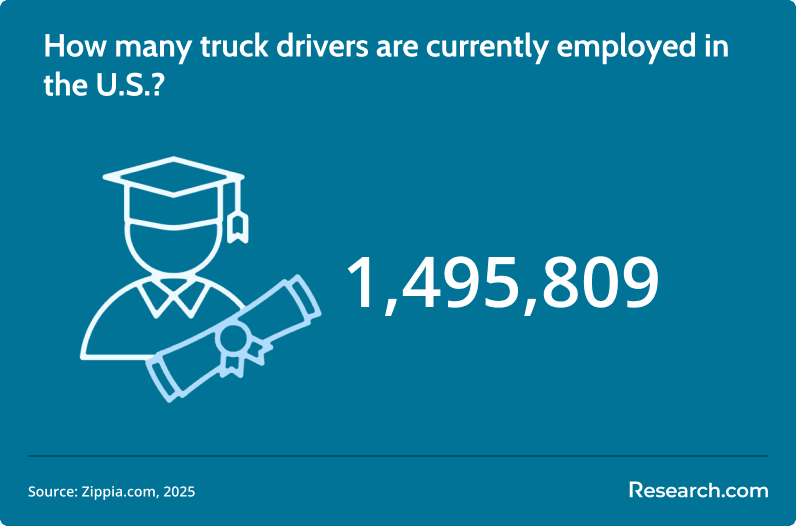
Should you pursue additional education alongside a CDL?
A CDL can be enough to enter commercial driving, but additional education may help if your long-term goal is dispatch, safety supervision, fleet operations, logistics coordination, compliance, training, or transportation management. You do not need a degree to start driving, so the decision should depend on your career target, available time, and expected return on investment.
| Goal | Useful add-on education | When it makes sense |
| Move into dispatch or logistics | Courses in logistics, business operations, or supply chain basics | You want less time on the road and more planning responsibility. |
| Become a safety or compliance lead | Training in DOT regulations, safety management, and documentation | You have strong attention to detail and want a supervisory role. |
| Run your own trucking business | Business, accounting, insurance, and fleet operations coursework | You plan to become an owner-operator or manage vehicles. |
| Teach or train drivers | Instructor preparation, adult learning, or workforce education | You have driving experience and want to train new entrants. |
Students who want a fast academic credential in addition to CDL training can review options such as an associate degree in 6 months online free, but they should confirm accreditation, transfer value, costs, and whether the credential supports their intended transportation career.
What courses are usually included in CDL training?
CDL programs typically combine theory instruction with behind-the-wheel learning. The exact curriculum varies by license class and provider, but most programs align with federal Entry-Level Driver Training standards.
Core theory and safety topics
- CDL orientation: Licensing steps, program expectations, test structure, and career basics.
- General knowledge: Traffic laws, safe driving procedures, regulatory responsibilities, and operating fundamentals.
- Vehicle inspections: Pre-trip, en-route, and post-trip inspection procedures used to identify safety issues.
- Basic control: Steering, backing, turning, space management, and safe maneuvering.
- Railroad crossings: Hazard awareness, stopping rules, and crossing procedures for commercial vehicles.
Cargo, vehicle systems, and endorsement topics
- Transporting cargo: Loading, securement, weight distribution, and cargo protection.
- Air brakes: System operation, inspection, maintenance awareness, and emergency procedures.
- Combination vehicles: Coupling, uncoupling, turning, backing, and managing articulated vehicles.
- Hazmat training: Additional theory required for drivers who want to transport hazardous materials.
- Refresher courses: Training for experienced drivers returning to commercial driving or updating skills.
Many CDL systems and state agencies connect to national driver data through resources such as the Commercial Driver’s License Information System (CDLIS), which helps support consistent licensing information across jurisdictions.
Which certifications and endorsements can strengthen a CDL career?
Endorsements and specialized credentials can expand the work you are legally qualified to do. They may also help you compete for routes involving passengers, tank vehicles, hazardous materials, or specialized freight. The best endorsement is the one that aligns with jobs available in your region and employers you want to target.
| Credential or endorsement | What it supports | Who should consider it |
| Hazardous Materials (HazMat) | Transporting regulated hazardous materials | Drivers seeking specialized freight roles and willing to complete extra screening and testing. |
| Passenger Vehicle (PV) | Operating buses, shuttles, or passenger vehicles requiring a CDL | Students interested in transit, charter, shuttle, or school transportation careers. |
| Tank Vehicle (TV) | Hauling liquids or gases in tankers | Drivers interested in fuel, chemical, food-grade liquid, or other tanker-related work. |
| Air brake-related qualification | Operating vehicles equipped with air brake systems | Drivers who want access to a wider range of commercial vehicles. |
| Safety or compliance certificates | Fleet safety, documentation, and regulatory awareness | Experienced drivers moving toward supervisory or compliance roles. |
If you are exploring stackable credentials beyond CDL endorsements, Research.com’s guide to certificates for good paying jobs can help you compare shorter training options in other fields as well.
Can CDL training lead to leadership roles in transportation?
CDL training can be the first step toward transportation leadership, but driving experience alone may not be enough for management roles. Employers often look for safety records, communication skills, dispatch knowledge, route planning ability, regulatory awareness, and experience with drivers, customers, and equipment.
Some CDL programs introduce fleet management, safety leadership, and compliance concepts. Drivers who want to move into management may later add business, logistics, or operations education. For higher-level roles, some professionals consider graduate study, including options such as 1 year masters programs, but the value depends on the employer, job target, and total cost.
What CDL specializations are available?
CDL specialization starts with the license class and continues through endorsements. Your choice determines the types of vehicles you can drive, the freight or passengers you can carry, and the employers that may consider you.
CDL license classes
- Class A: For combinations of vehicles with a GCWR over 26,001 pounds, including tractor-trailers.
- Class B: For single vehicles over 26,000 pounds, such as some delivery trucks or buses.
- Class C: For smaller vehicles that require specific endorsements or are used for regulated passenger or materials transport.
Common CDL endorsements
- Hazardous Materials (HazMat): Required for drivers transporting regulated dangerous substances.
- Passenger Vehicle (PV): Needed for certain bus, shuttle, and passenger-carrying roles.
- Tank Vehicle (TV): Required for hauling liquids or gases in tank vehicles.
Endorsements affect job duties, risk exposure, employer requirements, and sometimes pay opportunities. If you are comparing CDL specializations with other credential-based public safety careers, see Research.com’s breakdown of how to become a forest ranger.
How to choose the best CDL program
The best CDL program is the one that gets you legally trained, practically prepared, and connected to realistic job opportunities without unnecessary cost. Do not choose based on tuition alone. A cheap program that does not report completion, provide enough driving practice, or support testing can cost more in delays and retakes.
Checklist before enrolling
| Question to ask | Why it matters |
| Is the provider listed on the FMCSA Training Provider Registry? | ELDT completion must be reported properly for covered CDL applicants. |
| Does the course match my CDL class or endorsement? | A Class A course, Class B course, and endorsement course are not interchangeable. |
| What exactly is included in the price? | Tuition may or may not include materials, testing, vehicle use, endorsements, or fees. |
| How much behind-the-wheel time is included? | Road practice is essential for passing the skills test and driving safely. |
| Who are the instructors? | Experienced instructors can improve test preparation and safety habits. |
| What equipment will I train on? | Modern, well-maintained trucks better reflect real job conditions. |
| Does the school help schedule testing? | Testing delays can extend your timeline after coursework is complete. |
| What job placement support is offered? | Carrier relationships, interview help, and pre-hire support can shorten your job search. |
| What happens if I do not pass the first time? | Retake policies, extra practice fees, and refund rules affect your total cost. |
Common mistakes to avoid
- Assuming “online” means the whole CDL process is remote: Theory may be online, but driving practice and testing are still in person.
- Skipping the FMCSA registry check: A provider’s marketing language is not enough; verify registry status.
- Focusing only on tuition: Add exam fees, endorsements, medical requirements, transportation, vehicle rental, and retake costs.
- Choosing the wrong CDL class: Match the license to the job you actually want.
- Ignoring schedule realities: A low-cost program is not useful if driving practice or testing is unavailable when you need it.
- Overlooking contract terms: Company-sponsored programs can be valuable, but repayment clauses and work commitments matter.
- Assuming salary outcomes are guaranteed: Pay depends on route, employer, experience, safety record, endorsements, and market conditions.
If you are still weighing field-based credential careers, Research.com’s guide on how to start a career as a park ranger may help you compare training timelines, job duties, and public-service requirements.
What career paths are available after CDL training?
A CDL can lead to more than one kind of driving job. The right path depends on whether you prefer local work, passenger transportation, freight, construction, public service, instruction, or independent business ownership.
| Career option | Typical duties | Average salary stated |
| Bus Driver | Operate city, school, charter, or shuttle buses while following passenger safety rules. | $43,615 |
| CDL Instructor | Teach new drivers, supervise practice, and prepare students for road testing. | $65,771 |
| Construction Driver | Move materials, equipment, and supplies to and from job sites. | $39,585 |
| Fire & Rescue | Drive emergency vehicles such as fire trucks as part of public safety operations. | $47,392 |
| Mover | Transport household or commercial goods during relocations. | $41,027 |
| Waste Management Driver | Operate garbage, recycling, or sanitation vehicles on assigned routes. | $55,505 |
| Delivery Driver | Transport goods on local or regional routes for businesses or logistics providers. | $64,625 |
| Truck Driver | Drive local, regional, long-haul, or specialized freight routes. | $79,978 |
To improve your chances of entering the right role, start by reviewing your state CDL manual, identifying employers in your area, and choosing endorsements based on real job postings rather than guesses. If you prefer another hands-on trade that can start soon after high school, you can compare CDL training with affordable appliance repair courses online.
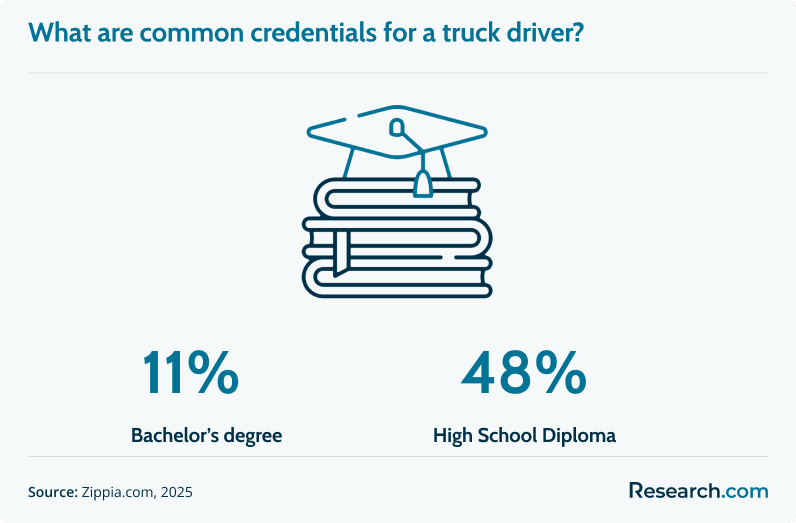
What trends are shaping CDL training?
CDL training is becoming more flexible and more technology-supported, but the fundamentals remain the same: safe operation, regulatory compliance, vehicle control, inspections, and supervised road practice. Online ELDT theory has made the classroom component easier to access, especially for rural students and working adults.
Training providers are also using interactive modules, simulations, digital quizzes, mobile access, and progress tracking to help students prepare more efficiently. These tools can support learning, but they do not replace the judgment and vehicle handling skills developed through in-person driving.
Another trend is the blending of CDL preparation with broader logistics, safety, and business education. Drivers who want to move beyond entry-level driving may consider additional credentials or academic pathways, including an accelerated bachelors degree online, if it aligns with a clear management or operations goal.
What is the job market like for CDL graduates?
The job market for CDL graduates remains closely tied to freight demand, replacement hiring, consumer spending, construction activity, local delivery needs, and supply chain operations. The strongest opportunities often go to drivers with clean safety records, reliable attendance, the right endorsements, and flexibility around routes or schedules.
Factors supporting demand
- E-commerce activity: Online purchasing increases the need for warehousing, distribution, and last-mile or regional movement.
- Worker replacement: Retirements and career changes create recurring openings.
- Driver shortage concerns: The U.S. faces a projected shortfall of 160,000 drivers by 2028.
Job market facts to consider
- Projected New Jobs: 160,600 by 2029 (BLS)
- High Salaries: CDL drivers can earn up to $100,000 per year, depending on experience and specialization.
- Incentives: Some employers offer signing bonuses, tuition reimbursement, and flexible hours.
- Role variety: Common options include Company Driver, Local Delivery, Owner-Operator, Team Driving, and Specialty Hauler.
Part-time and flexible CDL work
Part-time CDL work can appeal to retirees, students, and workers seeking secondary income. These roles may include local delivery, shuttle driving, seasonal hauling, event transportation, or substitute driving. Availability varies by region and employer, so check local postings before choosing endorsements or paying for extra training.
If you already work in transportation management or hope to manage a fleet, graduate business education may be useful later. Research.com’s guide to dual MBA programs online can help you compare options if you want an MBA combined with another graduate field.
Practical steps to start your CDL path
- Decide what type of CDL job you want: Local delivery, long-haul trucking, passenger transport, construction driving, and tanker work may require different training and endorsements.
- Check your state requirements: Confirm age, medical, documentation, permit, testing, and endorsement rules before enrolling.
- Verify FMCSA Training Provider Registry status: Do this before paying for any ELDT course.
- Compare total cost, not just tuition: Include fees, testing, vehicle use, retakes, transportation, and financing terms.
- Plan behind-the-wheel training early: Online theory is only useful if you can complete the road training and skills test afterward.
- Ask employers what they prefer: Local carriers can tell you which endorsements, schools, and experience levels they value.
- Protect your driving record: Safety history matters for hiring, insurance, and long-term career growth.
- Keep documents organized: Save training certificates, test records, medical documentation, and endorsement paperwork.
References
- Bureau of Labor Statistics. (n.d.). Heavy and tractor-trailer truck drivers. U.S. Department of Labor.
- Zippia. (n.d.). Truck driver demographics and statistics in the US.
- Federal Motor Carrier Safety Administration. (n.d.). Commercial driver's license. U.S. Department of Transportation.
- Indeed Editorial Team. (n.d.). How to get a CDL. Indeed.
- Driver Resource Center. (n.d.). How much does it cost to get a CDL?
- Indeed Editorial Team. (n.d.). 8 types of careers you can pursue with a CDL.
- Smith & Solomon. (n.d.). Job market insights: Opportunities for CDL graduates.
Key Insights
- Online CDL training can satisfy the ELDT theory requirement when the provider is properly listed and reports completion to the FMCSA Training Provider Registry.
- Online theory does not replace behind-the-wheel training, vehicle practice, or the state skills test required to earn a CDL.
- Many online theory options are low-cost, but full CDL preparation may still require additional spending for road training, testing, endorsements, and licensing fees.
- The best CDL program depends on your intended job: Class A is commonly used for tractor-trailers, Class B for many single heavy vehicles, and endorsements open specialized roles.
- Do not choose a program based only on price. Verify registry status, training scope, reporting timelines, instructor quality, driving practice, test support, and refund policies.
- CDL careers can offer multiple work styles, from local delivery to long-haul freight, but pay and lifestyle vary significantly by employer, route, experience, and specialization.
- Additional education is optional for drivers, but it may help those planning to move into dispatch, safety, compliance, fleet supervision, logistics, or transportation management.
Other Things You Should Know About CDL Programs
In 2027, online CDL training programs are budget-friendly, typically ranging from $1,500 to $3,000. The price variation depends on course duration, included materials, and additional resources like practice tests or career counseling. These program costs often cover essential training modules and test preparation resources.
In 2027, online CDL training options include programs from accredited trade schools like Roadmaster Drivers School, Stevens Transport, and Smith & Solomon CDL Training. These programs often combine online classes with hands-on training to ensure comprehensive learning and skill development for aspiring truck drivers.
Affordable online CDL training programs in 2027 offer flexibility, allowing students to balance other commitments while gaining necessary skills. They also provide cost-effective education options by reducing traditional expenses associated with commuting and physical materials, making entry into the trucking industry more accessible.