2027 Best Online Dog Obedience Training Trade School Programs

Co-Founder and Chief Data Scientist
The standard for professional dog training is rising. Clients are no longer just looking for a dog lover; they're looking for a credentialed expert. This shift creates a powerful opportunity for those who are properly qualified, especially since 96% of dog owners have no experience with formal training classes.
Our career planning experts, with 10 years of experience, built this guide to show you how to meet that new standard. It’s a clear roadmap to finding high-quality online dog obedience training programs and launching a career built on real expertise.
What are the benefits of getting a dog obedience training certificate?
- Gain the professional credibility to build client trust, whether you start your own business or work for established training companies and shelters.
- Unlock higher earning potential, with certified trainers in specialized roles earning salaries of up to $70,000 or more.
- Enjoy the flexibility to learn from anywhere, fitting a comprehensive, career-focused education into your current life.
What can I expect from an online dog obedience training program?
When you enroll in a quality online dog obedience training program, you can expect a highly structured, interactive experience. This is not just about watching videos; it’s an active learning process. Programs are delivered through online modules that include video lessons, readings, and quizzes.
The most important part is the practical application. You will submit videos of yourself working with a dog, and your instructors will provide detailed, individualized feedback on your technique. This structured feedback loop, often combined with written assignments, ensures you are developing real-world skills.
Many programs also include a built-in externship or mentorship component, providing valuable hands-on experience in a supervised setting.
Where can I work with an online dog obedience training program?
A certificate in dog training opens up more career doors than you might think. You can launch your own private training business, join an established company, or find rewarding roles within veterinary clinics, animal shelters, and even large pet retail stores.
The most common path is entrepreneurship, with about 40% of trainers being self-employed. This route offers total freedom over your schedule and methods. However, stable employment is a strong and popular alternative.
Many graduates choose to work for training facilities or shelters, where they can focus purely on helping dogs and their owners. Others find positions in vet clinics, offering behavioral support as a value-added service to clients. These roles provide a steady paycheck and a great way to build your reputation.
How much can I make with an online dog obedience training program?
Earning potential is a key factor, and this is a field with significant room for growth. With a certificate from one of the best online dog obedience training programs, you can expect a salary ranging from around $38,000 to over $70,000.
The median salary provides a stable baseline. However, the key to reaching the top of that range is specialization.
Trainers who focus on high-demand areas like aggression management or service dog training command higher rates. Your business skills also play a major role in pushing your income potential higher.
- List of the Best Online Dog Obedience Training Programs for 2027 List of Programs
- How long does it take to complete an online dog obedience training program? Completion Time
- How does an online dog obedience training program program compare to an on-campus program? How does an online dog obedience training program program compare to an on-campus program?
- What is the average cost of an online dog obedience training program? Average Cost
- What are the financial aid options for students enrolling in an online dog obedience training program? Financial Aid
- What are the prerequisites for enrolling in an online dog obedience training program? Requirements
- What courses are typically in an online dog obedience training program? What courses are typically in an online dog obedience training program?
- What types of specializations are available in an online dog obedience training program? What types of specializations are available in an online dog obedience training program?
- How to Choose the Best Online Dog Obedience Training Program How to Choose the Best Online Dog Obedience Training Program
- What career paths are available for graduates of an online dog obedience training program? Career Paths
- What is the job market for graduates of an online dog obedience training program? Job Market
- What legal and regulatory considerations should I address before starting my practice? What legal and regulatory considerations should I address before starting my practice?
- How can I effectively market my dog obedience training business? How can I effectively market my dog obedience training business?
- What ongoing professional development opportunities can boost my career? What ongoing professional development opportunities can boost my career?
Best Online Dog Obedience Training Programs: How to Compare Your Options
Choosing an online dog obedience training program is not just about finding a course that teaches commands. You are deciding whether a certificate, diploma, mentorship model, or hybrid training pathway can prepare you to work safely with dogs, communicate clearly with clients, and build a credible career in animal training.
This guide is for career changers, pet care workers, aspiring trainers, shelter staff, and dog owners who want professional-level training rather than casual instruction. You will learn how online dog training programs work, how long they take, what they cost, which schools are commonly compared, what career paths may follow, and what questions to ask before enrolling.
Quick answer: Are online dog obedience training programs worth considering?
Online dog obedience training programs can be a practical route into the field if they include science-based coursework, instructor feedback, video assignments, mentorship, and opportunities for supervised hands-on practice. The strongest programs do more than award a certificate; they help you understand canine learning, behavior, client coaching, safety, business operations, and ethical training methods.
Most comprehensive options take about 6 to 12 months, although some intensive or advanced programs are shorter or longer. Tuition varies widely, so the best choice depends on your budget, career goal, preferred learning format, and access to dogs for practice.
How we evaluate programs
Because training programs can differ significantly in price, structure, credibility, and student support, students should compare more than tuition. Research.com considers transparency, program length, cost, curriculum depth, professional preparation, available mentorship, and publicly available institutional information when presenting program options.
For education-related data and institutional context, Research.com uses established sources such as the IPEDS database, Peterson's database, the College Scorecard database, and The National Center for Education Statistics. Not every vocational dog training provider appears in the same federal datasets as colleges, so prospective students should also verify program claims directly with each school.
To understand how Research.com approaches rankings and program evaluation, visit the Research.com methodology page.
Online dog obedience training programs compared
| Program | Best fit | Program length | Total tuition | Accreditation or professional recognition listed |
| The Academy of Pet Careers - Professional Dog Trainer Program | Students who want a self-paced career program with instructor support and business preparation | 6-12 months | $5,500 | Not specified |
| Conifer Canine's Dog Training College - Behavior and Obedience Trainer Course | Learners seeking a short, intensive course that includes behavior, obedience, and business topics | 6 weeks | $5,200 | Not specified |
| Penn Foster Career School - Dog Obedience Trainer/Instructor Career Diploma | Budget-conscious students who need a mobile-friendly online diploma format | Up to 11 months | $989 | Not specified |
| Huffman K9 Obedience Professional Trainer Academy - Master Trainer Program | Students interested in working dog disciplines and advanced training areas | 5 months or 1,000 hours | $12,500 | Not specified |
| The Dog Wizard - Dog Training Program | Learners who want a hybrid program connected to a training network and franchise pathway | 2 to 3 months | $10,000 | Not specified |
| Animal Behavior College - Dog Obedience Instructor Program | Students who want online lessons plus a local externship and staged curriculum | 5 to 18 months | $5,547 | Certification Council for Professional Dog Trainers (CCPDT); International Association of Animal Behavior Consultants (IAABC); and National Association of Dog Obedience Instructors (NADOI) |
| Western States K-9 College - Dog Trainer Certification Program | Self-paced learners who want private coaching and business-focused modules | 6 to 12 months | $500 | Not specified |
| CATCH Canine Trainers Academy - Certified Dog Trainer Program | Students who want a program director, local mentor trainer, and career-focused curriculum | 6 to 18 months | $5,487 | Not specified |
1. The Academy of Pet Careers - Professional Dog Trainer Program
The Academy of Pet Careers offers an online certification pathway designed for students preparing to enter professional dog training. The program includes a professional toolkit, instructor guidance, and job placement assistance after completion. Its self-paced structure may appeal to learners who want employment support as well as resources for launching an independent training business.
- Program Length: 6-12 months
- Total Tuition: $5,500
- Accreditation: Not specified
2. Conifer Canine's Dog Training College - Behavior and Obedience Trainer Course
Conifer Canine's Dog Training College provides a concentrated six-week program covering obedience, behavior concerns, aggression-related topics, marketing, and kennel management. The course is positioned around a balanced training perspective and may suit students who want a fast, immersive format rather than a long self-paced program.
- Program Length: 6 weeks
- Total Tuition: $5,200
- Accreditation: Not specified
3. Penn Foster Career School - Dog Obedience Trainer/Instructor Career Diploma
Penn Foster Career School offers an online career diploma that emphasizes flexibility and mobile access. Students study training fundamentals, canine social behavior, and approaches for common behavior challenges. The program may be especially attractive to learners who need a lower tuition option and a self-directed schedule.
- Program Length: Up to 11 months
- Total Tuition: $989
- Accreditation: Not specified
4. Huffman K9 Obedience Professional Trainer Academy - Master Trainer Program
Huffman K9 Obedience Professional Trainer Academy offers a vocational program for students interested in both companion dog and working dog environments. The curriculum includes advanced areas such as tracking, detection, protection work, service dog training, and stress-based training techniques.
- Program Length: 5 months or 1,000 hours
- Specializations: Tracking; Detection; Protection; and Service Dog Training
- Total Tuition: $12,500
- Accreditation: Not specified
5. The Dog Wizard - Dog Training Program
The Dog Wizard uses an intensive hybrid model that combines online coursework with in-person practice at one of its locations. The program also offers a pathway related to franchise ownership and states that students have access to job placement within its network.
- Program Length: 2 to 3 months
- Pathways: Franchise Ownership
- Total Tuition: $10,000
- Accreditation: Not specified
6. Animal Behavior College - Dog Obedience Instructor Program
Animal Behavior College combines online lessons with a hands-on externship guided by a local professional mentor. Its 11-stage curriculum includes learning theory, obedience instruction, business development, and Pet CPR certification, making it a structured option for students who want both flexibility and field exposure.
- Program Length: 5 to 18 months
- Total Tuition: $5,547
- Accreditation: Certification Council for Professional Dog Trainers (CCPDT); International Association of Animal Behavior Consultants (IAABC); and National Association of Dog Obedience Instructors (NADOI)
7. Western States K-9 College - Dog Trainer Certification Program
Western States K-9 College offers a self-paced online certification program that includes private coaching and business development content. Students can choose tracks such as Behavior Specialist and Business & Leadership, which may appeal to those planning to start or expand a training practice.
- Program Length: 6 to 12 months
- Tracks: Behavior Specialist; and Business & Leadership
- Total Tuition: $500
- Accreditation: Not specified
8. CATCH Canine Trainers Academy - Certified Dog Trainer Program
CATCH Canine Trainers Academy pairs students with a personal Program Director and a local Mentor Trainer. The curriculum includes behavior problem solving, practical skill development, and career preparation, with students working toward the Certified Dog Trainer (CCDT) title.
- Program Length: 6 to 18 months
- Total Tuition: $5,487
- Accreditation: Not specified
How long does an online dog obedience training program take?
Many full career-preparation programs take about 6 to 12 months, although some intensive programs last 6 weeks and some hybrid or mentorship-based options extend to 18 months. The right timeline depends on how quickly you can study, whether the program requires externship hours, and how often you can practice with dogs.
Self-paced online formats are useful for students who are working, caring for family, or testing a career change before leaving a current job. That flexibility matters because nearly 59% of animal trainers work part-time, which means many people in the field combine training work with other responsibilities, especially early in their careers.
Why the shorter training timeline matters
Dog training certificates are usually designed for vocational entry rather than a multi-year academic sequence. That makes this path different from fields where students may need several years of college before qualifying for entry-level work. For example, someone researching what qualifications do you need to be a marine biologist will find a much longer academic route than most dog training certificate pathways.
The shorter timeline can reduce risk for career changers, but it also puts more responsibility on the student. You need to practice consistently, seek feedback, observe experienced trainers, and continue learning after graduation. A short program is only valuable if it builds real skill rather than simply moving you through lessons quickly.
Typical completion timelines by student goal
| Student goal | Program type to consider | What to verify before enrolling |
| Learn foundational obedience for entry-level work | Online certificate or career diploma | Instructor feedback, practice assignments, and coverage of learning theory |
| Start a private training business | Program with business, marketing, and client coaching modules | Mentorship, graduate support, liability guidance, and sample client forms |
| Work with behavior challenges | Advanced or specialization-focused program | Ethics, safety protocols, referral guidance, and supervised case practice |
| Enter working dog or service dog training | Hybrid or intensive program with hands-on components | Facilities, trainer credentials, dog access, and realistic job pathways |
Online vs. on-campus dog training programs: Which format is better?
The best format depends on how you learn. Online programs usually offer more scheduling flexibility and may be easier to fit around work. On-campus and hybrid programs provide a more controlled training environment, immediate in-person feedback, and easier access to multiple dogs with different temperaments.
Online learning has expanded across many fields, from vocational certificates to degree programs such as the fastest online environmental science degree. Dog training is different because physical timing, leash handling, reinforcement delivery, and body language matter. A strong online program must therefore include video review, live coaching, externships, or mentor feedback.
How hands-on training works in an online format
High-quality online dog training programs often require students to record training sessions and submit videos for evaluation. Instructors can then review the student’s timing, reward placement, communication style, safety choices, and ability to read the dog. This can be effective when the feedback is specific and repeated over time.
Online students should ask whether they need access to one dog or multiple dogs, whether shelter or client dogs may be used for assignments, and how quickly instructors respond to submissions. A program that offers only readings and quizzes may not be enough for career preparation.
| Format | Advantages | Limitations | Best for |
| Fully online | Flexible schedule, location independence, often easier to combine with work | Requires self-discipline and independent access to dogs for practice | Students with reliable practice opportunities and strong time management |
| Hybrid | Combines online coursework with in-person skill development | May require travel, fixed dates, or additional costs | Learners who want flexibility but still need supervised hands-on coaching |
| On-campus or intensive | Immediate feedback, structured environment, access to trainers and dogs | Less flexible and often harder to fit around full-time work | Students who learn best through daily in-person practice |
What does an online dog training program cost?
Program pricing varies widely. Some students focus on options in the $800 and $3,500 range, but the programs listed in this guide show that tuition can be lower or substantially higher depending on format, mentorship, specialization, and hands-on requirements. The listed tuition amounts range from $500 to $12,500.
When comparing cost, avoid looking only at the advertised tuition. Students evaluating professional programs should use the same cost-and-value mindset they would use when comparing other online education options, such as the best online MDiv programs. The least expensive option is not always the best fit, and the most expensive option is not automatically the most credible.
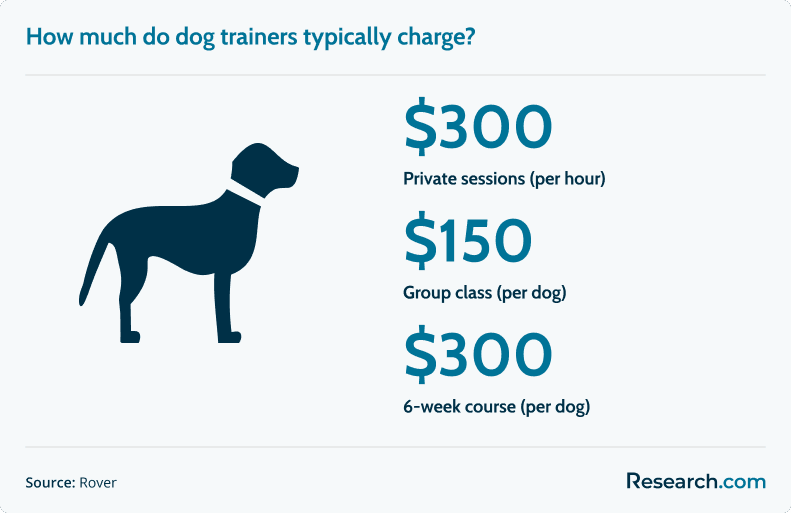
Dog trainers may charge around $150 for group classes or up to $300 for private, one-on-one sessions, but earnings depend on location, reputation, specialization, business model, and client demand. Do not assume tuition will be recovered quickly without a realistic plan for practice, marketing, insurance, and client acquisition.
What should be included in the price?
A higher-cost program should provide a clear reason for the added expense. Look for direct access to qualified instructors, detailed video feedback, mentorship, externship placement, modern behavior science, business training, and preparation for respected independent credentials where applicable.
| Cost factor | Why it matters | Question to ask |
| Instructor access | Feedback is essential for improving timing and handling skills | Will a trainer review my videos or observe my work directly? |
| Hands-on practice | Dog training cannot be learned through reading alone | Does the program require supervised practice, an externship, or mentor sessions? |
| Business training | Many graduates become self-employed or work part-time | Will I learn pricing, client screening, marketing, policies, and recordkeeping? |
| Professional recognition | Clients and employers may value credible preparation | Does the program prepare me for external certification, or only issue its own certificate? |
| Career support | Job leads and graduate networks can help new trainers gain traction | What placement support, alumni access, or mentorship continues after graduation? |
Financial aid and payment options for online dog obedience training programs
Most online dog obedience training certificates are funded differently from traditional college degrees. Common payment options include school payment plans, private financing, personal savings, employer support, and veteran education benefits such as the GI Bill when a program qualifies.
Students comparing vocational programs should be careful not to assume that funding works the same way it does for college-based healthcare or graduate programs, such as an MSN AGPCNP online program. Many dog training programs are non-degree certificates, so they may not participate in federal student aid.
Why FAFSA may not apply
Many certificate-based dog training programs do not qualify for federal financial aid through the FAFSA because they are not traditional degree programs. That does not make them invalid, but it does mean students need to ask direct questions about payment terms, refund policies, financing costs, and whether veteran benefits are accepted.
This differs from degree pathways such as the shortest bachelor’s in natural sciences online, where institutional eligibility and federal aid rules may be different. Before signing an enrollment agreement, request the full cost in writing, including materials, travel, externship expenses, exams, and any required equipment.
Ways to reduce financial risk
- Ask for the refund policy before paying. Know the cancellation window, payment deadlines, and what happens if you withdraw.
- Choose value over hype. A program with strong mentoring may be worth more than a cheaper course with no feedback.
- Avoid unnecessary debt. If you are unsure about the profession, consider a lower-cost foundational course before committing to a high-tuition academy.
- Compare total career startup costs. Tuition is only one expense; business registration, insurance, equipment, website costs, and continuing education may also matter.
Prerequisites for online dog obedience training programs
Most programs require a high school diploma or GED, but formal academic barriers are usually low. Dog obedience training is more practice-based than classroom-heavy technical training, unlike fields such as a Microsoft Azure dual certification boot camp, where students may need stronger preparation in computing concepts.
The more important prerequisites are personal and practical. Successful students need patience, careful observation, physical awareness, empathy, consistency, and the ability to explain training plans to people who may be frustrated, embarrassed, or overwhelmed by their dog’s behavior.
Certification can help you stand out
Because the field has a low formal entry barrier, credible education and recognized credentials can help separate a serious professional from a hobbyist. This is different from scientific careers where formal academic expectations may be much higher, such as the herpetologist job requirements associated with advanced study.
A certificate does not guarantee clients or employment, but a rigorous program can signal that you have studied learning theory, safety, humane methods, client communication, and professional ethics. The strongest credential is one that requires actual assessment of knowledge and skills rather than automatic completion.
Readiness checklist before enrolling
- You have regular access to at least one dog for practice assignments.
- You can record videos and receive critique without becoming defensive.
- You are willing to work with people as much as with dogs.
- You understand that behavior cases may require referrals to veterinarians or qualified behavior professionals.
- You can commit time each week to study, observe, practice, and document progress.
Courses commonly included in online dog obedience training programs
A strong dog obedience training curriculum covers far more than basic cues. Students should expect to study how dogs learn, how behavior changes, how to coach owners, and how to operate safely and ethically in real-world environments.
This blend of technical knowledge and leadership resembles other professional programs where students must combine subject expertise with management skill, such as an MSN nurse executive leadership online program. Dog trainers need both canine behavior knowledge and the ability to guide human clients through behavior change.
Core topics often include learning theory, canine ethology, reinforcement strategies, training plans, leash skills, behavior problem prevention, client communication, business practices, and safety. Students may also study training mechanics such as timing, reinforcement delivery, and shaping behavior.
Common course areas and why they matter
| Course area | What you learn | Why employers or clients care |
| Learning theory | How consequences, reinforcement, and environment affect behavior | It helps trainers build plans based on behavior science rather than guesswork |
| Canine body language | How to recognize stress, fear, arousal, play, and conflict signals | It improves safety and helps prevent escalation during sessions |
| Obedience foundations | How to teach cues, focus, leash manners, recall, and impulse control | These are common services requested by pet owners |
| Behavior modification basics | How to approach reactivity, fear, jumping, barking, and other challenges | Clients often seek help when behavior disrupts daily life |
| Client coaching | How to explain plans, set expectations, and motivate owners | Training fails when the human side is ignored |
| Business operations | How to price services, market locally, track clients, and set policies | Many trainers work independently or build small businesses |
Where these skills may lead
Program coursework is most useful when it connects directly to real practice settings. Graduates may work with pet owners, shelters, rescues, boarding facilities, veterinary teams, training companies, or their own clients. Employment opportunities can be stronger in states with larger urban and suburban populations where pet services are more established, including California, Florida, and Texas.
Specializations in dog obedience and behavior training
General obedience is often the starting point, but specialization can shape your reputation and earning potential. Students should first build a solid foundation before moving into complex behavior or working dog areas.
- Puppy Development: Trainers help owners with early socialization, basic manners, bite inhibition, crate routines, and prevention of common behavior issues.
- Aggression Management: This area involves fear, reactivity, conflict, and safety planning. It requires advanced education, careful screening, and appropriate referrals.
- Service Dog Training: Trainers prepare dogs to perform specific tasks for individuals with disabilities. This work requires precision, patience, and strong ethical standards.
- Dog Sports: Trainers coach teams in activities such as agility or scent work, where motivation, timing, and teamwork are central.
How specialization may affect income
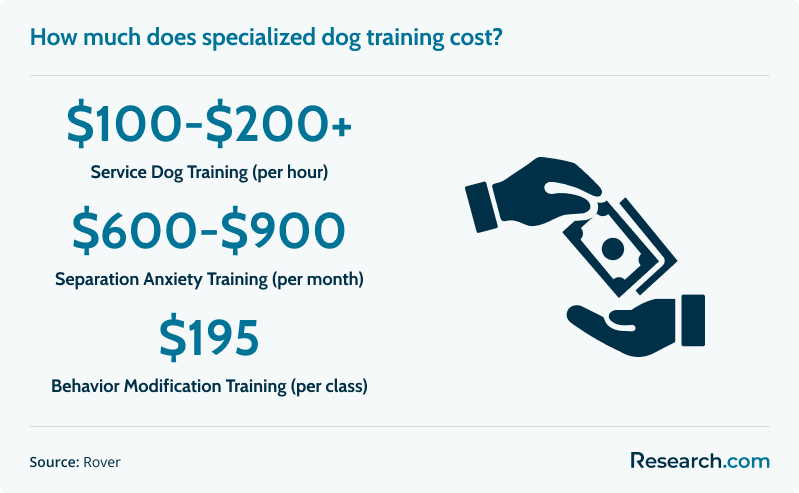
Specialization can support higher fees because clients may pay more for help with difficult or urgent problems. A general trainer might earn a salary in the $38,000 to $45,000 range, while experienced specialists or business owners may earn more depending on demand, reputation, and location.
Some trainers move beyond companion dog work into more rigorous pathways connected to law enforcement or working dogs. Students interested in that direction should understand the K9 officer job qualifications and the additional standards that may apply.
| Specialization | Good fit for | Extra caution |
| Puppy training | New trainers who enjoy owner education and prevention work | Poor early advice can create long-term problems, so methods should be current and humane |
| Reactivity and fear | Experienced trainers who want complex behavior cases | Safety planning and veterinary collaboration may be necessary |
| Service dog work | Detail-oriented trainers with strong standards and patience | Ethical screening and task-specific training are essential |
| Sports and performance | Trainers who enjoy precision, motivation, and coaching teams | Students may need additional sport-specific mentorship |
How to choose the best online dog obedience training program
The best online dog obedience training program is the one that matches your career goal, teaches modern behavior science, requires real practice, and provides feedback from qualified professionals. Marketing language is not enough. You need proof of curriculum quality, trainer experience, student support, and realistic outcomes.
Questions to ask before enrolling
| Question | Why it matters |
| Who teaches the program, and what are their credentials? | Instructor experience affects the quality of feedback and professional guidance. |
| Does the program use science-based, humane training methods? | Modern clients and employers increasingly expect ethical, evidence-informed approaches. |
| Will I receive feedback on actual training videos? | Hands-on skill cannot be verified through quizzes alone. |
| Is there an externship, mentor trainer, or supervised practice requirement? | Real-world practice helps students build confidence with different dogs and clients. |
| What exactly does the certificate represent? | A certificate of completion is not the same as an independently assessed professional credential. |
| What support is available after graduation? | Career coaching, alumni networks, and business resources can help new trainers transition into paid work. |
| What is the full cost and refund policy? | Students should understand tuition, fees, materials, travel, and cancellation rules before paying. |
Common mistakes to avoid
- Choosing only by price: A low-cost program may be useful, but not if it lacks feedback, practice, and credible instruction.
- Assuming all certificates carry the same weight: Some certificates only show course completion, while stronger credentials involve skill or knowledge assessment.
- Ignoring training philosophy: Be cautious if a school relies heavily on vague dominance language or does not clearly explain its methods.
- Skipping the instructor review: If you cannot identify who teaches the course or what experience they have, ask for clarification before enrolling.
- Underestimating the business side: Many trainers struggle not because they cannot train dogs, but because they cannot attract, screen, and retain clients.
- Believing job outcomes are guaranteed: Placement support can be valuable, but no program can guarantee long-term career success for every student.
Red flags in low-quality programs
- Automatic or “guaranteed” certification: A credible credential should reflect demonstrated knowledge or skill, not simply payment of tuition.
- Outdated or unclear methods: Programs should be able to explain their training approach in plain language.
- No meaningful feedback: If instructors never review your technique, you may graduate without knowing whether you can train effectively.
- High-pressure enrollment tactics: Strong programs give students time to compare options and read policies carefully.
Career paths after an online dog obedience training program
Graduates may work for established employers, start small businesses, support shelters and rescues, or specialize in behavior consulting. The best path depends on your tolerance for business risk, desired income, local market, and preferred work environment.
- Private Business Owner: Self-employment can offer the highest income ceiling, with experienced specialists often earning over $70,000. Results depend heavily on marketing, referrals, pricing, reputation, and local demand.
- Staff Trainer: Training companies and large pet retailers may offer steadier work, with pay typically starting around $38,000. This can be a practical way to gain experience before becoming independent.
- Animal Shelter or Rescue Trainer: These roles may start at the lower end of the pay range, but they can be meaningful for trainers who want to improve adoptability and animal welfare.
- Veterinary Clinic Consultant: Behavior-focused consultants may work with veterinary teams and pet owners, with experienced professionals often in the $45,000+ range.
Employment vs. self-employment
| Path | Advantages | Trade-offs |
| Work for an employer | More structure, existing clients, possible training systems, steadier early income | Less control over schedule, methods, pricing, and service design |
| Start a private practice | Control over brand, schedule, niche, and income potential | Requires marketing, insurance, policies, client management, and business discipline |
| Combine training with another animal care role | Can build experience gradually and reduce financial pressure | May take longer to grow a full-time client base |
The entrepreneurial route
About 40% of animal trainers are their own boss, which shows that self-employment is a common part of the field. This path can be rewarding for trainers who enjoy building relationships, managing clients, and developing a clear service niche.
However, entrepreneurship is not automatically easier than employment. New trainers need service agreements, liability coverage, local visibility, follow-up systems, and a realistic plan for turning inquiries into paying clients.
Job market outlook for online dog obedience training graduates
The employment outlook for animal care and service workers points to a 6% growth rate, and demand for skilled trainers is also influenced by pet ownership, urban and suburban service markets, and the growing expectation that dogs should be able to live safely in homes, apartments, parks, and public spaces.
One important market signal is that only 4% of owners ever attend a formal training class with their dog. That suggests many potential clients may still be unreached, especially if trainers can explain the value of early training, prevention, and humane behavior support.
Current trends affecting dog trainers
- Video-based coaching is more accepted. Online lessons, recorded homework, and virtual follow-ups can expand a trainer’s reach when used responsibly.
- Clients expect clearer ethics. Many dog owners now ask about humane methods, fear, anxiety, and positive reinforcement before hiring a trainer.
- Business skills matter more. Trainers increasingly need websites, local search visibility, scheduling tools, review management, and clear service packages.
- AI tools can assist but not replace judgment. Technology may help draft client notes or organize lesson plans, but it cannot safely assess a dog’s behavior, environment, health context, or risk level without professional observation.
Geographic considerations
Location can affect pricing, client volume, and employment opportunities. Areas with strong local economies and high spending on pet services may support higher fees, especially for trainers who specialize in behavior concerns. The data below highlights top-paying states for animal trainers and can help students think strategically about where their services may be most valuable.
What graduates say about online dog obedience training programs
- Devin: "I knew I enjoyed working with dogs, but I did not understand how much science was behind effective training until I started the program. Being able to study online helped me keep my part-time job while building real skills. I now work with paying clients and feel proud of the business I am creating."
- Tina: "I was unsure whether a hands-on field could be taught online. The video assignments changed my mind. My mentor pointed out small details in my timing and handling that I would have missed on my own, and I could rewatch each session to see exactly what needed improvement."
- Leslie: "I enrolled to learn basic obedience, but the behavior modules made me rethink my career direction. After finishing the foundation work, I became especially interested in helping anxious dogs. The program gave me the confidence to continue toward a specialization."
Legal and regulatory issues before starting a dog training practice
Before accepting clients, check the business rules in your city, county, and state. You may need a general business license, local permits, zoning approval for in-home services, or permission to operate from a rented training space. If you board dogs, transport dogs, or use public parks, additional rules may apply.
New trainers should also consider professional liability insurance, written service agreements, intake forms, cancellation policies, safety protocols, and referral guidelines for medical or severe behavior concerns. If you are comparing dog training with other vocational credentials, resources on the best paying certificate programs can help you think more broadly about credential value, business readiness, and career planning.
How to market a dog obedience training business
Marketing a dog training business starts locally. A simple website, clear service descriptions, client testimonials, accurate Google Business information, and helpful educational content can make it easier for nearby dog owners to understand what you offer. Photos, short videos, and case examples can build trust when they are honest and do not overpromise results.
Social media can support credibility when you show training progress, explain common mistakes, and educate owners rather than only posting promotions. Email updates can help past clients return for advanced classes, puppy follow-ups, or seasonal training needs. If you later pursue college-based coursework to strengthen your business or animal care knowledge, you may also compare online schools that accept FAFSA to understand funding options outside non-degree dog training programs.
Ongoing professional development for dog trainers
Graduation should be the beginning of professional development, not the end. Dog trainers need continuing education to stay current on behavior science, safety practices, client coaching, and ethical standards. Workshops, conferences, advanced certifications, shadowing experienced trainers, and peer case discussions can all strengthen long-term credibility.
Continuing education is especially important for trainers who want to handle fear, reactivity, aggression, service dog work, or other complex cases. If your goals expand beyond dog training into a degree-based animal care, business, or education pathway, reviewing online schools that accept FAFSA may help you compare broader academic options and financial aid possibilities.
Key Insights
- Online dog obedience training can work when it includes real feedback. Look for video review, mentorship, externships, or supervised practice, not just readings and quizzes.
- Program length varies by intensity and structure. Many career-focused options take about 6 to 12 months, but listed programs range from 6 weeks to 18 months.
- Tuition should be judged against career preparation. Compare instructor access, practice requirements, business training, refund policies, and credential value before choosing.
- Certification is helpful but not a guarantee. A certificate can support credibility, but clients and employers still look for skill, ethics, communication, and results.
- Specialization can shape earning potential. Puppy training, behavior modification, service dog work, and sports training require different levels of preparation and risk management.
- Business readiness matters as much as training skill. Many trainers are self-employed, so marketing, insurance, client policies, and local compliance should be part of your plan.
- Avoid programs that promise too much. Be cautious with automatic certification, unclear methods, hidden instructors, and pressure to enroll quickly.
References:
- CareerExplorer. (n.d.). Animal trainer satisfaction. Retrieved August 13, 2025, from https://www.careerexplorer.com/careers/animal-trainer/satisfaction/
- College Board. (n.d.). Animal trainer: Education needed. BigFuture. Retrieved August 13, 2025, from https://bigfuture.collegeboard.org/careers/animal-trainer/education
- Cutler, J. (2023, December 26). Pet behavior solutions: Hidden benefits of training your dog. City Sun Times. Retrieved August 13, 2025, from https://www.citysuntimes.com/community_voices/columnists/pet-behavior-solutions-hidden-benefits-of-training-your-dog/article_520555e4-a4d9-11ee-acfb-077754481df4.html
- De Klerk, J. (2024, May 15). How much does dog training cost in 2024?. Rover.com. Retrieved August 13, 2025, from https://www.rover.com/blog/how-much-does-dog-training-cost/
- Phillips-Donaldson, D. (2021, July 1). APPA releases generational report on pet ownership, purchasing trends. Petfood Processing. Retrieved August 13, 2025, from https://www.petfoodprocessing.net/articles/15660-appa-releases-generational-report-on-pet-ownership-purchasing-trends
- U.S. Bureau of Labor Statistics. (2024, April 3). Occupational employment and wages, May 2023: 39-2011 Animal trainers. Retrieved August 13, 2025, from https://www.bls.gov/oes/2023/may/oes392011.htm
- U.S. Bureau of Labor Statistics. (2024, September 6). Occupational outlook handbook: Animal care and service workers. Retrieved August 13, 2025, from https://www.bls.gov/ooh/personal-care-and-service/animal-care-and-service-workers.htm#tab-3
- U.S. Bureau of Labor Statistics. (n.d.). Occupational employment and wage statistics. Retrieved August 13, 2025, from https://data.bls.gov/oes/#/industry/000000
Other Things You Need To Know About Becoming a Dog Trainer
Most online dog training programs do not require you to own a dog. Schools understand that not all students have a suitable dog to work with. They often provide clear guidance on how to complete practical assignments by partnering with local shelters, friends, or family members who have dogs. Your experience will come from working with various breeds and temperaments.
To enroll in an online dog obedience training program in 2027, candidates generally need a high school diploma or equivalent. Some programs may require basic computer skills and internet access, and specific institutions might have additional criteria, such as previous experience with dogs or introductory canine behavior courses.