
2027 Best Online MSN Adult-Gerontology Primary Care NP Programs

Co-Founder and Chief Data Scientist
As the U.S. population rapidly ages, the demand for skilled adult-gerontology nurse practitioners continues to grow. The number of Americans aged 65 and older is expected to rise by 47% between 2022 and 2050, making up nearly a quarter of the population.
This article helps prospective students find the best online MSN programs for becoming an Adult-Gerontology Primary Care Nurse Practitioner (AGPCNP), offering a flexible path to join a high-demand, patient-focused field.
What are the benefits of getting an online MSN in adult-gerontology primary care NP?
- Graduates can become Adult-Gerontology Primary Care Nurse Practitioners, working in outpatient clinics, long-term care facilities, home health agencies, and community health centers.
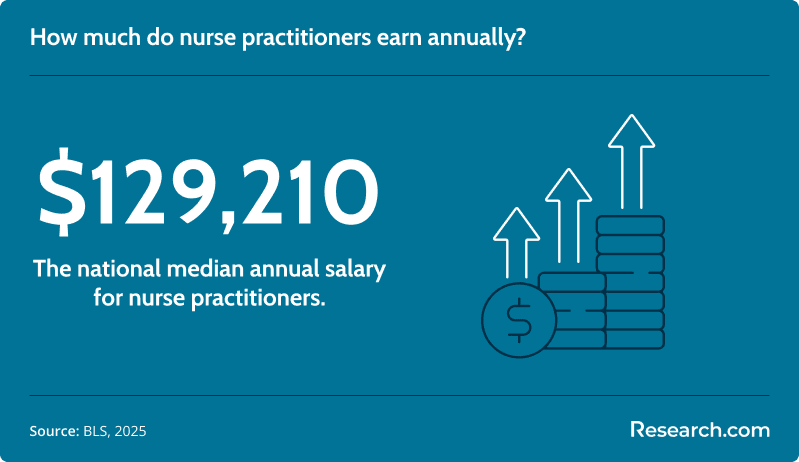
- Nurse practitioners, including AGPCNPs, earn a median annual wage of $129,210, according to the U.S. Bureau of Labor Statistics (BLS).
- Online programs allow working nurses to complete coursework on their own schedule, balancing clinical training with personal and professional responsibilities.
What can I expect from an online MSN in adult-gerontology primary care NP?
An online MSN in Adult-Gerontology Primary Care Nurse Practitioner prepares registered nurses to deliver long-term, comprehensive care to adults and older adults across the lifespan. The curriculum typically includes advanced courses in pathophysiology, pharmacology, and health assessment, along with geriatric-focused primary care.
Most programs also require clinical practicum hours that students can complete in approved healthcare settings within their community. While coursework is delivered online, many programs also offer interactive components like virtual simulations or live discussions. These degrees are designed for working professionals and can often be completed in two to three years, depending on the student's pace and prior qualifications.
Where can I work with an MSN in adult-gerontology primary care NP?
Graduates of an MSN in Adult-Gerontology Primary Care NP can find employment in a variety of healthcare environments focused on adult and elderly patient populations. These include primary care clinics, internal medicine practices, nursing homes, assisted living facilities, and community health organizations. Many also work in hospice and palliative care settings, offering ongoing support for patients with chronic illnesses.
Some AGPCNPs are employed by large healthcare systems or outpatient specialty practices, while others may choose to work independently in states that grant full practice authority. The scope of practice may vary by state, but the overall demand for nurse practitioners specializing in adult-gerontology is expected to remain high as the healthcare system shifts toward preventive and long-term care models.
How much can I make with an MSN in adult-gerontology primary care NP?
Nurse practitioners across specialties earn strong salaries, and AGPCNPs are no exception. According to BLS, nurse practitioners earned a median annual wage of $129,210 as of 2023. Salaries tend to be higher in outpatient care centers and areas with high demand for geriatric care services.
Earnings can also vary based on location, experience, and work setting. AGPCNPs in metropolitan areas or regions with a large aging population may command higher wages. Those with several years of experience or who take on leadership roles may earn well above the median. Additionally, the flexibility of online MSN programs means professionals can advance their careers and boost their earning potential without stepping away from their current jobs.
- List of the Best Online MSN Adult-Gerontology Primary Care NP Programs for 2027 List of Programs
- How long does it take to complete an online MSN in adult-gerontology primary care NP? Completion Time
- How does an online MSN in adult-gerontology primary care NP compare to an on-campus program? Online vs. Traditional
- What is the average cost of an online MSN in adult-gerontology primary care NP? Program Cost
- What are the financial aid options for students enrolling in an online MSN in adult-gerontology primary care NP? What are the financial aid options for students enrolling in an online MSN in adult-gerontology primary care NP?
- What are the prerequisites for enrolling in an online MSN in adult-gerontology primary care NP? What are the prerequisites for enrolling in an online MSN in adult-gerontology primary care NP?
- What courses are typically in an online MSN in adult-gerontology primary care NP? What courses are typically in an online MSN in adult-gerontology primary care NP?
- What types of specializations are available in an online MSN in adult-gerontology primary care NP? What types of specializations are available in an online MSN in adult-gerontology primary care NP?
- How do you choose the best online MSN in adult-gerontology primary care NP? How do you choose the best online MSN in adult-gerontology primary care NP?
- What career paths are available for graduates of an online MSN in adult-gerontology primary care NP? Career Paths
- What is the job market like for graduates of an online MSN in adult-gerontology primary care NP? Job Outlook
- Can accelerated BSN programs in USA pave the way to an online MSN in adult-gerontology primary care NP? Can accelerated BSN programs in USA pave the way to an online MSN in adult-gerontology primary care NP?
- How can you prepare for success in an online MSN in adult-gerontology primary care NP? How can you prepare for success in an online MSN in adult-gerontology primary care NP?
Best Online MSN Adult-Gerontology Primary Care NP Programs for 2027
// PREVIEW //
Choosing an online MSN in Adult-Gerontology Primary Care Nurse Practitioner is not just a school decision. It affects your clinical training, certification readiness, state licensure options, schedule, debt, and long-term role in caring for adult and older adult patients. For registered nurses who want to move into advanced practice without leaving the workforce, the right online AGPCNP program can make graduate study more manageable while still requiring serious clinical preparation.
This guide is designed for licensed RNs comparing online MSN AGPCNP programs, especially those who need flexible coursework, local clinical placements, transparent costs, and a clear path toward national certification. You will find ranked program options, cost and credit comparisons, admissions expectations, common courses, career outcomes, job market data, and practical questions to ask before enrolling.
Quick answer: What is an online MSN AGPCNP program?
An online MSN in Adult-Gerontology Primary Care Nurse Practitioner prepares registered nurses to provide advanced primary care to adults and older adults. Programs usually combine online graduate coursework with supervised in-person clinical hours. Most programs in this list take about two to three years, require roughly 40 to 50 credits, and are accredited by CCNE. Graduates typically pursue adult-gerontology primary care NP certification and roles in clinics, long-term care, community health, home healthcare, and related primary care settings.
How should you use this ranking?
Use this list as a starting point, not as the only factor in your decision. A highly ranked program may still be a poor fit if it does not meet your state authorization needs, requires campus visits you cannot attend, offers limited clinical placement support in your area, or costs more than your expected return justifies. Before applying, confirm accreditation, certification eligibility, licensure alignment, clinical placement responsibilities, total program cost, and whether the course schedule works with your nursing job.
How do we rank schools?
Research.com created this ranking to help prospective graduate nursing students compare programs using clear, verifiable information. Because an MSN is a major academic and financial commitment, our review considers publicly available institutional data, program details, and trusted education databases rather than promotional claims alone.
You can read the complete Research.com ranking process on our methodology page. Data for this list draws from sources such as the IPEDS database, Peterson’s database, including its Distance Learning Licensed Data Set, the College Scorecard database, and the National Center for Education Statistics (NCES).
// PREVIEW //
| Rank | School | Program length | Required credits | Cost per credit | Accreditation |
| 1 | University of South Alabama | Two three years | 45 | $594 | CCNE |
| 2 | University of Cincinnati | Two years | 44 | $746 | CCNE |
| 3 | University of Southern Mississippi | Two to three years | 44 | $535 | CCNE |
| 4 | Kent State University | Two to three years | 41 | $536 | CCNE |
| 5 | University of North Dakota | Two and a half years | 49 | $598 | CCNE |
| 6 | Old Dominion University | Two to three years | 49 | $599 (in-state), $623 (out-of-state) | CCNE |
| 7 | Texas Tech University Health Sciences Center | Two to three years | 48 | $265 (in-state), $673 (out-of-state) | CCNE |
| 8 | East Carolina University | Two to three years | 50 | $305 (in-state), $1,029 (out-of-state) | CCNE |
| 9 | Ball State University | Two years | 47 | $410 | CCNE |
| 10 | University of Arkansas | Two to three years | 43 | $437 | CCNE |
1. University of South Alabama
The University of South Alabama offers an online MSN Adult-Gerontology Primary Care Nurse Practitioner option for RNs who need graduate study that can fit around employment. The program has offered online coursework since the early 2000s and now serves students beyond its local region. Coursework is delivered primarily online, while students complete required clinical hours in approved healthcare settings and attend occasional campus-based intensives. The curriculum emphasizes adult and older adult primary care, chronic disease management, prevention, and advanced clinical decision-making.
- Program Length: Two three years
- Tracks/concentrations: Adult-Gerontology Primary Care NP
- Cost per Credit: $594
- Required Credits to Graduate: 45
- Accreditation: CCNE
2. University of Cincinnati
The University of Cincinnati provides an online MSN AGPCNP pathway built for working nurses who want a structured graduate program without required campus visits. The curriculum covers advanced pathophysiology, health policy, adult primary care, and geriatric-focused practice. Students complete online coursework through the university’s virtual learning system and work with clinical placement coordinators to meet practicum requirements in appropriate local settings.
- Program Length: Two years
- Tracks/concentrations: Adult-Gerontology Primary Care NP
- Cost per Credit: $746
- Required Credits to Graduate: 44
- Accreditation: CCNE
3. University of Southern Mississippi
The University of Southern Mississippi offers an online MSN AGPCNP program with a practice-oriented focus, including preparation for care in rural and underserved communities. Available online since 2009, the program is intended for nurses who want to remain connected to their current communities while expanding into advanced practice. Most courses use an asynchronous format, and the school offers assistance with local clinical placement needs.
- Program Length: Two to three years
- Tracks/concentrations: Adult-Gerontology Primary Care NP
- Cost per Credit: $535
- Required Credits to Graduate: 44
- Accreditation: CCNE
4. Kent State University
Kent State University delivers an online MSN AGPCNP program designed for students who need flexibility but still want a defined clinical education sequence. The program’s online platform launched in 2011, and its curriculum has been updated to address the care needs of adult and aging populations. Courses are fully online and asynchronous, with full-time and part-time plans available. Kent State also provides support for identifying clinical placements.
- Program Length: Two to three years
- Tracks/concentrations: Adult-Gerontology Primary Care NP
- Cost per Credit: $536
- Required Credits to Graduate: 41
- Accreditation: CCNE
5. University of North Dakota
University of North Dakota offers an online MSN AGPCNP program with a strong connection to primary care and rural health. The university has provided distance education since the early 2000s. Students complete mostly online coursework, participate in some synchronous meetings, and attend required in-person intensives. The program places notable emphasis on applying advanced nursing knowledge in real clinical settings, including communities with limited access to care.
- Program Length: Two and a half years
- Tracks/concentrations: Adult-Gerontology Primary Care NP
- Cost per Credit: $598
- Required Credits to Graduate: 49
- Accreditation: CCNE
6. Old Dominion University
Old Dominion University offers a hybrid-style MSN AGPCNP program that combines online instruction with short required campus visits. The university has offered distance nursing education since 1995 and has developed a model that can serve both regional and remote learners. The program prepares students for advanced practice responsibilities in adult primary care, care coordination, chronic illness management, and care for older adults.
- Program Length: Two to three years
- Tracks/concentrations: Adult-Gerontology Primary Care NP
- Cost per Credit: $599 (in-state), $623 (out-of-state)
- Required Credits to Graduate: 49
- Accreditation: CCNE
7. Texas Tech University Health Sciences Center
Texas Tech University Health Sciences Center offers an online MSN AGPCNP program with clinical hours completed in the student’s local region. The program may appeal to nurses interested in community-based care, rural practice, and service to underserved populations. Its asynchronous design supports students who plan to keep working while completing advanced practice coursework.
- Program Length: Two to three years
- Tracks/concentrations: Adult-Gerontology Primary Care NP
- Cost per Credit: $265 (in-state), $673 (out-of-state)
- Required Credits to Graduate: 48
- Accreditation: CCNE
8. East Carolina University
East Carolina University offers an online MSN AGPCNP pathway with a structured format and particular relevance for North Carolina residents. The program includes both synchronous and asynchronous learning and maintains relationships with regional healthcare partners that can support clinical education. Faculty mentorship, clinical preparation, and certification readiness are central parts of the student experience.
- Program Length: Two to three years
- Tracks/concentrations: Adult-Gerontology Primary Care NP
- Cost per Credit: $305 (in-state), $1,029 (out-of-state)
- Required Credits to Graduate: 50
- Accreditation: CCNE
9. Ball State University
Ball State University provides a fully online MSN AGPCNP program focused on evidence-based practice, patient-centered care, and adult primary care competencies. The program has been available online since 2011. Students complete clinical requirements in their home communities with university support for locating appropriate sites, making the program a practical option for nurses who cannot relocate for graduate school.
- Program Length: Two years
- Tracks/concentrations: Adult-Gerontology Primary Care NP
- Cost per Credit: $410
- Required Credits to Graduate: 47
- Accreditation: CCNE
10. University of Arkansas
The University of Arkansas offers an online MSN AGPCNP program that emphasizes population health, adult primary care, long-term care, leadership, and ethical practice. The format is designed for working nurses, with asynchronous coursework and scheduled virtual check-ins. Students complete clinical rotations at approved sites near where they live, subject to program approval and placement requirements.
- Program Length: Two to three years
- Tracks/concentrations: Adult-Gerontology Primary Care NP
- Cost per Credit: $437
- Required Credits to Graduate: 43
- Accreditation: CCNE
How long does it take to complete an online MSN in adult-gerontology primary care NP?
Most online MSN AGPCNP programs in this guide take about two to three years, although the exact timeline depends on course load, clinical scheduling, start dates, and whether a student enrolls full time or part time. These programs are generally designed for licensed registered nurses with a BSN who want to qualify for advanced practice roles focused on adults and older adults.
Program length is shaped by several practical factors. A student working full time may choose a slower pace to protect clinical performance and avoid burnout. A student with more schedule flexibility may be able to move faster if the program allows full-time enrollment and clinical sites are available when needed. Clinical placement timing can also affect completion because practicum courses usually must be completed in sequence.
Online nursing graduate study is different from shorter online career training. For example, professionals exploring a CISSP certification course online are usually comparing certification-focused technology training, while MSN students are entering a regulated healthcare pathway that includes graduate nursing coursework, supervised clinical hours, certification, and licensure considerations.
Some students reach the AGPCNP pathway after exploring earlier healthcare roles. If you are still at the beginning of your healthcare career, reviewing a medical assistant career path can help you understand patient-care environments before committing to nursing school and eventually graduate-level NP preparation.
How does an online MSN in adult-gerontology primary care NP compare with an on-campus program?
Online and campus-based MSN AGPCNP programs can lead to similar academic and professional outcomes when they are properly accredited and meet certification and licensure requirements. The main difference is not the degree title; it is how students attend class, interact with faculty, arrange clinical training, and manage their weekly schedules.
It is also important not to confuse graduate nursing education with flexible trade or technical programs. Someone comparing online gunsmith training is evaluating a very different kind of skill-based education. An MSN AGPCNP program requires graduate-level nursing science, advanced assessment, pharmacology, patient management, and supervised clinical practice.
| Factor | Online MSN AGPCNP | On-campus MSN AGPCNP |
| Course delivery | Often asynchronous or blended with live online sessions | Usually scheduled in-person classes on campus |
| Clinical hours | Completed in approved healthcare settings, often near the student’s residence | Completed in approved clinical settings, often through local campus partnerships |
| Flexibility | Better suited to working nurses who need schedule control | Better suited to students who prefer fixed schedules and face-to-face learning |
| Campus requirements | Varies by program; some require intensives or brief visits | Regular campus attendance is typically expected |
| Student experience | Requires strong self-direction and comfort with online platforms | Offers more immediate in-person interaction with faculty and peers |
What online and campus programs usually share
- Accreditation expectations: Both formats should meet recognized nursing education standards and include advanced courses such as pathophysiology, pharmacology, and health assessment.
- Clinical practice requirements: Students in either format must complete supervised practicum experiences in real healthcare environments.
- Certification preparation: A properly aligned program should prepare graduates to pursue adult-gerontology primary care nurse practitioner certification.
Where online programs differ most
- Schedule control: Online learning can make graduate study more realistic for nurses balancing work, family, and clinical rotations.
- Networking style: Campus students may build relationships through in-person interaction, while online students rely more on virtual discussions, simulations, webinars, and clinical connections.
- Clinical placement logistics: Online students should ask early whether the school arranges placements, supports placements, or expects students to find sites independently.
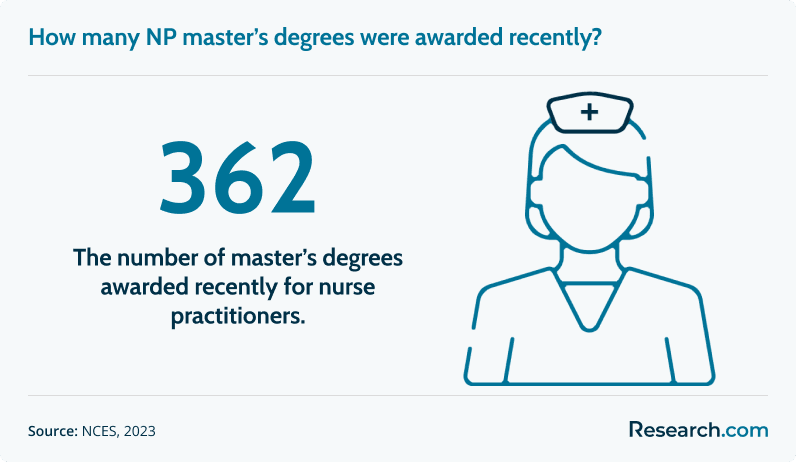
NCES reported that 362 master’s degrees for nurse practitioners were recently awarded, reflecting continued interest in advanced nursing education. For many students, online study is attractive because it can reduce relocation barriers while still requiring the clinical training needed for advanced practice.
What is the average cost of an online MSN in adult-gerontology primary care NP?
Tuition for an online MSN AGPCNP program can vary substantially by school, residency status, fees, and required credits. The programs listed here show per-credit rates ranging from lower-cost public university options to higher out-of-state rates. Students should compare the full cost of attendance rather than relying only on the advertised tuition rate.
Across the broader market described in the original data, students can expect per-credit costs between $400 and $800, with total program costs ranging from $18,000 to over $40,000. Public universities may charge different rates for in-state and out-of-state students, while some institutions use a flat online tuition structure. Fees, clinical travel, books, technology requirements, certification exam costs, and campus intensives can change the real price of attendance.
Cost comparisons can be misleading when different types of online education are placed side by side. For instance, online CDL training options follow a much shorter workforce-training model than a graduate nursing degree. An MSN AGPCNP should be evaluated as an advanced practice investment tied to certification, licensure, clinical scope, and long-term nursing career goals.
Students sometimes move into AGPCNP study after gaining experience in specialized nursing areas. If you are comparing bedside specialties before graduate school, reviewing orthopedic nursing responsibilities and salary paths can help you decide whether adult-gerontology primary care matches your interests better than a specialty-focused RN role.
Costs to ask about before you enroll
- Tuition structure: Ask whether rates differ for in-state, out-of-state, or online students.
- Mandatory fees: Confirm technology, distance learning, simulation, assessment, and graduation fees.
- Clinical expenses: Budget for travel, background checks, immunizations, drug screening, onboarding platforms, and professional liability coverage if required.
- Campus intensives: If the program requires in-person visits, include transportation, lodging, meals, and missed work.
- Certification and licensure: Ask what costs are associated with certification exams, state applications, and credentialing after graduation.
What are the financial aid options for students enrolling in an online MSN in adult-gerontology primary care NP?
Graduate nursing students often use a mix of federal aid, employer support, scholarships, and service-based repayment programs. The best approach is to compare net cost after aid rather than choosing only by sticker price.
- Federal student aid: Eligible graduate students may use federal loans. Some nurses may also qualify for service-based assistance such as the Nurse Corps Loan Repayment Program.
- Nursing scholarships: Universities, professional organizations, healthcare systems, and community foundations may offer awards for graduate nursing, primary care, or gerontology-focused students.
- Employer tuition reimbursement: Hospitals, clinics, and health systems may help pay for an MSN when the degree supports workforce needs.
- State grants and fellowships: Some states support students preparing for high-need healthcare roles, especially in primary care or underserved areas.
- Military and veteran education benefits: Active-duty service members and veterans may be able to apply GI Bill or related benefits to eligible graduate programs.
How to reduce the cost of an online MSN AGPCNP
- Request a full tuition-and-fee sheet from every school before applying.
- Ask whether your employer has preferred-school partnerships or reimbursement limits.
- Compare part-time and full-time enrollment costs, including how long fees continue.
- Confirm whether clinical placements near your home can reduce travel expenses.
- Apply early for institutional nursing scholarships because deadlines may come before admission decisions.
What are the prerequisites for enrolling in an online MSN in adult-gerontology primary care NP?
Most online MSN AGPCNP programs are designed for registered nurses who already hold a BSN and have an active, unencumbered RN license. Admission standards vary by school, but applicants should expect to document academic readiness, clinical experience, professional goals, and eligibility to complete clinical hours in approved settings.
- A current RN license in good standing
- A Bachelor of Science in Nursing from an accredited institution; students comparing longer academic routes may also review BSN to PhD online bridge programs
- A minimum undergraduate GPA, often 3.0 or higher
- Professional or academic recommendation letters
- A personal statement explaining advanced practice goals
- Official transcripts from all previously attended colleges or universities
Zippia reports that a master’s degree is the most common education level for adult nurse practitioners at 44% and gerontological nurse practitioners at 42%. This supports the reality that graduate education is a common route into advanced practice for nurses focused on adult and older adult care. Students who are interested in aging populations but unsure about the NP route may also explore career options with a gerontology degree.
Questions to ask admissions before applying
- Does the program accept students from my state?
- Will the curriculum meet certification and licensure requirements where I plan to practice?
- How much RN experience is recommended or required before starting clinical courses?
- Does the school require an undergraduate statistics course or recent science coursework?
- Are campus visits, intensives, or live online class meetings required?
- What happens if I cannot secure an approved clinical site on schedule?
What courses are typically in an online MSN in adult-gerontology primary care NP?
An online MSN AGPCNP curriculum usually combines advanced nursing science, diagnostic reasoning, pharmacologic management, healthcare systems content, and repeated clinical practicum experiences. Course titles vary by school, but most programs are built around the same core competencies needed for adult and older adult primary care.
Common graduate nursing core courses
- Advanced Pathophysiology
- Advanced Pharmacology
- Advanced Health Assessment
Adult-gerontology primary care courses
- Management of Acute and Chronic Illnesses in Adults and Older Adults
- Health Promotion and Disease Prevention
- Adult-Gerontology Primary Care Practicum, often completed over multiple semesters
Professional practice and systems courses
- Healthcare Policy and Ethics
- Evidence-Based Practice and Research
- Leadership and Role Development in Advanced Nursing
Some students use elective work or continuing education to build skills in related areas such as infusion care, diagnostics, or specialty procedures. If that direction interests you, you can review how to become an IV nurse as a related nursing career path, although IV nursing and AGPCNP practice are distinct roles with different preparation requirements.
What types of specializations are available in an online MSN in adult-gerontology primary care NP?
Many AGPCNP programs focus on one main certification track rather than offering numerous formal concentrations. However, students may be able to shape their experience through electives, clinical placements, scholarly projects, or employer-based practice settings. The best specialization choice depends on the patient population you want to serve and the environment where you hope to practice.
| Focus area | What it may prepare you to do | When it may make sense |
| Mental health and substance abuse | Support adults with co-occurring behavioral health or substance use needs in primary care contexts | You want to work in settings where chronic illness, mental health, and social needs overlap |
| Chronic disease management | Manage conditions such as diabetes, hypertension, and COPD among adult and older adult patients | You prefer outpatient, long-term care, or community health practice |
| Geriatric palliative care | Focus on symptom management, quality of life, and care planning for older adults with serious illness | You are drawn to elder care, long-term care, hospice-adjacent, or complex chronic care environments |
| Research and policy | Use clinical knowledge to support evidence-based practice, systems improvement, or healthcare policy work | You may want a future role beyond direct patient visits |
| Administrative or consulting roles | Apply advanced nursing knowledge to leadership, care coordination, program development, or consulting | You want to combine clinical expertise with management or systems-level work |
Salary can vary by industry and setting. The original labor market data notes that nurse practitioners working in residential facilities for intellectual and developmental disabilities or mental health and substance abuse earn a median annual salary of $160,330, the highest across industries. Nurse practitioners in scientific research and development services earn about $143,430 annually. Those working in grantmaking organizations or management and consulting services may see salaries reaching $141,400 to $135,750 depending on the sector.
Some nurses compare AGPCNP practice with adjacent clinical roles involving diagnostic services. If you are interested in that environment, reviewing radiology nursing responsibilities may help you understand how imaging-related nursing differs from adult-gerontology primary care.
How do you choose the best online MSN in adult-gerontology primary care NP?
The best online MSN AGPCNP program is the one that fits your licensure goals, schedule, clinical placement reality, budget, and learning style. A program can look strong on paper but still create problems if it does not operate in your state, leaves clinical placement entirely to students, or requires travel you cannot manage.
Decision checklist for comparing programs
- Accreditation: Confirm the program is accredited by a recognized nursing accreditor such as CCNE or ACEN. You can use resources explaining CCNE and ACEN nursing accreditation to understand why this matters for certification and licensure.
- State authorization: Ask whether the school can enroll students from your state and whether clinical placements are permitted where you live.
- Certification alignment: Confirm that the curriculum prepares graduates for the adult-gerontology primary care NP certification you plan to pursue.
- Clinical placement support: Clarify whether the school finds sites, helps identify sites, or requires students to secure placements on their own.
- Format and attendance: Compare asynchronous courses, live sessions, intensives, exam proctoring, and required campus visits.
- Faculty expertise: Look for instructors with current or recent experience in adult primary care, geriatrics, chronic disease management, or advanced nursing leadership.
- Student outcomes: Ask for graduation rates, board certification pass rates, and employment outcomes if available.
- Total cost: Compare tuition, fees, travel, books, technology, certification, and lost work time.
Common mistakes to avoid
| Mistake | Why it can hurt you | Better approach |
| Choosing based only on tuition | The lowest per-credit rate may not include fees, travel, or clinical placement challenges | Compare total cost of attendance and expected out-of-pocket expenses |
| Ignoring accreditation | An unaccredited or poorly aligned program can affect certification, licensure, and employer acceptance | Verify nursing accreditation before applying |
| Assuming online means no campus visits | Some online programs still require intensives, labs, or orientation visits | Ask for every required in-person date before enrolling |
| Waiting too long to plan clinicals | Clinical site shortages can delay graduation | Discuss placement support during admissions and start planning early |
| Relying only on rankings | A ranked program may not fit your state, schedule, or practice goals | Use rankings as one input alongside licensure, cost, and clinical fit |
| Assuming salary outcomes are guaranteed | Pay varies by state, setting, experience, employer, and scope of practice laws | Research local employers and compare compensation by practice setting |
What career paths are available for graduates of an online MSN in adult-gerontology primary care NP?
Graduates of online MSN AGPCNP programs typically pursue advanced practice roles serving adults and older adults across primary care and community-based settings. Common workplaces include outpatient clinics, long-term care facilities, home healthcare services, community health centers, specialty practices, and private practice settings where allowed by state law.
The national median salary for nurse practitioners is $129,210, according to the data cited in this article. Actual pay depends on employer type, location, years of experience, patient population, productivity model, and state practice authority. In states with full practice authority, AGPCNPs may have more room to practice independently, including the possibility of operating or helping lead primary care services.
| Career direction | Typical focus | Good fit for nurses who want |
| Adult primary care NP | Routine care, preventive visits, medication management, and chronic illness follow-up | Long-term patient relationships and broad adult care responsibilities |
| Geriatric primary care NP | Care for older adults with complex health needs, functional changes, and multiple medications | A focus on aging, care coordination, and quality of life |
| Long-term care or skilled nursing NP | Management of frail older adults, chronic conditions, transitions of care, and family communication | Work with high-need patients in residential care settings |
| Community health NP | Primary care, prevention, education, and access-focused services | Mission-driven care in underserved or public health-oriented environments |
| Telehealth or hybrid care NP | Virtual follow-up, chronic care monitoring, medication review, and patient education | Technology-enabled care delivery and flexible service models |
Some nurses compare AGPCNP roles with other advanced or specialized nursing pathways, including surgical and cardiovascular settings. If compensation comparison is part of your decision, reviewing a CVOR nurse salary guide can help you understand how specialty nursing roles differ from primary care NP careers.
What is the job market like for graduates of an online MSN in adult-gerontology primary care NP?
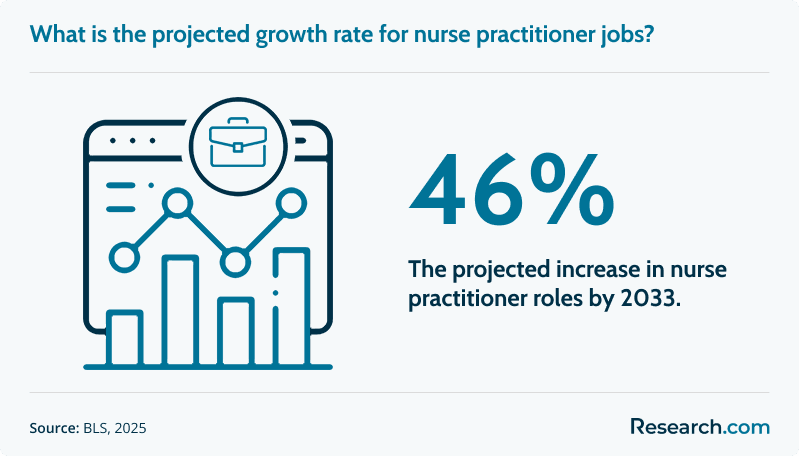
The job outlook for nurse practitioners is very strong in the cited BLS data. BLS projects 46% growth in NP employment from 2023 to 2033, with total jobs expected to reach 427,900 by 2033. This growth is connected to demand for primary care, the needs of an aging population, provider shortages, and greater emphasis on prevention and chronic disease management.
AGPCNP graduates may be especially relevant in settings that serve adults with long-term conditions, older adults managing multiple medications, and communities with limited access to physicians or specialty care. Demand can vary by region, so students should research local employers, state scope-of-practice rules, and clinical placement networks before assuming that national growth will translate directly into their preferred job market.
Current trends affecting AGPCNP students and graduates
- Aging population needs: Older adults often require ongoing primary care, medication management, chronic disease support, and care coordination.
- Primary care shortages: Nurse practitioners can help expand access to care, particularly in underserved communities and rural areas.
- Telehealth growth: Virtual care can create new opportunities for follow-up visits, chronic care management, and patient education, though state rules and employer policies still matter.
- Greater focus on outcomes: Employers increasingly value evidence-based practice, prevention, quality metrics, and patient experience.
- Clinical placement competition: As online graduate nursing enrollment grows, students should confirm placement support early rather than assuming sites will be easy to find.
What do graduates say about online MSN adult-gerontology primary care NP programs?
- Sara: "The online adult-gerontology primary care NP format made it possible for me to keep working full time while completing graduate coursework. I could review asynchronous lessons around my shifts, and the virtual simulations helped me practice decision-making before clinicals. The strongest part of the program was learning how to manage chronic conditions in older adults while still having faculty support from a distance. Avoiding a commute also saved time and money. I finished feeling more capable and ready for the next stage of practice."
- James: "I chose the online adult-gerontology primary care NP route because I needed flexibility for work and family responsibilities. Completing clinical hours locally helped me stay connected to my community, and live webinars with experienced AGPCNP faculty made the program feel personal rather than isolated. The focus on prevention and aging-related care kept me motivated throughout the degree. It changed the way I viewed my future in nursing."
- Aisha: "The online AGPCNP program helped me move from RN responsibilities toward advanced practice without putting my life on hold. My schedule was unpredictable, so having coursework I could complete on my own time mattered. I also valued the online peer group because we kept each other accountable during demanding semesters. The adult and elder care focus felt directly connected to the patients I wanted to serve."
Can accelerated BSN programs in USA pave the way to an online MSN in adult-gerontology primary care NP?
Graduates of accelerated BSN programs in USA may be able to move into an online MSN AGPCNP program if they meet the school’s RN licensure, BSN, GPA, prerequisite, and clinical eligibility requirements. Accelerated BSN programs can provide an intensive nursing foundation, but they do not remove the need for graduate-level advanced practice coursework, supervised clinical hours, certification preparation, and state licensure review.
If you completed an accelerated BSN, ask each MSN program how it evaluates applicants from accelerated pathways. Important questions include whether recent RN experience is recommended, whether any bridge coursework is needed, how clinical placement works for newer nurses, and whether the program supports students who are transitioning quickly from entry-level nursing into advanced practice preparation.
// PREVIEW //
How can you prepare for success in an online MSN in adult-gerontology primary care NP?
Success in an online MSN AGPCNP program requires more than logging into courses on time. Students need disciplined scheduling, strong clinical judgment, reliable technology, early clinical planning, and a realistic understanding of how demanding graduate nursing study can be while working as an RN.
- Confirm your academic foundation: If you do not yet have a BSN, compare bridge options such as the easiest online RN to BSN degrees before planning an MSN.
- Strengthen core clinical knowledge: Review assessment, pharmacology, common adult conditions, and documentation skills before advanced coursework begins.
- Plan clinical placements early: Ask your program when clinical site approval starts and what documentation preceptors need.
- Protect study time: Online flexibility helps, but it does not reduce the volume or rigor of graduate nursing work.
- Use student support services: Academic advising, writing support, library access, tutoring, and technical help can prevent small issues from becoming major barriers.
- Build professional relationships: Faculty, preceptors, classmates, and supervisors can become references, mentors, and future collaborators.
Key Insights
// PREVIEW //
- An online MSN AGPCNP is a clinical graduate degree, not a shortcut. Coursework may be online, but supervised in-person clinical hours remain central to preparation.
- Most listed programs take about two to three years. Your timeline depends on full-time or part-time enrollment, course sequencing, and clinical placement availability.
- Accreditation and state eligibility should come before rankings. Confirm that the program is accredited, authorized in your state, and aligned with certification and licensure expectations.
- Cost varies widely. Compare per-credit tuition, required credits, residency rates, fees, travel, clinical expenses, and certification-related costs before deciding.
- Clinical placement support is a major decision factor. A flexible online program can still become difficult if you are expected to find approved preceptors without meaningful support.
- The labor market is favorable but not automatic. BLS projects 46% NP employment growth from 2023 to 2033, but local hiring, pay, and scope of practice depend on location and employer needs.
- The best program is the one that fits your practice goal. Choose based on adult-gerontology focus, clinical training quality, schedule, affordability, state rules, and the type of patients you want to serve.
// PREVIEW //
References:
- BLS. (2025, August 28). Nurse anesthetists, nurse midwives, and nurse practitioners. bls.gov.
- BLS. (2025). Occupational Employment and wage Statistics Profiles. data.bls.gov.
- NCES. (2023). Bachelor’s, master’s, and doctor’s degrees conferred by postsecondary institutions, by sex of student and field of study: Academic year 2021-22. nces.ed.gov.
- Zippia. (2025, January 8). Best Colleges and Degrees for Adult Nurse Practitioners. zippia.com.
- Zippia. (2025, January 8). Best Colleges and Degrees for Gerontological Nurse Practitioners. zippia.com.
- US Census Bureau. (2025, February 12). 2023 National Population Projections Tables: Main Series. Census.gov. census.gov.
// PREVIEW //
Other Things You Should Know About the Best Online MSN Adult-Gerontology Primary Care NP Programs
Most accredited MSN Adult-Gerontology Primary Care NP programs require at least 500 supervised clinical hours, and many require 600 or more. These hours must cover adult and older-adult primary care, include approved preceptors, and be completed before graduation under school and state board standards.
After completing an online MSN Adult-Gerontology Primary Care NP program, graduates are typically required to pass the ANCC's Adult-Gerontology Primary Care Nurse Practitioner Certification or the AANP's Adult-Gerontology Primary Care NP certification exam to become board certified in 2027.
Most online MSN Adult-Gerontology Primary Care NP programs can be completed in 2 to 3 years of full-time study in 2027. Part-time options may extend this timeframe to 4 years. Program lengths can vary, so checking specific school timelines is advisable.


