2027 Choosing an Online BA in Psychology - Addictions Around Captioning and Recorded Lecture Needs
Audited and Verified:
Our Editorial and Data Verification Process
Research.com uses government datasets, official education statistics and primary institutional information to support its career and degree guides. Our review process checks factual accuracy, occupational definitions, source dates and the requirements associated with the credentials discussed.
How This Article Was Fact-Checked
Our editorial team verifies salary estimates, employment projections, education requirements and program information against original data providers and official organizations. Salary figures are checked against the relevant occupational definitions and reporting periods. Information about licensure, accreditation and required in-person training is reviewed separately.
Fact-checked and verified on:

Co-Founder and Chief Data Scientist
An online psychology BA with addiction studies may fit your goals academically but still be difficult to complete if lectures are inaccessible or disappear before you can review them. Captioning, recordings, and live-session policies deserve the same scrutiny as coursework and cost.
This guide is for prospective and returning students who need dependable access to spoken material, whether because of a disability, work schedule, caregiving, or study preferences. It explains what to verify before enrolling and how to judge whether the degree supports your intended role without mistaking addiction-focused study for a counseling credential.
Key Things You Should Know
- Ask for a demonstration of captions in an actual psychology lecture and written answers about recording availability, retention, and accommodations; "online" does not establish that these features are usable.
- Confirm institutional accreditation, the exact status of the addiction focus, and any live or in-person requirements separately. Accreditation does not guarantee accessibility or addiction-counselor eligibility.
- Compare the full remaining-degree cost and your state's rules for the job you want. A psychology BA can support nonclinical recovery-service work, but it does not itself authorize addiction counseling.
What is an online bachelor's degree in psychology with addiction studies?
It is an undergraduate psychology degree that pairs broad study of behavior and research with coursework on substance use, prevention, recovery, or service systems. Schools may call the added study a concentration, track, minor, or set of electives. Those labels are not interchangeable: check the catalog and degree audit to see what is required and what, if anything, appears on the transcript.
A BA may also include substantial general education and writing coursework. Its addiction content is academic preparation, not a license to diagnose or treat substance use disorder. When comparing bachelor's study in addiction psychology online, favor a documented curriculum and workable delivery format over a concentration name alone.
How do captioning and recorded lectures support online psychology students?
Accurate, synchronized captions make spoken explanations, terminology, and discussion easier to follow and review. Recordings let students pause a research-methods demonstration or revisit an explanation of addiction models. Neither feature substitutes for the other: a recording without usable captions may remain inaccessible, while captions on a live session do not help a student who cannot attend it.
Request a sample from a course resembling those you will take, not just a promotional video. Test captions for speaker identification, specialized terms, and alignment with the audio. Ask whether live discussions are captioned, whether recordings include those discussions, how long files remain available, and whether viewing them later satisfies attendance rules. In addiction-related classes, also ask how instructors handle recordings of sensitive student discussions; some sessions may not be recorded to protect privacy.
If comparing psychology with a more occupation-specific degree, apply the same media-access test when evaluating online addiction counseling programs. A program can offer recorded lectures yet still require scheduled skills practice or fieldwork.
How can you verify accreditation for an online psychology bachelor's program?
Look up the institution through the U.S. Department of Education's accreditation database or the accreditor's own directory. Match the institution's name and location, then confirm that the accreditation applies to the school awarding the degree. Ask the registrar or program office which catalog and degree requirements govern your entry term, especially if a partner platform markets the online program.
Institutional accreditation matters for degree recognition and access to federal aid at eligible schools, but it does not certify caption quality or establish eligibility for a state addiction credential. APA accreditation is not the standard to seek for a general psychology BA. Program-specific accreditation becomes a different question if you later consider a professional counseling degree; comparing condensed accredited counseling study routes requires checking the accreditor's scope and the intended state's rules, not transferring a BA accreditation claim to a graduate program.
Possible subjects include the psychology of substance use, biological and social influences, prevention, co-occurring conditions, recovery systems, and research methods. Check the actual catalog: a school may offer some subjects only as electives or on a rotating schedule. Statistics and research methods are particularly useful for judging claims about treatment and prevention, but studying an intervention is different from being qualified to deliver it.
For each required course, ask how lectures, demonstrations, and assigned media are captioned and whether an equivalent accessible format is available when outside videos are used. Check whether group presentations, guest speakers, or any field experience add live obligations. If your interest is justice-system work rather than addiction services, comparing faster forensic psychology undergraduate options may clarify a different curricular fit; neither focus alone confers clinical or investigative authority.
First-year applicants generally need to document secondary education; transfer applicants submit records of prior college study. Schools set their own GPA, prerequisite, and application rules. Admission to the university, admission to the major, acceptance of credits, and application of those credits toward graduation are separate decisions.
If you are returning to school, request a written degree audit before relying on an advertised completion estimate. Have the evaluator identify which prior courses satisfy psychology, statistics, research-methods, general education, and residency requirements. Transfer credit reviews for psychology applicants are useful context, but only the receiving institution can decide how your courses apply. You can contact disability services before enrolling to discuss access needs; an admissions decision does not settle how a particular course will be accommodated.
Completion time depends on accepted credits, the courses still required, course frequency, and how many you can take alongside other commitments. An asynchronous lecture may reduce scheduling pressure, but a scheduled discussion, group project, or placement can still determine your pace. Ask for a term-by-term plan showing when addiction electives and prerequisite courses are offered.
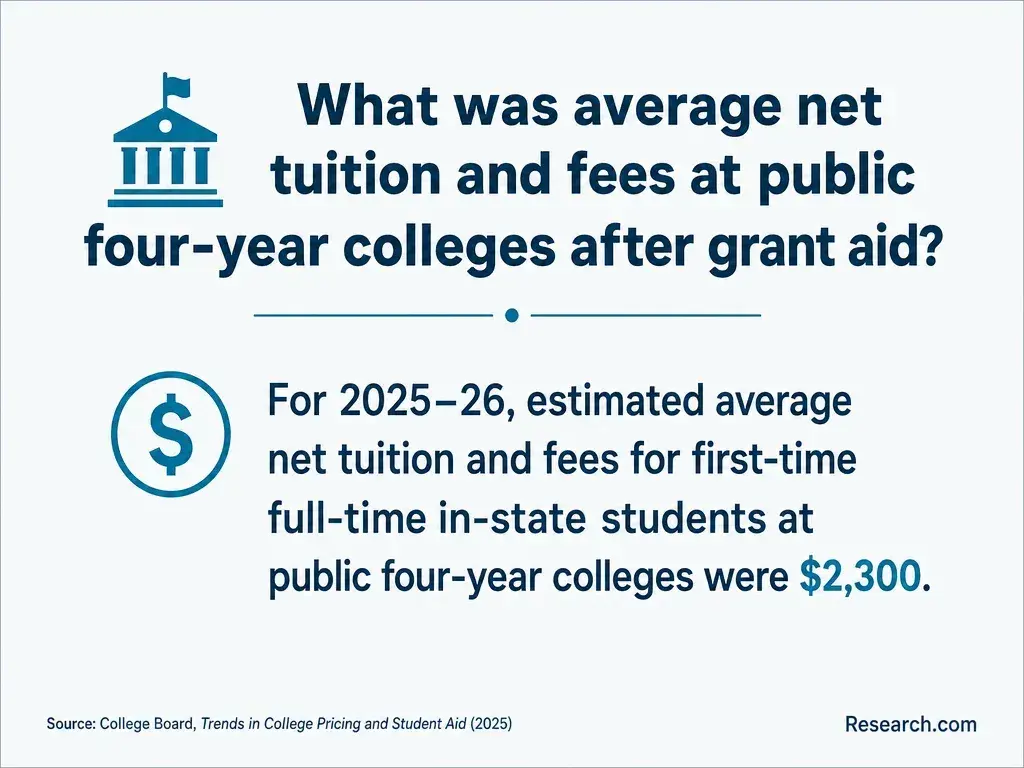
For cost, obtain an itemized estimate for your remaining courses rather than multiplying an advertised tuition rate by a generic degree length. Include mandatory online and technology fees, books or software, and any placement travel or unpaid time. Verify aid eligibility with the financial aid office and compare estimates on the same enrollment basis. A broader look at psychology degree tuition and affordability can help frame the comparison, but your evaluated remaining credits determine the more useful personal estimate.
Depending on employer requirements and experience, graduates may seek nonclinical work in recovery outreach, program support, intake administration, referral coordination, or community education. These jobs can involve explaining services, maintaining records, helping people connect with resources, and working under established supervision and confidentiality rules. They do not authorize independent assessment, diagnosis, or psychotherapy.
Choose learning opportunities that provide evidence of the tasks you want to perform: careful documentation, culturally responsive communication, ethical handling of information, and evaluation of prevention materials. Confirm any internship's duties and supervision before assuming it counts toward a credential. If your target is justice-system research or support rather than addiction services, compressed online master's study in forensic psychology represents a different, later educational choice - not a shortcut to forensic practice.
Requirements depend on the state, protected title, and duties. Some addiction-counselor pathways may recognize particular undergraduate education alongside specified training, supervised experience, and an examination; others require a qualifying graduate degree or impose different standards. Peer-support credentials are separate, and their scope is not the same as a counseling license.
Before choosing a BA, identify the exact job title and state where you intend to work. Check the responsible state board or credentialing authority for accepted degrees and coursework, approved supervision, examinations, and whether online study or a proposed placement meets its rules. If your aim is independent mental health counseling, investigate a qualifying graduate pathway; assessing shorter clinical mental health master's program outcomes is a separate decision from choosing an addiction-focused BA. Neither a concentration nor a recorded counseling lecture counts as supervised clinical practice.
How do you choose an accessible and reputable online psychology program?
Make access requirements a condition of your shortlist, not a question saved for after the deposit. Seek written answers from the program and disability services, then test the learning platform if a demonstration is available. The most useful comparison covers both routine access and what happens when it fails.
Use this sequence to make the final decision:
- Confirm the exact degree and addiction-study requirements, institutional accreditation, and your individualized transfer-credit audit.
- Inspect captioned course media and ask who corrects errors, how quickly corrections are handled, and how to request an accessible alternative.
- Get the policy for live attendance, recordings, retention, examinations, group work, and any campus or placement obligations in writing.
- Compare the remaining cost and course schedule against the requirements of your intended job or future degree.
If the school cannot explain how required lectures will remain accessible, an attractive concentration or accelerated calendar is a poor substitute. The same caution applies to later graduate study: evaluating faster-paced forensic psychology master's degrees calls for checking actual delivery and professional outcomes rather than assuming a shorter advertised timeline means fewer access barriers.
Other Things You Should Know About Psychology
If a school provides captions to everyone, you can generally use them as a study aid. For an individualized accommodation, contact disability services about its process and applicable documentation requirements.
Not necessarily. Captions, searchable transcripts, and downloadable files are different features. Ask for the policy for instructor recordings, guest presentations, and assigned third-party videos.
Ask how to report errors and request a corrected or otherwise accessible version. Test a course sample before enrolling; automated captions alone do not show that specialized content will be accurate.
Do not assume so. Access may end with the course, and downloading or sharing recordings may be restricted. Check retention and permitted personal use before building your study plan around permanent access.
- Auxiliary Aids and Services for Postsecondary Students with Disabilities | U.S. Department of Education http://www.ed.gov/laws-and-policy/individuals-disabilities/auxiliary-aids-and-services-for-postsecondary-students-with-disabilities
- Cost of Attendance (Budget) | 2025-2026 Federal Student Aid Handbook https://fsapartners.ed.gov/knowledge-center/fsa-handbook/2025-2026/vol3/ch2-cost-attendance-budget
- Captions and Transcripts | Section508.gov https://www.section508.gov/create/captions-transcripts/
- Online Bachelor's Degree in Psychology - CSU Online https://online.colostate.edu/degrees/psychology/
- Online Substance Abuse and Addictions Degree | ASU Online https://asuonline.asu.edu/online-degree-programs/undergraduate/counseling-psychological-sciences/
- Cost of Attendance - Financial Aid and Scholarships | The University of Utah https://financialaid.utah.edu/tuition-and-fees/cost-of-attendance.php
- How to Become an Addiction Counselor: 5 Key Steps (2026) | Touro University Worldwide https://www.tuw.edu/health/how-to-become-an-addiction-counselor/
- Video Captioning Requirements & Guidance | Educational Development https://educationaldevelopment.uams.edu/digital-accessibility/video-captioning-requirements-guidance
- Applied Psychology: Addictions Studies, B.S. - CPS, CPSO | University of New Hampshire https://www.unh.edu/program/bachelor-science/applied-psychology-addictions-studies
- Online Post-Bachelor's Certificate in Addiction Treatment | UNC Greensboro https://www.uncg.edu/degrees/addiction-treatment-p-b-c/