2027 Online Business Administration Bachelor's Degree Programs Under $10,000

Co-Founder and Chief Data Scientist
An online business administration bachelor’s degree can be a practical route into management, finance, marketing, operations, or entrepreneurship—but only if the price and format fit your life. For working adults, transfer students, military learners, and career changers, the real question is not simply whether to earn the degree online. It is whether you can complete an accredited program without taking on debt that outweighs the career benefit.
Many programs advertise flexibility, but tuition, fees, transfer rules, technology costs, and graduation timelines can change the final price quickly. Tuition costs often exceed $10,000, and recent data shows that 38% of students prioritizing affordability in online business administration programs drop out due to unexpected expenses. That makes cost transparency, accreditation, financial aid, and credit transfer policies central to choosing well.
This guide explains how online business administration bachelor’s degree programs under $10,000 work, which low-cost options are commonly discussed, how public and private universities compare, what accreditation to verify, and how students can reduce costs through transfer credits, aid, accelerated formats, and careful program selection.
Key Things to Know About Online Business Administration Bachelor's Degree Programs Under $10,000
- Affordable online business administration bachelor's degrees minimize student debt-many programs charge under $300 per credit, significantly lowering total costs compared to traditional options.
- Graduates often see a strong return on investment, with median salaries exceeding $60,000 yearly, especially from military-friendly programs offering credit for prior learning.
- Flexible course schedules and transfer credit policies enable working adults and first-generation students to balance education and career progression efficiently.
What Are the Most Affordable Accredited Online Business Administration Bachelor's Degree Programs Under $10,000?
An online business administration bachelor’s degree under $10,000 generally means the tuition needed to complete the remaining degree requirements stays below that amount. This distinction matters because many students enter with prior college credits, military training, professional learning, or an associate degree. A program may cost far more than $10,000 for a student starting from zero credits but fall under that threshold for a transfer student.
Accreditation should come before price. Regional accreditation helps confirm that the institution meets accepted academic and administrative standards, supports eligibility for federal financial aid, and improves the likelihood that credits will transfer. In business programs, programmatic accreditation from organizations such as the Accreditation Council for Business Schools and Programs (ACBSP) can add another layer of business-specific quality review.
Common accrediting bodies associated with affordable online options include the Higher Learning Commission (HLC), Southern Association of Colleges and Schools Commission on Colleges (SACSCOC), Middle States Commission on Higher Education (MSCHE), Northwest Commission on Colleges and Universities (NWCCU), New England Commission of Higher Education (NECHE), and Distance Education Accrediting Commission (DEAC).
Among frequently cited low-cost accredited online business administration bachelor’s degree options are:
- Western Governors University: Flat-rate tuition of about $3,920-$4,600 total depending on credits completed; requires 120 credits. Accredited by NWCCU and ACBSP.
- Fort Hays State University: $218.67 per credit hour; roughly $9,600 total for 44 online credits; regionally accredited by HLC.
- Columbia Southern University: $230 per credit for 120 credits, totaling near $9,600; accredited by SACSCOC.
- University of the People: Tuition-free model with assessment fees around $4,860 total; accredited by DEAC.
- American Public University System: $285 per credit hour; nearly 120 credits with discounts keeping tuition just under $10,000; accredited by HLC and ACBSP.
- Granite State College (University System of New Hampshire): $250 per credit hour; 120-credit degree totals approximately $9,000; accredited by NECHE.
- Southern New Hampshire University (SNHU): $320 per credit; flexible transfer credit policies can reduce total costs below $10,000; accredited by NEASC.
When comparing these programs, focus on the cost to finish, not just the published tuition rate. Ask how many credits you still need, whether fees are separate, whether textbooks or course materials are included, and whether prior learning can reduce the number of required courses. Students comparing broader low-cost options can also review the most affordable online business administration degree listings to understand how tuition, transfer credit, and accreditation affect total value.
For students considering graduate study later, it may also be useful to compare admission flexibility at the bachelor’s level with easiest masters programs to get into, especially if long-term plans include an MBA or another business-related master’s degree.
How Do Tuition Costs for Online Business Administration Bachelor's Programs Under $10,000 Compare Across Public and Private Universities?
Public universities often appear cheaper because state funding can lower tuition, especially for in-state students. Private nonprofit universities may list higher per-credit prices but can still become affordable when they offer flat online tuition, generous transfer credit, scholarships, or accelerated formats. The better comparison is the total amount you will pay after transfer credits, grants, fees, and required materials—not the per-credit rate alone.
| Cost factor | Public universities | Private nonprofit universities |
| Typical per-credit pricing | Often ranges from $200 to $300 per credit due to state support. | Often ranges from $300 to $500 per credit, though discounts and aid may reduce the net cost. |
| Best fit for | In-state students, transfer students, and learners seeking predictable public tuition. | Out-of-state students, adults with transfer credits, and learners who can benefit from prior learning assessment. |
| Potential cost advantage | Lower published tuition and larger enrollment scale. | Flat tuition, accelerated calendars, scholarships, and transfer-friendly policies. |
| Main risk to check | Out-of-state tuition, fees, and limited course availability. | Higher sticker price if aid, transfer credits, or accelerated pacing do not apply. |
- Tuition rates per credit: Public universities commonly price online business courses between $200 and $300 per credit, which can help students keep tuition below $10,000 across a 40- to 50-credit completion pathway.
- Total program cost: Private nonprofit universities may charge between $300 and $500 per credit, but shorter completion pathways, transfer credits, and prior learning assessments can lower the total bill.
- State subsidies: Public institutions may use state support to reduce tuition for residents. Private nonprofits do not receive the same subsidy but may use institutional aid, online-student scholarships, or flat tuition policies.
- Program delivery format: Both public and private schools commonly use asynchronous online courses. Some private nonprofit programs also use accelerated cohorts or competency-based models that may shorten time to completion.
- Enrollment size and economies of scale: Larger public universities can spread technology, advising, and course development costs across more students. Smaller private universities may offset higher operating costs through individualized transfer evaluation or aid packages.
- When private institutions may cost less: A private university can be cheaper for an out-of-state student if it charges one online rate, accepts more transfer credits, or awards enough institutional aid to reduce the net cost below a comparable public option.
Before choosing, request a written degree plan showing accepted transfer credits, remaining credits, tuition, fees, and expected time to graduation. This is the clearest way to determine whether a program truly fits under $10,000.
Students comparing online degrees in other fields may also find useful pricing and acceleration examples in an online psychology degree, especially when evaluating how course length and transfer credits affect affordability.
What Is the Typical Duration of an Online Business Administration Bachelor's Degree Under $10,000, and How Can Students Graduate Faster?
Most business administration bachelor’s degrees require about 120 credit hours, usually equal to about 40 courses. A full-time student following a traditional semester calendar typically finishes in four years. Students entering with transfer credits, enrolling year-round, or choosing competency-based formats may finish sooner.
For programs under $10,000, speed matters because every extra term can create additional costs: tuition, fees, books, technology expenses, and lost time that could be spent advancing at work. However, faster is not always better. Students working full time or managing family responsibilities should choose an accelerated pace only if they can maintain strong academic performance.
- Use accelerated sessions: Many affordable programs offer eight-week terms or shorter sessions instead of standard 15-week semesters. This allows students to complete more courses in a calendar year.
- Enroll continuously: Taking courses during summer and winter terms can reduce long breaks and keep degree progress steady.
- Choose competency-based learning when appropriate: Some schools allow students to advance by demonstrating mastery rather than spending a fixed amount of time in each class. This can benefit students with business, military, management, accounting, or administrative experience.
- Transfer as many credits as possible: Prior college coursework, CLEP, DSST, AP credits, ACE-reviewed military training, and prior learning assessment may reduce required coursework.
- Avoid course sequencing delays: Business programs often include prerequisites in accounting, economics, statistics, finance, and management. Missing one prerequisite can delay graduation by a term.
- Balance pace with sustainability: Taking too many courses at once can lead to withdrawals or failed classes, which may increase total cost.
Institutions such as Western Governors University and Fort Hays State University offer business administration degrees priced under $10,000, with average completion periods ranging from three to three and a half years, thanks to expedited formats and competency-based approaches.
A professional who pursued an affordable online business administration degree after military service said that balancing coursework with family responsibilities and part-time work was difficult, but the self-paced, competency-based structure helped him progress more efficiently. He noted that “being able to test out of subjects I already knew saved me both time and money.” His experience shows why students with relevant prior knowledge should ask about competency exams and prior learning before enrolling.
Which Online Business Administration Bachelor's Programs Under $10,000 Offer the Best Earning Potential After Graduation?
The strongest earning potential usually comes from pairing a low-cost accredited business administration degree with a concentration that matches labor market demand and the student’s existing experience. A degree alone does not guarantee a salary level, but it can help qualify graduates for roles where business, analytical, financial, operational, or technology skills are valued.
Data from the Bureau of Labor Statistics highlights several business-related tracks commonly associated with stronger median salaries:
- Finance: Finance-focused graduates may pursue roles such as financial analysts or advisors with median annual incomes exceeding $80,000. Courses in investment management, accounting, financial planning, and corporate finance can improve alignment with banking, insurance, and corporate finance roles.
- Management Information Systems (MIS): MIS combines business operations and technology. Graduates often begin near $60,000, with salaries rising toward $90,000 for roles such as IT consultants or project managers. Programs that include coding, database systems, cybersecurity, analytics, and project management may offer stronger practical preparation.
- Supply Chain Management: Supply chain and logistics concentrations prepare students for roles in manufacturing, distribution, procurement, and operations, with median salaries around $75,000. Useful coursework includes operations planning, vendor management, logistics, purchasing, and process improvement.
- Marketing: Marketing tracks in digital marketing, marketing analytics, sales, and consumer behavior offer median earnings near $65,000. Students should look for applied projects, portfolio work, campaign analysis, and internship options when available.
When comparing programs for earning potential, review more than the concentration name. Look for employer-aligned coursework, internship access, capstone projects, analytics tools, faculty experience, and career services. A lower tuition program can offer strong value if it helps you build evidence of skill—not just complete general business classes.
Students who want a practical skill add-on may also consider a bookkeeping course, especially if they are targeting entry-level accounting, small business, or administrative finance roles alongside the bachelor’s degree.
What Financial Aid and Scholarship Opportunities Can Reduce an Online Business Administration Bachelor's Degree Cost Below $10,000?
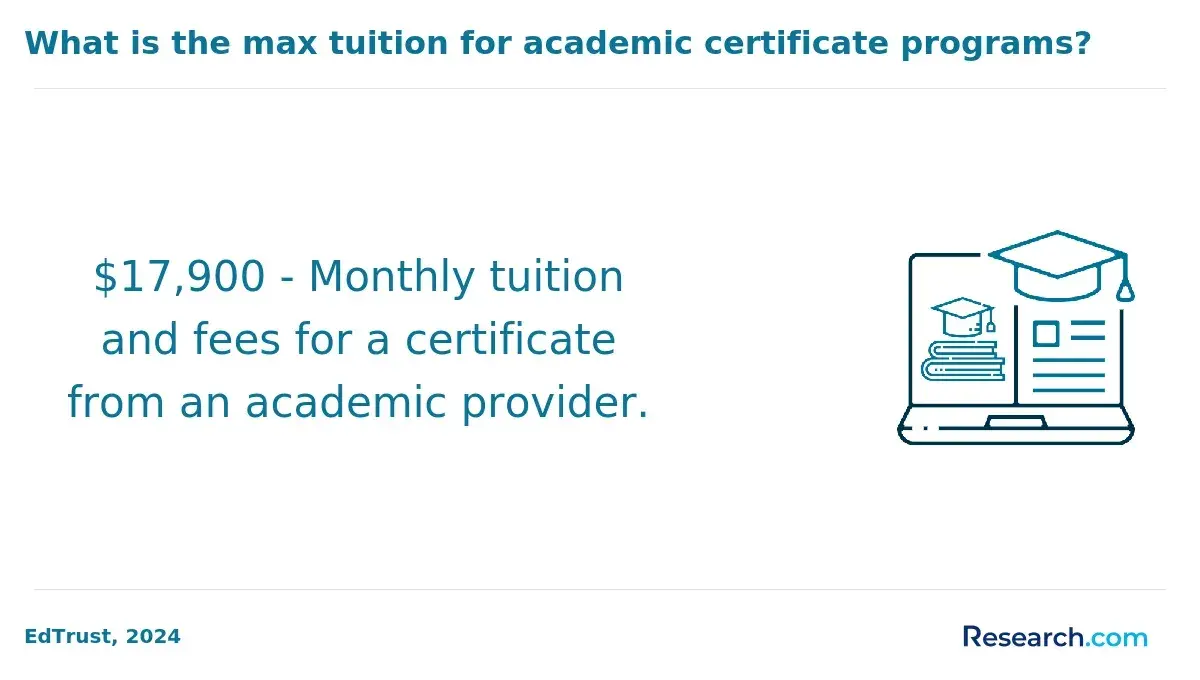
Financial aid can turn a low-tuition business administration program into a genuinely affordable degree, but students need to separate free aid from borrowed aid. Grants and scholarships reduce the amount paid out of pocket. Loans can help cover gaps but must be repaid, often with interest.
Federal Pell Grants: These need-based grants do not require repayment and can provide major tuition relief for low- and moderate-income students. FAFSA data shows Pell Grants often cover the bulk of initial costs, making them a foundation of many aid packages.
Subsidized Federal Loans: Subsidized loans may offer favorable interest treatment while the student is enrolled, but they should usually come after grants, scholarships, employer tuition benefits, and payment plans. They can bridge a remaining gap, but repayment is required.
Institutional Scholarships: Many accredited colleges offer merit-based or need-based scholarships for business administration students. Some awards are automatically considered during admission, while others require a separate application, essay, or minimum GPA.
State-Based Grants: Some states provide grants for residents pursuing online degrees, including business programs. Eligibility may depend on residency, income, enrollment status, institution type, and academic progress.
Professional Association Scholarships: Organizations such as the National Business Education Association and the American Management Association offer scholarships for business administration students. These opportunities may be competitive, but they can reduce borrowing when combined with federal, state, and institutional aid.
How to stack aid without losing cost control
- Submit the FAFSA as early as possible.
- Ask the school for a full aid estimate before enrolling.
- Confirm whether grants or scholarships are renewable each year.
- Check whether aid changes if you attend part time.
- Compare the net cost after aid, not the advertised tuition.
- Borrow only what is needed after free aid is applied.
One professional who completed an affordable online business administration degree said: “I was initially overwhelmed managing my work, family, and the financial aid paperwork, but applying early for FAFSA made a big difference. Leveraging multiple scholarships kept my costs manageable, and the process taught me how to navigate financial systems confidently. It wasn't easy balancing everything, but knowing I was investing smartly in my future kept me motivated throughout.” Her experience shows why early planning and multiple funding sources matter for students trying to keep the final cost below $10,000.
How Many Transfer Credits Do Online Business Administration Bachelor's Programs Under $10,000 Accept, and How Does This Reduce Total Cost?
Transfer credit is often the biggest factor in whether an online business administration bachelor’s degree can be completed for under $10,000. Students who already have college credits, an associate degree, military training, professional certifications, or exam-based credit may need far fewer courses than a first-time freshman.
Programs accepting 60 or more transfer credits can sharply reduce both tuition and time to graduation. For instance, with an average cost of $250 per credit, transferring 60 credits cuts fees from roughly $30,000 to $15,000—halving educational expenses. Some institutions accept up to 90 transfer credits, which can further shorten the remaining degree path.
Transfer-friendly programs may evaluate several forms of prior learning:
- Accredited college coursework: Credits from community colleges, universities, and previous online programs may apply to general education, electives, or major requirements.
- CLEP and DSST exams: Standardized exams can help students earn credit for subjects they already know.
- Military training: ACE-recommended military training may convert into college credit at participating institutions.
- AP exam credits: Some schools award credit for qualifying Advanced Placement scores.
- Prior learning assessment: Work experience, professional training, or certifications may be evaluated for credit, depending on school policy.
Several online programs are frequently noted for flexible transfer credit policies:
- Western Governors University: Accepts up to 90 transfer credits, including CLEP, DSST, and military training, offering strong flexibility for returning learners.
- Fort Hays State University: Allows up to 90 transfer credits from accredited colleges and recognizes military training and AP exam credits.
- Thomas Edison State University: Uses comprehensive prior learning assessments, accepting CLEP, DSST, and military credits, supporting up to 90 transfer credits for degree acceleration.
- Excelsior College: Known for evaluating military and standardized exam credits, it accepts up to 90 transfer credits.
Before applying, request an unofficial transfer review if available. After admission, review the official degree audit carefully. A school may accept credits toward the total number needed to graduate but not apply them to required business courses. The best-value program is the one that applies the most credits to your actual degree requirements.
What Accreditation Should an Online Business Administration Bachelor's Program Under $10,000 Have to Ensure Quality and Employer Recognition?
An online business administration bachelor’s program under $10,000 should be offered by an accredited institution. Regional accreditation remains the most widely recognized standard in U.S. higher education because it evaluates the institution as a whole, including academic quality, faculty qualifications, student support, financial stability, and governance.
Key regional accrediting bodies include:
- Higher Learning Commission (HLC): Serves institutions in the central United States, including many that offer affordable online business administration programs.
- Southern Association of Colleges and Schools Commission on Colleges (SACSCOC): Accredits colleges in the southern U.S., where many budget-friendly online options are available.
- New England Commission of Higher Education (NECHE): Covers northeastern institutions and evaluates them against recognized higher education standards.
Programmatic accreditation can also matter. Business-specific accreditors such as the Accreditation Council for Business Schools and Programs (ACBSP) and the Association to Advance Collegiate Schools of Business (AACSB) review business curricula, faculty qualifications, learning outcomes, and program quality. Not every reputable business program has programmatic accreditation, but it can strengthen credibility, especially for students planning graduate study or advancement in competitive business environments.
National accreditation may be legitimate in some contexts, but it can create limitations. Credits from nationally accredited institutions may not transfer easily to regionally accredited schools, and some employers or graduate programs may prefer regional accreditation. A low tuition price is less valuable if the degree creates transfer, employment, or graduate admission barriers.
Prospective students should verify accreditation through the U.S. Department of Education's accreditation database before enrolling. Recent statistics show that approximately 80% of employers prefer candidates with degrees from regionally accredited schools, which is why accreditation should be treated as a minimum requirement rather than an optional feature.
What Are the Admission Requirements for Online Business Administration Bachelor's Programs Priced Under $10,000?
Admission requirements for online business administration bachelor’s programs under $10,000 vary by school, but most are designed to be accessible to adult learners, transfer students, first-generation students, and working professionals. The minimum requirement is usually a high school diploma or GED. Transfer applicants must also submit official college transcripts from previously attended institutions.
- High school diploma or GED: Most programs require proof of high school completion or an equivalent credential.
- Minimum GPA requirements: Many schools set GPA thresholds between 2.0 and 2.5 on a 4.0 scale. Open-admission programs may waive GPA requirements to broaden access.
- Standardized testing: SAT or ACT scores are increasingly optional or not required for affordable online business administration programs.
- Prerequisite courses: Some programs require basic college-level preparation in English and math before or early in enrollment.
- Transfer documentation: Students with prior credits should submit all transcripts, exam scores, military records, and certification documentation for evaluation.
- Application materials: Some schools may request a personal statement, resume, or proof of work experience, especially for adult-completion or competency-based programs.
Open-admission and rolling-admission policies can make enrollment faster and more flexible. They are useful for students who do not want to wait for a single annual start date. More selective programs may have stricter GPA expectations, priority deadlines, or limited cohort space, but they may also offer stronger peer networks or employer recognition.
Applicants who do not meet initial criteria can improve their profile by completing community college coursework, earning relevant business certifications, documenting professional experience, or writing a clear personal statement that explains academic readiness. Students exploring other low-cost online fields can compare requirements with an urban development degree online to see how admission standards differ across disciplines.
How Do Online Business Administration Bachelor's Programs Under $10,000 Support Student Success Through Advising and Career Services?
Low tuition should not mean students are left on their own. Advising, tutoring, technology support, and career services can directly affect whether a student graduates on time and keeps costs under control. A missed prerequisite, poor course sequence, or lack of internship guidance can add terms and expenses.
- Personalized academic advising: Advisors help students choose courses in the right order, understand degree requirements, plan around work and family responsibilities, and avoid unnecessary credits.
- Tutoring and mentorship: Support in accounting, statistics, economics, writing, and business analytics can prevent withdrawals or repeated courses. Peer and faculty mentorship can also help online students feel less isolated.
- Mental health and wellness resources: Some programs provide counseling access, stress management resources, or wellness coaching. These services can support persistence, especially for working adults balancing multiple responsibilities.
- Career placement and internship coordination: Strong programs may offer business-specific job boards, resume reviews, interview preparation, internship listings, and career coaching.
- Alumni networks and employer connections: Alumni groups can provide networking, referrals, mentoring, and practical insight into business roles.
- Student satisfaction and graduation rates: According to the National Survey of Student Engagement (NSSE), programs with comprehensive advising and career support demonstrate higher student satisfaction and on-time graduation rates—important indicators of cost-effectiveness.
Before enrolling, ask how advising works for online students. Find out whether advisors are assigned individually, how quickly they respond, whether tutoring is included in tuition, and whether career services are available to online students after graduation. A program under $10,000 may be a poor value if students cannot get help when they need it.
Students planning long-term academic advancement may also compare undergraduate support with quickest cheapest masters degree options to understand how advising and career services affect low-cost online pathways at different degree levels.
What Concentrations or Specializations Are Available Within Online Business Administration Bachelor's Programs Under $10,000?
Many online business administration bachelor’s programs under $10,000 offer concentrations that help students connect a broad business degree to a clearer career path. The best specialization depends on your work history, strengths, target industry, and willingness to pursue additional certifications after graduation.
- Management: This concentration emphasizes leadership, supervision, organizational behavior, planning, and decision-making. Management roles are expected to grow 7% through 2032, with median salaries near $105,000. Because many roles do not require an additional credential, this can be a cost-conscious option for students already working in business or operations.
- Marketing: Marketing concentrations focus on digital strategy, consumer behavior, branding, sales, campaign management, and analytics. Marketing jobs are projected to grow by 10%, with median incomes around $65,000. Optional credentials such as Google Analytics can strengthen a graduate’s profile but may add costs beyond tuition.
- Finance: Finance covers budgeting, investment, financial analysis, risk, and corporate finance. Projected growth is 9%, and median earnings hover around $83,000. Students considering advanced finance or accounting roles should check whether certifications such as CPA or CFA may eventually be needed, since those pathways can add time and expense.
- Entrepreneurship: This track focuses on business planning, innovation, startup operations, funding, market research, and small business management. It can be useful for students planning to launch or grow a business, though earnings vary widely by industry and business performance.
- Supply Chain Management: This specialization covers logistics, procurement, operations, inventory, vendor relationships, and process improvement. The field grows at 6% with median wages near $77,000. Certifications such as CPIM or CSCP can add value but are optional and may increase the total cost of career preparation.
Students should not choose a concentration based only on salary. A finance track may have strong earning potential, but it may not fit a student who dislikes quantitative analysis. Marketing may be appealing, but the strongest candidates often need portfolios and analytics skills. Management can be flexible, but it may require demonstrated work experience to move into supervisory roles. The right choice balances market demand with the skills you can realistically build and use.
What Technology and Learning Platforms Do Online Business Administration Bachelor's Programs Under $10,000 Use?
Affordable online business administration programs usually use a learning management system, or LMS, to deliver lectures, readings, assignments, discussions, quizzes, grades, and messages. The platform affects how easy it is to stay organized, communicate with instructors, and complete coursework around work or family obligations.
- Canvas: Often valued for a clean interface, mobile access, calendars, assignment tracking, and straightforward communication tools.
- Blackboard: Commonly used for discussion boards, quizzes, gradebooks, content modules, and instructor announcements.
- Moodle: An open-source platform that institutions can customize for course delivery, assessments, and resource sharing.
- Simulation tools: Some business courses use virtual business simulations, financial modeling tools, spreadsheets, case platforms, or analytics exercises to develop applied skills. These may require separate licensing fees.
- Technical requirements: Students generally need reliable internet, a computer with at least 4GB of RAM, a webcam, and current standard software to participate fully.
Technology costs can affect whether a degree stays under $10,000. Before enrolling, confirm whether the school charges technology fees, online course fees, proctoring fees, software fees, or e-textbook fees. Also ask whether courses require live attendance, specific software, group projects, or webcam-based exams.
Students with slower internet or older devices should look for programs that provide mobile-friendly access, downloadable materials, low-bandwidth options, and responsive technical support. A low-cost program is only workable if the technology requirements match the student’s actual resources.
What Graduates Say About Their Online Business Administration Bachelor's Degree Programs Under $10,000
- Chelsea: "Choosing an online business administration bachelor's degree under $10,000 was a strategic decision for me to balance quality education with affordability. The program's cost-effectiveness allowed me to invest in my future without the burden of overwhelming debt. Since graduating, I've noticed a significant boost in my career opportunities, as employers respect the practical skills and strong knowledge base I gained through the coursework."
- Walker: "I opted for the online business administration bachelor's degree under $10,000 because it provided flexibility to study while continuing my job. The affordable tuition made it accessible, which was crucial for me as I supported my family. Reflecting on my experience, the program sharpened my leadership skills and made a clear difference in how I approach business challenges professionally."
- Joseph: "The affordability of the online business administration bachelor's degree program-under $10,000-was a major factor in my decision to enroll. It offered comprehensive coursework that prepared me well for real-world business environments without draining my finances. Pursuing this degree online empowered me to advance my career confidently and opened doors to new managerial roles I hadn't previously considered."
Other Things You Should Know About Business Administration Degrees
Yes, some fully online business administration bachelor's programs under $10,000 do not charge out-of-state tuition penalties. These programs usually come from public universities with state-wide online pricing policies or from private institutions offering flat tuition rates for all online students. This approach levels the playing field for students regardless of their residency, making affordable education available nationwide.
Federal Pell Grants, state grants, institutional scholarships, and employer tuition assistance can reduce out-of-pocket cost for these programs. Students must complete the FAFSA, and aid eligibility is based on need, enrollment status, and program accreditation. Some schools also cap total charges at 120 credit hours.
Many online business administration programs under $10,000 accept credit from CLEP, DSST exams, and other prior learning assessments. These options allow students to demonstrate mastery of key subjects and bypass certain courses, lowering the total credits they must pay to complete. Utilizing these credits helps students accelerate degree completion and reduce overall tuition expenses.
References
- The Importance of Accreditation for Online BBA Degree Programs https://www.dypatilonline.com/blogs/the-importance-of-accreditation-for-online-bba-degree-programs
- Online Bachelor's Degree Completion Financial Aid https://www.hamline.edu/admission-aid/financial-aid/online-bachelors
- Tuition-Free Distance Learning Program in Business Administration - UNYBT https://unybt.com/tuition-free-program-business-administration/
- Online Business Degree https://www.snhu.edu/online-degrees/bachelors/bs-in-business-administration
- The Need of Accreditation in Online Degree Programs https://www.onlinecu.in/blog/cu/the-importance-of-accreditation-in-online-degree-programs.php
- Top Online Business Degrees That Pay Off in 2026: A Smart Investment in Your Future - Swiss School of Business and Management Geneva https://www.ssbm.ch/top-online-business-degrees-that-pay-off-in-2026-a-smart-investment-in-your-future/
- 8 Online Degrees That Pay Well & You Can Start Today | Penn Foster https://www.pennfoster.edu/blog/8-online-degrees-that-pay-well-and-you-can-start-today
- 2025 Most Affordable Online Business Degrees https://www.onlineu.com/most-affordable-colleges/business-degrees
- The Safest Way to Finance an Online Bachelor’s Degree in 2026 https://www.collegetransitions.com/blog/how-to-finance-an-online-bachelors-degree/
- AGTU | Global Degree Online https://agtu.us/en/programs/undergraduate-programs/digital-business/bachelor-digital-business/