2027 Self-Paced Online Business Administration Bachelor's Degree Programs

Co-Founder and Chief Data Scientist
Choosing a self-paced online business administration bachelor's degree is mainly a question of fit: can you make consistent progress without weekly class meetings, fixed semester pacing, or frequent reminders? For working adults, military-affiliated learners, parents, and career changers, the format can remove one of the biggest barriers to finishing a degree: an inflexible schedule.
These programs can be practical, but they are not automatically easier or cheaper. The best option depends on accreditation, transfer-credit rules, tuition model, financial aid eligibility, prior learning credit, and the amount of structure you need to stay on track. According to the National Center for Education Statistics, over 40% of undergraduates enrolled online in 2022 pursued part-time or self-paced formats, showing how common flexible study has become among adult learners balancing school with work and family responsibilities.
This guide explains how self-paced online business administration bachelor's programs work, how they compare with traditional online programs, what accredited options are available, what affects completion time and cost, and how to evaluate whether the format supports your career goals.
Key Benefits of Self-Paced Online Business Administration Bachelor's Degree Programs
- Self-paced online business administration bachelor's degrees offer unmatched flexibility-allowing working professionals to balance studies with careers and personal commitments without fixed class schedules.
- Accelerated learning models enable faster skill acquisition by focusing on competencies, often letting students leverage prior experience to complete programs more quickly.
- Cost-effective pathways-such as transfer credits and prior learning assessments-reduce total expenses, making accredited business administration degrees more accessible to non-traditional and first-time college students.
What Are Self-Paced Online Business Administration Bachelor's Degree Programs, and How Do They Differ From Traditional Online Formats?
Self-paced online business administration bachelor's degree programs allow students to complete coursework on an individualized timeline, usually within a broader program limit set by the school. Instead of progressing through weekly modules with a class cohort, students often move ahead once they demonstrate mastery of required business concepts and skills.
The main difference is pacing. A traditional online course may be asynchronous, meaning students do not have to log in at a specific time, but assignments, discussions, exams, and projects still follow a fixed schedule. A self-paced program gives students more control over when they complete lessons and assessments. That flexibility can be valuable for learners with rotating work shifts, caregiving responsibilities, seasonal workloads, or prior knowledge in business subjects.
Common features of self-paced business administration programs
- Flexible start dates: Some programs use open enrollment or multiple start windows, reducing the need to wait for a fall or spring semester.
- Individualized progress: Students may move quickly through familiar material and spend more time on subjects that require deeper study.
- Competency-focused assessment: Many programs measure learning through exams, projects, case analyses, presentations, simulations, or portfolios rather than seat time.
- Limited external pacing: Students usually have fewer weekly deadlines, which makes time management more important.
- On-demand or scheduled support: Faculty, mentors, advisors, or coaches may be available, but students often must initiate contact when they need help.
This format works best for students who can plan their own study calendar, protect regular study time, and ask for help before they fall behind. It may be a poor fit for learners who depend on weekly instructor reminders, live discussion, or a highly structured class rhythm.
Before choosing a program, review transfer credit policies, prior learning assessment options, academic support, federal financial aid eligibility, and the maximum time allowed to complete each course or term. Students who are not ready to commit to a full degree may also compare shorter credentials, such as certificates online, before enrolling in a bachelor's program.
Which Accredited Institutions Offer Self-Paced Online Business Administration Bachelor's Degree Programs?
Accredited self-paced online business administration bachelor's programs are offered by several institutions that serve working adults and non-traditional students. The strongest choices combine recognized institutional accreditation with clear tuition policies, transparent transfer-credit evaluations, and support systems designed for independent learners.
Students comparing schools should verify accreditation directly, ask how self-paced coursework is documented on the transcript, and confirm whether the program is fully self-paced or only partially flexible. Some schools offer true competency-based pathways, while others offer standard online courses with flexible scheduling.
- Western Governors University: Accredited by the Northwest Commission on Colleges and Universities (NWCCU), this nonprofit uses subscription-based tuition per six-month term rather than a per-credit model. Students can accelerate if they complete more coursework during the term, and the average completion time is about 3 years. Transfer credits and prior learning assessments may reduce the time to degree.
- Capella University: Regionally accredited by the Higher Learning Commission (HLC), Capella offers the FlexPath model, which uses flat-rate tuition per 12-week session. Students in the online business administration bachelor's program can progress at an individualized pace, with completion time commonly ranging from 2 to 4 years. Transfer credits are accepted.
- Northeastern University: Accredited by the New England Commission of Higher Education (NECHE), Northeastern's College of Professional Studies offers a competency-based Bachelor of Science in Business Administration online. Tuition is charged per credit hour, and students may be able to use transfer credits and prior learning assessments. Completion usually ranges from 3 to 5 years, depending on pace.
- Purdue University Global: Accredited by HLC, Purdue University Global offers a self-paced competency-based Bachelor of Science in Business Administration. Its subscription-based tuition per term rewards students who can maintain steady progress. Transfer credits and competency assessments may shorten the path to completion.
- Southern New Hampshire University: Regionally accredited by NECHE, SNHU offers an online business administration program that includes some self-paced courses within a primarily term-based structure. The average completion time is about 4 years, with transfer credit policies and financial aid options available.
When comparing these options, look beyond the school name. Ask whether tuition is charged by credit, term, or subscription period; whether the program accepts prior college, military, or professional learning; and whether the degree will meet your future plans for employment or graduate study. Students focused on affordability may also compare a business administration degree online accredited to understand how accredited online business programs differ in cost and structure. For a broader view of affordable online education in other disciplines, resources on bachelors in psychology online may also be useful.
How Long Does It Take to Complete a Self-Paced Online Business Administration Bachelor's Degree?
Completion time varies widely. Some students finish a self-paced online business administration bachelor's degree in as little as two years, while others take three to five years. NCES data shows that traditional bachelor's degrees usually take around 4.5 years, which is a helpful benchmark for students who plan to study at a steady but not accelerated pace.
The main advantage of a self-paced model is that time to graduation is influenced less by the academic calendar and more by how much relevant credit, experience, and study time the student brings into the program.
Factors that can shorten or lengthen completion time
- Prior credits: Students with completed general education or business courses may reduce the number of remaining requirements.
- Transfer coursework: Credits from community colleges, vocational schools, or military training can accelerate completion if the receiving institution accepts them toward degree requirements.
- Weekly study hours: Students who can study consistently each week usually progress faster than those whose work or family obligations frequently interrupt study time.
- Prior learning assessments: Exams, portfolios, or evaluated professional training may allow students to earn credit for college-level learning gained outside the classroom.
- Competency-based models: Programs that allow students to advance after demonstrating mastery can help motivated learners move quickly through familiar material.
- Support services: Advising, tutoring, writing help, and progress coaching can provide structure in a format that otherwise depends heavily on self-direction.
A realistic plan matters more than an optimistic one. Students working full time should estimate how many hours they can study in a normal week, not just during a quiet month. One professional who enrolled in a self-paced business administration bachelor's program described the experience as "both challenging and rewarding." Managing coursework alongside a demanding job required "constant adjustment" and "prioritizing assignments based on deadlines and workload." He appreciated being able to accelerate during less busy periods and pause when needed, but emphasized the importance of self-discipline and academic support. "At times, I felt overwhelmed balancing everything, but the program's resources and my commitment helped me keep moving forward," he shared.
What Are the Admission Requirements for Self-Paced Online Business Administration Bachelor's Degree Programs?
Admission requirements for self-paced online business administration bachelor's programs are often designed for adult learners, transfer students, and working professionals. Many schools focus not only on academic eligibility but also on whether the applicant is ready for independent online study.
- High school diploma or GED: Most programs require a high school diploma or GED equivalent as evidence of basic college readiness.
- Minimum GPA requirements: Some programs require a minimum GPA, often between 2.0 and 2.5. Others use more flexible criteria, especially for applicants with work experience or prior college credit.
- Prerequisite coursework: Applicants may need basic college-level math and English. Prior business coursework can help, but many programs allow students to begin with foundational courses.
- Open enrollment or rolling admission: Many self-paced programs let students apply throughout the year, which can be useful for learners who do not want to wait for a traditional semester start.
- Transfer documentation: Students with previous college credit usually need official transcripts from all prior institutions.
- Technology readiness: Because the program is online, schools may expect students to have reliable internet access, a suitable computer, and comfort using a learning management system.
Open-access programs can reduce admissions barriers, but they do not reduce the academic expectations after enrollment. Selective programs may require stronger prior grades or additional materials, but they may also provide more structured advising, tutoring, and academic planning.
If your academic record is uneven, strengthen your application with a clear personal statement, relevant work history, letters of recommendation, completed college courses, or professional credentials. Applicants comparing flexible learning models in other fields can review an online psyd program resource to see how online admission structures vary by discipline.
How Much Does a Self-Paced Online Business Administration Bachelor's Degree Cost, and What Affects Tuition?
The cost of a self-paced online business administration bachelor's degree depends heavily on the tuition model. Some programs charge per credit, while others use a flat-rate subscription model that allows students to complete as many eligible courses as possible during a defined period, such as a term, month, quarter, 12-week session, or six-month term.
Neither pricing model is automatically cheaper. A flat-rate model can save money for students who complete courses quickly, but it can become expensive if progress slows. A per-credit model may be easier to budget course by course, but total cost can rise if the student has many credits left to complete.
- Per-credit tuition: Most self-paced programs charge between $300 and $600 per credit hour. This structure is straightforward, but students should calculate the full number of required credits, not just the cost of one course.
- Flat-rate subscription: Some schools charge a fixed amount for a set period and allow students to complete multiple courses during that window. This model works best for disciplined students who can maintain momentum.
- Bundled fees: Students may also pay technology fees ranging from $50 to $150 per term, online exam proctoring fees of $30 to $100 each, and costs for textbooks or software subscriptions.
- Transfer credits: Accepted transfer credits can reduce the number of courses required and lower total tuition.
- Prior learning assessment: Credit for professional training, military learning, certifications, or exams can reduce cost if the school applies those credits toward degree requirements.
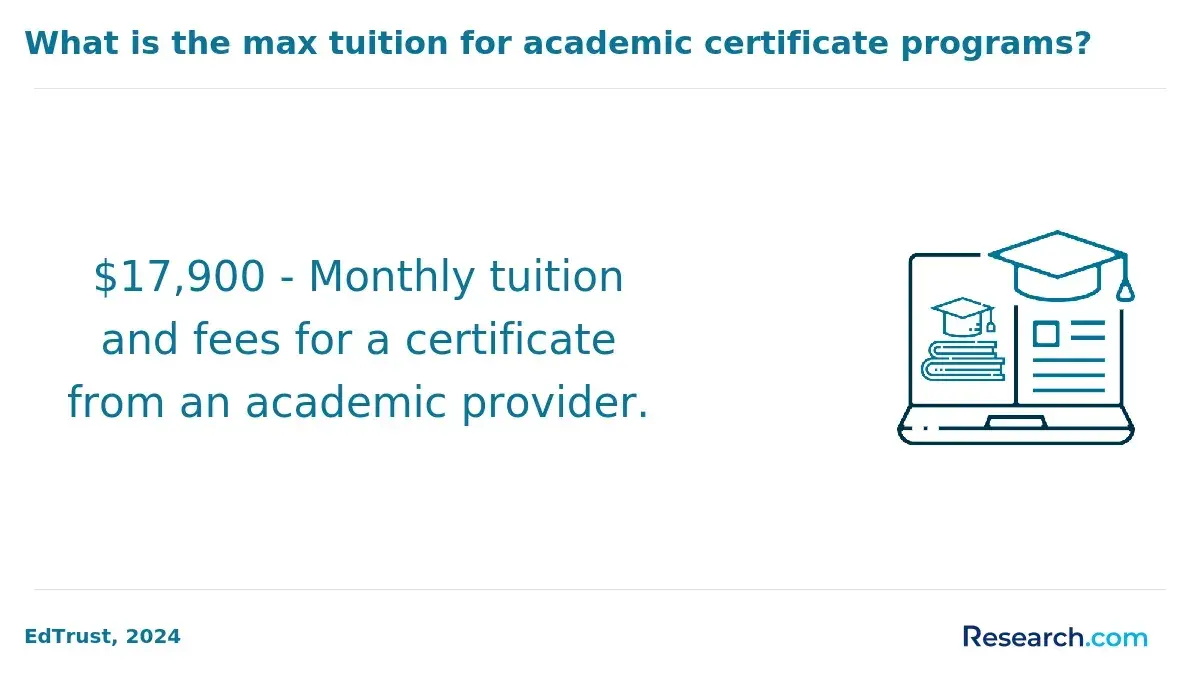
- Financial aid and employer benefits: Scholarships, federal aid, state aid, institutional grants, and employer tuition reimbursement can reduce out-of-pocket cost, but eligibility must be confirmed before enrollment.
One professional who completed a self-paced online business administration bachelor's degree said the subscription model worked because her schedule changed week to week. "It felt like I was paying for flexibility, which was essential since my schedule changed week to week," she explained. She found the upfront fees manageable compared with traditional semester costs but warned that students must plan carefully. "I appreciated being able to accelerate through familiar courses but had to stay disciplined to not let time slip away," she added.
What Financial Aid Options Are Available for Self-Paced Online Business Administration Bachelor's Programs?
Financial aid may be available for accredited self-paced online business administration bachelor's programs, but students should verify eligibility before enrolling. The key issues are institutional accreditation, program structure, enrollment status, academic progress rules, and how the school measures completed coursework.
Federal student aid is typically tied to recognized accreditation and eligible programs. In competency-based education models, schools may convert competencies into credit-hour equivalents or use specific federal aid frameworks. This can affect when aid is disbursed and what academic progress requirements students must meet.
- Federal aid: Eligible students may be able to use federal aid if the institution and program qualify. FAFSA requirements, enrollment intensity, and satisfactory academic progress rules still apply.
- State aid: State programs vary widely. Some have residency requirements, calendar-based rules, or restrictions that may not fit every self-paced format.
- Institutional scholarships and grants: Colleges may offer aid for online learners, adult students, transfer students, military-affiliated students, or business majors.
- Professional scholarships: Organizations connected to business and management, including the American Management Association and the National Black MBA Association, may offer scholarship opportunities for eligible students.
- Employer tuition assistance: Working adults should ask whether their employer offers reimbursement, direct billing, or education benefits for business-related degrees.
The College Board's recent Trends in Student Aid report highlights a 3% increase in average undergraduate grant aid, reflecting continued attention to grant support for students, including those in online and flexible programs. Because self-paced scheduling can change when coursework is considered complete, students should ask the financial aid office exactly how aid is awarded, disbursed, and renewed.
How Do Competency-Based Education (CBE) Models Work in Self-Paced Online Business Administration Programs?
Competency-based education (CBE) measures what students can demonstrate rather than how many weeks they spend in class. In a self-paced online business administration program, students progress by proving mastery of defined competencies in areas such as accounting, management, finance, marketing, operations, communication, business ethics, and strategic decision-making.
CBE programs commonly use assessments such as projects, case studies, simulations, presentations, written analyses, objective exams, or portfolios. A student with prior business experience may move quickly through familiar topics, while a student new to finance or quantitative analysis may need more time before attempting assessments.
For financial aid purposes, many CBE programs convert competencies into credit-hour equivalents. Direct assessment CBE programs may evaluate mastery without translating each requirement into a traditional credit hour, which can affect tuition structure and aid administration. Students should ask the school how the program appears on transcripts, how credits are awarded, and how financial aid eligibility is determined.
- Mastery-based progress: Students advance after demonstrating required knowledge and skills, not simply after completing a fixed number of weeks.
- Flexible pacing: Learners may accelerate through subjects they already understand and slow down for difficult material.
- Assessment variety: Business CBE programs may use projects, simulations, exams, and applied assignments tied to workplace scenarios.
- Mentor or coach support: Many programs assign faculty mentors, academic coaches, or evaluators to guide progress and clarify expectations.
- Employer relevance: CBE can be attractive when assessments clearly map to workplace skills, though employer recognition still depends on the institution's reputation and accreditation.
Examples of self-paced online business administration programs using CBE models include Western Governors University, Southern New Hampshire University, and Capella University's FlexPath. A recent survey indicates an 18% growth in CBE program enrollment, reflecting demand for flexible, competency-driven education. Students considering this format should be honest about their motivation, time management, and comfort with independent learning.
What Accreditation Should a Self-Paced Online Business Administration Bachelor's Program Hold?
A self-paced online business administration bachelor's program should be offered by an institution with recognized accreditation. Accreditation affects credit transfer, federal financial aid eligibility, employer recognition, and admission to graduate programs. It is one of the first details students should verify.
Regional accreditation is generally the most widely recognized form of institutional accreditation for degree-granting colleges and universities. The six regional accrediting bodies are the Middle States Commission on Higher Education (MSCHE), New England Commission on Higher Education (NECHE), Higher Learning Commission (HLC), Northwest Commission on Colleges and Universities (NWCCU), Southern Association of Colleges and Schools Commission on Colleges (SACSCOC), and Western Association of Schools and Colleges Senior College and University Commission (WSCUC).
National accreditation may be legitimate, but it is often associated with vocational, technical, or religious institutions. Credits from nationally accredited schools may not transfer as easily to regionally accredited institutions, and some graduate programs or employers may view them differently. Students should not assume that all accreditation carries the same practical value.
Programmatic accreditation can add another layer of quality assurance for business programs. Organizations such as the Accreditation Council for Business Schools and Programs (ACBSP) and the Association to Advance Collegiate Schools of Business (AACSB) review business curricula, faculty qualifications, outcomes, and continuous improvement processes. Programmatic accreditation is not always required, but it can be valuable for students comparing business schools.
- Regional accreditation: Usually offers the broadest recognition for transfer credit, graduate study, and employer acceptance.
- National accreditation: May be valid but can create transfer or recognition limitations depending on the student's future plans.
- Programmatic accreditation: AACSB or ACBSP accreditation can signal stronger business-specific review.
- Unaccredited programs: These carry major risks, including limited credit transfer, possible financial aid ineligibility, and weaker employer recognition.
- Verification: Students should confirm accreditation through the U.S. Department of Education's accreditation database or the Council for Higher Education Accreditation (CHEA) directory before applying.
Accreditation is also important for students who may later pursue graduate education, including options such as a 1 year online masters in human resources.
How Many Transfer Credits Can Be Applied Toward a Self-Paced Online Business Administration Bachelor's Degree?
Many self-paced online business administration bachelor's programs are designed to maximize usable transfer credit. Some highly flexible programs allow up to 90 transfer credits, which can significantly reduce the number of remaining courses for students who already have college credit.
Transfer credit policies vary by institution. A school may accept a credit on the transcript but apply it only as an elective, not toward a major, general education, or upper-division requirement. That distinction affects both cost and completion time.
- Maximum credit transfer: Some self-paced programs allow up to 90 transfer credits, which can help students with substantial prior coursework finish faster.
- Community college credits: Regionally accredited community college coursework is commonly accepted, especially when covered by articulation agreements.
- Military and ACE credits: Many schools evaluate military training using American Council on Education (ACE) recommendations.
- Professional certifications: Some business, technology, management, or industry credentials may be reviewed for credit if they align with degree outcomes.
- Prior learning assessments: Portfolio review, exams, or documented workplace learning may reduce remaining requirements.
Before enrolling, request a formal transfer credit evaluation in writing. Ask which credits apply to the major, which apply to general education, which count as electives, and how many credits must be completed at the degree-granting institution. Without this evaluation, students may overestimate how close they are to graduation and underestimate total tuition.
Students interested in combining business knowledge with technical or sustainability-focused fields may also compare options such as an online environmental engineering degree when planning long-term academic goals.
Can Students Earn Credit Through Prior Learning Assessment in Self-Paced Online Business Administration Programs?
Yes. Many self-paced online business administration programs allow students to earn credit through prior learning assessment (PLA). PLA evaluates college-level learning gained through work, military service, professional training, industry certifications, independent study, or other documented experience.
PLA is especially useful for adult learners with management, sales, operations, accounting, human resources, logistics, entrepreneurship, or military leadership experience. However, credit is not awarded simply for having work experience. Students must show that their learning matches specific course outcomes.
- Portfolio assessment: Students submit evidence such as work samples, training records, job descriptions, reflective essays, licenses, certificates, and supervisor verification.
- Challenge exams: Some schools allow students to test out of specific courses by passing an internal exam.
- Standardized exams: CLEP and DSST exams may provide credit for approved subjects.
- ACE-reviewed learning: Military training and some professional programs may be evaluated using American Council on Education credit recommendations.
- Advisor support: Academic advisors can help students identify which experiences are likely to translate into credit.
Western Governors University, Thomas Edison State University, and Excelsior College are recognized for accommodating substantial PLA credits, typically between 30 and 60 credits depending on the institution. Students should confirm credit limits, fees, documentation standards, appeal procedures, and how PLA credits apply to major requirements.
Approximately 70% of adult learners now utilize PLA options to accelerate degree completion. To improve the likelihood of approval, organize documentation carefully and connect each experience to measurable business competencies, not just job duties.
What Concentrations or Specializations Are Available in Self-Paced Online Business Administration Bachelor's Programs?
Self-paced online business administration programs may offer concentrations that help students align the degree with a specific career direction. In 2026, some programs structure concentrations as competency clusters, specialized badges, or micro-credentials that appear on the transcript or supplement the degree record.
Concentration availability varies by school, and not every self-paced program offers the same level of specialization. Students should compare curriculum maps, elective options, certification alignment, and whether concentration courses are also self-paced.
- Marketing: This concentration can support roles in digital marketing, brand management, market research, and customer strategy. Median salaries are around $65,000 annually. Optional certifications in areas such as social media marketing may strengthen job prospects without necessarily extending the degree timeline.
- Financial management: Coursework commonly covers corporate finance, budgeting, investment analysis, and financial decision-making. It can prepare graduates for roles such as financial analysts with median salaries near $131,000. Credentials such as the CFA or CPA often require additional study beyond the bachelor's degree.
- Human resources management: This track emphasizes recruitment, employee relations, benefits, training, compliance, and organizational development. It aligns with careers offering median salaries between $63,000 and $121,000. Certifications such as SHRM-CP or PHR may require further preparation.
- Supply chain and operations management: Students study logistics, procurement, production planning, quality improvement, and process management. This area has median wages around $77,000. Some employers may prefer credentials such as APICS CPIM or CSCP.
- Entrepreneurship: This pathway focuses on business planning, innovation, opportunity analysis, funding, and small business operations. Earnings vary considerably because outcomes depend on the venture, industry, and market conditions.
The best concentration is not always the one with the highest salary figure. Students should consider their existing experience, local and remote job opportunities, tolerance for quantitative coursework, interest in professional certification, and whether the specialization supports a clear next career step.
What Graduates Say About Self-Paced Online Business Administration Bachelor's Degree Programs
- : "Choosing a self-paced online business administration bachelor's degree was perfect for me because it offered the flexibility to balance work and study without feeling overwhelmed. The affordable tuition compared to traditional programs made it an accessible option, allowing me to invest in my future without financial strain. Since graduating, I've noticed a significant boost in my management skills and career opportunities-definitely a worthwhile investment. Conrad"
- : "Reflecting on my experience, the self-paced online business administration program stood out because it let me tailor the learning schedule around my busy life. The cost was reasonable, especially for the quality of education received, which helped me avoid long-term debt. Professionally, it opened doors to leadership roles I hadn't imagined possible before, making the journey both transformative and practical. Walker"
- : "My main reason for pursuing a self-paced online business administration degree was to advance my career without putting it on hold. The cost-effectiveness of the program was a huge factor-being able to manage expenses while learning was a relief. Achieving this degree remotely didn't just add a credential; it enhanced my confidence and networking skills in the corporate world. Joseph"
Other Things You Should Know About Business Administration Degrees
Many self-paced programs require remote proctoring or approved testing centers for major exams. Students usually must present a government-issued photo ID, keep webcams on, and follow a no-notes, no-phone policy. Some schools also set time windows of 24 to 72 hours for scheduling each proctored assessment.
Enrolling students need a reliable internet connection and a computer with up-to-date operating systems and software like Microsoft Office for coursework. Some programs may also require specific applications or hardware for virtual lectures and interactive assignments.
Self-paced online Business Administration bachelor's programs in 2027 often utilize project-based assessments, quizzes, and interactive coursework rather than traditional exams. These methods evaluate students' practical skills and understanding, offering flexibility to demonstrate competence in real-world business scenarios.
References
- How long does it typically take to complete the online MBA Business Administration program? https://www.lsib.co.uk/2022/answers.aspx
- affordable online business administration degree 2025 https://www.accio.com/biz-cheap/affordable-online-business-administration-degree
- Financial Aid For Online Colleges https://www.affordablecollegesonline.org/financial-aid/financial-aid-for-online-colleges/
- How Long Does it Take to Complete an Online Bachelor's in Accounting? https://www.master-of-finance.org/faq/how-long-does-it-take-to-complete-an-online-bachelors-in-accounting/
- Choosing a bachelor's in business administration | edX https://www.edx.org/resources/how-to-choose-a-bachelors-in-business-administration
- Explore Top Online BBA Programs | AccreditedSchoolsOnline.org https://www.accreditedschoolsonline.org/business/bachelors/
- Online Degree vs. Traditional: Choosing the Right Path https://beal.edu/online-degree-vs-traditional/
- Online Business Administration Bachelors Degree Programs https://www.distance-learning-college-guide.com/business-administration-bachelors.html
- A Guide to Accredited Online Business Administration Programs https://www.aiuniv.edu/degrees/business/articles/a-guide-to-accredited-online-business-administration-programs
- Online vs. Traditional Business Administration Degrees: What’s Best for You? | UAGC https://www.uagc.edu/blog/online-vs-traditional-business-administration-degrees-whats-best-you