2027 Online MS in Psychology - Forensic Psychology After a BS in Homeland Security: Compare Prerequisites and Admission Options
Audited and Verified:
Our Editorial and Data Verification Process
Research.com uses government datasets, official education statistics and primary institutional information to support its career and degree guides. Our review process checks factual accuracy, occupational definitions, source dates and the requirements associated with the credentials discussed.
How This Article Was Fact-Checked
Our editorial team verifies salary estimates, employment projections, education requirements and program information against original data providers and official organizations. Salary figures are checked against the relevant occupational definitions and reporting periods. Information about licensure, accreditation and required in-person training is reviewed separately.
Fact-checked and verified on:

Co-Founder and Chief Data Scientist
A BS in homeland security can provide a relevant foundation for forensic psychology, but it may not cover the psychology and research courses a master's program expects. To move from security or justice work into behavioral research, victim services, or another psychology-related role, the admissions details matter more than the degree title alone.
This guide shows you how to compare prerequisites, bridge missing coursework, evaluate online programs, and determine whether the degree fits your career goal. Alternatively, you may find a more direct route serves you better.
Key Things You Should Know
- A homeland security bachelor's degree does not automatically disqualify you; programs differ on whether psychology coursework is required before admission or can be completed after enrollment.
- Compare your transcript against each program's psychology, statistics, and research-methods requirements - not just its list of accepted undergraduate majors.
- An online forensic psychology MS is generally a nonclinical degree; it does not, by itself, qualify you for psychologist licensure, forensic evaluations, or investigative authority.
Can you earn an online MS in forensic psychology after homeland security?
Yes, potentially. A BS in homeland security may meet a program's bachelor's-degree requirement, while its courses in emergency management, intelligence, criminal justice, or public policy provide useful context for studying behavior in legal and security settings. Admission still depends on the individual program's accepted majors, prerequisites, GPA policy, and review of your application.
The important distinction is between relevant experience and psychology preparation. An analysis of threats or institutional risk may demonstrate strong reasoning, but it does not necessarily substitute for psychological research methods or statistics. Likewise, a forensic psychology degree studies behavior in legal contexts; it does not confer law-enforcement powers.
If you are considering another undergraduate degree solely because your first major was homeland security, ask graduate admissions whether targeted prerequisites would suffice. If a second bachelor's is genuinely necessary for your longer-term plans, a psychology transfer credit acceptance guide can help you frame questions about how prior coursework would apply.
What prerequisites do online forensic psychology master's programs require?
There is no universal prerequisite list. Some programs consider applicants from any accredited bachelor's discipline; others specify psychology credits or ask applicants without a psychology major to complete foundational courses. Read the requirements for the exact degree and entry term, including whether a course must be finished before applying or merely before starting.
This comparison separates common admissions categories from preparation that may strengthen a homeland security graduate's application. Neither column replaces a school's official policy.
| Course or evidence | Why it matters | What to verify |
| Introductory psychology | Establishes vocabulary and major areas of psychological science | Required course, accepted equivalent, or recommended preparation? |
| Statistics or quantitative analysis | Supports interpretation of behavioral research | Will statistics taken in another department count? |
| Psychological research methods | Prepares students to evaluate study design and evidence | Is a general social-science methods course equivalent? |
| Advanced psychology coursework | May support study of development, psychopathology, or social behavior | Are particular subjects required, or can they be taken in the MS? |
| Academic and professional evidence | Shows readiness beyond course titles | How are GPA, writing, recommendations, and relevant work assessed? |
A criminal justice course titled "criminal behavior" is not automatically equivalent to abnormal psychology. Send syllabi to the program when course titles obscure their content, and request a written prerequisite assessment. For most applicants missing a few courses, individual classes are a more focused first step than comparing accelerated psychology degree options.
What are the admission options for students without a psychology degree?
Your options generally fall into three categories: apply to a program that accepts varied majors, complete specified courses before admission, or pursue a program that permits approved foundation courses after admission. Conditional admission or a prerequisite waiver is possible only where the institution offers it; relevant employment is not an automatic substitute for academic requirements.
Build an application that connects your background to a defined question or role. For example, experience reviewing security incidents may support an interest in how organizations assess risk, but your statement should acknowledge the psychological methods you still need to learn. A supervisor who can describe your analytical writing, ethical judgment, and work with sensitive information may provide more useful evidence than a generic recommendation.
For an efficient comparison, follow this sequence:
- Choose a target outcome, such as justice-system research support or victim-services coordination.
- Request a transcript-based prerequisite review from each shortlisted program.
- Ask which missing courses can be taken elsewhere and whether written preapproval is required.
- Confirm application deadlines, GPA rules, recommendations, writing requirements, and any test or interview policy.
- Compare admission conditions and total coursework before paying a deposit.
If a forensic specialization is not essential to your goal, accelerated online master's degrees in psychology provide another category to investigate. Check each program's actual curriculum and admissions rules rather than assuming a general MS will accept fewer prerequisites.
Accreditation applies at different levels. First, verify the institution's recognized institutional accreditation and that the specific online MS is offered by that institution. Do not assume that the American Psychological Association accredits a nonclinical forensic psychology master's: APA accreditation focuses on covered professional psychology doctoral programs and training experiences, not every psychology degree.
Accreditation also does not establish that a curriculum meets a state's licensing requirements. If a school advertises a professional pathway, request its written disclosure for your state and verify the claim with the relevant licensing board. For a broader forensic psychology program review before enrollment, compare the exact degree awarded, prerequisite policy, learning opportunities, and reported outcomes - not accreditation language alone.
Curricula vary, but a nonclinical program may combine psychology research methods and statistics with topics such as psychology and law, social behavior, violence, victimization, correctional settings, and the ethical limits of psychological evidence. A thesis, capstone, or applied project may be available or required; confirm which option your intended program actually offers.
For a homeland security graduate, the most valuable coursework may be the material least familiar from the BS: evaluating behavioral studies, understanding measurement limits, and distinguishing evidence from assumptions about risk or credibility. A course discussing psychological assessment does not authorize you to administer restricted tests or conduct forensic evaluations.
Check whether electives match your target function. Substance-use education, for instance, may inform justice-system or community work, but it is not the same credential as a counseling degree. If addiction-service work is your primary aim, compare that curriculum and its state-specific credential implications with alternatives such as budget-friendly substance abuse counseling bachelor's study before committing to a forensic MS.
Duration depends on required credits, course availability, enrollment pace, and any prerequisites you must complete first. A program's advertised fastest completion time may assume continuous full-time study. Ask for a term-by-term plan based on your transcript and intended schedule, including when methods courses, capstones, or placements are offered.
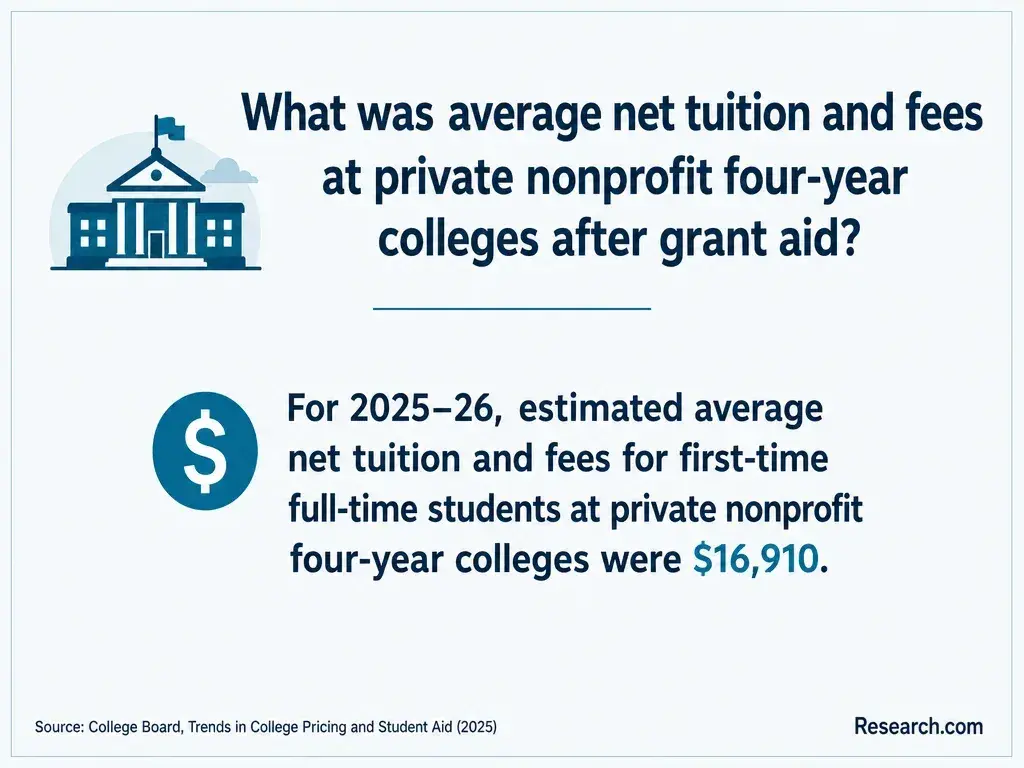
Calculate cost from published tuition and mandatory fees for your expected credit load, then add foundation coursework, books, technology, potential travel, and any unpaid applied experience. Request a personalized estimate rather than treating a per-credit rate as the complete price. Employer education assistance may matter for public-sector workers, but eligibility and repayment conditions depend on the employer.
If speed is a priority, evaluating faster-paced forensic psychology master's degrees can help you identify scheduling questions; it cannot replace checking your own prerequisite-related delays.
Online delivery can reduce commuting and make continued employment more feasible, but it does not guarantee asynchronous classes or flexible deadlines. Campus study may offer easier access to on-site research teams and local professional contacts; either format may still require you to arrange an approved project or placement.
Compare formats using your actual weekly availability. Ask about live sessions, group meetings, campus visits, research supervision, and whether the school helps online students locate appropriate nonclinical experiences. If you are comparing this degree with a clinical counseling program, note that counseling training has different supervised-practice requirements: comparing clinical counseling master's completion times is not an equivalent comparison of forensic MS scheduling.
For someone with homeland security experience, the strongest fit may be an adjacent move rather than a complete career reset: research or program support in a justice agency, victim-services coordination, corrections program administration, or policy and training work involving behavioral evidence. Hiring depends on the employer's job description, your prior experience, and any required clearance or separate credential - not the MS title alone.
Choose the degree by comparing the work you want to do with the evidence an employer will expect. An analytical role may value statistics, research design, and a well-supervised capstone; a victim-services role may place greater weight on direct service experience, referral knowledge, and confidentiality. Neither route makes a graduate a forensic psychologist or gives them authority to investigate crimes.
If the desired job is primarily addiction-service support rather than forensic research or justice administration, a targeted credential or supervised work experience may be more direct. Compare its education requirements and costs separately rather than assuming forensic specialization covers them.
If you are weighing a less expensive undergraduate route into addiction services instead, compare its separate aid rules through this guide to undergraduate substance abuse counseling education funding.
Generally, a nonclinical forensic psychology MS does not independently qualify someone for psychologist licensure. Licensed psychologists typically follow a jurisdiction-specific doctoral, supervised-experience, and examination pathway. A master's course on diagnosis or testing does not confer permission to diagnose, provide psychotherapy, or conduct independent forensic assessments.
If your goal is licensed counseling rather than psychology research in legal settings, investigate a program designed for that credential and obtain written confirmation of how it aligns with your state's educational rules. Evaluating shorter mental health counseling graduate pathways is a separate decision from choosing a forensic MS; supervised clinical training and licensure steps still matter regardless of advertised speed.
What are the salary and job outlook for forensic psychology graduates?
There is no single reliable salary or employment-growth figure for "forensic psychology MS graduates." Federal occupational statistics track defined jobs, not graduates of a concentration. A psychologist wage figure is especially misleading here because a nonclinical MS does not by itself qualify its holder for that occupation.
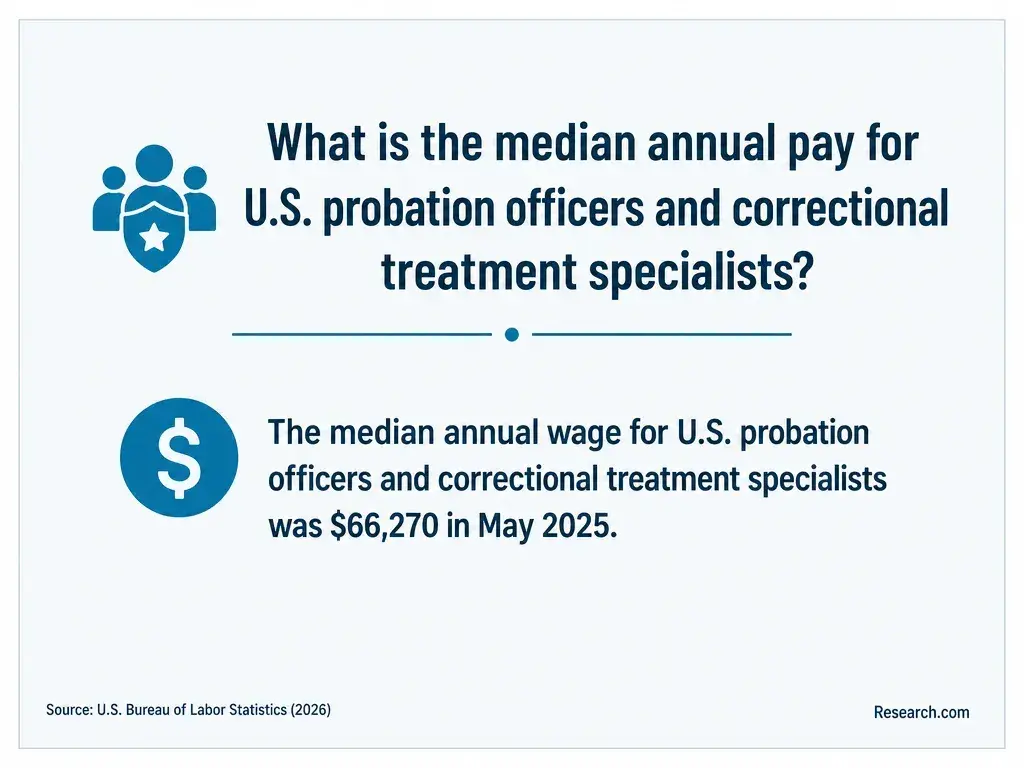
For a useful comparison, identify the job titles you would actually seek, then consult the most recent U.S. Bureau of Labor Statistics occupation-specific wage and projection data alongside local postings. Check each posting's education, experience, clearance, and credential requirements. A current public-sector salary band may tell you more about the return on this degree than a national median for a broader occupation.
Compare likely pay changes against your full education cost and any earnings you would forgo. If your real objective is licensed counseling, assess that distinct program's costs - including supervised training - rather than using forensic MS outcomes as a proxy; a guide to paying for an online mental health counseling degree addresses that alternative financial decision.
Other Things You Should Know About Psychology
Yes, if a course title does not clearly show its psychology, statistics, or methods content. Ask admissions how to submit it and who decides equivalency.
Often. Choose someone who can give specific examples of your analytical work, writing, judgment, and handling of sensitive information, subject to the program's recommender rules.
Not without the required agency permission and university approval. Discuss access, confidentiality, and a feasible alternative with a faculty supervisor before proposing the project.
A thesis may offer stronger evidence of independent research, but its value depends on the doctoral program and the quality of your work. Ask prospective programs what research preparation they expect.
- Eligibility Requirements | Federal Student Aid https://studentaid.gov/understand-aid/eligibility/requirements
- Cost of Attendance (Budget) | 2025-2026 Federal Student Aid Handbook https://fsapartners.ed.gov/knowledge-center/fsa-handbook/2025-2026/vol3/ch2-cost-attendance-budget
- How to Become a Licensed Psychologist | Texas Behavioral Health Executive Council https://bhec.texas.gov/texas-state-board-of-examiners-of-psychologists/applying-for-a-psychology-license/how-to-become-a-licensed-psychologist/
- Master's in Counseling Psychology at KU Program Details https://epsy.ku.edu/academics/counseling-psychology/masters/details
- Graduate Prerequisites - Department of Psychology https://csm.fresnostate.edu/psych/degrees-programs/graduate/overview/types.html
- Academics: Section 4: Academic Calendar, Admission, and Enrollment: Admission Requirements https://academics.waldenu.edu/handbook/registration-admission-enrollment/admission-requirements
- Master's Degree in Criminal Justice or Forensic Psychology? | ASU Online https://asuonline.asu.edu/newsroom/asu-online-news/masters-of-criminal-justice-or-forensic-psychology/
- What you need to know to get licensed | apa.org https://www.apa.org/gradpsych/2004/01/get-licensed