2027 Online BA in Psychology - Mental Health Admissions with a Reentry Education Background: What to Ask Before Applying

Co-Founder and Chief Data Scientist
If you studied psychology years ago - or earned credits in another field - an online BA with a mental health focus may look like a practical route back to school. The risk is enrolling before you know which old credits satisfy the degree, whether the schedule fits your life, and whether the program supports your intended job or graduate application.
This guide is for returning students comparing those trade-offs. It identifies the questions to put to admissions, the registrar, and academic advisers before you commit.
Key Things You Should Know
- Ask for a written degree audit: credits accepted for transfer are not necessarily credits that satisfy psychology, general education, or graduation requirements.
- Confirm reentry rules and course sequencing before estimating your finish date; old statistics or methods coursework may need an equivalency review.
- A mental health focus can support nonclinical work or later applications, but a psychology BA does not qualify you to diagnose conditions or provide psychotherapy.
What Is an Online BA in Psychology for Mental Health Careers?
An online BA in psychology is an undergraduate degree in psychological science. A mental health focus may be an official concentration, a set of electives, or simply a program description; those are not interchangeable credentials. Ask which designation, if any, appears on the transcript and what coursework it requires.
For a returning student, the useful distinction is between learning about mental health and qualifying to deliver clinical care. Coursework may examine psychological disorders, development, research, and service systems. The BA alone does not authorize assessment, diagnosis, or therapy. When choosing an online psychology program, compare the published degree requirements with your prior coursework and target role - not just the focus named in its marketing.
Can a Psychology Bachelor's Degree Lead to Mental Health Admissions?
Yes, a psychology BA can provide academic preparation for applications to mental health-related graduate programs. It is not automatic admission. Counseling, social work, clinical psychology, and other professional pathways set their own prerequisites, experience expectations, and credential requirements. Ask a prospective graduate program whether your intended BA coursework meets its specific entry requirements before choosing undergraduate electives.
If your goal is substance-use counseling rather than broad psychology study, compare academic routes into addiction counseling with your state's credential rules. A psychology BA may be useful preparation, while a more directly aligned program or credential may better fit the role. Your previous service experience can strengthen an application without replacing required courses or supervised training.
What Accreditation Should an Online Psychology Bachelor's Program Have?
Verify that the institution holds recognized institutional accreditation and that it applies to the school awarding your online degree. Confirm its status with the accreditor and the U.S. Department of Education's accreditation records, particularly if you expect to transfer again or apply to graduate school.
Do not look for APA accreditation as a test of an ordinary psychology BA: APA accreditation covers specified professional psychology programs and training, not general bachelor's majors. The same distinction matters when considering accredited online pathways in forensic psychology; accreditation establishes neither a concentration's clinical scope nor eligibility for a future license. Ask the graduate program or state board governing your intended next step what recognition it requires.
"Reentry" can mean resuming study at your former institution or applying as a transfer student elsewhere. Those routes may have different readmission forms, catalog-year rules, academic-standing reviews, and financial-aid consequences. Your former school's registrar decides how you return there; a new school has final authority over its own transfer evaluation.
Before applying, assemble transcripts from every prior institution, course descriptions or syllabi for disputed psychology and statistics courses, and any documentation for nontraditional learning. Use the questions below to obtain decisions you can compare across schools:
- Will I return under my old catalog or the current one, and who confirms that in writing?
- Which credits are accepted, and which satisfy general education, psychology-major, prerequisite, and residency requirements?
- Will you review an older statistics or research-methods course for equivalency, recency, or a written substitution?
- How can I appeal an evaluation, and when will a complete degree audit be available?
- Will my previous grades or withdrawals affect readmission, satisfactory academic progress, or aid eligibility?
An associate degree, applied coursework, military learning, or prior work experience may be evaluated differently across institutions. For help framing a comparison, see transfer credit reviews for psychology applicants; only the receiving school can tell you what will count toward your degree.
Expect psychology foundations alongside research methods and statistics, with offerings such as developmental, social, biological, and abnormal psychology. A mental health focus may add courses on psychopathology, addiction, prevention, or community services. Check the actual catalog: a course on counseling theories teaches subject matter, not permission to counsel clients.
For reentry planning, course sequence matters more than the elective list. Ask whether statistics precedes research methods, whether a capstone has prerequisites, and how often each required online course runs. If graduate study is your aim, compare those undergraduate foundations with prospective programs' prerequisites; accelerated graduate psychology course sequencing is a separate consideration and will not repair a missing undergraduate prerequisite by itself.
Your remaining requirements - not the number of credits a school initially accepts - determine your timeline. A returning student may have substantial elective credit yet still need a sequence of major courses, general education, and credits completed at the degree-granting institution. Request a term-by-term plan showing when each required course is offered and what happens if you study part-time or pause enrollment.
Ask whether "asynchronous" courses have fixed weekly deadlines, live meetings, group work, or in-person requirements. If a field experience is offered or required, establish who finds the site and whether your current job could qualify; employment is not automatically an approved placement. Claims about forensic psychology master's study with faster pacing concern a different degree level and should not be used to estimate BA completion.
Compare the cost to finish, not advertised tuition alone. Ask each school for its current per-credit or per-term charges, mandatory online fees, remaining required credits, and the cost of any courses you must repeat. Add books, technology, travel for any in-person obligation, and possible lost earnings from changing work hours. An official degree audit makes this comparison far more meaningful than a published full-program price.
Ask the financial-aid office how prior enrollment affects eligibility and satisfactory academic progress, and whether your planned course load qualifies for the aid you expect. If addiction services are your target, a comparison of substance use counseling undergraduate tuition versus salary outlook may help frame alternatives - but verify local credential requirements before treating a lower tuition figure as better value.
Institutional admission, permission to enter the psychology major, and reentry after a break can be separate decisions. Schools may request prior transcripts, evidence of good standing, or a statement addressing earlier academic difficulties; requirements and deadlines vary. Ask admissions which applicant category applies to you, then ask the psychology department whether the major has its own entry or prerequisite rules.
Do not confuse BA entry with later graduate admissions. For example, forensic psychology graduate study in an intensive format can have different prerequisites and workload expectations. If that is your eventual goal, obtain its current admission criteria separately rather than assuming undergraduate acceptance establishes graduate eligibility.
Depending on employer requirements and your experience, a psychology BA can support applications for nonclinical roles in community services, behavioral-health program support, intake and referral, research assistance, or victim services. Duties may include documentation, coordinating resources, collecting approved research data, and working within a supervisor's procedures. Relevant prior employment can be as important as the new degree when an employer assesses readiness.
Start with job postings for the role and location you want: identify required credentials, software or documentation skills, and supervised experience. Then ask whether the BA fills a real gap or whether targeted training and experience would be more direct. A licensed counselor or psychologist follows a different educational and supervised-practice pathway. Likewise, discussions of higher-paying career paths after forensic psychology graduate study should not be read as outcomes available simply from completing a BA.
What Salary and Job Outlook Can Psychology Bachelor's Graduates Expect?
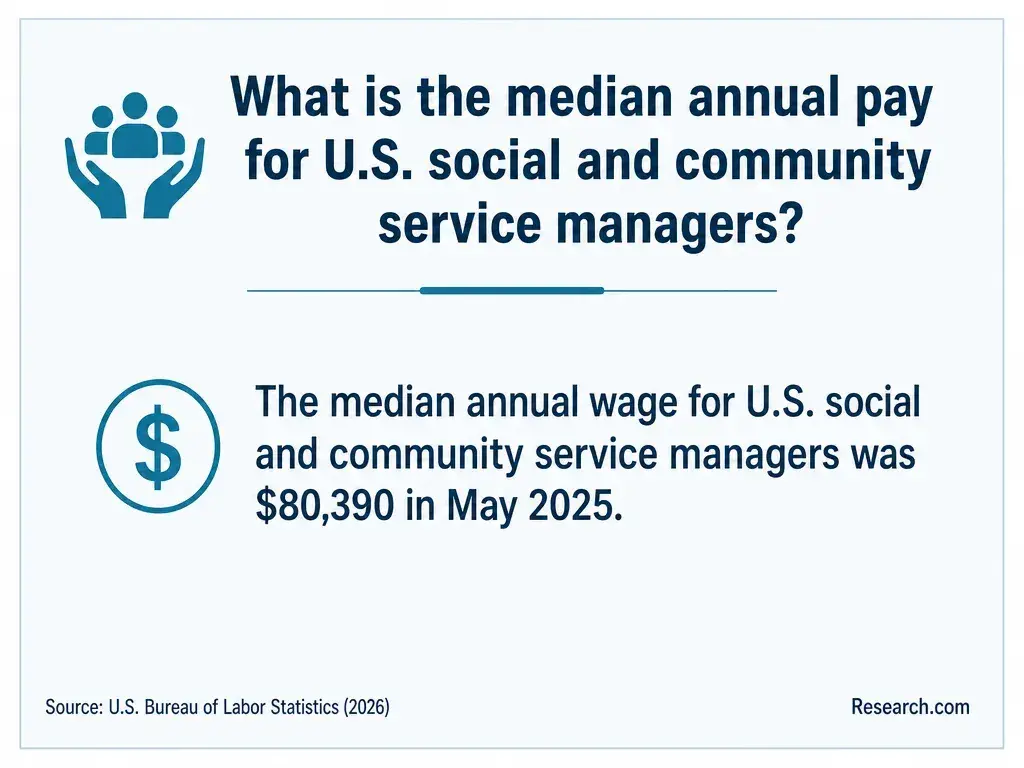
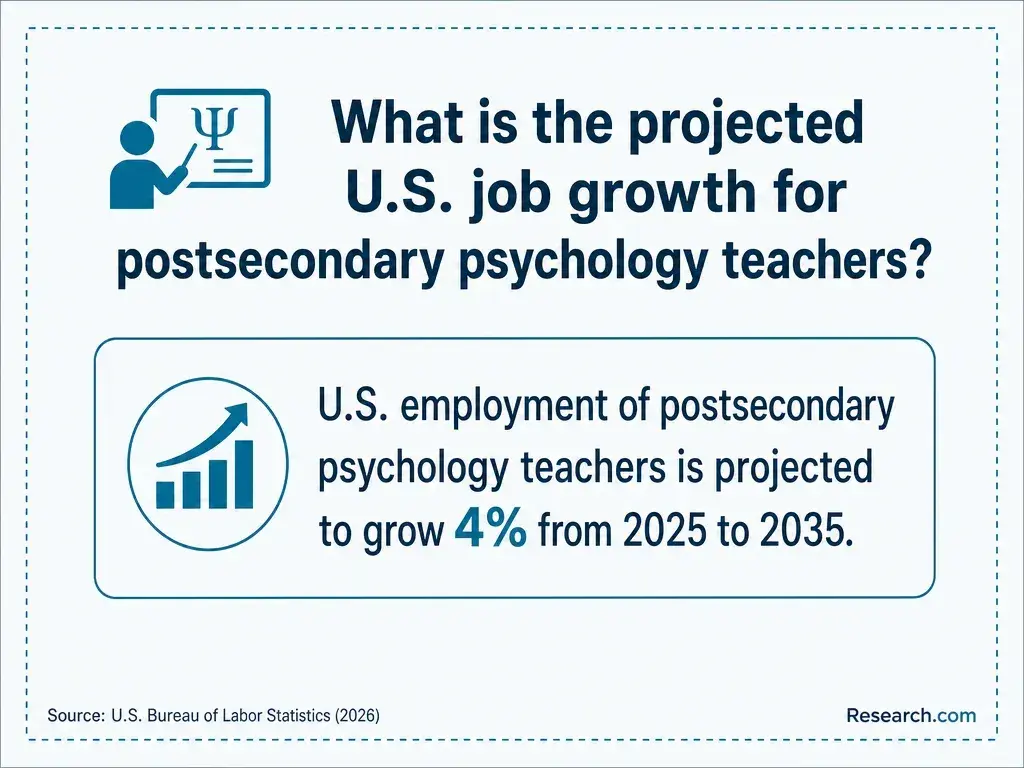
There is no single salary or job-growth rate for "psychology BA graduates": they enter occupations with different duties, qualifications, and pay. For a defensible comparison, identify a specific target occupation, then check the latest U.S. Bureau of Labor Statistics Occupational Outlook Handbook entry for its national median pay, projection period, and typical entry requirements. A national occupational median is not a starting offer or a graduate outcome for a particular school.
For a returning student, the financial question is whether the degree changes access to the specific jobs available in your area enough to justify its remaining cost and time. Compare local postings and pay ranges with your current options. If your goal requires a counseling graduate degree, include that additional training when evaluating the net cost of counseling education; stopping the calculation at BA tuition would understate the pathway.
Other Things You Should Know About Psychology
If the application invites an explanation, briefly describe the circumstances, what has changed, and how you will manage study now. Follow the school's instructions rather than sending an unsolicited personal history.
Only if the program approves the site, supervision, duties, and learning objectives. Ask before relying on your job to meet a degree requirement.
No. Naming a possible next program helps you choose courses, but you can first request a degree audit and evaluate the cost of finishing the BA.
Ask its registrar or department for an archived description. Submit whatever official documentation is available and ask the receiving school what alternative evidence it accepts for an equivalency review.
- Cost of Attendance (Budget) | 2025-2026 Federal Student Aid Handbook https://fsapartners.ed.gov/knowledge-center/fsa-handbook/2025-2026/vol3/ch2-cost-attendance-budget
- .14 Evaluation and Review Process for Transfer of Courses and Credits. | Library of Maryland Regulations https://regs.maryland.gov/us/md/exec/comar/13B.06.02.14
- Tuition & cost of attendance | UC Admissions https://admission.universityofcalifornia.edu/tuition-financial-aid/tuition-cost-of-attendance/
- Supports for Students with Conviction Records | The City University of New York https://www.cuny.edu/academics/current-initiatives/civic-engagement/support-student-conviction-records/
- Criminal Background Check | Towson University https://www.towson.edu/chp/careersupport/backgroundcheck/
- Credit for Prior Learning: Future Students | Dawson Community College https://www.dawson.edu/future-students/credit-for-prior-learning.html
- Transcript Requirements & Evaluation | Valencia College https://catalog.valenciacollege.edu/admissions/generaladmissionrequirements/
- Credit for Prior Learning Pathways | Midland University Catalog https://grad.catalog.midlandu.edu/academicpolicies/cpl