2027 Online BA in Psychology - Mental Health for College Student Wellbeing Programs: Which Courses Should You Look For?
Audited and Verified:
Our Editorial and Data Verification Process
Research.com uses government datasets, official education statistics and primary institutional information to support its career and degree guides. Our review process checks factual accuracy, occupational definitions, source dates and the requirements associated with the credentials discussed.
How This Article Was Fact-Checked
Our editorial team verifies salary estimates, employment projections, education requirements and program information against original data providers and official organizations. Salary figures are checked against the relevant occupational definitions and reporting periods. Information about licensure, accreditation and required in-person training is reviewed separately.
Fact-checked and verified on:

Co-Founder and Chief Data Scientist
If you want to help colleges improve student wellbeing, the most useful psychology BA is not necessarily the one with the most mental health electives. You also need to understand young adult development, evaluate evidence, communicate responsibly, and work within the boundaries of a nonclinical role.
This guide is for prospective and current online psychology students choosing courses for campus outreach, peer programs, and student support. It shows which classes to prioritize, what practical experience to seek, and when a different education pathway would better match the job you want.
Key Things You Should Know
- Prioritize developmental psychology, psychopathology, social and cultural psychology, statistics, and research methods; add public health or program evaluation where available.
- Look for supervised, nonclinical work with student services. A mental health elective or concentration does not qualify you to diagnose students or provide therapy.
- A typical bachelor's degree requires about 120 credits, but transfer rules, course sequencing, and placement requirements determine your actual time and cost.
What is an online BA in psychology for college student wellbeing programs?
It is a bachelor of arts degree in psychology whose coursework and applied experiences can support work in college health promotion, student affairs, outreach, and service coordination. "College student wellbeing" may be a career goal rather than an official degree concentration. Check the catalog: an elective, a named concentration, and a separately awarded credential are different things.
A BA can help you understand behavior and assess whether a prevention initiative is reaching students. It is not training to independently assess mental disorders or treat them. If you are choosing between specializations, compare their required courses against campus jobs rather than assuming that a more distinctive title is more relevant. For example, fast-paced BA and BS forensic psychology pathways may serve a different goal; their pace does not substitute for student-development or program-evaluation preparation.
Which psychology courses prepare students for college mental health programs?
Start with methods, then build toward the setting. Statistics and research methods teach you to question survey results, recognize selection bias, and distinguish a change in reported wellbeing from proof that a program caused it. Developmental psychology helps you understand transitions into adulthood; social and cultural psychology helps you examine belonging, stigma, identity, and barriers to seeking support. Psychopathology provides vocabulary for understanding mental health concerns, not authority to diagnose them.
The table separates high-priority coursework from useful additions. Course names vary, so compare descriptions and prerequisites rather than relying on titles alone.
| Course or experience | Relevance to student wellbeing programs | What to verify |
| Statistics and research methods | Interpreting needs assessments and evaluating outreach | Whether both are required and whether methods requires statistics first |
| Developmental, social, and cultural psychology | Understanding transitions, peer influence, belonging, and access | Whether relevant electives run often enough to fit your schedule |
| Psychopathology and health psychology | Understanding mental health concepts, stress, and prevention | Whether the courses address support systems without presenting clinical practice as a BA outcome |
| Program evaluation, public health, or supervised internship | Planning outreach, documenting work, and assessing a service | Site approval, supervision, data permissions, and any in-person hours |
A feasible sequence is introductory psychology and statistics first, research methods next, then population-focused electives and an approved project. If your goal is campus wellbeing, use this sequence as your comparison standard even when reviewing a differently focused option such as a forensic psychology program review before enrollment. Ask whether its actual electives and placement options serve your intended work.
How can you verify an online psychology program's accreditation?
Confirm the institution's current accreditation through its named accreditor and a U.S. Department of Education-recognized accreditation listing. Check that the online BA belongs to that institution, then request the catalog for your intended entry term. Institutional accreditation matters for degree recognition and possible credit transfer; it does not verify that a particular internship exists or that graduates qualify for licensure.
Do not look for APA accreditation as a test of a general psychology BA: APA accreditation applies to specified professional psychology training programs, not ordinary undergraduate majors. If your eventual goal is licensed counseling, evaluate the future professional program and your state's rules separately. A guide to comparing condensed accredited counseling study routes can help frame that later comparison, but faster coursework alone does not resolve clinical training requirements.
Campus support work combines respectful communication with operational judgment. Useful graduates can explain a service without promising treatment, make an appropriate referral, recognize when a concern must be escalated under institutional policy, and document outreach without exposing sensitive student information. Accessibility and cultural responsiveness matter when a program must reach students with different schedules, identities, and support needs.
Build evidence of those skills through an approved student-affairs internship, research assistantship, or supervised outreach project. A strong nonclinical portfolio might contain a literature-informed outreach plan and an aggregate evaluation proposal - not identifiable student records or claims that the project improved outcomes without evidence. If your interest extends beyond campus services, working in substance use recovery support illustrates another support-oriented pathway with its own training and role boundaries.
Schools generally review prior education and transcripts, but admission to the university, entry to the major, and acceptance of transfer work toward specific requirements can be separate decisions. Applicants with college credits should request a degree audit showing where introductory psychology, statistics, research methods, general education, and remaining major courses will apply. Ask whether the program has prerequisites, a minimum grade for major courses, or residency-credit requirements.
Do not choose undergraduate electives solely because a later master's program sounds appealing. Graduate prerequisites vary by institution and purpose: one-year online forensic psychology master's options, for instance, should be checked against their own admissions rules and are not substitutes for a counseling qualification. For campus wellbeing work, first confirm what your BA and intended entry-level jobs require.
A common bachelor's framework is about 120 semester credits, but that is not a personal completion estimate. Your remaining credits depend on the school's written transfer evaluation, how accepted courses satisfy requirements, the frequency of advanced courses, and whether you study part time. An internship that runs only in certain terms can extend an otherwise flexible schedule.
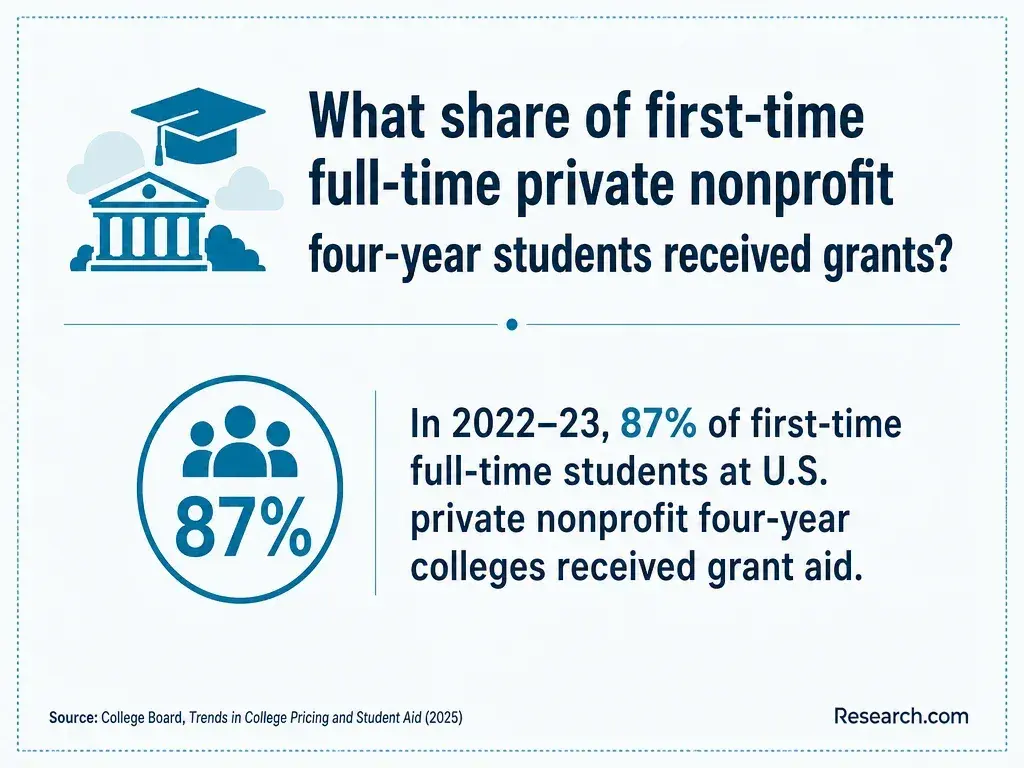
Compare the cost to finish, not just advertised tuition per credit: include required fees, remaining credits, materials, and any travel or reduced work hours associated with an approved placement. Financial aid eligibility also depends on the institution and your circumstances. Advice on paying for a substance abuse counseling bachelor's degree may offer useful aid questions, but verify every award and eligibility condition for the psychology BA you would actually enter.
Online study may reduce commuting, while a campus program may make it easier to meet student-services staff or join on-site projects. Neither format guarantees an internship, research supervision, or access to the college population you hope to serve. Ask online programs whether classes are asynchronous, whether group meetings are live, how students find approved local sites, and who helps resolve a placement that falls through.
Compare support by what you can actually use: advising appointments, tutoring for statistics, career connections to student affairs, and supervision for an applied project. Delivery details become especially consequential if you later seek clinical training; comparing fast-track mental health counseling master's formats can help you see why online classes and in-person supervised experiences must be evaluated separately.
Potential nonclinical roles include student wellbeing program assistant, health-promotion coordinator, outreach specialist, and student-services or resource-navigation staff. Duties may involve organizing workshops, explaining available services, coordinating referrals, maintaining program records, or helping evaluate participation. Job titles and degree requirements vary by institution; some coordinator positions expect prior campus experience or a graduate degree.
Read postings for tasks, not just titles. If a role centers on prevention and operations, a psychology BA plus relevant experience may be useful; student affairs, public health, or social work preparation could also fit. If it centers on psychotherapy, plan for a qualifying professional pathway rather than trying to assemble clinical authority through BA electives. Compare shorter graduate counseling programs by cost and duration only after checking that a program meets the educational rules for the jurisdiction and role you want.
There is no single salary or employment forecast for "psychology BA graduate working in campus wellbeing." Colleges use different job titles and pay structures, and a broad occupational median cannot predict an offer from a particular campus. For a realistic comparison, gather current postings for the specific roles and locations you would accept, then compare required experience, pay range, benefits, and advancement rules. The U.S. Bureau of Labor Statistics Occupational Outlook Handbook can provide context for a closely matching occupation, but its occupation-wide figures are not degree-specific outcomes.
Weigh that likely entry route against your remaining education cost. A graduate degree may be worthwhile for a clearly identified role, but an inexpensive master's is not automatically a better investment than relevant paid experience. Use lower-tuition psychology master's options as a cost comparison only after confirming that a nonclinical psychology master's advances your particular career goal.
What licenses or certifications are required for college mental health roles?
Licensing depends on duties and jurisdiction, not whether the employer is a college. Outreach, program administration, and many resource-navigation roles are nonclinical, although employers may require training in confidentiality, crisis procedures, or campus policy. Providing psychotherapy, diagnosing conditions, or using a protected clinical title requires the relevant professional education and state authorization; a psychology BA does not provide either on its own.
Before enrolling, obtain a target job posting and identify its required credential, then check the responsible state board or certifying body and the proposed program's eligibility statement. Do not mistake subject-area specialization or speed for qualification: forensic psychology master's completion time comparisons address a different educational choice and do not establish eligibility to practice as a college mental health clinician.
Other Things You Should Know About Psychology
Possibly, if your instructor and the campus program approve the scope and supervision. Peer-support participation alone does not grant access to confidential records or permission to present student interactions in coursework.
Not without the applicable permissions and privacy review. A safer portfolio item is a blank survey proposal or a report using information the institution has explicitly authorized for release.
It may improve communication and referral awareness. Check its learning objectives, and do not treat course completion as permission to counsel students clinically.
Ask whether an approved health-promotion, student-affairs, disability-services, or community outreach site meets the course objectives. Obtain academic approval before assuming a volunteer or work role will count.
- Accreditation in the U.S. | ed.gov http://www.ed.gov/laws-and-policy/higher-education-laws-and-policy/college-accreditation/accreditation-in-the-us
- Why APA Accreditation Matters https://accreditation.apa.org/why-accreditation-matters
- Part-Time MSW Program - UW School of Social Work https://socialwork.uw.edu/academics/msw/part-time-program/
- Human Services | Human Development and Family Sciences https://www.hdfs.udel.edu/human-services/
- Online Psychology B.A. or B.S. Degree Completion Program | gsu.edu https://online.gsu.edu/program/psychology-ba-or-bs-completion-program/
- Psychology careers guide | apa.org https://www.apa.org/education-career/guide/careers
- Human Services Online Program - ODUGlobal https://online.odu.edu/academics/programs/human-services
- What Can You Do with a bachelor's in Psychology? | UMass Global https://www.umassglobal.edu/blog-news/can-you-do-a-bachelors-psychology-top-careers-skills-build-your-future
- Online Bachelor's Degree in Psychology | Purdue Global https://www.purdueglobal.edu/degree-programs/psychology/bachelor-degree-psychology-online/
- Online Psychology Degree: Your Complete Guide (2026) | counselingpsychology.org https://www.counselingpsychology.org/psychology/schools/online-psychology-degree/