2027 Are There Any One-Year Online Environmental Science Degree Programs Worth Considering?

Co-Founder and Chief Data Scientist
A one-year online Environmental Science degree sounds attractive if you want to move into conservation, sustainability, environmental consulting, climate work, or public policy without spending several more years in school. The important reality is that a full accredited Environmental Science bachelor’s degree is rarely something a new college student can complete in one year because the field depends on sequenced science courses, labs, data work, and often field-based learning.
For most students, “one-year” means one of three things: a degree-completion pathway for students who already have substantial transfer credits, an accelerated graduate program for applicants with a related bachelor’s degree, or a shorter certificate or professional credential focused on environmental skills. This guide explains what is realistic, which online options exist, what to check before applying, how costs and financial aid may work, and how to judge whether an accelerated environmental science pathway is worth it for your goals.
Key Points About One-Year Online Environmental Science Degree Programs
- One-year online Environmental Science degrees offer accelerated coursework focused on core topics like ecology and sustainability, differing from traditional programs that span 2-4 years with broader study.
- These programs often prioritize practical skills through virtual labs and case studies, catering to working professionals seeking rapid career advancement in a growing green job market.
- Availability is limited; students should expect selective enrollment and fewer specialization options compared to traditional degrees, reflecting the discipline's complex, interdisciplinary nature.
Is It Feasible to Finish a Environmental Science Degree in One Year?
Finishing an online Environmental Science bachelor’s degree in one year is generally not feasible for students starting from little or no college credit. Most accredited bachelor’s programs require 120-180 credits, and environmental science coursework usually includes biology, chemistry, ecology, statistics, environmental policy, lab assignments, data analysis, and a capstone or applied project. Those requirements are difficult to compress into a single year without weakening the academic experience.
The main exception is a degree-completion student who has already earned a large number of transferable credits, often through an associate degree or previous bachelor’s-level coursework. Even then, the remaining major requirements may not all be available every term, and upper-division science courses often have prerequisites that must be completed in sequence.
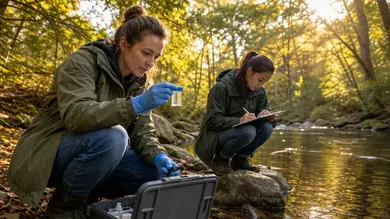
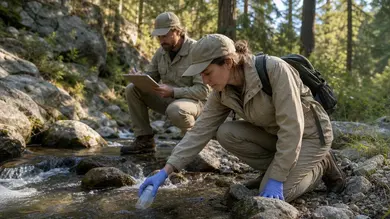
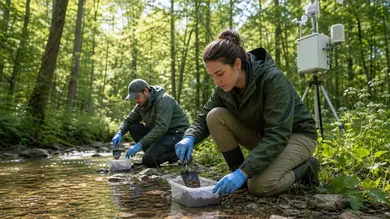
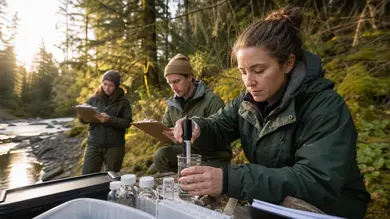
Students should also consider the practical side of the field. Environmental science is not only reading and exams; it often involves sampling methods, GIS, data interpretation, field observations, lab-based reasoning, and technical reporting. Online programs may use virtual labs, mailed lab kits, local field assignments, remote sensing exercises, or internships, but these elements can affect scheduling and completion time.
When a one-year timeline may be realistic
- You already have substantial transfer credit: A student entering with many completed general education and science prerequisites may be able to reduce the remaining timeline significantly.
- You are pursuing a certificate rather than a full degree: Certificates can be shorter and more targeted, but they are not the same as an accredited bachelor’s degree.
- You are entering a graduate program with the right background: Some master’s pathways may be shorter than undergraduate degrees, but they usually require a completed bachelor’s degree and may still take more than one year.
- You can study full time year-round: Accelerated pacing usually requires heavy course loads across multiple terms with limited breaks.
Licensing is generally not required for many entry-level environmental science roles, but some advanced or specialized positions may require additional credentials, certifications, field experience, or graduate study. Before choosing a fast-track path, ask the school for a written transfer-credit evaluation, a term-by-term degree plan, and a clear explanation of lab, fieldwork, internship, and capstone requirements.
Are There Available One-year Online Environmental Science Degree Programs?
There are currently no accredited one-year online Environmental Science degree programs in the United States designed for students to complete an entire bachelor’s degree from start to finish in one year. Most accredited online Environmental Science bachelor’s programs require between 120 and 180 credits and typically take four years of full-time study.
That does not mean faster online pathways are impossible. Some universities offer flexible, transfer-friendly, or accelerated Environmental Science degree online options that may help students finish sooner if they bring in significant prior coursework. The difference matters: these are usually not true one-year degrees, but they may function as faster degree-completion routes for prepared students.
Examples of online Environmental Science programs to compare
- Oregon State University (OSU) Online: Requires 180 quarter credits and includes coursework in environmental sampling, GIS, remote sensing, and environmental policy. Students can specialize in conservation or resource economics. Transfer students must complete 45 of their last 75 credits at OSU.
- Southern New Hampshire University (SNHU) Online: Requires 120 credits covering natural sciences, resource conservation, ecology, and water management. Labs are conducted via mailed kits, and the program includes a capstone and internship opportunities.
- University of Phoenix Online: Requires 120 credits, focusing on core sciences, environmental law, policy, economics, and toxicology. Accredited by the Higher Learning Commission, the program offers flexible scheduling and a growing alumni network.
When reviewing these or similar programs, focus less on whether the program uses the word “accelerated” and more on whether your prior credits will actually apply to the degree. A program can be flexible and still require multiple years if your previous coursework does not meet major, science, or residency requirements.
Students who need a shorter route into the workforce may also consider related non-degree credentials, including 2 year certificate programs that pay well. These may support entry-level skill building, but they do not replace an accredited Environmental Science degree when a job or graduate program specifically requires one.
Why Consider Taking Up One-year Online Environmental Science Programs?
The strongest reason to consider a one-year or accelerated online Environmental Science pathway is speed to credential completion, especially if you already have credits, work experience, or a related academic background. For working adults, online delivery can make it possible to keep earning income while building environmental science knowledge in areas such as conservation, resource management, environmental compliance, climate adaptation, and sustainability.
Still, the value depends on what the program actually is. A one-year certificate, a degree-completion bachelor’s program, and an accelerated master’s program serve different goals. Before enrolling, match the credential to the type of role you want and confirm that employers or graduate schools in your target field will recognize it.
- Flexibility: Online courses can make it easier to study during evenings, weekends, or around work shifts. This is especially useful for students who cannot relocate or pause employment.
- Time Efficiency: Programs accepting up to 90 transfer credits may reduce the time needed to finish a degree. This benefit is strongest for students whose prior coursework fits cleanly into general education, science prerequisites, and major requirements.
- Career Advancement: An accelerated pathway may help working professionals qualify for new responsibilities in environmental consulting, government agencies, nonprofits, sustainability offices, or compliance-related roles.
- Applied Learning: Strong programs emphasize practical tools such as GIS technology, water and soil analysis, environmental impact assessments, technical writing, and data interpretation through virtual labs, case studies, and projects.
- Hands-On Requirements: Environmental science depends on observation, measurement, and applied problem-solving. Students should verify how the program handles labs, fieldwork, internships, and capstones before assuming a fully online format will meet their needs.
Best fit for accelerated online study
- Students with an associate degree or substantial transferable college credit
- Working adults already employed in environmental, safety, planning, agriculture, energy, or sustainability-related settings
- Career changers who need formal academic preparation but cannot attend campus full time
- Students who are self-directed, organized, and comfortable with science-heavy coursework
Students interested in targeted professional skill building can also compare short credentials and courses that pay well. These can complement a degree plan, especially when they add practical skills such as data analysis, GIS, project management, or regulatory knowledge.
The main drawback is that the one-year promise can be misleading. Environmental Science is a broad, technical field, and an overly compressed program may leave little room for lab practice, field experience, research methods, career exploration, and deeper study of complex systems. Students should be cautious of any program that advertises unusual speed without clearly explaining accreditation, credit requirements, learning outcomes, and hands-on components.
Fully online one-year Environmental Science degrees are rare because the subject requires both scientific foundations and applied practice. If a pathway is legitimate, it will likely be demanding and best suited for students who already have relevant credits or experience.
- Heavy workload: Accelerated formats may require students to cover biology, chemistry, ecology, statistics, policy, and technical writing in a compressed schedule. This can increase stress and reduce retention if the pace is unrealistic.
- Limited practical training: Fieldwork, lab reasoning, sampling, and observation are difficult to duplicate online. Virtual labs and simulations can help, but they may not fully replace in-person experience for some career paths.
- Reduced networking opportunities: Online programs may offer fewer spontaneous opportunities to meet faculty, classmates, researchers, and local employers unless they intentionally build in live sessions, group projects, advising, or internships.
- Restricted career exploration: A fast curriculum can leave little time to test different specialties, such as conservation biology, environmental policy, water resources, sustainability, or environmental data analytics.
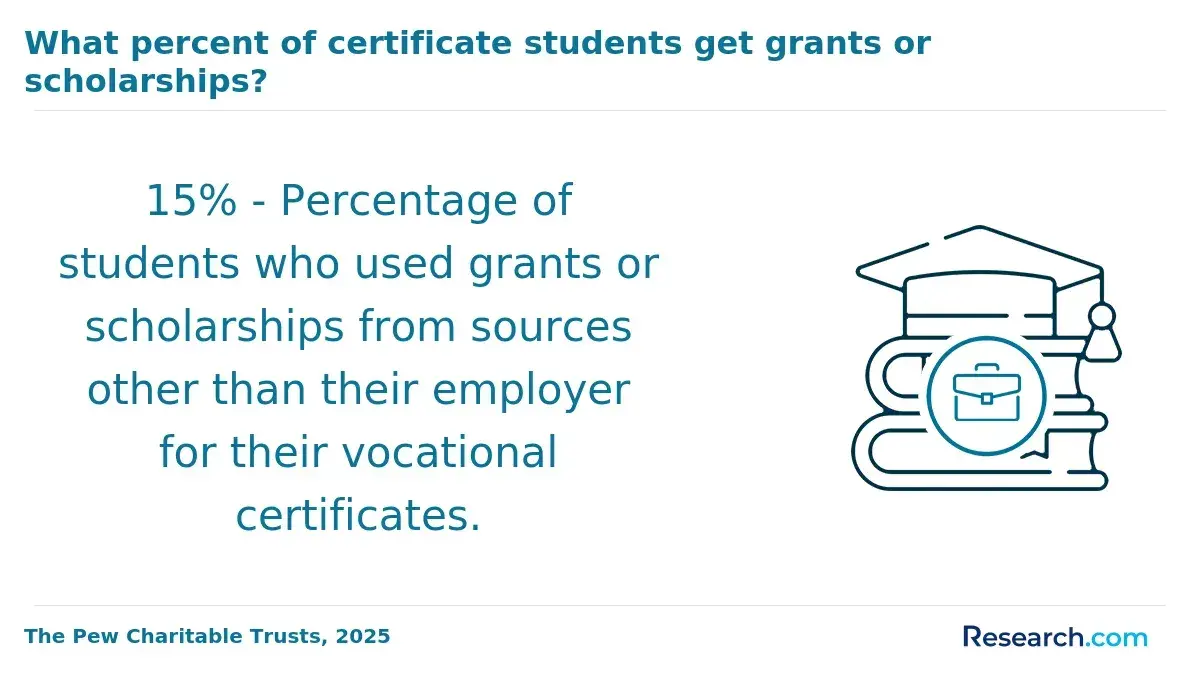
- Financial aid limitations: Some shorter or non-degree programs may not offer the same access to scholarships, grants, or federal aid as traditional degree programs. Eligibility depends on accreditation, enrollment status, and program structure.
How to reduce these risks
- Ask whether labs are virtual, mailed, local, or campus-based.
- Look for programs with internship, capstone, or applied research options.
- Join professional associations, webinars, and environmental science communities while enrolled.
- Seek volunteer or part-time field experience with agencies, nonprofits, parks, watershed groups, or sustainability offices.
- Request a written degree plan before enrolling so you know whether a one-year timeline is realistic.
Eligibility requirements depend on whether the program is an undergraduate degree-completion pathway, a certificate, or a graduate program. For a true accelerated undergraduate route, schools usually expect applicants to enter with a significant amount of completed college coursework. Without transfer credit, a one-year Environmental Science bachelor’s timeline is generally unrealistic.
Because environmental science builds on math and lab sciences, admissions teams may also review whether you have completed prerequisites such as biology, chemistry, statistics, or college-level math. Meeting the minimum admission standard does not always mean you can finish quickly; the key question is how many of your prior credits apply directly to the degree.
- Transfer credits or associate's degree: Most one-year pathways require applicants to have completed at least 60 semester credits, including general education and relevant prerequisite courses such as biology, chemistry, or math.
- Official transcripts: Schools typically require transcripts from every previously attended institution to verify credits, grades, and course equivalencies.
- Application and fee: Applicants must submit the school’s online application and required application fee by the stated deadline.
- Letters of recommendation: These are less common for undergraduate programs but may be required for graduate-level applicants or selective accelerated pathways.
- Personal statement or letter of interest: Some programs ask applicants to explain their academic goals, professional interests, and reasons for pursuing environmental science.
- Placement exams: A school may require placement testing to confirm readiness for upper-division science, math, or writing courses.
- Graduate program requirements: Rare one-year graduate Environmental Science programs generally expect a bachelor's degree in a related field, GRE scores, and may include interviews or background checks, particularly for research or fieldwork-oriented tracks.
- Professional experience: Work experience may strengthen an application for adult-focused or professional programs, but it usually does not replace required academic preparation.
Questions to ask before applying
- How many of my credits will transfer into the major, not just as electives?
- Are prerequisite science courses required before upper-division classes?
- How often are required courses offered online?
- Is there a residency requirement for the final credits?
- Are lab, fieldwork, internship, or capstone requirements available every term?
Students comparing environmental science with other academic options may also want to review the most lucrative college majors, but salary potential should not be the only factor. Environmental roles can vary widely by location, employer, education level, technical skills, and experience.
When evaluating one-year or accelerated online Environmental Science degree programs, start with legitimacy, then look at fit. A program that is fast but poorly aligned with your career goals can cost you time and money. A stronger program will be accredited, transparent about credit requirements, realistic about hands-on learning, and clear about the outcomes students can expect.
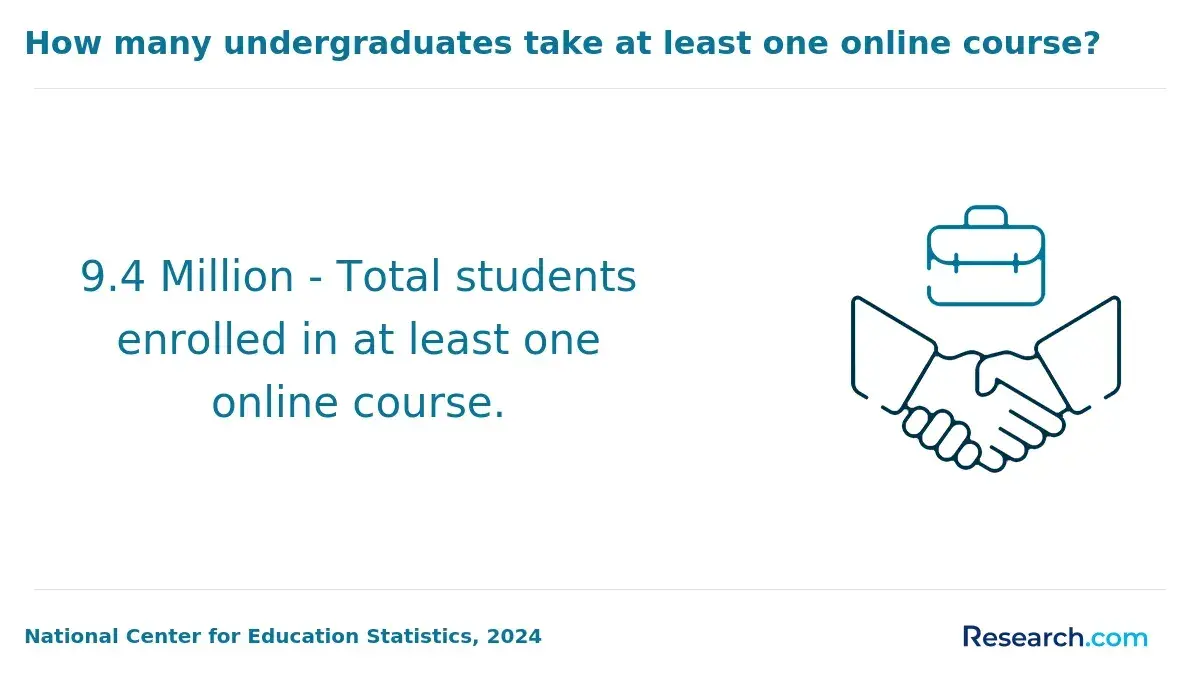
- Accreditation: Accreditation for online environmental science degrees is essential. Confirm that the institution is accredited by a recognized accrediting agency so the credential is more likely to be accepted by employers, graduate schools, and financial aid programs. You can compare institutional options through resources such as the top non profit online accredited colleges.
- Faculty expertise: Look for instructors with academic training and practical experience in environmental science, environmental policy, ecology, conservation, GIS, sustainability, or related fields.
- Curriculum quality: A strong curriculum should include core sciences such as biology and chemistry, environmental systems, environmental policy, quantitative methods, and applied skills such as GIS, data analysis, or technical reporting.
- Course delivery format: Check whether courses are asynchronous, live, self-paced, cohort-based, or competency-based. Flexibility is valuable, but accelerated programs also need regular faculty access and clear deadlines.
- Credit transfer policies: If you have previous coursework, request a formal transfer evaluation before committing. Transfer acceptance is often the deciding factor in whether a fast timeline is possible.
- Tuition and fees: Compare total program cost, not just per-credit tuition. Include technology fees, lab materials, textbooks, software, proctoring, and any travel for field or campus requirements.
- Student support services: Accelerated online students need reliable advising, tutoring, library access, technical support, career counseling, and help finding internships or applied projects.
- Program alignment with goals: Make sure electives, projects, and specializations support your intended path, whether that is conservation, policy, environmental data analytics, sustainability, water resources, or environmental compliance.
Program comparison checklist
| Factor | What to verify | Why it matters |
| Accreditation | Institutional accreditation by a recognized agency | Supports transferability, financial aid eligibility, and employer recognition |
| Transfer credit | Written evaluation of prior credits | Determines whether a one-year or accelerated timeline is realistic |
| Labs and fieldwork | Virtual labs, mailed kits, local assignments, internships, or campus visits | Environmental science requires applied observation and technical practice |
| Career support | Advising, internship help, employer connections, and capstone guidance | Online students may need extra support building professional experience |
| Cost transparency | Total tuition, fees, materials, and aid eligibility | Prevents surprises and helps compare programs fairly |
One-year online Environmental Science degree programs are uncommon in the U.S., but some accelerated master’s or degree-completion options exist. These programs generally cost between $10,000 and $30,000 in tuition, depending on the institution, degree level, credit requirements, and whether the student qualifies for reduced rates or brings in transferable credits.
Cost comparisons can be tricky because a shorter program is not automatically cheaper. A student may pay less overall if many credits transfer, but accelerated terms can create larger short-term bills. Online students should also account for technology fees, books, lab kits, software, proctoring, and possible travel for field or campus-based requirements.
Tuition prices are influenced by the program's level-whether bachelor's or master's-the type of institution, and credit requirements, as accelerated tracks often condense the usual 120-180 credits into a shorter period. Residency status may also affect costs, with some programs offering fixed rates for online students regardless of location. Public universities typically offer more affordable tuition than private ones.
In contrast, traditional four-year Environmental Science degrees can range from $40,000 to $120,000 or more in total tuition. This makes accelerated one-year online options potentially more cost-effective for students with transferable credits or eligibility for accelerated pathways, but the value depends on program quality, aid availability, and whether the credential supports the student’s career goal.
Cost questions to ask the school
- What is the total estimated cost to graduate based on my transfer-credit evaluation?
- Are online students charged in-state, out-of-state, or a separate online tuition rate?
- Are lab kits, GIS software, textbooks, or proctored exams included in tuition?
- Can I use federal financial aid for this specific program?
- Will an accelerated schedule affect payment deadlines or aid disbursement?
Students should expect an intensive academic experience. Because most accredited bachelor’s programs require 120-180 credits and typically take four years, a one-year online Environmental Science pathway usually assumes extensive prior credit, a related academic background, or enrollment in a shorter graduate or certificate option. The pace can be demanding, especially for students balancing full-time work or family responsibilities.
The curriculum is typically interdisciplinary. Students may study ecology, chemistry, geology, environmental policy, environmental law, resource management, climate issues, statistics, GIS, and technical communication. Strong programs connect scientific concepts with applied decision-making, including how environmental data is collected, interpreted, and used in policy, compliance, conservation, or planning contexts.
Online learning experiences may include virtual labs, mailed lab kits, remote sensing assignments, GIS projects, data analysis, case studies, simulations, discussion boards, and capstone projects. Some programs also include local field assignments or internships. Capstone projects commonly address topics such as climate change and resource management.
Skills you may build
- Scientific reading and interpretation
- Environmental data analysis
- Technical writing and reporting
- GIS and mapping fundamentals
- Understanding of environmental law and policy
- Problem-solving across scientific, social, and regulatory contexts
- Project planning for environmental assessments or sustainability initiatives
Success in an accelerated online format requires discipline. Expect frequent deadlines, significant independent reading, quantitative assignments, and less time to recover if you fall behind. Students who want a lower-risk way to add marketable skills may also consider related online certificates that pay well alongside or before committing to a full degree pathway.
Financial aid may be available for one-year or accelerated online Environmental Science programs, but eligibility depends on the school, accreditation status, degree level, enrollment intensity, and whether the program qualifies for federal aid. Students should confirm aid eligibility before enrolling, especially if the program is a certificate, non-degree credential, or unusually compressed pathway.
- Federal and State Aid: Accredited online degree programs may qualify for federal aid such as Pell Grants and Direct Loans through Title IV eligibility. Students must complete the FAFSA, meet enrollment requirements, demonstrate eligibility, and maintain satisfactory academic progress. State aid varies by state and program.
- Scholarships: Environmental Science students may find scholarships from schools, nonprofit organizations, sustainability groups, professional associations, and local community foundations. Requirements may include essays, academic merit, financial need, or demonstrated commitment to environmental work.
- Employer Tuition Assistance: Some employers reimburse tuition for education related to job responsibilities, including environmental science, sustainability, safety, compliance, or resource management. These benefits often require pre-approval and may include grade or employment-continuation requirements.
Private grants and loans may also help cover costs, but students should compare repayment terms carefully. Accelerated programs can affect cash flow because aid may disburse by term or semester, and shorter schedules may create fewer, larger payments. Ask the financial aid office to explain when funds will be released and whether your course load qualifies for the aid you expect.
Financial aid documents to gather early
- FAFSA information and tax records
- Official admission status for the program
- Transfer-credit evaluation and enrollment plan
- Scholarship essays or recommendation materials
- Employer tuition-assistance forms, if available
What Environmental Science Graduates Say About Their Online Degree
-
: "Completing the one-year online Environmental Science degree was a game changer for my career. The accelerated format allowed me to gain practical skills quickly while balancing my job, and the average cost was much more affordable than traditional programs. I feel confident stepping into roles that demand real-world environmental solutions.
Daniel"
-
: "The competency-based structure of the Environmental Science program really suited my learning style. I could focus on mastering each topic at my own pace without unnecessary busywork, which made the experience deeply rewarding. Reflecting on the investment, both in time and the modest average cost, this degree truly accelerated my personal and professional growth.
Carl"
-
: "Pursuing the one-year online Environmental Science degree equipped me with comprehensive knowledge in a remarkably short time. The program's practical approach and cost-effectiveness stood out, helping me move into the environmental consulting field faster than I expected. This degree was a smart investment that has already opened doors for me professionally.
Nick"
Other Things You Should Know About Pursuing One-Yeas Environmental Science Degrees
Students enrolling in a one-year online Environmental Science degree program in 2027 typically need a reliable internet connection, a computer with updated operating systems, and software like Microsoft Office and statistical analysis tools. Specific programs may have additional software requirements.
Prerequisites typically include a high school diploma or GED with a strong focus on science subjects. Some programs may also require prior knowledge in biology or chemistry. Check each program's specific requirements to ensure eligibility for the 2027 academic year.
Employers often prioritize skills and competencies over the mode of degree completion. While traditional degrees have long-established credibility, many employers value online degrees if they are from accredited institutions. Demonstrating practical knowledge and experience can enhance the perception of an online degree.
- Best Environmental Science Courses & Certificates [2025] | Coursera Learn Online https://www.coursera.org/courses
- Advantages and Disadvantages of Online Degree Programs - OnlineEducation.com https://www.onlineeducation.com/features/advantages-and-disadvantages-of-online-education
- Which environmental degree should I choose? https://ecampus.oregonstate.edu/news/which-online-environmental-bachelors-degree-should-i-choose/
- 5 Pros and Cons for Studying a Distance Learning Degree in 2025 | Distancelearningportal https://www.distancelearningportal.com/articles/174/why-study-distance-learning-degree.html
- What Can I Do with an Environmental Science Degree? https://www.snhu.edu/about-us/newsroom/stem/what-can-i-do-with-an-environmental-science-degree
- What Can You Do With An Environmental Science Degree? https://online.arizona.edu/news/what-can-you-do-environmental-science-degree
- Earning An Online Environmental Science Bachelors Degree https://www.accreditedschoolsonline.org/online-degrees/environmental-science/
- Online Environmental Graduate Programs: Are They Right for You? https://www.cjbnetwork.com/articles/online-environmental-graduate-programsare-they-right-for-you