2027 Environmental Science Degrees Explained: Are They Classified as Professional Degrees?

Co-Founder and Chief Data Scientist
Many prospective students wrongly assume that environmental science degrees automatically qualify as professional degrees crucial for licensure or specialized roles. However, only about 35% of environmental science graduates pursue advanced certifications or professional licenses within related industries. This gap leads to confusion about career pathways and necessary educational investments.
Understanding whether an environmental science degree meets professional criteria is essential for strategic planning, especially given the increasing demand for specialized environmental consultants and policy experts. This article, prepared by career planning experts, clarifies the distinctions between environmental science degrees and professional degrees, offering practical insights on accreditation, program design, career impact, and cost considerations.
Key Benefits of Professional Environmental Science Degrees
- Professional environmental science degrees equip graduates with analytical and field-based skills to address environmental challenges and sustainability issues.
- These degrees offer strong earning potential, as expertise in environmental assessment, conservation, and regulatory compliance is in high demand.
- They prepare graduates for specialized, certified, and leadership roles in environmental research, policy, and management, supporting long-term career stability.
What Is Considered a Professional Environmental Science Degree?
Choosing a professional environmental science degree carefully is essential for students focused on licensure, career advancement, and gaining relevant skills. The U.S. workforce demand for applied environmental science expertise has increased, with enrollment in related degree programs growing over 20% in the last decade. This underscores the importance of selecting programs that align with professional outcomes.
A common way to clarify misunderstandings is through myth-versus-fact explanations.
Degree status
- Myth: All environmental science degrees automatically qualify as professional degrees.
- Fact: Professional environmental science degrees involve specialized applied training aimed at workforce readiness and licensure preparation, focusing on practical skills and industry collaboration rather than solely theory.
Certification eligibility
- Myth: Any accredited environmental science program makes students eligible for professional certification.
- Fact: Accreditation alone does not guarantee certification readiness; professional degree programs often feature course sequences tailored to credentialing requirements and align with standards like those needed for a Registered Environmental Professional (REP).
When exploring environmental science professional degree programs, consider how the curriculum prepares you for specific certifications and career-building experiences, including internships and compliance training. For students interested in areas like artificial intelligence within environmental studies, programs linked to ai degree online options may also complement their skill set.
Who Should Pursue a Professional Environmental Science Degree?
Identifying who should pursue a professional environmental science degree is essential for prospective students seeking career-focused, practice-oriented education. This clarity helps ensure the right candidates invest their time and resources into programs that best support their professional goals. Enrollment in environmental science programs has increased by over 20% in the past decade, reflecting a growing demand for qualified professionals.
Common misconceptions about these degrees can hinder informed decisions. The following myth-versus-fact pairs clarify who truly benefits from professional environmental science degrees.
Early-Career Focus
- Myth: Professional environmental science degrees are only for recent graduates seeking general environmental careers.
- Fact: These degrees are ideal for early-career professionals aiming for specialized or regulated roles, such as environmental consultants or compliance officers, where practice-oriented expertise and sometimes licensure are required.
Career Changers
- Myth: Career changers cannot benefit from professional environmental science degrees.
- Fact: Individuals transitioning from unrelated fields frequently find these degrees valuable because they combine applied skills with essential scientific knowledge, easing entry into environmental sectors with clear career pathways.
Licensure Necessity
- Myth: A professional degree is unnecessary if you do not seek licensure.
- Fact: Although not always mandatory, a professional degree can enhance advancement opportunities and increase earning potential in competitive markets.
Those who benefit most from professional environmental science degrees include early-career professionals needing practice-based training, individuals pursuing licensure or certification, career changers seeking applied expertise, and those targeting specialized, regulated environmental roles.
Prospective students evaluating their paths alongside other degree options might also consider an accelerated social work degree online for related career goals in public and environmental health fields.
What Are the Most Common Professional Environmental Science Degree Programs?
Choosing the right professional environmental science program is crucial for aligning education with long-term goals. With enrollment rising about 8% annually, demand for skilled graduates is stronger than ever.
Below are key programs frequently pursued by students entering this field.
- Environmental Engineering: This program centers on creating solutions to environmental problems using engineering principles. It covers pollution control, waste management, and sustainable infrastructure, responding to the needs of industries and government agencies focused on environmental protection.
- Environmental Health: Focused on assessing and managing factors that affect human health in relation to the environment, this program emphasizes toxicology, risk assessment, and regulatory compliance. Graduates are prepared to address public health challenges linked to environmental hazards.
- Environmental Policy and Management: Combining science with policy analysis, this program prepares students to develop and implement regulations and sustainability programs. It is designed for those interested in navigating environmental laws and promoting effective resource management.
Accreditation is often a primary concern for students selecting professional environmental science degree programs because it influences licensure eligibility, access to federal financial aid, and employer recognition. Nearly 85% of employers favor candidates from accredited programs, highlighting the importance of program oversight in this discipline.
Here are some common myths and facts about accreditation for environmental science degrees to clarify these concerns.
Accrediting Bodies
- Myth: All professional environmental science degrees are accredited by a single specialized body.
- Fact: Unlike fields such as health or engineering, environmental science does not have one specific accrediting agency; accreditation typically comes from regional institutional accreditors recognized by the U.S. Department of Education or the Council for Higher Education Accreditation (CHEA).
Programmatic Accreditation
- Myth: Programmatic accreditation is unavailable or unnecessary for environmental science degrees.
- Fact: Though rare, some multidisciplinary related programs might seek specialized accreditation, but environmental science degrees generally hold institutional accreditation, which evaluates the entire institution to ensure academic quality and integrity.
Licensure & Career
- Myth: Accreditation does not impact licensure or career prospects in environmental science.
- Fact: Accreditation matters for licensure in certain environmental careers requiring state certification or public trust and is often a prerequisite for federal financial aid and preferred by employers, influencing career advancement.
Students comparing programs should also consider how accreditation organizations for environmental science degrees affect eligibility for financial support. Exploring related options, such as executive MBA programs online, can provide insights into accredited program structures that balance flexibility and reputation.
Prospective students benefit greatly from knowing admission prerequisites, as this information helps them gauge their qualifications and better prepare their applications. This is especially relevant now, since enrollment in environmental science programs has surged by more than 20% over the past five years, increasing competition for available spots.
The following highlights key requirements applicants typically encounter.
- Academic background: Applicants need a high school diploma or equivalent with solid grades, particularly in science and math. This foundation is crucial for grasping the complex principles they will encounter in coursework.
- Prerequisite courses: Completion of classes such as biology, chemistry, physics, and calculus is usually required. These subjects equip students with essential scientific knowledge and analytical skills prior to starting professional studies.
- Standardized testing: Many programs request SAT or ACT scores to assess academic readiness. Although test-optional policies are increasingly common, submitting scores can still strengthen an application.
- Letters of recommendation: References from teachers or mentors help admissions committees evaluate an applicant's motivation, work ethic, and fit for an intense science-driven curriculum.
- Personal statement: A written essay allows candidates to express their interest in environmental science, career goals, and commitment to the profession, providing insight beyond grades and test results.
Prospective students evaluating professional environmental science programs must carefully consider the curriculum and practical training components to ensure the degree meets career and certification requirements. A comprehensive understanding of coursework requirements and hands-on experiences is essential for assessing program quality and outcomes.
The following list outlines common courses and practical training elements in professional environmental science degree programs:
- Core Scientific Coursework: Classes in ecology, chemistry, geology, statistics, and environmental policy form the foundation for analyzing natural and human-impacted systems. These courses provide fundamental knowledge of environmental processes and regulatory frameworks relevant to many career paths.
- Geographic Information Systems (GIS): Training in GIS equips students with technical skills to collect, manage, and analyze spatial data integral to environmental assessment, planning, and management roles.
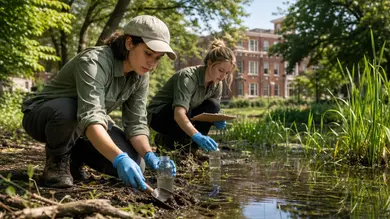
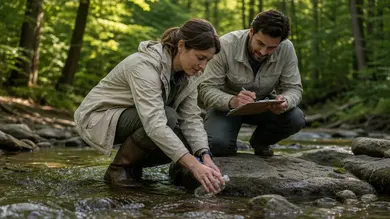
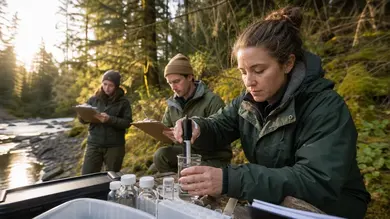
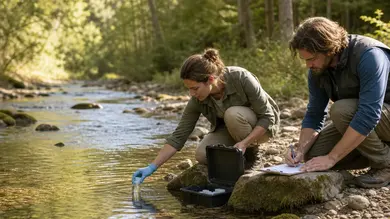
- Practical Training and Internships: Many programs require internships, fieldwork, or lab work to bridge theory and real-world application. These experiences develop expertise in environmental sampling, data collection, scientific methodology, and professional communication, aligning with common environmental science practical training and internships expectations.
- Fieldwork Experience: Direct observation and problem-solving in diverse environmental conditions build critical analytical and adaptive skills. Fieldwork fosters teamwork and project management capabilities, which are highly valued by employers.
- Laboratory Skills Development: Lab courses reinforce scientific principles and data interpretation relevant for careers requiring technical proficiency in environmental monitoring and research.
Incorporating this balance between coursework and practical experience is vital for career advancement and professional licensure. Graduates with well-rounded training often find stronger opportunities in government agencies, consulting, and sustainability-focused organizations. For students considering flexible options, exploring an accelerated bachelor's degree online may provide an efficient pathway to enter the field.
Understanding the cost of professional environmental science degrees is essential for prospective students when evaluating program affordability and long-term financial commitment. On average, graduate-level tuition ranges from $15,000 to over $50,000 annually, with total program costs often increasing after factoring in additional expenses. Nearly 60% of environmental science graduate students rely on loans or financial aid, highlighting the importance of careful financial planning.
Several major expenses contribute to the overall cost of a professional environmental science degree:
- Tuition and fees: Tuition varies significantly based on institution type; public universities typically offer lower rates for in-state students, whereas private institutions tend to be more expensive. Mandatory fees can include charges for lab access, technology use, and administrative services, which add to the baseline cost.
- Books and supplies: Students often need specialized textbooks, lab equipment, and software licenses, resulting in additional annual costs that can total hundreds or even thousands of dollars.
- Living expenses: Costs for housing, food, and transportation depend heavily on the program's geographic location, which can have a substantial impact on overall affordability beyond tuition and fees.
- Internships and fieldwork: Practical experience is an important component of many professional environmental science degrees. These opportunities may require travel and additional expenditures that are not typically covered by tuition.
Evaluating the professional environmental science degree tuition fees alongside these factors is critical to understanding the full financial commitment. Students exploring alternative ways to enhance their credentials and earning potential may also consider certifications online as supplementary or alternative options.
Financial aid eligibility is a frequent concern for students exploring professional environmental science programs due to the significant costs involved. Data from the National Center for Education Statistics show nearly 60% of graduate students in science fields rely on some form of financial assistance.
Below are common misconceptions about financial aid for environmental science degrees, paired with factual clarifications.
Federal Aid
- Myth: Professional environmental science degrees are excluded from federal financial aid since they are viewed as non-traditional programs.
- Fact: Many environmental science programs qualify for federal aid like Direct Unsubsidized and Grad PLUS loans, depending largely on institutional and program accreditation.
Scholarships Available
- Myth: Scholarships and employer tuition benefits are rarely accessible to environmental science students.
- Fact: Numerous scholarships exist specifically for environmental science fields, and many employers in this sector provide tuition reimbursement to support career growth.
Loan Forgiveness
- Myth: Public service loan forgiveness programs do not apply to environmental science graduates.
- Fact: Graduates employed by qualifying public agencies or nonprofits can often benefit from federal loan forgiveness options.
Knowing the educational requirements for specific environmental science careers helps students choose the right programs and avoid unnecessary time and expense. With job growth in licensed or certified environmental roles expected to rise by 8% through 2030, meeting degree and credential standards is increasingly important.
Below are common misconceptions clarified about professional environmental science degrees.
Degree Necessity
- Myth: All environmental science careers require a professional degree.
- Fact: Many positions, such as environmental consulting or fieldwork, may only need a relevant bachelor's or master's degree rather than a professional degree.
Licensing Requirements
- Myth: Licensure in environmental fields does not require specific accredited degrees.
- Fact: Certain regulated professions, like environmental engineering or hazardous materials management, often mandate licensing that depends on particular accredited degrees or certifications.
Career Eligibility
- Myth: Professional environmental science degrees guarantee eligibility for all jobs in the field.
- Fact: Eligibility varies by role and industry; some jobs require licensure linked to professional degrees while others rely on related academic backgrounds.
Degree Impact
- Myth: Holding a professional degree does not affect advancement opportunities.
- Fact: Professional degrees may be essential for career progression, licensing, or specialized roles that demand recognized credentials.
Evaluating the financial returns of professional environmental science degrees is essential for students weighing the cost and time of advanced education. Knowing the impact on salary helps to make smarter career choices and optimize educational investments.
The following myth-versus-fact format highlights common misconceptions and realities about earnings linked to these degrees.
Salary Impact
- Myth: Professional environmental science degrees do not lead to higher salaries than general degrees.
- Fact: These degrees often offer specialized skills aligned with industry needs, enabling graduates to access better-paying, competitive roles.
Immediate Raise
- Myth: Earning a professional degree guarantees an immediate salary increase.
- Fact: While the degree enhances job eligibility for higher pay, actual salary depends on experience, location, and the sector, making the degree a valuable credential but not a stand-alone guarantee.
Career Growth
- Myth: Professional degrees have limited effect on long-term earning potential.
- Fact: Holding a recognized professional environmental science degree often leads to advancement opportunities such as leadership or consulting roles that can substantially boost income over time.
Financial Value
- Myth: The cost of professional degrees outweighs the financial benefits they provide.
- Fact: Despite expenses, higher lifetime earnings and increased job security typically justify the investment, especially when programs include industry-recognized certifications.
Program Quality
- Myth: All environmental science programs produce similar financial outcomes.
- Fact: Graduates from accredited programs with professional standards tend to achieve better salaries compared to those from less rigorous curricula.
What Graduates Say About Their Professional Environmental Science Degree
- Rocky: "Choosing to enroll in a professional environmental science degree program was one of the best decisions I've made. The flexibility allowed me to balance work and study without sacrificing either, which was crucial given the average cost of attendance and my personal commitments. Since graduating, I've seen a significant boost in my career opportunities and feel confident contributing to sustainability projects. "
- Edelyn: "Pursuing a professional environmental science degree was initially a reflective choice shaped by my desire to make a real-world impact. The program's adaptable schedule made it manageable alongside my family life, even though I was mindful of the typical tuition costs. Today, the knowledge I gained has proven invaluable in shaping policies that benefit the environment. "
- Benjie: "As a seasoned professional, enrolling in a professional environmental science degree program was a strategic move. The comprehensive curriculum, combined with the program's flexibility, justified the financial investment considering the average cost of attendance. This degree has enhanced my expertise and credibility, directly influencing my career advancement in environmental consultancy. "
Other Things You Should Know About Environmental Science Degrees
Environmental science programs are commonly reviewed by regional accreditors, while some specialized tracks also seek recognition from bodies such as ABET for engineering-related content. Employers and licensing boards usually rely on institutional accreditation plus program standards, not a universal “professional degree” label.
A master's level environmental science degree can be considered a professional degree if it combines advanced scientific knowledge with practical skills and meets industry-specific competencies. In 2027, these programs often emphasize applied research, internships, and fieldwork to prepare graduates for professional roles in environmental management and policy.
- Admission requirements for Environmental Science https://ruc.dk/en/admission-requirements-environmental-science
- Is an Environmental Science Degree Worth It? https://unity.edu/career-corner/is-an-environmental-science-degree-worth-it/
- Online Degree Programs Myths And Facts, Check Details https://pwskills.com/blog/online-degree-programs-myths-and-facts/
- Careers in Environmental Science: Vitally Important Jobs, Crappy Pay • The Revelator https://therevelator.org/environmental-science-important-jobs-crappy-pay/
- 2025 Most Affordable Online Environmental Science Degrees https://www.onlineu.com/most-affordable-colleges/environmental-science-degrees
- Debunking 8 of the biggest online learning myths https://www.ube.ac.uk/whats-happening/articles/online-learning-myths/
- 5 Biggest Green Career Myths in the UK – Debunked with Facts, Salaries & Real Job Examples https://www.jobsinecology.co.uk/resources/blog/2025/08/5-biggest-green-career-myths-in-the-uk-debunked-with-facts-salaries-real-job-examples/
- What Can I Do with an Environmental Science Degree? https://www.snhu.edu/about-us/newsroom/stem/what-can-i-do-with-an-environmental-science-degree
- Debunking Common Myths About TRU https://futurestudents.inside.tru.ca/debunking-common-myths-about-tru/
- College vs. University: Myths and Facts - College of the Rockies https://cotr.bc.ca/blog/college-vs-university-myths-and-facts/