2027 Cheapest Accredited Online Environmental Science Master's Programs With No Out-of-State Tuition Surcharge

Co-Founder and Chief Data Scientist
An online environmental science master's can be affordable for out-of-state students, but identical tuition rates do not automatically mean the lowest total price. College Board reported average 2024-25 published graduate tuition and fees of $12,596 at public institutions for in-state students and $21,730 for out-of-state students. This guide helps working professionals and career changers compare residency-neutral programs, verify accreditation, estimate full costs, assess aid, and decide whether a lower-priced degree fits their environmental career goals.
Key Things You Should Know
- A no-out-of-state-surcharge policy means eligible online students pay one published rate regardless of residence; it does not mean tuition is free, in-state priced, or automatically the market's lowest total cost.
- Using the 2024-25 public graduate tuition averages of $12,596 in-state and $21,730 out-of-state, avoiding a residency premium can materially improve affordability, but required credits, fees, and travel can still change the comparison.
- Verify institutional accreditation, the exact online program's tuition page, required credits, transfer rules, and any campus requirements before applying; career value depends on curriculum and outcomes as well as price.
What Does No Out-Of-State Tuition Surcharge Mean for an Online Environmental Science Master's Program?
A no-out-of-state tuition surcharge means an institution charges qualifying online students the same tuition rate whether they live in the university's home state or elsewhere in the United States. Schools may describe this as "online tuition," "distance-learning tuition," "flat tuition," or a residency-neutral rate. It is a pricing policy, not an accreditation category or a quality guarantee.
The policy is especially useful for students who cannot relocate. It can eliminate the difference between resident and nonresident public-university pricing, but the resulting rate may still be higher than another institution's resident rate or a private nonprofit university's standard online rate.
This comparison shows why readers should separate residency policy from actual affordability.
| Tuition model | How residence affects tuition | Best fit | Key caution |
| Residency-neutral online rate | One rate for eligible online students | Out-of-state students seeking predictable pricing | Program fees and exclusions may apply |
| Traditional public tuition | Residents and nonresidents pay different rates | Students who already qualify for in-state tuition | Moving solely for tuition may not create residency eligibility |
| Private nonprofit tuition | Usually one institutional rate regardless of state | Students comparing total price and flexibility | The standard rate can be higher than public online tuition |
| Temporary waiver | Nonresident premium is reduced for a stated period or group | Students who meet written eligibility terms | A waiver can expire or exclude some courses |
Ask admissions for written confirmation that the published rate applies to the exact environmental science master's, your intended start term, and every required credit. A common mistake is relying on a university-wide online-tuition statement when the graduate program has separate pricing or course fees.
How Can Students Verify Accreditation for an Affordable Online Environmental Science Master's Program?
For most environmental science master's programs, the essential credential is institutional accreditation recognized by the U.S. Department of Education and the Council for Higher Education Accreditation. Environmental science does not have one universal programmatic accreditor equivalent to the accreditation systems used in some regulated professions. Employers and doctoral programs commonly focus on the institution's recognized accreditation, the rigor of the science curriculum, and relevant experience.
Use this verification sequence before paying an application fee.
- Find the university in the federal Database of Accredited Postsecondary Institutions and Programs and confirm that its institutional accreditation is current.
- Confirm that the accreditor listed by the university matches the federal record and that no status notice affects the school.
- Check that the online degree is awarded by the accredited institution, not merely delivered through a third-party platform.
- Review whether the curriculum includes the quantitative, laboratory, field, policy, or geospatial coursework required for your target role.
- Ask whether the program supports any certification, employer, doctoral, or state-specific requirement relevant to your plan.
Do not confuse accreditation with ranking, nonprofit status, or a state authorization to enroll online students. If you are comparing credentials in other fields, standards can be more program-specific; for example, students evaluating online PsyD programs accredited by APA should examine professional accreditation requirements that are not generally applicable to environmental science.
Red flags include vague claims of "international accreditation" without naming a recognized accreditor, a missing degree-granting institution, or admissions staff who will not provide an official catalog link. Accreditation confirms baseline institutional oversight; it does not by itself confirm that a concentration has the courses, faculty expertise, or field opportunities you need.
How Much Does the Cheapest Online Environmental Science Master's Program Cost in Total?
The cheapest advertised per-credit rate is not necessarily the cheapest degree. Total cost starts with tuition for every required credit, then adds mandatory institutional, technology, course, laboratory, fieldwork, and residency expenses. It should also account for books, software, transportation, and lost earnings if a schedule forces reduced work hours.
For perspective, College Board's 2024-25 published averages for graduate tuition and fees at public institutions were $12,596 for in-state students and $21,730 for out-of-state students. Those are broad annual averages, not environmental science program prices, so use them only to understand why a residency-neutral policy can matter.
Calculate each school's estimate using the same categories below. This prevents a low per-credit figure from masking required costs.
| Cost component | Calculation | What to verify |
| Tuition | Required program credits × applicable per-credit rate | Whether the rate is guaranteed for continuing students |
| Mandatory fees | Per-term fees × expected terms, plus per-course fees | Online, student-service, technology, laboratory, and course fees |
| Required travel | Trips × transportation, lodging, meals, and local costs | Residencies, orientation, field intensives, capstone presentations, and internships |
| Learning materials | Estimated books, data tools, equipment, and software | GIS licenses, field gear, proctoring, and required subscriptions |
| Net price | Total educational cost − confirmed grants, scholarships, and employer aid | Whether awards apply to online graduate students and repeat each year |
Request a written estimate for your first term and ask whether tuition can rise before graduation. Compare the same enrollment pattern at every school: a 30-credit program and a 36-credit program cannot be fairly compared on rate alone.
A lower-priced undergraduate pathway may also be relevant for applicants who need prerequisites; see this guide to a lowest cost online bachelor's degree when building foundational coursework.
Usually, no. A genuine residency-neutral online tuition policy lets eligible students receive the listed online rate without establishing residency in the university's state. Students should still read the policy carefully because "online" may be defined by course delivery, campus participation, military status, or program location.
In-state tuition and no out-of-state surcharge are not identical. In-state tuition is a legal residency classification that can affect multiple university services and state-funded benefits. A residency-neutral online rate is a school pricing rule that may apply only to a designated program and may not change a student's legal residence classification.
Before enrollment, obtain answers to these questions in writing.
- Does the identical rate apply to every required course, including electives and capstone credits?
- Will an on-campus course, optional internship, or hybrid requirement change my tuition classification?
- Are students in my state authorized to enroll, and are there location-based restrictions on field placements?
- Are military, veteran, employer-partnership, or regional rates separate from the standard online rate?
- Does the school require annual proof of address or impose any residency-related conditions after admission?
Avoid moving or changing legal residence solely to obtain a stated tuition rate without consulting the registrar. Public institutions often have separate residency rules, and enrollment alone may not establish eligibility for resident tuition.
Public universities can offer strong value when their online rate is residency-neutral or when the applicant already qualifies for in-state tuition. Private nonprofit universities often charge one rate regardless of location and may offer shorter terms, structured support, or predictable course sequencing. Neither institutional category is automatically less expensive or better.
College Board's 2024-25 averages illustrate the typical published-price gap: public graduate tuition and fees averaged $12,596 in-state and $21,730 out-of-state, while private nonprofit graduate tuition and fees averaged $29,931. These sector averages do not predict an individual online program's price, especially when public institutions extend one online rate nationwide.
The table identifies the practical trade-offs to investigate.
| Comparison factor | Public university | Private nonprofit university | Decision use |
| Tuition structure | May vary by residency, program, or online status | Often a single rate regardless of residence | Compare your actual published rate, not sector averages |
| Fees | May include institution- or course-specific charges | May bundle some services or charge separate fees | Add all mandatory charges to tuition |
| Scheduling | May follow traditional academic calendars | May use accelerated or multiple start terms | Evaluate whether the pace suits work and field obligations |
| Research access | May offer links to public agencies and research centers | May emphasize practitioner support and smaller cohorts | Review faculty, projects, and career connections in your specialty |
Public, private, and nonprofit labels are starting points rather than value judgments. Pay more only when the added curriculum, environmental data tools, field partnerships, advising, location access, or employer recognition has a clear connection to your goals.
Financial aid can reduce the net cost of an online environmental science master's, but graduate students should not assume need-based grants will cover tuition. Eligible students may use federal Direct Unsubsidized Loans and Graduate PLUS Loans after filing the FAFSA, while school scholarships, assistantships, agency support, and employer education benefits vary widely.
Start with aid that does not require repayment, then compare financing options. This order matters because loans can make a program immediately accessible while increasing the long-term cost.
- File the FAFSA early and review the school's graduate financial-aid deadlines.
- Ask whether institutional scholarships are open to fully online environmental science students and whether a separate application is required.
- Ask your employer whether tuition assistance covers degree tuition, fees, books, and courses from an out-of-state institution.
- Check whether your work in environmental compliance, conservation, utilities, government, or consulting qualifies for agency or professional-development funding.
- Compare award renewal terms, reimbursement timing, tax treatment, required grades, and service commitments before counting aid in your budget.
- Subtract only confirmed gift aid and documented employer support from the total program estimate; treat loans as financing, not a discount.
Graduate assistantships can be valuable but are less common in fully online, professionally oriented programs and may require local research or teaching. Students interested in a research-intensive progression should also consider whether their long-term academic plan could include one year doctoral programs, while recognizing that environmental doctoral study often has distinct research and residency expectations.
A common error is comparing a school's sticker price with another school's loan offer. Compare net educational cost after nonrepayable aid, then separately assess how much borrowing and monthly repayment risk you are willing to accept.
Format affects cost because it changes how many terms you pay fees, whether travel is required, and how quickly you can finish. Fully online programs can lower commuting and relocation costs, while hybrid programs may provide laboratory or field access but require travel. "Online" does not always mean asynchronous; live sessions may still affect work schedules.
An accelerated program can reduce time-based expenses if you can maintain the pace without repeating or withdrawing from courses. A traditional part-time schedule may cost more in repeated term fees and exposure to tuition increases, but it can be the safer financial choice for professionals balancing full-time work, caregiving, or seasonal field duties.
Use this format comparison to match cost structure to your circumstances.
| Format or pace | Potential cost advantage | Potential added cost or risk | Best fit |
| Fully online, asynchronous | May reduce commuting and scheduling conflicts | May still require remote proctoring, software, or local fieldwork | Working adults who need location flexibility |
| Fully online, synchronous | No regular campus travel | Fixed meeting times can constrain work schedules | Students who value live discussion and can attend set sessions |
| Hybrid or low-residency | Access to hands-on instruction and cohort networking | Travel, lodging, and time away from work | Students needing structured laboratory or field experiences |
| Accelerated | Potentially fewer fee-bearing terms and faster completion | Heavy workload can make reduced employment or course repetition more likely | Students with strong preparation and reliable weekly study time |
| Traditional part-time | May permit continued full-time employment and cash-flow planning | More terms can mean more fees and tuition-change exposure | Students prioritizing manageable pacing |
Confirm whether the degree is an MS, MA, Master of Environmental Science, or related professional master's. MS and research-oriented degrees may include thesis or substantial research requirements; professional programs often use an applied capstone.
A generalist curriculum suits broad environmental management goals, while concentrations in sustainability, environmental policy, GIS, water resources, conservation, or climate science should align with the job skills you intend to build.
Transfer credit can reduce cost only when a school accepts relevant graduate-level coursework and applies it to required degree credits. Many environmental science master's programs limit transfer credits, require a minimum grade, impose a recency rule, or exclude thesis, capstone, internship, and residency credits. Some programs accept no transfer credits because of cohort sequencing.
Use a conservative estimate until the registrar completes an official review. For example, if a program accepts a transfer course, the potential tuition reduction is the number of approved credits multiplied by the tuition rate that would otherwise apply; fees and required experiences may remain unchanged.
Ask these questions before treating prior coursework as a discount.
- What is the maximum number of graduate transfer credits allowed, and does that limit differ for online students?
- Which course content, grade minimum, and completion date requirements apply?
- Can credits replace core requirements, or only electives?
- Will the school evaluate syllabi before admission, and is the decision binding?
- Do transferred credits affect financial-aid enrollment status, time to completion, or thesis and capstone requirements?
Do not confuse transfer credits with undergraduate prerequisites. Applicants without sufficient chemistry, biology, statistics, calculus, ecology, or geospatial preparation may need additional coursework that increases both cost and time.
Quantitative preparation is particularly useful for environmental modeling and data work; applicants who need foundational coursework may explore a math degree online as a separate educational pathway.
A cheap online environmental science master's can be worthwhile when it builds skills required for a target role, keeps borrowing manageable, and is earned from an appropriately accredited institution. It is less compelling when the curriculum does not support the work you want, the program lacks needed field or technical preparation, or the degree would require substantial debt without a realistic career benefit.
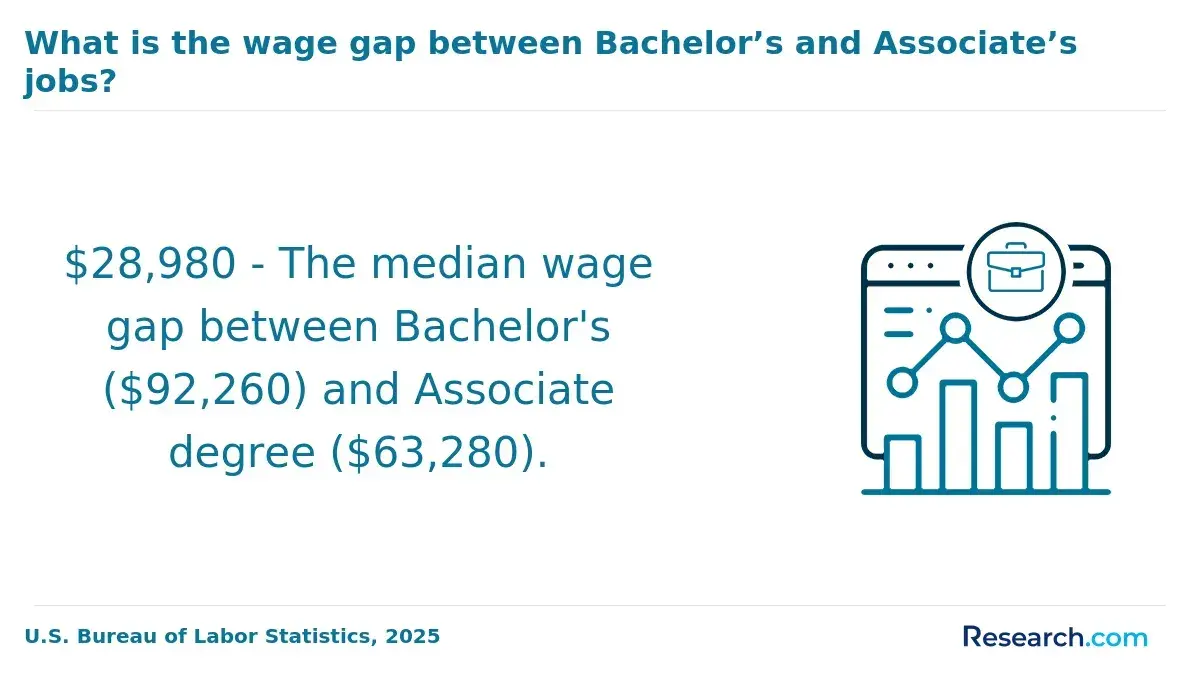
The U.S. Bureau of Labor Statistics projects 4% employment growth for environmental scientists and specialists from 2024 to 2034 and reports a 2024 median annual wage of $80,060 for the occupation. This occupation-level figure is not a graduate earnings guarantee: environmental science roles vary by location, sector, experience, bachelor's-versus-master's entry requirements, and specialization.
Environmental science master's graduates may pursue work in environmental consulting, compliance, natural-resource management, sustainability, remediation, conservation, water quality, climate adaptation, environmental data analysis, or public agencies. Core duties can include collecting and interpreting environmental data, evaluating regulatory compliance, preparing reports, managing field projects, communicating risks, and recommending mitigation strategies.
Career value is often strongest when the program strengthens an identifiable capability, such as GIS, environmental sampling, statistics, impact assessment, permitting, environmental policy, remote sensing, project management, or scientific writing.
Technical computing can be valuable in data-heavy environmental roles, so prospective students may also compare an affordable online computer science degree if their career objective centers on programming, modeling, or data systems rather than environmental practice alone.
Before enrolling, compare the degree's total net cost with your likely career use case. Ask employers in your target area whether they value a master's for promotion, request job postings to identify repeated skill requirements, and examine whether a thesis, capstone, internship, portfolio, or faculty research opportunity will produce evidence of those skills.
Professional certifications and state-specific roles may have separate education or experience requirements, so verify those directly with the relevant employer or licensing authority.
How Should Students Compare the Cheapest Accredited Online Environmental Science Master's Programs?
The best low-cost option is the program with the lowest verified net total cost that still meets your academic, technical, scheduling, and career requirements. Do not choose solely from an advertised tuition figure. Build a short list of accredited programs with transparent online pricing and compare the same information for each one.
A practical comparison should include the following decision factors.
| Factor | What to compare | Why it matters |
| Accreditation | Recognized institutional accreditation and degree conferral | Supports employer, transfer, and further-study confidence |
| Tuition policy | Exact online rate, residency treatment, and rate-change policy | Confirms whether no surcharge applies to you |
| Total required credits | Core courses, electives, thesis or capstone, and prerequisites | Determines total tuition more accurately than rate alone |
| Mandatory expenses | Fees, software, field gear, proctoring, and travel | Identifies costs missing from headline tuition |
| Delivery and timeline | Asynchronous access, live sessions, start dates, and completion window | Shows whether the program works with employment and reduces time costs |
| Curriculum | Generalist or concentration courses, thesis/capstone, and technical tools | Connects the degree to the skills your target roles request |
| Student and career support | Advising, faculty access, internship help, alumni network, and career services | Helps assess value beyond the credential |
| Transfer and aid | Written transfer evaluation, scholarships, assistantships, and employer billing | Can change your net price and completion plan |
After narrowing the list, contact each school with a consistent set of questions and retain the answers. Ask for the catalog year that will govern your degree, an itemized estimate for all required credits, confirmation of online-student eligibility for aid, and disclosure of any campus, field, internship, or residency expectation. Then calculate a best-case and conservative budget before accepting admission.
Important red flags include a school that cannot state the full credit requirement, a tuition page that omits fees, unclear accreditation language, pressure to enroll before receiving written information, or a curriculum that does not show the technical preparation required for your intended work.
The cheapest accredited online environmental science master's is the right investment only when its complete cost and learning outcomes match your personal career plan.
Other Things You Should Know About Environmental Science
Requirements vary. Many programs accept applicants from biology, chemistry, geology, geography, engineering, environmental studies, or related fields. Applicants from other majors may need prerequisites in natural science, mathematics, statistics, or research methods.
Some do, while others use virtual labs, local projects, datasets, or a capstone. Review the curriculum and ask whether fieldwork must be completed at a specific location, whether students arrange their own sites, and whether travel costs are required.
A thesis can fit students seeking research experience, doctoral study, or research-focused roles. A non-thesis capstone or professional project often fits working professionals who want applied skills and a faster, more structured completion path. Neither option is universally better.
Useful skills commonly include data analysis, GIS or remote sensing, scientific writing, environmental sampling, regulatory literacy, statistics, project management, communication, and collaboration. Prioritize programs that provide demonstrable practice in the skills appearing in your target job postings.
- EdAssist | Understanding college pricing models https://www.brighthorizons.com/resources/blog/edassist/understanding-college-pricing-models
- 2025 Most Affordable Online Environmental Science Degrees https://www.onlineu.com/most-affordable-colleges/environmental-science-degrees
- Best of 2025: Environmental Science Online Master's Programs https://www.onlinemastersdegrees.org/best-programs/environmental-science/
- Part Time, Full Potential - Ithaka S+R https://sr.ithaka.org/publications/part-time-full-potential/
- Costs and Payments https://atlanticcape.edu/one-stop/costs-payments.php
- Environmental science (M.S.) | University of Idaho https://www.uidaho.edu/academics/degree-finder/environmental-science-ms
- How Much Do Environmental Graduate Programs Cost? https://www.cjbnetwork.com/articles/how-much-do-environmental-graduate-programs-cost
- Average Cost of a Master's Degree: 2025 Analysis https://educationdata.org/average-cost-of-a-masters-degree