2027 Online Environmental Science Degree Programs With No Personal Statement or Admissions Essay Required

Co-Founder and Chief Data Scientist
Applying to an online environmental science degree can feel needlessly difficult when a personal statement is the main barrier. "No essay required" usually means the standard application does not request an admissions essay, not that every applicant is automatically admitted.
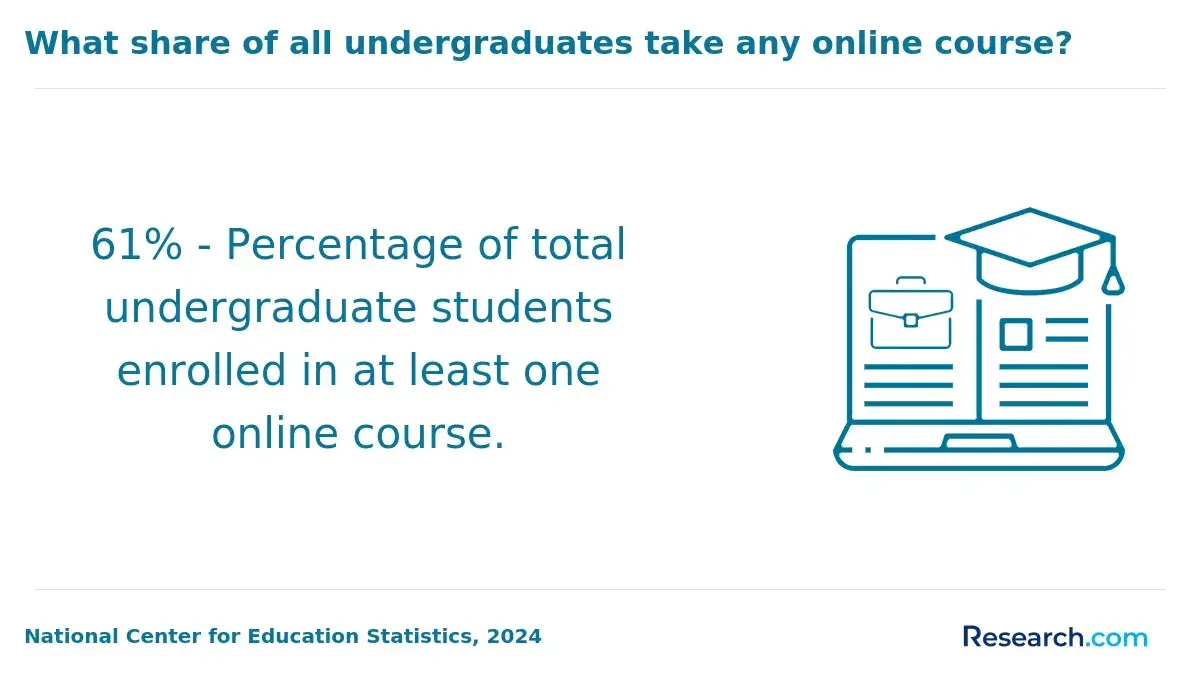
This matters as online study remains mainstream: National Center for Education Statistics data show that 54% of U.S. college students took at least one distance education course in fall 2022. This guide explains the requirements that remain, how policies differ, and how to choose a credible program that fits your academic and career goals.
Key Things You Should Know
- A true no-essay online environmental science program does not require a personal statement for standard admission, but it may still evaluate official transcripts, GPA, prerequisite science coursework, residency, and transfer-credit eligibility.
- No essay is not the same as open admission or guaranteed acceptance; programs can be selective, capacity-limited, or require additional materials when an applicant's academic record needs review.
- Essay-optional and essay-waived policies differ from a permanent no-essay policy, and scholarships, honors programs, competitive internships, and departmental awards may still request written responses.
What Does No Personal Statement or Admissions Essay Required Mean for Online Environmental Science Degree Programs?
A no-personal-statement or no-admissions-essay policy means applicants can complete the program's standard admissions application without submitting a narrative explaining their goals, background, academic history, or interest in environmental science. The school instead bases its initial decision primarily on objective records, such as transcripts and prior coursework.
This policy applies to admission into the institution or degree program only when the published requirements say it does. It may not apply to a separate honors college, a scholarship, an accelerated pathway, a field-placement exception, or an appeal after denial. Applicants should read the requirements for their exact degree level and applicant category rather than relying on a general "no essay" label.
Online environmental science programs may lead to a Bachelor of Science, Bachelor of Arts, degree-completion credential, or, less commonly, an associate degree. Curricula commonly include ecology, environmental policy, chemistry, biology, geographic information systems, statistics, sustainability, and field or laboratory components. A simplified application should not be the deciding factor; students should first determine whether the course sequence supports their intended work in conservation, environmental compliance, sustainability, natural resources, or graduate study.
Students who are still identifying an academic direction can compare environmental science with other university majors before committing to a program. Environmental science is interdisciplinary, so its fit depends on whether you prefer scientific analysis, policy work, field observation, data analysis, or a combination of these areas.
What Admissions Requirements Do Online Environmental Science Degree Programs Use Instead of an Essay?
Removing an essay generally shifts attention to verifiable academic and administrative materials. Requirements vary by institution, degree level, and whether you are a first-year, transfer, returning, military-connected, or international applicant.
The following comparison shows common alternatives to an admissions essay and what each item helps a school assess.
| Requirement | What the school evaluates | Why it matters for environmental science |
| Official transcripts | Completed courses, grades, and academic standing | Programs may review readiness for science and quantitative coursework. |
| Minimum GPA | Overall or transferable college GPA | A stated minimum is an eligibility threshold, not always a guarantee of admission. |
| Prerequisite courses | Prior biology, chemistry, algebra, or statistics preparation | Missing prerequisites can delay upper-level environmental science courses. |
| Application form | Identity, educational history, residency, and intended term | Incomplete forms can hold up an otherwise essay-free application. |
| Test scores, if requested | Academic preparation for some first-year applicants | Test-optional rules concern exams, not necessarily essays or transcripts. |
| Recommendations or résumé | Context on preparation, when required | These are more common in selective, graduate, or special-track admissions. |
Before applying, confirm whether the GPA rule applies to cumulative high school GPA, all college work, or only transferable credits. Also ask whether laboratory sciences must include in-person labs. Some online programs deliver virtual labs, while others require a campus visit, approved local lab, or field activity.
Strong quantitative preparation can be especially valuable. Environmental professionals often use data to monitor pollution, interpret ecosystems, estimate risk, and report compliance findings. Students who want additional mathematical preparation can review an online bachelor in mathematics as a separate pathway or a point of comparison for quantitatively intensive study.
Who Is a Good Fit for Online Environmental Science Degree Programs With No Admissions Essay?
No-essay admissions can be a practical fit for qualified applicants who can demonstrate readiness through transcripts and do not need an essay to explain unusual circumstances. It can reduce application time, particularly for working adults, military learners, and transfer students applying to several institutions.
A simplified application may work well for the following students, provided the program's curriculum and outcomes are a match.
- Transfer students with a solid college record and clearly documented science, mathematics, or general education credits.
- Working adults returning to finish a bachelor's degree who need predictable admissions steps and flexible course scheduling.
- First-year applicants whose grades and required coursework already meet published entry standards.
- Students seeking an environmental career change who can complete any required science prerequisites before upper-division courses.
- Applicants who prefer to reserve substantial writing time for scholarships, financial aid appeals, or academic work rather than a general admissions essay.
It may be less suitable for applicants with a low GPA, a long academic gap, limited prerequisite coursework, disciplinary history, or major circumstances that need context. An essay-optional program can be strategically better in those cases because it may let the applicant explain an upward grade trend, relevant work experience, caregiving responsibilities, military service, or a clear environmental career goal.
Applicants should also distinguish environmental science from environmental studies. Environmental science typically has a stronger natural-science and quantitative emphasis, while environmental studies may focus more on policy, society, ethics, and sustainability. Review required chemistry, calculus, statistics, and lab expectations before assuming one program is interchangeable with another.
These terms are often used loosely in search results, but they create different applicant choices. The safest approach is to treat the school's current application checklist as controlling, because policies can differ by term, applicant type, and program.
This table separates the three policies so you can decide whether submitting writing would be possible or useful.
| Policy | What it means | Applicant decision |
| No essay required | The standard application does not request an admissions essay. | Submit the required records; do not assume other writing is prohibited or unnecessary for special opportunities. |
| Essay-optional | The applicant may submit an essay, but it is not required for a complete application. | Consider submitting one if it adds important context not visible in transcripts. |
| Essay-waived | An essay normally required has been removed for a defined group, term, pathway, or condition. | Verify the waiver applies to your degree, start date, and applicant category. |
| Essay required | A written statement is needed for admission or a competitive review. | Plan enough time to answer the prompt directly and provide accurate supporting details. |
An essay waiver is usually the most time-sensitive label. For example, a college may waive an essay for transfer applicants with a specified number of credits but require one from first-year applicants. Another school may waive it for general admission while retaining written responses for an honors cohort or scholarship competition.
Do not confuse no-essay admission with test-optional admission. Test-optional means standardized test scores may be omitted; it does not tell you whether an essay, transcript, recommendations, or placement assessment is required. Likewise, a school can ask for an additional written explanation if records are inconsistent or an admissions reviewer needs clarification.
Not necessarily. A no-essay policy removes one application component, but admission can still depend on GPA, completed credits, prerequisite grades, space in the program, residency rules, and institutional review standards. "Easy to apply to" and "easy to be admitted to" are different claims.
The U.S. Bureau of Labor Statistics reported a 2023 median annual wage of $78,980 for environmental scientists and specialists, excluding epidemiologists, and projected 6% employment growth from 2023 to 2033. This broad occupational category includes roles with varied education and experience requirements, so students should use it as labor-market context rather than a predicted outcome from any one online degree.
Some programs use broad-access admissions at the institution level but impose additional requirements before students can enter upper-division environmental science courses. Others may offer conditional admission, allowing enrollment while requiring students to meet a GPA, complete foundational courses, or satisfy placement requirements. Conditional admission can be helpful, but it may extend the time and tuition needed to graduate.
A better way to judge accessibility is to ask the admissions office whether the published criteria are minimum requirements, whether the degree has capacity limits, and whether students are admitted directly to environmental science or first admitted to the university. If your record needs explanation, an essay-optional program may offer more control over your application story than a strictly no-essay process.
Application simplicity should also not outweigh career alignment. Students considering faster routes in another discipline can compare an accelerated business degree, but environmental positions involving scientific assessment generally require coursework that an accelerated business curriculum does not replace.
Accreditation is more important than an easy application. Start by confirming that the institution holds institutional accreditation recognized by the U.S. Department of Education or the Council for Higher Education Accreditation. This supports transferability, federal aid eligibility where applicable, and employer confidence, though it does not guarantee that every credit will transfer to another school.
Environmental science does not have one universal programmatic accreditor comparable to those in some licensed professions. Quality review should therefore extend beyond an accreditation claim. Check the institution's accreditor, then examine whether the degree includes coherent science coursework, qualified faculty, access to academic advising, library resources, tutoring, and transparent graduation requirements.
Use the following checks before paying an application fee or making an enrollment deposit.
- Find the school in the federal Database of Accredited Postsecondary Institutions and Programs and confirm that its accreditation status is current.
- Read the online environmental science curriculum course by course, including chemistry, biology, statistics, laboratory, fieldwork, and capstone requirements.
- Ask how online students complete labs, field experiences, internships, and equipment-based assignments, including any travel or local-site costs.
- Verify whether the program is designed for careers requiring state-specific credentials, permits, or professional certifications, because requirements may vary by employer and jurisdiction.
- Review published tuition, mandatory fees, technology costs, transfer-credit limits, withdrawal policies, and student-support services.
Red flags include vague accreditation language, missing faculty information, a curriculum with little science content, unclear lab arrangements, unusually broad promises about jobs, or pressure to enroll before you receive a written cost estimate. A legitimate school should be able to identify its accreditor and explain how online learners meet the same learning outcomes expected of other students.
The process is usually shorter than a traditional essay-based application, but it still requires careful document collection and deadline management. Start early enough to resolve transcript holds, prerequisite questions, and financial aid steps before your intended term.
For most applicants, the process follows these practical steps.
- Confirm that the exact online environmental science degree, not merely the university, lists no personal statement or admissions essay for your applicant type.
- Create the application account and select the correct degree level, online format, start term, and campus designation if the institution uses multiple locations.
- Request official high school and/or college transcripts from every institution the application requires.
- Submit any required residency information, identification, application fee or fee-waiver request, and test scores only if the school requests them.
- Provide prerequisite documentation and course descriptions if the school needs to evaluate transfer science or mathematics credits.
- Monitor the applicant portal for missing items, decisions, conditional-admission conditions, and enrollment deadlines.
- After admission, compare your transfer evaluation and degree plan with the catalog before registering or accepting financial aid.
Keep copies of confirmation emails and screenshots of the requirements page. If an admissions representative says no essay is needed, ask for confirmation in writing and specify whether that answer covers scholarships, honors programs, transfer review, and any departmental application.
A common mistake is submitting an unnecessary generic essay to a no-essay program through an upload field intended for other documentation. Extra materials may not be reviewed and can create confusion. Submit optional writing only when the school expressly permits it and when it provides meaningful context.
Yes, many online programs use no-essay pathways for transfer and adult applicants, but transfer rules often differ from first-year admissions. Adult students may be evaluated primarily on college-level work completed after high school, while applicants with fewer transferable credits may need to provide both high school and college transcripts.
Transfer admission does not automatically mean every course will count toward the degree. Environmental science programs commonly review equivalencies for general education, biology, chemistry, mathematics, and laboratory courses individually. A course can transfer as elective credit yet fail to satisfy a required major prerequisite.
Before applying, ask for an unofficial transcript review if the institution offers one. Then verify the maximum number of transferable credits, minimum grade required for major courses, course-age limits for sciences if any, and whether online or community-college labs are accepted. These details affect time to completion more than the absence of an essay.
Adult learners should also ask about course pacing, synchronous sessions, exam proctoring, fieldwork, and required software. A fully online label may still include scheduled virtual labs, local environmental observations, or a capstone project. Students seeking a shorter, career-oriented starting point may also compare easy associate degrees that pay well, while recognizing that an associate degree is not equivalent to a bachelor's environmental science curriculum.
If your prior record includes withdrawals, low grades, or a major interruption, do not assume the no-essay policy prevents you from providing context. Ask whether the admissions office accepts an optional statement, academic-addendum form, or appeal letter. Keep the explanation brief, factual, and focused on current readiness.
No-essay admissions policies do not inherently reduce tuition or make financial aid more available. Tuition is set by the institution and may vary by residency, credit load, degree level, course delivery, and fees. Online students should compare the total estimated program cost, not simply per-credit tuition.
For context, the College Board's 2024 Trends in College Pricing report listed average published tuition and fees at public four-year institutions for in-state students at $11,610 for the 2024-25 academic year. That national figure is not an online environmental science price quote: it excludes many living, technology, lab, and course-material costs and cannot predict what an individual student will pay.
Federal student aid eligibility generally depends on factors such as enrollment, satisfactory academic progress, citizenship or eligible noncitizen status, and financial need or loan limits - not on whether an admission essay was required. Submit the Free Application for Federal Student Aid as early as possible under the applicable cycle, then review each school's aid offer for grants, work-study eligibility, loans, and renewal conditions.
Scholarships are a separate issue. A school may admit a student without an essay but require essays for institutional merit awards, environmental leadership scholarships, honors programs, or external awards. Consider the trade-off: a faster no-essay application may be convenient, but skipping optional scholarship writing can leave funding opportunities unexplored.
When comparing offers, request a written breakdown of tuition, mandatory fees, estimated books or software, lab supplies, proctoring, travel for field requirements, and any charges that change after transfer credit is posted. Avoid treating a large loan offer as a discount; loans generally require repayment with applicable interest and terms.
How Should You Compare Online Environmental Science Degree Programs With No Admissions Essay?
Compare programs in a consistent order: academic fit, institutional quality, practical delivery, total cost, and admissions convenience. A program with no essay is a strong option only when it also offers the science preparation, support, and flexibility needed for your next step.
This comparison framework highlights the factors that most directly affect degree value and completion planning.
| Comparison factor | What to check | Why it changes the decision |
| Admissions policy | Whether no essay applies to your applicant type and term | Prevents confusion between permanent no-essay, optional, and waived policies. |
| Science curriculum | Required biology, chemistry, physics, statistics, GIS, labs, and capstone work | Determines readiness for environmental work or graduate study. |
| Accreditation and reputation | Current institutional accreditation and transparent program information | Supports informed decisions about aid, transfer, and employer recognition. |
| Online delivery | Live sessions, lab format, fieldwork, proctoring, and travel expectations | Shows whether the format genuinely works with your location and schedule. |
| Transfer evaluation | Accepted credits, major equivalencies, and remaining prerequisites | Can substantially change time to degree and total cost. |
| Total net cost | Tuition, fees, aid, materials, and required travel after grants | Provides a more realistic affordability comparison than advertised tuition alone. |
| Career preparation | Internships, career support, GIS or data tools, alumni outcomes, and graduate-school preparation | Connects the degree to the roles and skills you want to pursue. |
Ask each admissions team the same questions: Is an essay required for my category? Are there separate major, scholarship, or honors applications? Which prerequisites must be completed before upper-level courses? How are labs and field experiences handled? Which fees are not included in tuition? Can I receive a preliminary transfer evaluation before enrolling?
Choose an essay-free program when your records already show readiness and the curriculum meets your goal. Consider an essay-optional program when you have important context or distinctive environmental experience to explain. If you need extensive career mentoring, specialized lab access, or preparation for graduate research, prioritize those resources even if the application requires more writing.
Students comparing related helping-profession degrees should recognize that accreditation requirements are field-specific; for example, CACREP online counseling programs follow a professional-accreditation model that does not apply to most environmental science degrees.
Other Things You Should Know About Environmental Science
No. A policy may differ for first-year, transfer, international, readmission, graduate, honors, or conditional-admission applicants. Confirm the checklist for your exact applicant category and intended start term.
Yes. An admissions office may request clarification about transcripts, academic gaps, disciplinary history, residency, prerequisite equivalencies, or other issues. This does not necessarily mean the advertised standard application required an essay.
Often, yes. Many merit, leadership, departmental, and external scholarships use short-answer questions or essays to distinguish applicants. Review scholarship requirements separately from the degree admission checklist.
They can. Delivery varies by school: labs may be virtual, completed through kits, conducted at an approved local site, or scheduled in person. Confirm these requirements before enrolling, especially if travel or local access would be difficult.
- [PDF] Personal Statement - Monmouth College https://www.monmouthcollege.edu/live/files/37-personal-statementpdf
- 2025 Most Affordable Online Environmental Science Degrees https://www.onlineu.com/most-affordable-colleges/environmental-science-degrees
- 33 Colleges Without Supplemental Essays! https://www.collegeadvisor.com/resources/colleges-without-supplemental-essays/
- 12 Personal Statement Examples + Analysis 2026/2027 | College Essay Guy https://www.collegeessayguy.com/blog/personal-statement-examples
- Colleges That Don't Require Supplemental Essays https://www.collegexpress.com/lists/list/colleges-and-universities-that-dont-require-supplemental-essays/3008/
- Personal Statements vs. Statements of Purpose: The Difference https://www.collegeessayadvisors.com/personal-statements-and-statements-of-purpose-whats-the-difference/
- College Applications Without Essays: Do They Exist? https://collegewise.com/blog/college-application-without-essay
- The Most Competitive Colleges: Acceptance Rates, SAT Scores, and What It Takes to Get In https://orieladmissions.com/most-competitive-colleges/
- Why personal statements in academic admissions are (mostly) a waste of time - Acuity Insights https://acuityinsights.com/personal-statements-academic-admissions-mostly-waste-time/