2027 Online Environmental Science Degree Programs With No Letters of Recommendation Required

Co-Founder and Chief Data Scientist
An online environmental science degree can be a practical route for working adults, transfer students, and applicants who do not have recent academic references. "No letters of recommendation required" means letters are not part of the standard application; it does not mean admission is automatic or that transcripts, GPA, essays, or prerequisites are waived.
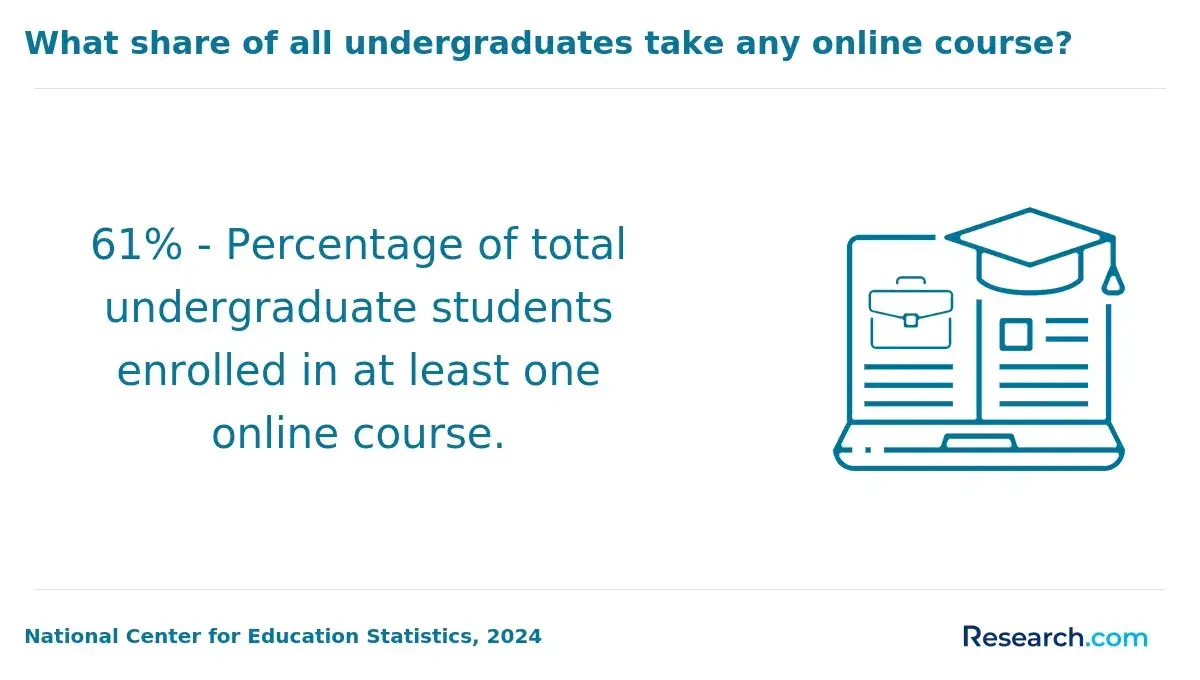
The National Center for Education Statistics reported that more than half of postsecondary students took at least one distance education course in fall 2022. This guide explains how to find credible programs, compare requirements, assess cost, and choose an option that supports your environmental career goals.
Key Things You Should Know
- Several legitimate online bachelor's programs in environmental science or closely related environmental studies fields use transcript-based admissions and do not list recommendation letters as a standard requirement, but applicants must confirm the policy for their exact degree and entry term.
- No-recommendation admissions usually shift attention to official transcripts, cumulative GPA, science and math preparation, a personal statement, a resume, or transfer-credit history; simplified paperwork does not indicate lower academic standards.
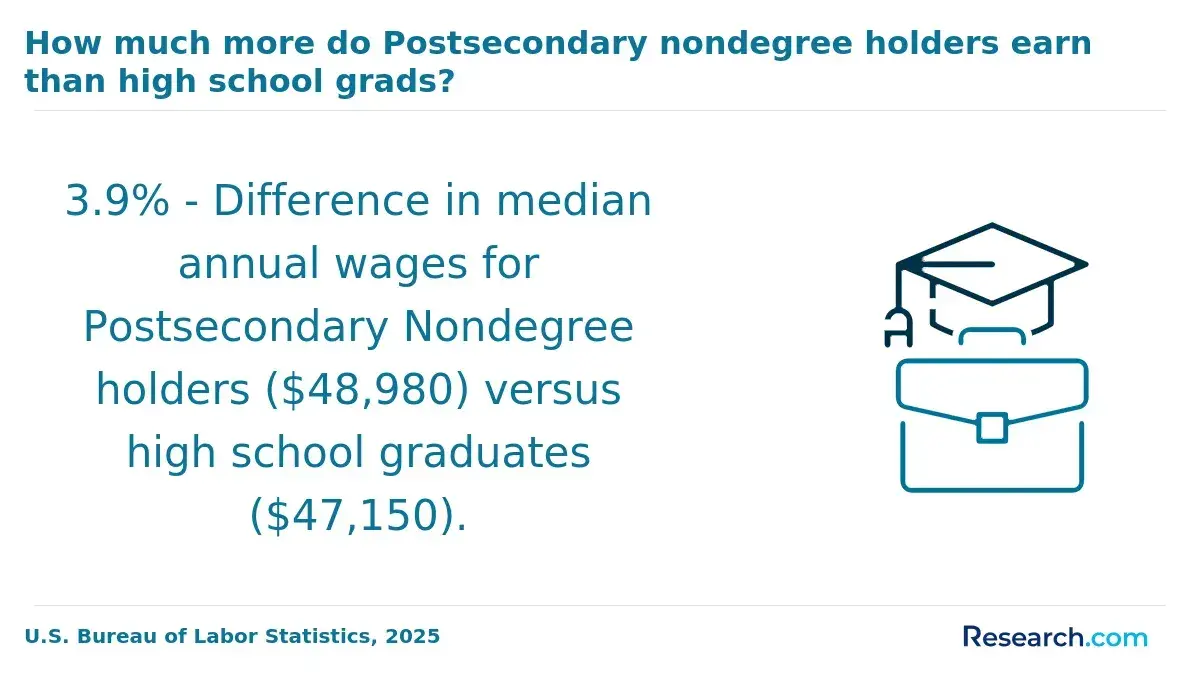
- Compare institutional accreditation, field and lab requirements, total tuition and fees, transfer rules, and career alignment before applying; for context, average published 2024-25 tuition and fees were $11,610 at public four-year in-state institutions and $43,350 at private nonprofit four-year institutions.
Which Online Environmental Science Degree Programs Require No Letters of Recommendation?
Recommendation-letter policies are set by the institution and can differ between undergraduate, graduate, transfer, and international applications. At the bachelor's level, schools commonly use a standard undergraduate application that does not require letters.
Programs may be titled environmental science, environmental studies, environmental management, sustainability, natural resources, or conservation; curriculum matters more than the title alone.
The programs below are examples of online or substantially online undergraduate options whose standard published undergraduate admissions processes have commonly emphasized applications and transcripts rather than recommendation letters. Because requirements can change, treat this as a starting list and obtain written confirmation from admissions before paying an application fee:
| Institution and online option | Degree focus | Typical no-letter admissions approach | What to verify |
| Southern New Hampshire University | B.S. in Environmental Science | Application and prior-school transcripts are central materials | Transfer evaluation, science coursework, and current documentation list |
| Oregon State University Ecampus | B.S. in Environmental Sciences | Undergraduate application review generally centers on academic records | Whether the desired option is fully online and any laboratory expectations |
| Unity Environmental University | B.S. in Environmental Science and Climate Change | Streamlined undergraduate application model focused on academic history | Accreditation, course pacing, field experience, and aid eligibility |
| American Public University System | B.S. in Environmental Science | Admissions commonly emphasize application and educational records | Transfer applicability, lab delivery, and employer fit in your target field |
For a student selecting among university majors, environmental science is best suited to those who want an interdisciplinary foundation in ecology, chemistry, earth systems, data interpretation, policy, and environmental problem-solving.
Applicants seeking work as a licensed engineer, geologist, or environmental health specialist should check whether their intended role requires a more specific accredited program, graduate credential, or state license.
A school that says recommendations are "optional" is not necessarily a no-recommendation program. Optional letters can be submitted to strengthen an application, while a conditional waiver means letters may still be required for applicants below a GPA threshold, applicants to a graduate concentration, or those without particular coursework. Ask whether letters are required, optional, accepted but unnecessary, or waived only in selected circumstances.
What Are the Admission Requirements for Online Environmental Science Degree Programs With No Recommendation Letters?
Most online undergraduate environmental science programs use a holistic but document-focused review. The absence of recommendation letters removes one item from the checklist, not the school's responsibility to determine whether an applicant is prepared for college-level science.
Applicants should expect some combination of the following materials. Requirements differ by institution, degree level, residency status, and whether you are applying as a first-year or transfer student:
- Completed application and any required application fee or fee-waiver request.
- Official high school transcript, GED record, and/or official college transcripts.
- Minimum GPA review, which may apply to overall coursework, transferable credits, or prerequisite courses.
- Evidence of English composition, algebra, biology, chemistry, or other prerequisite preparation when required.
- Personal statement, short-answer responses, or an explanation of academic history when requested.
- Resume or employment history, especially for adult, military-affiliated, or degree-completion applicants.
- Identity, residency, or immunization documentation when institutionally required.
SAT and ACT scores are frequently optional or not used at many online-focused undergraduate institutions, but students should not assume a test-free policy applies everywhere. GRE scores are generally not part of bachelor's admissions; they are more relevant to some master's programs.
Graduate environmental science programs are also more likely than bachelor's programs to request recommendations, research statements, and prerequisite science coursework.
Before applying, use this short verification process to avoid a preventable application delay:
- Open the admissions page for the exact online degree, not a general university admissions page.
- Check the catalog year and the application term because requirements may change between cycles.
- Read separate rules for first-year, transfer, international, and graduate applicants.
- Ask admissions by email whether recommendation letters are required, optional, or conditionally waived for your applicant type.
- Save the response and submit all required records before the stated document deadline.
Are Online Environmental Science Programs With No Letters of Recommendation Easier to Get Into?
Not necessarily. A program without recommendation letters may be easier to apply to because it requires fewer third-party documents, especially for applicants who have been out of school for years. It is not automatically less selective, less rigorous, faster to complete, or more likely to admit every applicant.
Admissions staff can evaluate academic readiness through transcripts, GPA trends, prior college performance, prerequisite completion, writing samples, and documented professional experience. Environmental science involves quantitative and laboratory-based learning, so a school may still expect preparation in algebra, statistics, biology, chemistry, geology, or physics.
The distinction below helps applicants interpret streamlined admissions language accurately:
| Admissions feature | What it may mean | What it does not mean |
| No recommendation letters | The school does not need external evaluators to complete the standard application | Guaranteed admission or no review of academic preparation |
| Test optional | Standardized scores may not be required | All other academic requirements are removed |
| Rolling admissions | Applications may be reviewed across multiple dates | There is no deadline for transcripts, aid forms, or class registration |
| Open or broad-access admission | The institution may provide wider entry opportunities | Every major, course sequence, or advanced option has unrestricted entry |
A common mistake is selecting a program based only on minimal application friction. A better comparison considers whether the curriculum includes environmental sampling, geographic information systems, statistics, ecology, policy, and a capstone or internship. These features are more informative for career preparation than whether a recommender had to submit a letter.
When letters are not required, admissions teams typically rely more heavily on records that applicants can supply directly. This approach can benefit professionals without recent instructors or supervisors who can write detailed letters, but it also makes accuracy and completeness of submitted records especially important.
The following comparison shows what each alternative material can communicate to an admissions reviewer:
| Application material | What it helps demonstrate | How to make it stronger |
| Official transcripts | Academic performance, completed credits, and prerequisite readiness | Submit records early and review them for missing institutions or unresolved holds |
| GPA and course pattern | Consistency and readiness for college-level science | Highlight recent improvement and complete recommended prerequisites when possible |
| Personal statement | Goals, context, writing ability, and fit with the degree | Connect specific environmental interests to the curriculum and realistic career plans |
| Resume | Relevant employment, military service, fieldwork, technical skills, and leadership | Use concrete duties such as data collection, compliance support, GIS, or sustainability reporting |
| Prerequisite coursework | Preparation for chemistry, ecology, statistics, and related courses | Provide syllabi only when the transfer office requests them |
Environmental science careers can include environmental technician, sustainability coordinator, conservation program assistant, compliance specialist, water-quality analyst, and environmental scientist roles. Responsibilities vary from field sampling and regulatory documentation to data analysis and public communication.
The U.S. Bureau of Labor Statistics reported a 2024 median annual wage of $80,060 for environmental scientists and specialists, including health; that occupation typically requires at least a bachelor's degree, but pay and hiring standards vary substantially by industry, location, experience, and specialization.
Quantitative preparation can improve both admission readiness and later coursework. Students who need a stronger foundation may benefit from reviewing options for an online bachelor in mathematics or taking transferable algebra, statistics, and data-analysis courses before entering a science-intensive program.
Institutional accreditation is the first legitimacy check. In the United States, a recognized institutional accreditor evaluates the college or university as a whole, including governance, finances, academic quality, and student-support systems.
Accreditation does not make every course identical, but it is important for federal aid eligibility, credit transfer, graduate-school applications, and employer confidence.
Environmental science bachelor's degrees do not always have a single universal programmatic accreditor in the way that some licensed professions do. Therefore, evaluate the institution, the curriculum, instructional delivery, and outcomes rather than assuming a program is strong because it is online or because admissions are streamlined.
Use the following checks before enrolling. They help separate a credible online degree from a program with unclear quality claims:
- Search the U.S. Department of Education's Database of Accredited Postsecondary Institutions and Programs or the Council for Higher Education Accreditation directory for the institution's recognized accreditation status.
- Confirm that the online program is awarded by the accredited institution itself, not merely marketed by a third-party company.
- Review the catalog for credit requirements, faculty qualifications, laboratory or field components, learning outcomes, and capstone expectations.
- Ask how online lab courses work, whether in-person or local field activities are required, and whether associated costs are included in tuition estimates.
- Check whether credits transfer from and to institutions you may use later, understanding that transfer acceptance is always decided by the receiving school.
- Be cautious of pressure to enroll immediately, vague accreditation language, unsupported salary promises, or a refusal to provide a written cost breakdown.
Employers generally focus more on the awarding institution, your skills, relevant experience, and the degree's applicability to the role than on whether recommendation letters were required at admission. For regulated pathways, verify requirements directly with the relevant state board or employer. Environmental consulting, engineering-adjacent work, and public-sector roles may have specific coursework, field, certification, or experience expectations.
A no-recommendation policy does not predict tuition. Online environmental science costs depend on whether the institution is public or private, your residency classification, total credits required, transfer credits accepted, course format, technology fees, lab kits, fieldwork, and whether tuition is charged by credit or term.
For a broad benchmark, College Board's 2024-25 published tuition-and-fee averages were $11,610 for public four-year in-state institutions and $43,350 for private nonprofit four-year institutions.
These figures are not price quotes for online environmental science degrees and exclude important expenses such as housing, books, transportation, and some program fees. Use them only to frame why obtaining a program-specific estimate matters.
This cost view identifies the expenses applicants should request in writing before comparing offers:
| Cost component | Why it can change the total | Question for the school |
| Tuition per credit or term | Rates may differ by residency, enrollment level, or program | What is the current rate and how many credits does my degree plan require? |
| Mandatory fees | Technology, student services, graduation, and course fees may be separate | Which fees apply to fully online students each term? |
| Laboratory and field expenses | Environmental courses may require kits, software, travel, or local materials | Which courses have additional lab, proctoring, or field costs? |
| Transfer-credit evaluation | More accepted credits can reduce remaining tuition and time | How many credits are likely to apply before I commit? |
| Books and technology | GIS software, equipment, and textbooks may vary by course | Are software licenses, lab materials, and device requirements included? |
Compare net price rather than sticker price. A lower per-credit rate can cost more overall if the program accepts few transfer credits or adds recurring fees. Conversely, a higher listed rate may be offset by employer tuition assistance, institutional scholarships, or a clearer path to graduation.
Employer Confidence in Online vs. In-Person Degree Skills, Global 2024

Yes. A streamlined admissions process does not prevent an eligible student from receiving federal financial aid. Eligibility is tied primarily to the student, the institution's accreditation and federal participation, enrollment status, satisfactory academic progress, and the characteristics of the program - not to whether recommendation letters were submitted.
Students should complete the Free Application for Federal Student Aid as early as possible and use the financial-aid office's published deadlines. Aid may include federal grants, Direct Loans, work-study opportunities where available, state programs, institutional scholarships, military education benefits, and employer tuition assistance. Awards and borrowing limits depend on individual circumstances.
Take these steps before accepting an aid offer so that affordability remains part of the admissions decision:
- Confirm that the institution participates in federal student aid programs and that your online degree is eligible for enrollment-based aid.
- Compare each school's estimated cost of attendance with its aid offer, separating grants and scholarships from loans.
- Ask whether part-time online enrollment changes eligibility for institutional aid, grants, or employer reimbursement.
- Review satisfactory academic progress rules, including minimum completion and GPA expectations, because aid can be affected after enrollment.
- Borrow only after comparing the amount needed with expected remaining credits, personal budget, and likely repayment obligations.
Students comparing environmental science with shorter workforce-focused options can also examine easy associate degrees that pay well. An associate credential may suit some entry-level goals, but it is not automatically equivalent to a bachelor's degree for environmental scientist and specialist roles that commonly call for four-year preparation.
A standard bachelor's degree generally requires about 120 semester credits. A first-year student attending full time often plans for about four years, while a transfer student may finish sooner if prior coursework meets general education and major requirements.
Part-time enrollment can extend the timeline but may make it easier to balance employment, caregiving, or fieldwork obligations.
Online delivery changes where and when students complete much of the coursework; it does not eliminate academic requirements. Environmental science students may need scheduled laboratory simulations, mailed lab kits, synchronous sessions, local field observations, internships, or proctored assessments. Confirm these details before assuming every component is fully asynchronous.
The timeline below shows the main factors that affect completion more than the presence or absence of recommendation letters:
| Timeline factor | Potential effect on completion | What to check |
| Transfer credits | May shorten the remaining degree plan | Written evaluation of accepted credits and unmet requirements |
| Course sequencing | Prerequisites can delay upper-level science courses | When required chemistry, statistics, ecology, and capstone courses are offered |
| Enrollment pace | Part-time study generally increases total time | Typical credits per term and course-load expectations |
| Term calendar | Accelerated terms can increase intensity | Whether courses run in 8-week, 16-week, or other formats |
| Field or internship requirement | May require advance planning around work and location | Hours, supervision, travel, and scheduling expectations |
Accelerated course calendars can be useful for organized students, but they are not automatically the best option for science-heavy coursework. If speed is your primary concern, compare the workload carefully with an accelerated business degree; business and environmental science programs can have very different lab, quantitative, and sequencing demands.
Many online environmental science programs accept transfer credits, but each institution decides what will apply to its degree. A no-recommendation application process does not guarantee generous transfer policies.
The most valuable question is not simply how many credits a school accepts, but how many apply to your general education, major prerequisites, upper-level requirements, and graduation residency requirement.
Transfer students commonly submit official transcripts from every postsecondary institution attended. Schools may also request course descriptions or syllabi for science, laboratory, statistics, or environmental courses when equivalency is unclear. Credits may transfer as electives without reducing the number of major courses remaining.
Before enrolling, ask for an official or preliminary transfer evaluation and compare the results among schools. Pay particular attention to whether chemistry sequences, biology labs, calculus or statistics, GIS, and environmental policy courses fulfill degree requirements.
Students should also confirm the maximum number of credits accepted, minimum grade requirements, the age limit on older science courses, and whether credits from nationally accredited institutions are treated differently from credits earned at regionally accredited institutions.
A common mistake is withdrawing from a current course or selecting a new community-college class based on an informal verbal estimate. Obtain written preapproval whenever possible, especially for expensive laboratory courses. Keep syllabi, catalog descriptions, assignments, and lab-hour records until the transfer review is complete.
How Should You Compare Online Environmental Science Degree Programs That Do Not Require Letters of Recommendation?
The best program is not necessarily the one with the shortest application. A strong choice matches your academic preparation, schedule, budget, transfer record, and intended environmental role.
Start by narrowing your target: field-based science, conservation, compliance, sustainability, environmental policy, water resources, GIS, or preparation for graduate study can require different coursework.
Use the following comparison criteria to create a short list. They focus on factors that affect educational value after admission:
| Comparison area | Strong evidence to look for | Why it matters |
| Admissions policy | Current program-specific checklist stating whether letters are required | Prevents applying under an outdated or conditional waiver assumption |
| Institutional accreditation | Recognized accreditor and clear institutional status | Supports aid access, transferability, and credibility |
| Curriculum | Courses in natural science, data analysis, environmental systems, and applied work | Shows whether the degree fits your intended role |
| Online learning design | Clear explanation of labs, fieldwork, live sessions, and student support | Helps determine whether the format fits your location and schedule |
| Total net cost | Written estimate covering tuition, fees, materials, and remaining credits | Allows a meaningful affordability comparison |
| Career preparation | Internship, capstone, GIS, career services, and employer-relevant skills | Can strengthen a transition into environmental work or graduate study |
After comparing the basics, contact each admissions office with targeted questions: Is the no-letter policy unconditional for my applicant category? Which prerequisites must be completed before enrollment? How are labs delivered? What transfer credits will count toward the major? What will I pay after grants, scholarships, and expected transfer credit? Can the school provide a sample degree plan for a part-time student?
Applicants who are changing fields should also consider whether a related degree better fits their goals. Environmental science is usually the stronger choice for science-centered work involving sampling, analysis, ecology, and environmental systems; environmental studies or sustainability programs may emphasize policy, communication, and organizational change.
A comparable quality-checking mindset is useful when evaluating professional programs such as CACREP online counseling programs, where program-specific standards can matter greatly for career eligibility.
Choose a no-recommendation environmental science program if you have a clear academic or career purpose, can meet the remaining documentation requirements, and find an accredited curriculum with a workable total cost. Consider a different route if the program lacks needed laboratory preparation, does not accept enough transfer credit, cannot support your required credential path, or makes unverifiable claims about outcomes.
Other Things You Should Know About Environmental Science
Often, yes. No-recommendation admissions can be especially useful for adults who no longer have contact with instructors. You may still need official transcripts and may be asked to explain academic gaps, show relevant work experience, or complete prerequisites such as algebra or biology.
Only submit them if the school says optional letters are accepted and useful. Some streamlined applications do not review unsolicited documents. A focused personal statement and complete transcript record may be more valuable than materials the admissions office does not consider.
Many do, but delivery varies. Programs may use virtual labs, home lab kits, local field activities, intensive sessions, or required in-person components. Ask for the course sequence and laboratory format before enrolling, particularly if you need preparation for graduate school or technical fieldwork.
Check when you begin researching, again before submitting the application, and whenever you change terms or applicant categories. Use the current catalog and written confirmation from admissions because requirements for recommendations, transcripts, test scores, and prerequisites can change.
- 2025 Most Affordable Online Environmental Science Degrees https://www.onlineu.com/most-affordable-colleges/environmental-science-degrees
- Going Green: Scholarships for the Environmentally Friendly https://www.mefa.org/article/going-green-scholarships-for-the-environmentally-friendly/
- How to Apply to Environmental Graduate Programs https://www.cjbnetwork.com/articles/how-to-apply-to-environmental-graduate-programs
- How to Ask for Letters of Recommendation as an Online Student https://summitlearningcharter.org/resources/blog/how-online-students-should-ask-for-letters-of-recommendation/