2027 Online Environmental Science Degree Programs With Monthly Tuition Payment Plans

Co-Founder and Chief Data Scientist
An online Environmental Science degree can be easier to schedule than a campus program, but tuition is often billed by term rather than by month. Monthly payment plans divide an eligible balance into scheduled installments, usually within one semester or session.
This matters because the College Board reported average published tuition and fees of $11,950 for in-state students at public four-year colleges in 2025-26. This guide helps prospective online students compare payment-plan terms, upfront costs, aid timing, and alternatives before choosing a program.
Key Things to Know About Environmental Science Programs with Monthly Tuition Payments
- Online Environmental Science programs may offer monthly installments through the university's student-account office, but availability, enrollment fees, deposits, and installment counts usually vary by school and academic term.
- A payment plan spreads an existing tuition balance over a short period; it is not the same as a student loan and generally does not reduce tuition or extend repayment beyond the term.
- There is no reliable national average monthly payment for online Environmental Science degrees because tuition, transfer credits, aid, course load, and plan length differ; calculate the payment from your school's net balance after aid.
Which online Environmental Science degree programs have monthly tuition payment plans?
Monthly payment plans are usually offered at the institution level rather than attached to one Environmental Science major.
That means an eligible online student in an environmental science, sustainability, conservation, natural resources, or related program may be able to use the same tuition installment option as other enrolled students. However, a school can exclude certain accelerated terms, employer-paid students, noncredit courses, or students with overdue balances.
Start with regionally accredited colleges that publish both an online Environmental Science-related degree and a tuition-payment policy. The examples below are useful programs to investigate, but students should obtain written confirmation from the bursar or student-accounts office that the specific online program and term are eligible before paying a plan enrollment fee.
| Online program to investigate | Degree focus | What to confirm about monthly payments |
| Oregon State University Ecampus | B.S. in Environmental Sciences | Whether the Ecampus term balance can be placed on the university's current installment plan and whether laboratory or field-course charges are included. |
| University of Arizona Online | B.S. in Environmental Science | Whether online tuition, mandatory university fees, and any course-specific charges are eligible for the selected term. |
| Arizona State University Online | Sustainability or related environmental study options | Whether session-based courses use the same plan schedule as standard semester courses. |
| Other accredited online bachelor's programs | Environmental science, ecology, natural resources, or sustainability | Plan opening date, payment count, enrollment fee, down payment, and consequences of a missed installment. |
Program names and delivery formats can change, so treat a payment-plan page as a financial-policy document rather than proof of program availability. Confirm the degree's curriculum, science prerequisites, lab expectations, transfer-credit policy, and accreditation separately.
Students still comparing university majors can use career goals to decide whether environmental science, sustainability, biology, geoscience, or another field is the better academic fit.
When contacting a school, ask for the answer in writing and include the exact start term, number of credits, online program name, and whether you expect financial aid. A general statement that "payment plans are available" does not establish what your first payment will be.
How much do online Environmental Science degree programs typically cost?
Online Environmental Science tuition varies substantially by residency rules, institution, number of transferred credits, required labs, and whether a school charges one online rate or standard campus tuition. As a broad comparison point, the College Board reported average published 2025-26 tuition and fees of $11,950 for in-state students at public four-year institutions and $45,000 at private nonprofit four-year institutions.
Those figures are not online environmental science degree program prices, but they show why students should compare each program's full cost rather than its monthly installment alone.
A monthly payment amount should be based on the net amount due for one billing period, not on the degree's total advertised tuition. This calculation framework shows the information needed to estimate an installment without assuming that every school uses the same schedule.
| Amount to identify | How it affects the installment | What to verify |
| Term tuition and mandatory fees | Forms the starting balance for the semester or session. | Whether online, technology, student-service, laboratory, or field fees appear separately. |
| Grants, scholarships, and accepted aid | Can reduce the balance that must be paid from monthly income. | When aid is expected to disburse and what happens if it is delayed. |
| Required initial payment | Reduces the remaining balance before installments are calculated. | Whether it is a deposit, first installment, or nonrefundable plan fee. |
| Number of installments | More installments can lower each scheduled payment but may create more opportunities for late fees. | Whether payments occur monthly, biweekly, or on fixed term dates. |
Use this basic calculation: subtract confirmed aid and any required upfront payment from the eligible term balance, then divide the remainder by the number of scheduled installments.
Add the plan enrollment fee and any charges not covered by the plan to your personal budget. Do not count pending aid as available until the financial-aid office confirms that it is expected to disburse.
Lower tuition is not automatically the lower-cost choice. An affordable program that requires extra prerequisite science courses, repeated lab travel, or a slower pace may cost more over time than a slightly higher-priced program that accepts more transfer credits and fits your completion timeline.
How common are monthly tuition payment plans among Environmental Science programs?
Monthly or installment tuition plans are common enough across U.S. higher education that many colleges provide them through their student-account systems or a payment-plan vendor. There is no authoritative national count limited to online Environmental Science programs, however, because colleges typically report plan availability by institution and term rather than by major. Students should not assume a plan applies simply because a school offers online degrees.
The most important distinction is between a recurring monthly financing arrangement and a short-term term-based installment plan. Most college payment plans split one semester's or session's balance into several scheduled payments; they are designed to bring the account current before the term ends. They generally are not designed to finance a four-year degree over many years.
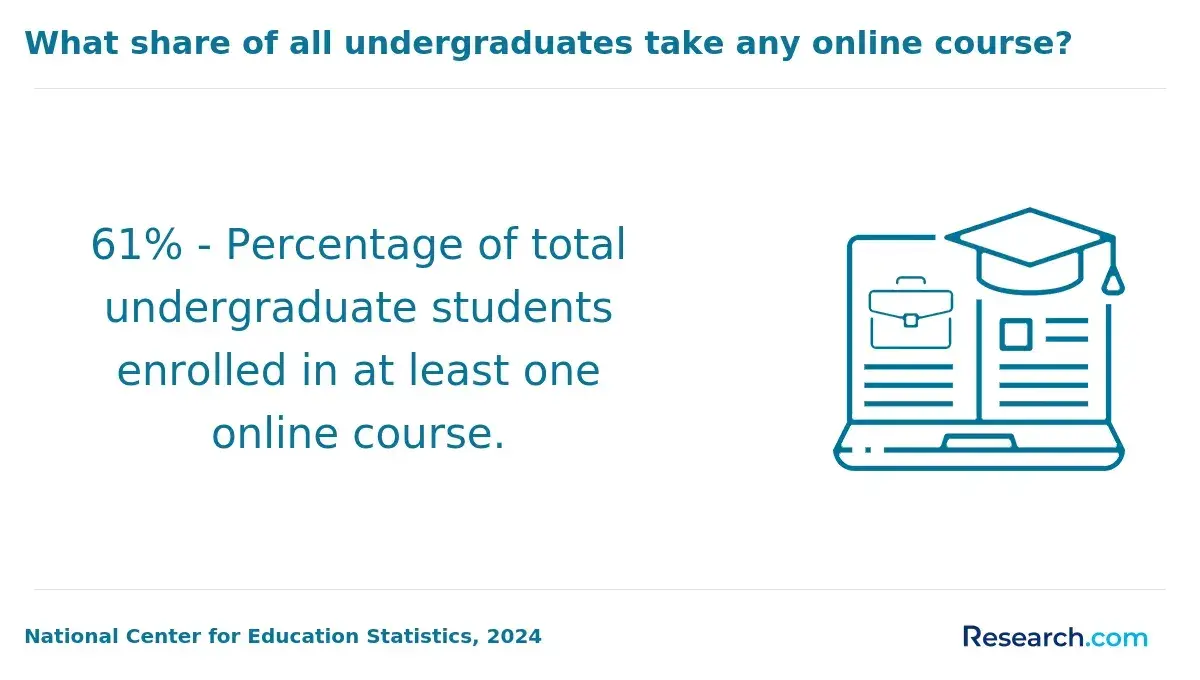
Current enrollment patterns also make flexibility relevant. The National Center for Education Statistics reported that more than half of postsecondary students took at least one distance education course in recent reporting, but online participation does not mean all online students receive identical billing options. Enrollment format, aid status, start date, and course length can affect eligibility.
Before applying, check the school's payment-plan page for the plan's opening date and deadline. Many plans offer the most installments only if a student enrolls before the term begins; waiting until classes start may leave fewer payments and a larger first installment.
Monthly tuition plans can make an Environmental Science degree more attainable for students who have steady income but cannot comfortably pay a full semester bill at once. They are especially useful when the balance remaining after grants, scholarships, employer support, and savings can realistically be cleared within the term.
A payment plan is generally a better fit for the following situations because it matches a short-term cash-flow problem rather than a long-term financing gap:
- You can cover each installment from predictable wages, savings, family support, or employer reimbursement without missing essential expenses.
- Your financial aid covers part of the bill, leaving a manageable remaining balance for the current term.
- You want to avoid borrowing a small short-term balance when the plan fee is lower than the potential cost of alternative financing.
- You understand that the balance must usually be paid before the semester or session ends.
A plan may be a poor fit if your income is irregular, the initial payment would deplete emergency savings, or the installment amount would require credit-card debt each month. In those cases, reducing the course load, postponing enrollment, pursuing additional grants, considering employer tuition assistance, or comparing federal loan options may be safer.
Employer reimbursement deserves special attention. Some employers reimburse only after successful course completion, while payment plans require money during the term. Ask whether your employer can pay the school directly or provide advance support; otherwise, you may need a short-term cash-flow solution even when reimbursement is expected later.
Students seeking a fast academic timeline should also compare workload against affordability. An accelerated business degree may be relevant for students considering a business-focused alternative, but accelerated formats commonly compress tuition due dates as well as coursework. The same scheduling issue can arise in accelerated environmental programs.
A monthly payment plan usually does not change the published tuition rate for an Environmental Science degree.
Its direct added cost is more often a nonrefundable enrollment or administrative fee, plus possible late fees or returned-payment charges. Unlike many private education loans, a standard school installment plan may not charge interest, but students must verify this in the agreement instead of assuming the plan is interest-free.
The comparison below separates short-term monthly payments from longer-term borrowing. It can help students choose a payment method based on total cost and repayment capacity rather than the smallest immediate bill.
| Option | Typical repayment window | Potential added cost | Best use case |
| School monthly payment plan | Usually within one semester or academic session | Plan enrollment fee and possible late or returned-payment fees | A manageable remaining balance that can be paid during the term |
| Federal student loan | Usually begins after enrollment ends or falls below half-time, subject to federal rules | Interest and applicable federal loan fees | A larger educational expense that cannot reasonably be paid within the term |
| Private education loan | Varies by lender and loan terms | Interest, possible fees, and credit-based terms | Only after carefully reviewing federal aid and lower-cost options |
| Pay tuition upfront | Before the institution's due date | Usually no plan fee, though the school's tuition and other charges still apply | Students with sufficient savings who want the lowest administrative cost |
Read the plan agreement for the total amount due, not just the installment amount. A longer installment schedule can improve monthly cash flow, but it is not automatically cheaper if it has a higher fee or exposes you to more late-payment risk. Missing payments can also result in registration holds, late fees, loss of plan access, or referral of an unpaid account under the school's policies.
Do not use a monthly plan to mask an unaffordable course load. If the term balance cannot be paid without revolving credit-card debt, a smaller course load or a different financing strategy may lower the total financial risk.
Enrolling in a monthly tuition plan does not ordinarily change eligibility for federal financial aid by itself. Eligibility is generally based on factors such as the Free Application for Federal Student Aid, enrollment level, satisfactory academic progress, cost of attendance, dependency status, and other federal and institutional requirements. A payment plan is a billing arrangement, while financial aid is a separate funding process.
Timing is the issue that most often affects students. Aid may not disburse until enrollment is confirmed and institutional requirements are complete, but the payment plan may require an initial installment before that date. If expected aid later changes, is reduced because of enrollment changes, or does not disburse, the student remains responsible for the outstanding balance.
Before enrolling in a plan, request a written account estimate showing billed charges, accepted aid, pending aid, the amount excluded from the plan, and each payment due date. Then ask the financial-aid office whether dropping or adding a course would change your award and whether the student-account office will automatically recalculate the installments.
Students should also distinguish a tuition payment plan from a financial-aid payment plan used by a college to release residual aid. The names can sound similar, but the first concerns paying a bill and the second may concern how aid is disbursed. Ask the school which policy applies to your account.
A school may require an initial payment when you enroll in the plan, although it may be described as a down payment, first installment, deposit, or amount due at enrollment. The school may also charge a separate plan enrollment fee.
These terms are not interchangeable: a down payment generally reduces the tuition balance, while an enrollment fee may be nonrefundable and not reduce tuition at all.
The required upfront amount commonly depends on how late you enroll. Students who join before the term starts may have more installments remaining, while students who join after tuition is due may owe a larger first payment and may have fewer monthly due dates.
Use these steps before paying an upfront amount so that a low advertised monthly figure does not hide a larger opening bill:
- Ask for the total charges for your exact online Environmental Science schedule, including any required lab or course fees.
- Confirm the amount due when you enroll and whether any part of it is nonrefundable.
- Check whether pending grants, scholarships, veteran education benefits, or employer payments reduce the required upfront amount.
- Save the plan disclosure and your account statement showing the due dates and total scheduled payments.
Do not confuse an academic admission deposit with a payment-plan down payment. Some programs may have one, both, or neither. Ask whether an admission deposit is credited toward tuition and whether it can be included in the installment arrangement.
Schools may include tuition and certain mandatory institutional fees in a payment plan while billing other charges separately or requiring them by an earlier due date. Environmental Science students should pay particular attention to charges associated with laboratory courses, field experiences, equipment, proctoring, software, travel, and optional professional activities.
This table identifies common charges that students should check on both the program page and their student-account statement. Inclusion varies by institution, course, and term.
| Charge category | May be included in the plan? | Why students should check |
| Tuition | Often included | It is usually the primary balance being divided into installments. |
| Mandatory institutional fees | Often, but not always | Technology, distance-learning, or student-service fees may be billed with tuition. |
| Laboratory and field-course fees | Varies | Environmental courses may require specialized materials, local fieldwork, or separate course charges. |
| Books, software, and supplies | Often excluded | Students may need to purchase these directly from a vendor before coursework begins. |
| Travel, lodging, and optional experiences | Usually excluded | Field intensives, internships, conferences, and study experiences can create separate expenses. |
| Late, returned-payment, and collection-related charges | Not part of the scheduled balance | These may apply if a payment fails or is made after the due date. |
Ask the school for a complete cost-of-attendance estimate as well as a term bill. The cost of attendance may include indirect expenses such as housing, transportation, and personal costs; the student-account bill generally does not. Both figures matter when deciding whether a monthly plan fits your overall budget.
Students considering lower-cost entry routes may compare environmental study with easy associate degrees that pay well, but should verify whether an associate credential aligns with their intended environmental role and whether credits will transfer into a bachelor's program.
A payment plan should be evaluated like a short-term financial agreement. The best plan is not necessarily the one with the lowest monthly figure; it is the one whose full schedule, fees, and consequences fit your verified cash flow.
Review the following terms before enrolling. These details reveal whether the plan is genuinely manageable and whether its cost is transparent:
- Eligible balance: Confirm whether tuition, mandatory fees, lab charges, and prior balances can be included.
- Initial amount due: Identify the down payment, first installment, and separate enrollment fee.
- Installment schedule: Record the exact due dates, number of payments, automatic-payment requirements, and final payment date.
- Fees and interest: Ask whether there is an enrollment fee, late fee, returned-payment fee, reinstatement fee, or any finance charge.
- Missed-payment policy: Determine whether a late payment triggers a hold, plan cancellation, course removal, or collection activity.
- Adjustment rules: Ask how dropped courses, added courses, refunds, and changed financial-aid awards affect future installments.
- Refund and withdrawal treatment: Confirm how a withdrawal refund is applied if you have already made payments.
Red flags include vague fee language, no written schedule, a required payment method you cannot reliably use, and a plan that assumes unconfirmed financial aid will arrive on time. Get the disclosure before entering bank or card information, and compare it with your program's tuition schedule.
Academic fit also matters. Environmental Science is quantitative and may require chemistry, biology, geology, statistics, or data analysis. Students wanting stronger quantitative preparation can compare an online bachelor in mathematics with environmental study options, especially if their intended work involves modeling, GIS, data analysis, or climate research.
How do you know if online Environmental Science degrees with monthly payments are right for you?
An online Environmental Science degree with monthly payments can be the right choice when the program fits your academic and career goals, the school is appropriately accredited, and the full term balance is affordable on the published schedule. The payment plan should support an already realistic education budget; it should not be the reason to enroll in a program whose total cost is unclear.
Environmental Science programs tend to suit students interested in natural systems, environmental policy, conservation, sustainability, compliance, field sampling, data interpretation, or related work.
The U.S. Bureau of Labor Statistics reported a $80,060 median annual wage for environmental scientists and specialists in May 2024. That occupation-level figure is not a guaranteed graduate outcome, and some roles require specific coursework, field experience, graduate education, or employer-preferred credentials.
Use this decision process to compare programs and funding choices before committing:
- Define the role you want after graduation and check whether the degree includes relevant science, statistics, GIS, laboratory, internship, or field components.
- Confirm institutional accreditation and review any employer, state, or graduate-school requirements connected to your intended career.
- Calculate the full term bill after confirmed grants and scholarships, including costs excluded from the payment plan.
- Compare the required installment with your monthly take-home income, essential expenses, and emergency savings.
- Read the missed-payment, withdrawal, and financial-aid adjustment policies before enrolling.
- Compare the plan with paying upfront, reducing credits, employer assistance, and federal aid options.
A payment plan is generally less suitable if you need years rather than months to repay the balance, expect unstable income, or would need high-interest consumer debt to make installments. Students who need a longer repayment horizon should speak with the financial-aid office about federal aid eligibility before considering private financing.
Finally, judge the program on more than billing flexibility. Ask whether online courses include required in-person labs or fieldwork, whether transfer credits shorten completion time, what student support is available, and whether the curriculum serves your intended career path. A monthly plan can improve budgeting, but program quality and total educational value should drive the final decision.
Other Things You Should Know About Environmental Science Programs
Possibly. Some schools allow certificate students to use the same plan as degree-seeking students, while others limit plans to credit-bearing programs or specific terms. Check the certificate's billing classification and ask the student-account office before enrolling.
Often, the school will recalculate the balance after an add, drop, refund, or aid adjustment, but policies differ. Ask whether future installments update automatically and whether you must manually revise the agreement.
Some do, particularly when laboratory science or field methods are central to the curriculum. Online delivery may use home lab kits, virtual labs, local placements, short residencies, or in-person field requirements. Confirm these expectations before enrolling because travel and materials may not be covered by a tuition plan.
Many schools permit authorized users or third-party sponsors, but the student usually remains responsible for the account. Ask about authorization procedures, employer billing arrangements, payment deadlines, and whether third-party payments can be included in the plan.
- 2025 Most Affordable Online Environmental Science Degrees https://www.onlineu.com/most-affordable-colleges/environmental-science-degrees
- Student Loan Repayment Options | Sallie Mae https://www.salliemae.com/student-loans/manage-your-private-student-loan/understand-student-loan-payments/explore-loan-repayment-options/
- Online Environmental Science Degree | BS Environmental Science | University of Phoenix https://www.phoenix.edu/online-liberal-arts-degrees/environmental-science-bachelors-degree.html
- Average Cost of College [2025]: Yearly Tuition + Expenses https://educationdata.org/average-cost-of-college