2027 Best States for Game Development Career Growth

Co-Founder and Chief Data Scientist
Choosing where to study or work in game development is a real career decision because studios, salaries, internships, and networking opportunities are not evenly distributed across the U. S. The U. S. Bureau of Labor Statistics projects 15% growth for software developers, quality assurance analysts, and testers from 2024 to 2034, much faster than average. This guide is for students, career changers, and early-career developers comparing states, schools, and degree paths. You will learn where opportunities are strongest, what roles pay best, and how to choose a program that supports long-term career mobility.
Key Things You Should Know
- California, Washington, Texas, New York, Massachusetts, North Carolina, Georgia, Florida, Utah, and the Maryland/Virginia region offer some of the strongest combinations of studios, tech employers, internships, and related software jobs.
- The clearest national salary benchmark is the BLS 2024 median pay of $133,080 for software developers; game-specific pay varies by role, studio size, state, portfolio strength, and whether the job is in programming, design, art, QA, or production.
- The best education path depends on the target role: computer science is strongest for programming, game design degrees fit design and production, digital art fits animation and technical art, and data or AI coursework is increasingly useful for live-service games.
Which U.S. states offer the strongest game development career growth and opportunities?
The strongest states for game development career growth are not always the same as the cheapest states or the highest-paying states. A strong game career market usually combines studio density, nearby technology employers, internship access, venture-backed startups, university partnerships, and enough adjacent software jobs to help developers stay employed during industry cycles.
For most students and early-career developers, the best states fall into three groups: established game hubs, fast-growing mixed tech markets, and lower-cost emerging markets. The table below summarizes where each state tends to be strongest and who should consider it.
| State or region | Why it stands out for game development | Best fit for | Main trade-off |
| California | Largest concentration of major studios, entertainment companies, mobile game firms, tools companies, and networking events | Students targeting AAA studios, mobile games, entertainment tech, or venture-backed startups | High housing costs and intense competition for entry-level roles |
| Washington | Strong mix of game studios, cloud platforms, engines, software employers, and high-paying technical roles | Gameplay programmers, engine programmers, tools developers, and backend engineers | Hiring standards can be highly technical, especially for programming roles |
| Texas | Large and diversified market with studios, simulation, enterprise software, esports, and lower costs than many coastal hubs | Students seeking a balance of game jobs, software jobs, and cost control | Opportunities are spread across metros, so location within the state matters |
| New York | Strong in interactive media, AR/VR, advertising technology, indie games, digital design, and media production | Designers, producers, UX-focused developers, and interactive media students | AAA studio density is lower than California, and costs can be high |
| Massachusetts | Strong education ecosystem, robotics, simulation, AI, serious games, and research-driven technology companies | Students interested in AI, simulation, educational games, health games, and research-oriented development | Fewer large entertainment game studios than West Coast hubs |
| North Carolina | Growing game, software, esports, and research triangle technology market | Students who want a more affordable East Coast option with software backup paths | Networking may require more intentional outreach than in larger studio hubs |
| Georgia | Strong entertainment production ecosystem, digital media, esports activity, and university talent pipelines | Students interested in game art, interactive media, esports production, or entertainment technology | Game programming roles may be fewer than general software roles |
| Florida | Interactive media, simulation, theme park technology, training, and entertainment-adjacent opportunities | Students interested in simulation, immersive media, and experience design | Traditional game studio jobs may be concentrated in specific metros |
| Utah | Growing tech sector, games education presence, esports, and lower cost than many coastal markets | Students seeking an emerging hub with a smaller but active ecosystem | Fewer large employers means internships and entry-level openings can be limited |
| Maryland and Virginia | Simulation, defense training, serious games, cybersecurity, government contracting, and software development | Developers interested in simulation, training systems, security, or government-adjacent interactive technology | Some roles may require citizenship, clearance eligibility, or specialized technical skills |
California and Washington remain the clearest choices for students who want maximum studio proximity, but they are not automatically the best choices for everyone. A student with strong programming skills may find better risk-adjusted career growth in Texas, Massachusetts, or the Maryland/Virginia region because those markets offer both game jobs and broader software engineering opportunities.
How do salaries for game developers compare across different U.S. states?
Game developer salaries vary widely because "game developer" can mean gameplay programmer, engine programmer, UI designer, technical artist, QA tester, producer, data analyst, or tools engineer. The most reliable national benchmark is the BLS 2024 median pay of $133,080 for software developers, which is most relevant to programming-heavy game roles rather than art, QA, or entry-level design positions.
State comparisons should be interpreted carefully. Higher-paying states often have higher living costs, and some game jobs pay less than comparable software roles at cloud, finance, defense, or AI employers. The table below shows how to think about salary opportunity by location without assuming that every game role pays like a general software engineering job.
| Salary tier | States or regions commonly in this tier for software-heavy roles | What it means for game developers | Decision factor |
| Highest pay potential | California, Washington, New York, Massachusetts | Best for senior programmers, engine developers, backend engineers, technical directors, and candidates who can also compete for non-game software roles | Compare salary offers against rent, commuting costs, and local competition |
| Strong pay with broader affordability options | Texas, North Carolina, Georgia, Utah, Maryland/Virginia | Good for developers who want game opportunities plus fallback paths in enterprise software, simulation, cloud, or defense technology | Look for metro-specific clusters rather than assuming the whole state has equal opportunity |
| Emerging or specialized opportunity | Florida, Colorado, Pennsylvania, Illinois, Ohio, Arizona | Can be attractive for simulation, indie studios, XR, education technology, esports, or remote work | Portfolio strength and remote-readiness matter more because local studio density may be thinner |
The practical takeaway is that salary comparisons should include three numbers: expected entry-level pay, local cost of living, and the salary of adjacent software roles in the same region. If a state has fewer game studios but many software employers, it may still be a strong career-growth state because developers can move between games, tools, simulation, and general software work.
What is the job outlook for game programmers and developers in leading states?
The job outlook is strongest for game programmers who can build production-ready software, collaborate with artists and designers, and adapt to adjacent industries. BLS projections for software developers, quality assurance analysts, and testers show 15% growth from 2024 to 2034, which supports the broader programming labor market even though game studio hiring itself can be cyclical.
Game industry hiring is affected by product cycles, platform changes, mergers, remote work policies, and investment conditions. That means students should not evaluate a state only by the number of famous studios headquartered there. The safer approach is to choose a market where game skills also transfer into software, simulation, AR/VR, user experience, data, cloud infrastructure, or AI tooling.
In leading states, the strongest outlook tends to be in roles that solve technical production problems. Employers often need people who can improve frame rates, automate testing, support multiplayer infrastructure, build content pipelines, analyze player behavior, and integrate AI tools responsibly. Entry-level design jobs are usually more competitive because there are many applicants and fewer junior openings.
Students should also understand the effect of AI. AI tools can accelerate concepting, scripting, testing, asset iteration, and player analytics, but they do not remove the need for strong fundamentals. In fact, they may raise expectations: employers increasingly value developers who can review AI-assisted output, protect intellectual property, debug generated code, and understand where automation creates quality or ethics risks.
Which degree programs best prepare students for game development careers by state?
The best degree for game development depends on the role you want, not just the state where you study. A student who wants to become an engine programmer needs a different curriculum from a student who wants to design levels, animate characters, manage production, or build game analytics tools.
The table below compares common degree paths and the states where each path often has the strongest career fit. Use it to match your education choice with the type of game work you actually want to do.
| Degree path | Best-prepared roles | States where it can be especially useful | What to check before enrolling |
| Computer science | Gameplay programmer, engine programmer, tools programmer, backend developer | California, Washington, Texas, Massachusetts, Maryland/Virginia | Look for C++, data structures, algorithms, graphics, networking, systems, and portfolio-based projects |
| Game development or game programming | Gameplay programmer, technical designer, junior developer, build engineer | California, Texas, Utah, Florida, Georgia, North Carolina | Confirm that the program teaches real production tools and does not rely only on basic game engine tutorials |
| Game design or interactive media | Level designer, systems designer, UX designer, producer, narrative designer | New York, Georgia, California, Florida, North Carolina | Review student portfolios, internship access, and whether design courses include playtesting and documentation |
| Digital art, animation, or technical art | Animator, environment artist, character artist, VFX artist, technical artist | California, Georgia, Florida, New York, Texas | Check software access, faculty industry experience, demo reel support, and collaboration with programmers |
| Data science, AI, or applied computing | Live operations analyst, gameplay analyst, recommendation systems developer, AI tools developer | Washington, California, Massachusetts, Texas, New York | Look for statistics, Python, machine learning, data ethics, experimentation, and SQL |
Students focused on design rather than programming may want to compare a video game designer degree with broader interactive media or computer science options. A specialized game degree can be valuable when it includes strong portfolio development, team projects, internships, and faculty with current industry experience.
How do online game development degrees compare to campus-based programs by location?
Online game development degrees can work well for disciplined students who need flexibility, lower relocation costs, or access to programs outside their home state. Campus-based programs can be better for students who need studio labs, motion capture access, in-person collaboration, local internships, and direct networking with nearby employers.
The comparison below shows when each format tends to make sense. The right choice depends less on the delivery format and more on project quality, faculty feedback, career support, and access to peers who can help you build portfolio-ready games.
| Program format | Best advantages | Best fit | Potential drawback |
| Online degree | Flexible schedule, lower relocation costs, access to out-of-state programs, easier for working adults | Self-directed students, career changers, military learners, and students who already have hardware and software access | Networking, team production, and internship access may require extra effort |
| Campus-based degree | In-person studio culture, local employer relationships, labs, clubs, hackathons, game jams, and faculty access | Students who benefit from structure, collaboration, and regional industry connections | Relocation, housing, commuting, and campus fees can raise total cost |
| Hybrid degree | Mixes online flexibility with periodic labs, critiques, or production intensives | Students who want flexibility but still need hands-on feedback and team development | Travel requirements and scheduling can be inconvenient |
Before choosing online or campus study, ask whether the program requires collaborative capstone projects, live critiques, version control, portfolio reviews, and career coaching. Students comparing flexible programs in other fields, such as an exercise science degree online, should apply the same principle: convenience matters, but the format must still support the hands-on outcomes employers expect.

What accreditation and educational quality standards matter for game development programs?
Accreditation matters because it affects federal financial aid eligibility, credit transfer, graduate school options, and employer confidence. For game development, there is no single universal programmatic accreditor that all reputable game programs must have, so students should start with institutional accreditation and then evaluate program quality through curriculum, outcomes, facilities, and portfolio support.
Use this checklist to reduce the risk of choosing a program that looks exciting but lacks academic or career value. These checks are especially important for online programs, private institutions, and highly specialized game schools.
- Confirm institutional accreditation through an accreditor recognized by the U.S. Department of Education or the Council for Higher Education Accreditation.
- For computer science-heavy programs, check whether ABET accreditation is available or whether the curriculum otherwise includes rigorous computing fundamentals.
- For art and animation programs, review faculty credentials, studio facilities, demo reel support, and whether graduates produce employer-ready portfolios.
- Ask for examples of recent student capstones, shipped games, internships, employer partnerships, and job titles pursued by alumni.
- Review transfer credit policies before enrolling, especially if you may start at a community college or move between states.
- Be cautious of programs that promise specific salaries, guarantee jobs, hide total cost, or focus more on game fandom than production skills.
A strong game development program should make student work visible. If a school cannot show sample projects, capstone expectations, faculty feedback processes, and career support, that is a red flag even if the course titles sound appealing.
What core courses and technical skills do game programming degrees typically include?
Game programming degrees usually combine computer science fundamentals with game-specific production skills. The strongest programs do not only teach students how to use a game engine; they teach why systems work, how to debug them, and how to collaborate across art, design, audio, and production teams.
The table below summarizes the core courses and technical skills that matter most for employability. Students should compare programs based on how deeply these topics are taught and whether they appear in portfolio projects.
| Course or skill area | Why it matters in game development | Portfolio evidence to look for |
| Programming fundamentals | Supports gameplay logic, tools, debugging, and collaboration with engineering teams | Clean code samples, playable prototypes, and documented systems |
| Data structures and algorithms | Improves performance, memory use, AI behavior, and large-system design | Optimized gameplay systems, pathfinding, inventory systems, or simulation projects |
| C++ and C# | Commonly used in engines, gameplay scripting, tools, and production workflows | Projects built in Unreal, Unity, or custom engines |
| Computer graphics | Supports rendering, shaders, lighting, visual effects, and performance optimization | Shader demos, rendering experiments, or graphics programming samples |
| Game engines | Connects programming skills to real production environments | Playable games with source control history and clear technical documentation |
| Networking and backend systems | Important for multiplayer, live-service games, matchmaking, and cloud saves | Client-server prototypes, APIs, or multiplayer systems |
| AI and machine learning basics | Useful for NPC behavior, procedural content, analytics, personalization, and development tools | Behavior trees, procedural systems, player analytics, or responsible AI tool experiments |
| Production and collaboration | Reflects how real game teams manage tasks, builds, reviews, and milestones | Team capstones, version control, bug tracking, and postmortems |
AI is becoming more relevant in game development, but it should supplement fundamentals rather than replace them. Students who want to specialize in game AI, procedural systems, or player analytics may benefit from exploring an applied artificial intelligence degree alongside game programming coursework.
What are typical admission requirements and program lengths for game development majors?
Admission requirements vary by institution and degree level, but most bachelor's programs in game development, computer science, or interactive media look for evidence that students can handle math, computing, writing, and collaborative project work. Art-focused programs may place more weight on portfolios, while programming-focused programs may emphasize math readiness.
The table below outlines typical requirements and timelines. Always confirm details with the school because admissions standards, transfer rules, and credit requirements can change by campus and state.
| Program level | Typical admission requirements | Common length | Best fit |
| Certificate or bootcamp-style program | High school diploma or equivalent; some may require coding basics or portfolio samples | A few months to one year | Students adding a focused skill such as Unity, Unreal, QA automation, or 3D tools |
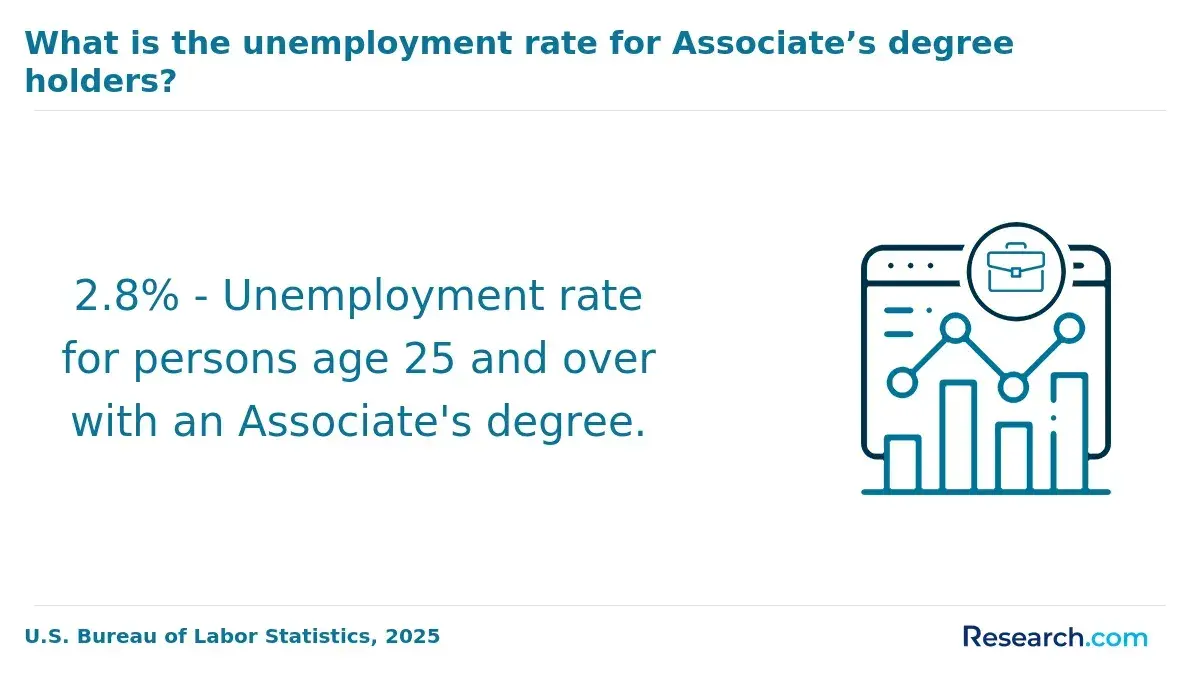
| Associate degree | High school diploma or equivalent, placement tests, and basic math or English readiness | About two years full time | Students seeking lower-cost transfer pathways or entry-level technical preparation |
| Bachelor's degree | High school transcript, GPA requirements, math preparation, optional test scores at some schools, and sometimes a portfolio | About four years full time | Most students targeting programming, design, production, technical art, or graduate study |
| Master's degree | Bachelor's degree, transcripts, statement of purpose, portfolio or coding samples, and sometimes prerequisite coursework | One to three years | Students seeking specialization in graphics, AI, HCI, simulation, serious games, or research |
Students can prepare before applying by building small playable projects, learning version control, strengthening algebra and programming basics, and documenting their work. A simple but polished project is often more useful than an unfinished ambitious game because admissions reviewers and employers need to see follow-through.
Which game development roles are most in-demand in top states, and what do they earn?
The most in-demand game development roles in top states tend to be technical, production-critical, or connected to live operations. Programming roles often have the strongest salary ceiling because they overlap with the broader software market, while design, art, QA, and production roles depend more heavily on portfolio quality, studio type, and seniority.
The table below connects common roles to the states where they are often most marketable and the salary benchmark readers should use when comparing offers. Use BLS software developer pay as a high-level benchmark for programming roles, but do not assume every game job will match that figure.
| Role | Common responsibilities | States where demand is often strongest | Earnings context |
| Gameplay programmer | Builds player mechanics, combat systems, UI behavior, and interactive features | California, Washington, Texas, North Carolina, Utah | Closest to the BLS software developer benchmark of $133,080 median pay in 2024, especially with strong C++ or engine experience |
| Engine programmer | Optimizes rendering, memory, physics, tools, and low-level systems | California, Washington, Massachusetts, Texas | Often among the higher-paying game roles because it requires deep systems knowledge |
| Tools or build engineer | Improves pipelines, automates builds, supports artists and designers, and reduces production bottlenecks | Washington, California, Texas, Maryland/Virginia | Can compete with broader software and DevOps roles when skills transfer outside games |
| Technical artist | Connects art and engineering through shaders, rigs, tools, optimization, and asset pipelines | California, Georgia, Florida, New York, Texas | Pay varies widely because the role blends art portfolio strength with technical depth |
| QA automation tester | Tests builds, writes automated test scripts, reports bugs, and supports release quality | Texas, California, Washington, Georgia, Florida | Typically lower than senior software development pay, but automation skills improve mobility |
| Live operations or game data analyst | Analyzes player behavior, monetization, retention, balancing, and experiments | California, Washington, New York, Massachusetts, Texas | Can align with data analyst or data science career paths, especially in mobile and live-service studios |
| Producer or associate producer | Coordinates schedules, teams, milestones, risks, and communication across disciplines | California, New York, Texas, Washington, Georgia | Compensation depends heavily on studio size, shipped titles, and project complexity |
Students interested in analytics-heavy game careers should consider whether a game degree is enough or whether broader data preparation would create better mobility. Comparing an affordable data science degree can make sense for learners who want to work on player analytics, experimentation, recommendation systems, or live-service strategy.
How should students choose a state and school for long-term game development success?
The best state and school for long-term game development success is the one that fits your target role, budget, learning style, and risk tolerance. A famous studio hub can be valuable, but it is not worth overborrowing for a program that lacks rigorous projects, internships, or transferable technical skills.
Use the following steps to compare options in a practical way. This process helps you avoid choosing a state or school based only on reputation, rankings, or marketing language.
- Choose a target role first, such as gameplay programmer, technical artist, level designer, producer, QA automation tester, or data analyst.
- Match the role to the curriculum; programmers should prioritize computer science depth, while artists and designers should prioritize portfolio development and critique.
- Compare total cost, not just tuition, including housing, fees, software, hardware, relocation, transportation, and lost income if you study full time.
- Check whether the state has both game employers and adjacent software, media, simulation, or data employers that can support career flexibility.
- Review student work before applying; strong programs should be able to show playable games, capstones, reels, code samples, and team projects.
- Ask admissions or department staff about internship placement, employer partnerships, alumni job titles, transfer credits, and career support.
- Build a portfolio before graduation through game jams, modding, open-source tools, internships, freelance projects, or small shipped games.
- Avoid schools that guarantee jobs, hide costs, overstate salary outcomes, or cannot explain how graduates move into specific roles.
For many students, the smartest path is not "move to the biggest hub immediately." It may be more practical to earn an affordable degree in a strong regional market, build a portfolio, complete internships, and then apply nationally or remotely. This is especially true for students who need to control debt or who are still deciding between game development and broader software careers.
Other Things You Should Know About Game Programming & Development
California is leading for game development career growth in 2027. It is home to major industry giants, a thriving startup environment, and numerous networking opportunities, making it an ideal hub for game developers seeking career advancement.
In 2027, California continues to boast the fastest-growing game development industry due to its tech ecosystem and talent pool. However, Texas is gaining momentum with its attractive tax incentives and burgeoning tech scene. Both states offer promising opportunities for career growth in game development.
State labor and economic development agencies support studios through workforce grants, apprenticeship funding, and training tax credits. Common examples include the Texas Workforce Commission, the Michigan Economic Development Corporation, and the Georgia Department of Economic Development, which often administer programs tied to hiring, reskilling, and internship pipelines.
In 2027, states like California and Texas offer tax credits and grants to attract game development companies. These incentives aim to stimulate job creation and industry growth by making it financially viable for studios to operate and expand within these states.
References
- Game Developer Salaries by Country 2025-2026 https://optiveum.com/articles/game-developer-salaries-by-country/
- what - Tłumaczenie po polsku - Słownik angielsko-polski Diki https://www.diki.pl/slownik-angielskiego
- Definition of WHAT https://www.merriam-webster.com/dictionary/what
- Top Game Development Cities in USA: A Comprehensive Guide https://devvibe.com/top-game-development-cities-in-usa/
- Game Design Requirements: Skills, Portfolio & Entry Guide | BSBI https://www.berlinsbi.com/blog/game-design-requirements-what-you-need-to-know-before-you-apply
- Best state, city for indie game developer? (US) https://discussions.unity.com/t/best-state-city-for-indie-game-developer-us/561391
- Accreditation Standards - Standards for Accreditation of Education https://www.accreditation.info/accreditation/accreditation-standards.html
- Game Programming Bachelor’s Degree at University of Advancing Technology https://www.uat.edu/game-programming-degree
- Game Development Degrees: What You Need to Know https://www.ivywise.com/ivywise-knowledgebase/gaming-majors/
- Mission https://igda.org/sigs/game-education/