2027 Online Game Programming and Development Degrees That Help Build Real-Time Software Skills

Co-Founder and Chief Data Scientist
Choosing an online game programming degree is really a decision about whether you want to build real-time software: games, simulations, interactive tools, virtual environments, and engine-based applications. The demand is not just cultural; the Entertainment Software Association reported that 190.6 million Americans play video games, showing how large the interactive media market has become. This guide is for prospective students comparing online degrees, costs, admissions, career paths, and ROI. You will learn how to evaluate programs, avoid common mistakes, and choose a path that fits your technical goals.
Key Things You Should Know
- Online game programming degrees are strongest for students who want software-heavy roles; BLS data shows software developers had a median annual wage of $133,080 in May 2024, but game-specific roles can vary widely by studio, region, portfolio, and experience.
- Cost depends heavily on school type and transfer credit; College Board's 2024 pricing data lists average published tuition and fees at $11,610 for in-state public four-year colleges and $43,350 for private nonprofit four-year colleges.
- The best programs combine accredited computer science foundations with real-time skills in C++, C#, game engines, graphics, physics, networking, debugging, and portfolio-based projects.
What is an online game programming and development degree, and who is it right for?
An online game programming and development degree is a college program that teaches students how to design, code, test, and optimize interactive software. Unlike a general game design degree, which may focus more on storytelling, level design, art, or user experience, a programming-focused degree emphasizes computer science, mathematics, software engineering, and game engine implementation.
The "real-time" part matters. Games and simulations must respond instantly to user input, physics events, network activity, artificial intelligence systems, and visual rendering demands. That means students need more than basic coding ability; they need to understand performance, memory, latency, concurrency, and how engines such as Unity or Unreal manage interactive worlds.
This degree is usually a good fit for learners who want a technical role and enjoy solving hard implementation problems. It may be less ideal for students who mainly want to become concept artists, narrative designers, esports managers, or general digital marketers, unless the program also offers those tracks.
How do online game programming degrees compare to campus-based programs in flexibility and outcomes?
Online and campus-based game programming programs can lead to similar technical outcomes when they share the same accreditation, faculty standards, curriculum depth, and project expectations. The main difference is how students access instruction, collaborate, get feedback, and build a portfolio.
Online learning tends to work best for students who are self-directed, comfortable troubleshooting software independently, and able to manage deadlines without a daily campus routine. Campus learning may be stronger for students who want in-person studio labs, local networking, motion capture facilities, esports spaces, or frequent live collaboration.
The table below compares practical differences that affect learning experience and career preparation, not just convenience.
| Factor | Online game programming degree | Campus-based game programming degree |
| Schedule flexibility | Often better for working adults, military students, caregivers, and students outside major tech hubs | Usually better for students who can attend classes and labs at fixed times |
| Technical learning | Can be strong if courses include live coding, version control, engine projects, and instructor feedback | Can be strong when supported by lab access, team projects, and direct faculty interaction |
| Collaboration | Depends on online team workflows, Git repositories, video meetings, and project management tools | Often easier for in-person teams, studio-style critiques, and rapid peer feedback |
| Portfolio development | Requires discipline to complete polished, public-facing projects | May provide more structured showcases, demo days, or local events |
| Career networking | Can be effective if the school offers remote career fairs, alumni channels, and employer partnerships | May offer stronger local studio connections if the campus is near a game development market |
Outcomes depend less on the delivery format and more on what students can prove they can build. Employers commonly review GitHub repositories, playable demos, shipped projects, code samples, internships, and technical interviews. For that reason, an online program with rigorous projects may be more valuable than a campus program with weak technical depth.

What types of accredited online game programming and development degrees can students pursue?
Students can pursue game programming education at several degree levels. The right level depends on prior credits, career goal, budget, and how quickly the student needs to enter the workforce.
The table below summarizes common online degree options and when each one makes sense.
| Degree type | Typical focus | Best fit | Decision trade-off |
| Associate degree | Introductory programming, math, game tools, and general education | Students seeking a lower-cost start or transfer pathway | May not be enough for competitive programming roles without a strong portfolio or bachelor's transfer plan |
| Bachelor's degree | Computer science foundations, engines, graphics, gameplay programming, software engineering, and capstone projects | Students seeking entry-level software or game programming roles | Longer and more expensive, but usually offers broader employer recognition |
| Master's degree | Advanced graphics, AI, simulation, systems, research, production pipelines, or specialized software engineering | Students with a technical background who want advanced or specialized roles | Usually not necessary for all entry-level jobs, but useful for research-heavy or senior technical paths |
| Certificate | Unity, Unreal, C#, C++, game design tools, or portfolio production | Degree holders or career changers filling a specific skill gap | Faster and cheaper, but may not replace a degree for employers that require one |
Accreditation should be non-negotiable for degree programs. Regional or institutional accreditation affects transfer credit, federal financial aid eligibility, and employer confidence. Some computing programs may also hold programmatic accreditation, such as ABET accreditation, but not every reputable game development degree has it. If a program lacks programmatic accreditation, students should look more closely at faculty credentials, curriculum rigor, graduate outcomes, and portfolio expectations.
Students comparing technology-focused graduate options may also explore related paths such as a blockchain masters degree if their interests lean toward distributed systems, digital assets, or secure interactive economies rather than traditional game engine development.
What core coursework builds real-time software and game engine programming skills?
A strong online game programming curriculum should look like a software engineering program with added depth in real-time systems, graphics, engines, and interactive application development. Students should be cautious of programs that emphasize only drag-and-drop tools without teaching how software works under the hood.
The table below shows the coursework areas that matter most for real-time software skill development and why they are important.
| Course area | What students learn | Why it matters for real-time software |
| Programming fundamentals | Variables, data structures, algorithms, object-oriented design, debugging, and testing | Builds the foundation for reliable gameplay systems and tools |
| C++ and C# programming | Memory, performance, object models, engine scripting, and application structure | C++ is common in engine-level work, while C# is widely used in Unity development |
| Computer graphics | Rendering pipelines, shaders, lighting, transformations, and optimization | Helps students understand how visual output is generated and tuned for performance |
| Physics and math for games | Linear algebra, vectors, collision detection, motion, and numerical methods | Supports movement, simulation, animation, and realistic interactions |
| Game engines | Unity, Unreal Engine, asset pipelines, scripting, debugging, and deployment | Turns coding knowledge into playable, testable, portfolio-ready projects |
| Networking and multiplayer systems | Client-server models, latency, synchronization, replication, and security basics | Prepares students for online games, simulations, and collaborative real-time environments |
| Software engineering | Version control, agile workflows, code reviews, architecture, and documentation | Matches how professional teams build and maintain interactive software |
| Capstone or studio project | Team production, milestone planning, testing, publishing, and postmortems | Provides evidence of applied skills for employers and graduate programs |
Students should look for assignments that require original code, not only tutorial replication. A useful portfolio might include a custom gameplay system, AI behavior, multiplayer prototype, graphics demo, performance optimization write-up, or tool built for designers.
What admission requirements and prior experience are needed for online game programming programs?
Admission requirements vary by school and degree level, but most undergraduate programs expect a high school diploma or equivalent, transcripts, an application, and sometimes placement results for math or writing. Graduate programs typically require a bachelor's degree, transcripts, a resume, statement of purpose, and proof of programming or quantitative preparation.
Prior game development experience is helpful but not always required. What matters more is readiness for programming, algebra, problem solving, and sustained project work. Students who have never coded can still succeed, but they may need a slower first term or a preparatory course.
Before applying, prospective students should check whether they are ready for the technical workload. The following preparation steps can reduce the risk of starting a program and quickly falling behind.
- Complete an introductory programming course in Python, C#, Java, or C++ before enrollment if you have no coding background.
- Review algebra, trigonometry, and basic linear algebra because game programming uses vectors, transformations, and coordinate systems.
- Install and test the required engine, integrated development environment, graphics drivers, and hardware before classes begin.
- Create a small project, such as a 2D platformer mechanic or simple physics prototype, to confirm that you enjoy debugging and iteration.
- Ask admissions whether transfer credits, military credits, AP credits, or prior learning assessments can shorten your timeline.
Common admission mistakes include choosing the fastest program without checking math prerequisites, assuming every game degree is programming-heavy, and ignoring hardware requirements. Students should also ask whether online courses are asynchronous, synchronous, or hybrid, because live meeting times can affect work schedules.
How long do online game programming degrees take, and what do they typically cost?
Most online associate degrees take about two years of full-time study, while bachelor's degrees often take about four years for first-time students. Transfer students may finish sooner, and part-time students may take longer. Graduate certificates can sometimes be completed in less than a year, while master's programs commonly take one to three years depending on course load.
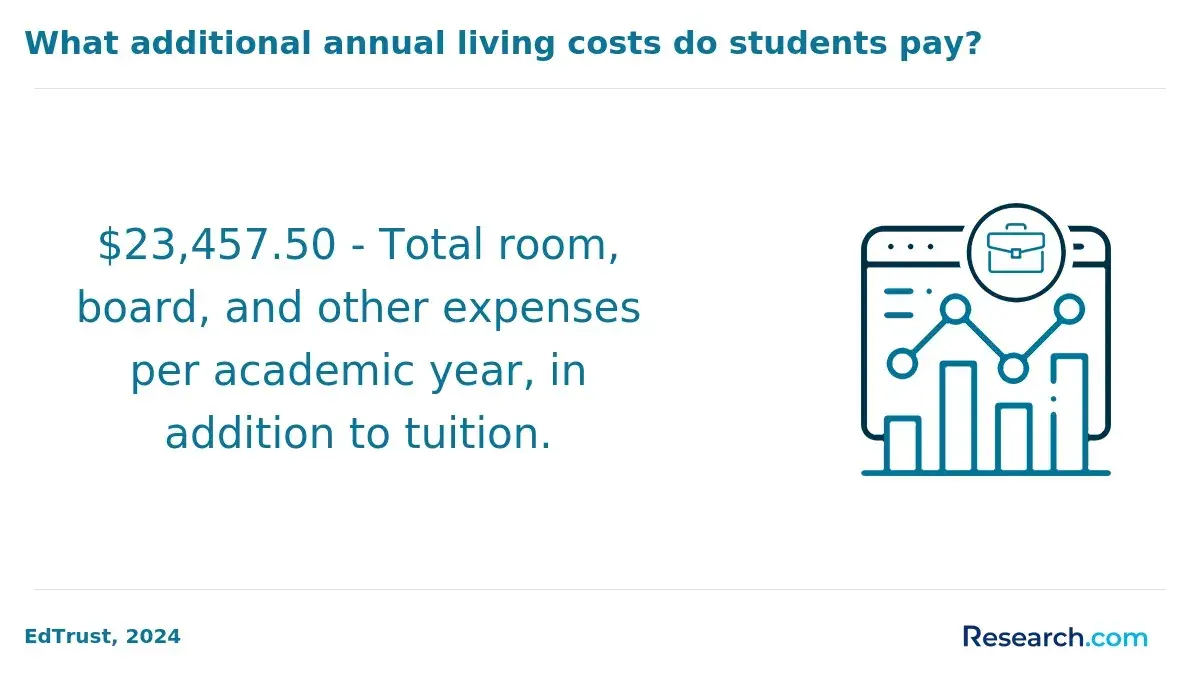
Cost depends on tuition, fees, transfer credits, technology requirements, course load, textbooks, software, and whether the student qualifies for aid. College Board's 2024 pricing data lists average published tuition and fees for 2024-25 at $11,610 for in-state public four-year institutions and $43,350 for private nonprofit four-year institutions. Online students should use these figures as broad benchmarks, not exact online program prices.
The table below highlights the main cost factors students should compare before enrolling.
| Cost factor | Why it matters | What to ask the school |
| Tuition model | Some schools charge per credit, while others use flat-rate terms or subscription models | What is the total tuition estimate for my expected number of credits? |
| Transfer credit | Accepted credits can reduce both time and cost | How many credits will apply to the major, not just electives? |
| Technology fees | Online programs may add platform, lab, proctoring, or course fees | Which fees are mandatory each term? |
| Hardware requirements | Game engines may require a capable computer and graphics card | What computer specifications are required for all upper-level courses? |
| Software access | Some tools are free for students, while others may require licenses or subscriptions | Which tools are included, discounted, or paid out of pocket? |
| Financial aid eligibility | Accredited degree programs may qualify for federal financial aid | Is the program eligible for federal aid, scholarships, employer tuition support, or veterans benefits? |
To reduce cost, students should prioritize accredited schools that accept transfer credits, publish total program costs, and offer strong completion support. The cheapest program is not always the best value if it lacks advanced programming courses, career services, or portfolio development.
What game programming and real-time software career paths can these degrees support?
Online game programming degrees can support careers in game studios, software companies, simulation firms, defense contractors, education technology, healthcare visualization, architecture, training platforms, and AR/VR development. The degree is most useful when paired with a portfolio that demonstrates specific technical strengths.
Career paths vary by specialization. The table below connects common roles with the kind of work students should be prepared to show employers.
| Career path | Typical responsibilities | Portfolio evidence that helps |
| Gameplay programmer | Implements player controls, combat, camera systems, inventory, AI behaviors, and game rules | Playable prototype with clean code and documented systems |
| Engine programmer | Works on rendering, memory, tools, physics, asset loading, and performance | C++ projects, graphics demos, optimization notes, and engine-level experiments |
| Tools programmer | Builds editors, automation scripts, pipelines, and workflows for designers and artists | Custom editor tools, pipeline scripts, and usability documentation |
| Technical designer | Bridges design and programming by scripting systems, tuning gameplay, and prototyping mechanics | Engine projects showing both technical implementation and design reasoning |
| Simulation developer | Builds training, visualization, or modeling software for real-world scenarios | Physics, UI, data integration, or scenario-based interactive demos |
| AR/VR developer | Creates immersive applications with spatial interaction, performance constraints, and hardware integration | VR or AR prototype with interaction design and performance testing |
| Software QA analyst or test automation engineer | Tests software, writes automated tests, reports defects, and supports release quality | Test plans, automation scripts, bug reports, and version-control history |
Students who discover that they prefer analytics, player behavior modeling, or machine learning over engine programming may want to compare a masters degree in data science online with a game programming path. Data science can connect to gaming through telemetry, personalization, matchmaking analysis, and live operations, but the curriculum is usually less focused on engines and real-time rendering.
A smart career plan starts with a target role, then works backward to the skills and projects required. For example, a gameplay programmer should prioritize engine fluency and systems implementation, while an engine programmer should prioritize C++, graphics, memory, and performance.
What salary ranges and earning potential exist for game programmers and related roles?
There is no single federal salary category for "game programmer," so students should interpret earnings through related software, animation, programming, and QA occupations. Salaries vary by location, employer, platform, specialization, studio size, union or nonunion environment, experience, and whether the role is in entertainment games or broader real-time software.
The table below uses BLS May 2024 wage data for related U.S. occupations. These figures are useful benchmarks, but they should not be treated as guaranteed outcomes for graduates.
| Related occupation | Median annual wage, May 2024 | How it connects to game programming |
| Software developers | $133,080 | Closest broad benchmark for programmers building applications, systems, and interactive software |
| Software quality assurance analysts and testers | $102,610 | Relevant for game QA automation, tools testing, build validation, and release quality roles |
| Computer programmers | $98,670 | Relevant for coding-heavy roles, though the category is broader than games and includes legacy programming work |
| Special effects artists and animators | $99,060 | Relevant for technical art, animation systems, visual effects, and real-time visual production |
| Web developers and digital designers | $95,380 | Relevant for interactive web experiences, browser-based games, and front-end real-time applications |
The strongest earning potential often comes from combining game-specific knowledge with transferable software skills. C++, C#, graphics, cloud services, networking, testing automation, and performance optimization can help graduates compete for roles beyond entertainment studios, including simulation, defense, enterprise training, and spatial computing.
Students should also consider labor-market volatility. Game studios can be project-based and competitive, while broader software and simulation roles may offer more employer diversity. A degree with strong computer science foundations can provide a wider safety net than a narrow program focused only on one engine or one genre.
What industry certifications, tools, and technologies are most relevant for game developers?
Game programming is a portfolio-driven field, so certifications rarely replace demonstrable projects. However, selected credentials can help students validate tool knowledge, especially when paired with code samples and shipped prototypes.
The most relevant tools and technologies usually fall into several categories. Students do not need to master all of them at once, but they should graduate with depth in at least one engine and enough software fundamentals to learn new tools quickly.
- Game engines: Unity, Unreal Engine, Godot, and custom engine frameworks.
- Programming languages: C++, C#, Python, JavaScript, Lua, and shader languages such as HLSL or GLSL.
- Collaboration tools: Git, GitHub, GitLab, Jira, Perforce, documentation systems, and build pipelines.
- Graphics and content workflows: Blender, Maya, Substance tools, animation pipelines, asset optimization, and real-time rendering workflows.
- Cloud and multiplayer technologies: client-server architecture, matchmaking, backend services, databases, authentication, and network security basics.
- Testing and deployment: automated tests, profiling tools, crash reporting, continuous integration, platform packaging, and performance analysis.
AI is also changing the workflow. Developers increasingly encounter AI-assisted coding, procedural content tools, NPC behavior systems, automated testing support, and asset pipeline automation. Students who want deeper preparation for machine learning, generative systems, or AI engineering may compare game development with an AI masters degree, especially if their long-term goal is applied AI rather than gameplay implementation.
Useful certifications may include engine-specific credentials, cloud certifications, or software testing credentials, but students should be selective. A certification is most valuable when it supports a defined role, such as Unity developer, cloud multiplayer engineer, QA automation analyst, or technical artist.
How can students evaluate and choose a reputable, accredited online game development school?
Choosing the right online game programming school requires more than comparing tuition or reading rankings. Students should evaluate accreditation, curriculum depth, faculty experience, project requirements, technical support, transfer policies, career services, and evidence of student work.
The most important step is to verify institutional accreditation through recognized sources such as the U.S. Department of Education's accreditation database or the school's official accreditation page. Accreditation affects financial aid, credit transfer, graduate school eligibility, and employer perception.
Use the checklist below when speaking with admissions advisors or program directors. These questions help reveal whether the program is truly built for programming outcomes.
- Ask whether the degree is institutionally accredited and whether any computing-related programmatic accreditation applies.
- Request a full curriculum map showing required programming, math, software engineering, engine, networking, graphics, and capstone courses.
- Ask how many major courses require original code, team production, version control, and instructor-reviewed projects.
- Review student portfolios, demo reels, GitHub repositories, capstone showcases, or published projects when available.
- Confirm whether faculty have professional software, game development, simulation, or interactive media experience.
- Ask what career services are available to online students, including resume reviews, technical interview prep, internship support, and employer events.
- Compare total program cost, not just tuition per credit, including fees, hardware, software, books, and repeated-course policies.
- Check whether credits transfer into or out of the program, especially if you may pursue graduate school later.
Red flags include vague course descriptions, no evidence of student projects, pressure-based admissions tactics, unclear accreditation claims, unrealistic salary promises, and programs that teach only one tool without broader software foundations. Students comparing online education options in different fields can also review how accreditation and professional outcomes are discussed in programs such as a library science masters, where institutional credibility and career alignment are similarly important.
The best choice is usually the program that fits your target role, budget, schedule, and learning style while giving you enough technical depth to build a credible portfolio. If two programs look similar, choose the one with stronger project evidence, better transfer policies, clearer cost information, and more direct access to faculty feedback.
Other Things You Should Know About Game Programming & Development
Most programs require high school algebra, basic programming experience, and some expect precalculus or trigonometry before admission. Core courses usually include C++, data structures, discrete math, and introductory computer science, with 60 to 120 total credits for the degree.
In 2027, online game programming degrees focus on practical, hands-on experience to enhance real-time software skills. Programs typically include courses on real-time rendering, interactive simulations, and collaborative team projects, providing students with the necessary skills to develop sophisticated, interactive gaming experiences.
C# is a practical starting point for Unity, while C++ is important for Unreal Engine and lower-level engine programming. Beginners can start with either, but students targeting engine or performance-heavy roles should eventually become comfortable with C++.
Yes, but it may take more networking and portfolio visibility. Remote and hybrid roles exist, though competition can be strong. Online students should attend virtual events, contribute to projects, publish playable demos, and build a professional online presence.
References
- 2025 Top Game Design Programs https://www.princetonreview.com/college-rankings/game-design
- Game Design & Development Certifications | Unity https://unity.com/products/unity-certifications
- Game Development Program https://www.vertexschool.com/game-development-program
- Career Path and Salary for Video Game Designers | ComputerScience.org https://www.computerscience.org/careers/video-game-designer/career-outlook-and-salary/
- Career pathways in game development: from programming to design https://www.law.ac.uk/resources/blog/career-pathways-in-game-development/
- Decoding Game Development and Programming Salaries: A Comprehensive Guide https://ghanitricks.com/
- Salaries in game development industry | InGame Job https://ingamejob.com/en/salaries
- Bachelor of Science inGame Design and Development Online or On Campus https://www.albany.edu/cehc/programs/bs-game-design-and-development
- Game Developer Certifications: Best Credentials to Advance Your Career | Teal https://www.tealhq.com/career-paths/game-developer-certifications
- Study to become a Game Programmer - Futuregames Warsaw https://futuregames.se/pl/program/game-programmer/