2027 Online Game Programming and Development Degrees for Employees Seeking Tuition Reimbursement

Co-Founder and Chief Data Scientist
Choosing an online game programming degree while working means balancing career goals, employer reimbursement rules, cost, and time. Demand for software developers is strong: the U. S. Bureau of Labor Statistics projects 17% growth for software developer roles from 2023 to 2033, much faster than average. This guide is for employees who want to build game development skills without leaving their jobs. You'll learn how online programs work, which credentials employers typically reimburse, what to verify before enrolling, and how to choose a program with stronger long-term value.
Key Things You Should Know
- Employer tuition reimbursement usually applies best to accredited degree programs, job-related coursework, and schools that can provide itemized tuition, grade, and enrollment documentation.
- Under current federal tax rules, up to $5,250 per year in qualifying employer educational assistance may be excluded from taxable income, so benefit timing can materially affect out-of-pocket cost.
- Game programming graduates often compete for broader software roles; the BLS reports a May 2024 median annual wage of $133,080 for software developers, but game-specific pay varies by studio, location, portfolio, and experience.
What is an online game programming and development degree, and who is it best for?
An online game programming and development degree is a college credential focused on building interactive software. Unlike a general game design program, which may emphasize storytelling, level design, art direction, and player experience, game programming centers on code, engines, tools, simulation, physics, artificial intelligence, networking, and performance optimization.
This degree is best for working adults who want to move toward technical roles in game studios, simulation companies, interactive media, extended reality, defense training, educational technology, or software teams that use real-time 3D tools. It is also useful for employees whose current jobs involve software support, IT, QA testing, graphic production, or digital media and who need a structured path into programming-heavy work.
The table below compares common online credential levels. Use it to match your current education, tuition reimbursement limits, and career target before speaking with admissions or HR.
| Credential | Best fit | Typical focus | Reimbursement fit |
| Certificate | Employees testing interest or filling a specific skill gap | Unity, Unreal Engine, C#, C++, scripting, or portfolio projects | Often reimbursable if job-related, but some employers exclude non-degree programs |
| Associate degree | Career changers who need foundational programming and general education | Introductory coding, math, game engines, web or software basics | Usually easier to justify when accredited and credit-bearing |
| Bachelor's degree | Employees seeking entry-level developer eligibility and broader software options | Data structures, algorithms, game architecture, graphics, physics, production pipelines | Often the strongest match for formal reimbursement policies |
| Master's degree | Software professionals moving into advanced graphics, AI, simulation, or technical leadership | Advanced programming, real-time systems, AI, research, capstone production | May require manager approval because costs are higher and career relevance must be clear |
A game programming degree may not be the best choice if you primarily want to become a 2D/3D artist, animator, narrative designer, esports manager, or general IT support specialist. Those paths may call for art portfolios, media production programs, business degrees, or certifications rather than a programming-heavy curriculum. If your interest is in interactive fitness technology, sports performance apps, or wellness platforms, comparing a game development pathway with a best online exercise science degree can help you decide whether your core goal is software creation or human performance.
How do online game programming degrees compare to campus programs for working adults?
Online and campus game programming programs can lead to similar academic credentials when they come from accredited institutions, but the learning experience is different. Working adults should compare scheduling flexibility, access to hardware, collaboration style, internship expectations, and how easily coursework fits employer reimbursement deadlines.
The table below summarizes practical differences that matter most for employees who cannot pause full-time work.
| Factor | Online game programming degree | Campus game programming degree | Best choice when... |
| Schedule | Often asynchronous or evening-friendly | Usually fixed class times and lab schedules | Online is better if work hours vary or travel is difficult |
| Collaboration | Uses Git, Discord, learning platforms, video critique, and remote team projects | Offers in-person labs, studios, and peer work sessions | Campus is better if you learn best through face-to-face production work |
| Equipment | Requires a capable personal computer and stable internet | May provide labs with game-ready machines and motion capture tools | Online is cheaper only if you already have suitable equipment |
| Networking | Depends on virtual events, faculty access, alumni channels, and portfolio reviews | May offer local studio visits, showcases, and campus recruiting | Campus can help if you live near a game industry hub |
| Employer reimbursement | Often easier to complete while employed | May be harder if attendance conflicts with work | Online is usually more practical if reimbursement requires continued employment |
The strongest online programs do not simply post lectures. They require playable projects, version control, peer code reviews, milestone-based production, and feedback from instructors with current software or game development experience. The biggest risk is choosing a program that is convenient but too light on coding, math, or portfolio output.
Campus programs can be worth the commute when they provide specialized labs, local studio pipelines, or highly structured team production courses. Online programs are often better for tuition reimbursement because employees can stay in their role, maintain eligibility, and pace courses around annual benefit caps.
Which U.S. online game development programs qualify for employer tuition reimbursement?
Most employer tuition reimbursement policies do not approve or reject programs solely because they are online. Instead, they usually look at accreditation, whether the coursework relates to your current or future role, whether the school is eligible to award academic credit, and whether you can submit required documentation before internal deadlines.
For employees comparing online colleges for game design or programming, the reimbursement question should come before the enrollment question. A program may be academically interesting but still create reimbursement problems if it lacks recognized accreditation, uses non-credit bootcamp billing, or cannot provide the paperwork your employer requires.
The table below shows which kinds of U.S. online game development programs are most likely to fit employer tuition policies and what to verify.
| Program type | Typical reimbursement outlook | What to verify before enrolling |
| Regionally accredited bachelor's in game programming, computer science, or software development | Strong fit for many policies | Accreditation, course relevance, grade minimum, annual cap, and whether fees are covered |
| Accredited associate degree in game development or programming | Often acceptable, especially for career changers | Transferability into a bachelor's program and whether general education is reimbursable |
| Accredited master's in game development, computer science, AI, or simulation | Possible, but often requires stronger business justification | Manager approval, job relevance, lifetime cap, and repayment obligations |
| Credit-bearing certificate from an accredited college | Policy-dependent | Whether certificates qualify and whether credits can later apply to a degree |
| Non-credit bootcamp or vendor course | Less predictable | Whether your employer has a separate professional development budget |
Before applying, request the employer's tuition policy in writing. Pay attention to whether reimbursement is paid before or after course completion, whether you must earn a minimum grade, whether you must stay employed for a period after reimbursement, and whether your employer pays the school directly or reimburses you after you pay.
What accreditation and quality standards should online game programming programs meet?
Accreditation is the main quality checkpoint for employees using tuition reimbursement. It signals that an institution has been reviewed by a recognized accreditor, and it is often required for federal financial aid, credit transfer, graduate school admission, and employer reimbursement.
For game programming, institutional accreditation is the minimum. Programmatic accreditation can add value in some computing programs, but it is not always available or required for game development degrees. What matters most is whether the curriculum has enough technical depth for your target role.
Use the following checks before you submit an application or reimbursement request. These steps reduce the risk of paying for credits that your employer, future school, or hiring manager may not value.
- Confirm that the institution is accredited by an accreditor recognized by the U.S. Department of Education or the Council for Higher Education Accreditation.
- Ask whether the exact online program appears on the accredited institution's approved program list, not just whether the school has a physical campus.
- Review the curriculum for C++, C#, data structures, algorithms, computer graphics, game engines, software engineering, and collaborative production.
- Request evidence of student work expectations, such as capstones, Git-based projects, playable prototypes, or portfolio reviews.
- Check whether credits transfer to related programs in computer science, software engineering, artificial intelligence, or data science if your goals change.
Common red flags include vague accreditation claims, no published course catalog, no faculty qualifications, no clear tuition schedule, pressure to enroll immediately, and programs that promise a game industry job. Accreditation does not guarantee employment, but lack of recognized accreditation can create avoidable financial and career risk.
What prerequisites and admissions requirements do online game development degrees have?
Admissions requirements vary by level and institution, but online game development degrees usually expect evidence that you can handle programming, math, and project-based work. Employees returning to school should also ask how prior credits, military training, professional certifications, or work experience may reduce the number of courses required.
The table below outlines common admissions expectations by credential level. It is not a universal rulebook, but it helps you anticipate what schools may request.
| Program level | Common requirements | Preparation that helps |
| Certificate | Application, transcript, basic computer literacy, sometimes prior programming | Introductory Python, C#, or JavaScript practice |
| Associate degree | High school diploma or GED, placement assessment, transcripts | Algebra readiness and comfort installing development tools |
| Bachelor's degree | High school or transfer transcripts, GPA review, possible portfolio or essay | Precalculus, object-oriented programming, and completed general education credits |
| Master's degree | Bachelor's degree, transcripts, statement of purpose, resume, sometimes coding background | Data structures, algorithms, linear algebra, and a technical portfolio |
If you have little programming experience, do not choose an accelerated program just because it appears faster. Game programming draws on math, debugging discipline, and systems thinking. A slower program with strong foundations may be more valuable than a compressed path that leaves you with weak code samples.
Employees should also check transfer policies early. The best financial outcome often comes from transferring prior general education credits, using reimbursement for upper-division technical courses, and avoiding repeated coursework that your employer may not cover.
How long do online game programming degrees take, and what do they cost?
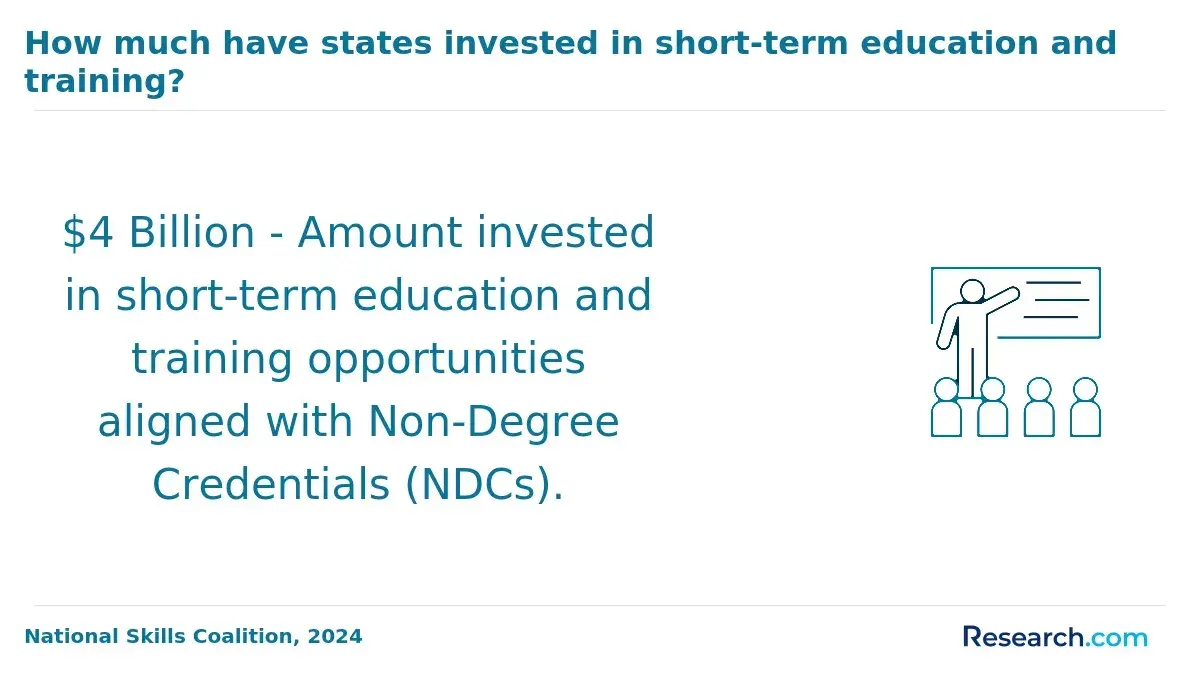
Online game programming degree timelines depend on transfer credit, course load, academic calendar, and whether you study year-round. A full bachelor's degree commonly requires about 120 credits, but working adults often complete fewer credits per term to maintain grades and reimbursement eligibility.
For cost planning, use national tuition benchmarks only as a starting point. The College Board's 2024 Trends in College Pricing reports average published tuition and fees of $11,610 for in-state students at public four-year institutions for 2024-25; online students may pay more or less depending on residency rules, technology fees, and institutional pricing.
Common U.S. cost and timing benchmarks include the following. Your actual cost should be calculated from the school's tuition schedule, required credits, fees, transfer credits, and employer cap.
- Associate degree: often designed for about 2 years of full-time study, with lower total tuition if completed at a community college before transfer.
- Bachelor's degree: often designed for about 4 years full time, but employees studying part time may need 5 to 6 years unless they transfer credits.
- Master's degree: commonly completed in about 1.5 to 3 years, depending on course load and capstone requirements.
- Employer educational assistance: up to $5,250 per year may be tax-excludable under qualifying plans, though employers can set lower or higher internal benefit limits.
Cost is not just tuition. Budget for a game-capable computer, software subscriptions if not included, headset or peripherals, cloud storage, textbooks, graduation fees, and possible portfolio hosting. Ask whether the school provides student licenses for tools such as Unity, Unreal Engine-related software, version control platforms, and art or audio packages.
The key trade-off is speed versus reimbursement. Taking more courses at once can shorten the degree, but it may push expenses above your annual benefit cap and increase the risk of lower grades. A slower pace can maximize reimbursement and preserve work performance, but it delays career transition.
What core courses and skills are taught in online game programming curricula?
A strong online game programming curriculum teaches students to build reliable interactive systems, not just to use a game engine interface. Employers tend to value graduates who can debug, collaborate, optimize, document code, and show finished projects.
The table below summarizes core curriculum areas and why each matters for game development careers.
| Curriculum area | What students learn | Why it matters professionally |
| Programming languages | C++, C#, scripting, object-oriented programming | Supports engine work, gameplay systems, tools, and technical interviews |
| Data structures and algorithms | Memory, complexity, collections, search, sorting, optimization | Helps developers write efficient code and solve performance problems |
| Game engines | Unity, Unreal Engine, editor workflows, components, blueprints or scripting | Connects programming concepts to playable interactive products |
| Math and physics | Linear algebra, vectors, collision, movement, simulation | Essential for graphics, gameplay, animation, and real-time systems |
| Computer graphics | Rendering pipelines, shaders, lighting, cameras, performance | Prepares students for graphics programming and technical art collaboration |
| Networking and multiplayer | Latency, synchronization, client-server architecture, security basics | Supports online games, simulations, and live interactive applications |
| Production and collaboration | Git, agile workflows, documentation, testing, team milestones | Reflects how software and game teams actually build products |
AI is also changing game development. Generative tools can help with prototyping, code suggestions, dialogue drafts, and asset iteration, but they do not replace the need to understand systems, performance, copyright constraints, security, and debugging. Students interested in machine learning for non-player characters, procedural content, analytics, or simulation should compare game programming coursework with the best online master's in artificial intelligence to see whether an AI-focused graduate path fits their goals better.
The most useful portfolio projects are small enough to finish but complex enough to demonstrate technical judgment. Examples include a polished 2D platformer with custom physics, a multiplayer prototype, an AI behavior system, a shader demo, a procedural level generator, or a tools project that improves a designer's workflow.
What entry-level and advanced careers can game programming graduates pursue?
Game programming graduates can pursue game-specific roles and broader software roles. That flexibility matters because game studio hiring can be competitive, project-based, and concentrated in certain regions, while software development skills are useful across many industries.
The table below compares career options by level and typical responsibilities. Use it to decide whether your target job requires a degree, a portfolio, prior software experience, or a graduate credential.
| Career path | Typical responsibilities | Common entry point | Advancement path |
| Gameplay programmer | Build mechanics, player controls, combat systems, UI interactions, and game rules | Bachelor's degree or strong portfolio with engine projects | Senior gameplay engineer, lead engineer, technical director |
| Engine programmer | Work on rendering, physics, memory, tools, or low-level systems | Strong C++ background, computer science depth, advanced projects | Principal engineer, engine architect, R&D specialist |
| Tools programmer | Create internal tools for designers, artists, animators, and QA teams | Programming degree plus workflow-focused portfolio | Pipeline engineer, technical lead, production technology manager |
| Quality assurance automation tester | Write tests, identify bugs, document issues, and automate repeatable checks | Certificate, associate degree, or bachelor's coursework plus scripting | QA engineer, test automation lead, software developer |
| Simulation developer | Build training, defense, medical, industrial, or educational simulations | Game programming or software degree with real-time 3D skills | Simulation engineer, systems architect, technical manager |
| AR/VR developer | Create immersive experiences for headsets, training, product visualization, or entertainment | Game engine projects plus UX and hardware awareness | XR engineer, immersive technology lead, product developer |
Advanced roles usually require more than a degree. Employers look for readable code, shipped or finished projects, comfort with technical interviews, teamwork, and the ability to explain trade-offs. For employees already in software, a game-focused degree or certificate may be most valuable when it adds graphics, engine, simulation, or portfolio experience that their current job does not provide.
Employees should avoid assuming that "game developer" means one job. A designer may define mechanics, a programmer implements systems, a technical artist bridges art and code, and a producer manages timelines. Choosing the wrong program type is one of the most common reasons students finish with skills that do not match the roles they want.
What salary ranges and job outlook can game developers expect in the U.S.?
Salary outcomes for game programming graduates vary widely by job title, employer, region, remote-work policy, and experience. Game studios may pay differently from enterprise software companies, simulation firms, defense contractors, or technology platforms, even when the underlying skills overlap.
The BLS reported a May 2024 median annual wage of $133,080 for software developers in the U.S. This figure is useful because many game programming graduates compete for software developer roles, but it should not be read as a guaranteed game industry salary. Entry-level candidates, QA-focused roles, smaller studios, and lower-cost regions may offer less, while experienced engineers in high-cost markets or specialized roles may earn more.
The table below places game-related roles in a broader U.S. labor market context. It helps separate game-specific aspiration from transferable software employment options.
| Role category | Relevant U.S. labor market signal | How to interpret it |
| Software developer | BLS May 2024 median annual wage: $133,080 | Best broad benchmark for programming-heavy careers, including many game-adjacent roles |
| Computer programmer | Often relevant to legacy code, tools, and scripting roles | Job titles using "programmer" may not reflect modern software engineering responsibilities |
| Special effects artist or animator | More relevant to art and animation than programming | Useful only if your target role is technical art, animation tools, or visual production |
| QA analyst or tester | Relevant to testing, automation, and game quality roles | Can be an entry point, but advancement usually requires scripting and engineering depth |
The outlook is strongest for graduates who can market themselves beyond entertainment games. Real-time 3D skills are used in product visualization, training, architecture, healthcare simulation, education, defense, automotive interfaces, and virtual production. This broader market can reduce career risk if a game studio hiring cycle slows.
To improve employability, build a portfolio that shows code quality, not just visuals. Include a short project description, your exact role, a gameplay video, source code samples when appropriate, and notes on performance, bugs fixed, and design trade-offs.
How can employees maximize employer tuition benefits while studying game development online?
Employees can make tuition reimbursement go much further by planning before enrollment. The goal is to align school choice, course sequencing, payment timing, and career relevance with your employer's written policy.
Follow these steps before committing to an online game programming degree. They help reduce reimbursement denials, surprise costs, and delays in graduation.
- Get the tuition assistance policy from HR and confirm annual caps, eligible programs, grade requirements, repayment clauses, and documentation deadlines.
- Ask your manager to connect the degree to business needs, such as software development, simulation, training tools, QA automation, data visualization, or interactive customer experiences.
- Choose an accredited program that issues transcripts and itemized billing statements acceptable to your employer.
- Map courses by calendar year so your tuition charges fit the annual reimbursement cap whenever possible.
- Use transfer credits, prior learning assessment, or community college credits strategically if your employer covers only part of the degree.
- Keep every syllabus, receipt, grade report, and approval email in one folder so reimbursement claims are easy to submit.
- Reassess after the first two courses; if programming is not the right fit, switch early before spending multiple benefit cycles.
Employees with long-term goals in game analytics, player behavior modeling, AI research, or large-scale simulation may eventually consider graduate study beyond game development. In those cases, comparing a master's pathway with an online PhD in data science can clarify whether research, analytics leadership, or applied software development is the better destination.
Common mistakes include enrolling before HR approval, choosing a non-accredited provider because it looks cheaper, ignoring technology costs, taking too many courses while working full time, and assuming reimbursement is automatic. The safer approach is to treat tuition assistance like a contract: verify eligibility, document everything, and choose courses that support both your current job and next role.
Other Things You Should Know About Game Programming & Development
An online game programming degree can be highly beneficial if your employer covers the cost. It enables you to gain specialized skills without financial strain, enhancing your career prospects in the gaming industry or related fields. Reimbursement makes it a financially savvy investment for your professional development.
Possibly, but you may need to show job relevance. Connect the coursework to software development, simulation, training, visualization, automation, user experience, or technical problem-solving in your current organization.
Most employers require at least 30 to 36 semester credits for reimbursement, and some cap coverage at 6 to 12 credits per term. Confirm that the degree is from a regionally accredited school and that the coursework appears on an approved degree plan before you enroll.
References
- Game Design and Development Curriculum for High Schoolers https://www.masterycoding.com/courses/game-design-and-development-curriculum
- Circuit Stream · Your Guide to the Different Career Pathways You Can Take in the Game Development Industry https://www.circuitstream.com/blog/your-guide-to-the-different-career-pathways-you-can-take-in-the-game-development-industry
- Companies That Pay for Your Degree | ComputerScience.org https://www.computerscience.org/resources/companies-that-pay-for-college/
- Guide to Employers Who Subsidize Online Education https://www.onlineeducation.com/features/employers-who-subsidize-higher-ed
- Game Development Degrees: What You Need to Know https://www.ivywise.com/ivywise-knowledgebase/gaming-majors/
- Optimize Tuition Benefits | University of Phoenix https://www.phoenix.edu/workforce-solutions/workforce-resources/posts/employee-engagement/how-companies-can-optimize-their-tuition-benefits.html
- Online Game Development Courses: The Path to Mastering Virtual Worlds and Career Success https://macrobiangames.com/blog/online-game-development-courses/
- How to Start Your Game Development Career | OEd https://oed.com.ph/courses-to-work-in-game-development/
- Game Development Career Pathways | CG Spectrum https://www.cgspectrum.com/career-pathways/game-development
- Intro to Game Development: Course | Codecademy https://www.codecademy.com/learn/introduction-to-game-development