2027 Best Online Bachelor's in Game Programming and Development With Portfolio Support

Co-Founder and Chief Data Scientist
Choosing an online game programming degree is a high-stakes decision because employers often judge candidates by playable work, not just transcripts. The U. S. game audience remains large, with the Entertainment Software Association reporting more than 190 million U. S. players in its 2024 industry profile.
This guide is for students comparing online bachelor's programs that teach coding, game engines, teamwork, and portfolio production. You will learn how to evaluate curriculum, accreditation, cost, time to completion, and career fit so you can choose a program that supports both graduation and employability.
Key Things You Should Know
- The best online game programming bachelor's programs combine accredited coursework, engine-based production experience, and structured portfolio support through capstones, team projects, playable prototypes, or faculty critique.
- College Board's 2024 pricing data lists average published tuition and fees at $11,610 for in-state public four-year students and $43,350 for private nonprofit four-year students, before aid and online-specific fees.
- Career outcomes depend on role and region; BLS data lists the May 2024 median wage for software developers at $133,080, but game industry entry-level pay can vary based on portfolio strength, studio type, and technical specialization.
What is an online bachelor's in game programming and development with portfolio support?
An online bachelor's in game programming and development is a four-year undergraduate degree focused on building interactive software for games, simulations, virtual environments, and related digital products. "Programming" usually emphasizes code, algorithms, game engines, physics, artificial intelligence, tools, and optimization. "Development" is broader and may include gameplay systems, level implementation, production workflows, user testing, and collaboration with designers and artists.
Portfolio support is the feature that separates a career-oriented game degree from a general computer science program with a few game electives. A strong program should help students leave with polished, playable work that can be shown to employers, graduate schools, or collaborators. This may include GitHub repositories, engine projects, a senior capstone, team-based prototypes, game jam submissions, or a personal website.
This degree usually fits students who want a structured path into technical game roles but also want a broader computing foundation. It may not be the best fit for students who only want concept art, 3D modeling, narrative design, or esports management unless the program offers those concentrations. Students more interested in art-centered programs may also want to compare online colleges for game design, because design and programming degrees can lead to different portfolios and job targets.
The table below shows how common game-related degree paths differ. Use it to match the program type to the work you actually want to do after graduation.
| Program type | Best fit | Typical portfolio evidence | Main trade-off |
| Game programming and development | Students who want to code gameplay, tools, systems, or engines | Playable prototypes, C++ or C# projects, engine demos, capstone games | Less focus on art, writing, or visual design |
| Computer science with game electives | Students who want maximum flexibility across tech careers | Algorithms projects, software apps, selected game projects | May require extra effort to build a game-specific portfolio |
| Game design | Students focused on mechanics, level design, player experience, or prototyping | Design documents, levels, prototypes, playtest notes | May include less advanced programming depth |
| Animation or digital art | Students aiming for art, rigging, modeling, or visual asset roles | Demo reels, 3D assets, character work, environment art | Usually not enough for programming-heavy roles |
How does an online game programming bachelor's compare to a campus-based program?
An online game programming bachelor's can be just as legitimate as a campus-based program if the institution is properly accredited and the curriculum includes real production work. The biggest difference is not whether the degree is online; it is how the program delivers collaboration, feedback, technical support, and portfolio review.
Online programs often appeal to working adults, military students, transfer students, and learners who do not live near a campus with a specialized game program. Campus programs may offer easier access to labs, local studio events, in-person clubs, and spontaneous team projects. The right choice depends on your learning style, schedule, and need for hands-on community.
The comparison below highlights the decision factors that matter most for game programming students. Focus on the learning environment that will help you produce stronger work, not just the format that looks more convenient.
| Factor | Online bachelor's program | Campus-based program | Best choice when |
| Schedule | Often more flexible, especially with asynchronous courses | Usually built around set class times | Online works better if you need to balance school with work or caregiving |
| Team projects | Can use remote tools, version control, and online critique | Can support in-person collaboration and studio-style labs | Either works if team production is required and well supervised |
| Technical setup | Requires a capable computer, stable internet, and software access | May provide labs, equipment, and local troubleshooting | Campus may help if you cannot afford the required hardware |
| Networking | Depends on virtual events, alumni networks, Discord or Slack communities, and career services | May offer easier local networking and clubs | Campus can help if the school has strong regional studio ties |
| Portfolio feedback | Should include recorded critiques, faculty review, peer testing, and capstone milestones | May include live critique and showcase events | Choose the program with clearer, more frequent feedback |
A common mistake is assuming online means self-taught. A good online program should still include deadlines, faculty interaction, collaborative assignments, source control expectations, and career services. If a program is mostly prerecorded lectures with little critique or no capstone, it may not provide enough support for a competitive game portfolio.
What admission requirements do online game programming and development programs typically have?
Admission requirements for online game programming bachelor's programs are usually similar to other computing-related undergraduate degrees. Schools may admit first-year students, transfer students, associate degree holders, or adult learners with prior college credit. Selective programs may review math readiness, programming experience, or creative work, but many bachelor's programs teach introductory coding from the beginning.
Before applying, confirm whether the program is designed for beginners or for students who already have college-level programming coursework. The following requirements are common, but exact policies vary by institution.
- High school diploma, GED, or equivalent credential for first-year admission
- Official transcripts from high school and any colleges previously attended
- Minimum GPA requirement, often with separate standards for transfer admission
- Placement or prerequisite readiness in college algebra, precalculus, discrete math, or introductory programming
- Personal statement, admissions essay, or goal statement explaining interest in game development
- Optional or required portfolio, especially for programs that blend programming with design or digital media
- English proficiency documentation for applicants whose prior education was not in English
If your math background is weak, ask whether the school offers a bridge course, placement support, or tutoring before you enroll in programming-heavy classes. Game development uses math more often than many beginners expect, especially in graphics, physics, collision, animation, camera systems, and procedural generation.
Transfer students should ask for a preliminary credit evaluation before committing. A program that accepts general education credits but rejects prior programming courses may take longer and cost more than expected.
What core courses and skills are taught in online game programming bachelor's programs?
Online game programming bachelor's programs usually combine computer science fundamentals with game-specific production courses. The strongest curricula teach students how to write reliable code, work inside commercial engines, collaborate with artists and designers, and explain technical decisions clearly.
Core courses often cover the technical foundation below. These subjects matter because employers and project teams need developers who can solve problems beyond following tutorials.
- Programming fundamentals using languages such as C++, C#, Java, or Python
- Data structures, algorithms, and software design patterns
- Game engine development or engine-based production using tools such as Unity or Unreal Engine
- Gameplay systems, input, cameras, user interfaces, combat, inventory, and progression mechanics
- Computer graphics, rendering concepts, shaders, lighting, and asset pipelines
- Physics, collision detection, vectors, matrices, and applied game mathematics
- Artificial intelligence for games, including pathfinding, behavior trees, state machines, and decision systems
- Multiplayer networking, server-client architecture, synchronization, and latency issues
- Version control, debugging, testing, performance profiling, and build management
- Game production, agile workflows, documentation, playtesting, and team communication
AI is also changing what students need to know. Studios increasingly expect developers to understand procedural workflows, automation, testing tools, and responsible use of generative systems, but AI does not replace the need for strong fundamentals. Students who can combine programming, data literacy, and model-aware thinking may have more flexible career options; those interested in the analytics side of games can also compare affordable data science degrees if they are drawn to player behavior, live operations, or game economy analysis.
The table below connects common courses to career-ready skills. Use it to identify whether a curriculum is broad enough for game programming and flexible enough for adjacent software roles.
| Course area | Skill developed | Why it matters |
| Data structures and algorithms | Efficient problem-solving | Supports performance-critical systems and technical interviews |
| Game engines | Production fluency | Helps students build playable work instead of isolated assignments |
| Graphics and math | Spatial reasoning and visual systems | Important for rendering, camera behavior, effects, and simulation |
| Software engineering | Maintainable code and teamwork | Prepares students for collaborative studio or software environments |
| Capstone development | End-to-end project delivery | Creates portfolio evidence that shows planning, execution, and polish |
How do online game programming programs help you build a professional game portfolio?
Portfolio support is one of the most important quality signals in an online game programming degree. A transcript can show what you studied, but a portfolio shows what you can build, debug, document, and finish. For technical roles, employers often want to see playable builds, clean code samples, development notes, and evidence that you can contribute to a team.
Look for programs that build portfolio development into required courses instead of treating it as an optional final task. Strong portfolio support usually includes the following elements.
- Multiple completed projects, not just one senior capstone
- Team-based development with defined roles, milestones, and peer accountability
- Faculty critique focused on code quality, gameplay feel, usability, performance, and polish
- Use of version control so students can demonstrate professional workflow habits
- Playtesting assignments that require students to collect feedback and improve the game
- Career services that help students present projects on a website, GitHub, itch.io, ArtStation, or similar platform
- Opportunities to participate in game jams, showcases, portfolio reviews, or employer-facing events
A practical portfolio should be focused, not crowded. Three polished projects with clear documentation usually make a stronger impression than ten unfinished prototypes. For each project, explain your role, the tools used, the technical challenge, and what changed after testing.
Before enrolling, ask admissions or the program chair to show examples of student capstones or graduate portfolios. If the school cannot explain how students receive project feedback, how teams are formed, or how portfolio work is evaluated, that is a red flag.
How can you verify accreditation and program quality for online game development degrees?
Accreditation is the first quality check for any online bachelor's degree. In the U.S., students should confirm that the institution holds accreditation from an agency recognized by the U.S. Department of Education or the Council for Higher Education Accreditation. Institutional accreditation affects credit transfer, graduate school eligibility, and access to federal financial aid.
Programmatic accreditation is less common in game development than in fields such as nursing, education, or engineering. Some computing programs may hold ABET accreditation, but many legitimate game programming degrees do not. If a program lacks programmatic accreditation, evaluate its curriculum, faculty, capstone requirements, career services, and graduate outcomes more closely.
Use the following steps to verify quality before you submit an application or deposit. This sequence helps you avoid schools that look polished online but lack the academic infrastructure students need.
- Search the institution in the U.S. Department of Education's accreditation database or CHEA-recognized resources.
- Confirm that the online program is offered by the accredited institution, not only by a third-party vendor.
- Review the curriculum map to see whether programming, math, engines, software engineering, and capstone work are required.
- Ask whether credits transfer to other accredited institutions and whether prior credits can reduce your time to completion.
- Request outcomes information such as retention, graduation, career services access, internship support, and examples of student portfolios.
- Check whether faculty have game industry, software engineering, simulation, graphics, or interactive media experience.
Do not rely only on rankings, advertising language, or screenshots of student games. A "best" program for you should be accredited, affordable enough to complete, technically rigorous, and aligned with the kind of portfolio you need for your target role.
How long does it take to complete an online bachelor's in game programming and development?
A traditional online bachelor's in game programming and development takes about four years of full-time study, usually around 120 semester credits. However, actual completion time depends on transfer credits, course load, prerequisite sequencing, and whether the program runs on semesters, quarters, or accelerated terms.
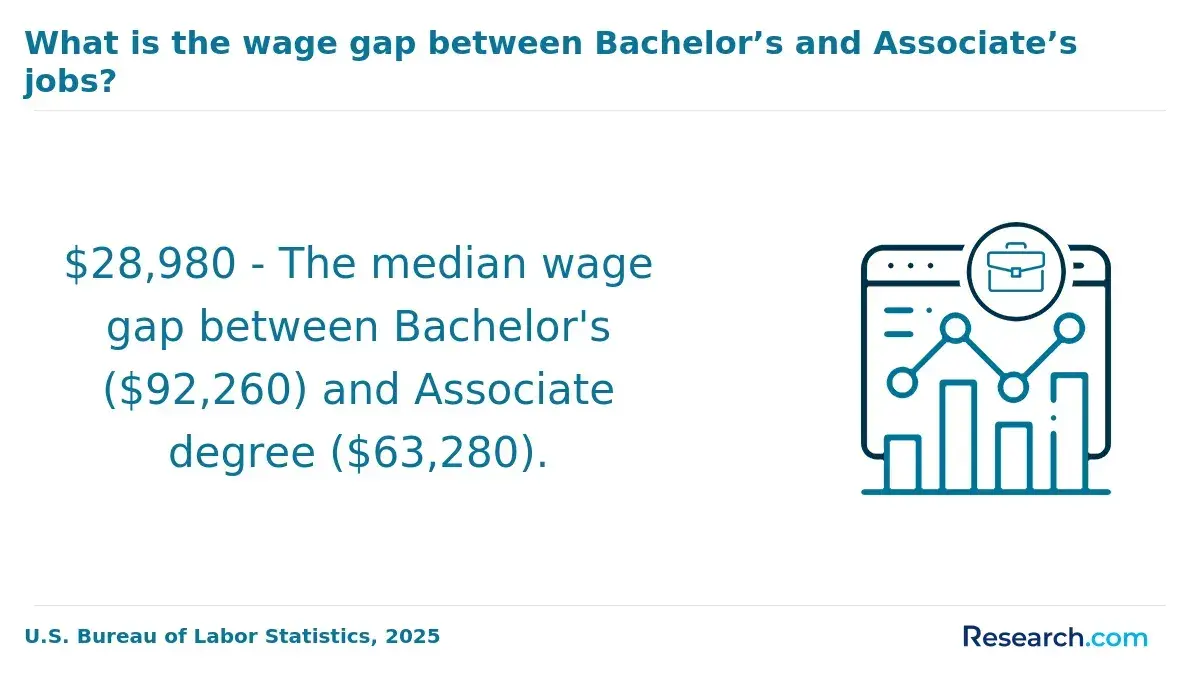
Students with an associate degree or substantial transfer credit may finish faster, especially if the school accepts both general education and computing courses. Part-time students may need five to six years or more, but a slower pace can be realistic for learners working full time.
The table below summarizes common pacing options. Use it to compare the time savings of accelerated study against workload and portfolio quality.
| Enrollment path | Typical time frame | Who it fits | Main caution |
| Full-time bachelor's | About 4 years | Students who can prioritize school and take a standard course load | May require careful scheduling around intensive project courses |
| Part-time bachelor's | Often 5 to 6 years or more | Working adults, caregivers, and students managing financial constraints | Longer time in school can increase total fees and delay career entry |
| Transfer pathway | Often 2 to 3 years after accepted credits | Associate degree holders or students with prior college coursework | Technical credits may not transfer cleanly if tools or course content differ |
| Accelerated terms | Varies by credit load and calendar | Motivated students with strong time management and fewer outside obligations | Fast pacing can reduce time for portfolio polish and team collaboration |
Be cautious about choosing the fastest option simply because it sounds efficient. Game portfolios take iteration. If an accelerated program compresses major projects into short terms without meaningful feedback, you may graduate sooner but with weaker work samples.
What tuition costs, fees, and financial aid options exist for online game programming degrees?
Tuition for online game programming degrees depends on institution type, residency policy, transfer credits, technology fees, and required software or hardware. College Board's 2024 pricing data lists average published tuition and fees for four-year institutions at the following levels, which can help you benchmark whether a school's sticker price is unusually high or low.
- Public four-year, in-state average published tuition and fees: $11,610
- Public four-year, out-of-state average published tuition and fees: $30,780
- Private nonprofit four-year average published tuition and fees: $43,350
Online students should calculate total cost, not only tuition. Game programming can require a capable computer, graphics hardware, high-speed internet, engine-compatible storage, peripherals, and possibly software subscriptions. Some tools are free for students, but hardware costs can still be significant.
Most eligible students should start with the FAFSA to determine access to federal grants, loans, and work-study. Scholarships may be available through the school, state agencies, game industry organizations, military benefits, employer tuition assistance, or transfer partnerships with community colleges.
Use this cost checklist before enrolling. It can help you compare programs on net price and completion risk instead of advertised tuition alone.
- Ask for a full cost of attendance estimate, including tuition, fees, books, software, hardware, and graduation fees.
- Confirm whether online students pay in-state tuition, a flat online rate, or out-of-state tuition.
- Request a transfer credit review before committing if you have prior college coursework.
- Compare scholarship renewal rules, minimum GPA requirements, and credit-load requirements.
- Estimate debt at graduation and compare it with realistic entry-level job targets, not only median software developer salaries.
- Ask whether required courses are offered often enough to avoid paying for extra terms while waiting for prerequisites.
A common mistake is choosing the cheapest program without checking support. Low tuition is valuable, but poor advising, limited course availability, or weak portfolio feedback can increase the real cost if it delays graduation or leaves you underprepared.
What careers can you pursue with an online bachelor's in game programming and development?
An online bachelor's in game programming and development can prepare students for game-specific roles and adjacent software roles. The best career path depends on the technical depth of the program, the quality of your portfolio, internships or project experience, and your willingness to apply skills outside traditional entertainment studios.
Game studios hire for specialized roles, but competition can be strong. Graduates may improve their options by targeting related industries such as simulation, training software, virtual reality, augmented reality, education technology, defense contractors, healthcare visualization, and interactive media.
The table below summarizes career directions that may fit this degree. It is not a promise of eligibility, but it can help you match coursework and portfolio projects to job descriptions.
| Career path | Typical responsibilities | Portfolio evidence that helps |
| Gameplay programmer | Build player controls, mechanics, combat systems, cameras, and game rules | Playable prototypes with responsive mechanics and documented code |
| Engine or systems programmer | Work on performance, rendering, tools, memory, physics, or platform systems | C++ projects, optimization examples, graphics or engine demos |
| Tools programmer | Create internal tools that help designers, artists, and developers work faster | Editor extensions, pipeline tools, usability notes, and workflow documentation |
| Technical designer | Bridge design and code by implementing gameplay logic, scripting, and prototypes | Engine-based levels, scripting systems, design iteration notes |
| QA automation or test engineer | Test game systems, write automated tests, identify bugs, and support release quality | Bug reports, test plans, automation scripts, and polished project documentation |
| Simulation or interactive software developer | Build real-time interactive applications outside entertainment games | Unity or Unreal projects, VR or AR demos, technical documentation |
If you are still comparing majors, think about whether you want a project-based creative technology career or a more regulated, mission-specific path. For example, students exploring science-oriented careers may find a very different decision framework in guides on what jobs can you get with an environmental science degree, while healthcare-focused students may be better served by an online dietitian degree if their goal involves nutrition practice rather than software development.
Students who should strongly consider this degree include those who enjoy coding, debugging, math-based problem-solving, and long-term projects. Students who dislike programming or mainly want to write game stories, stream content, manage esports teams, or create character art should consider a different major or a program with a more suitable concentration.
What are the salary expectations and job outlook for game programmers and developers?
Salary expectations for game programming graduates should be interpreted carefully because job titles are not always tracked separately in federal data. Many game programmers fall under broader categories such as software developers, software quality assurance analysts, computer programmers, or special effects artists and animators, depending on the employer and role.
BLS data lists the May 2024 median annual wage for software developers at $133,080. This figure is useful because many game programming roles require similar software development skills, but it should not be treated as a game-industry guarantee. Entry-level compensation can be lower or higher depending on location, studio size, specialization, shipped-project experience, and whether the role is in entertainment games, simulation, or general software.
The outlook is also strongest when students build transferable software skills. BLS projects employment for software developers, quality assurance analysts, and testers to grow 17% from 2023 to 2033, much faster than the average for all occupations. For students, this means a degree with solid programming fundamentals may support opportunities beyond games if the entertainment market is highly competitive.
The table below shows how to interpret common job-market signals. Use it to set realistic expectations and avoid relying on a single salary number.
| Signal | What it suggests | How students should use it |
| Software developer median wage | Broad software roles can pay well for strong technical skills | Build transferable coding, debugging, and software design abilities |
| Game studio competition | Entertainment game roles may attract many applicants | Apply with a focused portfolio and consider adjacent interactive software roles |
| Portfolio quality | Employers often need evidence of finished work | Prioritize polished projects, clear documentation, and code samples |
| Location and work model | Pay and openings vary by region and remote-work policy | Research job postings in your target markets before choosing a school |
| Specialization | Engine, tools, networking, and graphics skills can be valuable but demanding | Choose electives and capstone projects that match your target niche |
The safest ROI strategy is to choose a program that prepares you for both game jobs and broader software roles. That way, your degree is not dependent on one studio, one platform, or one hiring cycle.
Other Things You Should Know About Game Programming & Development
Yes. Many portfolio-focused online programs waive ACT or SAT scores and instead review a creative portfolio, high school transcript, and minimum GPA, often around 2.5. Some schools also require a short programming sample or interview before admission.
Many employers care more about accredited education, technical skill, portfolio quality, and project experience than whether coursework was online or on campus. However, competitive studios may still expect strong code samples, teamwork experience, and evidence that you can finish playable projects.
Not always. Many bachelor's programs begin with introductory programming, but students should be ready for math, logic, and consistent practice. If you have never coded, completing a beginner course or small game tutorial before enrolling can help you confirm fit.
Graduates of 2027 online bachelor's programs in game programming and development benefit from robust portfolio support, which enhances employment prospects in roles such as game developer, software engineer, or designer. They often find opportunities with game studios, tech companies, and indie startups, reflecting a strong demand for skilled professionals in the gaming industry.
References
- Game Development Bachelor's Degree https://www.fullsail.edu/degrees/game-development-bachelor
- Accreditation Explained: Guidelines for Global Verification https://www.motaword.com/blog/understanding-accreditation-how-to-verify-institutions-globally
- Online Game Development Courses: The Path to Mastering Virtual Worlds and Career Success https://macrobiangames.com/blog/online-game-development-courses/
- Game Development Degrees: What You Need to Know https://www.ivywise.com/ivywise-knowledgebase/gaming-majors/
- Online Game Development Courses | Learn from Top Game Devs https://www.cgspectrum.com/courses/game-development
- How to Check if a Graduate Program is Accredited (and Why This Matters) | ProFellow https://www.profellow.com/tips/how-to-check-if-a-graduate-program-is-accredited-and-why-this-matters/
- Salaries in game development industry | InGame Job https://ingamejob.com/en/salaries
- TIGA University Accreditation - TIGA https://tiga.org/education/tiga-university-accreditation
- How to Assess the Quality and Authority of Online Educational Sources http://www.counterfeitdegrees.com/accreditation/assess.htm
- Game Creation https://en.ehuniversity.lt/study-programs/game-creation/