2027 Best Online Game Programming and Development Degrees for Adults Returning to College

Co-Founder and Chief Data Scientist
Choosing an online game programming degree as a returning adult is a high-stakes decision: the program must fit your schedule, budget, transfer credits, and career goals. The timing is strong for technical learners, with the U. S. Bureau of Labor Statistics projecting 15% growth for software developers, quality assurance analysts, and testers from 2024 to 2034. This guide explains degree types, accreditation, admissions, costs, curriculum, salaries, and red flags so you can compare programs with confidence and avoid paying for a credential that does not match your target job.
Key Things You Should Know
- The best online game programming degree for adults is usually a regionally accredited bachelor's program with flexible pacing, transfer-credit support, a portfolio-based curriculum, and strong programming coursework in C++, C#, Unity, Unreal Engine, graphics, AI, and software engineering.
- Cost varies widely, but College Board's 2024 data shows average published tuition and fees of $11,610 for in-state public four-year colleges and $43,350 for private nonprofit four-year colleges, making transfer credit and employer tuition benefits major ROI factors.
- Game-specific jobs can be competitive, so adults should evaluate programs by software development outcomes as well as game studio preparation; BLS data places 2024 median pay for software developers at $133,080, while related roles vary by industry, location, and portfolio strength.
What is an online game programming and development degree, and who is it best for?
An online game programming and development degree is a college program that teaches students how to build interactive digital games using computer science, software engineering, game engines, math, design systems, and production workflows. Unlike a general game design program, a programming-focused degree emphasizes code, technical problem-solving, engine architecture, physics, gameplay systems, tools development, debugging, and performance optimization.
For returning adults, the best fit is usually a program that recognizes prior college credit, supports part-time enrollment, and helps students graduate with a portfolio of playable projects. It may lead to jobs in game development, simulation, software development, quality assurance, AR/VR, educational technology, defense training systems, and interactive media.
The table below compares common degree and credential options. It can help you decide whether you need a full degree, a shorter credential, or a broader computing path.
| Option | Best for | Typical focus | Main trade-off |
| Associate degree in game development | Adults starting college or preparing to transfer | Introductory programming, game engines, digital media, math basics | May not be enough for many software developer roles without a bachelor's or strong portfolio |
| Bachelor's in game programming or game development | Adults seeking entry-level technical game or software roles | C++, C#, engine scripting, software engineering, graphics, game AI, production, capstone projects | Longer and more expensive than certificates, but more recognized by employers |
| Computer science degree with game electives | Learners who want the widest software career options | Algorithms, systems, data structures, databases, operating systems, electives in graphics or games | May offer less game-specific portfolio development unless you build projects independently |
| Certificate or bootcamp | Adults with prior coding experience who need targeted skills | Unity, Unreal, C#, C++, game art pipelines, portfolio projects | Usually less comprehensive and may not satisfy degree requirements for some employers |
If your goal is more creative than technical, compare the programming path with becoming a video game designer. Designers often focus more on mechanics, levels, story, player experience, and systems design, while programmers build and implement the underlying technology.
This degree is best for adults who enjoy coding, math-based problem-solving, iterative testing, and collaborative project work. It may not be the right investment if you mainly want to write stories, create 3D art, compose music, or manage esports; those goals usually align better with design, digital art, animation, audio production, or business programs.
How do online game programming degrees compare with on-campus programs for adult students?
Online and on-campus game programming degrees can cover similar technical content, but the learning experience is different. Adult students should compare not only the curriculum but also delivery format, studio access, collaboration tools, project feedback, and how easily the program fits around work and family obligations.
The table below summarizes the most important differences for returning adults. Use it to identify which format supports your schedule and learning style rather than assuming one is automatically better.
| Factor | Online degree | On-campus degree | What adults should consider |
| Schedule flexibility | Often asynchronous or evening-friendly | Usually tied to fixed class times | Online programs are often better for working adults, parents, military learners, and career changers |
| Collaboration | Uses Discord, GitHub, learning platforms, video meetings, and virtual teams | Offers in-person labs, clubs, studios, and game jams | Online students should verify that team projects and instructor feedback are built into the program |
| Hardware and software access | May require a capable home computer and licensed tools | May provide campus labs and equipment | Online students should budget for hardware, storage, peripherals, and possible engine or asset costs |
| Networking | Depends on virtual events, alumni channels, and portfolio reviews | May offer more in-person events and local employer connections | Adults should ask how online students meet employers, alumni, and project collaborators |
| Learning support | Varies by school; strong programs offer tutoring, career coaching, and tech help remotely | May offer walk-in labs and face-to-face advising | Online support hours matter if you study at night or on weekends |
Online study makes sense if you need flexibility and are comfortable learning through projects, documentation, recorded lectures, and remote collaboration. On-campus study may be better if you learn best in a lab environment, want direct access to specialized equipment, or value in-person peer communities.
A common mistake is choosing online only because it seems convenient. Game development is project-heavy, so you should confirm that the program includes live critique, peer collaboration, portfolio milestones, code reviews, and access to faculty with relevant technical experience.
How can adults identify accredited and reputable online game development schools in the U.S.?
Accreditation is one of the first things adults should verify because it affects federal financial aid, transfer credit, graduate school eligibility, and employer trust. In the U.S., the most important baseline is institutional accreditation from an agency recognized by the U.S. Department of Education or the Council for Higher Education Accreditation.
For game programming degrees, programmatic accreditation is less common than in fields like nursing or engineering. Some computing programs may have ABET accreditation, which can be a positive signal for technical rigor, but many legitimate game development degrees do not have it. The key is to verify institutional accreditation first, then evaluate curriculum quality, faculty, projects, and student outcomes.
Use this process before applying or paying an enrollment deposit:
- Search the school in the U.S. Department of Education's Database of Accredited Postsecondary Institutions and Programs or CHEA's database.
- Confirm that the accredited institution name matches the school offering the online program, not only a parent company or marketing brand.
- Check whether the program is a degree, certificate, concentration, or noncredit training product.
- Ask whether credits transfer to other accredited colleges and whether the school has written articulation agreements.
- Review faculty profiles for experience in computer science, software engineering, game engines, simulation, graphics, or shipped game projects.
- Look for transparent student services, career support, graduation requirements, tuition, fees, refund policies, and complaint procedures.
Red flags include vague accreditation claims, pressure to enroll immediately, unclear tuition, missing faculty information, no sample curriculum, unrealistic job promises, and programs that focus heavily on game enthusiasm but lightly on programming fundamentals. A reputable school should be able to explain exactly what you will build, what languages you will learn, and how your work will be evaluated.
What admission requirements do online game programming and development programs typically have for returning adults?
Admission requirements vary by school and degree level, but online bachelor's programs in game programming are usually designed for students with a high school diploma or equivalent. Returning adults may also be evaluated for transfer credits, prior learning, military training, professional certifications, or previous college coursework.
The table below outlines common admission expectations. It is especially useful if you have been out of school for several years and need to know what documents to gather.
| Requirement | What schools commonly ask for | Adult learner tip |
| Academic records | High school transcript, GED record, and transcripts from all prior colleges | Request transcripts early because old records can delay admission and transfer review |
| Math readiness | Placement test, prior algebra or precalculus, or college math transfer credit | Game programming uses vectors, matrices, physics, probability, and logic, so refreshing math before enrollment can reduce frustration |
| Programming background | Some programs require no experience; others prefer prior coding exposure | If you are new to coding, take a free or low-cost C#, Python, or C++ introduction before committing |
| Portfolio | Usually optional for bachelor's admission but common for advanced or selective programs | A small playable project can help you confirm interest even when it is not required |
| English proficiency | Required for applicants whose prior education was not in English | Technical writing matters because programmers document code, bugs, design decisions, and project plans |
Adults returning to college should pay close attention to transfer policies. A school that accepts general education, math, or introductory programming credits can shorten time to graduation and reduce total cost, but you should ask for a written transfer evaluation before enrolling.
Before applying, prepare for the process with these practical steps:
- Collect every prior transcript, even from colleges where you completed only one course.
- Ask admissions whether transfer credits are evaluated before or after enrollment.
- Request a degree plan showing remaining credits, estimated timeline, tuition, and required terms.
- Confirm whether courses are offered every term or only once per year.
- Ask whether the program has minimum GPA requirements for transfer students or major progression.
Avoid assuming that professional experience automatically converts into college credit. Some schools offer prior learning assessment, but policies vary, and credit is usually awarded only when your experience maps clearly to course outcomes.
What courses and skills are taught in an online game programming and development curriculum?
An online game programming curriculum should teach both software fundamentals and game-specific implementation. The strongest programs do not simply teach students how to use one engine; they help students understand how games work under the hood so they can adapt as tools change.
Most bachelor's programs include a mix of general education, computing foundations, math, game development courses, electives, and a capstone. The table below shows typical course areas and why they matter for employment readiness.
| Course area | Skills commonly developed | Why it matters |
| Programming foundations | C++, C#, Python, object-oriented programming, debugging, version control | Employers expect programmers to write, test, refactor, and maintain code |
| Data structures and algorithms | Arrays, trees, graphs, search, sorting, optimization | These skills support performance, technical interviews, and non-game software roles |
| Game engines | Unity, Unreal Engine, scripting, editor tools, asset integration | Studios often use established engines, and portfolios usually need playable projects |
| Computer graphics | Rendering pipelines, shaders, lighting, 2D and 3D math | Graphics knowledge supports gameplay, visual effects, tools, and engine programming |
| Game physics and math | Vectors, matrices, collision detection, motion, probability | Many gameplay systems depend on math-driven behavior |
| Game AI | Pathfinding, behavior trees, decision systems, procedural generation | AI is increasingly important in gameplay, simulation, testing, and content workflows |
| Software engineering | Agile development, testing, documentation, architecture, team workflows | Game projects are collaborative, version-controlled, and deadline-driven |
| Capstone or portfolio studio | Playable game, team production, launch plan, postmortem | Hiring managers often evaluate demonstrable work, not only transcripts |
AI is changing the skill mix in game development, but it does not remove the need for strong programming fundamentals. Generative tools can assist with concepting, code suggestions, testing support, animation workflows, and asset iteration, yet employers still need developers who can evaluate output, fix bugs, optimize performance, protect intellectual property, and ship reliable systems.
Adults who discover they prefer analytics, machine learning, or data-heavy simulation may also compare game programming with MS data science online pathways after completing a bachelor's or building a computing foundation. Data science is not the same career path, but the overlap in programming, statistics, and AI can be valuable for technical learners.
When reviewing a curriculum, look for evidence that you will graduate with marketable artifacts. Good signs include GitHub-ready code samples, playable prototypes, team projects, technical design documents, bug tracking, code reviews, and a final project that can be shown to employers.

How long do online game development degrees take, and can adults study part time?
Online game development degrees vary in length based on degree level, transfer credit, course load, and whether the school uses semesters, quarters, or accelerated terms. Adults often benefit from part-time study because it reduces schedule pressure, but it can extend the time before career transition.
The table below gives realistic timeline ranges. Use it as a planning tool, not a guarantee, because course availability and transfer evaluations can change the final graduation date.
| Program type | Common full-time timeline | Common part-time timeline | Best fit |
| Certificate | Several months to 1 year | 1 to 2 years | Adults adding Unity, Unreal, or C# skills to an existing background |
| Associate degree | About 2 years | 3 to 4 years | Students starting college or planning to transfer into a bachelor's program |
| Bachelor's degree | About 4 years with no transfer credit | 5 to 6 years or more | Adults seeking a full undergraduate credential for technical roles |
| Bachelor's completion program | 1 to 3 years depending on credits accepted | 2 to 4 years | Returning adults with substantial prior college credit |
Part-time study can be a smart choice if you are balancing employment, caregiving, military service, or financial limits. The trade-off is that technical skills build sequentially, so long gaps between programming courses can make it harder to retain concepts.
To choose a manageable pace, follow these steps before your first term:
- Estimate weekly study time for each course, especially programming and math courses that require practice beyond lectures.
- Ask whether the program allows lighter terms during work-heavy seasons.
- Avoid taking multiple high-intensity technical courses at once if you are new to coding.
- Build a weekly project schedule instead of waiting until deadlines approach.
- Recheck the course rotation so part-time enrollment does not delay prerequisites by a full year.
A common mistake is enrolling full time to finish faster without accounting for debugging time. Programming courses can take longer than expected because much of the learning happens through fixing errors, revising logic, and testing projects repeatedly.
How much do online game programming degrees cost, and what financial aid can adults use?
The cost of an online game programming degree depends on tuition, fees, transfer credits, textbooks, software, hardware, residency status, and how long you remain enrolled. Tuition is only part of the equation, especially for adults who may also be managing lost work hours, childcare, or loan repayment.
College Board's 2024 pricing data shows average published tuition and fees of $11,610 for in-state public four-year colleges, $30,780 for out-of-state public four-year colleges, and $43,350 for private nonprofit four-year colleges for the 2024-25 academic year. These are sticker-price benchmarks, not your final cost, but they show why public tuition, transfer credit, and aid eligibility can materially change the ROI calculation.
- Public in-state four-year average published tuition and fees: $11,610
- Public out-of-state four-year average published tuition and fees: $30,780
- Private nonprofit four-year average published tuition and fees: $43,350
Online students should also budget for technology. A game programming program may require a computer capable of running Unity or Unreal Engine, extra storage, a headset, controller, drawing tablet, cloud backup, or paid software. Many engines are free for learning, but hardware needs can still be significant.
Adults may be able to reduce out-of-pocket costs through several funding sources. Availability depends on the school, enrollment status, income, employer policy, military status, and academic progress.
- Federal Pell Grants, if you qualify based on FAFSA results and undergraduate eligibility.
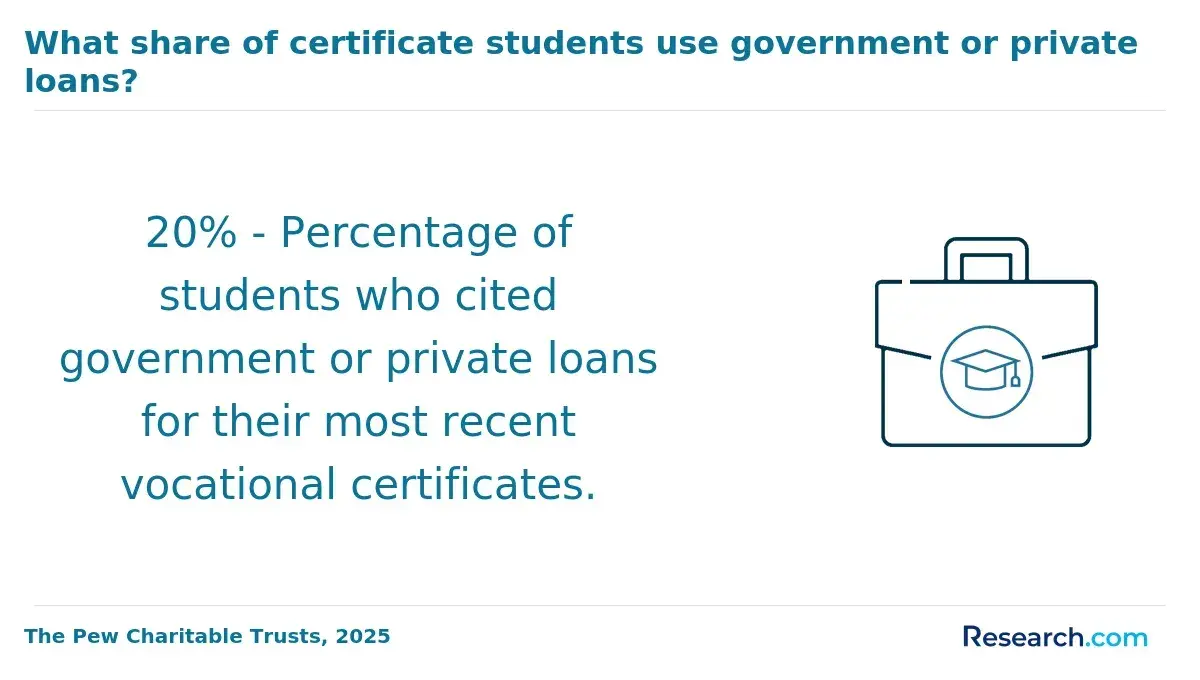
- Federal student loans, used cautiously after comparing total debt with realistic career outcomes.
- State grants or workforce programs for residents pursuing high-demand technical fields.
- Employer tuition assistance or reimbursement, especially if your current job values software, simulation, or interactive media skills.
- Military and veteran education benefits for eligible service members, veterans, and dependents.
- Scholarships from the school, professional associations, community organizations, or game and technology groups.
- Transfer credit, credit for prior learning, or community college pathways that reduce the number of credits taken at a four-year tuition rate.
Do not compare schools by tuition per credit alone. Ask for a full cost estimate that includes required credits after transfer, program fees, technology fees, repeated-course policies, books, equipment, and whether tuition changes if you enroll part time.
What careers can you pursue with an online game programming and development degree?
An online game programming and development degree can lead to game industry roles, but it can also support broader software careers. That flexibility matters because game studio jobs can be competitive, project-based, and location-sensitive, while software development skills transfer to many industries.
The table below shows common career paths and what each role typically does. Use it to match your target job with the skills your program must teach.
| Career path | Typical responsibilities | Important skills |
| Gameplay programmer | Build player controls, combat systems, camera behavior, mechanics, and interactive features | C++, C#, scripting, debugging, game physics, collaboration with designers |
| Engine programmer | Work on rendering, tools, performance, memory, systems, and low-level architecture | C++, graphics, optimization, algorithms, systems thinking |
| Tools programmer | Create internal software that helps designers, artists, and developers build content faster | Editor scripting, UI development, pipeline knowledge, user-focused problem-solving |
| Game AI programmer | Develop non-player character behavior, pathfinding, decision systems, and procedural logic | Algorithms, probability, behavior trees, machine learning awareness |
| Quality assurance analyst or tester | Find, document, reproduce, and verify bugs in games or software products | Testing methods, communication, attention to detail, bug tracking tools |
| Simulation developer | Build interactive training, defense, medical, manufacturing, or education simulations | Game engines, physics, UX, software engineering, domain collaboration |
| Software developer | Design, code, test, and maintain applications outside the game industry | Programming, databases, cloud tools, APIs, software architecture |
Career mobility improves when you build a portfolio that shows completed work, not only coursework. A strong entry-level portfolio might include one polished small game, a technical demo, readable code samples, documentation, a postmortem explaining design decisions, and evidence of team collaboration.
Game development increasingly overlaps with AI, procedural content, analytics, automation, and simulation. Adults who want to move beyond games into intelligent systems may eventually compare an online masters in AI, especially after gaining a bachelor's-level foundation in programming and math.
Entry-level applicants should be realistic: a degree helps, but employers often evaluate projects, technical tests, code quality, communication, and ability to work in production pipelines. Internships, freelance prototypes, game jams, open-source contributions, and modding projects can all strengthen your candidacy.
What salary ranges and job growth can game programmers and developers expect?
Salary and job growth depend on role, region, employer, experience, portfolio quality, and whether you work in games, general software, simulation, entertainment, defense, education, or technology services. Game-specific salary data can be harder to isolate because many job titles are grouped under broader software, animation, or media categories.
BLS 2024 data reports a median annual wage of $133,080 for software developers, while the broader occupational group that includes software developers, quality assurance analysts, and testers is projected to grow 15% from 2024 to 2034. For adults, this means a programming-heavy game degree may provide more career flexibility than a narrow game-only curriculum.
The table below provides a practical salary and outlook context using broad U.S. occupational categories that commonly overlap with game programming and development. Treat these as labor-market reference points, not personal salary predictions.
| Occupational area | Relevant game development connection | 2024 U.S. labor-market context |
| Software developers | Gameplay, tools, engine, simulation, and application development | Median annual wage reported by BLS: $133,080 |
| Software quality assurance analysts and testers | Game QA, automation testing, bug verification, build testing | Often an entry point for people who understand software testing and production workflows |
| Special effects artists and animators | Technical art, visual effects, animation systems, real-time graphics collaboration | More art-focused than programming-focused, but relevant for technical artists and graphics teams |
| Computer programmers | Legacy systems, scripting, maintenance, tools, and application code | Some roles are being reshaped by automation and AI-assisted coding, increasing the value of broader software engineering skills |
Compensation in games can differ from compensation in general software. Some game jobs are highly desirable and competitive, and entry-level applicants may face contract work, studio cycles, or location constraints. On the other hand, the same programming foundation can support roles in enterprise software, training simulations, AR/VR, health technology, defense systems, and educational platforms.
To interpret salary data wisely, compare your target role with the program's outcomes. Ask schools for graduate job titles, internship partners, portfolio examples, career services access for online students, and whether alumni work in game studios, software companies, simulation firms, or adjacent technical industries.
How should adult learners choose the best online game programming program for their goals?
The best online game programming program for returning adults is not simply the most famous, cheapest, or fastest. It is the program that matches your target role, accepts the right transfer credits, fits your schedule, teaches durable programming skills, and helps you graduate with a credible portfolio.
Use the following checklist when comparing schools. These questions focus on factors that affect cost, completion, and employability.
- Verify institutional accreditation before considering curriculum, price, or rankings.
- Request a written transfer-credit evaluation and a remaining-course degree plan.
- Compare total program cost, not only tuition per credit.
- Review whether the curriculum teaches C++, C#, data structures, algorithms, math, game engines, software engineering, testing, and capstone development.
- Ask for examples of student projects, portfolios, capstones, or published games.
- Confirm that online students receive tutoring, career services, technical support, library access, and faculty feedback.
- Check whether courses are asynchronous, synchronous, accelerated, or term-based.
- Ask how team projects work for remote students and what collaboration tools are used.
- Evaluate career outcomes by job titles, not vague claims about working in the game industry.
- Compare the degree with alternatives such as computer science, software engineering, digital media, certificates, or self-directed portfolio building.
The table below highlights common program-selection mistakes and better alternatives. It can help you avoid decisions that look attractive at enrollment but create problems later.
| Common mistake | Why it can hurt adults | Better approach |
| Choosing a school without checking accreditation | Credits may not transfer, and federal aid may not apply | Verify institutional accreditation before applying |
| Focusing only on game branding | A flashy program name does not prove technical depth | Review actual courses, coding languages, math, and portfolio requirements |
| Ignoring transfer credit | You may pay to repeat courses you already completed | Get a written transfer evaluation before enrolling |
| Assuming online means easier | Programming projects can be time-intensive and cumulative | Plan weekly study blocks and start with a realistic course load |
| Relying only on rankings | Rankings may not reflect adult flexibility, cost, or career fit | Compare accreditation, cost, curriculum, support, and outcomes together |
| Expecting a degree to replace a portfolio | Technical hiring often depends on demonstrable work | Build playable projects, code samples, documentation, and team experience throughout the program |
Adults comparing career changes should also think broadly about fit. If you are weighing multiple education paths and asking questions like is library science a good degree, use the same decision framework: target role, credential requirements, labor market, cost, schedule, and long-term interest.
A practical final test is to describe your goal in one sentence: "I want this degree so I can become a specific type of developer in a specific industry." If the program's curriculum, projects, and career support do not clearly support that sentence, keep comparing options.
Other Things You Should Know About Game Programming & Development
It can be worth it if you need a bachelor's credential, want structured programming training, and will graduate with a strong portfolio. It may not be worth the cost if the program is not accredited, lacks technical depth, or does not support your target role.
Yes, but the degree alone is usually not enough. Employers often want playable projects, clean code samples, engine experience, teamwork, debugging ability, and evidence that you can complete production-style work.
Most online game programming degrees require a high school diploma or GED, official transcripts, and placement in college-level English and math. Some schools also ask for a 2.0 GPA, a brief admissions essay, or proof of prior college credit before enrollment.
References
- Diploma in Game Development Part Time https://www.pulsecollege.com/game/diploma-in-game-development-part-time/
- Online Game Development Courses | Learn from Top Game Devs https://www.cgspectrum.com/courses/game-development
- Online Game Development Courses: The Path to Mastering Virtual Worlds and Career Success https://macrobiangames.com/blog/online-game-development-courses/
- Best Online Schools and Colleges to Learn Game Design & Development | The Rookies Blog https://www.therookies.co/blog/headlines/best-online-schools-and-colleges-to-learn-game-design-development
- We help game developers learn and grow https://gamedev.tv/
- Paying for a Computer Science Degree | Scholarships, Grants, Loans https://www.computerscience.org/resources/how-to-pay-for-a-degree/
- Global Bachelor in Games Development | IADE https://www.iade.europeia.pt/en/undergraduate-programs/bachelor-games-development/
- Financial Aid For Online Colleges https://www.affordablecollegesonline.org/financial-aid/financial-aid-for-online-colleges/
- APPLICATION PROCESS https://colognegamelab.de/study-programs/post-graduate-programs/game-development-research-ma/application/
- Intro to Game Development: Course | Codecademy https://www.codecademy.com/learn/introduction-to-game-development