2027 Game Development Roles at the Center of AI-Assisted Production Workflows

Co-Founder and Chief Data Scientist
Choosing a game development career now means choosing how you will work with AI, not whether you will. The Entertainment Software Association reported in 2024 that more than 190 million Americans play video games, keeping demand broad while studios adopt automation for prototyping, testing, animation, and content pipelines. This guide is for students, career changers, and early-career developers comparing education options and job paths. You will learn which roles are changing, what skills matter, how degrees compare, and how to evaluate programs before investing time and money.
Key Things You Should Know
- AI is already part of game production: the 2024 GDC State of the Game Industry survey reported that 31% of developers personally used generative AI tools, making AI literacy a practical workplace skill rather than a niche specialty.
- Game programming career planning should be salary-aware but realistic: the BLS reported a May 2024 median annual wage of $133,080 for software developers, a broad category that includes many game-engine, tools, and gameplay programming roles.
- Program cost can vary sharply: College Board's 2024 pricing data listed average published tuition and fees of $11,610 for in-state public four-year institutions and $43,350 for private nonprofit four-year institutions, before aid and living costs.
How are modern game development roles evolving within AI-assisted production workflows?
Modern game development roles are evolving from single-discipline production jobs into AI-supervised, pipeline-aware roles. AI-assisted production workflows use machine learning, generative tools, procedural systems, analytics, and automation to speed up tasks such as concept iteration, code assistance, asset tagging, test case generation, localization, and player-behavior analysis.
The important shift is not that AI "replaces" the game developer. In most professional settings, AI changes the developer's responsibility from producing every artifact manually to designing the system, checking outputs, enforcing quality standards, and integrating work into a build that is playable, stable, ethical, and commercially viable.
The table below summarizes how common game development roles are changing. Use it to identify which career paths require deep programming, which require creative direction, and which require hybrid fluency across tools and teams.
| Role area | Traditional focus | AI-assisted workflow focus | Best-fit learner profile |
| Gameplay programming | Implementing mechanics, controls, cameras, and game systems | Using AI coding assistants, simulation tools, and behavior systems while validating performance and playability | Students who enjoy algorithms, debugging, and player-facing systems |
| Technical art | Building shaders, rigs, tools, and asset pipelines | Automating repetitive art tasks, validating generated assets, and connecting creative tools to engines | Artists who also like scripting, math, and engine workflows |
| Game design | Creating levels, rules, economies, and player experiences | Rapidly prototyping ideas, testing generated variations, and using analytics to tune experiences | Creative problem-solvers who can evaluate systems, not just ideas |
| Quality assurance | Manual testing, bug reporting, and regression checks | Combining automated testing, telemetry, AI-generated test cases, and human judgment | Detail-oriented learners who want a practical entry point into production |
| Production management | Schedules, milestones, team coordination, and risk tracking | Using workflow analytics, AI summaries, and dependency tracking while managing scope and ethics | Organized communicators who understand creative and technical constraints |
For students, this means the strongest programs are no longer just "game art" or "game programming" in isolation. Look for curricula that teach engines, collaboration, version control, data-informed design, responsible AI use, and portfolio production because employers often judge candidates by what they can build and explain.
What core responsibilities do game programmers have in AI-integrated development pipelines?
Game programmers remain central in AI-integrated pipelines because they turn design intent into reliable, interactive systems. Even when AI tools assist with code suggestions or test generation, programmers are responsible for correctness, maintainability, performance, and integration with the game engine.
In an AI-assisted production environment, a programmer's daily work often includes both traditional software engineering and AI-aware review. The following responsibilities matter because they determine whether AI-supported work becomes a playable product rather than a collection of prototypes.
- Implementing gameplay systems such as movement, combat, inventory, camera behavior, physics interactions, user interfaces, and save systems.
- Building and maintaining engine tools that help designers, artists, and QA teams work faster without breaking production standards.
- Reviewing AI-assisted code for security, performance, licensing risk, style consistency, and hidden logic errors.
- Integrating AI-driven features such as nonplayer character behavior, procedural generation, recommendation systems, adaptive difficulty, or content moderation tools.
- Optimizing performance across platforms, including PC, console, mobile, cloud, and extended-reality environments.
- Collaborating through version control, issue tracking, build systems, code reviews, and sprint planning.
A useful way to think about the role is this: AI may help create a first draft, but the programmer owns the engineering decision. That includes knowing when not to use an AI-generated solution because it is too slow, too opaque, too fragile, or too difficult for the rest of the team to maintain.
Students comparing career paths should also distinguish game programming from general software development. Game programming often requires real-time performance thinking, 3D math, memory awareness, engine-specific workflows, and constant collaboration with non-engineers. That can be exciting for hands-on builders, but it can frustrate students who prefer predictable enterprise software environments.
Which game development roles work most closely with AI tools and automation?
The roles that work most closely with AI tools are usually those positioned at the intersection of experimentation, automation, and quality control. These jobs do not all require the same depth of machine learning knowledge, but they do require enough AI literacy to evaluate outputs and communicate risks.
The table below can help you compare AI exposure by role. It is especially useful if you are deciding whether to pursue a programming-heavy, design-heavy, or production-heavy path.
| Role | How the role uses AI tools | Depth of AI knowledge needed | Common portfolio evidence |
| AI gameplay programmer | Creates behavior trees, utility AI, pathfinding, procedural systems, and adaptive mechanics | High technical depth in algorithms, engine programming, and testing | Playable demos with explainable enemy behavior or adaptive systems |
| Tools programmer | Builds automation for content pipelines, editor extensions, build systems, and asset validation | Moderate to high technical depth, especially scripting and systems design | Custom tools that save time for artists, designers, or QA teams |
| Technical artist | Uses AI for asset cleanup, rigging support, materials, procedural generation, and workflow scripting | Moderate technical depth with strong creative judgment | Before-and-after pipeline examples, shaders, rigs, or automation scripts |
| Game data analyst | Studies player behavior, balance issues, monetization patterns, and retention signals | Moderate statistical and data-tool depth | Dashboards, A/B test analysis, economy-tuning projects, or telemetry reports |
| QA automation tester | Uses scripts, bots, automated test suites, and AI-assisted bug triage | Moderate technical depth and strong documentation habits | Automated test cases, bug reports, and reproducible testing workflows |
| Producer or production coordinator | Uses AI summaries, scheduling tools, risk flags, and workflow analytics | Foundational AI literacy and strong human communication | Production plans, milestone documents, and team retrospectives |
For entry-level candidates, QA automation, technical design, junior tools work, and gameplay scripting can be realistic gateways into AI-assisted production. More specialized roles, such as machine learning engineer for games or senior AI gameplay programmer, usually require stronger math, software engineering, and shipped-project experience.
What degrees and training pathways prepare students for AI-era game development careers?
There is no single required degree for game development, but the best pathway depends on the role you want. A gameplay programmer needs a stronger computer science foundation than a level designer, while a technical artist may need a hybrid mix of art, scripting, and engine production.
Students comparing degrees should focus on curriculum and portfolio outcomes rather than the program title alone. A program labeled "game design" can be highly technical at one school and mostly creative at another. Students interested in advanced design leadership can also compare masters in game design options when they already have a portfolio or bachelor's background and want graduate-level specialization.
The table below compares common U.S. training pathways. Use it to match your education investment to your target role and timeline.
| Pathway | Typical fit | Strengths | Limitations to check |
| Bachelor's in computer science | Gameplay programmer, engine programmer, tools programmer, AI programmer | Strong foundation in algorithms, data structures, software engineering, and systems thinking | May require self-directed game projects if the school has limited game-specific coursework |
| Bachelor's in game development or game programming | Students who want a game-focused technical degree | Usually includes engines, team projects, prototyping, and portfolio development | Quality varies widely; check faculty experience, capstone expectations, and graduate outcomes |
| Bachelor's in digital art, animation, or technical art | Technical artist, environment artist, animator, VFX artist | Builds visual production skills and may include pipelines, rigging, or shader work | Students may need extra scripting or engine training for AI-assisted production roles |
| Associate degree or certificate | Career changers, QA candidates, portfolio builders, or students testing the field | Lower time commitment and often more focused on tools | May not be enough for competitive programming roles without strong projects |
| Bootcamp or self-directed learning | Motivated learners with prior coding or art experience | Fast, project-centered, and often affordable compared with a full degree | Requires strong discipline and careful proof of skill through a portfolio |
| Graduate degree | Specialized AI, graphics, simulation, research, or leadership roles | Can deepen expertise and support research-oriented careers | Best ROI when tied to a clear technical or leadership goal |
A practical rule is to choose the most technical pathway you can complete successfully if your goal is programming. For design or art roles, choose the pathway that produces the strongest portfolio while still teaching enough scripting, engine literacy, and AI ethics to work in modern teams.
How do online and campus-based game development programs differ for AI-focused training?
Online and campus-based game development programs can both prepare students for AI-focused training, but they serve different learners. The right choice depends on your schedule, learning style, access to equipment, need for studio collaboration, and ability to build a portfolio outside class.
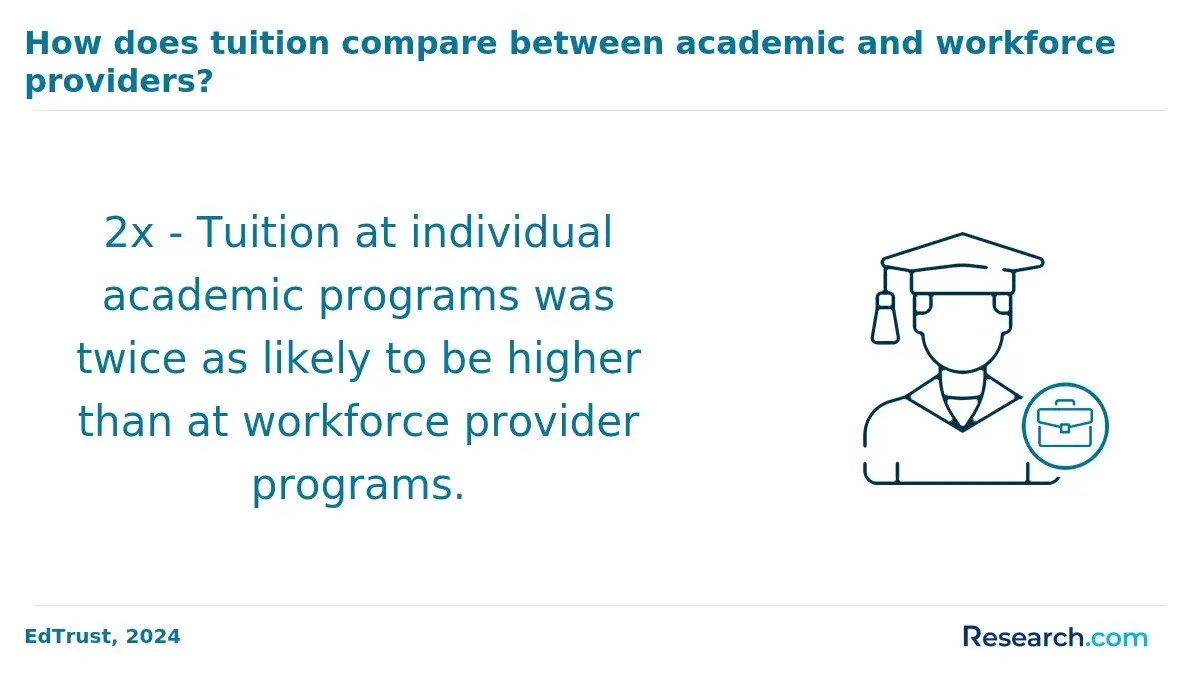
Cost should be part of the comparison, not the whole decision. College Board's 2024 data listed average published tuition and fees of $11,610 for in-state public four-year colleges and $43,350 for private nonprofit four-year colleges, before grants, scholarships, housing, books, and technology costs. This gap matters because game careers can be competitive, and students should avoid unnecessary debt when a lower-cost program can produce comparable skills and projects.
The table below compares online and campus formats specifically for AI-era game development training.
| Program format | Best for | AI-focused strengths | Trade-offs |
| Online asynchronous | Working adults, military students, caregivers, and self-directed learners | Flexible access to coding, engine tutorials, cloud tools, and recorded demonstrations | Requires discipline; collaboration and live critique may be limited |
| Online synchronous | Students who want structure without relocating | Live feedback, team meetings, and remote production workflows similar to distributed studios | Schedule may still conflict with work or time zones |
| Campus-based | Students who benefit from labs, peer teams, equipment, and face-to-face critique | Hands-on access to motion capture, VR labs, render farms, faculty mentoring, and studio-style production | May cost more after housing and commuting; fewer schedule options |
| Hybrid | Learners who want flexibility plus periodic studio access | Combines online technical modules with in-person production, critique, or capstone work | Travel requirements and residency dates must be checked early |
Students leaning toward analytics, machine learning, or data-driven gameplay may also compare adjacent programs such as a masters in data science online, especially if their long-term goal is player analytics, recommendation systems, or AI product roles rather than core game programming.
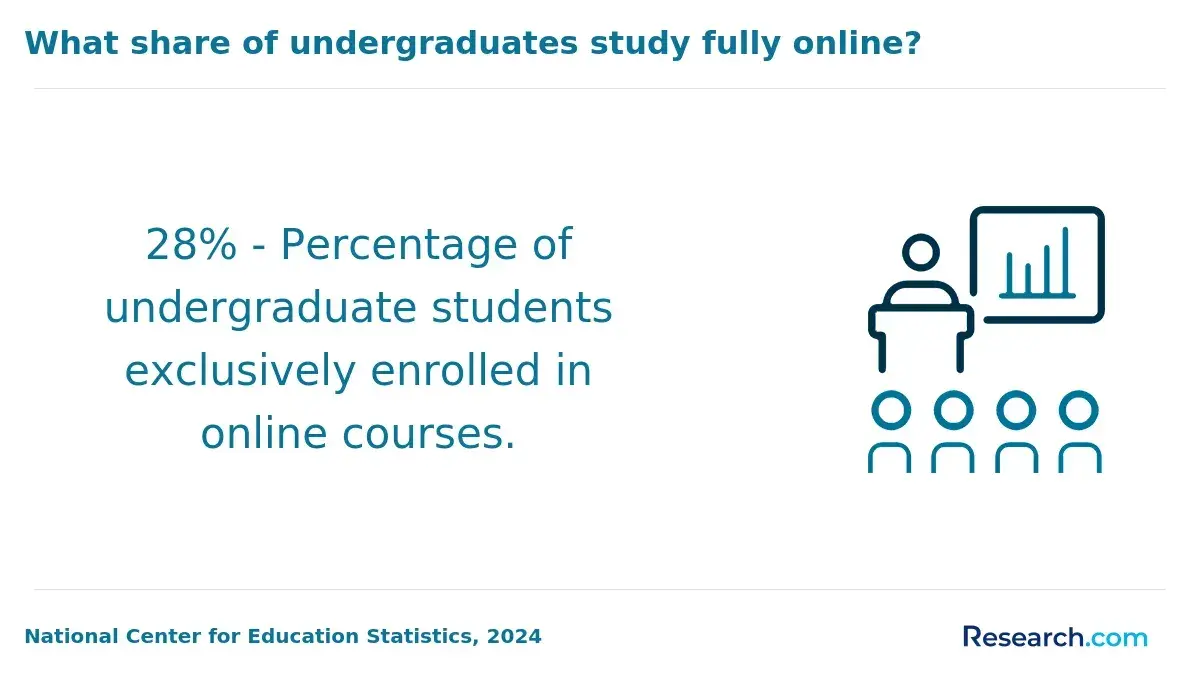
Online programs make the most sense when you already have a reliable computer, strong time-management habits, and access to peer collaboration through class teams, game jams, or open-source projects. Campus programs may be worth the added cost when the school offers specialized labs, strong industry networks, frequent critiques, and team-based capstones that would be hard to replicate alone.
What courses and technical skills are essential for working in AI-assisted game production?
AI-assisted game production still rests on fundamentals. Students who skip math, programming, version control, or design principles often struggle because AI tools can produce plausible outputs that are technically wrong, inefficient, or unsuitable for the game experience.
The most useful curriculum combines software engineering, game-specific production, and responsible AI practice. These are the skill areas to prioritize when reviewing a syllabus or building a self-study plan.
- Programming fundamentals: C++, C#, Python, data structures, algorithms, object-oriented design, debugging, and memory-aware thinking.
- Game engines: Unity, Unreal Engine, editor tooling, asset pipelines, physics systems, animation systems, lighting, build deployment, and profiling.
- Math for games: linear algebra, vectors, matrices, trigonometry, probability, statistics, and basic optimization.
- AI for games: pathfinding, behavior trees, finite-state machines, utility systems, procedural generation, reinforcement-learning concepts, and simulation testing.
- Generative AI literacy: prompt evaluation, output verification, copyright awareness, dataset concerns, bias review, and documentation of AI-assisted work.
- Production collaboration: Git or Perforce, agile workflows, issue tracking, code review, technical documentation, and cross-disciplinary communication.
- Quality assurance: test planning, automated testing, bug reproduction, telemetry, performance testing, and accessibility checks.
Advanced students who want to work on research-heavy AI systems, simulation, robotics-adjacent games, or experimental machine learning may eventually compare AI PhD programs. For most game development jobs, however, employers are more likely to expect a strong portfolio, solid engineering habits, and evidence that you can work on a team.
A good portfolio should show process, not just final screenshots. Include short explanations of what you built, what tools you used, where AI helped, how you checked the output, and what you would improve. That transparency helps employers evaluate your judgment.
How can prospective students evaluate accredited U.S. game development programs using AI tools?
Prospective students can use AI tools to organize research, compare curricula, generate questions for admissions advisors, and summarize public information. However, AI should support program evaluation, not replace verification. Accreditation, cost, transfer credit, and outcomes should always be confirmed through official school pages and recognized databases.
A reliable evaluation process should combine human judgment with AI-assisted organization. Follow these steps before enrolling in a U.S. game development program.
- Confirm institutional accreditation through the U.S. Department of Education's recognized accreditor database or the school's official accreditation page.
- Compare the curriculum against your target role, checking for engines, programming depth, AI coursework, team projects, portfolio development, and production tools.
- Ask whether students complete capstones, game jams, internships, co-ops, studio collaborations, or publishable projects.
- Calculate total cost, including tuition, fees, housing, software, hardware, commuting, portfolio expenses, and lost work time.
- Review transfer credit, prior learning assessment, military credit, and part-time pacing policies if flexibility matters.
- Ask for career-outcome context, but avoid treating salary claims as guarantees because outcomes vary by region, portfolio quality, employer, and prior experience.
- Use AI to compare program pages and generate follow-up questions, then verify every important claim with an admissions advisor or official catalog.
Common red flags include vague course descriptions, no clear portfolio requirement, limited programming depth for a programming degree, high-pressure enrollment tactics, unclear accreditation language, and career claims without context. If a school cannot explain what students build and how those projects connect to jobs, keep comparing options.
The same due-diligence habits apply outside game development. For example, students comparing a best online nutrition degree still need to check accreditation, curriculum fit, cost, and career alignment rather than relying only on rankings or marketing language.
What are typical salaries and advancement opportunities for AI-fluent game development professionals?
Salaries for AI-fluent game development professionals vary widely because "game developer" can refer to programmers, technical artists, designers, QA specialists, producers, data analysts, or machine learning engineers. Location, studio size, shipped titles, engine experience, platform specialization, and portfolio quality all influence compensation.
The most relevant federal benchmark for many programming-heavy game roles is the BLS software developer category. The BLS reported a May 2024 median annual wage of $133,080 for software developers. This figure is not a game-industry guarantee, but it gives students a realistic reference point for technical roles that require software engineering skill.
The table below shows how advancement often works in AI-assisted game production. Timelines vary, but the progression helps students understand what skills to build at each stage.
| Career stage | Common role titles | What employers usually look for | AI-era advancement signal |
| Entry level | Junior gameplay programmer, QA tester, associate technical artist, production assistant | Strong fundamentals, clean portfolio projects, collaboration habits, and willingness to learn studio tools | Can use AI responsibly while explaining and validating the work |
| Early career | Gameplay programmer, tools developer, QA automation tester, technical designer | Reliable delivery, debugging skill, engine fluency, and team communication | Builds reusable tools, automates repetitive tasks, or improves testing coverage |
| Mid career | Senior programmer, technical artist, systems designer, data analyst, producer | Ownership of features, mentoring, architecture decisions, and production judgment | Connects AI tools to measurable workflow improvements without sacrificing quality |
| Advanced | Lead programmer, technical director, AI engineer, principal tools engineer, production director | Strategic decision-making, cross-team leadership, shipped products, and technical credibility | Sets standards for AI governance, pipeline design, automation strategy, and ethical review |
Students should evaluate ROI by comparing likely debt, time to completion, portfolio strength, and target role. A lower-cost public program with strong projects may be a better investment than a higher-cost program with weak placement support, while a more expensive program may be reasonable if it provides rare equipment, internships, expert faculty, and strong alumni access.
What is the job outlook for game developers specializing in AI-assisted workflows?
The job outlook is strongest for game developers who pair creative production skills with durable technical abilities. AI tools may reduce some repetitive tasks, but they also increase the need for workers who can build pipelines, validate outputs, maintain tools, analyze data, and make responsible production decisions.
The BLS projected employment for software developers, quality assurance analysts, and testers to grow much faster than the average for all occupations in the 2024-2034 period. For game development students, the takeaway is not that every game studio will hire aggressively, but that software, automation, testing, and interactive-technology skills remain transferable beyond traditional entertainment studios.
Employers hiring AI-fluent game development professionals may include entertainment game studios, serious-games companies, simulation firms, education technology companies, defense and training contractors, AR/VR developers, mobile app companies, and software firms building interactive experiences. This matters because students who build transferable skills can pursue adjacent roles if the game market becomes competitive.
The safest career strategy is to avoid becoming tool-dependent. Engines, AI platforms, and production software change quickly, but fundamentals such as programming, systems design, math, version control, documentation, testing, and communication remain valuable across employers.
Are there industry-recognized certifications or standards for AI-enabled game development roles?
There is no single mandatory U.S. license for game developers, and there is no universal certification that employers treat as required for AI-enabled game development roles. Hiring usually depends more on portfolio quality, shipped or completed projects, technical interviews, collaboration skills, and role-specific expertise.
Certifications can still be useful when they support a clear gap in your background. The table below summarizes credentials and standards that may help, depending on your target role.
| Credential or standard area | Most relevant for | How it can help | Limitation |
| Unity or Unreal Engine training credentials | Gameplay programmers, technical artists, designers, and educators | Shows structured engine learning and may help entry-level candidates organize skills | Does not replace a playable portfolio or code review |
| Cloud or DevOps certifications | Backend, live operations, build engineering, multiplayer infrastructure, and tools roles | Supports knowledge of deployment, scaling, automation, and production reliability | Most useful when paired with practical projects |
| Data analytics or machine learning certificates | Game data analysts, AI product roles, economy designers, and personalization teams | Can document statistics, Python, dashboards, or model-evaluation skills | May be too general unless applied to game datasets or simulations |
| Accessibility standards and inclusive design training | Designers, QA testers, producers, UX researchers, and interface specialists | Improves player experience and supports responsible production practices | Requirements vary by employer and platform |
| AI ethics and governance training | Producers, leads, technical directors, AI specialists, and policy-focused teams | Helps teams address disclosure, bias, copyright, data privacy, and review processes | Still an emerging area with changing employer expectations |
A common mistake is collecting certificates without building evidence of applied skill. A better approach is to choose one credential that supports your target role, then create a portfolio project that uses the skill in context, such as an automated test suite, procedural level tool, AI behavior demo, or player analytics dashboard.
Other Things You Should Know About Game Programming & Development
A strong portfolio for AI-assisted game development should include examples of AI implementation in game mechanics, procedural content generation, and automation tools. Highlight projects demonstrating problem-solving with AI tools, and supporting documentation detailing your process and contribution to AI-driven aspects of development.
A computer science degree is not always mandatory, but it is one of the strongest foundations for programming-heavy roles. If you choose a game-specific degree, make sure it includes data structures, algorithms, C++ or C#, engine work, version control, and team projects.
Technical designers and tools engineers usually handle AI prompt design in 2027 production pipelines. They write reusable prompt templates, test output quality, and connect AI tools to engines like Unity or Unreal. Strong scripting skills, version control, and documentation are common requirements for this work.
References
- mages.edu.sg: Verifying that you are not a robot... https://mages.edu.sg/blog/future-of-game-development-careers/
- The Future of Game Creation: AI’s Role in Video Game Development - https://codewave.com/insights/impact-ai-video-game-development/
- AI Game Programmer Job Description, Salary, Skills & Software https://www.cgspectrum.com/career-pathways/ai-programmer
- Virtuall – Enterprise Creative AI OS for Studios https://virtuall.pro/blog-posts/ai-in-game-development
- Salary progression in Game Developer https://www.whitecarrot.ai/resources/templates/progression-salary/game-developer
- 6 Recommended AI Courses for Game Developers in 2025 https://completeaitraining.com/blog/6-recommended-ai-courses-for-game-developers-in-2025/
- International Summer School on AI and Games 2026 https://school.gameaibook.org/
- 87% of game developers are using AI agents in their workflows, says new survey https://www.gamesindustry.biz/87-of-game-developers-are-using-ai-agents-in-their-workflows-says-new-survey
- Aspiring Video Game Designers in 2025: What You Need to Know https://www.dice.com/career-advice/aspiring-video-game-designers-in-2025-what-you-need-to-know
- 16 Artificial Intelligence Career Paths https://www.calmu.edu/news/artificial-intelligence-career-paths