2027 Online Game Programming and Development Degrees With Low Total Student Debt Potential

Co-Founder and Chief Data Scientist
Choosing an online game programming degree is really a cost-versus-career decision: you need technical depth without borrowing more than the job market can reasonably support. The U. S. Bureau of Labor Statistics reports that software developers had a median wage of $133,080 in May 2024, but game-industry hiring can be competitive and portfolio-driven.
This guide is for students comparing online game development programs, transfer pathways, and affordable bachelor's options. You will learn how to judge debt potential, accreditation, curriculum quality, admissions fit, timelines, and career outcomes before enrolling.
Key Things You Should Know
- Lowest-debt pathways usually combine community college transfer credit, in-state public tuition, employer aid, scholarships, and careful borrowing; dependent undergraduates are capped at $31,000 in federal Direct Loans.
- Game programming degrees are best judged as software-development degrees with game-specific projects, because BLS data places software developers at a $133,080 median wage and 17% projected growth from 2023 to 2033.
- Accreditation, C++ or C# depth, engine experience, math readiness, and a strong portfolio matter more than a program's game-themed branding.
What is an online game programming and development degree, and who is it best for?
An online game programming and development degree is a college program that teaches students how to design, build, test, and optimize interactive digital games. Unlike a general game design program, which may focus more heavily on storytelling, art direction, level design, or player experience, a game programming degree usually emphasizes coding, mathematics, algorithms, software engineering, game engines, physics simulation, and technical production.
This degree is best for students who want to become technical contributors on game projects. It can also fit students who like software engineering but want coursework framed around gameplay systems, graphics, real-time interaction, and simulation. A strong candidate usually enjoys problem-solving, debugging, math, collaborative projects, and learning new tools independently.
It may not be the best investment for every student who "likes games." If you mainly want to write stories, create 3D art, compose music, or manage communities, a programming-heavy degree may feel frustrating. Students more interested in machine learning, automation, or generative tools used across industries may want to compare game programming with degrees in AI online, since AI-focused degrees can lead to a wider set of technical roles outside entertainment.
The table below shows how common game-related education paths differ. This comparison matters because two programs with similar names can prepare students for very different jobs.
| Path | Primary focus | Best fit | Debt-risk note |
| Game programming bachelor's degree | Coding, engines, math, physics, software architecture | Students targeting gameplay, tools, engine, or simulation programming | Can be worthwhile if tuition is controlled and portfolio outcomes are strong |
| Game design degree | Systems design, level design, narrative, player experience | Students who want to shape how games play rather than build core code | Debt risk rises if the program lacks technical or transferable skills |
| Computer science degree with game electives | Broad software theory plus selected game projects | Students who want game jobs but also want strong backup options in tech | Often a safer ROI path when offered at affordable public universities |
| Certificate or bootcamp | Short-term engine or portfolio training | Students who already have coding fundamentals or a prior degree | Lower upfront cost, but may not replace a bachelor's degree for all employers |
For most students, the strongest choice is a program that treats game development as applied software engineering. That way, the degree can support game-industry goals while still leaving room for jobs in simulation, visualization, education technology, defense, mobile apps, and general software development.
How do online game programming degrees compare to campus programs for cost and flexibility?
Online game programming degrees can be less disruptive than campus programs because they often allow students to study from home, keep working, and avoid relocation. The biggest savings are not always tuition; they often come from lower housing, commuting, parking, and lost-wage costs. However, online programs vary widely in quality, so flexibility should not be the only deciding factor.
Campus programs can offer advantages that are harder to replicate online, including in-person labs, motion-capture facilities, esports spaces, studio-style collaboration, and local recruiting events. Online programs can still be effective when they include live critiques, team projects, version-control workflows, virtual office hours, and structured portfolio reviews.
The table below compares online and campus formats across the factors that usually affect cost, learning experience, and debt exposure.
| Factor | Online program | Campus program | Decision point |
| Total cost | May reduce relocation and commuting costs | May require housing, meal plans, and transportation | Compare total cost of attendance, not tuition alone |
| Schedule | Often more flexible for working students | Usually more fixed around class times and studio access | Online is stronger for students who must maintain income |
| Collaboration | Depends on digital tools and instructor structure | Often easier through labs and in-person teams | Ask how group projects are managed online |
| Portfolio development | Can be strong if projects are reviewed regularly | Can benefit from studio culture and peer feedback | Look for shipped projects, capstones, and public portfolio support |
| Networking | Requires more intentional effort | May include local events and campus recruiting | Online students should seek game jams, Discord communities, and internships |
A practical way to compare formats is to calculate what each option will cost you over the full degree, including income you may lose if you cannot work. A higher-tuition online program may still be cheaper than a lower-tuition campus program if it lets you keep a job, live at home, and graduate without private loans.
Which types of game programming degrees have the lowest total student debt potential?
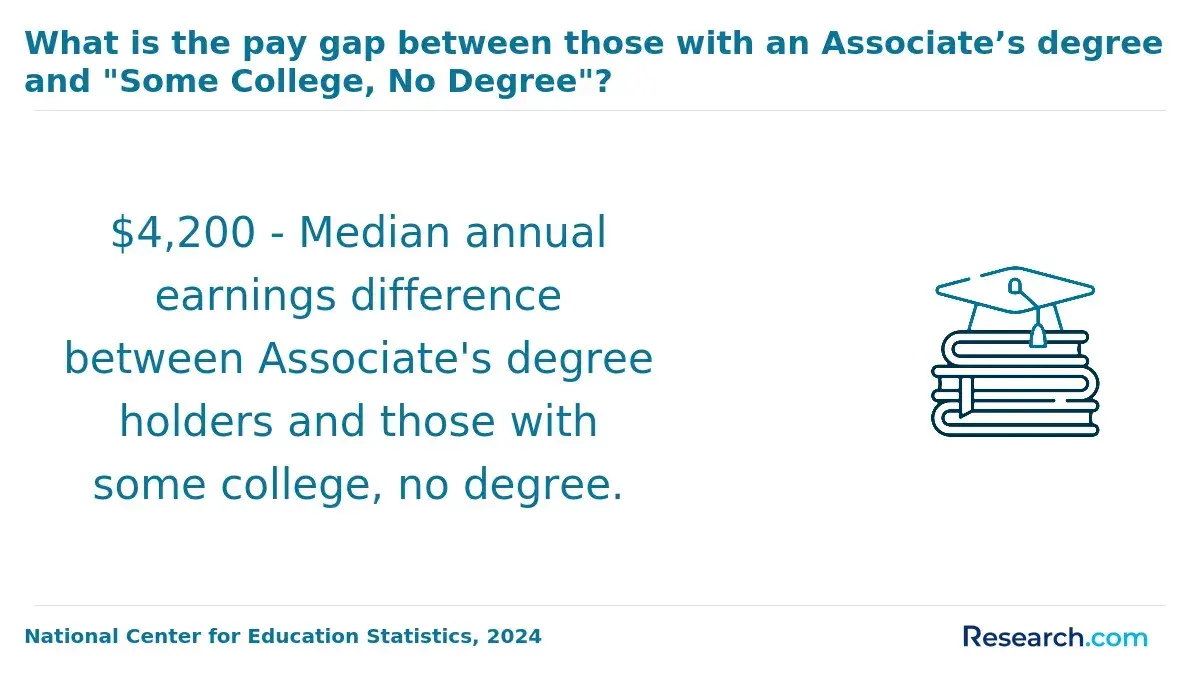
The lowest total student debt potential usually comes from programs that reduce the number of credits you must pay for at bachelor's-level tuition. For game programming, this often means starting with a transfer-friendly associate degree, choosing an in-state public online bachelor's program, or selecting a computer science program with game electives instead of a niche private program with high tuition.
Students should also compare game programming with related technical degrees. For example, an affordable data science degree may offer a stronger fit for students who enjoy coding and analytics but want a broader labor market than entertainment software alone.
The table below ranks common degree routes by debt potential, not by prestige. The best path depends on transfer credit, residency, financial aid, and whether the curriculum still supports your target role.
| Degree route | Typical debt potential | Why it may cost less | Best for |
| Associate degree plus transfer to public online bachelor's | Lowest to moderate | Lower-division credits are completed at community college rates | Students who can verify transfer agreements before enrolling |
| In-state public online bachelor's | Low to moderate | Resident tuition and state aid may reduce borrowing | Students with access to a strong public university option |
| Computer science bachelor's with game electives | Moderate | Broader program availability can create more affordable choices | Students who want game jobs plus general software backup options |
| Private nonprofit game development bachelor's | Moderate to high | Institutional aid may help, but sticker prices can be high | Students receiving strong grants or scholarships |
| Specialized private or for-profit game degree | Higher if aid is limited | Costs can rise quickly if credits do not transfer or completion takes longer | Students who have verified outcomes, accreditation, and total cost carefully |
Debt potential is not determined by public versus private status alone. A private nonprofit with a large scholarship can be cheaper than a public out-of-state option. The safest method is to compare net price, transfer credit, graduation requirements, loan limits, and portfolio outcomes side by side.
What accreditation should online game programming and development programs have in the U.S.?
In the U.S., the first accreditation question is whether the institution is accredited by an agency recognized by the U.S. Department of Education or the Council for Higher Education Accreditation. Institutional accreditation affects federal financial aid eligibility, transfer credit recognition, graduate school options, and employer confidence. A program that is "licensed," "approved," or "industry aligned" is not the same as being institutionally accredited.
Programmatic accreditation is a useful bonus but not always required for game programming. ABET accreditation may matter for some computing, software engineering, or engineering-related programs, but many legitimate game development programs do not have ABET accreditation. For art-heavy game programs, design accreditation may be relevant, but technical students should prioritize coding depth and software outcomes.
The same accreditation habit applies across online education fields; students comparing best online library science programs, computing degrees, or game development programs should verify recognition before applying.
Before enrolling, use this short accreditation and legitimacy checklist to avoid expensive mistakes:
- Confirm the school appears in the U.S. Department of Education's Database of Accredited Postsecondary Institutions and Programs.
- Ask whether online students receive the same accredited degree as campus students.
- Check whether credits transfer to public universities or graduate programs you might later consider.
- Look for transparent tuition, fees, refund policies, graduation requirements, and technology requirements.
- Be cautious if admissions staff pressure you to enroll immediately before you receive a full financial aid estimate.
A strong program should be easy to verify. If a school avoids direct answers about accreditation, credit transfer, total cost, or graduate outcomes, treat that as a red flag.
What courses and skills are typically included in online game programming curricula?
Online game programming curricula usually combine computer science foundations with game-specific applications. The goal is to help students build reliable software under real-time constraints, not just learn how to use one engine's interface.
Most strong programs include a mix of the following course areas because each one maps to a real production skill:
- Programming in C++, C#, Java, or Python, with emphasis on debugging and object-oriented design.
- Game engine development using tools such as Unity or Unreal Engine.
- Data structures, algorithms, software engineering, and version control.
- Linear algebra, calculus, discrete math, probability, and physics for movement, collision, and simulation.
- Computer graphics, shaders, rendering pipelines, and optimization.
- Artificial intelligence for non-player characters, pathfinding, procedural content, and gameplay systems.
- Networking and multiplayer architecture, including latency, synchronization, and server-client models.
- Capstone projects, team production, agile workflows, playtesting, and portfolio presentation.
Some programs also offer electives in monetization systems, cloud services, cybersecurity, or blockchain-based game economies. Students interested in decentralized systems beyond games can compare those electives with a master in blockchain later, but undergraduates should first master software fundamentals.
Employers typically evaluate game programming applicants through a portfolio, code samples, technical interviews, and evidence that they can finish projects. A polished demo with readable code, documentation, and clear notes about your personal contribution is often more useful than a large but unfinished game concept.
What are the usual admission requirements for online game programming bachelor's programs?
Admission requirements for online game programming bachelor's programs vary by school, but most are similar to other computing-related undergraduate programs. Selective programs may expect stronger math preparation, while open-admission or transfer-friendly programs may place students into prerequisite coursework first.
Applicants should prepare the following materials early because missing documents can delay financial aid and transfer evaluations:
- High school diploma, GED, or equivalent completion record.
- Official transcripts from high school and any colleges previously attended.
- Minimum GPA, if required by the institution or major.
- Math placement, prerequisite algebra or precalculus, or readiness assessment.
- Personal statement or short essay, especially for project-based programs.
- Portfolio, coding sample, or creative work if requested, although many bachelor's programs do not require one for first-year admission.
- FAFSA submission for students seeking federal, state, or institutional aid.
Transfer students should pay special attention to how programming and math credits are evaluated. A school may accept general education credits but still require students to retake major courses if earlier coursework used a different language, lacked lab components, or did not match the program sequence.
Common admission mistakes include applying before checking transfer rules, assuming a game portfolio can replace math readiness, and ignoring laptop or software requirements. A better approach is to ask for a written degree plan showing exactly which credits you need, how long completion will take, and what each term is expected to cost.
How long do online game programming and development degrees take, and what do they cost?
A traditional online bachelor's degree in game programming usually requires about 120 credits and takes four years of full-time study. Students who transfer an associate degree may finish in about two additional years, while part-time students may need longer. Accelerated terms can shorten the calendar, but they can also increase workload and reduce time for portfolio projects.
Cost depends heavily on residency, institution type, fees, and transfer credit. College Board's 2024 Trends in College Pricing reported average published tuition and fees of $11,610 for in-state students at public four-year institutions, $30,780 for out-of-state students at public four-year institutions, and $43,350 at private nonprofit four-year institutions for the 2024-25 academic year. These are sticker prices, not net prices, but they show why residency and institutional aid can change the debt picture dramatically.
The table below summarizes common timeline and cost drivers. Use it to estimate total cost before committing to a program.
| Cost or time factor | Why it matters | How to compare programs |
| Credits required | More required credits usually increase tuition and fees | Ask for a full degree audit, especially if transferring |
| Tuition rate | Online rates may be per credit and may differ from campus rates | Compare in-state, out-of-state, and online-only rates |
| Fees | Technology, course, graduation, and platform fees add up | Request total cost of attendance, not just tuition |
| Hardware and software | Game engines and 3D tools may require a capable computer | Check required specifications before enrolling |
| Transfer credit | Accepted credits reduce both time and borrowing | Get transfer decisions in writing before paying deposits |
| Pace | Part-time study can preserve income but extend completion | Compare monthly affordability with total completion cost |
The lowest-cost program is not always the best value if it lacks rigorous programming courses or portfolio support. The best financial fit is usually the accredited program that lets you graduate with the fewest paid credits while still building the skills required for technical interviews.
What game development careers can graduates pursue, and what are common job titles?
Graduates of online game programming and development programs can pursue roles in game studios, mobile app companies, simulation firms, education technology, virtual reality, augmented reality, defense contractors, software companies, and interactive media agencies. The game industry is attractive, but students should plan for adjacent software roles as well because entry-level game jobs can be highly competitive.
The table below connects common job titles with typical responsibilities. Titles vary by employer, so students should read job descriptions carefully rather than relying on the title alone.
| Job title | Typical responsibilities | Useful preparation |
| Gameplay programmer | Build player mechanics, combat systems, controls, and interactive features | C++, C#, engine scripting, math, debugging |
| Engine programmer | Work on rendering, performance, memory systems, and core engine tools | Advanced C++, computer graphics, optimization |
| Tools programmer | Create software that helps artists, designers, and developers build content faster | Software engineering, UI tools, scripting, workflow design |
| AI programmer | Develop pathfinding, behavior systems, decision trees, and procedural systems | Algorithms, data structures, math, gameplay design awareness |
| Network programmer | Build multiplayer systems, synchronization, matchmaking, and server logic | Networking, cloud basics, latency management, security awareness |
| Technical designer | Bridge design and engineering by scripting gameplay and prototyping systems | Engine fluency, scripting, communication, design thinking |
| QA automation tester | Create automated tests, reproduce bugs, and support release quality | Testing frameworks, scripting, documentation, attention to detail |
Students can improve their odds by targeting internships, game jams, open-source projects, modding communities, and collaborative capstones. A degree can help open doors, but hiring managers often want proof that you can ship working software, communicate with non-programmers, and solve problems under production constraints.
What is the salary outlook and industry demand for game programmers and developers?
The salary outlook for game programmers is best understood through related software and digital media occupations because the BLS does not publish a separate national category only for game programmers. The closest broad benchmark is software developers, who had a median wage of $133,080 in May 2024 and projected employment growth of 17% from 2023 to 2033. This signals strong demand for software skills overall, but it does not mean every game graduate will enter a high-paying studio role immediately.
Game-industry salaries vary by specialization, studio size, region, platform, experience, and whether the job is in entertainment games or adjacent fields such as simulation. Technical roles that require advanced C++, graphics, networking, or engine optimization often have stronger compensation potential than roles with a larger supply of entry-level applicants.
Current trends also affect the career decision. AI-assisted tools are changing workflows for prototyping, art pipelines, testing, and code generation, but they increase the value of programmers who understand fundamentals well enough to review, optimize, and integrate generated output. At the same time, studios continue to expect collaboration across distributed teams, making version control, documentation, and remote communication essential.
The practical takeaway is to choose a program that prepares you for both game jobs and broader software work. If your portfolio and coursework are too narrow, you may have fewer options during hiring slowdowns. If your degree includes strong software engineering foundations, you can pursue games while remaining competitive for roles in mobile development, simulation, interactive training, and general application development.
How can students minimize loans and total debt in online game programming programs?
Students can reduce total debt by treating program selection like a financial plan, not just an admissions decision. The 2024-25 federal Direct Loan aggregate limit for dependent undergraduates is $31,000, which is a useful warning line: if a program requires borrowing beyond federal limits, students may need Parent PLUS loans, private loans, or other financing that can increase repayment risk.
Use the following steps before enrolling to lower your borrowing and avoid common debt traps:
- Start with the net price, not the advertised tuition, by comparing grants, scholarships, required fees, and living costs.
- Complete transferable general education and introductory programming courses at a community college when articulation agreements are clear.
- Ask each school for a written transfer evaluation before committing.
- Choose in-state public options when they meet your academic and portfolio needs.
- Apply for institutional scholarships, state grants, employer tuition assistance, and paid internships early.
- Borrow federal loans before considering private loans because repayment protections differ.
- Avoid retaking credits by following the exact course sequence recommended by an advisor.
- Build a portfolio throughout the degree so you are not paying extra terms just to create job samples after graduation.
Red flags include unclear accreditation, vague job placement claims, unusually aggressive admissions calls, poor transfer policies, and programs that emphasize flashy game branding but provide little evidence of coding rigor. Also be careful with "accelerated" options if the pace leaves no time for math mastery, debugging practice, or team projects.
A smart debt strategy does not mean choosing the cheapest program automatically. It means choosing the lowest-cost accredited path that still gives you the technical foundation, portfolio evidence, and career flexibility needed to justify the investment.
Other Things You Should Know About Game Programming & Development
It can be worth it if the program is accredited, affordable, technically rigorous, and helps you build a strong portfolio. It is less attractive if it requires high borrowing and does not provide transferable software development skills.
Evaluate programs by comparing tuition costs, available scholarships, and financial aid packages. Review alumni testimonials and graduate debt statistics. Opt for accredited institutions offering strong financial support and low average student debt to ensure a low-debt education.
Most online game programming programs expect college algebra, trigonometry, and some calculus readiness before advanced courses. Applicants usually need a high school diploma or GED, and many programs ask for placement scores in math and English before enrollment in 2027.
References
- Game Development Career Pathways | CG Spectrum https://www.cgspectrum.com/career-pathways/game-development
- Bachelor of Science inGame Design and Development Online or On Campus https://www.albany.edu/cehc/programs/bs-game-design-and-development
- What is a Game Developer? - Career Insights | Teal https://www.tealhq.com/career-paths/game-developer
- Top Colleges for Game Development/Design or Animation https://discussions.unity.com/t/top-colleges-for-game-development-design-or-animation/612982
- All game development courses! List of over 160 courses | InGame Job https://ingamejob.com/en/courses
- Online Game Development Courses: The Path to Mastering Virtual Worlds and Career Success https://macrobiangames.com/blog/online-game-development-courses/
- Game Development Bachelor's Degree https://www.fullsail.edu/degrees/game-development-bachelor
- Career Path and Salary for Video Game Designers | ComputerScience.org https://www.computerscience.org/careers/video-game-designer/career-outlook-and-salary/
- The Video Game Designer Job Outlook | NEIT https://www.neit.edu/blog/video-game-designer-job-outlook
- Learn game development | edX https://www.edx.org/learn/game-development