2027 Online Game Programming and Development Degrees With Graphics and Rendering Coursework

Co-Founder and Chief Data Scientist
Choosing an online game programming degree is harder when your goal is graphics, rendering, or engine work rather than general coding. The stakes are real: the Entertainment Software Association reported that 190.6 million people in the U. S. played video games in its latest published survey, keeping demand high for technically skilled creators. This guide is for students comparing online degrees, certificates, and career paths. You will learn what these programs teach, how to evaluate quality, what they cost, and which roles may justify the investment.
Key Things You Should Know
- Graphics-focused online game degrees are usually bachelor's programs in game programming, game development, computer science, or interactive media, with specialized coursework in real-time rendering, shaders, 3D math, physics, and game engines.
- For cost planning, the College Board's latest published national averages show 2024-25 tuition and fees of $11,610 for in-state public four-year colleges and $43,350 for private nonprofit four-year colleges, before aid, housing, software, or equipment.
- Career outcomes vary widely, but the U.S. Bureau of Labor Statistics lists a 2024 median pay of $133,080 for software developers, while graphics-heavy roles may also overlap with special effects, animation, tools programming, and technical artist pathways.
What is an online game programming and development degree with graphics and rendering focus?
An online game programming and development degree with a graphics and rendering focus is a college program that teaches students how games are built at the code, engine, and visual-systems level. Instead of concentrating only on game design concepts, these degrees emphasize programming, 3D mathematics, rendering pipelines, simulation, optimization, and production workflows.
In practical terms, "graphics and rendering" means learning how a game turns digital assets, lighting, materials, cameras, particles, animation, and post-processing effects into images that run smoothly in real time. Students may write C++ or C# code, build shaders, work in Unity or Unreal Engine, debug frame-rate problems, and create portfolio projects that demonstrate technical ability.
This type of degree is a strong fit for students who want to build visual technology, gameplay systems, engine tools, or interactive simulations. It may be less ideal for students who mainly want to draw characters, write storylines, compose music, or manage esports programs unless the curriculum also includes those areas. Students more interested in visual communication than programming may want to compare a related path such as an online graphic design bachelor degree, which typically focuses more on design, typography, branding, and digital media than engine-level coding.
The main degree options differ in technical depth and career flexibility. The table below summarizes how common online degree types compare for students specifically interested in graphics and rendering.
| Program type | Typical focus | Best fit | Potential limitation |
| BS in Game Programming or Game Development | Game engines, gameplay systems, graphics, physics, production pipelines | Students aiming for game programmer, graphics programmer, tools developer, or technical designer roles | May be narrower than a traditional computer science degree if the student later wants non-game software work |
| BS in Computer Science with game electives | Algorithms, data structures, systems programming, software engineering, with optional graphics or game courses | Students who want maximum flexibility across game, software, AI, simulation, and tech roles | Game-specific portfolio development may require extra self-directed work |
| BA or BS in Interactive Media | Game design, digital media, scripting, user experience, creative production | Students who want a hybrid creative and technical path | May not go deep enough into advanced rendering, engine programming, or optimization |
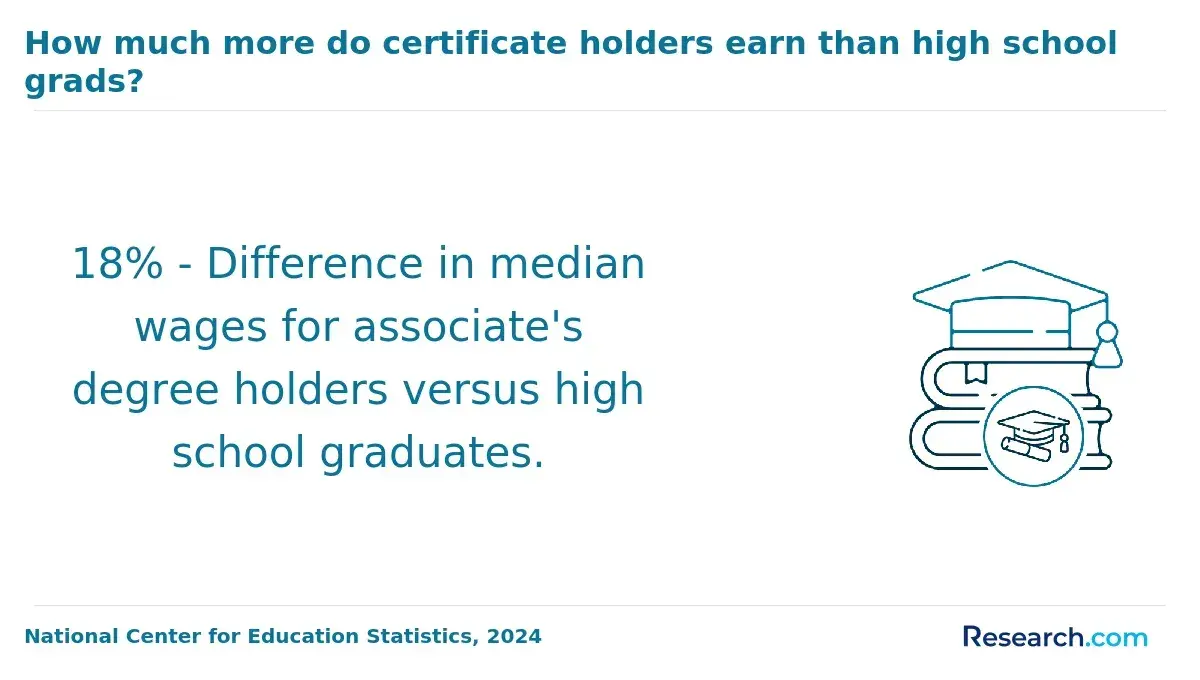
| Associate degree or certificate | Introductory programming, engines, art pipelines, or game design fundamentals | Students testing the field, building transfer credits, or adding a focused skill | Often not enough by itself for competitive programming-heavy roles |
How do online game programming degrees compare to campus-based programs in graphics training?
Online and campus-based game programming programs can teach the same technical foundations, but the learning experience differs. For graphics training, the biggest question is not whether the program is online; it is whether students get enough project feedback, access to required tools, team collaboration, and portfolio support.
Online programs work well for students who are self-directed, already comfortable with computers, and able to schedule consistent lab time. Campus programs may be better for students who benefit from in-person studio culture, physical labs, motion-capture spaces, local game clubs, or direct access to faculty during scheduled studio hours.
The table below compares the formats on factors that matter most for graphics and rendering coursework.
| Factor | Online degree | Campus-based degree | How to decide |
| Software access | Usually uses remote downloads, cloud labs, or student licenses | Often includes computer labs with preinstalled tools | Ask whether Unreal, Unity, Visual Studio, Maya, Blender, Perforce, or Git tools are included or discounted |
| Rendering projects | Portfolio projects are submitted digitally with recorded demos or repository links | Projects may be reviewed in studio critiques or lab sessions | Choose the format that gives you frequent critique, not just final grading |
| Hardware needs | Students usually need a reliable computer with a dedicated GPU for advanced 3D work | Students may use institutional workstations, though personal hardware is still helpful | Calculate equipment costs before comparing tuition |
| Team production | Collaboration happens through Discord, Git, project boards, video meetings, and engine version control | Collaboration may be easier through shared labs and scheduled studio time | Look for required team-based capstones, not only solo assignments |
| Networking | Depends on online events, alumni channels, portfolio reviews, and virtual career fairs | May include campus clubs, local studios, guest speakers, and showcases | Ask for evidence of employer engagement and recent graduate portfolios |
A common mistake is assuming that an online degree is automatically easier. Graphics programming can be mathematically and technically demanding in any format. Online students need disciplined weekly practice, strong file management, and comfort asking questions in discussion boards, live sessions, and version-control comments.
What core graphics, rendering, and engine coursework do these degrees typically include?
Graphics-focused game programming degrees usually combine computer science foundations with applied game engine projects. The goal is to help students understand both the theory behind visual systems and the practical constraints of building real-time interactive software.
The most relevant courses tend to build on each other. Students who skip the fundamentals may struggle later with shaders, optimization, or engine architecture, so it helps to understand the normal progression before enrolling.
- Programming fundamentals: C++, C#, Python, object-oriented programming, debugging, memory basics, and software design patterns used in games.
- Mathematics for games: linear algebra, vectors, matrices, trigonometry, quaternions, coordinate systems, interpolation, and collision-related math.
- Computer graphics: rasterization, lighting models, cameras, transformations, texture mapping, materials, shadows, and rendering pipelines.
- Shader programming: vertex shaders, fragment or pixel shaders, HLSL or GLSL concepts, material graphs, procedural effects, and GPU performance considerations.
- Game engines: Unity, Unreal Engine, custom engine concepts, scene graphs, entity-component systems, asset importing, scripting, and editor tools.
- Physics and simulation: rigid-body motion, collision detection, particle systems, cloth or fluid concepts, and real-time constraints.
- Optimization and profiling: frame budgeting, draw calls, memory use, level-of-detail systems, batching, culling, and platform performance testing.
- Capstone or portfolio production: a playable game, rendering demo, engine tool, technical art pipeline, or graphics feature documented for employers.
Students should look for assignments that require working artifacts, not just exams. A strong graphics portfolio might include a real-time lighting demo, custom shader set, performance analysis write-up, engine tool, or before-and-after optimization case study. Employers often need evidence that a candidate can diagnose visual and performance problems, not simply complete coursework.
What prior education, skills, and admission requirements are needed for these online programs?
Admission requirements vary by school and degree level, but online bachelor's programs commonly require a high school diploma or equivalent, transcripts, an application, and sometimes placement assessments in math or English. Competitive programs may also ask for a portfolio, programming sample, statement of purpose, or evidence of prior college credit.
Students do not always need prior game development experience, but they should be realistic about the technical learning curve. Graphics and rendering coursework relies heavily on math, coding, troubleshooting, and independent practice. A student who enjoys only the idea of games but dislikes programming may be better served by game art, animation, interactive media, or design-focused programs.
Before applying, students can reduce risk by checking whether they are prepared in the following areas.
- Math readiness: comfort with algebra, functions, geometry, trigonometry, and willingness to learn linear algebra.
- Programming readiness: at least basic exposure to variables, loops, functions, objects, and debugging through a free course or introductory class.
- Hardware readiness: access to a computer that can run modern engines and graphics tools, especially for 3D projects.
- Time readiness: ability to spend sustained weekly hours coding, rendering, testing, and revising projects outside scheduled class time.
- Portfolio mindset: willingness to document projects, record demos, publish code when appropriate, and explain technical decisions clearly.
Transfer students should ask whether previous computer science, math, art, or general education credits apply to the degree. Some schools accept many transfer credits but still require upper-level game courses to be completed in residence, which can affect both cost and graduation timeline.
How long do online game programming degrees take, and how are they structured for students?
Most online bachelor's degrees in game programming take about four years of full-time study for first-time students, though completion time can be shorter with transfer credits or longer for part-time students. Associate degrees often take about two years, while certificates may range from a few months to more than a year depending on intensity and credit load.
The structure matters because graphics and rendering courses are sequential. A student typically cannot take advanced shader programming before completing programming, math, and engine fundamentals. Accelerated programs can save time, but they may feel intense if the student is also working full time.
The table below shows how common study formats affect pacing and student experience.
| Format | Typical structure | Best for | Trade-off |
| Full-time online bachelor's | Multiple courses per term with general education, programming, math, and game development sequences | Students who want the fastest traditional path to a degree | Heavy workload during project-based terms |
| Part-time online bachelor's | One or two courses per term, often with flexible asynchronous work | Working adults, parents, military learners, or career changers | Longer time to completion and slower portfolio development |
| Accelerated degree | Shorter terms or year-round enrollment | Students with strong preparation and stable schedules | Less recovery time between technical courses |
| Associate-to-bachelor pathway | Lower-cost general education and introductory programming first, followed by transfer | Cost-conscious students and those building academic confidence | Transfer rules must be checked carefully to avoid lost credits |
| Certificate plus portfolio | Focused courses in engines, programming, shaders, or tools | Students who already have a degree or want targeted upskilling | May not satisfy degree preferences for some employers |
A practical way to evaluate pacing is to map the curriculum term by term and identify when portfolio-quality projects occur. If all meaningful work happens only in the final capstone, students may have too little time to revise and polish projects before applying for internships or jobs.
How can students verify accreditation and program quality for online game development degrees?
Accreditation is one of the first quality checks for any online degree. In the U.S., students should verify that the institution is accredited by an agency recognized by the U.S. Department of Education or the Council for Higher Education Accreditation. Institutional accreditation affects federal financial aid eligibility, credit transfer, graduate school options, and employer trust.
Program-level accreditation is less common for game development than for fields such as engineering, nursing, or education. Because of that, students should evaluate program quality through evidence: curriculum depth, faculty background, portfolio expectations, student work, internship support, transfer policies, and career services. The same accreditation-first logic applies when evaluating other degree investments, including questions such as is a library science degree worth it, because the value of a credential depends partly on institutional credibility and career alignment.
Use a step-by-step verification process before committing to a program.
- Confirm institutional accreditation on the school's website, then cross-check it in a recognized accreditation database.
- Review the exact degree name on the transcript, not just the marketing title on the program page.
- Ask whether credits transfer to or from public universities, graduate programs, or related computer science pathways.
- Request examples of recent student portfolios, capstones, game jams, demos, or technical projects.
- Check whether graphics courses include coding-based rendering work rather than only engine drag-and-drop workflows.
- Ask about career services specific to game, software, simulation, visualization, or interactive media roles.
- Read the program's technology requirements and confirm that your computer can handle required engines and tools.
Red flags include vague course descriptions, no named faculty, no clear accreditation information, unusually aggressive admissions pressure, unclear total cost, or promises of specific jobs after graduation. A reputable school can explain requirements, costs, outcomes, and limitations without guaranteeing employment.
What are the typical tuition costs, fees, and financial aid options for these online degrees?
Tuition for online game programming degrees varies by institution type, residency rules, credit requirements, transfer credits, and fees. Online students may avoid campus housing costs, but they can still face technology fees, software costs, proctoring fees, books, and hardware upgrades.
For a national baseline, the College Board's latest published averages for 2024-25 provide useful context for comparing four-year options before financial aid. These are published tuition and fee figures, not the final net price after scholarships or grants.
- Public four-year, in-state average published tuition and fees: $11,610.
- Public four-year, out-of-state average published tuition and fees: $30,780.
- Private nonprofit four-year average published tuition and fees: $43,350.
Those figures help students avoid comparing an online program's sticker price in isolation. A lower tuition rate can be attractive, but a program with weak transfer policies, limited technical depth, or poor support may cost more in lost time. Students comparing education ROI across very different majors may also find it useful to examine how cost and earnings are discussed in field-specific resources such as this guide to online animal science degree salary, because the same net-price and outcome questions apply across disciplines.
Important cost factors often sit outside the headline tuition rate. The table below summarizes what to ask about before enrollment.
| Cost factor | Why it matters | Question to ask |
| Per-credit tuition | Game degrees may require many credits, so small differences add up | Is the rate different for online, out-of-state, or upper-division courses? |
| Transfer credits | Accepted credits can reduce time and cost | Which credits apply to the major, not just electives? |
| Hardware | Rendering coursework may require a stronger CPU, GPU, RAM, and storage | What are the minimum and recommended specs for advanced courses? |
| Software and licenses | Some tools are free for students, while others may require paid access | Are engine, IDE, art, version-control, and collaboration tools included? |
| Fees | Online, technology, graduation, lab, or proctoring fees can change the real cost | Can the school provide a full program cost estimate? |
| Financial aid | Grants, scholarships, employer aid, military benefits, and federal loans affect net price | What is the expected net price after aid, not just the listed tuition? |
To control costs, complete the FAFSA if eligible, ask about transfer evaluations before enrolling, compare net price instead of sticker price, and avoid borrowing for hardware or living costs without a realistic repayment plan. Students should also ask whether internships, co-ops, or employer-sponsored projects are available, because experience can affect career readiness even when it does not directly reduce tuition.
What entry-level and advanced careers use graphics and rendering skills in game development?
Graphics and rendering skills can lead to several career paths, not all of them inside traditional video game studios. Graduates may work in games, simulation, virtual reality, augmented reality, training software, architecture visualization, defense simulation, medical visualization, automotive interfaces, education technology, or general software roles that use real-time 3D.
Entry-level roles are often competitive because game studios receive many applications from people who love games. A degree can help, but a targeted portfolio, code samples, internships, game jam projects, and teamwork experience are often just as important for proving readiness.
The table below connects common roles with the graphics-related work they typically involve.
| Career path | Typical responsibilities | Graphics or rendering relevance | Common preparation |
| Gameplay programmer | Build mechanics, player controls, cameras, UI interactions, and game systems | Uses engine rendering features and must understand performance constraints | C++, C#, Unity or Unreal, debugging, gameplay demos |
| Graphics programmer | Develop rendering features, shaders, lighting systems, effects, and optimization tools | Directly focused on real-time rendering and GPU performance | Computer graphics, linear algebra, C++, shader programming, rendering portfolio |
| Engine programmer | Work on low-level systems, architecture, tools, asset pipelines, and performance | May support rendering, memory, physics, animation, or platform systems | Systems programming, C++, data structures, profiling, engine projects |
| Technical artist | Bridge art and engineering through shaders, rigs, tools, procedural workflows, and optimization | Applies rendering knowledge to improve visual quality and artist workflows | Engine tools, scripting, materials, art pipeline knowledge, portfolio demos |
| Tools developer | Create editor extensions, automation, asset validation, and production utilities | Supports efficient creation of visual content and game assets | Programming, UI tools, scripting, version control, production experience |
| VR or simulation developer | Build immersive training, visualization, or interactive 3D systems | Requires high frame rates, optimization, spatial interaction, and rendering awareness | Real-time engines, interaction design, performance testing, 3D math |
AI tools are also changing the field. Generative tools can help with concept exploration, texture ideas, code assistance, and test asset creation, but they do not replace the need to understand rendering fundamentals, performance budgets, copyright constraints, or engine architecture. Students should learn how to use AI responsibly while building original, explainable projects.
What salary ranges and earning potential can graduates with graphics-focused game degrees expect?
Salary potential depends on role, location, employer type, portfolio quality, prior experience, and whether the graduate enters games, broader software, simulation, or visualization. Game-related titles can vary significantly, and some studios use contract or project-based hiring, so students should interpret salary data as context rather than a promise.
The U.S. Bureau of Labor Statistics reported a 2024 median pay of $133,080 for software developers. This figure is useful because many game programming graduates compete in the broader software developer labor market, but it is not specific to entry-level game studio jobs and may include higher-paying industries outside games.
For graphics-focused students, salary planning should compare related occupational categories rather than relying on one number. The table below gives a practical way to interpret earning potential by pathway.
| Pathway | Salary context | How students should interpret it |
| Software developer | BLS 2024 median pay: $133,080 | Relevant for graduates who can qualify for broader software engineering, engine, tools, simulation, or interactive systems roles |
| Special effects artist or animator | BLS 2024 median pay: $99,800 | Relevant to technical artists and real-time visual effects roles, though many programming roles use different pay structures |
| Graphic designer | BLS 2024 median pay: $61,300 | Relevant mainly for students leaning toward visual design rather than programming-heavy rendering careers |
| Computer and information research scientist | BLS 2024 median pay: $140,910 | Relevant for advanced graphics, AI, simulation, research, or graduate-level computing roles, but typically requires stronger academic preparation |
Students interested in advanced graphics, machine learning for games, procedural generation, or analytics-heavy interactive systems may eventually consider graduate study in computer science, AI, or data science. For example, comparing an online master data science pathway can make sense for students who want to move toward game analytics, recommendation systems, AI tooling, or technical leadership beyond entry-level development.
The strongest ROI usually comes from aligning the degree with a specific role and building evidence of that role before graduation. For a graphics programmer, that means rendering demos and code. For a technical artist, it means shaders, tools, and art-pipeline examples. For a gameplay programmer, it means playable systems, clean code, and team projects.
Are industry certifications or specialized tools important for graphics and rendering careers?
Industry certifications are not usually required for game programming jobs, but specialized tools and credible project evidence matter. Employers often care more about whether applicants can build, debug, optimize, and explain working systems than whether they hold a short credential.
Certifications can still help when they are used strategically. They may be useful for students who lack professional experience, career changers who need structure, or workers trying to document a specific tool skill. They should not replace a degree-level foundation in programming, math, graphics, and software engineering.
The most useful technical areas to document include the following.
- Game engines: Unity, Unreal Engine, custom engine concepts, editor scripting, asset workflows, and deployment.
- Programming languages: C++, C#, Python, HLSL, GLSL, and scripting used in production tools.
- Version control: Git, GitHub, Perforce, branching workflows, code reviews, and team collaboration.
- Graphics tools: Blender, Maya, Substance tools, RenderDoc, Nsight, engine profilers, and material editors.
- Production methods: agile workflows, task tracking, build management, testing, documentation, and performance profiling.
A common mistake is collecting certificates without building a portfolio. A better strategy is to pair any certificate with a finished artifact: a shader breakdown, optimization report, rendering demo, tool walkthrough, or short playable project. That combination makes the credential easier for employers to evaluate.
Other Things You Should Know About Game Programming & Development
It can be worth it if the program is accredited, technically rigorous, and helps you build a strong portfolio in rendering, shaders, engines, or tools. It may not be worth the cost if the curriculum is mostly game design theory, has weak coding requirements, or does not produce employer-ready projects.
No. Graphics programming is more about math, code, rendering systems, and performance than hand drawing. Artistic awareness helps, especially for lighting and materials, but technical artists and graphics programmers can come from programming-heavy backgrounds.
Requirements vary by school, but advanced 3D coursework usually benefits from a modern multi-core processor, dedicated graphics card, sufficient RAM, and fast storage. Always use the program's recommended specifications rather than minimum specifications if you plan to work heavily in Unreal, Unity, or 3D rendering tools.
Most programs require college algebra, trigonometry, and calculus I, and some add linear algebra or discrete mathematics. These courses support 3D geometry, shaders, animation, and physics-based rendering. Check the catalog for a minimum grade of C, because many programs require that before advanced game engine and graphics classes.
References
- Salaries in game development industry | InGame Job https://ingamejob.com/en/salaries
- What Skills Are Needed For Distance Learning? https://www.skillsacademy.co.za/what-skills-are-needed-for-distance-learning/
- Cost of an Online Degree: Calculate the Cost of Your Higher Education https://www.edumed.org/articles/cost-of-an-online-degree/
- Can You Take Prerequisites Online? https://www.sophia.org/blog/higher-education/can-you-take-prerequisites-online/
- Online Game Development Courses: The Path to Mastering Virtual Worlds and Career Success https://macrobiangames.com/blog/online-game-development-courses/
- The 10 Best Video Game Design Schools Online | 2023 https://gamedesigning.org/schools/online/
- Essential Skills for Online Learning https://tssw.tulane.edu/essential-skills-online-learning
- Career Path and Salary for Video Game Designers | ComputerScience.org https://www.computerscience.org/careers/video-game-designer/career-outlook-and-salary/
- Graphic Design Certifications: Are They Worth Earning? https://www.dice.com/career-advice/graphic-design-certifications-are-they-worth-earning
- Game Creation https://en.ehuniversity.lt/study-programs/game-creation/