2027 BS in Business Administration Transfer Planning: Credits from Three Previous Colleges
Audited and Verified:
Our Editorial and Data Verification Process
Research.com uses government datasets, official education statistics and primary institutional information to support its career and degree guides. Our review process checks factual accuracy, occupational definitions, source dates and the requirements associated with the credentials discussed.
How This Article Was Fact-Checked
Our editorial team verifies salary estimates, employment projections, education requirements and program information against original data providers and official organizations. Salary figures are checked against the relevant occupational definitions and reporting periods. Information about licensure, accreditation and required in-person training is reviewed separately.
Fact-checked and verified on:

Co-Founder and Chief Data Scientist
Credits from three colleges can shorten a BS in Business Administration, but a total transfer-credit offer will not tell you how close you are to graduation. Some courses may satisfy general education, while others count only as electives or fail to meet business prerequisites.
For returning students comparing programs, the useful question is what remains after each school applies all three transcripts to its degree requirements. This guide shows how to read that evaluation, challenge missing equivalencies, and compare the time and cost of realistic completion plans before enrolling.
Key Things You Should Know
- Submit transcripts from all three colleges and request a course-by-course evaluation; accepted credits and credits that satisfy graduation requirements are different totals.
- Compare each school's official degree audit for remaining business core, concentration, upper-division, prerequisite, and residency requirements - not just its advertised transfer-credit limit.
- Get written answers about disputed courses and a term-by-term plan before assuming that transferring more credits will reduce tuition or time to graduation.
How Do Transfer Credits From Three Colleges Apply to a BS in Business Administration?
The receiving university evaluates coursework from each institution, then determines how eligible credits fit its BS in Business Administration. Accepted credit is recorded on your new academic record; applied credit satisfies a requirement in your specific degree plan. A course can be accepted without replacing the accounting class, statistics prerequisite, or upper-division business course you still need.
Read the evaluation alongside the current degree audit. The categories below reveal why two programs can accept similar amounts of coursework yet leave you with different paths to graduation.
| Audit category | What transferred work might satisfy | What can remain unresolved |
| General education | Writing, mathematics, sciences, or humanities | A specific quantitative or communication requirement |
| Business prerequisites and core | Accounting, economics, statistics, or introductory business | A required equivalent, minimum grade, or course sequence |
| Concentration and electives | Approved specialization courses or free electives | Upper-division concentration courses offered only by the new school |
| Institutional requirements | Some graduation requirements, if the school permits | Minimum credits earned at the receiving institution, capstone, or other residency rules |
Compare audits for the same intended concentration and catalog. If you still need introductory preparation, review the college coursework required for business administration entry, then ask the receiving school which of your three colleges' courses meet its requirements. Admission to the university, admission to its business major, and graduation eligibility are separate decisions.
What Accreditation Requirements Affect Business Administration Transfer Credit?
Check the institutional accreditation status of each prior college for the period you attended and the receiving university's current status. The receiving institution sets its transfer policy: accreditation can affect review, but it does not by itself establish that a course is equivalent, fits your degree, or meets a minimum-grade rule. Coursework from a differently accredited institution may require an individual review rather than an automatic rejection or approval.
Institutional accreditation is distinct from business-school or programmatic accreditation through AACSB, ACBSP, or IACBE. A receiving business school may have additional rules for major courses, including whether an upper-division business class must be completed there. Verify the accreditor's actual scope and the school's written transfer policy rather than assuming every business course from an accredited college will count toward the major.
When you compare ranked online business schools in America, check accreditation and transfer policies directly with each institution. A ranking is not a course-equivalency decision.
How Can You Maximize Transfer Credits Toward a Business Administration Degree?
Maximizing credit means reducing remaining requirements, not merely increasing the number of electives on your record. Work from the receiving school's degree audit and current catalog, then resolve gaps before registering for another course.
Use this sequence when three transcripts produce unclear or incomplete results:
- Match every prior course to the audit and mark it as a requirement, elective, duplicate, pending review, or unaccepted course.
- Request written reviews for likely equivalents that lack a clear match; send the catalog description or syllabus from the term you took the course.
- Ask whether an approved substitution can meet a specific requirement and who - such as the department chair or business school - must authorize it.
- Confirm limits on lower-division, upper-division, examination, military, or other prior-learning credit before pursuing more credit elsewhere.
- Obtain an updated audit and proposed course sequence after decisions are posted; keep copies of approvals.
If your goal is specifically an HR degree rather than general business, compare how prior college coursework toward an HR bachelor's might apply. A specialized program could use your previous classes differently, but its remaining requirements - not its transfer-credit maximum - should decide the comparison.
Request an official transcript from each of the three colleges, including a college where you enrolled briefly or did not earn a credential. A receiving school may require transcripts sent directly by the issuing institution even if you have student copies. Ask its transfer office whether earlier coursework shown on a later college's transcript still requires a separate original transcript.
For courses without established equivalencies, gather descriptions from the catalog in effect when you enrolled and, if available, syllabi showing topics, learning outcomes, contact hours, and assessments. Keep records of associate degrees, examination scores, military learning, or other assessed learning if you want those evaluated. If a school uses quarter credits, flag those courses so the receiving office can apply its conversion policy.
Submit documents by the evaluation deadline and retain copies of decisions. If you are comparing online college options without an application fee, ask separately about transcript-ordering charges and whether a full transfer evaluation is available before you commit to enroll; an application-fee waiver does not settle either issue.
Writing, economics, introductory accounting, statistics, and other lower-division courses are common candidates for evaluation. Their placement depends on the receiving curriculum, course content, credit level, grade, and any recency rule. A quantitative course labeled "business math," for example, may not satisfy a required statistics course even if both earn elective credit.
Upper-division finance, management, marketing, operations, and business-law courses need especially careful matching: similar titles do not prove equivalent depth or coverage. A capstone may have to be taken at the receiving institution because it integrates that program's curriculum. An AA or AS can help satisfy general education under an applicable agreement, while an AAS may contain more occupational coursework that applies as electives; none guarantees completion of the business core.
If your previous courses are concentrated in scheduling or operations, project management bachelor's completion using existing credits is a useful comparison. Check whether a specialized degree applies those courses to its major before switching from business administration.
Time to completion depends on the remaining courses and when you can take them, not simply the number of credits a school accepts. A prerequisite may delay an advanced course, and a required capstone or concentration class may be offered in limited terms. Part-time attendance, work obligations, and residency rules can lengthen the calendar even when the remaining credit total looks manageable.
Ask an adviser for a term-by-term plan that identifies prerequisite chains, course availability, and the expected graduation term under your intended enrollment pace. Request a second version if a key course is unavailable or a disputed transfer course is denied. When you compare American fast-paced business bachelor's degrees, use your evaluated audit and an actual course schedule; an accelerated term does not remove required coursework.
Delivery format alone does not determine transferability. If online and campus students enter the same degree under the same catalog, the institution may apply the same academic transfer rules. Separate campuses, online divisions, or degree-completion tracks may instead use different catalogs, course availability, or residency policies. Ask which rules apply to your enrollment.
The practical difference may be whether you can complete the remaining courses on schedule. Check for live sessions, proctored exams, group presentations, internships, and required campus visits. If a course is offered only at certain times or locations, an otherwise favorable transfer evaluation may not be the fastest route. Use price, duration, and outcomes of business administration degrees as comparison factors, then verify them against your personal audit and the program's actual timetable.
Calculate cost from the courses you must still take, not from all credits previously earned or a program's maximum transfer allowance. Request an itemized estimate based on your evaluated degree audit and planned enrollment pace. No quoted total is dependable while required-course substitutions or transfer appeals remain unresolved.
For each school, compare these charges and financial effects using the same remaining-course plan:
- Tuition: the published per-credit, per-course, or per-term rate applied to the courses you still need.
- Required fees and materials: technology, assessment, books, software, and any travel or campus costs.
- Financing and timing: available grants or employer assistance, expected borrowing, payment deadlines, and the cost of an additional term if a course is delayed.
Ask financial aid staff how transfer credit, enrollment intensity, and satisfactory academic progress affect your eligibility. If an employer reimburses tuition, confirm when payment arrives and whether grades or continued employment are conditions. Resources on how to reduce tuition spending on an online business administration degree can help you find candidates, but the least expensive advertised rate is not necessarily the lowest completion cost for your three-transcript record.
A completed business administration degree can support applications for roles in operations, HR, marketing, procurement, and project coordination. The strongest route depends on your prior work and the evidence you can show - such as spreadsheet analysis, customer communication, budgeting support, or process documentation. Graduation alone does not qualify you to manage staff or move directly into a specialist position.
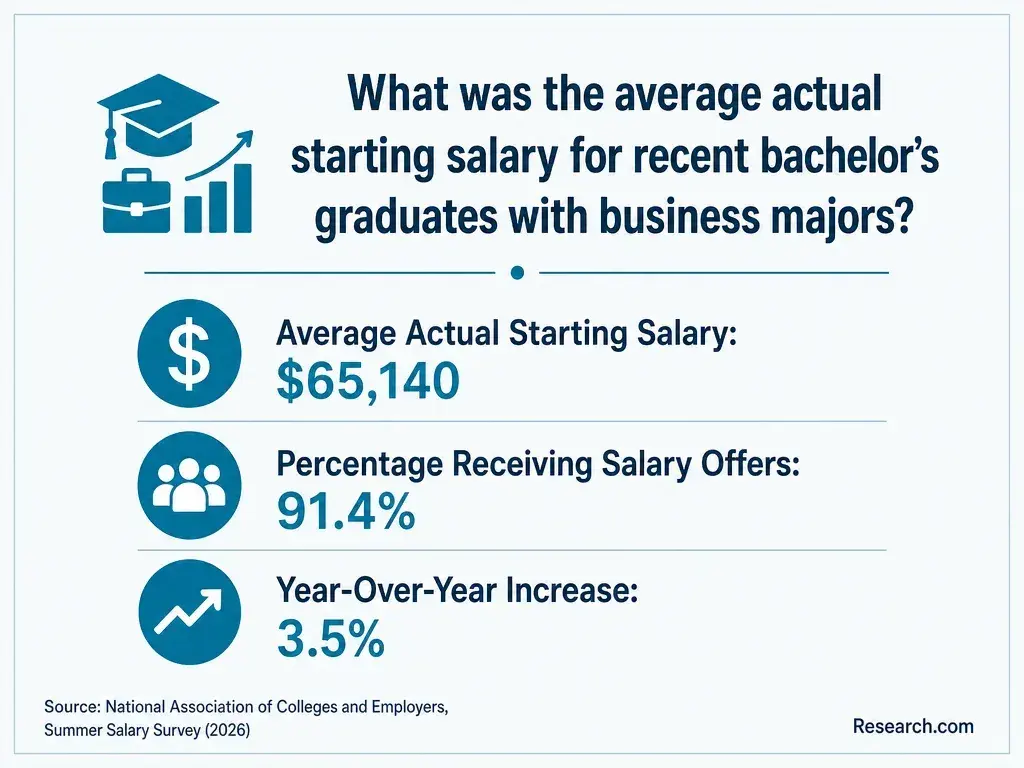
For context, the U.S. Bureau of Labor Statistics reports a May 2025 median annual wage of $75,940 for human resources specialists. That is an occupation-wide median, not an expected starting salary for business administration graduates; employers may also seek relevant HR experience or training. If project coordination is your specific goal, compare the business degree with specialized options, including financial aid at low-cost project management schools, while checking which path builds the skills your target employers request.
Do Business Administration Graduates Need Licenses or Professional Certifications?
There is no general professional license required simply to hold a BS in Business Administration. Requirements depend on the work: regulated accounting or financial-services activities can involve separate education, examinations, experience, or licensing, while some employers prefer voluntary credentials for HR or project roles. A business course or concentration does not automatically establish eligibility for those credentials.
Before paying for a certification, read the issuing organization's current eligibility rules and review job postings for your intended role. If employers mainly require a completed bachelor's degree, certification alone may not remove that barrier. Conversely, if you already meet degree requirements and need a specific skill, another full degree may be unnecessary. Compare targeted training with lower-priced college options for business majors only after your transfer audit shows what completing the degree would actually require.
Other Things You Should Know About Business Administration
Usually, you can apply elsewhere, but the receiving school may still require that college's official transcript. Check its admission and academic-standing policies if the withdrawal involved unresolved academic or disciplinary issues.
Not necessarily. A receiving school may treat them as duplicate coursework and award credit only once. Ask the registrar how its repeat and duplication rules apply before counting both toward graduation.
Transfer credits often appear without their grades being included in the receiving institution's GPA, but policies vary. Confirm how prior grades affect admission, major eligibility, and graduation honors separately.
That depends on the institution's catalog-year and reentry rules. Ask the registrar which catalog will govern your degree and whether a change of major or enrollment gap alters that choice.
- Accreditation in the U.S. | ed.gov http://www.ed.gov/laws-and-policy/higher-education-laws-and-policy/college-accreditation/accreditation-in-the-us
- Staying Eligible | Federal Student Aid https://studentaid.gov/understand-aid/eligibility/staying-eligible
- Definitions | Transfer Credit Ohio https://transfercredit.ohio.gov/educational-partners/educational-partner-initiatives/articulation-transfer-policy-policy/articulation-transfer-policy-definitions
- Academic Requirements | Undergraduate Advising & Student Success | Boston University https://www.bu.edu/advising/student-success/transfer-students/academic-requirements/
- Degree Requirements - Washington University Bulletin - WashU https://bulletin.wustl.edu/undergrad/business/requirements/
- View Transfer Guide - AA - FSU - Business Administration (BS) - General Business - Fully Online, On-Campus https://coursetransfer.northcarolina.edu/guide/2024-2025/474
- Converting Credits - Tusculum University https://catalog.tusculum.edu/content.php
- How Do Transfer Credits Work When You Go Back to School? | Whitworth Online https://online.whitworth.edu/news-articles/how-do-transfer-credits-work-when-you-go-back-to-school/
- Bachelor of Business Administration - KU Catalog https://catalog.ku.edu/business/bachelor-business-administration/
- General Business, B.S.B.A. - UWF Catalog https://catalog.uwf.edu/undergraduate/businessgeneral/