2027 Best Online Game Programming and Development Degrees for XR and Interactive Media Careers

Co-Founder and Chief Data Scientist
Choosing an online game programming degree is harder now because XR jobs sit between software engineering, 3D design, AI, and real-time simulation. The U. S. Bureau of Labor Statistics projects software developer, quality assurance analyst, and tester employment to grow 17% from 2023 to 2033, much faster than average, making technical preparation especially important.
This guide is for students comparing online degrees for game, VR, AR, mixed reality, and interactive media careers. You will learn what to study, how online programs compare, what they cost, and how to judge whether a program supports your career goals.
Key Things You Should Know
- The best online game programming programs for XR usually combine accredited computer science or software development coursework with real-time engines, 3D math, interaction design, and a portfolio of playable projects.
- College Board's 2024 pricing data lists average published tuition and fees at $11,610 for in-state public four-year colleges and $43,350 for private nonprofit four-year colleges, before grants, transfer credits, or online-specific pricing.
- Career outcomes depend more on demonstrable skills than the degree title alone; BLS May 2024 wage data lists a $133,080 median annual wage for software developers, while game and XR roles can vary by employer, location, specialization, and portfolio quality.
What is an online game programming and development degree for XR and interactive media?
An online game programming and development degree for XR and interactive media is a college program that teaches students how to build interactive digital experiences using code, real-time engines, graphics systems, user interfaces, and design workflows. XR stands for extended reality, a broad term that includes virtual reality, augmented reality, and mixed reality. Interactive media can include video games, simulations, training applications, immersive exhibits, educational tools, and digital storytelling projects.
For students focused on programming, the strongest programs typically go beyond "game ideas" and emphasize software construction. That means courses in C#, C++, JavaScript, Python, data structures, algorithms, 3D math, physics, networking, rendering, and version control. A more design-centered video game design degree may be a better fit for students who want to focus on level design, narrative, art direction, or gameplay systems rather than engine programming.
The word "best" should be interpreted carefully. The best program for an aspiring XR gameplay programmer may not be the best program for a technical artist, UX designer, or simulation developer. A strong choice is usually accredited, transparent about costs, flexible enough for online learners, connected to industry tools, and structured around portfolio-building projects.
The table below summarizes common degree paths and when each one makes sense. This comparison is useful because XR careers do not always require a degree with "game" in the title.
| Degree path | Typical focus | Best fit | Potential limitation |
| Game programming or game development bachelor's degree | Real-time engines, gameplay programming, project-based development, production workflows | Students who want to build playable games, XR prototypes, and interactive systems | May be narrower than computer science if the curriculum is light on algorithms, systems, or software engineering |
| Computer science bachelor's degree with game or graphics electives | Programming fundamentals, algorithms, operating systems, graphics, AI, software design | Students who want maximum flexibility across games, XR, software engineering, and tools development | May require students to build their own game or XR portfolio outside class |
| Interactive media or digital media degree | User experience, creative technology, storytelling, media production, interactive design | Students interested in immersive experiences, museums, education, brand activations, and creative tech | May not be technical enough for engine or graphics programming roles unless coding courses are substantial |
| Software engineering degree | Large-scale software development, testing, architecture, DevOps, team workflows | Students who want XR-adjacent roles in tools, platforms, enterprise simulation, and application development | May include fewer courses in 3D graphics, game design, or immersive interaction |
How do online game programming degrees compare to campus programs for XR-focused careers?
Online and campus programs can both prepare students for XR-focused careers, but they create different learning conditions. The key question is not whether the program is online; it is whether the program gives students enough technical depth, feedback, collaboration, and portfolio evidence to compete for project-based roles.
Online programs can be especially useful for working adults, military students, career changers, and students who do not live near a campus with game or XR labs. However, students should look closely at how the school handles team projects, access to game engines, faculty feedback, hardware requirements, and career services for remote learners.
This table compares online and campus formats on the factors that matter most for XR preparation. Use it to identify trade-offs instead of assuming one format is automatically better.
| Factor | Online program | Campus program | Decision guidance |
| Schedule flexibility | Often stronger, especially with asynchronous lectures and part-time pacing | Usually tied to fixed class times and campus attendance | Online is often better for learners balancing work, family, or military responsibilities |
| Hardware and lab access | Students may need their own VR headset, capable computer, and peripherals | Campus labs may provide headsets, motion capture, testing spaces, and specialized equipment | Campus can be better if the program uses expensive XR hardware that students cannot easily access |
| Team production experience | Possible through remote collaboration tools, repositories, and milestone reviews | Often easier to coordinate in person, especially for studio-based courses | Either format can work if the program requires structured team projects |
| Portfolio development | Can be strong if courses produce playable builds and documented projects | Can be strong if studio courses culminate in public showcases | Choose the program that produces the strongest evidence of your abilities |
| Networking | Depends on virtual events, Discord or Slack communities, alumni access, and career support | Often easier through clubs, studios, hackathons, and campus showcases | Online students should verify how the school supports industry connections remotely |
An online program is most likely to work well if you are self-directed, comfortable troubleshooting technology, and willing to build projects outside required assignments. A campus program may be a better option if you need hands-on access to specialized labs, frequent in-person critique, or a strong local game development community.
Which types of accredited U.S. schools offer online game programming and XR degrees?
Accredited U.S. schools offering online game programming, game development, XR, and interactive media degrees include public universities, private nonprofit universities, private for-profit institutions, and community colleges with transfer pathways. Institution type alone does not determine quality or return on investment, so students should evaluate accreditation, curriculum, outcomes, support, and total cost together.
At minimum, the school should hold institutional accreditation from an accrediting agency recognized by the U.S. Department of Education or the Council for Higher Education Accreditation. Programmatic accreditation is less common for game development programs, but ABET accreditation may be relevant for computer science or software engineering degrees, while art and design accreditation may matter more for media-heavy programs.
The table below explains the main school types students are likely to encounter. It can help you decide where to look first based on transfer plans, cost sensitivity, and desired technical depth.
| School type | Online degree options | Strengths | What to verify |
| Public universities | Bachelor's degrees in computer science, software development, digital media, or game development | Often strong regional reputation, transfer pathways, and lower in-state tuition | Whether online students receive the same degree, faculty access, and career services as campus students |
| Private nonprofit universities | Game development, interactive media, computer science, and creative technology programs | May offer flexible online formats, strong advising, and specialized creative programs | Total tuition, technology fees, credit transfer limits, and portfolio support |
| Private for-profit institutions | Career-focused game art, game development, animation, and media technology degrees | May offer frequent start dates and highly structured online delivery | Accreditation status, graduation and debt outcomes, employer reputation, and refund policies |
| Community colleges | Associate degrees or certificates in game design, programming, simulation, or digital media | Often lower cost and useful for building transfer credits | Whether credits transfer cleanly into a bachelor's program and whether courses include modern engines |
A reputable program should clearly publish its accreditation, tuition, curriculum, faculty credentials, technology requirements, transfer policies, and student support services. If a school cannot explain how online students build a portfolio or collaborate on projects, keep looking.
What courses and skills are taught in online game programming programs for XR?
Online game programming programs for XR should teach both foundational computing and applied interactive media production. XR development is not only about placing 3D objects in a headset; it requires performance optimization, spatial interaction, usability testing, asset pipelines, and careful attention to human comfort.
Students should expect a mix of programming, math, design, and production courses. The most useful curricula usually include the following areas because they map directly to real project responsibilities:
- Programming fundamentals, including object-oriented programming, data structures, debugging, memory concepts, and scripting for real-time environments.
- Game engines such as Unity or Unreal Engine, including scene management, input systems, physics, animation controllers, UI, asset integration, and deployment.
- 3D math and graphics, including vectors, matrices, transformations, lighting, shaders, cameras, collision, and rendering pipelines.
- XR interaction design, including spatial interfaces, hand tracking, controllers, locomotion, accessibility, comfort, and user testing.
- Software production workflows, including Git, agile methods, issue tracking, playtesting, documentation, build pipelines, and team communication.
- AI, simulation, and procedural systems, including pathfinding, behavior trees, generative tools, NPC logic, and data-driven gameplay.
AI is becoming increasingly relevant in game and XR development, but students should treat it as an extension of strong fundamentals rather than a replacement for them. Learners who want deeper preparation for machine learning, generative systems, or intelligent simulation may also compare specialized online AI degrees with game-focused programs.
The best course sequences build toward finished work. By graduation, a student should have multiple small prototypes, at least one larger team project, documented source control experience, and a portfolio that explains the technical problem solved, not just the final visual result.
What admission requirements and prior experience do online game development programs expect?
Admission requirements vary by degree level and school, but most online bachelor's programs expect a high school diploma or GED, transcripts, an application, and sometimes a minimum GPA. Some programs are test-optional, while others may request SAT or ACT scores from first-year applicants. Transfer students usually submit college transcripts and may need a minimum number of prior credits.
Prior game development experience is usually helpful but not always required. What matters more is readiness for programming, math, and independent project work. Students without coding experience can still succeed, but they should plan for a steeper first year and may benefit from introductory programming practice before classes begin.
Applicants can improve their readiness by preparing a small but focused set of materials and skills before enrollment. These steps are especially useful for students entering a programming-heavy program:
- Complete an introductory course or tutorial in Python, C#, Java, or JavaScript before the first term.
- Build one simple interactive project, such as a 2D game, physics demo, or basic VR scene, to confirm that you enjoy debugging and iteration.
- Review algebra, trigonometry, and basic vectors because 3D interaction and graphics rely heavily on spatial reasoning.
- Learn the basics of Git so you can manage code, collaborate, and show project history in a professional way.
- Ask admissions whether placement tests, bridge courses, or tutoring are available for programming and math.
Graduate programs may require a bachelor's degree, programming experience, a statement of purpose, letters of recommendation, and sometimes a portfolio. Students without a computing background should ask whether prerequisite courses are required before starting advanced game engine, graphics, or XR development classes.
How long do online game programming degrees take, and what do they cost?
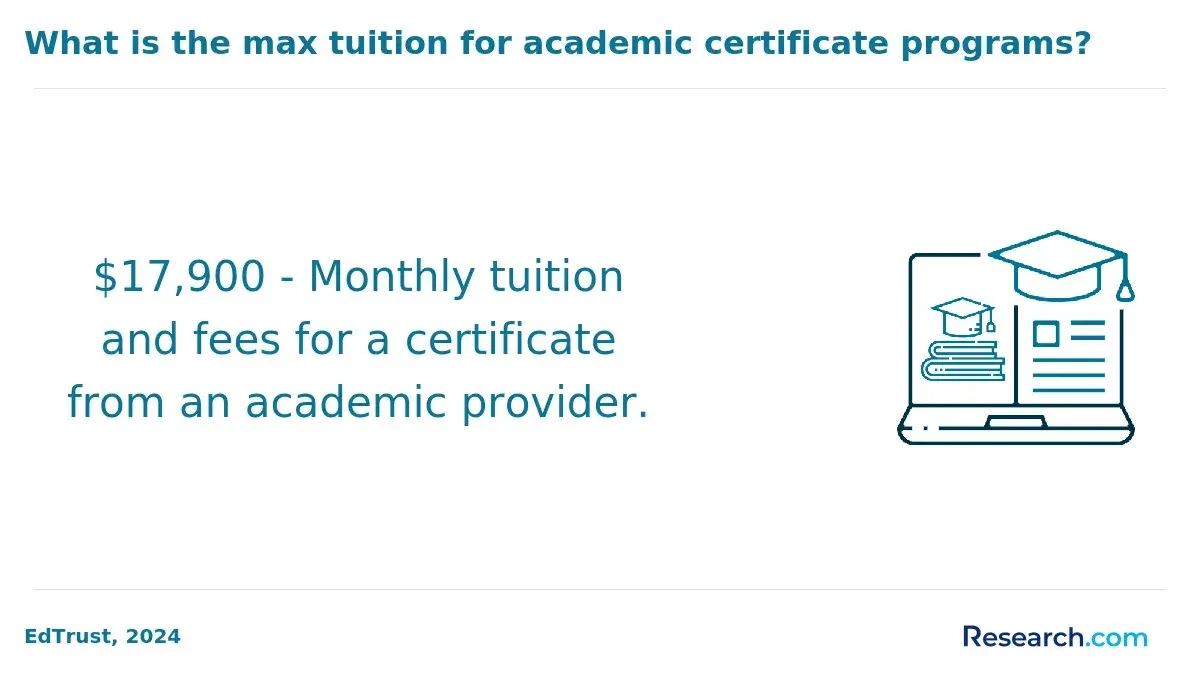
Most online bachelor's degrees require about 120 credits and take four years of full-time study, while associate degrees often require about 60 credits and take around two years. Part-time students may take longer, while transfer students with substantial prior credits may finish faster. Certificates can be shorter, but they usually provide narrower preparation than a full degree.
Costs depend on institution type, residency status, transfer credits, technology fees, and whether students need to purchase hardware. College Board's 2024 data provides a useful national benchmark: average published tuition and fees for public four-year in-state students were $11,610 for the academic year, while private nonprofit four-year colleges averaged $43,350. These are sticker prices, not necessarily the net price after grants or scholarships.
The table below outlines common time and cost variables. Use it to estimate total investment rather than comparing tuition alone.
| Cost or timeline factor | Why it matters | What to ask the school |
| Per-credit tuition | Online programs often charge by credit, and small differences add up across 120 credits | Is tuition different for online, in-state, out-of-state, military, or transfer students? |
| Transfer credit policy | Accepted credits can reduce both time and total tuition | How many credits can transfer, and which major courses must be completed at the school? |
| Technology fees | Online courses may include platform, lab, software, or digital resource fees | Are fees included in advertised tuition, or billed separately? |
| Hardware requirements | XR development may require a powerful computer, headset, controllers, or external storage | What exact hardware is required for each year of the program? |
| Course availability | Some specialized courses are offered only once per year, affecting graduation timing | Are game engine, XR, graphics, and capstone courses available on a predictable schedule? |
| Financial aid and loans | Borrowing cost affects long-term ROI; federal undergraduate Direct Loans carried a 6.53% fixed interest rate for 2024-2025 loans | What is the estimated net price after grants, scholarships, and transfer credits? |
To control costs, students should compare net price, not just published tuition. Community college transfer pathways, employer tuition assistance, military education benefits, scholarships, prior learning credit, and careful course planning can reduce the total amount paid.
What XR and interactive media careers can you pursue with a game development degree?
A game programming degree can lead to roles in entertainment, enterprise training, defense simulation, health care visualization, education technology, architecture, marketing, and immersive product design. XR career paths often overlap with broader software and interactive media careers, so students should build skills that transfer beyond one platform or device.
The career table below connects common roles to responsibilities and preparation. It is not a promise of employment; it is a practical map for matching coursework and portfolio projects to job targets.
| Career path | Typical responsibilities | Useful preparation |
| Gameplay programmer | Build player controls, game systems, mechanics, tools, and interactive behaviors | C++, C#, engine scripting, physics, debugging, gameplay prototypes |
| XR developer | Create VR, AR, or mixed reality applications for headsets, mobile devices, or spatial computing platforms | Unity or Unreal, XR SDKs, spatial UI, performance optimization, user testing |
| Technical artist | Connect art and engineering through shaders, rigging tools, pipelines, procedural assets, and optimization | Shaders, scripting, 3D tools, rendering, asset pipelines, visual problem solving |
| Simulation developer | Develop training, visualization, or modeling systems for enterprise, defense, aviation, health, or education | Physics, systems thinking, real-time engines, data integration, usability |
| Tools programmer | Create internal tools that help designers, artists, and developers build content faster | Software engineering, UI development, scripting, editor extensions, workflow analysis |
| Interactive media developer | Build installations, educational interactives, web-based experiences, and branded digital products | Front-end development, creative coding, UX, sensors, real-time media, accessibility |
Students who enjoy data-heavy simulation, analytics, or AI-enabled interactive systems may eventually combine game programming with graduate study in analytics or machine learning. In that case, comparing best data science master's programs can make sense after building a strong programming foundation.
This degree path is a strong fit for students who like building and testing systems repeatedly, not just imagining game concepts. It may be a poor fit for students who dislike coding, troubleshooting, math, or long iteration cycles. For those students, game art, UX design, animation, digital media production, or project management may be better aligned.
What salary ranges and earning potential exist for XR and game development professionals?
Salary potential in XR and game development depends on the role, industry, region, portfolio, programming depth, and whether the employer treats the job as software engineering, media production, or design. Students should use salary data as a planning benchmark, not as a guarantee.
The U.S. Bureau of Labor Statistics does not publish a single "XR developer" wage category, so related occupations provide the most useful comparison. The table below uses May 2024 BLS median annual wage data for roles that commonly overlap with game programming and interactive media work.
| Related occupation | May 2024 median annual wage | How it relates to XR and game development |
| Software developers | $133,080 | Relevant for engine programming, tools development, simulation software, platform work, and XR application development |
| Software quality assurance analysts and testers | $102,610 | Relevant for game QA automation, XR usability testing, performance testing, and release validation |
| Special effects artists and animators | $99,060 | Relevant for technical art, animation pipelines, real-time visual effects, and interactive media production |
The highest-paying route is often the most technical one. Students who can demonstrate strong programming fundamentals, optimization skills, engine knowledge, and production discipline may have more flexibility across industries than students whose portfolios show only small visual demos.
Location also matters. XR roles may cluster around technology hubs, game studios, defense contractors, simulation firms, medical technology companies, and media markets, but remote and hybrid work can broaden options. Entry-level candidates should expect competition and should treat internships, game jams, open-source projects, and capstone work as part of the employment strategy.
What industry certifications and portfolios strengthen job prospects in XR game development?
Certifications are not usually required for game or XR development jobs, but they can help validate specific tools when paired with a strong portfolio. Employers generally care most about what you can build, how well you explain technical decisions, and whether your work runs reliably.
The most useful credentials and portfolio assets are those that prove job-relevant ability. Consider the following options based on your target role:
- Unity or Unreal Engine training credentials can support entry-level XR or gameplay portfolios, especially when projects show deployment, optimization, and interaction design.
- Cloud or DevOps certifications may help students targeting multiplayer services, backend tools, live operations, or distributed simulation platforms.
- Accessibility, UX, or human-computer interaction coursework can strengthen portfolios for XR roles where comfort, usability, and inclusive design matter.
- Cybersecurity or secure coding training can be useful for networked games, enterprise simulations, and applications that handle user data.
- A public portfolio with playable builds, source samples, design notes, performance documentation, and short demo videos is often more persuasive than certificates alone.
A strong XR portfolio should not simply say "made in Unity" or "made in Unreal." It should explain your contribution, the technical challenge, what trade-offs you made, how you tested the experience, and what you would improve next. Hiring teams need to see both the finished artifact and your problem-solving process.
How can prospective students evaluate and choose a reputable online game programming program?
Prospective students should evaluate online game programming programs the way employers evaluate candidates: evidence matters. A reputable program should show clear accreditation, realistic costs, rigorous technical coursework, project-based learning, and meaningful support for online students.
Before applying, use a structured review process. These steps can help you avoid expensive mismatches and choose a program that fits your target career:
- Confirm institutional accreditation through a recognized accreditor and verify that the degree is eligible for federal financial aid if you plan to use it.
- Compare the curriculum against your target role, looking for programming, math, engine development, software engineering, XR interaction, and capstone requirements.
- Ask to see examples of student portfolios, capstone projects, or public showcases so you can judge the quality of graduate work.
- Calculate net price after transfer credits, scholarships, grants, fees, required hardware, software subscriptions, and expected time to completion.
- Verify online student support, including tutoring, faculty office hours, career coaching, internship help, technical support, and access to collaboration tools.
- Check whether specialized courses are taught by full-time faculty, working professionals, or rotating adjuncts, and ask how often courses are offered.
- Talk to admissions about transfer policies before enrolling, especially if you have community college credits, military training, or prior college coursework.
Common red flags include unclear accreditation claims, vague career outcome statements, portfolios that look outdated, heavy reliance on prebuilt tutorials, limited coding requirements, and pressure to enroll quickly. Be cautious if a program promises specific salaries or jobs; legitimate schools can discuss support and outcomes, but they cannot guarantee employment.
It is also smart to compare alternatives before committing. If you are deciding between creative technology, data, software, archives, or information-focused careers, resources that answer questions like is library science a good career can help you test whether your interests align better with another field.
The best final choice is the program that matches your career target, budget, learning style, and tolerance for technical challenge. For XR programming specifically, prioritize accredited programs that produce working projects, teach transferable software skills, and give you enough feedback to build a portfolio employers can evaluate.
Other Things You Should Know About Game Programming & Development
A strong XR-focused game development degree should include C# for Unity and C++ for Unreal Engine, plus JavaScript or Python for scripting and tools. Many programs also expect coursework in 3D math, graphics programming, and real-time interaction, because those skills are used in VR, AR, and interactive media production.
No. Many XR developers come from computer science, software engineering, digital media, or self-directed programming backgrounds. A game development degree can help if it includes solid coding, 3D math, engine work, and production experience.
Online game programming and development degrees in 2027 for XR cover immersive technology foundations, interactive media design, VR and AR development, 3D modeling, programming in C# and C++, user experience design, and project management. These programs aim to equip students with skills to create compelling XR applications for diverse platforms.
Both are useful. Unity is common in mobile AR, training, education, and many VR prototypes, while Unreal is strong for high-end visuals, simulation, and larger 3D productions. The better choice depends on your target roles and the projects you want to build.
References
- Online Game Development Courses | Learn from Top Game Devs https://www.cgspectrum.com/courses/game-development
- What can you do with a Games degree? https://www.falmouth.ac.uk/study/undergraduate/what-can-you-do-games-degree
- 2025 Top Game Design Programs https://www.princetonreview.com/college-rankings/game-design
- Game Developer Salary: 6 Factors That Boost Your Game Developer Salary https://pwskills.com/blog/web-development/game-developer-salary-web-development
- Game and Interactive Media Design - Reimagining CS https://reimaginingcs.org/pathways/game-interactive-media/
- Beyond Games and 3D Animation: Expanding Career Horizons | Media Design School at Strayer https://www.mediadesignschool.com/news/beyond-games-and-3d-animation-expanding-career-horizons
- Game Developer Certifications: Best Credentials to Advance Your Career | Teal https://www.tealhq.com/career-paths/game-developer-certifications
- 4 Months https://www.gamedevegypt.com/services/trainings/3/
- Bachelor of Science in Computer Science in Interactive Media and Game Development https://www.digipen.edu.sg/academics/computer-science-degrees/bs-in-computer-science-in-interactive-media-and-game-development
- Full Guide on Game Developer Salary in 2025 - Qubit Labs https://qubit-labs.com/game-developers-salaries-guide/