2027 Best Online Bachelor's in Game Programming and Development With Asynchronous Coursework

Co-Founder and Chief Data Scientist
Choosing an online game programming degree is really a career-fit and ROI decision: you need a program that teaches production-ready coding, builds a portfolio, and fits your schedule. The field is timely because the U. S. Bureau of Labor Statistics projects software developer employment to grow 17% from 2023 to 2033, much faster than average. This guide is for students comparing asynchronous bachelor's programs and explains accreditation, courses, cost, admissions, timelines, jobs, salaries, and red flags so you can choose a program with clearer expectations.
Key Things You Should Know
- The strongest asynchronous online game programming bachelor's programs combine institutional accreditation, engine-based development, C++ or C# programming, math for games, graphics, AI, networking, and a portfolio-centered capstone.
- Game programming graduates often compete for broader software roles; the BLS projects 17% growth for software developers from 2023 to 2033, but game-specific jobs can be more competitive and portfolio-driven.
- Cost varies widely: College Board's 2024-2025 published tuition averages were $11,610 for in-state public four-year colleges, $30,780 for out-of-state public colleges, and $43,350 for private nonprofit four-year colleges, before aid and fees.
What is an online bachelor's in game programming and development?
An online bachelor's in game programming and development is a four-year undergraduate degree focused on the technical side of making interactive games and simulations. Unlike a game art degree, which emphasizes visual design, this pathway usually centers on programming logic, game engines, software architecture, physics, graphics, artificial intelligence, multiplayer systems, testing, and performance optimization.
The "best" program depends on your goal. If you want to become a gameplay programmer, systems programmer, tools developer, technical designer, or junior software developer in an interactive media company, you need a degree that produces demonstrable projects-not just lecture-based coursework. If you want a broader software career with game-related electives, a computer science bachelor degree online may be a better fit because it can offer wider employer recognition outside entertainment and simulation industries.
Most programs fall into a few practical categories. This comparison helps you decide whether a specialized game degree or a broader computing degree better matches your risk tolerance, career goals, and learning style.
| Program type | Best fit | Typical strengths | Potential trade-off |
| Bachelor's in game programming | Students focused on gameplay, engines, and interactive systems | Game engines, portfolio projects, production pipelines | May be less flexible than computer science for non-game employers |
| Bachelor's in game development | Students who want a mix of programming, design, production, and media | Interdisciplinary project work and team-based development | Programming depth varies by school |
| Bachelor's in computer science with game electives | Students who want game skills plus broad software career options | Algorithms, systems, software engineering, stronger theory base | May require independent portfolio building for game roles |
| Bachelor's in simulation or interactive media | Students interested in serious games, training, VR, AR, or defense simulation | Applied computing and immersive technology | May not focus on commercial game studio pipelines |
The degree is usually worth considering if you enjoy programming, debugging, math, and iterative project work. It may not be the right investment if you mainly want to write game stories, create concept art, compose music, or manage esports; those goals often align better with design, media, writing, art, or business programs.
What accreditation matters for game programming degrees?
Accreditation is the first quality check for any online bachelor's degree. For most students, the most important requirement is institutional accreditation from an agency recognized by the U.S. Department of Education or the Council for Higher Education Accreditation. This affects federal financial aid eligibility, credit transfer, graduate school admission, and how employers view the degree.
Programmatic accreditation is less universal in game programming than in nursing, engineering, or teacher education. Some computing programs may hold ABET accreditation, especially if they are framed as computer science, software engineering, or information technology. ABET can be a strong signal for technical rigor, but its absence does not automatically make a game programming program poor; many reputable game-focused degrees are housed in accredited institutions without separate programmatic accreditation.
Use the following framework to evaluate accreditation and quality signals together rather than relying on a single label.
| Quality factor | Why it matters | What to verify |
| Institutional accreditation | Supports aid eligibility, credit transfer, and degree legitimacy | Confirm the school's accreditor through official federal or accreditor databases |
| Computing-specific accreditation | Can indicate standardized technical outcomes | Check whether the exact program, not just the university, is accredited |
| Curriculum transparency | Shows whether the program teaches real programming depth | Look for course descriptions in engines, data structures, graphics, AI, and capstone work |
| Faculty background | Industry and academic experience can shape project quality | Review faculty profiles for shipped games, software development, research, or production work |
| Career outcomes | Helps estimate practical value | Ask for placement data, internship access, portfolio examples, and employer partnerships |
A common mistake is assuming that "online" means lower quality or that "game" in the title means the curriculum is career-ready. A better approach is to confirm the school's accreditation, then inspect the course sequence and student work samples to see whether graduates leave with software skills that can transfer beyond games.

How do asynchronous online game programming programs work?
Asynchronous coursework means you can usually complete lectures, readings, coding assignments, discussion posts, and project submissions on your own weekly schedule rather than attending live classes at fixed times. This format is useful for working adults, military students, caregivers, and learners in different time zones, but it still requires consistent weekly effort and strict deadline management.
In game programming, asynchronous does not mean isolated. Strong online programs use version control, learning management systems, code review, game engine repositories, recorded demos, discussion boards, and collaborative tools so students can build playable projects remotely. Some programs may also include optional live critique sessions, virtual office hours, or scheduled team meetings for capstone projects.
Before enrolling, it helps to understand how online delivery affects your week-to-week experience. The table below summarizes the major format choices and what they mean in practice.
| Format feature | What it looks like | Best for | Watch out for |
| Fully asynchronous courses | Recorded lectures and weekly deadlines | Students who need maximum schedule flexibility | Requires self-discipline and proactive help-seeking |
| Asynchronous with optional live sessions | Recorded content plus office hours or critiques | Students who want flexibility with instructor access | Optional sessions may still be important for feedback |
| Cohort-based online model | Students move through courses together | Learners who want structure and peer accountability | Less flexibility if you need to pause or change pace |
| Project-based online model | Major assignments become portfolio pieces | Students targeting game or software roles | Group projects can be hard if communication expectations are unclear |
To succeed in an asynchronous game programming program, treat each week like a production sprint. A practical routine usually includes reviewing lectures early, coding in small daily blocks, committing work to version control, testing frequently, and asking questions before deadlines become emergencies.
What courses are in a game programming curriculum?
A strong curriculum should teach both general software development and game-specific systems. The best online bachelor's programs do not simply teach students how to use one engine; they explain the programming concepts underneath the engine so graduates can adapt as tools change.
Most programs include a mix of foundational computing, game systems, production, and portfolio courses. The table below shows common course areas and why each matters for career preparation.
| Course area | What students learn | Why it matters |
| Programming fundamentals | Variables, control flow, functions, object-oriented programming, debugging | Creates the base for every later technical course |
| Data structures and algorithms | Lists, trees, graphs, sorting, searching, complexity | Supports technical interviews and efficient game systems |
| Game engines | Unity, Unreal Engine, scripting, scene management, asset integration | Builds practical production skills for playable projects |
| Computer graphics | Rendering pipelines, shaders, lighting, transformations | Prepares students for graphics, tools, and performance work |
| Game physics | Collision detection, movement, rigid bodies, simulation basics | Improves gameplay feel and technical realism |
| Artificial intelligence for games | Pathfinding, behavior trees, decision systems, procedural logic | Supports NPC behavior, simulations, and gameplay systems |
| Networking and multiplayer | Client-server models, latency, synchronization, security basics | Important for online games and live-service products |
| Software engineering | Testing, version control, documentation, team workflows | Helps students work like professional developers |
| Capstone or portfolio studio | Complete game or interactive software project | Provides evidence of ability for internships and entry-level roles |
AI is also changing what students should expect from the curriculum. Modern game teams increasingly use AI-assisted tools for prototyping, animation support, testing, content generation, and workflow automation. A reputable program should teach students how to use these tools responsibly while still developing core programming judgment, because employers need developers who can evaluate, debug, and improve generated output.
What admissions requirements do these programs usually have?
Admissions requirements vary by institution, but online bachelor's programs in game programming usually follow standard undergraduate admissions practices. First-year applicants typically submit a high school transcript or GED documentation, an application form, and sometimes a personal statement. Transfer applicants usually submit college transcripts and may receive credit for general education, math, programming, or computing courses.
Some programs are test-optional, while others may ask for SAT or ACT scores depending on the institution's policy. Because programming degrees depend on math readiness, schools may require placement testing or prerequisite coursework before students enter calculus, discrete math, or higher-level programming.
Applicants can strengthen their readiness by preparing a simple but focused set of materials. These steps are especially useful if your academic record does not fully show your interest in programming:
- Complete an introductory programming course in Python, C#, C++, or Java before applying.
- Build a small playable project, even if it is simple, to confirm that you enjoy debugging and iteration.
- Review algebra, trigonometry, and basic discrete math concepts because game programming uses vectors, logic, and problem-solving.
- Ask admissions how transfer credits apply to the exact game programming degree plan, not just to elective totals.
- Request technology requirements in writing, including operating system, GPU, engine, headset, and software needs.
A major admissions mistake is enrolling before confirming prerequisites and transfer policy. Losing credits can increase cost and delay graduation, so transfer students should ask for an official degree audit before committing whenever possible.
How long does an online game programming bachelor's take?
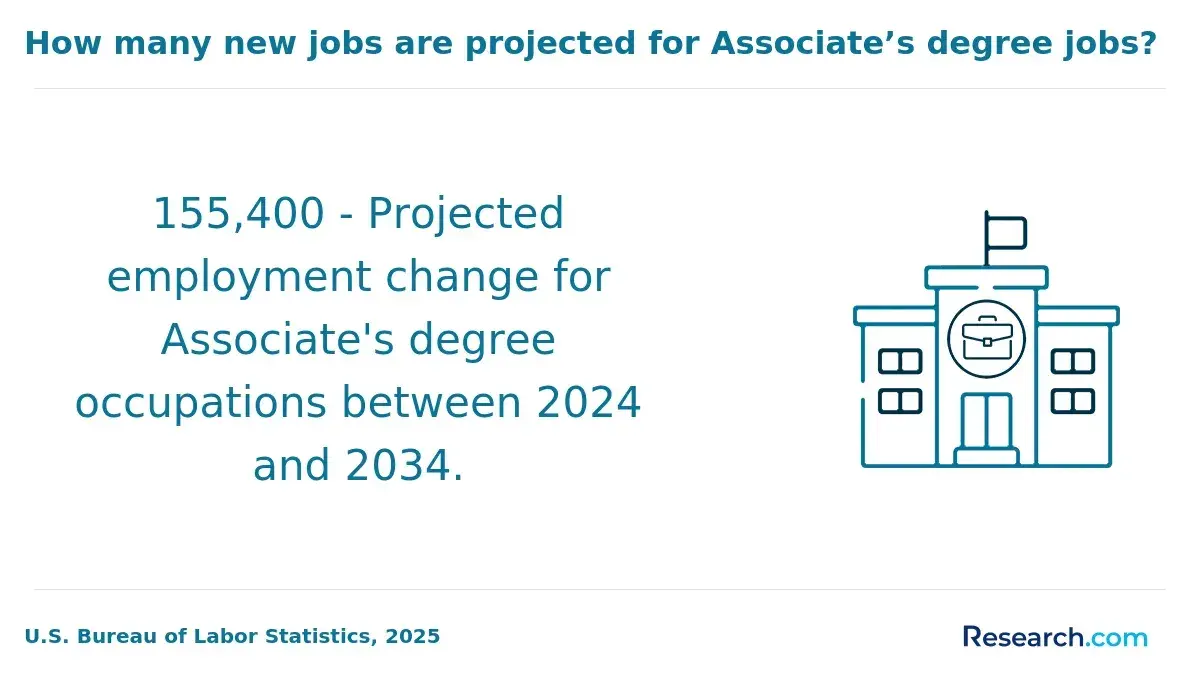
Most online bachelor's degrees in game programming require about 120 credits and take four years of full-time study. Students with prior college credit, AP credit, military training, or an associate degree may finish faster if the school accepts those credits toward major, general education, or elective requirements.
Part-time study can make the degree more realistic for working adults, but it extends the timeline. Accelerated terms can shorten completion time, but they may be difficult in programming-heavy courses because coding assignments require practice, testing, and revision. Faster is not always better if it leaves too little time to build portfolio-quality work.
The table below gives a practical view of common pacing options. Use it to compare speed against workload and career preparation.
| Enrollment pace | Typical completion pattern | Best for | Main trade-off |
| Full-time | About four academic years for first-time students | Students who can prioritize school and portfolio development | Higher weekly workload |
| Part-time | Often five to six years depending on credits per term | Working adults and caregivers | Longer time before degree completion |
| Transfer pathway | Potentially two to three years after an associate degree | Students with accepted general education and computing credits | Major courses may still need to be completed in sequence |
| Accelerated terms | Shorter courses with condensed deadlines | Highly organized students with strong prior preparation | Less time for deep practice and portfolio polish |
Students should also ask whether capstone courses are offered every term. If a required senior project is only available once or twice a year, missing a prerequisite can delay graduation even if the rest of the program is flexible.
How much do online game programming degrees cost?
The cost of an online bachelor's in game programming depends on tuition, fees, transfer credits, residency rules, technology requirements, and financial aid. Online programs may save money on relocation and commuting, but they can still include distance learning fees, software subscriptions, hardware needs, lab fees, or portfolio platform costs.
For national context, College Board reported 2024-2025 average published tuition and fees of $11,610 for in-state students at public four-year institutions, $30,780 for out-of-state students at public four-year institutions, and $43,350 at private nonprofit four-year institutions. These are sticker prices, not net prices, so grants, scholarships, employer tuition benefits, military benefits, and transfer credits can significantly change what a student actually pays.
- Public in-state four-year average published tuition and fees: $11,610 for 2024-2025.
- Public out-of-state four-year average published tuition and fees: $30,780 for 2024-2025.
- Private nonprofit four-year average published tuition and fees: $43,350 for 2024-2025.
Tuition is only one part of the total cost. Game programming students should budget for equipment and learning materials that may be more demanding than those required for text-based online programs.
| Cost factor | Why it matters | How to control it |
| Transfer credits | Accepted credits can reduce total courses needed | Request an official transfer evaluation before enrolling |
| Hardware | Game engines may require stronger CPU, GPU, memory, and storage | Ask for minimum and recommended specs by course level |
| Software | Some tools are free for students, while others may require licenses | Confirm whether licenses are included in tuition or fees |
| Course fees | Online, lab, platform, and technology fees can add up | Compare total program cost, not only per-credit tuition |
| Time to completion | Extra terms increase tuition and opportunity cost | Choose a realistic pace and avoid repeating prerequisites |
To evaluate affordability, compare net price and completion likelihood together. The cheapest program is not always the best value if it has weak support, unclear course sequencing, or limited portfolio development; the most expensive program is not automatically better if it cannot show strong technical outcomes.
What jobs can you get with this degree?
Graduates of online game programming and development programs can pursue game-specific roles and broader software roles. The broader path matters because the game industry can be competitive, project-based, and geographically concentrated, while software skills may transfer to simulation, education technology, defense, healthcare technology, mobile apps, AR and VR, and enterprise software.
If you are comparing creative technical paths across industries, it can help to look at adjacent career guides, such as Research.com's overview of high-paying jobs with environmental science degree options, to see how different STEM degrees connect to applied roles. The same decision logic applies here: match the degree to the work you actually want to do, not just the major title.
The table below summarizes common roles connected to game programming skills. Actual job titles vary by employer, and entry-level candidates often start in junior, associate, QA, or tools-focused positions before moving into specialized gameplay or engine roles.
| Role | Typical responsibilities | Relevant degree preparation |
| Gameplay programmer | Builds player controls, mechanics, combat systems, UI interactions, and in-game features | Engine programming, scripting, physics, debugging, design collaboration |
| Tools programmer | Creates internal tools that help artists, designers, and developers work faster | Software engineering, UI tools, scripting, workflow design |
| Engine programmer | Works on rendering, performance, memory, systems architecture, and platform support | C++, graphics, operating systems, optimization, math |
| AI programmer | Develops NPC behavior, pathfinding, procedural systems, and decision logic | Algorithms, AI for games, data structures, simulation |
| Game QA analyst or technical tester | Tests builds, documents bugs, verifies fixes, and may write automated tests | Testing, documentation, scripting, engine familiarity |
| Software developer | Designs and builds applications outside game studios | Programming, databases, software engineering, algorithms |
| XR or simulation developer | Creates VR, AR, training, or interactive simulation products | 3D engines, physics, UI, optimization, user interaction |
Students who want game studio jobs should plan for more than the degree. Employers commonly evaluate portfolios, code samples, internships, game jam projects, teamwork, and the ability to explain technical decisions. A polished portfolio with two or three strong projects is usually more persuasive than a long list of unfinished prototypes.
What salary can game programming graduates expect?
Salary outcomes vary by role, location, employer, experience, portfolio quality, and whether the job is in games, simulation, or general software development. Because "game programmer" is not always reported as a single standardized federal occupation, the most useful salary benchmarks are related roles such as software developers, computer programmers, web and digital interface designers, and special effects artists and animators.
The BLS reported a May 2024 median annual wage of $133,080 for software developers. This figure should not be read as a promise for new game programming graduates; instead, it shows the earning potential of the broader software labor market that technically prepared graduates may compete in after building experience.
The salary table below uses related U.S. occupational categories to help you interpret career options. Use it as a benchmark, then research local employers and entry-level postings in your target market.
| Related occupation | How it connects to game programming | Salary context |
| Software developer | Broader application, systems, tools, and platform development roles | BLS May 2024 median annual wage: $133,080 |
| Computer programmer | Code implementation, debugging, maintenance, and technical problem-solving | Can overlap with junior programming and tools work, though demand varies by industry |
| Special effects artist or animator | Technical art, visual effects, animation tools, and interactive media production | More relevant for students combining programming with art or graphics |
| Web or digital interface designer | UI, UX, interactive systems, and digital product development | Useful alternative for students interested in interface-heavy interactive work |
Some graduates eventually move into advanced areas such as machine learning, data science, simulation analytics, or research-heavy technical leadership. Students considering that long-term path may later compare graduate options such as an online data science PhD, but most bachelor's graduates should first focus on employable programming skills, shipped projects, and professional experience.
For ROI, compare likely entry-level opportunities against total debt and time to completion. Avoid assuming that a game degree automatically leads to a high-paying studio job; outcomes depend heavily on technical depth, portfolio quality, internships, networking, and willingness to apply to adjacent software roles.
How do you choose a reputable online program?
Choosing a reputable asynchronous online game programming program requires more than scanning rankings or marketing pages. The right program should fit your schedule, budget, technical goals, and career target while providing credible evidence of student support and career preparation.
A good selection process starts with verification and ends with fit. The following steps can help you compare programs consistently:
- Verify institutional accreditation and confirm whether the exact program has any additional computing-related accreditation.
- Map the curriculum against your goal, such as gameplay programming, engine development, tools programming, XR, simulation, or general software development.
- Review required programming languages and engines to make sure the program teaches transferable concepts, not only tool tutorials.
- Ask to see student capstone examples, portfolio expectations, and whether team projects use professional workflows such as version control and issue tracking.
- Compare total cost, including tuition, fees, hardware, software, transfer credits, and the number of terms you realistically need.
- Ask about academic support, tutoring, instructor response times, career services, internship support, and employer connections for online students.
- Check whether asynchronous courses ever require live attendance, scheduled exams, synchronous team meetings, or proctored assessments.
- Speak with admissions and academic advising before enrolling, and get important promises about transfer credit or pacing in writing.
Online program quality varies across fields, so it can also be useful to compare how reputable online degrees present accreditation, curriculum, and outcomes in other disciplines. For example, guides to master of library science online programs show the same core principle: strong online programs are transparent about accreditation, professional expectations, and student support.
Watch for red flags before committing. Be cautious if a school cannot clearly explain accreditation, avoids providing total cost estimates, uses vague career claims, lacks a coherent programming sequence, has no portfolio or capstone requirement, or promises job placement without evidence. Also be wary of programs that focus heavily on game enthusiasm but underemphasize math, coding, testing, and software engineering.
The best asynchronous online game programming degree is not simply the most flexible one. It is the program that helps you finish with credible credentials, strong code samples, a realistic debt load, and a portfolio that proves you can build interactive systems.
Other Things You Should Know About Game Programming & Development
Many do not require a portfolio for admission, but competitive programs often ask for one when reviewing applicants. A common baseline is a high school diploma or GED, minimum GPA around 2.5, and SAT or ACT scores only if the school is test-optional.
Yes, but the degree alone is usually not enough. Employers commonly look for strong programming ability, playable projects, code samples, collaboration experience, and evidence that you can solve technical problems in a production environment.
Most 2027 online bachelor's programs in game programming and development require foundational math courses like algebra, calculus, and discrete mathematics. These subjects are essential for understanding game physics, graphics, and problem-solving algorithms, critical in game development processes.
Choose game programming if you want a specialized, project-based path into interactive media and are committed to building a portfolio. Choose computer science if you want broader software career flexibility and are willing to add game projects, engine work, or electives on your own.
References
- Full Guide on Game Developer Salary in 2025 - Qubit Labs https://qubit-labs.com/game-developers-salaries-guide/
- We help game developers learn and grow https://gamedev.tv/
- Game Programming Degree | Bachelor of Game Development https://www.cgspectrum.com/courses/game-programming-program
- Admissions : Campus Tuition | Full Sail University https://www.fullsail.edu/admissions/tuition
- Asynchronous Games and Codex https://www.gamedeveloper.com/design/asynchronous-games-and-codex
- Game Design and Development Curriculum for High Schoolers https://www.masterycoding.com/courses/game-design-and-development-curriculum
- Bachelor of Science inGame Design and Development Online or On Campus https://www.albany.edu/cehc/programs/bs-game-design-and-development
- Creating Online Games: Synchronous Or Asynchronous Design? | Andrew M. Hagenbuch https://www.andrewhagenbuch.com/2012/04/28/creating-online-games-synchronous-asynchronous-design/
- Admissions Requirements https://www.aacom.org/become-a-doctor/apply-to-medical-school/admissions-requirements
- Admissions Criteria https://ed.wum.edu.pl/pl/admissions-criteria