2027 Online Game Programming and Development Degrees With Multiplayer Systems Concentrations

Co-Founder and Chief Data Scientist
Choosing a multiplayer-focused game programming degree is really a career-fit decision: you are investing in skills for real-time networking, game engines, cloud services, and live online communities. More than 190 million people in the U. S. play video games, according to the Entertainment Software Association's 2024 Essential Facts report, which helps explain why studios need developers who can build reliable online experiences. This guide is for prospective students comparing online degrees, costs, admissions, accreditation, careers, and salary potential so they can decide whether this path is worth it.
Key Things You Should Know
- Online multiplayer game programming degrees are best for students who want software-heavy training in engines, networking, backend systems, databases, security, and live-service game architecture rather than only art, narrative, or general game design.
- Cost varies widely: College Board's 2024 pricing data lists average published tuition and fees at $11,610 for in-state public four-year colleges and $43,350 for private nonprofit four-year colleges, so transfer credits and total program length matter as much as sticker price.
- The U.S. Bureau of Labor Statistics reports a May 2024 median annual wage of $133,080 for software developers, but game-industry pay depends heavily on role, portfolio quality, engine experience, studio size, location, and whether the work is gameplay, backend, tools, or online services.
What is an online game programming and development degree with a multiplayer systems concentration?
An online game programming and development degree with a multiplayer systems concentration is a software-focused degree that teaches students how to build games that multiple players can use at the same time over local networks, the internet, or cloud-hosted services. The concentration usually goes beyond basic gameplay coding by emphasizing latency, synchronization, matchmaking, server architecture, databases, security, cross-platform deployment, and live operations.
At the undergraduate level, this path may appear as a Bachelor of Science in Game Programming, Game Development, Computer Science with a game development track, or Software Development with game systems electives. At the graduate level, it may appear as a master's in game development, interactive technology, simulation, or computer science with real-time systems coursework. The most important distinction is whether the curriculum is programming-intensive enough for the jobs you want.
Students often confuse game programming, game design, and game art. The differences matter because employers evaluate these candidates differently.
| Path | Main focus | Best fit | Typical portfolio evidence |
| Game programming and development | Code, engines, tools, gameplay systems, performance | Students who want technical developer roles | Playable builds, source code, engine projects, systems demos |
| Multiplayer systems concentration | Networking, backend services, synchronization, online features | Students interested in online, co-op, competitive, or live-service games | Networked prototypes, server-authoritative gameplay, matchmaking demos |
| Game design | Rules, mechanics, player experience, levels, balancing | Students who want design, systems design, or level design roles | Design documents, prototypes, level maps, playtest results |
| Game art or animation | 2D/3D assets, characters, environments, visual pipelines | Students pursuing artist or animator roles | Art reels, models, textures, animation clips |
This degree makes the most sense for students who enjoy programming, debugging, math, and systems thinking. It may not be the right fit if you mainly want to write stories, build concept art, manage esports events, or study games as media rather than software. Those goals can still be valuable, but they point toward different programs and portfolios.
How do online multiplayer-focused game programming degrees compare with traditional on-campus programs?
Online multiplayer-focused game programming degrees can be academically comparable to campus programs when they use the same faculty standards, accredited institution, rigorous programming assignments, and project-based assessment. The main difference is not simply "online versus on campus"; it is whether the program gives you enough feedback, collaboration, technical depth, and portfolio opportunities to compete for developer roles.
The table below summarizes the practical trade-offs students should compare before enrolling. Use it to decide which format matches your learning style, schedule, and career goals.
| Factor | Online multiplayer-focused degree | Traditional on-campus program | Decision point |
| Schedule | Often asynchronous or evening-friendly | Usually fixed class times and studio labs | Online is stronger for working adults; campus may suit full-time students who want structure |
| Collaboration | Uses Git, Discord-like channels, video meetings, cloud repositories, and remote project teams | Uses in-person labs, game jams, studio spaces, and face-to-face critiques | Online students should confirm how team projects are managed and assessed |
| Hardware and software | Students may need a capable PC, headset, broadband, and licensed or free engine tools | Campus labs may provide workstations and specialized equipment | Online students should budget for technology beyond tuition |
| Networking | Depends on virtual events, alumni channels, faculty introductions, and portfolio showcases | May include local studio visits, campus recruiting, and in-person peer networks | Ask how the school connects online students with employers and alumni |
| Portfolio development | Can be strong if courses require playable builds, version control, and public-facing work | Can be strong if studio courses produce polished team projects | Choose the program with better project outcomes, not just the preferred delivery format |
Online delivery can also mirror the way modern game teams work. Distributed studios, remote contractors, cloud builds, collaborative repositories, and asynchronous documentation are common in software production. A well-designed online degree can help students practice those workflows early.
However, online study requires more self-management. Students who need constant in-person accountability, studio access, or local game-industry networking may prefer campus programs or hybrid degrees. Students with jobs, military obligations, caregiving responsibilities, or limited access to nearby game programs may find online study more realistic.
What accreditation and quality standards should online game programming programs meet?
Accreditation is one of the first quality checks for any online game programming degree. In the U.S., students should look for institutional accreditation from an accreditor recognized by the U.S. Department of Education or the Council for Higher Education Accreditation. Institutional accreditation affects credit transfer, graduate school eligibility, and access to federal financial aid.
Programmatic accreditation is less common in game development than in fields like nursing or engineering, but some computer science or computing programs may hold ABET accreditation. ABET is not required for every game programming job, but it can be a useful signal when a program claims to be software-engineering or computer-science intensive.
Beyond accreditation, students should evaluate whether the program meets practical quality standards. These indicators help separate serious technical degrees from programs that mainly market the excitement of games.
- Programming depth: The curriculum should include multiple coding courses, data structures, algorithms, software engineering practices, and engine-based development.
- Multiplayer specificity: Look for networking, distributed systems, online services, databases, security, cloud deployment, or real-time systems rather than only a single survey course.
- Portfolio requirements: Strong programs require playable projects, source control, team collaboration, and capstone work that students can discuss with employers.
- Faculty relevance: Instructors should have credible experience in software development, game production, interactive media, simulation, or related computing fields.
- Transparent outcomes: Schools should be willing to discuss retention, graduation, career services, internship support, and examples of student work without promising employment.
Be cautious with schools that emphasize "dream job" language but provide little detail about coursework, faculty, accreditation, or graduate outcomes. Game development is competitive, and a degree's value depends on the technical skill and portfolio you build, not on the program title alone.
What courses and skills are covered in a multiplayer systems concentration curriculum?
A multiplayer systems concentration typically combines game programming foundations with specialized coursework in real-time communication and online infrastructure. The goal is to help students understand not only how to make a game run, but how to make it run fairly, securely, and consistently for many players at once.
The curriculum below represents common course and skill areas. Exact course names vary by school, but a credible program should cover several of these areas in depth.
| Curriculum area | What students learn | Why it matters for multiplayer games |
| Programming fundamentals | C++, C#, Python, object-oriented programming, debugging | Builds the coding base needed for engines, tools, and gameplay systems |
| Game engines | Unity, Unreal Engine, scripting, asset pipelines, physics, input systems | Helps students implement playable mechanics and engine-ready features |
| Computer science foundations | Data structures, algorithms, memory, performance, software architecture | Supports scalable and efficient game systems |
| Networking | TCP/UDP concepts, replication, prediction, interpolation, lag compensation | Directly supports responsive multiplayer gameplay |
| Backend and cloud systems | APIs, authentication, databases, server hosting, telemetry | Supports accounts, matchmaking, persistence, analytics, and live services |
| Security and fairness | Cheat prevention, secure communication, server authority, abuse prevention | Protects player trust and competitive integrity |
| Team production | Agile workflows, Git, code reviews, testing, documentation | Matches how real game and software teams collaborate |
Students should also expect math and problem-solving. Linear algebra, physics, probability, optimization, and discrete math are especially useful for gameplay, matchmaking, simulation, and performance tuning. If a program avoids math and programming almost entirely, it is probably not designed for technical developer roles.
AI is also changing game development. Students interested in procedural content, nonplayer character behavior, automated testing, and intelligent tools may want to compare multiplayer coursework with broader options such as best online AI degree programs, especially if they are considering careers in game AI, simulation, or machine learning-supported tools.
The most valuable student outcome is a portfolio that proves technical competence. A strong multiplayer portfolio might include a small co-op game, a networked combat prototype, a lobby and matchmaking system, a server-authoritative movement demo, or a backend service that stores player progress.
What are the typical admission requirements for online game programming and development degrees?
Admission requirements depend on the degree level and institution. Bachelor's programs usually focus on high school completion and college readiness, while master's programs often expect prior programming experience or a related undergraduate degree. Some game programs are open to beginners, but multiplayer systems concentrations are easier for students who already have some coding background.
For undergraduate applicants, schools commonly request the following materials. Requirements vary, so students should confirm details with each admissions office.
- High school diploma, GED, or equivalent credential
- Official transcripts from high school and any prior colleges
- Minimum GPA or placement requirements, depending on the school
- Application form and possible personal statement
- Optional or required portfolio for more selective game programs
- Math placement, programming placement, or prerequisite courses for technical tracks
Graduate programs may require a more technical admissions profile. Students without a computer science background may still be admitted, but they may need bridge courses before taking advanced networking, algorithms, or engine programming classes.
- Bachelor's degree from an accredited institution
- Prior coursework in programming, data structures, math, or software development
- Resume showing technical, creative, or professional experience
- Statement of purpose explaining career goals
- Portfolio, code samples, GitHub repository, or game projects when requested
- Letters of recommendation for selective programs
Admissions standards also differ across online fields. For example, a student comparing a technical game development program with a masters in library science will likely see different expectations for programming prerequisites, portfolio work, and math preparation. That does not make one path easier or harder overall; it means each field screens for different types of readiness.
Students who are not yet ready for a full degree can prepare by taking introductory programming, discrete math, game engine tutorials, or a community college computer science course. This can reduce the risk of enrolling in a costly program before knowing whether coding-intensive game development is a good fit.
How long do these online degrees take and what do they typically cost?
Most online bachelor's degrees in game programming and development take about four years of full-time study, though transfer students may finish faster. Part-time students often need longer because programming courses build sequentially. Master's programs commonly take one to three years depending on course load, prerequisites, and whether the program includes a thesis, capstone, or production studio.
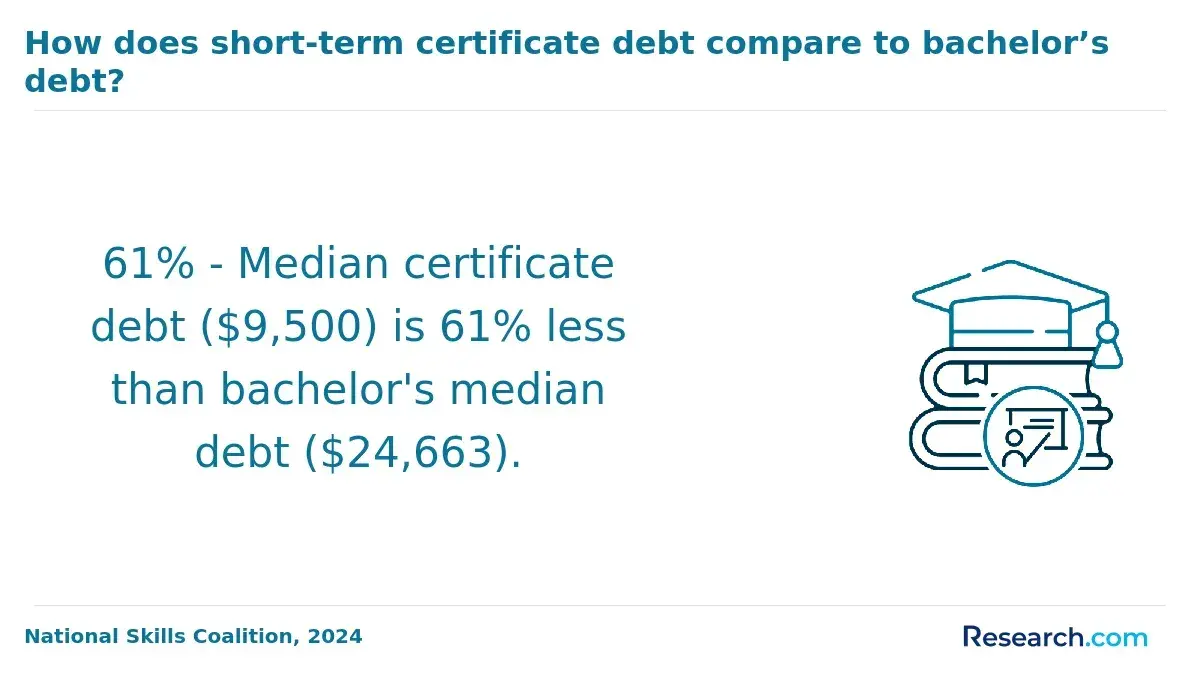
Cost depends on institution type, residency rules, transfer credit, fees, software, hardware, and pace. College Board's 2024 Trends in College Pricing data reported average published tuition and fees of $11,610 for in-state students at public four-year institutions and $43,350 at private nonprofit four-year institutions for the 2024-25 academic year. Those figures are not game-specific, but they are useful benchmarks when comparing online programs.
The table below highlights cost categories students often overlook. Reviewing each one can prevent a program that looks affordable from becoming more expensive than expected.
| Cost factor | What to check | Why it affects total price |
| Tuition structure | Per credit, per term, flat-rate, in-state, out-of-state, or online-specific tuition | The same degree length can cost very different amounts under different pricing models |
| Transfer credits | Maximum accepted credits and whether prior programming courses count | Accepted credits can reduce both time and tuition |
| Technology requirements | Computer specifications, graphics card, storage, broadband, webcam, headset | Online game development may require stronger hardware than typical online majors |
| Software and tools | Engine licenses, IDEs, cloud hosting, version control, collaboration platforms | Many tools are free for students, but cloud and specialized tools may add costs |
| Fees | Online course fees, graduation fees, lab fees, portfolio review fees | Fees can change the true cost beyond advertised tuition |
| Pace | Full-time, part-time, accelerated, or competency-based options | Faster is not always cheaper if it reduces work hours or increases course repetition risk |
Students comparing affordability across technical fields may also find it useful to review how other computing programs price online education, including resources on the cheapest data science degree. Data science and game programming are different paths, but both require students to compare tuition against coding depth, portfolio value, and career flexibility.
To reduce costs, prioritize accredited schools with generous transfer policies, clear tuition calculators, no hidden technology fees, and course sequences that will not delay graduation. Also complete the FAFSA if eligible, compare institutional scholarships, and ask whether online students qualify for the same financial aid opportunities as campus students.
What careers can a multiplayer systems concentration prepare you for in the game industry?
A multiplayer systems concentration can prepare students for technical roles in game studios, simulation companies, interactive media firms, esports technology providers, education technology, defense simulation, and software companies that build real-time applications. The degree is not limited to entertainment games, although that is often the main student interest.
The following table summarizes career paths related to multiplayer game programming. Job titles vary by studio, so students should compare responsibilities rather than relying only on titles.
| Career path | Typical responsibilities | Relevant degree preparation |
| Gameplay programmer | Implements mechanics, character behavior, controls, combat, and systems | Engine programming, C++ or C#, physics, debugging, gameplay prototypes |
| Network programmer | Builds replication, synchronization, lag compensation, and online gameplay features | Networking, distributed systems, real-time programming, performance optimization |
| Backend game developer | Develops APIs, player accounts, databases, matchmaking, telemetry, and live-service tools | Cloud systems, databases, security, web services, server-side programming |
| Tools programmer | Creates internal tools that help designers, artists, and engineers build games faster | Software engineering, editor scripting, UI tools, pipeline knowledge |
| QA automation engineer | Builds automated tests, performance checks, and reliability systems for games | Testing, scripting, CI/CD, debugging, build systems |
| Technical designer | Bridges design and engineering by scripting systems and tuning gameplay | Game design literacy, scripting, prototyping, engine workflows |
Entry-level applicants are usually judged by proof of ability: playable projects, clean code, team experience, and the ability to explain technical decisions. A degree can help create that structure, but it does not replace the need for a strong portfolio.
Students should also understand the difference between game-industry and broader software opportunities. Game roles may be highly competitive and portfolio-driven. Broader software roles may offer more openings and clearer hiring pipelines, especially for students who can translate multiplayer systems experience into backend development, cloud services, real-time applications, or simulation software.
What salary ranges and earning potential exist for multiplayer game programmers and developers?
Salary potential for multiplayer game programmers depends on the role, company, region, technical specialization, and prior experience. Because the Bureau of Labor Statistics does not publish a separate national wage category for "multiplayer game programmer," the closest broad benchmark is software developer. BLS May 2024 data lists the median annual wage for software developers at $133,080. This figure is useful for context, but it includes many industries beyond games.
Students should use salary data as a benchmark, not a promise. Game jobs can differ from general software jobs because studios may weigh shipped projects, engine knowledge, gameplay specialization, and portfolio quality more heavily than degree title alone.
The table below shows how multiplayer-related roles may connect to broader salary context. It does not guarantee earnings; it helps students understand which skills tend to align with higher-value technical responsibilities.
| Role category | Common experience level | Salary context | What can improve earning potential |
| Junior game programmer | Entry level | Often benchmarked below experienced software developer roles | Polished portfolio, internships, C++ or C# strength, team projects |
| Network or online systems programmer | Early to mid-career | Can be more competitive because networking skills are specialized | Real-time networking demos, server-authoritative systems, performance work |
| Backend game services developer | Entry to senior | May overlap with broader software and cloud development markets | API design, databases, cloud deployment, security, observability |
| Senior gameplay or engine programmer | Experienced | Typically depends on shipped titles, leadership, and technical ownership | Production experience, optimization, mentoring, architecture decisions |
Location still matters, even for remote roles. Studios in high-cost technology hubs may post higher salaries, while smaller studios may offer lower cash compensation but broader responsibilities. Students should compare salary expectations with cost of living, job stability, benefits, overtime expectations, and growth opportunities.
What is the job outlook for professionals specializing in online and multiplayer game systems?
The job outlook for multiplayer game systems specialists is tied to two overlapping markets: the game industry and the broader software development labor market. BLS projects employment for software developers to grow 17% from 2023 to 2033, much faster than the average for all occupations. For students, that means the underlying software skill set can remain useful even if a first job is outside a game studio.
Multiplayer expertise is especially relevant because many games now rely on online accounts, cross-platform play, cloud saves, social features, live events, battle passes, analytics, anti-cheat systems, and continuous updates. Even single-player games may include online storefronts, telemetry, patches, user-generated content, or connected services.
Several current trends affect how students should prepare for this field:
- Live-service expectations: Studios increasingly need developers who can support games after launch through updates, events, monitoring, and backend reliability.
- Cloud and platform integration: Multiplayer developers often work with hosting, identity services, databases, console networks, and cross-platform requirements.
- Security and player trust: Cheating, account theft, harassment, and data protection concerns make secure architecture more important.
- AI-assisted workflows: AI tools can speed up prototyping, testing, and content workflows, but employers still need developers who understand code, architecture, and debugging.
- Remote production: Distributed teams make documentation, version control, communication, and self-management essential workplace skills.
The main risk is competition. Many students want game jobs, and studios can be selective. The best hedge is to build a portfolio that demonstrates transferable software ability: networking, backend services, testing, cloud deployment, and performance optimization can apply beyond games.
How can students evaluate and choose the best online multiplayer game programming program?
Choosing the best online multiplayer game programming program starts with your target role. A student aiming for network programming needs a different curriculum than a student aiming for level design, game art, or production management. Before comparing rankings or tuition, define the job you want and the portfolio you need to prove readiness.
Use the following steps to evaluate programs in a practical order. This sequence helps you avoid choosing a school based only on marketing language or price.
- Confirm institutional accreditation and whether the school participates in federal financial aid if that matters for your funding plan.
- Map the curriculum against your target role, paying close attention to programming, networking, backend systems, databases, and capstone requirements.
- Ask to see examples of student projects, especially multiplayer prototypes, online services, Git-based team work, or shipped student games.
- Compare total cost, including tuition, fees, hardware, software, transfer credits, and expected time to completion.
- Review faculty backgrounds for game development, software engineering, simulation, cloud systems, or interactive technology experience.
- Ask how online students access career services, internships, alumni networks, portfolio reviews, and employer events.
- Check whether courses are asynchronous, synchronous, or hybrid, and decide whether that format matches your schedule and learning habits.
- Evaluate academic support, tutoring, technical help, disability services, and access to instructors for code feedback.
Students should also avoid common mistakes. The most damaging errors usually happen before enrollment, when applicants assume that any game-related degree will lead to the same career options.
- Mistake: Choosing a design-heavy program for a programming career. Better approach: Review the number and level of coding, math, networking, and software engineering courses.
- Mistake: Comparing tuition only. Better approach: Calculate total cost through graduation, including technology, fees, repeated courses, and transfer credit loss.
- Mistake: Ignoring portfolio outcomes. Better approach: Ask what playable projects students complete and whether those projects include code review and team production.
- Mistake: Assuming online means easier. Better approach: Treat online study as a professional workflow that requires time management, documentation, and consistent practice.
- Mistake: Relying on school branding alone. Better approach: Compare curriculum details, faculty, student work, and career support.
If your interests lean more toward mechanics, levels, player experience, or creative direction than technical infrastructure, compare programming degrees with game design online options. The right program is the one that matches the work you want to do every day, not just the industry you want to enter.
A strong final shortlist should include no more than a few programs that meet your academic, financial, and career criteria. For each one, ask admissions or faculty a direct question: "What multiplayer or online systems project will I graduate with, and how will it help me compete for my target role?" If the answer is vague, keep looking.
Other Things You Should Know About Game Programming & Development
Not always. Some developers enter through portfolios, self-study, bootcamps, or general computer science backgrounds. However, a degree can provide structure, feedback, math foundations, team projects, and access to internships or career services.
An online game programming degree focused on multiplayer systems in 2027 is valuable due to evolving technologies and industry demand. It offers in-depth understanding of network protocols, server management, and user interface design, equipping graduates with the necessary skills to excel in multiplayer game development.
Applicants usually need high school algebra, precalculus, and introductory programming before admission. Many 2027 online programs also expect one semester each of C++ or Java, discrete math, and basic data structures. Some schools require a minimum 2.5 to 3.0 GPA and a portfolio or coding sample.
References
- Which factors will affect my salary at a video game job? https://www.gameindustrycareerguide.com/factors-affecting-video-game-job-salary/
- How Online Gaming Growth Creates More Employment Opportunities https://www.onrec.com/news/news-archive/how-online-gaming-growth-creates-more-employment-opportunities
- The Video Game Designer Job Outlook | NEIT https://www.neit.edu/blog/video-game-designer-job-outlook
- Career Path and Salary for Video Game Designers | ComputerScience.org https://www.computerscience.org/careers/video-game-designer/career-outlook-and-salary/
- 60+ Multiplayer Game Development Online Courses for 2026 | Explore Free Courses & Certifications | Class Central https://www.classcentral.com/subject/multiplayer-game-development
- Read this before creating your first Online Multiplayer game https://discussions.unity.com/t/read-this-before-creating-your-first-online-multiplayer-game/1558507
- Bachelor of Science inGame Design and Development Online or On Campus https://www.albany.edu/cehc/programs/bs-game-design-and-development
- Online Game Development Courses: The Path to Mastering Virtual Worlds and Career Success https://macrobiangames.com/blog/online-game-development-courses/
- Game Industry Standards https://igda.org/resourcelibrary/game-industry-standards/
- Game Developer Salaries by Country 2025-2026 https://optiveum.com/articles/game-developer-salaries-by-country/